Why say New Year, New Me when you’re already perfectly fine the way you are? Instead, we’re saying Same You, New Skills in the PCWorld Shop as we’ve lowered prices on all kinds of cool things to help you learn something new in 2023. For instance, if you want to learn a new language, The Language Learner Lifetime Subscription Bundle is just $29 through 1/9 at 11:59 PM Pacific.
This bundle features lifetime subscriptions to uTalk and StackSkills Unlimited. uTalk has received The Queen’s Award for Innovation and Export and was The Chartered Institute of Language Threlford Cup Winner in 2019. It’s also earned 4.3/5 stars in the App Store because it has helped more than 30 million people learn more than 140 languages through , practical lessons.
StackSkills Unlimited allows you to take your learning mission even further, with more than 1,000 courses covering topics as diverse as the to growth marketing.
One of the core concepts of modern PC building is modularity. As long as you do a little research, you can be fairly certain that you can swap out compatible parts more or less forever. Case maker InWin is extending that idea to the design of the PC case itself, right down to the bones. PCWorld contributor Keith May has a breakdown of the new Mod Free system, live from CES 2023.
At the core of the Mod Free design is a frame that comes in standard ATX and Mini-ITX sizes. It looks pretty familiar if you’ve ever seen a “test bench” setup with no exterior panels. The difference is that these frames interlock together: you can add a front chamber to the ATX size for cooling, or a rear chamber to add space for an array of storage drives.
Modular sections for more parts can be added on or removed without tools in seconds — you can even chain multiple “core” modules together to create multi-system arrays. Once your modular frame is in place and your parts are installed, you can add on the exterior panels, which come in translucent acrylic, tempered glass, or cooling-friendly mesh on the concept device. It’s easy enough to print your own custom design on the panels with an industrial printer.
At the moment InWin isn’t talking release date or pricing, but it’s easy to see that this will be a popular option for builders who want absolutely no limits on customization. For more live reporting from CES, be sure to .
Michael is a former graphic designer who’s been building and tweaking desktop computers for longer than he cares to admit. His interests include folk music, football, science fiction, and salsa verde, in no particular order.
When the Nvidia RTX 3080 10GB was released, there was tremendous excitement for this $699 powerhouse. When it was “reborn” as the RTX 3080 12GB, with a huge jump in price, the enthusiasm was dampened. The $1,499 RTX 3090 had many questioning whether its price was “worth it,” but it sold well enough during that time due to its “best in class” status.
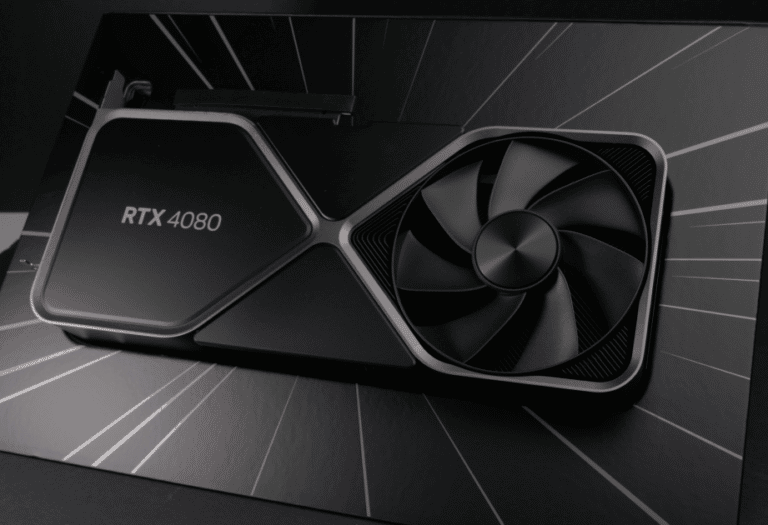
In 2022, the Nvidia RTX 4080 arrived at $1,199. But the days of extreme GPU shortages have passed. That era propelled the RTX 3000 GPUs to sell in massive quantities at absurd prices. Can the RTX 4080 succeed with similarly absurd pricing?
Let’s dig a little bit deeper, and compare the RTX 4080 to its predecessor, the RTX 3080. We’ll look at the availability and pricing of each in the context of its time, performance for the dollar, and ultimately try to “figure out” where the RTX 4080 currently stands.
Thiago Trevisan
Nvidia RTX 4080 vs. RTX 3080: Price and availability
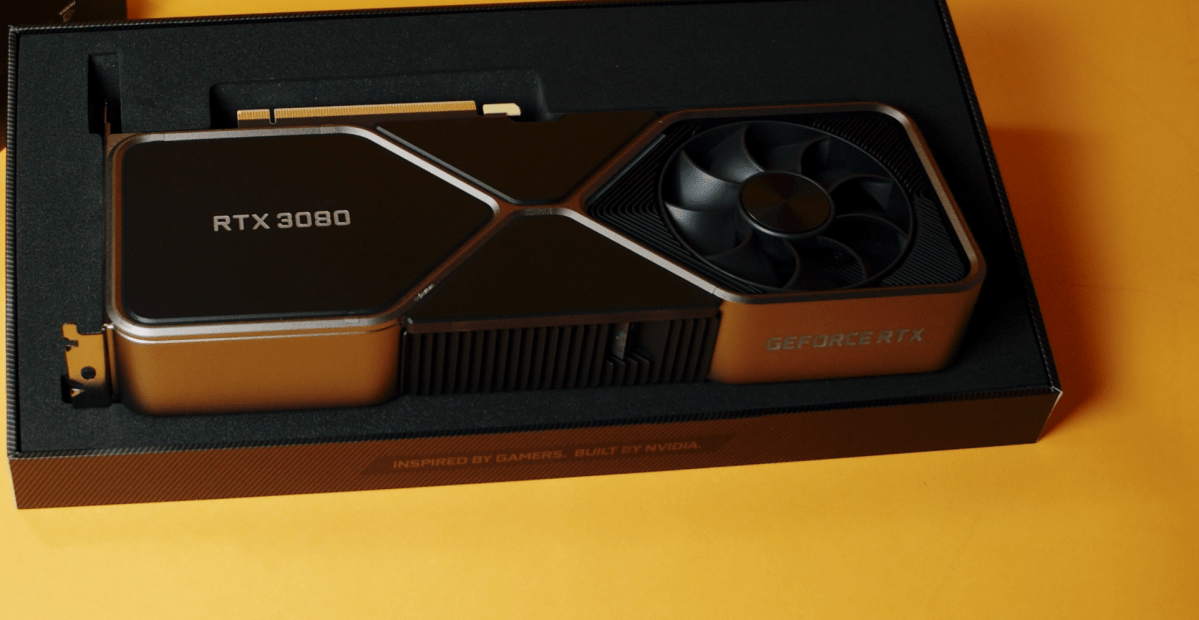
$699 for an RTX 3080 is great, perfection even. Good luck finding that 99.9 percent of the time during 2020 to 2022, however. The RTX 3080’s entire legacy is tarnished by being born in this unfortunate time of the “Great GPU Shortage” or whatever you’d like to call it. It was more likely to cost two to three times its MSRP on the secondhand market for most of its production.
It was refreshed as the RTX 3080 with 12GB of VRAM and a few upgraded specs, but it also saw retail pricing over $1,200 initially. The minor spec bump certainly did not justify its substantial price increase, which was caused by everything from lockdowns, to manufacturing delays, crypto-mining demand, and gamer demand.
How has the RTX 4080 fared in comparison? It picked up where the 12GB 3080 left off—with high pricing. The quickly cancelled RTX 4080 12GB came in at $899, which would have been closer to the original RTX 3080—had it not been a vastly cut-down model not worthy of the RTX 4080 moniker.
In Brad Chacos’ excellent review, he immediately pinpoints the problem: It is waaaaaay too expensive. Is it an impressive GPU? Sure. At $1,199 however, it disappoints and scores an “own goal.”
The RTX 4080 has a pricing issue.
Thiago Trevisan
How does this affect availability? The good news is that you’re much more likely to find an MSRP retail version of the RTX 4080 across various retail channels in stock. The bad news is that this is because of its poor perceived value, meaning you probably shouldn’t buy it.
Where does the RTX 4080 versus 3080 stack up in our debate so far? It’s a draw, and here’s why: The $699 RTX 3080 never realistically came to deliver on its awesome price-to-performance proposition, by being perpetually “out of stock.” Likewise, the RTX 4080 comes “out of the box” at a much higher price than gamers are willing to pay, relegating both to the same fate.
Nvidia RTX 4080 vs RTX 3080: Performance
OK, price and availability aside, how does the performance of the RTX 4080 fare against the RTX 3080? It’s somewhat lukewarm, eclipsed by the ridiculous gains showcased by the RTX 4090. (Now we’re playing with power!)
Thiago Trevisan
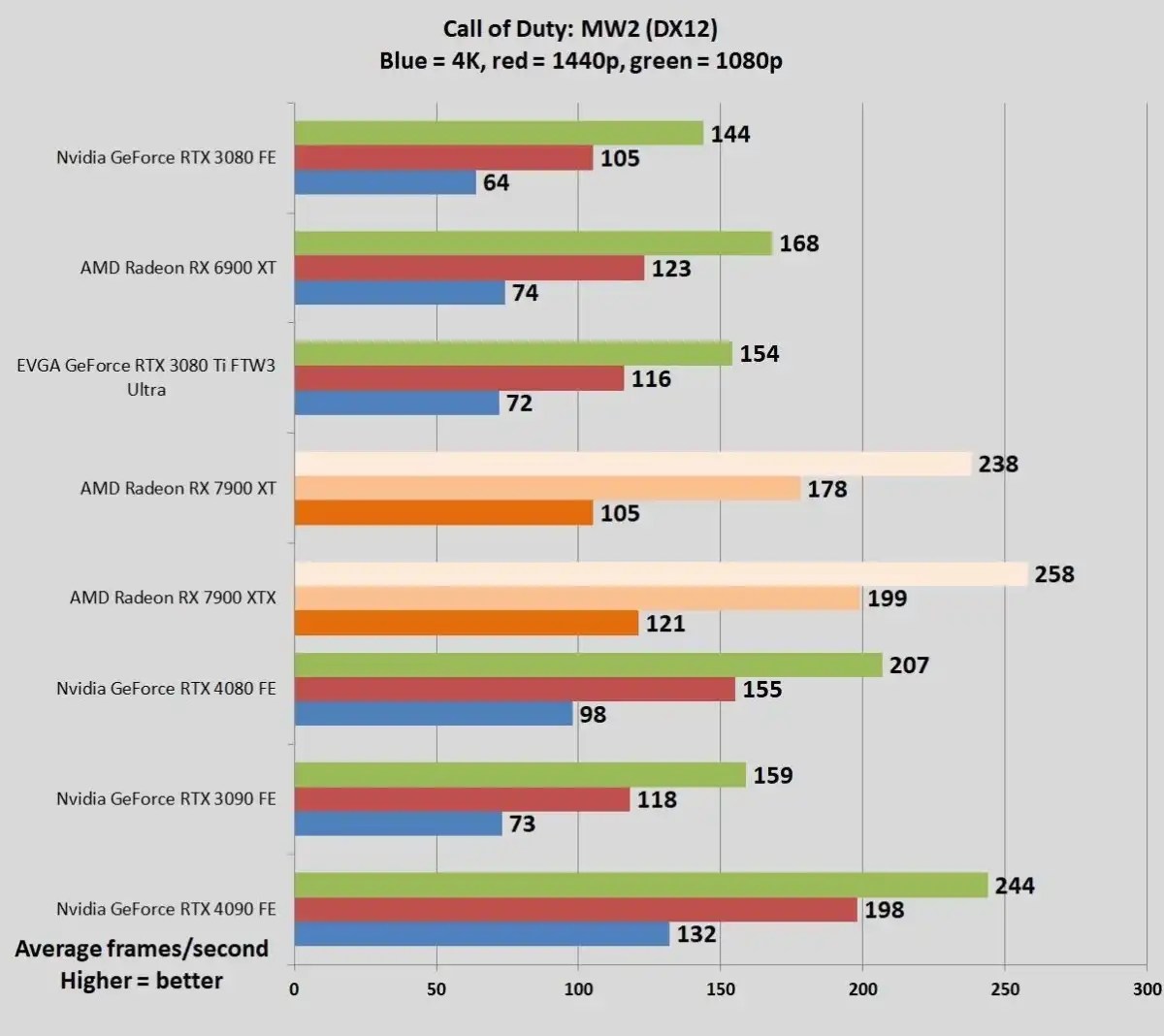
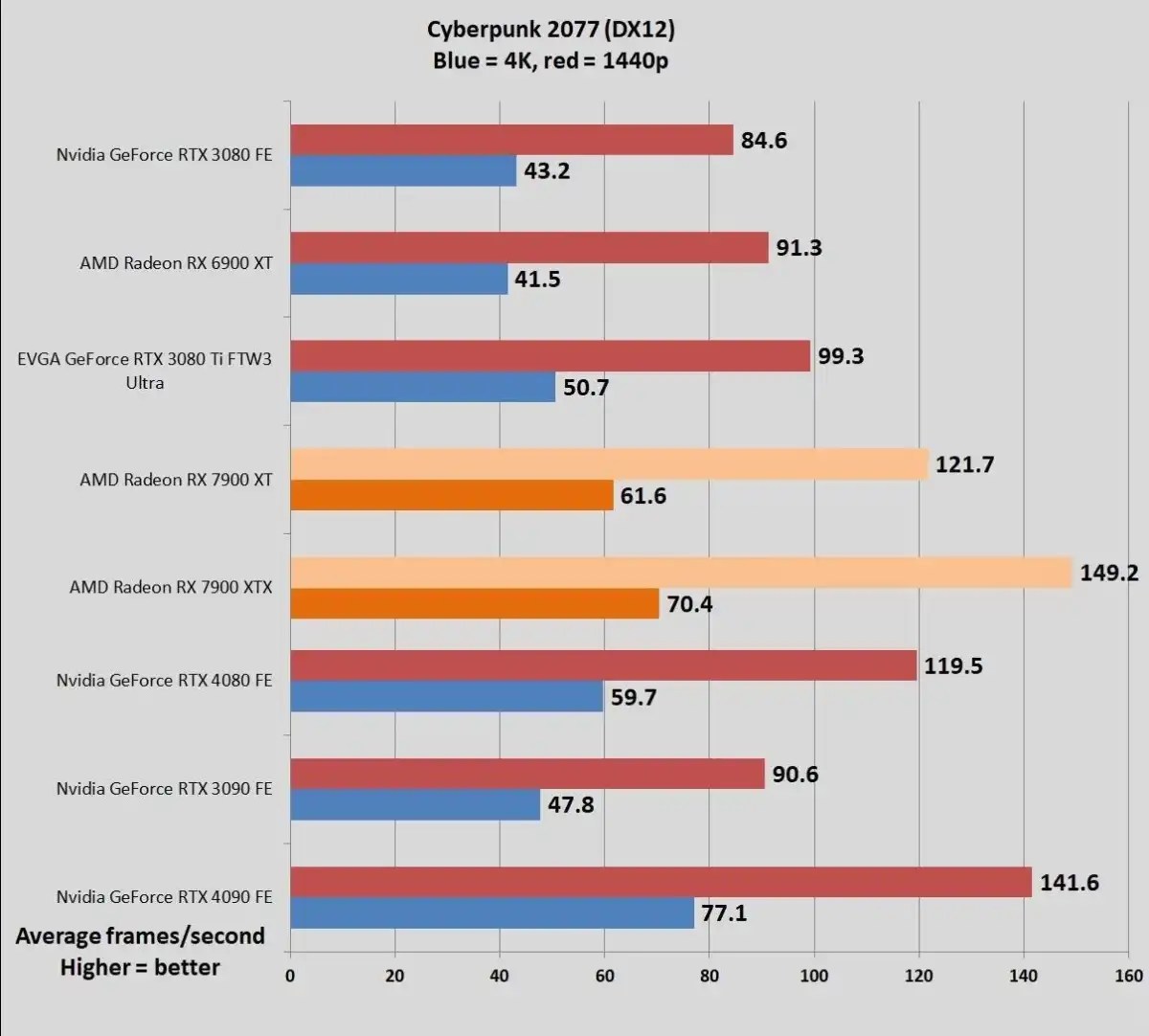
We’d have to compare the RTX 4080 to the more realistic RTX 3080 12GB that had a similar street retail price, instead of the lofty $699 RTX 3080, which was unobtanium. With the original RTX 3080 10GB, in a game like Call of Duty Modern Warfare 2, you’d get a nice bump from 64fps to 98fps at 4K. Non-ray traced Cyberpunk 2077 goes from 43fps to a more playable 59fps.
Thiago Trevisan
Very modest, expected generational gains while sticking to a similar price bracket as the 12GB 3080. Compared to the aforementioned $699 RTX 3080, these results for the $500 price increase are disappointing.
Let’s take a step further and play to the RTX 4080’s strengths. It has the chops (latest Ai Tensor cores) to handle ray tracing and technologies such as Nvidia’s DLSS 3.0 with aplomb—is it enough?
Thiago Trevisan
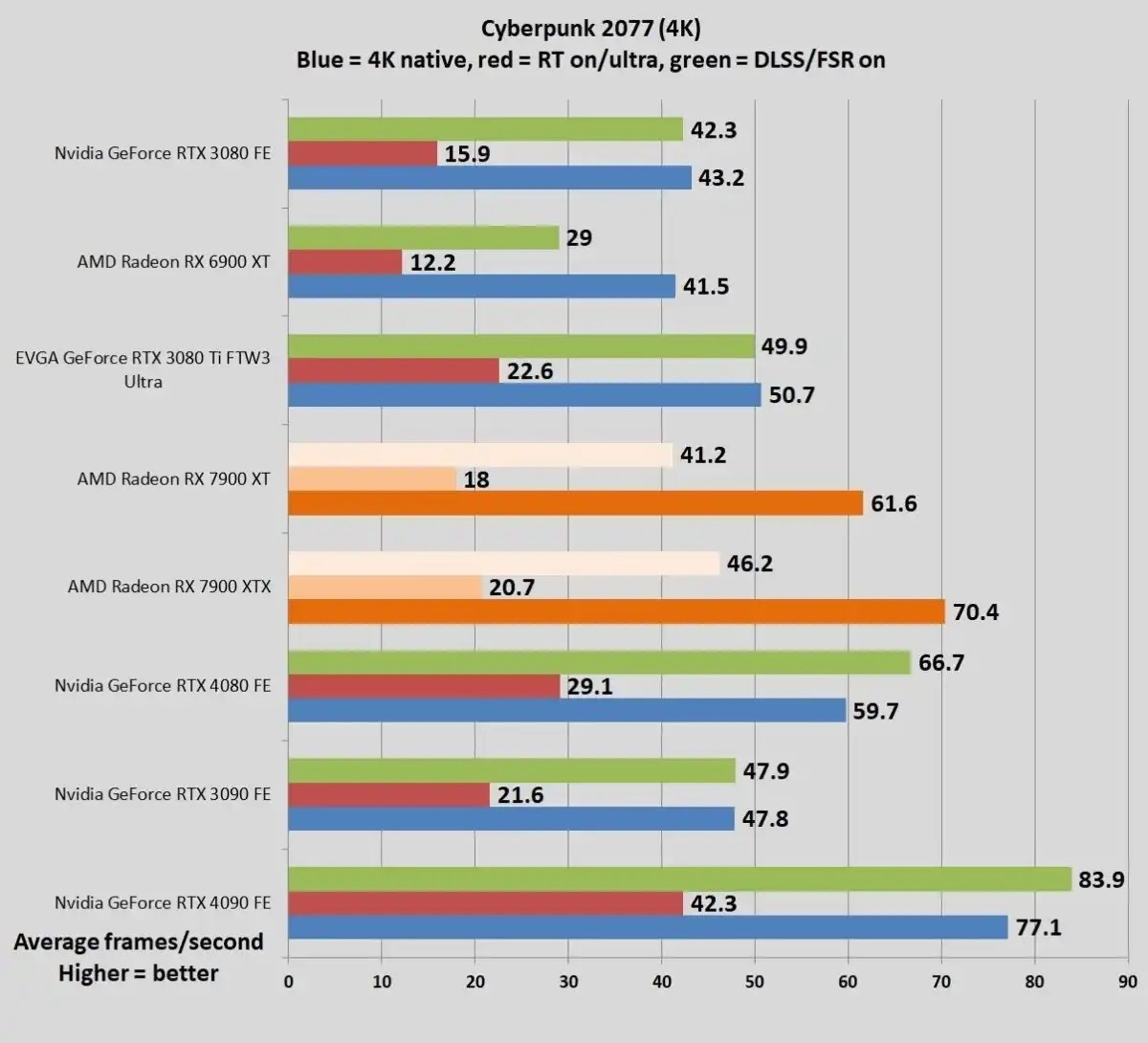
The RTX 3080 managed an unplayable 15fps with ray tracing Ultra at 4K. The RTX 4080 bumps that up to a still fairly unplayable 29fps, effectively doubling the performance. DLSS brings the RTX 3080 to 42fps, and the RTX 4080 to a much better 66fps.
While the RTX 4080 is now playable at these intense settings, the performance gains are still the minimum we’d expect for these prices and generational gains. Alas, the only better option is the beefier RTX 4090—but that will also cost a good deal more.
Brad Chacos points out that the RTX 40 series average gain is 30fps, more than the RTX 3000’s 20fps gains with DLSS, due to the better efficiency. Still, these are expected improvements and still make the price of the RTX 4080 hard to fully rationalize.
The RTX 4080 is also capable of DLSS 3.0, with Ai Frame generation, a very exciting bit of technology. In supported games such as Microsoft Flight Simulator 2020, you can see massive gains that start to edge the RTX 4080 out against any other GPU save for the RTX 4090.
I tested Flight Simulator on a 5120x1440p ultrawide monitor, on Ultra settings the RTX 4080 got 69fps. When using DLSS 3.0 with Ai Frame generation, this went up to a whopping 151 with DLSS balanced! That is an impressive improvement, and the future looks bright for DLSS 3.0—with more maturity, it can start to change the narrative on the RTX 4080 performance, too.
Let’s not forget content creation. In Adam Taylor’s review, we can see that the RTX 4080 gets a sizable lead versus the RTX 3080 in Davinci Resolve. While your mileage may vary depending on the software you’re using, the math may be different for non-gamers when looking at impressive performance gains on the RTX 4080 in some use cases.
Nvidia RTX 4080 vs. RTX 3080: Power and other things to know
Thiago Trevisan
The RTX 4080 has some impressive efficiency for the performance that it’s putting out, handily beating the RTX 3080 without compromise. Both share the same TDP of 320 watts, demonstrating how impressive the RTX 4080 is when considering it is often double or more the performance metrics versus the RTX 3080.
Yes, it does have that weird power adapter, and it often shares the huge cooler designs from the RTX 4090. While you may have much more trouble fitting it in most PC cases, one benefit is that on average the thermals and noise performance on the RTX 4080 are also impressive.
While the RTX 3080 never ran as hot as the RTX 3090, it still had GDDR6X VRAM that often performed poorly thermally due to inconsistent thermal pad applications. That problem seems like ancient history with the RTX 4080, which has an overkill cooler for its TDP.
Nvidia RTX 4080 vs. RTX 3080: The verdict
Newer GPUs like the RTX 4080 are always “better” objectively than their predecessors. Better rasterization, ray tracing, DLSS 3.0, efficiency, the list goes on.
Where we come in is in deciding if these technical improvements merit the pricing and actual real-world results.
The RTX 4080 falls short when viewed in its complete form. The $1,199 price pushes it too far outside of any reasonable “price-to-performance” expectations for an 80-class GPU, and there are many factors at play here. The GPU shortages of recent times caused plenty of problems, including a surplus of RTX 3000 GPUs during this year. DLSS 3.0 and ray tracing are getting more impressive as they mature, so the RTX 4080 has room for improvement here as new drivers release, to be fair.
The RTX 3080 is no prince charming, either. It’s $699 MSRP was merely a teaser that almost never saw the light of day, and its more expensive 12GB refresh had minimal improvements to justify the uptick in cost.
What’s the verdict? It’s a draw, the 80-class of GPUs have too many murky issues surrounding their existence to make either generation an obvious favorite. The favor seems to have jumped to GPUs such as the GeForce RTX 4090, which have unparalleled performance regardless of their higher pricing. Whether we’ll get a sub-$1,000 “darling” GPU that hits price-to-performance hard this year is anyone’s guess, but we surely need it!
If you’re looking to save some moolah on a midrange gaming machine, then we’ve got an awesome deal for you today. Amazon’s currently selling the Gigabyte G5 KE gaming laptop for $938.93, which is a savings of $260.07. Not only is the aesthetic subtle and sophisticated, but it’s also packing some powerful hardware.
The Gigabyte G5 KE comes equipped with an Intel Core i5-12500H CPU, an Nvidia GeForce RTX 3060 GPU, 16GB of RAM, and 512GB of SSD storage. In other words, this rig should be able to run most games on medium to high settings. The 15.6-inch 1080p display is spacious with a refresh rate of 144Hz, so visuals should be plenty sharp. The connectivity options are pretty diverse, too.
This thing is rocking one HDMI, one USB 2.0, one USB 3.2 Type-A, one USB 3.2 Type-C, one Thunderbolt 4, one mini DisplayPort 1.4, one audio in/out, one RJ-45, and one MicroSD card reader. That’s a lot of connectivity right there, which is perfect for those times when you want to hook up to an external monitor or mouse.
You better act fast, as we don’t expect this deal to last much longer.
Ashley is a professional writer and editor with a strong background in tech and pop culture. She has written for high traffic websites such as Polygon, Kotaku, StarWars.com, and Nerdist. In her off time, she enjoys playing video games, reading science fiction novels, and hanging out with her rescue greyhound.
According to , Twitter lost user email addresses, phone numbers, and other identifying data though a leak—an earlier, private exploit of a now-patched API vulnerability that allowed info of over 200 million users to be scraped. Affected users face the risk of hostile takeovers of accounts (both on Twitter and other locations tied to the data) plus the possibility of having their identity revealed if they’d been using the site anonymously.
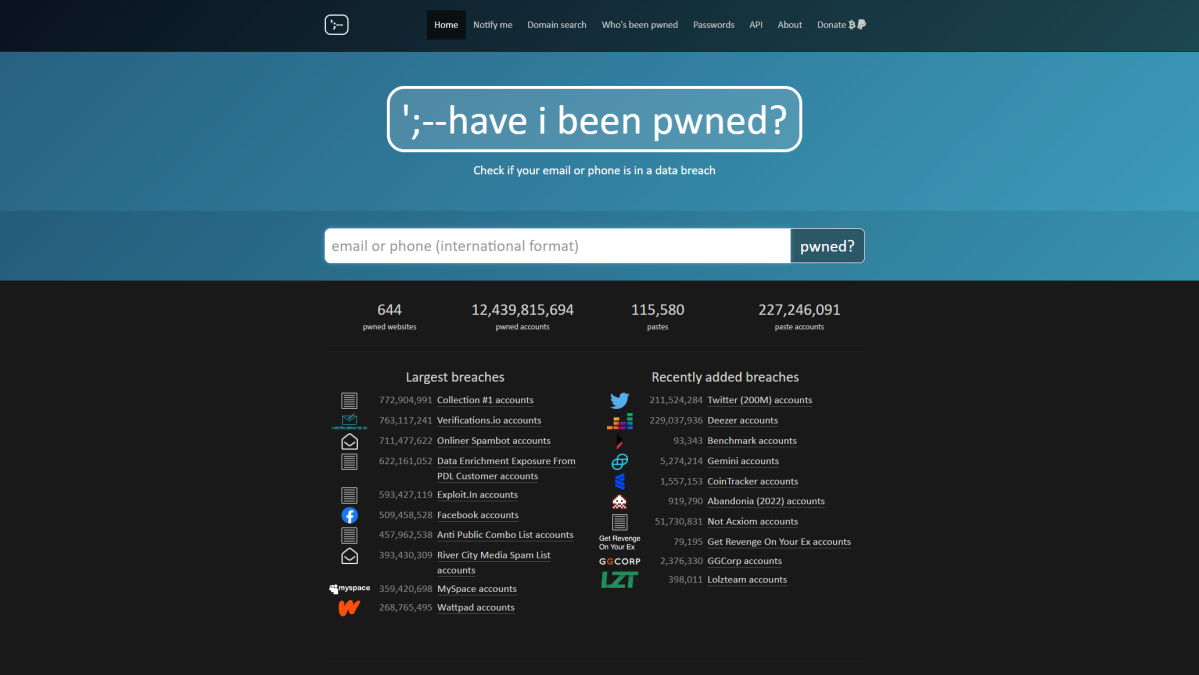
You don’t have to wait for the other shoe to drop, however. Security website is already allowing people to check if they were affected—meaning you can be proactive about understanding (and addressing) your level of risk.
Simply hop over to the site, then enter your email address or phone number to see all the major data breaches you’ve been caught in. (Caveat: HIBP can’t warn you about a breach no one yet knows about.) If you’re part of this Twitter fiasco, it’ll appear on the list.
You can check to see what data breaches you’ve been caught in through Have I Been Pwned.
PCWorld
Troy Hunt, the security researcher behind the site, noted that were already in the Have I Been Pwned database—so now’s a good time to sign up for the site’s email notification service. You’ll get alerts whenever the database is updated and your email address is part of a new data breach. Now’s also the time to get busy shoring up your security, like using strong, unique passwords for every website, two-factor authentication, and even unique email masks or usernames.
Improving your Twitter security in particular might be a wise idea, given the company’s upheaval since its change in ownership. Since Musk’s takeover, much of the company was gutted, leaving a severely reduced workforce to grapple with site management—and no communications team to alert users to problems. These days the social media platform is far less trustworthy and you’re on your own if you stay.
Alaina Yee is PCWorld’s resident bargain hunter—when she’s not covering PC building, computer components, mini-PCs, and more, she’s scouring for the best tech deals. Previously her work has appeared in PC Gamer, IGN, Maximum PC, and Official Xbox Magazine. You can find her on Twitter at @morphingball.
This article is part of a limited editorial series, called The 2023 Notebook, and is designed to be a guide to marketing and media buying in the new year. More from the series →
Since computer scientist Gavin Wood coined the term “Web 3.0” nearly a decade ago, the concept has become a blanket reference for everything from crypto and metaverse platforms to emerging tech like augmented reality and virtual reality. And despite all the hype and hullabaloo about Web3 over the past two years, marketers say 2023 will be another year of experimenting amid uncertain budgets and uncertain results.
As companies test various aspects of Web3 tech, more brands such as Tiffany & Co., Starbucks and Nike have moved beyond merely collectible NFTs in favor of token-gated commerce, loyalty programs and other ways to interact more directly with consumers via first-party data. These types of projects still make up just a small part of marketing compared to Web2 social channels such as Facebook, Instagram and Twitter. However, research firmGartner expects that by 2027 more than 40% of large organizations around the world will be using Web3, spatial computing and other metaverse-based projects as ways to increase revenue.
Data challenges and the economic climate are also putting marketers in a challenging catch-22 situation. Privacy changes and less reliance on third-party data give marketers new reasons to try alternative marketing channels, said Andrew Frank, a vice president analyst with Gartner’s marketing practice. On the other hand, budget pressures and negative crypto news make marketers more cautious about trying potentially risky Web3 initiatives.
“There are so many issues at play in the evolution of marketing data strategies and operations,” Frank said. “This is resulting in a broad range of approaches to Web3-style innovations in customer data and relationships, with a cautious majority and an ambitious minority. We expect to see some successful patterns in Web3 loyalty begin to emerge and be replicated, but economic conditions make it hard to predict how long this will take.”
Marketers look to move beyond cookies with Web3
As third-party cookies continue their slow process of deprecation, some see more potential in using first-party data with Web3 capabilities. But many of the promises of Web3 are still in their infancy — and in most cases still unproven. There’s also the chance that 2023 might be a year of what Forrester describes as “metaverse washing” by trying to make old media fancy with new terms. However, analysts say brands would be smart to try new things rather than repackage the old.
This year will be “the year of the dynamic NFT,” according to Rob Davis, chief digital innovation officer for MSL U.S. But instead of seeing the adoption of truly decentralized platforms, he expects the year will see increased interest in “safe” and “less radical” aspects of Web3 such as “metaverse-ish” experiences that are still just Web2.
“If we are going to discuss who is bullish about Web3 and who is not, we have to agree on what Web3 is,” Davis said. “If we are talking about using blockchain as a platform upon which experiences are built, I’d say quite a few brands are bullish. If we are talking about decentralization and demolishing the status quo, then my answer would be quite the opposite.”
To that point, crypto-enabled Web3 platforms still have a tiny user base compared to Web2 virtual worlds like Roblox, which had 13.5 million app downloads in November 2022, according to data from Sensortower. For example, The Sandbox — which has worked with more than 200 brands including Adidas and Gucci — had just 2,000 app installs worldwide in November. And Decentraland, which has worked with brands such as Heineke and Samsung, had just 1,000 installs worldwide in November for its Decentraland Explorer app and only 10,000 downloads to date.
Marketers experimenting with Roblox and other emerging platforms say there still aren’t enough measurement capabilities yet to prove what’s worth it or not. Meanwhile, others notethat it’s important that platforms like Roblox and others don’t become too cluttered with ads. Instead, it’s better to be smart about creating experiences rather than clutter, said Kevin Renwick, media director at Mekanism, which worked with Eos on its Roblox experience.
“Otherwise it’s just going to be like Times Square in the metaverse,” Renwick said. “A lot of noise but into the abyss.”
Testing the waters in the metaverse
In November, Red Wing made its first experience within Roblox by inviting gamers to design virtual “tiny houses” in exchange for the company donating to an organization that makes miniature homes in real life. A month later, Eos — a millennial and Gen Z-focused beauty brand — made its own debut on Roblox with a Christmas-themed starring Mariah Carey that included a multi-day event with a digital playhouse, free in-game items and ways to interact with Carey’s avatar on a virtual stage.
“If you want to remain a modern brand in today’s world, if you want to be a contemporary brand in today’s world, you have to play with some risks,” said Red Wing CMO Dave Schneider. “One of the risks is playing in spaces that frankly we don’t know where it’s gonna go exactly.”
Eos CMO Soyoung Kang wanted to reach users where they already were. “We start looking for new opportunities for where there are emerging platforms where you’re getting an outsized investment,” Kang said.
Hype and uncertainty are paired with plenty of scrutiny
There’s also still the big question of whether people even want whatever the metaverse has to offer: a recent Forrester report pointed out that less than half of online consumer plan to ever become metaverse users. And after non-fungible tokens were all the rage in 2021 and 2022, NFT trading volume dropped 97% from its January peak through September.
Amidst the myriad challenges, mixed expectations and more skepticism, surveys of business execs say they think the metaverse will be a part of their business in the near future. According to PwC’s 2022 survey of 5,000 consumers and 1,000 business leaders in the U.S., 66% of executives said their companies were already engaged in something related to the metaverse, 38% said it would be part of their business in 2023 and another 44% said it would be within three years.
“I use the analogy that someone came up with via the early days of the internet and dial-up with no graphic user interface until the late 80s or early 90s,” PwC CTO Joe Atkinson told Digiday in an interview last fall. “If it took us 30 years to get here, it might take us another 15 years to see the early power of Web3.”
Some see Web3 tech as beneficial beyond marketing. According to Raja Rajamannar, chief marketing officer at Mastercard, the “tsunami of emerging technologies” will continue bringing disruption to the sector. Despite the economic uncertainty, he said marketers should still experiment with them and decide which ones to prioritize, monitor and adjust.
There is also plenty of scrutiny on the sector. Last month, the Federal Trade Commission fined “Fortnite” maker Epic Games $520 million over allegations including deceptive marketing and data collection practices directed at children. Roblox has also faced criticism from consumer advocacy groups, which claim the company doesn’t properly disclose ads or have enough protections for safeguarding users against malicious actors. Meanwhile, some celebrities have faced increased skepticism, lawsuits and government settlements related to their roles as paid spokespeople for cryptocurrency companies.
Amid all the crypto criticism, one could see how this part of the budget could be the first to go facing bumpy economic conditions. But Geoff Renaud, co-founder and CMO of Invisible North, a Web3 marketing agency, expects VC funds to continue to support metaverse innovation.
“The tens of billions of dollars raised by VC funds must be deployed, so despite market conditions, you will see a lot of fresh funding for new projects,” Renaud said. “Innovative ideas will be awarded as funding scrutiny will be much tighter in 2023 as the bear rages on,” Renaud said.
This article is part of a limited editorial series, called The 2023 Notebook, and is designed to be a guide to marketing and media buying in the new year. More from the series →
This is not a prediction piece proclaiming 2023 will be the year TV advertising’s upfront model undergoes its long-awaited overhaul. No, that will be 2024, at the earliest, if ever.
“This is an interesting year because there’s just so many different factors of new streamers and weird economy and all that stuff. And then in ’24, I would imagine things might start shifting a bit. I don’t think there’s just going to be a year [when] everything falls off a cliff,” said one agency executive.
The idea that the upfront should go away or that large advertisers should not participate in reserving media via the upfront is a step too far.
Geoffrey Calabrese, chief investment officer at Omnicom Media Group
That is to say, a landslide is unlikely to sweep the upfront model — an annual marketplace for advertisers, agencies, TV networks and streaming services to sign long-term deals — into the sea in 2023. But the upfront model as it has existed for decades is eroding. There are swells — in the form of measurement changes, streaming shifts, flexibility demands, buying approaches and economic instability — that are sending waves pounding against the cliff and changing the shoreline.
“The idea that the upfront should go away or that large advertisers should not participate in reserving media via the upfront is a step too far in my opinion. However, not acknowledging that the days of old are past us is also a mistake. We as an industry must recognize that the needs and expectations of clients have changed, and that means we have to be willing to let go of historical norms and embrace heightened transparency, flexibility and transformation across the ecosystem,” said Geoffrey Calabrese, chief investment officer at Omnicom Media Group.
The upfront model “might evolve, but I don’t think [the change is] going to be the fundamental construct of this futures market where a few key things are agreed to in advance. That will remain as a construct,” said a TV network executive.
“I don’t see the upfronts going away anytime soon, but maybe they become less and less material as the years go on,” said a second TV network executive.
Measurement tsunami
The TV advertising industry’s ongoing currency changeover is its version of a 100-foot wave. Nielsen’s measurements have been the primary basis for upfront transactions for decades, so a move to adopt alternative measurements is a seismic shift.
“When you say tectonic, you’re talking about currency. It’s so much bigger than everything else,” said the first TV network executive.
But tectonic plates move slowly. 2023 stands to be another test-and-learn year as advertisers, agencies and TV networks sort out which measurement providers are ready to be relied upon as currencies, with Nielsen planning for Nielsen One to replace its legacy measurement system in 2024.
“The real fuse on this is probably September of ’24,” said the first TV network executive referring to Nielsen’s measurement system update.
“I don’t fundamentally believe the sell side is ready to do a rate card on a new currency,” said a third TV network executive. This person projected that the industry is “at best 15 months away from implementing new currencies.”
“A lot of us thought the 2022-23 upfront would set up for a monumental change for [the 2023-24 upfront cycle]. My feeling is ’23-’24 is going to set up that change, from a measurement currency standpoint, for ’24-’25,” said a second agency executive.
In the meantime, there remains the need for the various measurement providers to gain universal support among buyers and sellers. “There needs to be more uniformity in terms of measurement systems to move the ball forward in a meaningful, seismic way,” said the first agency executive.
Liquidity in the upfront
Then there are the other swelling developments. Among them, the buy side continues to call for the sell side to provide greater flexibility in upfront deals. While TV network owners have conceded to less stringent cancelation options on the linear TV side, they have also pushed advertisers to adopt those linear terms on the streaming side of their upfront deals as opposed to supporting the Interactive Advertising Bureau’s standard 14-day, 100% cancelation option for guaranteed digital deals.
With the IAB kicking off a two-year process in 2023 of updating its terms and conditions — including potentially rewriting its cancelation standard — agency executives hope to not only maintain the standard but broaden its support on the sell side to at least span all streaming and digital video inventory. And with the broader advertising slowdown, agency executives see an opportunity for the 2023 upfront to shift to favor buyers and put them in position to press for greater flexibility options.
“Buyers, in general, have pushed for more accountability and more flexibility for three years. When we have the upper hand, we can push on some of those areas. And other times it’s little harder,” said a third agency executive.
TV network executives are not so uniformly committed to such a change, but they did acknowledge the need for more flexibility in upfront commitments.
“I fundamentally believe that the sell-side has to meet marketers where they want to be; the video ecosystem has to evolve. Additional discussions around flexibility are still on the table. Cancelation windows, days’ notice, the ability to move it across viewing windows – this should be part of the conversation for all of the players collectively advancing the marketplace,” said Peter Olsen, president of ad sales at A+E Networks.
Additionally, there’s the rise of streaming — with streaming-only sellers like Roku and YouTube typically providing that greater flexibility in their upfront deals — as well as the shift from show-based buying to audience-based buying. Both are growing areas of the business that don’t really fit the traditional upfront model.
While the likes of Disney and NBCUniversal peddle their programming as a scarce resource, the likes of Roku and YouTube are selling their ability to put advertisers in front of audiences almost irrespective of the programming. TV network owners are similarly pushing more audience-based buying options to appeal to advertisers more concerned with targeting certain audiences to drive lower-funnel objectives, like product sales and website visits, than reaching broad audiences to raise brand awareness.
To be clear, audience-based buying does currently play a role in the upfront market. TV networks take the money advertisers commit in the upfront and allocate some of it toward their advanced advertising products that target ads beyond the traditional age-and-gender-based segments. But in some respects, audience-based buying is antithetical to the upfront model, and its growing prevalence — catalyzed by the shift in audiences and ad dollars to streaming — poses a threat to the upfront.
“The discussion with everyone is what’s the use of the video space from a standpoint of awareness down to purchase. That’s got to get right-sized and figured out,” said the third TV network executive.
“As we get more advanced with audiences, currency and measurement, the upfront weakens in its need because you’re using the entire funnel at all times, and the stuff you’re buying upfront is for awareness,” said the second agency executive. “Brand awareness, if you think about it, is the main function of video inventory, especially long-form and linear. Once that need goes away, maybe you don’t need the upfront.”
The upfront undertow
And that tees up another threat to the traditional upfront model. Some newer, digital-native advertisers are less willing to commit to the fixed, upper-funnel nature of an upfront deal. That unwillingness is exacerbated by the fact that these advertisers are typically pressed to pay higher rates in the upfront than legacy upfront advertisers that are dealing off price points set decades ago. Additionally, newer upfront advertisers, such as direct-to-consumer brands and cryptocurrency companies, have hit rough patches with their businesses that mitigating their participation in the upfront.
“What we started to see was the DTC guys grew up, they started in social, they started to embrace TV in some way, shape or form. Peloton was a huge spender two years ago; now they’re virtually gone,” said the second TV network executive.
“Those new advertisers aren’t coming in with massive budgets. A lot of them disappeared,” said the second agency executive.
“Certainly the biggest problem these days with the upfront model is, while it’s still a very good efficient model for clients who know they want to be there, with things so up in the air, it’s hard for these guys to commit,” said the first agency executive.
Which brings us, finally, to the economic downturn that may or may not continue into next year’s upfront cycle.
Multiple agency executives said they expect the amount of money advertisers commit in the upfront in 2023 to be lower than the amount committed in 2022. However, they caveated by acknowledging that companies’ financial circumstances could change by early summer when negotiations kick off. They also said the economic conditions could lead some advertisers that expect to continue to advertise on TV and streaming throughout 2023 into 2024 to be more likely to commit to upfront deals in order to secure lower ad prices than what they may encounter in the so-called “scatter” market, where TV networks and streaming services sell inventory unclaimed by upfront advertisers.
“You never want to be that advertiser that gets caught in scatter and you’re just paying through the nose,” said the first agency executive.
“People think of the upfront as leverage for sellers, but the reality is it’s an enormous opportunity for buyers because it does give them fairly significant cost advantages,” said the first TV network executive.
To conclude, the upfront as a part of TV advertising’s future seems fairly fixed, but the role of the upfront in the future of TV advertising appears to be much more fungible.
“We did a lot of road trips this fall seeing clients and agencies. I never felt less consensus on what to do,” said the third TV network executive.
This article is part of a limited editorial series, called The 2023 Notebook, and is designed to be a guide to marketing and media buying in the new year. More from the series →
Marketers are still seeingTikTok as a worthy investment, though they concedethere are still hurdles to overcome.
It’s a promising acknowledgement for TikTok as the ad industry enters 2023 with marketers eyeing the channels they’ve come to count on as a potential recession looms. And overall, marketers seem to be far more confident in the short-form video app. Think Estee Lauder, Spindrift and Supergut.
Granted, these brands are arguably still experimenting with what advertising on TikTok means for them, and don’t hold it to the same level of scrutiny as other platforms — yet. But this is clearly that period of discovery marketers go on before opting to go steady with a platform.
Why is confidence growing?
TikTok has gone to lengths to appease advertisers and win over their dollars.This year alone, the platform’s ad formats, personalization and bidding strategies have become far more sophisticated.
For starters, marketers now have a wealth of ad formats and units to play with. Previously, advertisers would have had topay for sponsored hashtags or to promote brand videos, saidTom Sweeney, head of strategy at Fanbytes by Brainlabs, whonoted that he recently “saw a movie theater promote its film showtimes and enable customers to book in-app.”
TikTok also increased personalization on the platform over the past 12 months. Previously, Sweeney said it was broad-stroke demographic-based targeting. But now, the platform has — and is willing to share with advertisers — deep rooted psychological data about its users, based on what they’re consuming.
“The personalisation options have got to a pretty good point,” Sweeney added. “It’s more based on user psychology than Instagram or Facebook, or any other platforms, which are largely now reliant on AI and machine learning to serve ads. TikTok probably remains the last bastion of specific targeting. It’s interesting that it moved in that direction, whereas others haven’t.”
Additionally, TikTok introduced new bidding strategies. In October, it went live with Focused View, which was designed to reach viewers who actually engage with an ad — not just wait for it to end, while advertisers saw it as a competitor to YouTube, given that that platform has a five-second view product.
TikTok, however, is offering a greater watch time. And given that TikToks are much shorter than a typical YouTube video, it would appear the platform was gunning for Google, said Sweeney.
“It’s great if storytelling is a key part of your ads, and it does a good job of proving that creative is the most important aspect now. Particularly on other platforms, brands are investing a lot more in their creative than they were in purely distribution,”Sweeney said.
The same goes for media dollars. For example, Disney+ increased its ad spending from just under $3 million in the first quarter of 2022 to $17.9 million in the third quarter, according to Sensor Tower. That’s a 496% rise, albeit from a much lower base compared to other platforms.
Other advertisers appear to be of the same view, as Benoit Vatere, CEO and founder of digital media company Mammoth Media, explained: “When looking at the brands Mammoth Media works with, we’re seeing a similar pattern as more and more brands are starting to spend on TikTok due to frustration in increasing costs on Facebook with a decrease in performance.”
Digital marketing agency Power Digital’s TikTok budgets have grown over 100% year-on-year on average. It was even more for advertising over Black Friday and Cyber Monday week, with spending over the period up 170% compared to a year ago. Rob Jewell, chief growth officer at Power Digital expanded on the point: “We anticipate a similar growth trajectory in 2023 as advertisers will continue to see ROI improve on the platform, especially in visual-first industries: beauty and fashion have seen 6x higher sales conversions on TikTok compared to Meta.”
Clearly the improvements TikTok made this year had a positive impact on some brands. So much so that some agency execs have witnessed a shift with their clients. Beth Carroll, head of social at Iris, which works with brands such as Adidas, Samsung and Pizza Hut, noted her clients now prioritize TikTok as much as Meta on media plans.
TikTok is maturing
Furthermore, Rhys Westwell, head of performance, performics at Zenith believes TikTok has grown from simply an experimental platform to a more mature social app over the last year.
“From a digital perspective, if we’re working on awareness or brand campaigns, TikTok is the third platform after YouTube and Meta,” he said.
However, while updates and innovations have certainly got advertisers excited, it’s not converted all the ad dollars just yet.
Thomas Esposito, digital marketing leader in biddable at performance marketing agency Croud commented that much of the work for his clients on TikTok remains very experimental. As such, it’s not held to the same KPIs and expectations as other platforms.
Which makes sense, as Amy Gilbert, head of social at The Social Element pointed out, doing well on TikTok with paid ads is very different to other social media platforms. “You really have to make TikTok native content, whereas you might have been able to get away with other more generic ads on other platforms,” she said.
But the fact is, once brands start experimenting with advertising, they don’t necessarily stop.
Experimentation never ends
Fanbytes, for example, has seen a massive uptake in advertising on TikTok, driven by the creative and cultural influence the platform has. TikTok’s share of marketing dollars won’t necessarily increase because of the technology or ad units it’s building, according to Sweeney. They’ll increase as brands become more confident.
“If you really lean into trends and how people use the app, such as song or challenge of the month, you’ll get far more out of it,” commented Westwell.
It’s fair to say, TikTok has forced marketers to rethink how social content and ads should be both created and consumed.
As per Insider Intelligence, direct-to-consumer (D2C) brands spent 231% more advertising on TikTok in Q2 2022 than the previous year, data from analytics firm Triple Whale showed, and this was largely driven by brands with revenues between $1 million to $5 million.
But while TikTok is on par with Meta and YouTube, these more established social apps are at an inflection point, whereby their ads businesses are challenged, presenting a perfect opportunity for the platform to swipe some of those dollars.
Challenges ahead
Of course, TikTok still has its own issues and headlines to contend with. Particularly misinformation, disinformation, as well as security risks related to its ties to China via parent company ByteDance. The latter, for example, recently caused U.S. lawmakers at both the national and state level to move forward with legislation to ban government employees from using TikTok on government-owned devices and computer networks.
That said, marketers’ investment into any platform is based on its popularity and ability to deliver decent ROI. Right now, that’s TikTok. So marketers will likely only care as much as they are required to — providing there’s no real reputational damage to their brands.
Marketers cannot simply put TikTok on the back burner and hope the reach is going to come from somewhere else or there’s safer inventory because quite simply there isn’t, said Sweeney.
“We’re at the point TikTok has been around long enough, we’ve got enough great case studies to prove what works,” Sweeney explained. “The creative is unbelievable, there are specialist agencies like us in the space, we’ve delivered amazing results for up and coming brands and made a genuine impact on the bottom line for them.
“TikTok is no longer just a platform for awareness and views. It can now be a full funnel product.“
Nearly 80% of the more than 70 agency professionals surveyed by Digiday+ Research in December said their companies’ revenues increased in 2022, and more than two-thirds said they think their revenues will increase again this year.
Digiday also found that this optimism extends to agencies’ ad spending on behalf of their clients.
Digiday’s survey found that after a strong year of client spending in 2022, agency pros expect more of the same in 2023 — even as the economy remains on uneven ground. Last year, 55% of agencies said their companies’ ad spending on behalf of clients increased. And this year, 59% expect clients’ ad spend to increase further. It is important to note the extent to which ad spending increased. Most of the respondents to Digiday’s survey (45%) who said their clients’ ad spend increased in 2022 said that spend increased somewhat. Meanwhile, only 11% of respondents said their clients’ ad spend increased significantly.
Interestingly, the percentage of agency pros who expect clients’ ad spending to decrease in 2023 came in lower than the percentage of respondents who said their clients’ spending actually decreased in 2022. More than a quarter (26%) said their company’s ad spending on behalf of clients decreased in 2022, while only 18% expect their spending on behalf of clients to decrease in 2023.
And while more than half of agencies saying their clients increased ad spend during what turned out to be a tumultuous year is a definite win in the current economic climate, the reality of client spending in 2022 did fall well short of agencies’ expectations for the year. According to Digiday’s survey of agency pros last year, 81% expected their companies’ ad spending on behalf of clients would increase in 2022. That’s a lot more than the 56% who said their clients actually did increase ad spending in 2022. In 2021, 70% of agency pros told Digiday their clients’ ad spending increased.
Breaking down this year’s data a bit further, it turns out that most of the expected growth in 2023 will likely be small. Nearly half of respondents to Digiday’s survey (47%) said they expect their companies’ ad spending on behalf of clients to increase only somewhat in 2023, compared with only 12% who said the increase will be significant this year. Nearly a quarter (23%) said they think their clients’ ad spending will neither increase nor decrease this year.
Check out all the on-demand sessions from the Intelligent Security Summit here.
During my tech career, I’ve learned that fear of failure can hold digital product teams back. Conversely, I’ve seen what can happen when they act boldly.
I’ve worked on groundbreaking location technology that mapped out emergency room entrances for hospitals across the globe for a customer building automotive navigation systems. I helped the U.S. government aggregate and build the first point addressing system in the U.S., which aided some rescue providers with the individual’s exact location, just in time to aid Hurricane Katrina victims in 2004 in finding safety. When tech leaders, product teams and engineers rise to meet a massive challenge, they not only create a better user experience (UX) but can make lives easier and even save them.
Yet, many tech companies fail to be great, settling instead for good enough. Why? Because the financial and reputational stakes feel too high; the pressure to deliver a product that works is real. So tech leaders and their product engineering teams too often play it safe: They’re afraid to do otherwise.
Tech companies must eliminate the fear employees can have when it comes to taking big swings — the fear that making the wrong decision will get you fired. And, this mindset shift has to start with company leadership: in 2021, 43% of American entrepreneurs reported fearing failure, which can create delays in decision-making, hurt product growth, and damper team morale.
Event
Intelligent Security Summit On-Demand
Learn the critical role of AI & ML in cybersecurity and industry specific case studies. Watch on-demand sessions today.
It’s not easy to take big risks, but the path to get there is relatively simple. Tech leaders who adopt three habits can instill the right kind of risk-taking mindset across their teams, improving lives along the way.
Harness business acumen to balance a bold vision
“Being bold” is most often embraced and taught by leaders who strongly desire to do the right thing. Doing the right thing is often hard, and it takes commitment and the desire to do so. To quote Amelia Earhart: “I want to do it because I want to do it.”
What’s the most important ingredient for leading boldly? I believe it’s business acumen, which also allows leaders of all types (tech, finance, talent) to get the right things done because they can weigh the impact of a project on humanity versus how much it will cost a business.
How does business acumen help you be bold? I am always calculating the expected ROI, looking at upfront cost, maintenance cost, and value delivered. And sometimes, you have to consider: What is the value of someone’s life saved (as in the case of the ER entrance)? And, if one life is saved every year by adding one feature, it is beyond worth the cost.
The other way I aim to be bold is by aggressively protecting intellectual property (IP) for my company while moving to a patentable and new-to-world experience.
There are also potential pitfalls to being bold. Tech leaders can lose market share, or they can lose the trust of product teams. Both are very impactful, but I am more often concerned about losing the team’s trust. When you lose trust, team members often lose their motivation and sense of purpose. Trust can be the difference between high-performing and mid-performing teams.
Set audacious goals but evaluate the potential impact
Tech leaders should always remember the that impact their product teams have on the entire company is remarkable. Consider that 66% of tech executives say that product and research and development teams are perceived to be most responsible for digital transformation. Their success is crucial, indeed.
To me, evaluating impact is critical, and it means coaching teams and sharing market trends and ensuring that they deliver products and features that customers use and love. This is always measured by the adoption rate and net promoter score (NPS) of a product or feature. To bolster those key performance indicators (KPIs), I create ambitious goals, watch for improvements and keep an eye to ensure that we increase our impact.
Evaluating impact also validates projects. If tech leaders are evaluating the impact of what we produce, then we learn more about our customers or users. If they use and love some of our products to solve a problem, then we can continue to evaluate that problem space scope in their daily life, which is the mental representation of a problem and all the possible paths to solving it. And we can evaluate the persona that loves the entire product.
Inspire confidence by celebrating every step
Because not all risks are worth taking, being able to map out the business value of an initiative inspires confidence across your team because they know the plan is credible and meaningful. A recent study found that unproductive employees are nearly three times more likely to not know their goals. So, tech leaders need to engender confidence and bring clarity, which will help team members lean in, do great work and develop game-changing products.
To instill confidence, celebrate the teams at all key milestones — even when they fail So much learning can happen through failure. Your team needs to know that learning is the goal — not winning — because there is never an endpoint with new product development. There are always goalposts being moved backward, forward and side to side. A good tactic is to create moments to showcase teams’ work on a cadence. Most teams will run to that cadence so there is something to show.
Also, ask questions like: “Under what condition can this concept work?” Encourage your team members to seek the answer. As a tech leader, be interested in the outcomes.
In closing, everyone has feared failure and avoided taking chances, but the impact tech leaders can have is when they know which risks to take. For me, after years of being in executive product roles, it’s all about being bold while employing business acumen, consistently evaluating impact and instilling confidence. These three ingredients can build stronger product teams and even save lives.
Sara Rossio is chief product officer at software marketplace G2.
DataDecisionMakers
Welcome to the VentureBeat community!
DataDecisionMakers is where experts, including the technical people doing data work, can share data-related insights and innovation.
If you want to read about cutting-edge ideas and up-to-date information, best practices, and the future of data and data tech, join us at DataDecisionMakers.