Home Blog Page 6917

Ransomware incident exposes medical data in Pennsylvania

Maternal & Family Health Services, a nonprofit organization that oversees and supports a network of health and nutrition centers in 17 northeastern Pennsylvania counties, announced Tuesday that it was hit with “sophisticated” ransomware on April 4, 2022. 

WHY IT MATTERS

The unauthorized access to the organization’s systems occurred between August 21, 2021 and April 4, 2022, according to the statement. 

MFHS, which serves more than 90,000 women, men and children annually, offers pregnancy care, reproductive health services and more and administers a WIC nutrition program.

The organization began sending letters this week to potentially impacted patients to inform them that their personal information may have been compromised. 

The personal and financial data could include names, addresses, dates of birth, Social Security numbers, driver’s license numbers, financial account/payment card information, usernames and passwords, medical information and/or health insurance information.

MFHS is offering complimentary credit monitoring and identity theft protection services to those whose Social Security number and/or financial account/payment card information may have been involved in the incident.

THE LARGER TREND

Ransomware hits providers and agencies, both small and large, and cybercriminals will attack profit and non-profit organizations. 

The healthcare industry’s size makes all players a target for cyberattacks

Whether it’s a business associate of CMS or a nationwide provider like CommonSpirit Health, organizations are left scrambling to maintain care and services while they get systems back online and implement back-ups. 

And while larger provider systems may be more complex than small medical groups, “they still have the same kind of risk, as we have [all] leveraged technology to deliver care,” Erik Decker, CISO for Salt Lake City-based Intermountain Healthcare, told Healthcare IT News in September.

ON THE RECORD

“We understand the inconvenience or concern this incident may cause and are committed to strengthening our systems’ security to prevent this kind of incident from happening again,” said Maria Montoro Edwards, president & CEO of Maternal & Family Health Services, in a statement.

Andrea Fox is senior editor of Healthcare IT News.
Email: af**@***ss.org

Healthcare IT News is a HIMSS publication.

Read More
Elida Drews

Vendors must do better understanding CIO needs, survey shows

Only 60% of health system chief information officers say they believe health IT marketers understand and market to their unique needs, a new report shows – while 55% think marketers could do a better job of understanding the problem they are trying to solve.

These are some of the findings of a report titled, 2023 Healthcare Technology Marketing Guide: Marketing and Selling to the Health System CIO, which surveyed 20 health system CIOs. The report is the product of the Merritt Group and 72Point’s research division, OnePoll.

The Merritt Group is a woman-led strategic communications firm celebrating its 25th anniversary. A mid-sized agency, it has a dedicated healthcare practice and specializes in public relations, messaging, branding/creative, content strategy and creation, demand and lead generation, and more.

Healthcare IT News interviewed Erin Erban, a healthcare expert at the Merritt Group, to dive into the survey results.

Q. What is the overarching thrust of what you’ve discovered from the survey? What’s the message healthcare CIOs are sending?

A. What we discovered is many vendors are not meaningfully connecting with CIOs in the way they think they are – or hope to – with their current marketing efforts.

CIOs want vendors to do more research and bring in voices that actually understand the realities of working in a health system – or better yet, voices that work in one. CIOs want vendors to make it easier for them to learn about products’ value and impact through short, digestible content.

And rather than just being self-serving and promotional, vendors should offer proof related to how their solutions can help – not just ideas. The CIOs surveyed also made it clear that cost and ROI are paramount, which is unsurprising given the current climate in the healthcare industry.

Q. Where do health system CIOs go looking for new vendor products?

A. Our survey found the top place CIOs get information about new health tech products is events – surprising given the anecdotal buzz we have heard about many events still not quite living up to their pre-COVID days. 50% of CIOs also say they learn about new products from their peers and colleagues, third-party or industry analyst reports, and content from vendors themselves.

Interestingly, the top market force influencing health tech buying decisions is media and news coverage. In terms of where CIOs like to get their news – the most popular answers were trade publications, medical journals, and national or business outlets.

Despite just 50% saying they get information from peers/colleagues/word of mouth, those CIOs that do seek out the advice of peers and industry influencers also said they were heavily influenced by it. In fact, 90% of CIOs say key opinion leaders are very or somewhat influential in the purchasing decision.

There are a wide variety of avenues to reach and influence CIOs, and it is important that vendors keep all of these stakeholders in mind in their efforts.

Q. What types of vendor content do health system CIOs like the most?

A. When asked about preferred health tech vendor content, the top response from CIOs was informational or online videos with 75% of CIOs responding with that answer. This was somewhat surprising – we certainly did not expect videos to be the No. 1 answer.

Visuals are clearly important to CIOs, so vendors should keep this in mind when developing content and determining which types of content to lead with in pitches or at industry events.

Coming in second was case studies, which was unsurprising. Demonstrating impact via case studies has been a tried-and-true method to reach and influence CIOs.

It is important that vendors show their real-world value and impact, and examples of how the technology is currently performing are critical – but of course there is a broad spectrum of how vendors develop and present case studies, so it would be interesting to explore how their length impacts the degree CIOs find them valuable.

Vendor websites and webinars each had 60%. There has been a lot of conversation in the industry around webinar fatigue, but webinars are clearly still a somewhat important source of information for CIOs. It is important that vendors be strategic about the content in their webinars and on their website and ensure that it really speaks to the needs of health systems.

Q. What do health system CIOs think of the current trade show landscape?

A. Anecdotally, we have heard many events held since COVID-19 are not reaching the same scale and having the same impact they used to – many of our health tech clients have noted this to be the case. It’s interesting because health system CIOs seem to disagree. The majority of healthcare CIOs (75%) say they prefer to get information about vendors from events.

Something we may infer from this but would warrant further discussions is that CIOs still find value in attending events because they can ask very specific questions about their unique needs that likely wouldn’t be answered in content, but also that there is less room for vendors to “hide behind the curtain” of a sharp marketing program.

For better or for worse, CEOs probably draw conclusions about vendors based on how much they are impressed by their representation at these shows.

Q. What should health IT vendors take away from your survey?

A. The top takeaway for health IT vendors is that the traditional PR and marketing methods are working – they just need to be used wisely and presented in the right way.

We know media, case studies, events, video, etc., are powerful tools, as long as the right messages are weaved throughout them. CIOs made it clear they want to see two key messages: cost savings and clinical validation. Spending too much time on content without them might just be a waste of time and not achieve what you’re hoping to.

When asked about the biggest sources of conflict between themselves and other stakeholders involved in the buying decision, the top two answers were cost and the level of clinical validation. 60% of CIOs would like vendors to lead with a cost-benefit/ROI message.

Vendors must be better about demonstrating their value in these areas in order to make the buying journey smoother for CIOs – especially during challenging economic times where every penny is scrutinized.

In every piece of content that is written, video that is created, event that is attended, health IT vendors must lead with an ROI message. While newer companies in the space may not have that data, they can use patient and provider stories, or demonstrate how they are working to collect that data. Showing that ROI and clinical impact is key to moving forward and moving health systems forward in a vendor’s marketing funnel.

There certainly is more research to be done, but we hope this survey provides some valuable initial insights for the mature and emerging health tech vendors developing their marketing plans for 2023.

Follow Bill’s HIT coverage on LinkedIn: Bill Siwicki
Email the writer: bs******@***ss.org
Healthcare IT News is a HIMSS Media publication.

Read More
Luz Mongold

Teladoc Health wraps up Livongo merger with new app launch at CES

0


Skip to main content


Virtual care provider Teladoc Health is refreshing its app more than two years after acquiring Livongo Health for $18.5 billion. 

Teladoc introduced the new app at the 2023 Consumer Electronics Show conference, held in Las Vegas. The app will provide primary care, mental health and chronic care management services across a single platform in either English or Spanish.  

This app represents the end of a long merger process between Teladoc and Livongo, which began when the two companies combined in October 2020. Dr. Vidya Raman-Tangella, Teladoc’s chief medical officer, defended the amount of time it took for Teladoc to integrate Livongo’s chronic care monitoring platform and other new products into a single user experience.  

“It’s not just Livongo. It’s a whole host of assets that we’re sitting under one umbrella,” said Raman-Tangella at CES. “I wish it were as easy as let me take A + B + C + D and then pull it together into an E—it is not.” 

To get to this point, Raman-Tangella said several processes had to be optimized and connected. She said the app will make it easier for the company to plan future growth, especially as employers, providers and patients have all shared a growing distaste for point solutions.  

“I think the market wants us to produce the clinical outcomes that we’re capable of producing,” Raman-Tangella said. “If we have broken front doors [and] broken components, people will give up and that’s what we’re trying to avoid. 

Other experts have shared similar insights on the changing market dynamics. 

Not a Modern Healthcare subscriber? Sign up today.

“Selling point solutions into hospitals is really hard, because they’re getting inundated,” said Peter Micca, a partner in consultancy Deloitte’s life sciences & healthcare practice., “What they really want is not a sleek technology solution, they want an integrated, combination technology.” 

As part of this refresh, users will no longer have duplicate logins for the company’s primary care, mental health and chronic conditions offerings. Raman-Tangella said the number one challenge users express is navigating the different apps.  

The Livongo acquisition was a financial challenge for Teladoc in 2022. The company’s net loss for the first nine months of 2022 totaled $9.8 billion, almost all of which was due to a non-cash goodwill impairment charge of $9.6 billion related to the Livongo acquisition. Cigna, a major insurer, dropped Livongo as its preferred digital health tool for chronic care conditions. 

Raman-Tangella said the deal was important to the company’s strategy of increasing the number of touch points it has with each patient. 

“If were sitting here talking about a day where obesity rates were not going up, chronic conditions were not going up the conversation would be very different, but the truth of the matter is all of those are continuing to go up,” Raman-Tangella said. “How else would you do it if not through these virtual mechanisms and by virtually engaging with people? This is one of the big reasons why I came to Teladoc. You cannot just provide a sliver of care. You have to address the mind and body together.” 

Teladoc’s acquisition of BetterHelp, its mental health service, was for a much smaller price at $17.2 million in 2015. The company’s finances were bolstered last year by interest in the BetterHelp mental health brand it said during its third quarter earnings call in October 2022.  

The app is available to specific customers for now but more widely available later in the year, Teladoc said. 

This story first appeared in Digital Health Business & Technology.


Read More
Brock E.W. Turner

2022 NFL season, Week 18: What We Learned from Saturday doubleheader – NFL.com

Football

Advertising

Published: Jan 07, 2023 at 07:56 PM

Around The NFL breaks down what you need to know from all of Saturday’s action in Week 18 of the 2022 NFL season. Catch up on each game’s biggest takeaways using the links below:

Football Tennessee Titans
  1. The Doug Pederson culture change was in full effect. The old Jaguars would have wilted in a game like this. Jacksonville didn’t lead until 2:51 remained, and at one point trailed, 10-0, in the second quarter after the Titans turned a botched Trevor Lawrence pitch on an ill-advised reverse into a lead-extending touchdown drive. Instead of missing that last step evolving teams must take to become contenders, the Jaguars found a way to win their fifth straight to capture the AFC South for the first time since 2017. It’s a night-and-day difference for a team that has picked at No. 1 overall in the past two drafts. Those picks, QB Lawrence and pass rusher Travon Walker, both made big plays Saturday as the Jags completed their transformation. Lawrence was essentially the entire offense considering Travis Etienne, the team’s leading rusher, accounted for only 17 yards on the ground. The second-year QB went 20 of 32 for 212 yards and one TD. Walker had a quarterback hit and four tackles, including a massive second-down tackle for loss against Titans star running back Derrick Henry in the fourth quarter, which preceded a Roy Robertson-Harris sack to force one of Tennessee’s three three-and-outs in the game. Add that big-time free-agent Christian Kirk led the team with six catches for 99 yards and a score, and you have major impacts by three key pieces in Pederson’s tremendous turnaround.
  2. Jaguars defense and special teams make the difference. Jacksonville’s offense only scored two field goals in the second half and ran just 15 plays on their final four drives, excluding kneel downs. The defense and special teams made sure none of that mattered. Jamal Agnew averaged 31.3 yards on four kick returns, including a 50-yarder, and he returned a fourth-quarter punt 22 yards to the Jaguars’ 43-yard line to help tilt the field-position game in Jacksonville’s favor. Punter Logan Cooke also did his part to help the stagnant offense by averaging 51 yards per kick. He put all four of his punts inside the 20 — and three inside the 10. The defense allowed just 116 total yards and three points in the second half, and the unit’s greatest highlight gave the Jaguars their first lead of the game. Safety Rayshawn Jenkins came charging around the edge on a third-down play with just over three minutes remaining to hit Joshua Dobbs during the Titans quarterback’s throwing motion. Dobbs’ hand came forward empty and the ball bounced perfectly to linebacker Josh Allen, who returned it all the way for the winning TD. The Jags turned the Titans over on downs on the following possession to ice it thanks to a smothering effort for all four quarters. These Jags will be dangerous on Super Wild Card Weekend.
  3. Titans can’t ride Derrick Henry to the postseason. Tennessee gave the ball to their workhorse 30 times. He broke the 100-yard mark for the ninth time this season, averaging 3.6 yards per carry for 109 yards, but it was not enough to overcome the injuries and disarray that led to the Titans dropping seven in a row and missing the playoffs for the first time since the 2018 season. It was not for lack of effort, both by Henry and others. The defense allowed just 13 offensive points and contributed to Tennessee holding a lead for 43 minutes of the game. Dobbs faltered late with a second-half fumble and interception, but he looked far sharper in his second-career start than rookie Malik Willis had in any of his this season, and he served as further evidence of head coach Mike Vrabel wringing every bit of life he could out a squad riddled by injuries. At the end of the day, Tennessee ends up with a fate that most expect for a franchise that fired its general manager six days into December and had to ask a QB signed on Dec. 21 to start a division-deciding game. The Titans fought hard, but now they enter an offseason of transition.

Next Gen Stat of the game: Titans RB Derrick Henry had 18 rushes for 46 yards against a stacked box, tied for his most such rushes in a game this season.

NFL Research: Jacksonville has swept the season series against Tennessee for the first time since 2006.

Football Las Vegas Raiders
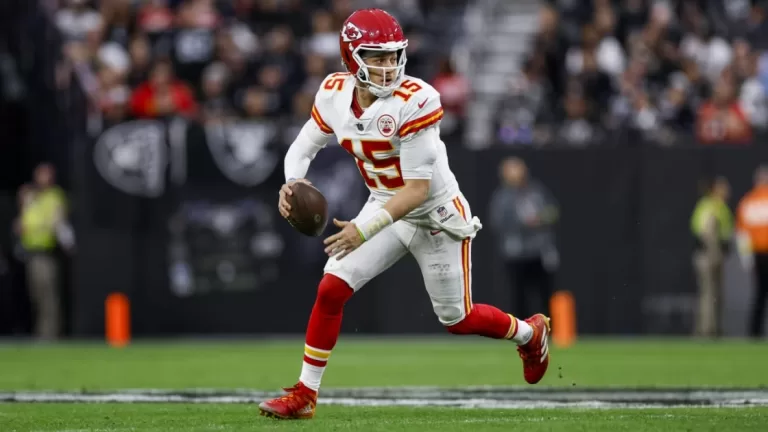
  1. Chiefs take care of business for AFC’s No. 1 seed. Kansas City will enter the playoffs on a five-game winning streak, but it hasn’t gone unnoticed that the team has played down to competition lately. That was not the case Saturday with a first-round bye on the line. After winning two games against the Broncos by a total of nine points and escaping a one-possession game against the lowly two-win Texans during their current streak, the Chiefs fired on all cylinders in Las Vegas. The Patrick Mahomes-led offense opened a big lead early by scoring three touchdowns on its first four drives and played turnover-free football throughout, which has been a problem for a unit that is tied for 26th-worst in giving the ball away. The defense flashed, as well, totaling six sacks and forcing two turnovers while holding rushing leader Josh Jacobs to just 45 yards on the ground. Even Harrison Butker, who is enduring his worst career year in field goal percentage (75) and extra-point percentage (92.7), connected on a 44-yard field goal and all four extra points. It was total domination and a reset heading into postseason play. Best of all, the Chiefs guaranteed they’ll go a fifth consecutive year without playing a road playoff game.
  2. No one has more fun than the Chiefs on offense. A lot of the entertainment factor comes purely from the success. Kansas City has the No. 1 offense in scoring, passing yards and yards per play. But there’s also the way the Chiefs go about racking up their highlights and accolades. Seemingly no play call or formation is too ridiculous to try if it might provide an edge. Beyond the creative deliveries to pass catchers and an affinity for goal-line shovel passes — Jerick McKinnon collected one for the first score of the game — the most eye-catching snap of Saturday’s game didn’t count. On a play Mahomes revealed to ESPN’s Laura Rutledge as “Snow Globe” after the game, Kansas City’s offense played Ring Around the Rosie in the huddle to delay revealing who would line up where before McKinnon took a direct snap and tossed the ball out right to Mahomes. Mahomes then threw the ball back across the field to Kadarius Toney, who broke a tackle and weaved through traffic for a 9-yard score. When a holding call erased the touchdown, Toney punched it in again with an 11-yard run on the very next play. There’s that success element again.
  3. Raiders go out with a whimper, face big decisions. Las Vegas offered little resistance in its fifth consecutive loss to Kansas City. The defense allowed 349 yards and 31 points, and the offense didn’t score its lone touchdown until midway through the fourth quarter. It culminated in a quiet, disappointing end to head coach Josh McDaniels’ first year at the helm. Now, franchise-altering questions await in the offseason. Although stifled on Saturday with just 45 rushing yards, Jacobs finished the game with a 205-yard lead over Nick Chubb for the 2022 rushing yards title, a stellar achievement considering Las Vegas declined his fifth-year option ahead of the season. The Raiders will either need to pay up for an extension or apply the franchise tag in order to keep the Pro Bowler now. Quarterback Jarrett Stidham played adequately in his second start with 210 yards and a touchdown but fumbled twice (one lost) and threw a pick. He represented himself as more of a reliable backup than “the guy” for an offense with Davante Adams at its disposal if Derek Carr truly is moving on. The Raiders will enter the offseason with the ninth-most salary cap space, per Over the Cap, but there’s also plenty of need for big swings to rectify a 26th-ranked defense. Where, and to whom, does all the money go? Those decisions are the storyline now for the 6-11 Raiders.

Next Gen Stat of the game: Kansas City’s defense pressured the QB on 45.2% of dropbacks, the highest rate in a game for the Chiefs in the past three seasons.

NFL Research: Patrick Mahomes now holds the NFL record for most offensive yards in a single season with 5,614 (5,250 passing, 358 rushing and six receiving).

Read More Bobby Kownack

How to watch Seahawks vs. Rams: NFL live stream info, TV channel, time, game odds


 How to watch Seahawks vs. Rams: NFL live stream info, TV channel, time, game odds

How to watch Seahawks vs. Rams football game

Who’s Playing

Los Angeles @ Seattle

Current Records: Los Angeles 5-11; Seattle 8-8

What to Know

The Seattle Seahawks and the Los Angeles Rams will face off in an NFC West clash at 4:25 p.m. ET Jan. 8 at Lumen Field. Seattle will be strutting in after a victory while Los Angeles will be stumbling in from a defeat.

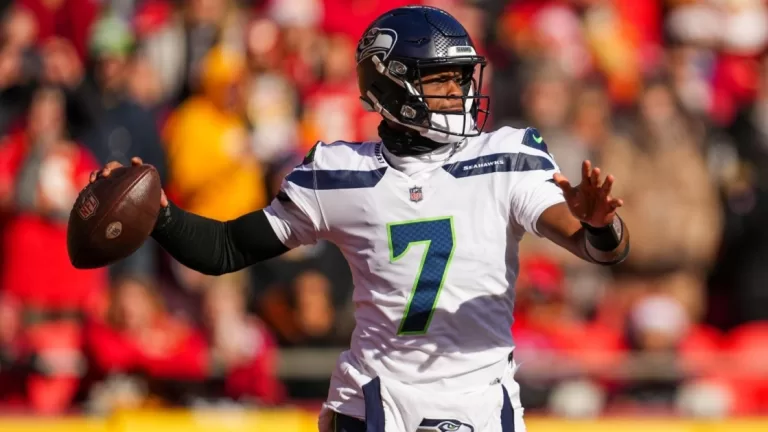
You can’t lose the matchup if you win every quarter, and that was precisely the Seahawks’ strategy against the New York Jets last week. Seattle strolled past New York with points to spare, taking the game 23-6. The team ran away with 17 points in the first half and mostly just sat on those in the second to pick up the win. RB Kenneth Walker III and QB Geno Smith were among the main playmakers for Seattle as the former picked up 133 yards on the ground on 23 carries and the latter passed for two TDs and 183 yards on 29 attempts. Smith ended up with a passer rating of 137.80.

Special teams collected 11 points for Seattle. K Jason Myers delivered a perfect 3-for-3 game.

Meanwhile, 2023 “welcomed” the Rams with a 31-10 beatdown courtesy of the Los Angeles Chargers last week. QB Baker Mayfield had a memorable game, but not in the way you want to be remembered: besides failing to produce a single touchdown, he fumbled the ball once with only 132 yards passing. Mayfield ended up with a passer rating of 116.30.

Los Angeles is now 5-11 while the Seahawks sit at 8-8. Los Angeles has been eliminated from playoff contention. Seattle is still in the hunt for a spot in the playoffs, so these next one game are critical for them.

Seattle is the favorite in this one, with an expected 6.5-point margin of victory. But bettors beware: they are only 1-4 against the spread when favored.

A couple stats to keep an eye on: The Seahawks are stumbling into the contest with the third most rushing yards allowed per game in the league, having given up 150.5 on average. The Rams have experienced some struggles of their own as they are fourth worst in the NFL in rushing yards per game, with only 94.7 on average. It’s possible one of these Achilles’ heels will wind up tripping the losing team up.

How To Watch

  • When: Sunday at 4:25 p.m. ET
  • Where: Lumen Field — Seattle, Washington
  • TV: FOX
  • Online streaming: fuboTV (Try for free. Regional restrictions may apply.)
  • Follow: CBS Sports App

Odds

The Seahawks are a solid 6.5-point favorite against the Rams, according to the latest NFL odds.

Over/Under: -110

See NFL picks for every single game, including this one, from SportsLine’s advanced computer model. Get picks now.

Series History

Los Angeles have won 11 out of their last 16 games against Seattle.

  • Dec 04, 2022 – Seattle 27 vs. Los Angeles 23
  • Dec 21, 2021 – Los Angeles 20 vs. Seattle 10
  • Oct 07, 2021 – Los Angeles 26 vs. Seattle 17
  • Jan 09, 2021 – Los Angeles 30 vs. Seattle 20
  • Dec 27, 2020 – Seattle 20 vs. Los Angeles 9
  • Nov 15, 2020 – Los Angeles 23 vs. Seattle 16
  • Dec 08, 2019 – Los Angeles 28 vs. Seattle 12
  • Oct 03, 2019 – Seattle 30 vs. Los Angeles 29
  • Nov 11, 2018 – Los Angeles 36 vs. Seattle 31
  • Oct 07, 2018 – Los Angeles 33 vs. Seattle 31
  • Dec 17, 2017 – Los Angeles 42 vs. Seattle 7
  • Oct 08, 2017 – Seattle 16 vs. Los Angeles 10
  • Dec 15, 2016 – Seattle 24 vs. Los Angeles 3
  • Sep 18, 2016 – Los Angeles 9 vs. Seattle 3
  • Dec 27, 2015 – Los Angeles 23 vs. Seattle 17
  • Sep 13, 2015 – Los Angeles 34 vs. Seattle 31


Our Latest Stories

Read More Scout Staff

How to watch Eagles vs. Giants: NFL live stream info, TV channel, time, game odds


How to watch Eagles vs. Giants: NFL live stream info, TV channel, time, game odds

How to watch Eagles vs. Giants football game

Who’s Playing

New York @ Philadelphia

Current Records: New York 9-6-1; Philadelphia 13-3

What to Know

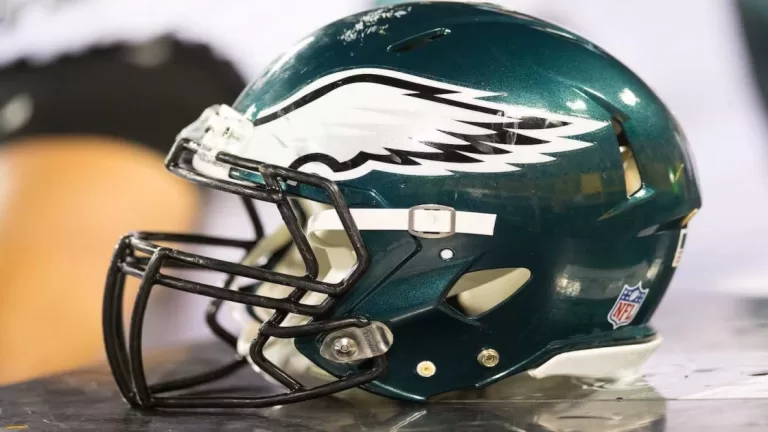
The Philadelphia Eagles are 10-3 against the New York Giants since November of 2016, and they’ll have a chance to extend that success on Sunday. Philadelphia and New York will face off in an NFC East battle at 4:25 p.m. ET at Lincoln Financial Field. The Eagles are the favorites here — although they were the favorites in their last game, too, so the odds might count for a little less.

Philadelphia came up short against the New Orleans Saints last week, falling 20-10. The losing side was boosted by WR A.J. Brown, who caught four passes for one TD and 97 yards. Near the top of the highlight reel was Gardner Minshew’s 78-yard TD bomb to Brown in the third quarter.

Meanwhile, New York made easy work of the Indianapolis Colts last week and carried off a 38-10 win. With New York ahead 24-3 at the half, the matchup was all but over already. Their QB Daniel Jones did his thing and passed for two TDs and 177 yards on 24 attempts in addition to rushing for two TDs and 91 yards. Jones ended up with a passer rating of 168.60.

This next contest looks promising for the Eagles, who are favored by a full 14 points. They have failed bettors playing the spread in their past three games, so buyers beware.

Philadelphia is now 13-3 while the Giants sit at 9-6-1. New York is 4-4 after wins this year, and Philadelphia is 1-1 after losses.

How To Watch

  • When: Sunday at 4:25 p.m. ET
  • Where: Lincoln Financial Field — Philadelphia, Pennsylvania
  • TV: CBS
  • Follow: CBS Sports App

Odds

The Eagles are a big 14-point favorite against the Giants, according to the latest NFL odds.

Over/Under: -110

See NFL picks for every single game, including this one, from SportsLine’s advanced computer model. Get picks now.

Series History

Philadelphia have won 12 out of their last 15 games against New York.

  • Dec 11, 2022 – Philadelphia 48 vs. New York 22
  • Dec 26, 2021 – Philadelphia 34 vs. New York 10
  • Nov 28, 2021 – New York 13 vs. Philadelphia 7
  • Nov 15, 2020 – New York 27 vs. Philadelphia 17
  • Oct 22, 2020 – Philadelphia 22 vs. New York 21
  • Dec 29, 2019 – Philadelphia 34 vs. New York 17
  • Dec 09, 2019 – Philadelphia 23 vs. New York 17
  • Nov 25, 2018 – Philadelphia 25 vs. New York 22
  • Oct 11, 2018 – Philadelphia 34 vs. New York 13
  • Dec 17, 2017 – Philadelphia 34 vs. New York 29
  • Sep 24, 2017 – Philadelphia 27 vs. New York 24
  • Dec 22, 2016 – Philadelphia 24 vs. New York 19
  • Nov 06, 2016 – New York 28 vs. Philadelphia 23
  • Jan 03, 2016 – Philadelphia 35 vs. New York 30
  • Oct 19, 2015 – Philadelphia 27 vs. New York 7


Our Latest Stories

Read More Scout Staff

Broncos vs. Chargers: How to watch, schedule, live stream info, game time, TV channel


Broncos vs. Chargers: How to watch, schedule, live stream info, game time, TV channel

How to watch Broncos vs. Chargers football game

Who’s Playing

Los Angeles @ Denver

Current Records: Los Angeles 10-6; Denver 4-12

What to Know

The Denver Broncos will be returning home after a two-game road trip. Denver and the Los Angeles Chargers will face off in an AFC West battle at 4:25 p.m. ET on Sunday at Empower Field at Mile High. Los Angeles will be strutting in after a win while the Broncos will be stumbling in from a loss.

It was close but no cigar for Denver as they fell 27-24 to the Kansas City Chiefs last week. Denver’s defeat came about despite a quality game from QB Russell Wilson, who passed for one TD and 222 yards on 38 attempts in addition to punching in two rushing touchdowns. Wilson ended up with a passer rating of 120.90. Wilson’s sharp performance set his single-game rushing touchdown high for the season.

Meanwhile, the Chargers made easy work of the Los Angeles Rams last week and carried off a 31-10 victory. It was another big night for Los Angeles’ RB Austin Ekeler, who rushed for two TDs and 122 yards on ten carries. One of the most memorable plays of the contest was Ekeler’s 72-yard touchdown rush down the right side of the field in the second quarter.

Los Angeles is now 10-6 while the Broncos sit at 4-12. Los Angeles has clinched a playoff berth as the current fifth seed in the AFC. Denver has been eliminated from playoff contention.

This next matchup is expected to be close, with Denver going off at just a 2.5-point favorite. But bettors beware: they are only 1-6 against the spread when favored.

Two offensive stats to keep in the back of your head while watching: The Broncos are stumbling into the game with the third fewest overall offensive touchdowns in the NFL, having accrued only 25 on the season. The Chargers have experienced some struggles of their own as they are third worst in the league in rushing yards per game, with only 91.6 on average. It’s possible one of these Achilles’ heels will wind up tripping the losing team up.

How To Watch

  • When: Sunday at 4:25 p.m. ET
  • Where: Empower Field at Mile High — Denver, Colorado
  • TV: CBS
  • Follow: CBS Sports App

Odds

The Broncos are a slight 2.5-point favorite against the Chargers, according to the latest NFL odds.

Over/Under: -107

See NFL picks for every single game, including this one, from SportsLine’s advanced computer model. Get picks now.

Series History

Denver have won nine out of their last 15 games against Los Angeles.

  • Oct 17, 2022 – Los Angeles 19 vs. Denver 16
  • Jan 02, 2022 – Los Angeles 34 vs. Denver 13
  • Nov 28, 2021 – Denver 28 vs. Los Angeles 13
  • Dec 27, 2020 – Los Angeles 19 vs. Denver 16
  • Nov 01, 2020 – Denver 31 vs. Los Angeles 30
  • Dec 01, 2019 – Denver 23 vs. Los Angeles 20
  • Oct 06, 2019 – Denver 20 vs. Los Angeles 13
  • Dec 30, 2018 – Los Angeles 23 vs. Denver 9
  • Nov 18, 2018 – Denver 23 vs. Los Angeles 22
  • Oct 22, 2017 – Los Angeles 21 vs. Denver 0
  • Sep 11, 2017 – Denver 24 vs. Los Angeles 21
  • Oct 30, 2016 – Denver 27 vs. Los Angeles 19
  • Oct 13, 2016 – Los Angeles 21 vs. Denver 13
  • Jan 03, 2016 – Denver 27 vs. Los Angeles 20
  • Dec 06, 2015 – Denver 17 vs. Los Angeles 3


Our Latest Stories

Read More Scout Staff

A lecturer showed a painting of the Prophet Muhammad. She lost her job.


National

After an outcry over the art history class by Muslim students, Hamline University officials said the incident was Islamophobic. But many scholars say the work is a masterpiece.

Hamline is a small, private university with about 1,800 undergraduates. Jenn Ackerman for The New York Times

By Vimal Patel, New York Times Service

Erika López Prater, an adjunct professor at Hamline University, in St. Paul, Minnesota, said she knew that many Muslims have deeply held religious beliefs that prohibit depictions of the Prophet Muhammad. So, last semester for a global art history class, she took many precautions before showing a 14th-century painting of Islam’s founder.

In the syllabus, she warned that images of holy figures, including Muhammad and the Buddha, would be shown in the course. She asked students to contact her with any concerns, and she said no one did.

In class, she prepped students, telling them that in a few minutes, the painting would be displayed, in case anyone wanted to leave.

Then López Prater showed the image — and lost her teaching gig.

Officials at the small private university, with about 1,800 undergraduates, had tried to douse what they feared would become a runaway fire. Instead they ended up with what they had tried to avoid: a national controversy, which pitted advocates of academic liberty and free speech against Muslims who believe that showing the image of Muhammad is always sacrilegious.

After López Prater showed the image, a senior in the class complained to the administration. Other Muslim students, not in the course, supported the student, saying the class was an attack on their religion. They demanded that officials take action.

Officials told López Prater that her services next semester were no longer needed. In emails to students and faculty, they said the incident was clearly Islamophobic. Hamline’s president, Fayneese Miller, co-signed an email that said respect for the Muslim students “should have superseded academic freedom.” At a town hall, an invited Muslim speaker compared showing the images to teaching that Adolf Hitler was good.

Free-speech supporters started their own campaign. An Islamic art historian wrote an essay defending López Prater and started a petition demanding the university’s board investigate the matter. It had more than 2,800 signatures. Free-speech groups and publications issued blistering critiques; PEN America called it “one of the most egregious violations of academic freedom in recent memory.” And Muslims themselves debated whether the action was Islamophobic.

Arguments over academic freedom have been fought on campuses for years, but they can be especially fraught at small private colleges such as Hamline, which are facing shrinking enrollment and growing financial pressures. To attract applicants, many of these colleges have diversified their curriculums and tried to be more welcoming to students who have been historically shut out of higher education.

Meanwhile, professors everywhere often face pushback for their academic decisions from activist students or conservative lawmakers.

López Prater’s situation was especially precarious. She is an adjunct, one of higher education’s underclass of teachers, working for little pay and receiving few of the workplace protections enjoyed by tenured faculty members.

University officials and administrators all declined interviews. But Miller defended the decision in a statement.

“To look upon an image of the Prophet Muhammad, for many Muslims, is against their faith,” Miller’s statement said, adding, “It was important that our Muslim students, as well as all other students, feel safe, supported and respected both in and out of our classrooms.”

In a December interview with the school newspaper, the student who complained to the administration, Aram Wedatalla, described being blindsided by the image.

“I’m like, ‘This can’t be real,’” said Wedatalla, who in a public forum described herself as Sudanese. “As a Muslim and a Black person, I don’t feel like I belong, and I don’t think I’ll ever belong in a community where they don’t value me as a member, and they don’t show the same respect that I show them.”

Todd Green, who has written books about Islamophobia, said the conflict at Hamline was “tragic” because administrators pitted natural allies — those concerned about stereotypes of Muslims and Islam — against one another.

The administration, he said, “closed down conversation when they should have opened it up.”

The image in question

The painting shown in López Prater’s class is in one of the earliest Islamic illustrated histories of the world, “A Compendium of Chronicles,” written during the 14th century by Rashid-al-Din (1247-1318).

Shown regularly in art history classes, the painting shows the winged and crowned angel Gabriel pointing at Muhammad and delivering to him the first Quranic revelation. Muslims believe that the Quran is composed of the words of Allah dictated to Muhammad through Gabriel.

The image is “a masterpiece of Persian manuscript painting,” said Christiane Gruber, a professor of Islamic art at the University of Michigan. It is housed at the University of Edinburgh; similar paintings have been on display at places such as the Metropolitan Museum of Art. And a sculpture of the prophet is at the Supreme Court.

Gruber said that showing Islamic art and depictions of Muhammad have become more common in academia, because of a push to “decolonize the canon” — that is, expand curriculum beyond a Western model.

Gruber, who wrote the essay in New Lines Magazine defending López Prater, said that studying Islamic art without the Compendium of Chronicles image “would be like not teaching Michaelangelo’s David.”

Yet, most Muslims believe that visual representations of Muhammad should not be viewed, even if the Quran does not prohibit them. The prohibition stems from the belief that an image of Muhammad could lead to worshipping the prophet rather than the God he served.

There are, however, a range of beliefs. Some Muslims distinguish between respectful depictions and mocking caricatures, while others do not subscribe to the restriction at all.

Omid Safi, a professor of Asian and Middle Eastern Studies at Duke University, said he regularly shows images of Muhammad in class and without López Prater’s opt-out mechanisms. He explains to his students that these images were works of devotion created by pious artists at the behest of devout rulers.

“That’s the part I want my students to grapple with,” Safi said. “How does something that comes from the very middle of the tradition end up being received later on as something marginal or forbidden?”

A warning is given

López Prater, a self-described art nerd, said she knew about the potential for conflict on Oct. 6, when she began her online lecture with 30 or so students.

She said she spent a few minutes explaining why she was showing the image, how different religions have depicted the divine and how standards change over time.

“I do not want to present the art of Islam as something that is monolithic,” she said in an interview, adding that she had been shown the image as a graduate student. She also showed a second image, from the 16th century, which depicted Muhammad wearing a veil.

López Prater said that no one in class raised concerns, and there was no disrespectful commentary.

After the class ended, Wedatalla, a business major and president of the university’s Muslim Student Association, stuck around to voice her discomfort.

Immediately afterward, López Prater sent an email to her department head, Allison Baker, about the encounter; she thought that Wedatalla might complain.

Baker, chair of the digital and studio art department, responded to the email 4 minutes later.

“It sounded like you did everything right,” Baker said. “I believe in academic freedom so you have my support.”

As López Prater predicted, Wedatalla reached out to administrators. López Prater, with Baker’s help, wrote an apology, explaining that sometimes “diversity involves bringing contradicting, uncomfortable and coexisting truths into conversation with each other.”

Wedatalla declined an interview request, and did not explain why she had not raised concerns before the image was shown. But in an email statement, she said images of Muhammad should never be displayed and that López Prater gave a trigger warning precisely because she knew such images were offensive to many Muslims. The lecture was so disturbing, she said, that she could no longer see herself in that course.

Four days after the class, López Prater was summoned to a video meeting with the dean of the College of Liberal Arts, Marcela Kostihova.

Kostihova compared showing the image to using a racial epithet for Black people, according to López Prater.

“It was very clear to me that she had not talked to any art historians,” López Prater said.

A couple of weeks later, the university rescinded its offer to López Prater to teach next semester.

López Prater said she was ready to move on. She had teaching jobs at other schools. But on Nov. 7, David Everett, vice president for inclusive excellence, sent an email to all university employees, saying that certain actions taken in an online class were “undeniably inconsiderate, disrespectful and Islamophobic.”

The administration, after meeting with the school’s Muslim Student Association, would host an open forum “on the subject of Islamophobia,” he wrote.

López Prater, who had only begun teaching at Hamline in the fall, said she felt as if a bucket of ice water had been dumped over her head, but the shock soon gave way to “blistering anger at being characterized in those terms by somebody who I have never even met or spoken with.” She reached out to Gruber, who ended up writing the essay and starting the petition.

An emotional forum

At the Dec. 8 forum, which was attended by several dozen students, faculty and administrators, Wedatalla described, often through tears, how she felt seeing the image.

“Who do I call at 8 a.m.,” she asked, when “you see someone disrespecting and offending your religion?”

Other Muslim students on the panel, all Black women, also spoke tearfully about struggling to fit in at Hamline. Students of color in recent years had protested what they called racist incidents; the university, they said, paid lip service to diversity and did not support students with institutional resources.

The main speaker was Jaylani Hussein, executive director of the Minnesota chapter of the Council on American-Islamic Relations, a Muslim civil rights group.

The instructor’s actions, he said, hurt Muslim students and students of color and had “absolutely no benefit.”

“If this institution wants to value those students,” he added, “it cannot have incidents like this happen. If somebody wants to teach some controversial stuff about Islam, go teach it at the local library.”

Mark Berkson, a religion professor at Hamline, raised his hand.

“When you say, ‘Trust Muslims on Islamophobia,’” Berkson asked, “what does one do when the Islamic community itself is divided on an issue? Because there are many Muslim scholars and experts and art historians who do not believe that this was Islamophobic.”

Hussein responded that there were marginal and extremist voices on any issue. “You can teach a whole class about why Hitler was good,” Hussein said.

During the exchange, Baker, the department head, and Everett, the administrator, separately walked up to the religion professor, put their hands on his shoulders and said this was not the time to raise these concerns, Berkson said in an interview.

But Berkson, who said he was a strong supporter of campus diversity, said he felt compelled to speak up.

“We were being asked to accept, without questioning, that what our colleague did — teaching an Islamic art masterpiece in a class on art history after having given multiple warnings — was somehow equivalent to mosque vandalism and violence against Muslims and hate speech,” Berkson said. “That is what I could not stand.”

In interviews, several Islamic art scholars took issue with the idea that López Prater’s intent was to disrespect the prophet, and said that it was nothing like the cartoons in Charlie Hebdo, a French satirical magazine that had reprinted mocking cartoons of Muhammad. That led to the deadly 2015 attack at the magazine’s offices, which the scholars also denounced.

Edward Ahmed Mitchell, deputy executive director of the national chapter of the Council on American-Islamic Relations, said he did not have enough information to comment on the Hamline dispute. But while his group discourages visual depictions of the prophet, he said there was a difference between an act that was un-Islamic and one that was Islamophobic.

“If you drink a beer in front of me, you’re doing something that is un-Islamic, but it’s not Islamophobic,” he said. “If you drink a beer in front of me because you’re deliberately trying to offend me, well, then, maybe that has an intent factor.”

“Intent and circumstances matter,” he said, “especially in a university setting, where academic freedom is critical and professors often address sensitive and controversial topics.”

Safi, the Duke professor, said Hamline had effectively taken sides in a debate among Muslims. Students “don’t have to give up their values,” he added. “But some part of the educational process does call for stepping beyond each one of our vantage points enough to know that none of us have the monopoly on truth.”

Safi has his own personal image of the prophet. When he was 14, his family fled to the United States from Tehran during the Iran-Iraq war. He packed an image of Muhammad holding a Quran into one of the family’s few suitcases.

That image now hangs on his wall at home.

This article originally appeared in The New York Times.

Read More
New York Times Service

La théorie d’Alain Connes unifie-t-elle les forces dans les pas d’Heisenberg et Einstein ? Ses explications.

Science & Nature

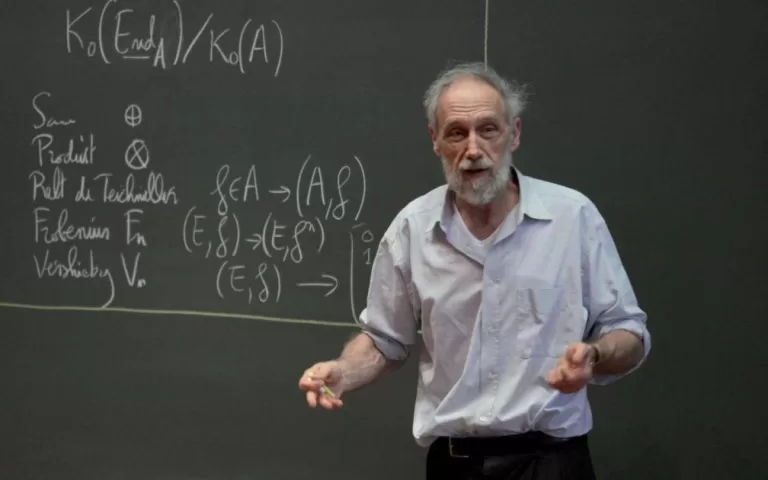
Comme le prix Nobel de physique Roger Penrose, également mathématicien, le lauréat de la médaille Fields de mathématique Alain Connes, un des plus grands mathématiciens de notre temps, utilise des théories géométriques avancées pour explorer les lois physiques fondamentales de la Nature. Futura a eu l’occasion de l’interviewer avec aussi Abhay Ashtekar et Jean-Pierre Luminet lors d’un symposium organisé par la Fondation Archimedes.SIE, en octobre 2022 à Saint-Raphaël.

Alain Connes, mathématicien et physicien théoricien dans la lignée de Laplace et Poincaré, est lauréat de la médaille Fields en mathématique, une distinction que l’on présente souvent comme l’équivalent de ce que serait un prix Nobel de mathématique.

Elle lui a été attribuée pour des travaux que le site de l’International Mathematical Union (qui décerne les médailles Fields) mentionne en ces termes, sa « contribution à la théorie des algèbres d’opérateurs, en particulier à la classification générale au théorèmethéorème de structure des facteurs de type III, la classification des automorphismes du facteur hyperfini, la classification des facteurs injectifs et les applicationsapplications de la théorie des C*-algèbres aux feuilletages et à la géométrie différentielle en général ».

Il est également lauréat du prix Crafoord (2001) et de la médaille d’or du CNRS (2004), Professeur émérite au Collège de France et à l’Institut des hautes études scientifiques où a travaillé le légendaire Alexandre Grothendieck, lauréat comme lui de la médaille Fields.

Il est probablement plus connu du grand public cultivé en mathématique et en physiquephysique théorique pour sa découverte d’une nouvelle forme de géométrie, inspirée par les lois de la mécanique quantique et ses travaux sur les algèbres d’opérateur, et que l’on appelle la géométrie non commutative. Cette géométrie l’a conduit à suivre les pas d’Einstein et de Heisenberg à la recherche d’une théorie unifiée des forces et des particules fondamentales de la Nature.

Mais le grand public français l’a probablement découvert avec le livre qu’il avait écrit avec le neurobiologiste Jean-Pierre Changeux, intitulé Matière à penser, et qui explorait notamment des questions millénaires : Quels sont les rapports entre les mathématiques et le réel ? Découvrons-nous ou inventons-nous les mathématiques ? Plus récemment, ce même grand public a pu lire de lui deux romans co-écrits avec Danye Chéreau et Jacques Dixmier : Le Théâtre quantique et Le Spectre d’Atacama. Dans Le Théâtre quantique il est fait mention du phénomène d’intrication quantique, phénomène qui a été dans l’actualité du mois d’octobre 2022 puisqu’il a valu au Français Alain Aspect le prix Nobel de physique.

Lors d’une série d’interviews avec aussi Abhay Ashtekar et Jean-Pierre LuminetJean-Pierre Luminet, nous avons eu la chance de poser plusieurs questions à Alain Connes sur ses travaux concernant aussi bien son exploration du monde mathématique que celle du monde physique.

Les réponses qu’il nous a données sont un point de départ pour explorer plus en avant les perspectives ouvertes par ses travaux dans trois articles que nous avions consacrés à la géométrie non commutative et ses implications pour la physique des particules élémentairesphysique des particules élémentaires et la gravitation quantiquegravitation quantique.

Futura avait écrit ces articles avec l’aide du physicienphysicien et mathématicien Pierre Martinetti :

Dans l’interview d’Alain Connes réalisée par Futura, nous lui avions posé les questions suivantes auxquelles il a répondu dans la vidéo d’introduction de cet article.

1. La géométrie d’EuclideEuclide à Descartes fait usage d’opérations dont on dit qu’elles commutent, ce qui signifie concrètement que l’ordre ne compte pas lorsque l’on fait l’addition ou le produit de deux nombres pour calculer des longueurs, des surfaces ou encore des angles. Mais la mécanique quantique de Heisenberg décrivant notamment le monde des atomesatomes en interaction avec la lumièrelumière fait usage en quelque sorte de nombres nouveaux dont le produit ne commute pas forcément.

Vous avez utilisé ce fait pour découvrir une nouvelle géométrie tout naturellement appelée géométrie non commutative. Pour le profane, cela peut sembler très obscur mais n’existe-t-il pas des situations de la vie de tous les jours où l’on peut saisir intuitivement et concrètement qu’une certaine forme de non-commutativité intervient ?     

2. Einstein a cherché à la fin de sa vie à généraliser sa théorie relativiste de la gravitation pour unifier la force électromagnétique avec la force de gravitation, en utilisant notamment des théories géométriques nouvelles. Mais le XXe siècle a abondamment démontré que le monde était fondamentalement quantique. Est-il donc possible d’imaginer unifier la physique en utilisant une géométrie non commutative justement inspirée du monde quantique ?    

3. Quelles sont les prédictions d’une telle théorie que l’on peut espérer tester, par exemple avec des accélérateurs de particules, via le boson de Higgsboson de Higgs ?

4. On ne peut pas décider a priori de quoi est capable la connaissance humaine, on ne peut avoir que des théories à son sujet plus ou moins confortées par l’expérience. Pensez-vous que l’histoire des mathématiques et de la physique au cours du XXe siècle a fortement fourni des faits permettant de penser que la théorie à ce sujet la plus raisonnable est bien que nous n’inventons pas les mathématiques et que, jusqu’à un certain point, le monde physique est construit à partir de formes mathématiques comme le pensait Platon ?     

Pour finir, quelques réflexions et indications de chemins à explorer pour ceux qui voudraient aller plus loin en disposant déjà d’un certain bagage en mathématique et physique.

Une axiomatisation algébrique de la théorie quantique des champs, de von Neuman à Haag

Dans son célèbre ouvrage Récoltes et semailles. Réflexions et témoignages sur un passé de mathématicien (chapitre 2, § 7, note 20), Alexandre Grothendieck fait référence aux « somnambules » d’Arthur Koestler, ces chercheurs qui tombent sur des découvertes fondamentales en science sans savoir vraiment comment, ni sans prendre vraiment conscience de toute la signification de ce qu’ils ont découvert en marchant comme un somnambule guidé inconsciemment par un contact avec le monde des idées de Platon.

C’est incontestablement ce qui est arrivé en 1925 à Werner HeisenbergWerner Heisenberg alors qu’il était sur l’île de Helgoland (voir à ce sujet l’interview de Carlo Rovelli pour Futura) et qu’il est tombé sur une formulation algébrique des équations fondamentales de la mécanique quantique. C’était une formulation alternative à celle qui allait bientôt émerger des travaux de Erwin SchrödingerErwin Schrödinger sur les ondes de matièrematière de Louis de BroglieLouis de Broglie, formulation beaucoup plus intuitive et basée sur la théorie des équations aux dérivées partielles de la physique mathématique classique exposée avec maestria à ce moment-là, et toute prête à l’emploi, dans deux célèbres volumes d’un traité dont la rédaction avait été menée sous la direction de Richard Courant et David Hilbert.

Les deux formulations sont équivalentes pour bien des problèmes simples de mécanique quantique rencontrés en physique atomique et moléculaire, mais parfois plus vraiment en théorie quantique des champs de particules élémentaires où certaines questions sont plus rigoureusement abordées d’un point de vue purement algébrique et sans référence à des images issues de la physique classique.

Des questions mathématiques se posaient dans les deux formulations et un traitement plus profond était nécessaire, ce qui a conduit le grand mathématicien von Neumann à mobiliser des outils que l’on devait à l’école allemande des mathématiques autour de Hilbert, mais aussi de l’école polonaise autour de Stefan BanachStefan Banach, à savoir l’algèbre moderne à la van der Waerden, la théorie des espaces de Hilbert et des opérateurs linéaires en analyse fonctionnelle qui vont avec. Il en résulta le mythique traité de von Neumann sur les fondements mathématiques de la mécanique quantique, mais aussi des articles de von Neumann sur les algèbres d’opérateurs qui influenceront la création de ce que l’on appelle la théorie algébrique des champs quantiques à laquelle plusieurs noms seront associés comme, par exemple, ceux de Irving Segal et Rudolf Haag.

D’une certaine façon, von Neumann avait cherché à faire un travail d’axiomatisation et une mise en forme rigoureuse d’une sorte de nouveau calcul pour la physique quantique qui représenterait un bond aussi considérable que l’avait été la découverte du calcul infinitésimal par NewtonNewton et Leibnitz, calcul dont une formulation plus rigoureuse n’avait été trouvée qu’au XIXe siècle avec notamment les travaux de Weierstrass. C’est ainsi que von Neumann a fait la découverte des algèbres portant son nom et qu’Alain Connes va en tirer ensuite sa théorie de la géométrie non commutative.
 

Read More
Qiana Motsinger

Damar Hamlin’s Collapse Highlights the Violence Black Men Experience in Football


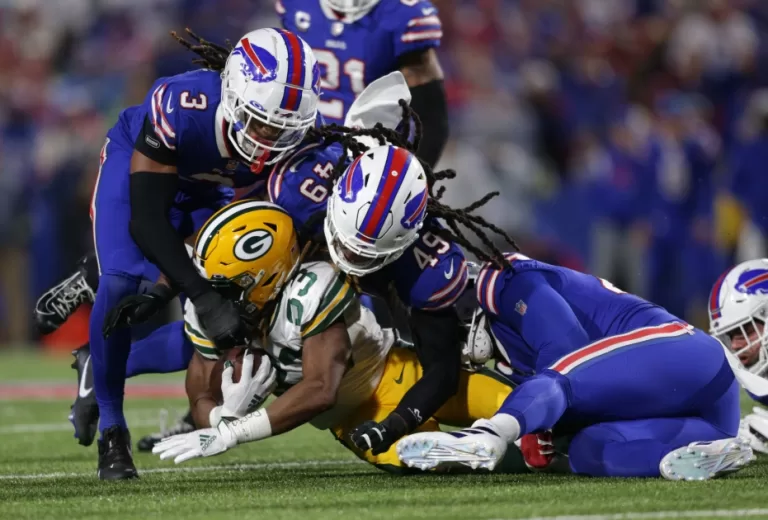
Football players Damar Hamlin, Tremaine Edmunds and Von Miller of the Buffalo Bills tackle Aaron Jones of the Green Bay Packers during the second quarter of a game at Highmark Stadium in Orchard Park, N.Y., on October 30, 2002. Credit: Joshua Bessex/Getty Images
National Football League (NFL), executed a seemingly routine tackle during a highly anticipated Monday Night Football game. Immediately after, Hamlin rose to his feet and then collapsed. Players from his team, the Buffalo Bills, and the opposing team, the Cincinnati Bengals, created a tight huddle around him on the field as medical personnel tried to revive him. We learned the next day that Hamlin suffered a cardiac arrest; his heart had suddenly stopped working.

This scene was horrific for both its regularity and its exceptionality. Matt Gutman of ABC tweeted as much: “The scariest part of this is that the hit was in fact not scary. It looked terrifyingly ordinary.” The ordinariness of men running into each other at full speed represents a normalized—even rationalized—violence that is routine to this American game.

This ordinary violence has always riddled the sport and it affects all players. But Black players are disproportionately affected. While Black men are severely underrepresented in positions of power across football organizations, such as coaching and management, they are overrepresented on the gridiron. Non-white players account for 70 percent of the NFL; nearly half of all Division I college football players are Black. Further, through a process called racial stacking, coaches racially segregate athletes by playing position. These demographic discrepancies place Black athletes at a higher risk during play.

As a cultural anthropologist, I’ve spent the last decade learning how Black college football players navigate the exploitation, racism, and anti-Blackness that are fundamental to its current system. I know it’s not new to highlight the inherent violence of American football. This sport requires exceptional athletes, who are otherwise ordinary men, to perform extraordinary feats on the field. We liken these men to gladiators and warriors. The leagues, organizations, teams, coaches, spectators, and fans who benefit from their performance expect them to tough it out when they get hurt and applaud them when they play through these injuries.

Football is a spectacle where excessive violence is mundane, because hits that cause injuries are a constant occurrence, and spectators are desensitized to it. Consumers of the sport assume players will withstand any bodily affront, so they are shocked when a player’s physical limits are exceeded, often on very public stages. People with a vested interest in professional football rationalize excessive violence in this structured space, as well as the ones that encompass college, high school and peewee play, all because they assume that rules, equipment, and regulations exist to prevent death. But this is false protection. While this form of entertainment has been normalized, Hamlin’s injury demonstrates that ordinary violence has potentially deadly consequences, and highlights how Black men’s athletic labor sustains this brutal system.

 Damar Hamlin.
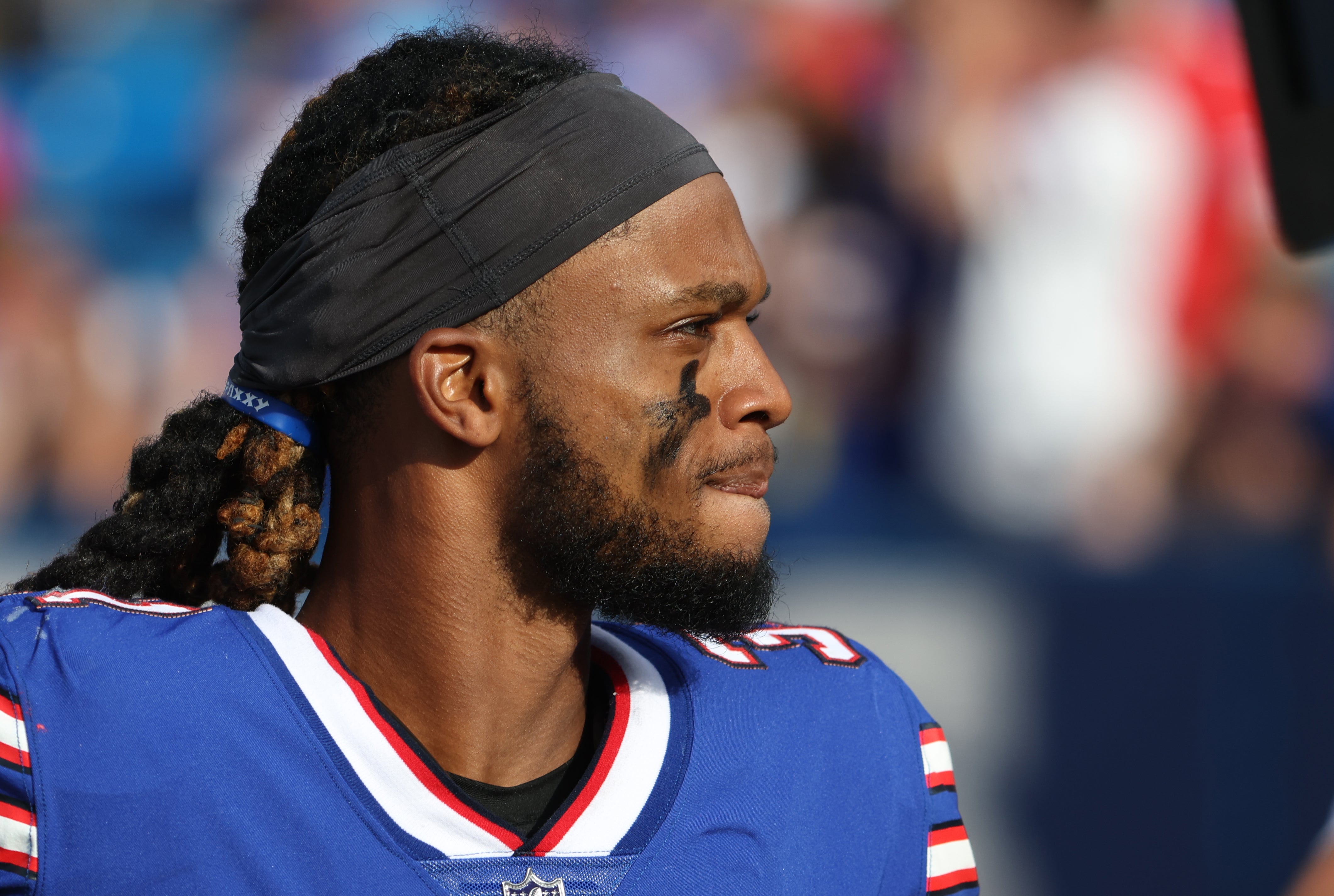
Damar Hamlin (no. 3) of the Buffalo Bills after a game against the Tennessee Titans at Highmark Stadium on September 19, 2022 in Orchard Park, New York. Credit: Timothy T Ludwig/Getty Images

On these playing fields, ones that sociologist Billy Hawkins would argue are never theoretically far from plantation fields, financial stakeholders value Black bodies for their productive potential and physical prowess. The league encourages and facilitates rigorous training and disciplining so players can execute seemingly impossible corporeal demands, all in the service of entertainment, money-making, and insatiable fandom. In the words of sociologist and activist Harry Edwards, “like a piece of equipment, the black athlete is used.” While I am not aware of research that compares the rate of injury between Black and white football players, heatstrokes, ACL and labrum tears, ankle sprains, bone breaks, and concussions are just a few of the consequences of how these bodies are used.

The NFL gains both culturally and financially from Black athletic performance. It is the most popular sports league in the United States andthe most valuable professional sports league in the world. It is also a league that has exploited its Black players for decades. League officials admitted to using race norming—the assumption that Black players have lower baseline cognitive function than white players and suffer less from concussion—in settlements for concussion-related injuries. A former head coach, Brian Flores, has sued the league for racial discrimination in hiring. The NFL’s success and popularity should never be disentangled from its persistent anti-Black practices.

Despite the dismissive arguments of critics that high salaries are payment enough for the injuries that NFL players will likely experience, athletes at other levels don’t have this luxury. Public health scholar Kathleen Bachynski details the risks that have always existed in youth tackle football—but professional play cannot be disconnected from college play since this is where professional talent is cultivated. The college system thrives on unpaid athletes’ labor through a power dynamic that sociologist Erin Hatton terms “status coercion,” as coaches manipulate and exploit players’ work to extract value that ultimately leads to revenue for almost every entity involved, except for players themselves. College players suffer the same injuries as professionals, some of which end careers before they even begin. Yet, there is often little support to help players imagine themselves outside of their athletic identities and to cultivate alternative careers.

The most recent and exaggerated example occurred in fall 2020, during the first season of play during the COVID-19 pandemic.  Beginning in March 2020, there were almost no students on campus, classes shifted to virtual formats, and social distancing became common practice. However, teams and conferences decided football play would continue. Players in all five major Division I conferences risked their health with an unpredictable and sometimes deadly virus to play a high-contact sport in almost empty stadiums to satisfy their universities, as well as television fans and the broadcasters who capitalize off their viewership. If those players hadn’t taken the field, athletic departments could’ve lost at least $4.1 billion in revenue

In a way that is reminiscent of Black feminist scholar Hortense Spillers’ theorization of flesh, these situations demonstrate how organizations, administrators and fans dismiss each player’s personhood, strip them of their humanity and reduce them to mere bodies. No football athlete deserves this treatment. They should not be expected to play after enduring, experiencing and witnessing bodily traumas. Further, to dismiss the almost certain breaking down of their bodies as just part of the game is a process of objectification and commodification that prioritizes the player over the person in a way that Black feminist scholar bell hooks says calls to mind “the history of slavery and the plantation economy.” The anti-Blackness of the system is inescapable. 

Despite the severity of Hamlin’s injury, the current NFL season will continue. The game between the Bills and the Bengals has officially been canceled, and the playoffs will be modified, but predictably, the Super Bowl in February will be followed by the scouting combine in March, the draft in April, and team training camps during the summer, all to prepare for the season to begin again in the fall. But we can’t forget that without players themselves, the game cannot persist. The elaborate infrastructure of the entire system relies upon their continued participation. If we expect these quotidian gladiators to return to the field, structural shifts must occur so they are actually cared for in a way that respects their humanity, as men who just happen to play the game of football exceptionally well.

This is an opinion and analysis article, and the views expressed by the author or authors are not necessarily those of Scientific American.

ABOUT THE AUTHOR(S)

    Tracie Canada is an assistant professor of cultural anthropology at Duke University. Her research uses sport to theorize race, kinship, care, gender and the performing body, and she is currently working on a book project about the experiences of Black college football players. She holds a Ph.D. from the University of Virginia. Follow Tracie Canada on Twitter

    Read More
    Tracie Canada