What just happened? Users often overlook Wi-Fi routers when it comes to security, a mistake that can lead to intrusions, snooping, and other kinds of attacks from malicious actors. Fortunately, Netgear has been on top of things recently with an extensive list of models and firmware versions affected by recently-discovered vulnerabilities.
Owners of Netgear routers including Orbi systems and several Nighthawk models should check if their firmware is the latest version available as soon as possible. The company issued two dozen security alerts in a single day this week, warning users about a wide range of patched vulnerabilities affecting many different router models, range extenders, and Wi-Fi systems.
Netgear doesn’t offer detailed information on how attackers exploit the vulnerabilities it patched, but the company’s alerts label the nature of each one. Their level of severity ranges between medium, high, and critical.
Two of the alerts involve pre-authentication buffer overflow vulnerabilities. Bleeping Computer writes that successful pre-authentication buffer overflow attacks could result in crashes or arbitrary code execution. They’re potentially dangerous because they don’t involve tricking a router’s owner into doing anything. Netgear lists one of these vulnerabilities as high-priority.
Almost half of Netgear’s alerts from this week are for post-authentication command injection vulnerabilities. These require an attacker to gain authentication to enter the system but could let them execute root-level commands once they’re in.
The other vulnerabilities could allow authentication bypass, denial of service attacks, and could leak sensitive information. One alert is for security misconfiguration. Netgear rates at least one alert as critical.
In each alert, Netgear has a list of affected firmware versions and devices large enough that just about anyone with recent Netgear equipment should check their firmware. The right side of each page also includes directions for checking each product’s model number.
The easiest way to update a Netgear device’s firmware is through one of the company’s mobile apps: the Nighthawk app for Nighthawk products, the Orbi app for Orbi systems, and the Insight app for some business devices.
To update firmware over the web, head to the Netgear support page. Start typing your model number and a drop-down list should appear. Click on your model number if it appears in the list, then click “downloads.” Under “Current Versions,” click on the download with a title beginning with “Firmware Version,” then click “Download.” Netgear also includes directions in product manuals, product support pages, and firmware release notes.
HandBrake is a free and open source tool for converting video from nearly any format to a selection of modern, widely supported codecs. HandBrake is a cross-platform application, available for Windows, Mac and Linux.
Is HandBrake a video editor?
HandBrake can crop and resize videos as well as restore old and low-quality videos, but for more powerful editing tools you can try DaVinci Resolve, Shotcut or VSDC Free Video Editor, which are great free options.
Can you use HandBrake to rip DVDs?
Yes, HandBrake can rip any DVD or Blu-Ray discs that are not copy protected.
Can HandBrake compress 4K videos?
Yes, HandBrake can compress any 4K video to reduce video size, while converting the video format at the same time.
Is Handbrake better than FFmpeg?
Both HandBrake and FFmpeg are free and open source, both are compatible with Windows, macOS, and Linux, and both can convert video files. The difference is that Handbrake uses a GUI (graphical user interface) to convert media files, while FFmpeg uses the command line to encode or decode video files. In fact, Handbrake uses FFmpeg internally for conversion. Another difference is that Handbrake supports DVD and Blu-Ray video as input, while FFmpeg does not. Also, Handbrake only offers MKV and MP4 output, while FFmpeg supports many video output formats.
Features
One of HandBrake’s strengths is its ability to open a wide variety of video formats. HandBrake uses FFmpeg under the hood and generally can open whatever FFmpeg will, in addition to disc-based formats like DVD and Blu-ray. HandBrake does not defeat or circumvent copy protection of any kind. It does not work with video files employing Digital Rights Management (DRM).
HandBrake’s software video encoders, video filters, audio encoders, and other processes benefit from fast CPU and memory. HandBrake’s hardware video encoders also benefit from modern GPU hardware.
Built-in Device Presets
Get started with HandBrake in seconds by choosing a profile optimised for your device, or choose a universal profile for standard or high quality conversions. Simple, easy, fast. For those that want more choice, tweak many basic and advanced options to improve your encodes.
Supported Input Sources
Handbrake can process most common multimedia files and any DVD or Blu Ray sources that do not contain any kind of copy protection.
Outputs
File Containers: .MP4(.M4V) and .MKV
Video Encoders: H.265 (x265 and QuickSync), H.264(x264 and QuickSync), H.265 MPEG-4 and MPEG-2, VP8, VP9 and Theora
Audio Encoders: AAC / HE-AAC, MP3, Flac, AC3, or Vorbis
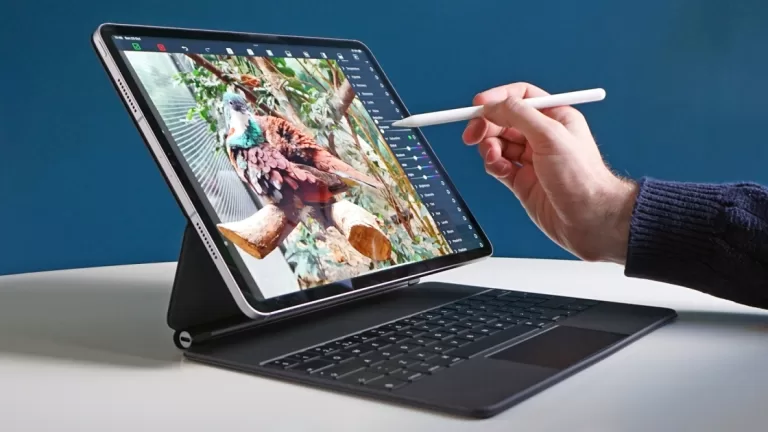
The 12.9-inch iPad Pro updated in 2022 (Image credit: Future)
We last got an iPad Pro refresh in October 2022, when the premium 11-inch and 12.9-inch slates were updated with the Apple M2 processor. According to the rumor mill, those screens will be changing in 2024 when the next models are due to appear.
This comes from display analyst Ross Young, speaking to MacRumors (opens in new tab). First, the display technology will apparently be changing from the IPS LCD LED (11-inch) and IPS LCD mini-LED (12.9-inch) of the current iPad Pros to OLED – just like the flagship iPhones.
That should mean even better screens in terms of contrast and darker blacks, though the panels attached to the current iPad Pro range are already impressive. We’ve been hearing rumors that Apple would switch to OLED on its iPads for some time now.
Changing sizes
There’s also going to be a change in the display sizes, Young says. The 11-inch iPad Pro will become an 11.1-inch iPad Pro, while the 12.9-inch iPad Pro will become a 13-inch iPad Pro – not much of a difference then, but one that’s worth noting.
It’s possible that Apple is going to be able to shrink the bezels on these two premium iPads, so the overall dimensions of the slates would stay the same while the displays get slightly bigger. OLED panels can mean thinner and lighter devices as well.
Additionally, despite earlier leaks suggesting that Apple was working on a super-sized iPad Pro, that’s apparently no longer on the way according to Young. It seems that for the next iteration at least, Apple is going to stick to the two sizes we’ve talked about.
Analysis: making the iPad Pros more Pro
The iPad Pros have always been high-end luxury devices for those with big budgets who need as much power as possible: bear in mind that the entry-level iPad (yours for $449 / £499 / AU$749) does basically everything that the more expensive models do.
Once the switch to OLED is made, that will be another differentiator that will help to justify the high price of the iPad Pro models. Whether these slates will cost the same remains to be seen – but we’re assuming that’s what Apple is going to aim for.
The change in size is less interesting, though Apple clearly wants to keep a large iPad Pro in its range. As well as offering more screen space, it helps to give buyers a reason to consider one of the more expensive tablets rather than the iPad Air.
With these updated tablets apparently getting launched in 2024, it could be a quiet 2023 in terms of Apple tablets. That might give its competitors time to catch up, but it also means there should be a substantial performance boost when the new iPad Pros do appear.
Sign up to get breaking news, reviews, opinion, analysis and more, plus the hottest tech deals!
Dave is a freelance tech journalist who has been writing about gadgets, apps and the web for more than two decades. Based out of Stockport, England, on TechRadar you’ll find him covering news, features and reviews, particularly for phones, tablets and wearables. Working to ensure our breaking news coverage is the best in the business over weekends, David also has bylines at Gizmodo, T3, PopSci and a few other places besides, as well as being many years editing the likes of PC Explorer and The Hardware Handbook.
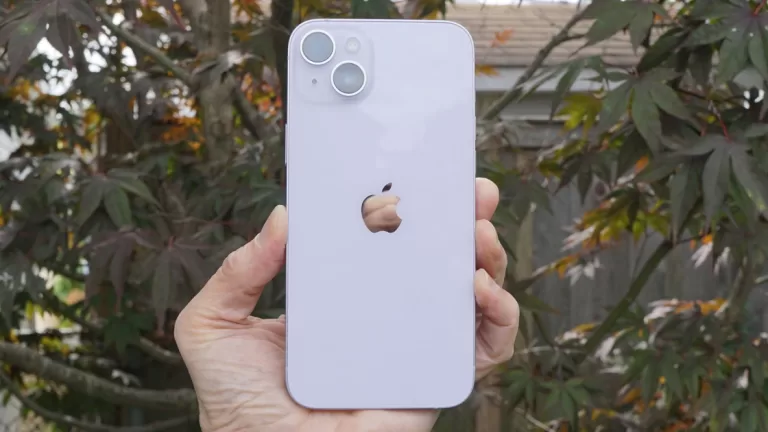
The iPhone 14 Plus hasn’t been selling well (Image credit: Future)
Price cuts on gadgets are always good news for consumers, and it would seem that the iPhone 15 could be in line for one if the latest leak can be believed: apparently Apple is considering cutting the pricing of the iPhone 15 Plus due to launch in September.
This comes from reputable online source Yeux1122 on South Korean social network Naver (via Macworld (opens in new tab)). The move is apparently being given serious consideration, and would be made in response to underwhelming sales of the current Plus model.
The iPhone 14 Plus that was unveiled with the rest of the family earlier this year has a starting price of $899 / £949 / AU$1,579 for the 128GB version, but it doesn’t appear to be attracting buyers in the numbers that Apple would like.
A tale of four phones
While canceling the Plus model would be an option for Apple, it’s likely that development on the iPhone 15 is too far down the line for that to happen. A price cut on the handset that replaced the iPhone 13 mini would be the next most logical step.
It’s worth bearing in mind that the iPhone 14 Pro Max offers the same screen size as the Plus, but adds in features like a faster chip, the Dynamic Island and the always-on display for another $200 / £250 / AU$320 – which makes it the better deal.
As yet there’s no indication of how big the price cut could be, or how it might affect the pricing of the other models in the range. We’ve also been hearing that Apple could introduce a more powerful, more expensive iPhone 15 Ultra next year too.
Analysis: getting the pricing right
Pricing is always key for any smartphone: the best cheap phones may not have the fastest chips or the best screens, but they cost substantially less than the premium flagships on the market, and so still represent good value for money.
As for Apple’s iPhone series, for the last few years the Pro models have been the handsets with the most appeal. That’s even more the case with the iPhone 14 Pro, because the less expensive models come with last year’s A15 Bionic chip inside.
Buyers of the iPhone 14 are getting a phone that’s slower than the Pro, with a camera system that’s not quite as good, and without several other cool features. Okay it’s cheaper, but there aren’t a lot of other reasons to prefer it over the Pro.
We’ll have to wait and see what Apple does in 2023, bearing in mind that it has the budget iPhone SE (2022) on sale as well. Next year could be the year when Apple’s flagship phone gets closer to mid-range pricing than ever before.
Sign up to get breaking news, reviews, opinion, analysis and more, plus the hottest tech deals!
Dave is a freelance tech journalist who has been writing about gadgets, apps and the web for more than two decades. Based out of Stockport, England, on TechRadar you’ll find him covering news, features and reviews, particularly for phones, tablets and wearables. Working to ensure our breaking news coverage is the best in the business over weekends, David also has bylines at Gizmodo, T3, PopSci and a few other places besides, as well as being many years editing the likes of PC Explorer and The Hardware Handbook.
What kind of 2022 did Microsoft experience? The company made some big moves during the course of this year, including a gargantuan near-$70 billion acquisition – mired in controversy – and it also brought the first major feature update to Windows 11. Let’s take a deep dive into how Microsoft fared across the software, hardware, and gaming fronts over the past year.
Windows 11’s big update (and bugged updates)
Windows 11 is still relatively new, having arrived late in 2021, and the biggest thing to happen to the OS this year was the debut of its first major update. (Remember that there’ll only be one feature update per year now, rather than twice yearly as was the case in the past). The Windows 11 2022 Update (informally known as 22H2) pitched up in September, applying a whole lot of polish, alongside some major and useful changes to the interface. We were also treated to a new system of ‘Moments’, fancy Microsoft jargon for smaller updates more agilely applied as needed outside of the big yearly feature upgrade.
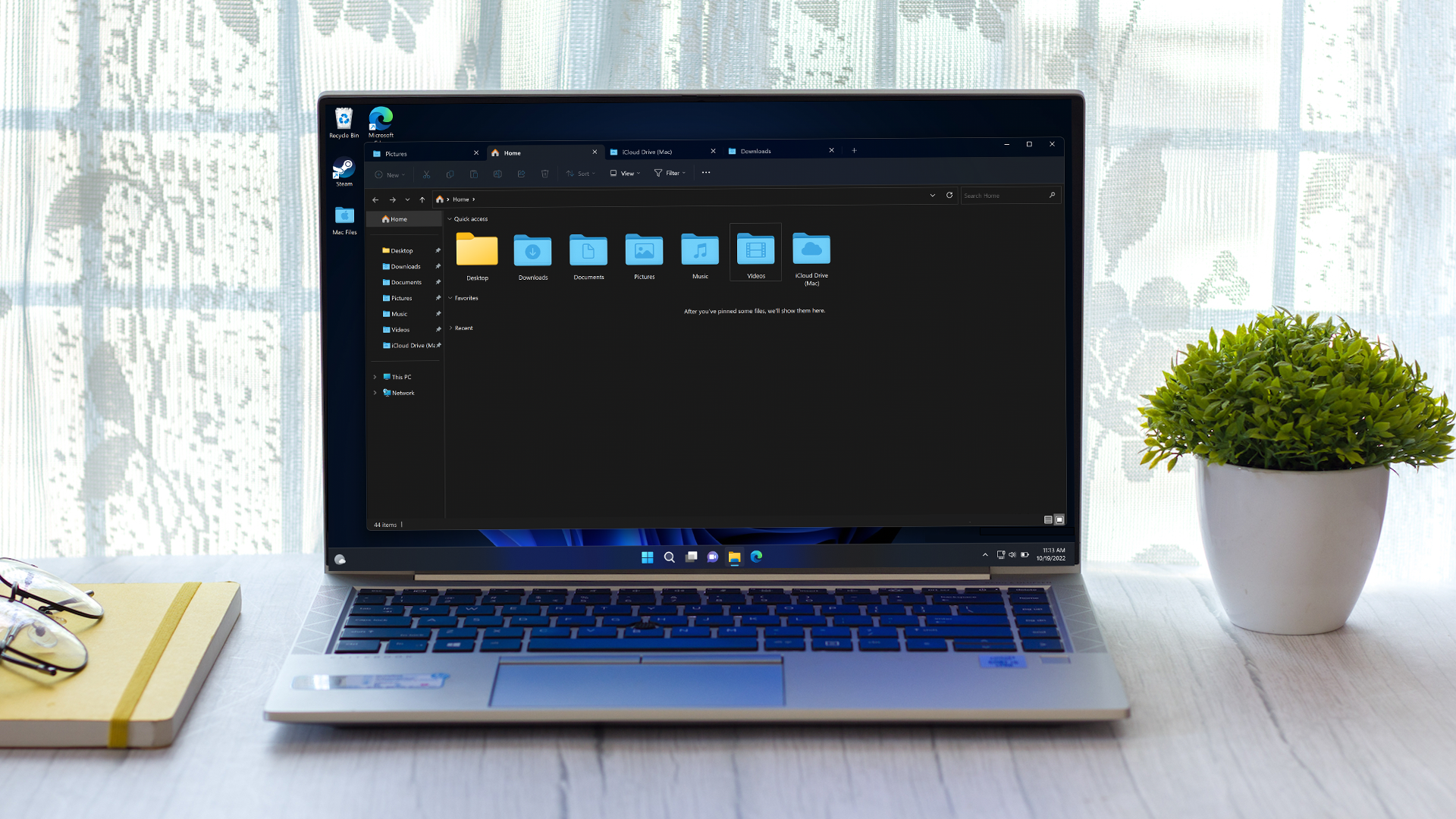
Some of the notable improvements piped through included the introduction of tabs for File Explorer, allowing for multiple folders to be opened in one File Explorer window, in the same way there are multiple tabs in a browser. That represented the delivery of a long-promised feature from Microsoft. The taskbar also received a lot of attention, with a taskbar overflow panel being brought in, and after lots of clamoring from a good many Windows 11 users, drag-and-drop functionality was finally returned to the taskbar.
(Image credit: TechRadar)
Indeed, it seems that something of a theme for the year was Microsoft listening more to feedback and user needs, as another much complained about aspect of the taskbar – the removal of the option to ungroup apps on the bar, a piece of functionality that’s in Windows 10 – looks set to be remedied. Or at least that facility has been present in testing with Windows 11, and should be here soon, fingers crossed, for those who don’t want multiple instances of the same app combined on the taskbar.
The feeling that Windows 11 is a work in progress still remained, with Microsoft needing to do a good deal of honing and revamping to knock various bits of the interface into better shape (and clear up cluttered legacy corners of the UI) – plus frustrating bugs were still a problem.
Throughout 2022, while there weren’t any show-stoppers in the way of Windows 11 bugs (as has been seen with Windows 10 in the past), we’ve reported on far too many glitches, and some nasty enough ones. Like printers having much of their functionality stripped away, for example, as well as gremlins that dragged down performance levels in various ways, and gamers came under fire from some seriously annoying bugs, too. Flaws in File Explorer seemed particularly rife, as well, which is a concern given that this is the core pillar of the UI (the very files and folders you work with every day).
(Image credit: Microsoft)
Perhaps the real acid test we can use to measure the success of Windows 11 in 2022 is looking at how many people made the move to the OS (or bought a new PC with it installed, of course). According to Statcounter’s figures (as of November 2022, the latest available at the time of writing), 16% of all Windows users are on Windows 11. That’s not great for an operating system which has been out for over a year now, especially considering Windows 7 holds almost a 10% share of the market. A completely outdated OS is not far behind, in other words.
Furthermore, a year into its reign as the cutting-edge operating system for Microsoft, Windows 10 had secured almost 30% adoption, nearly twice as much as Windows 11 has managed. Although that said, Windows 11 is hampered somewhat because some people can’t upgrade, as their PC doesn’t meet the more stringent requirements (particularly on the security front), so Microsoft will have expected migration to be slower when they baked those elements into the design of the OS.
Overall, Windows 11 made reasonable headway in applying important interface changes, for sure, but we’d like to see more progress still, and especially a better effort in combating bugs, with an overhaul long overdue for Microsoft’s QA processes in our opinion.
(Image credit: Future)
Surface so-so
Just like any other year, another bunch of refreshed Surface devices emerged.
In June we got our first glimpse of the Surface Laptop Go 2, which wasn’t hugely different to the original laptop, but made some useful improvements, and remains a great choice for a compact notebook.
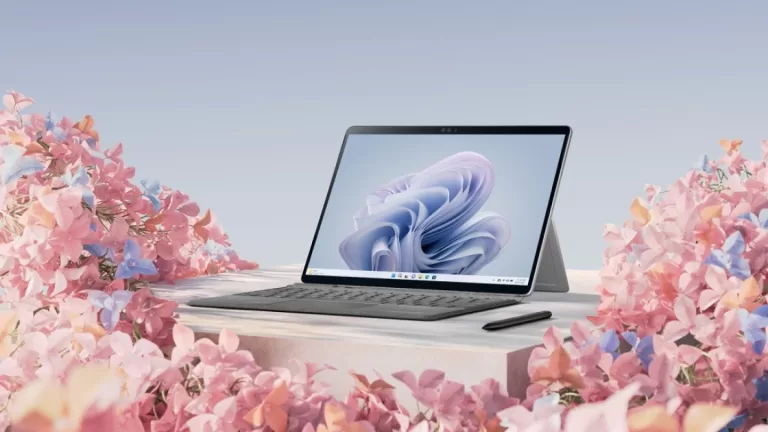
Then in October, at a big Microsoft event we witnessed the revelation of the Surface Pro 9 and Surface Laptop 5, alongside the Surface Studio 2+.
This wasn’t the best crop of Surface hardware for Microsoft, sadly. For starters, the Surface Laptop 5 failed to wow us, turning out to be spectacularly middle-of-the-road. Not terrible, but hampered by performance issues, and definitely not worth the hefty asking price pinned to the laptop.
The Surface Pro 9 turned out to be a better device, for sure, taking some laudable steps forward from the Pro 8. It also made an interesting move in having two flavors: a 5G model with a Qualcomm SQ3 (ARM) CPU, and a version with an Intel processor, the former being a great option for some (businesspeople on the move, for instance), albeit with ARM-related gremlins in the works. The Pro 9 remained pricey, but an undeniably slick device overall, and a good upgrade from its predecessor in the performance stakes.
The Surface Studio 2+ received just a minor upgrade, as the 2+ (rather than a 3) denoted, but Microsoft implemented some solid changes, albeit nothing particularly exciting. Which about sums up what happened on the Surface front overall: nothing bad, by any means – certainly not with the Surface Pro 9 – but nothing great, either.
(Image credit: Activision Blizzard)
Game for an acquisition
In January, Microsoft pounced to buy gaming giant Activision Blizzard in a huge acquisition for close to $70 billion. Yes, that Activision – the one with franchises like Call of Duty, Diablo, Overwatch, World of Warcraft and many other big-name games in its stable.
The magnitude of this deal can’t be underestimated, meaning that in the future, Xbox Game Pass owners could get the next Call of Duty blockbuster for nothing as part of that subscription (whereas PlayStation fans will have to stump up cash, and we’re all very familiar with the eye-watering cost of games these days).
Indeed, the ripples from this deal are still ongoing now, because at the time of writing this piece, the Federal Trade Commission (FTC) has filed a lawsuit to block Microsoft’s acquisition on the grounds that it could suppress rivals to the Xbox console.
Naturally, Microsoft has given us a whole raft of assurances on how it won’t throw its weight around in anti-competitive fashion after snapping up Activision, but there are plenty of doubters, and the FTC points to Microsoft’s past history and the ZeniMax (Bethesda) acquisition. While in that case, promises were also made about not withholding games from rival consoles, the FTC observes that post-acquisition, titles like Starfield, Redfall, and Elder Scrolls 6 were made Xbox exclusives.
Microsoft’s Activision buyout could still come a cropper at the final hurdles, then, potentially.
(Image credit: Shutterstock.com / Butsaya)
Ads nauseum – but with a glimmer of something positive?
While you might expect to see ads in a web browser, you don’t in your operating system. Because, you know, you paid good money for that OS, in the case of Windows anyway (or good money for the machine it came on, and that was part of the bill).
But ads taking up real-estate in Windows menus or panels again became a worry in 2022, as Microsoft tested – and note, these were just experiments that didn’t come to the release version of Windows 11 – adverts for OneDrive in the user session (shutdown) menu. And even more galling, the company briefly flirted with ads in File Explorer too, that central pillar of the Windows interface. That those waters were even tested is a concern, really.
All this could make you think that adverts are going to be a thorn in the side of Windows 11 users in the future – especially given Microsoft’s past form, this is not a new thing, of course – but instead, another possibility emerged late in the year.
Namely the notion that Microsoft could be angling towards low-cost PCs which are sold on subscription, rely on cloud services, and are supported by ads (to make them cheaper – so there’d be a benefit in this case). This was just a rumor, picked up (in November) via a Microsoft job listing, but earlier in July of this year, Microsoft CEO Satya Nadella talked about incorporating ads in its products.
There were clearly heard groans at this prospect, but as we observed, in a cost-of-living crisis, where not everyone might be able to afford a new PC, this could be a good thing to make Windows computers more accessible to those struggling with money.
(Image credit: Shutterstock / Blackboard)
Head in the clouds
Speaking of cloud services tied in with those ad-supported cheap PCs, this is an area where Microsoft went from strength to strength during 2022. Cloud revenue was strong right from the start of the year, and then in October, Microsoft’s Q1 2023 fiscal results showed that while the Windows division faltered – and was down 15%, in fact, partly due to the slump in PC sales this year – cloud revenue was buoyed by 24% compared to the same quarter in 2021.
Microsoft made $25.7 billion in just one quarter – over half its total revenue for that period – if you had any doubt about where the future lies for swelling the software giant’s coffers.
Concluding thoughts
With the PC slump, it wasn’t the best year for Microsoft – but cloud revenue was a clear highlight, and going by those various experiments with advertising in Windows 11, the company may have future plans to stoke profits in a different way, with low-cost ad-supported systems.
2022 was a pretty run-of-the-mill year for Surface hardware, albeit with some solid upgrades for some devices. And Windows 11 was a similar case of some reasonable progress being made, in the main, albeit with thorny asides in the form of bugs. However, a highlight with Windows 11 was seeing Microsoft listen more to user feedback, although arguably, some of the introductions made based on popular demand should have been addressed more swiftly.
That mammoth Activision Blizzard acquisition very much remains something to watch, as it’ll have potentially huge ramifications for the gaming industry next year if it goes through; but it feels like there’s still a distinct possibility of it coming off the rails.
Sign up to get breaking news, reviews, opinion, analysis and more, plus the hottest tech deals!
Darren is a freelancer writing news and features for TechRadar (and occasionally T3) across a broad range of computing topics including CPUs, GPUs, various other hardware, VPNs, antivirus and more. He has written about tech for the best part of three decades, and writes books in his spare time (his debut novel – ‘I Know What You Did Last Supper’ – was published by Hachette UK in 2013).
Cryptocurrency trading platform 3Commas has confirmed it suffered a data breach that saw API data stolen.
As per the announcement, an unknown threat actor posted 3Commas’ API database to Pastebin, on December 28.
After analyzing the database, the company confirmed its authenticity, saying “at this point, 3Commas can unfortunately confirm that some of 3Commas’ users’ API data (API keys, secrets and passphrases) have been disclosed by a third party”.
Stolen money
While the leaks revolve around API data at the moment, 3Commas’ does not exclude the possibility of other data being taken, as well: “Currently and to the best of our knowledge only API data have been disclosed as part of this incident. As a likely consequence the hacker(s) may use or may have used the API data to connect your exchange accounts to his/their account and/or initiate unauthorized trades,” it says.
In a notice sent to its users via email and a blog post, the company says it has made strides to protect its users and their funds, and reported the issue to relevant law enforcement agencies, including the FBI.
As per a BleepingComputer report, a set of 10,000 API keys were leaked, which is just 10% of the 100,000-big database. These keys are usually used by 3Commas bots to automatically interact with crypto exchange platforms, make trades and generate profit, without user interaction.
Reacting to the news, 3Commas urged all supported exchanges (including some of the biggest ones – Binance, Coinbase, and Kucoin) to revoke all API keys connected to the platform. The company also urged all users to reissue their keys on all linked endpoints (opens in new tab) personally.
Investigating the leak further, the company eliminated the possibility of this being an inside job: “Only a small number of technical employees had access to the infrastructure, and we have taken steps since November 19 to remove their access,” the company said in a Twitter post.
“Since then, we have implemented new security measures, and we will not stop there; we are launching a full investigation in which law enforcement will be involved,” the company added.
But the damage has already been done. Apparently, threat actors have been abusing leaked API keys since November, and have managed to steal some $6 million worth of cryptocurrencies so far.
These are the best firewalls (opens in new tab) right now
Sign up to theTechRadar Pro newsletter to get all the top news, opinion, features and guidance your business needs to succeed!
Sead is a seasoned freelance journalist based in Sarajevo, Bosnia and Herzegovina. He writes about IT (cloud, IoT, 5G, VPN) and cybersecurity (ransomware, data breaches, laws and regulations). In his career, spanning more than a decade, he’s written for numerous media outlets, including Al Jazeera Balkans. He’s also held several modules on content writing for Represent Communications.
Netgear has issued a patch for a high-severity vulnerability found in almost a dozen of its Wi-Fi routers (opens in new tab) and urged its users to apply the fix immediately.
Given the destructive potential of the flaw, Netgear did not disclose the details, other than saying that it’s a pre-authentication buffer overflow vulnerability, which could be used for all kinds of malicious activity, from crashing the device after a denial of service, to arbitrary code execution.
To abuse the vulnerability, the attackers do not need user permission or user interaction. The flaw can be used in low-complexity attacks, it was said.
Pre-authentication buffer overflow
Issuing a security advisory (opens in new tab) about the flaw, Netgear said it “strongly recommends” users download and install the latest firmware as soon as possible.
“The pre-authentication buffer overflow vulnerability remains if you do not complete all recommended steps,” Netgear added. “Netgear is not responsible for any consequences that could have been avoided by following the recommendations in this notification.”
The list of all of the affected devices, which includes multiple Wireless AC Nighthawk, Wireless AX Nighthawk (WiFi 6), and Wireless AC models, can be found on this link (opens in new tab).
Those looking to patch up their routers should navigate to the Netgear Support (opens in new tab) website, and type in their Wi-Fi router’s model number in the search box. Once the right version is identified, press Downloads, and under Current Versions, select the first download with “Firmware Version” in the beginning of the title.
Detailed instructions on how to apply the fix can be found in the Release Notes file accompanying the firmware download.
Wi-Fi routers are a popular target for cybercriminals due to the fact that all of a user’s traffic must go through the device. What’s more, users rarely change the factory settings, and update the firmware even less frequently.
These are the best firewalls (opens in new tab) right now
Sign up to theTechRadar Pro newsletter to get all the top news, opinion, features and guidance your business needs to succeed!
Sead is a seasoned freelance journalist based in Sarajevo, Bosnia and Herzegovina. He writes about IT (cloud, IoT, 5G, VPN) and cybersecurity (ransomware, data breaches, laws and regulations). In his career, spanning more than a decade, he’s written for numerous media outlets, including Al Jazeera Balkans. He’s also held several modules on content writing for Represent Communications.
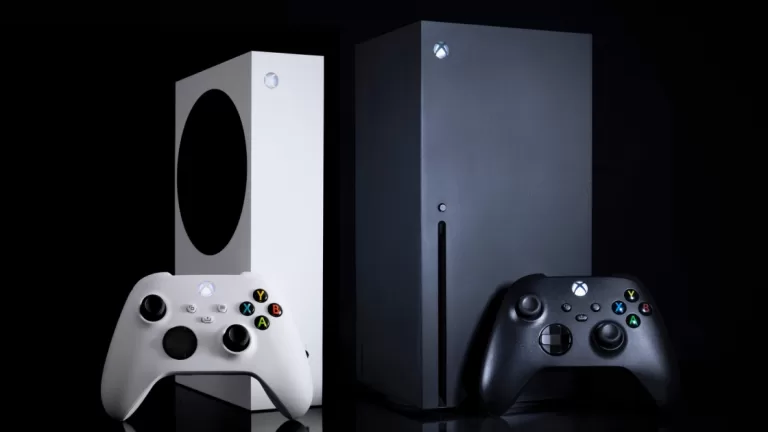
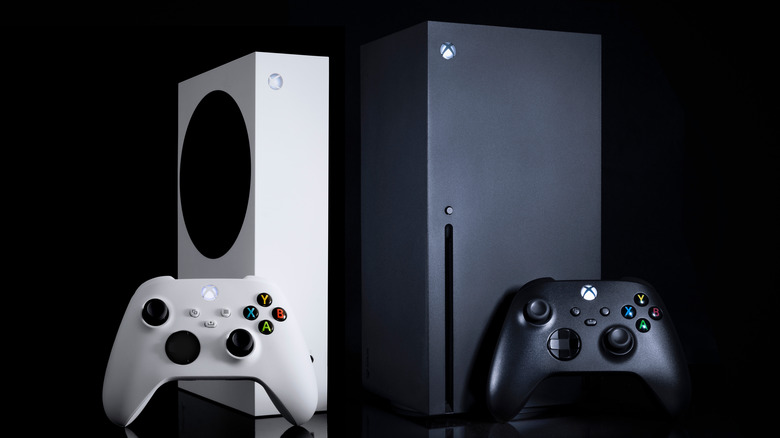
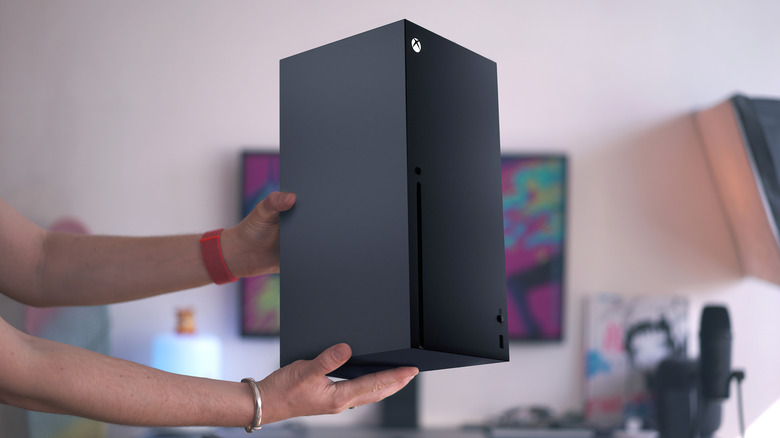
Gamers know that keeping your Xbox Series X clean helps aid in the console’s continued performance. Having too much dust accumulate inside your console (or any high performance technology) can cause serious damage. Dust, dirt, and hair can build up inside your console, blocking the fan, air vents, and damaging the disc drive. It can lead to your console overheating and malfunctioning.
Not only is it important to keep the inside of your Xbox Series X clean, but the outside as well. Not only do you want to keep your Xbox Series X running like new, but you want to keep it looking new, too. Thankfully, Microsoft shares with its customers the tools needed to keep your Xbox Series X looking and running like new.
To clean the outside of your Xbox Series X, Xbox support recommends using a dampened, microfiber cloth with mild soap or moistened disinfectant wipes. Wipe the exterior every 3-6 months or as needed. Remember to make sure your console is turned off completely before you begin cleaning.
How to clean the dust from your Xbox Series X
Mr.Mikla/Shutterstock
Cleaning the interior of the Xbox Series X is a tad bit more complex, and officially, Xbox support does not recommend opening your Xbox Series to clean internally. However, to keep dust from accumulating, cleaning the interior is necessary. According to SortaTechy, you should make sure you have these tools handy before you open your Xbox Series X console to begin cleaning.
Compressed air can
Microfiber cloth
Soft-bristle brush
Rubbing alcohol or mild soap
T8 screwdriver
To begin cleaning the inside of the Xbox Series console:
Turn off and unplug the console.
Clean the exterior of the console and its vents with a microfiber cloth.
Remove the sticker above the connection port and the warranty sticker at the bottom to expose two screws underneath.
Use the T8 screwdriver to remove the screws and unclip the back of the case, working your way from the bottom.
Remove the three screws at the upper part of the base of the fan to reveal the fan, allowing you to clean the fan blades and wipe the fan down.
Turn the case upside down and find the clip that fastens the base plate to the case.
Remove the exposed screws to disconnect the optical drive from the case, allowing you to detach the rest of the components from the case.
To reassemble, follow these steps in reverse.
How to clean the Xbox your Xbox Series X Controller
Diego Thomazini/Shutterstock
Caring for Xbox Series accessories is just as important as taking care of the console. The Xbox Series controller can get dirty or even sticky with hours upon hours of gameplay — especially if you snack while playing. Luckily, cleaning the controller is much easier than the console.
When to properly clean your controller, tech care company Asurion advises Xbox One and Xbox series users to:
Turn off your controller completely by pressing and holding the Xbox button for 5-10 seconds.
Use a microfiber cloth with isopropyl/rubbing alcohol or a disinfectant wipe to clean the analog sticks. Don’t forget to clean the base of the analog sticks by moving the sticks around.
Before turning the controller back on for use, let the controller dry completely.
If your Xbox Series X overheats or malfunctions due to dust and dirt accumulation, cleaning your console can help. However, if you still have issues with overheating or malfunctioning after cleaning your Xbox Series, contact Xbox support for servicing.
Google’s Pixel smartphone lineup doesn’t hold much Android market share, and while that doesn’t seem to be a big deal to the internet giant, Google does toss in some perks to make its mobile phones a tad more appealing. One of those perks is free access to the company’s virtual private network that everyone else has to pay for — it’s the same VPN you get when subscribed to Google One, which Pixel owners must pay for as well if they want to use the cloud storage and other bundled features.
The VPN offers some of the same benefits you’d get with any other paid alternative: enhanced privacy and security while on open Wi-Fi networks, the ability to torrent without risking a copyright strike from your ISP, and similar. The big exception is that Google One’s VPN doesn’t allow you to change the IP address region used when connected with the virtual private network, which makes the service less than useful if your goal is to get around geo-based content blocks.
As Google had promised, the Pixel 7 smartphone lineup comes with the free VPN perk, though the feature was delayed at launch. Google finally rolled out the free access with the December 2022 feature drop, and upon installing the update, users in eligible countries can enable the service whenever they’d like.
How to set up the free VPN on a Pixel 7
Google
Google’s VPN is part of the Google One subscription, and though it is made available for free to Pixel 7 owners, you’ll still need to download and install the companion app to set up and access the virtual private network (via Google). The Google One app is available for free from the Google Play Store, and is designed to automatically detect when it’s installed on a Pixel 7 — meaning you won’t have to do anything cumbersome to enable the free access.
Open the Google One app, scroll down, and tap “Benefits.”
Tap “View Details” next to the VPN feature.
Toggle on the “Enable VPN” switch.
Tap “Allow” on the VPN connection and notification prompts when they appear.
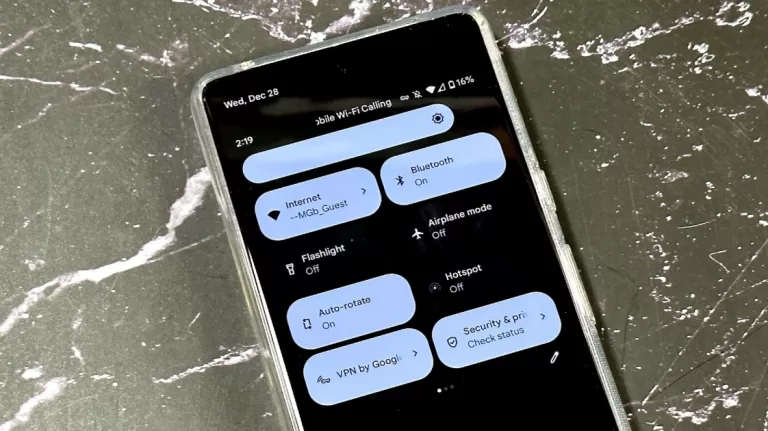
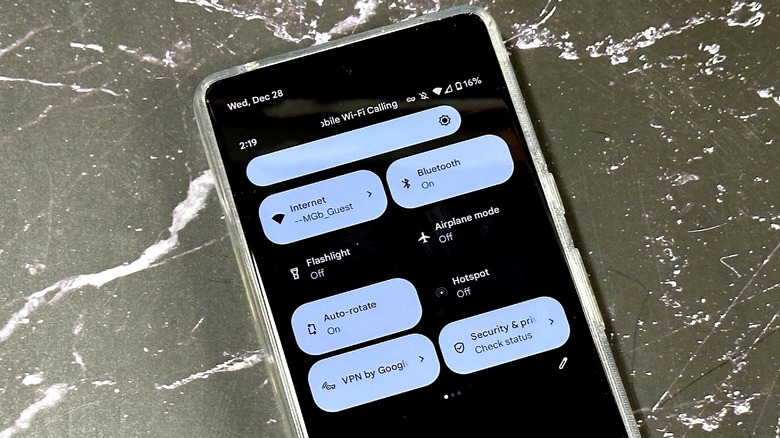
Your phone’s internet traffic will go through the Google One VPN as long as the toggle switch is set to “On.” Generally speaking, you’ll need to open the app to turn the VPN on and off, but there’s also the option of adding the function to Quick Settings on the Pixel 7 so that it’s easier to access. To do that, open Quick Settings by swiping down two times, tap “Edit,” and then tap, hold, and drag the Google One VPN tile to the spot you find most convenient.
How to configure the free VPN on a Pixel 7
Chris Davies/SlashGear
Many VPN apps include special features beyond simply “on” and “off” that give users more control over when and how the service connects to the provider’s servers. Arguably the most popular (and important) of these features is called a “kill switch.” As the name implies, a kill switch will block internet traffic if the VPN disconnects from the provider’s server, which is vital for users in situations where losing anonymity puts their safety at risk. The Google One app has a VPN kill switch feature, and though it doesn’t use that term, it is very simple to enable the setting.
Open the Google One app, scroll down, and tap “Benefits.”
Tap “View Details” next to the VPN feature.
Tap “Manage VPN Settings” to open the configuration menu.
Toggle on the setting called “Block internet if VPN disconnects.”
If you enable this feature, your Pixel 7 will only allow you to access the internet when the VPN is connected. If Google’s VPN servers experience a hiccup that causes your device to disconnect, the Google One app will flip the kill switch, in a manner of speaking, to keep your personal IP address from being revealed. For the average user, this is most commonly enabled to prevent the IP address from being revealed while torrenting copyrighted content. If you’re not concerned about your IP address reaching the destination, however, leaving this feature disabled will prevent connectivity disruptions.
How Google’s free Pixel 7 VPN works
Chris Davies/SlashGear
Ordinarily when you use an app, access a website, or send someone messages, you’re doing so with an IP address that can reveal certain information about you, such as your location. Information sent over the network can be viewed by other people connected to the same Wi-Fi if the data isn’t encrypted, as well. This isn’t a big deal if you are, for example, updating your blog from the comfort of your own password-protected home Wi-Fi network.
However, if you’re connected to a public Wi-Fi network such as the ones offered at libraries and coffee shops, browsing the internet without a VPN could be a security and privacy risk. As with other VPN services, the Google One VPN helps mitigate this risk by encrypting the data and shuttling it through its own servers, as the company explains in a support document.
As a result, the websites you visit while connected to the VPN will see the IP address related to Google’s server rather than the IP address from, for example, the coffee shop. Because the information is encrypted, other people connected to the coffee shop’s Wi-Fi won’t be able to snoop on your activity, either.
Alternative VPNs for Google Pixel 7 smartphones
Chris Davies/SlashGear
While Google says that it doesn’t collect the information that you access while connected with its VPN, the company is known for gobbling up user data in general, so it’s no surprise that some consumers simply do not feel comfortable using its virtual private network. If you’re included among those individuals, there are alternative VPN services you can use with the Pixel 7, though you’ll likely need to pay for them, as many free VPN apps come with privacy risks.
The good news is that paid VPN services are often very inexpensive at only a few dollars per month, and there are many options to choose from, including Private Internet Access, Nord VPN, Proton VPN, TorGuard, and ExpressVPN. When selecting a VPN service, you should verify that it supports the platforms you want to use it on, and that its data collection policy matches your needs and comfort level.
Some VPN providers require you to manually enter the connection details, for example, while others offer a downloadable Android app that greatly simplifies the connection process — such as the PIA app. Some providers have a policy that allows them to collect and store user data for a certain period of time, while other providers may not keep user logs at all.
Wordle’s year-end puzzle ends on a rather daring note. The word you’ll be hunting today defines traits like gallantry and dauntlessness. At the same time, it also personifies acts that are gutsy, or to put it more accurately for the Urban Dictionary-loving generation, ballsy or macho. However, the Wordle solution you seek is also used to describe a person with a virile and robust physique, someone engaged in hardy and brawny activities.
Getting away from riddle hints toward the alphabetical side of things. The last Wordle puzzle of 2022 features a single vowel, a semi-vowel at the end, and no repeating letters. Interestingly, it has spawned a whole IMDB list of a certain type of movies that include the likes of “Point Break,” “Unforgiven,” and Rambo, among others.
You can imagine the kind of characters played by Chuck Norris, Jean-Claude Van Damme, or Clint Eastwood, and you’ll likely land at the answer. Here’s some more hint. It’s a conjugate word, in the same vein as the word “properly,” turning a noun into an adjective.
Ending the year on a brave note
Wachiwit/Shutterstock
The answer to Wordle #560 (December 31, 2022 edition) is “manly.” Cambridge defines it as “having the qualities that people think a man should have.” It could be used as a substitute for masculine or virile from a gender-specific perspective, or qualities like bravery from a neutral standpoint.
As expected, the word is a combination of “man” and “ly.” Interestingly, the word “man” is still used as a generic term for someone belonging to the human race, a trend that can be traced all the way back to the Old English of the 13th century. As for the “ly” suffix part, it finds similarities in Old Germanic, but the real root is in the Old English term “lic,” which means “having qualities of, of the form or nature of.”
Given the word’s significance and versatility, there are a number of fun quotes out there, but this sums it up quite well: “Man is never so manly as when he feels deeply, acts boldly, and expresses himself with frankness and with fervor.” It’s attributed to former British Prime Minister Benjamin Disraeli, who was also a prolific writer as well as a renowned statesman with close ties to Queen Victoria herself.