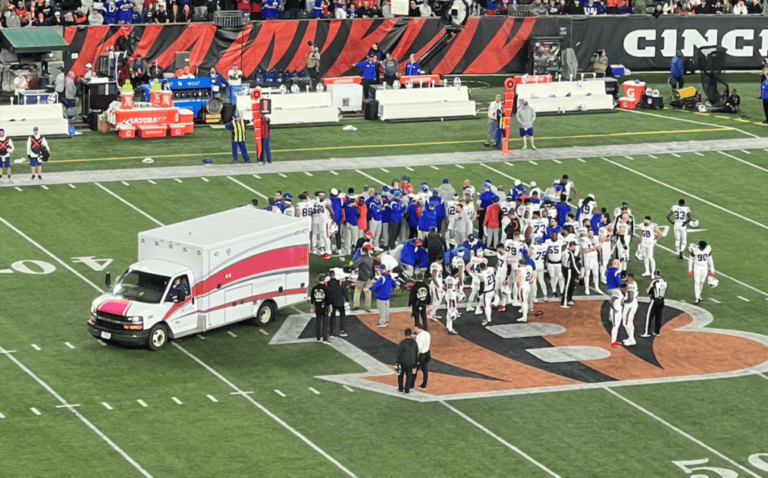
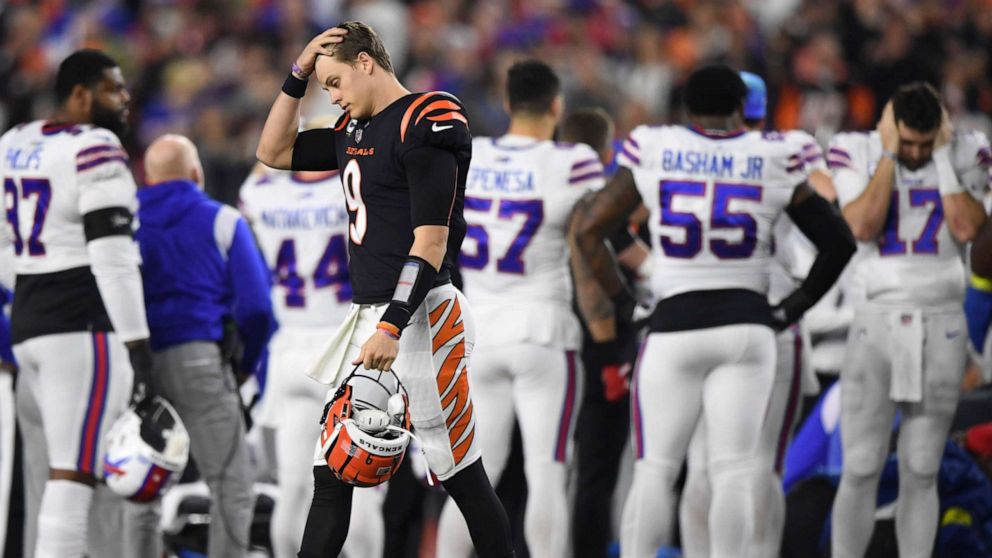
CINCINNATI — An awful scene struck Paycor Stadium on Monday Night Football when Damar Hamlin suffered a scary injury following a hit on Bengals wide receiver Tee Higgins.
Hamlin hit Higgins across the middle and immediately fell to the ground after getting up following the play.
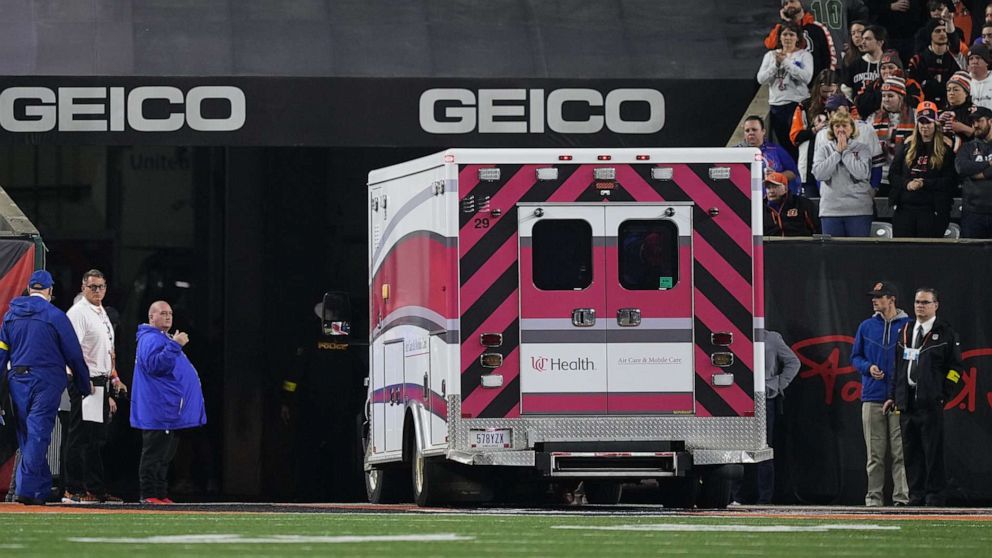
He then stayed down for 19 minutes as paramedics brought an ambulance onto the field to expedite care. They gave the safety CPR and eventually transported him to a local hospital.
UPDATE: FOX19’s Joe Danneman reports Hamlin has a pulse but is not breathing and is being transported to University of Cincinnati Medical Center. He required CPR and an AED on the field.
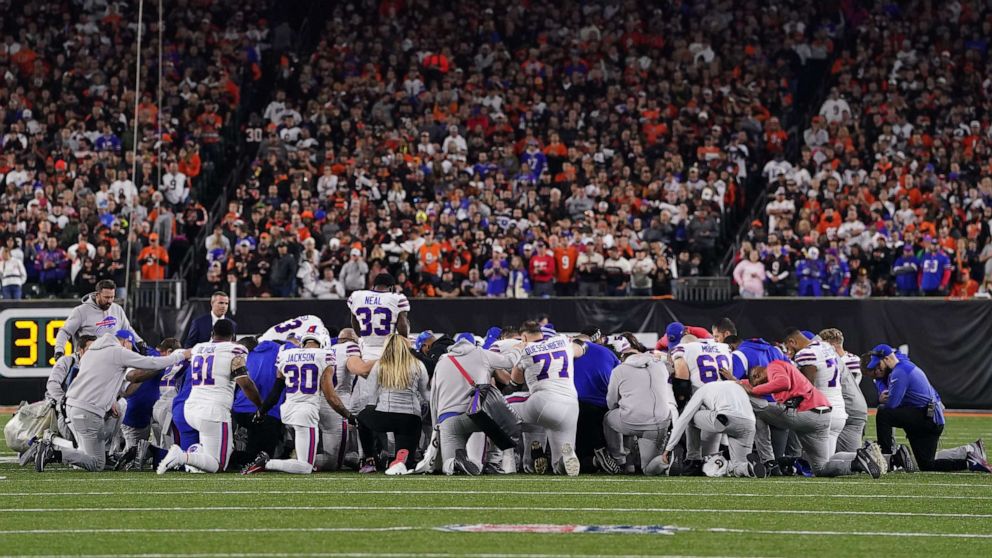
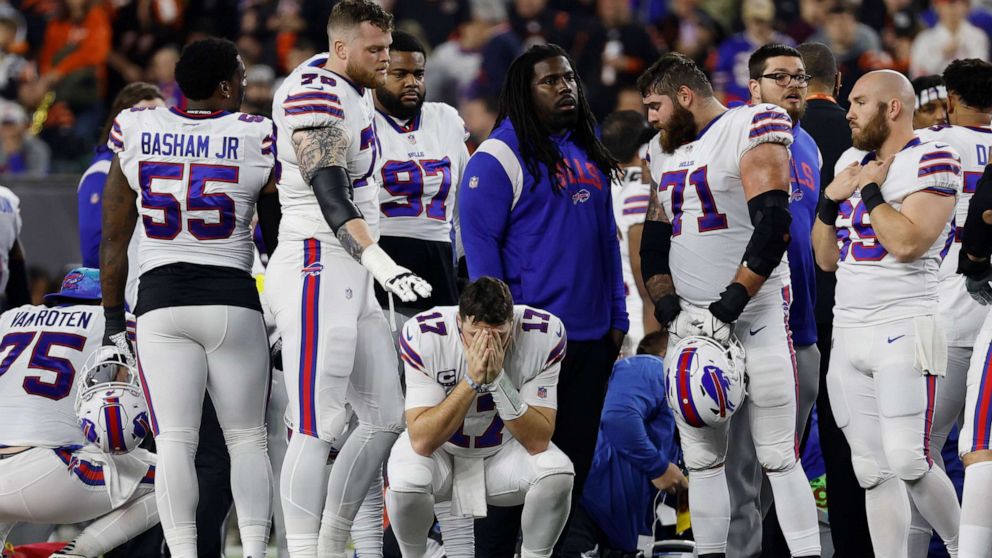
The entire Bills team gathered around Hamlin as both sidelines reacted to the devastating scene near midfield.
Trigger warning: The opening paragraph of this story recounts a story of death.
“Come. Help. It’s dad. He’s not breathing.”
The terrified, frantic tone in my mother-in-law’s voice is locked in a part of my brain. A breathless sing-song of shock and fear. I vividly recollect every second of fumbling for my phone to plead with 911 to arrive as quickly as possible. Trying to convince myself and my four-year-old daughter as we sat on the front porch with the sun rising that things were going to be okay.
“Mommy was a police officer. Your aunt is a nurse. They know how to help granddaddy, and the ambulance is on the way.”
I’ve lost people before. We all have, but this was the first with immediacy. The grief destroys you, but being right there when everything happened is what left every single one of us in a daze that lasted hours.
“We never had breakfast,” my daughter said, pulling gently on my shirt with her tiny hand. It was noon, and we’d been awake since 4:42 am. Waiting for the EMTs to arrive made minutes feel like an eternity, but it had been two hours since the coroner left, and it may as well have been a blink of the eye.
This is what has been going through my mind since Monday Night Football. The immediacy of the event. The shock, confusion, helplessness, and how all-consuming it is to witness a medical emergency like that. Unless it’s something you experience with regularity it leaves you unable to think of anything else. These were NFL players — they’re accustomed to broken bones, torn ligaments, cuts, and scrapes — not a 24-year-old coworker, a brother, going into cardiac arrest.
Nothing but Damar Hamlin’s health was the focus. Nothing else should have been. ESPN, particularly Booger McFarland, Scott Van Pelt, and Ryan Clark, handled the broadcast and its aftermath with the gravitas and grace it deserved — which was less about any masterful ability as sports analysts, and more their humanity shining through during one of the darkest incidents to happen on an NFL field.
There’s no “right” way to tell anyone how to process something like Hamlin’s medical emergency, but the NFL unquestionably dealt with it the wrong way. Someone in a position of power was so unprepared for something like this happening that they sent a message to the teams for the players to warm up and prepare to resume the game. If it wasn’t for coaches stepping in and stopping this ludicrous request, we really may have seen athletes in shock, unable to think about playing football — but being forced to do so anyway.
They’re humans.
The NFL is claiming they never told anyone to resume the game. There are ample reports indicating that someone told the teams the game would resume. That message was conveyed to the coaches and players, and at this point nobody inside the league is going to own up to making such a stupid request. The NFL can be monumentally dumb, and make decisions that are so stupid they defy belief — but even with a propensity to view the NFL with the most cynical eye, I truly can’t imagine someone being so callous as to make the call for play to resume after Hamlin’s incident, while players were visibly distraught on the sidelines.
Guidelines exist for moments like this. They’re written at times removed from crisis so when something does happen there’s a guiding light that can cut through the darkness and provide a path forward for people who are dealing with shock. The NFL has plenty of these, with the most common and benign being how a game should be suspended in the event of lightning.
What last night showed is how the league has a woeful crisis gap for any on-field incident that’s more serious than an orthopedic injury. The NFL prides itself on being pedantic when it comes to sock design, signage dimension and what color visors players can put on their helmets — but the same level of care and focus evaporates when there’s a medical emergency. The world saw how unprepared one of the largest sports leagues in the world was, and the medical emergency became an embarrassment.
We need the NFL to be human.
It’s the most basic bar this league needs to clear. We need more people in decision-making positions to simply act with care and empathy. There has to be someone watching who sees something like last night and say “football isn’t important — we’ll figure it out later.” That’s it. We don’t need it to be this difficult. However, time and time again when the NFL is called to have a modicum of understanding they find a way to choose to callousness.
The league’s marketing ethos revolves around portraying the NFL’s players as superheroes. They’re draped in gladiatorial imagery, vaunted for “sacrificing their bodies for the game,” and this veneer too often causes us to remove humanity from the game of football in service of the most pointless stuff. Who cares what Monday night does to playoff seeding, or who gets home field advantage? Certainly not those with the most skin in the game, as Stefon Diggs desperately pleaded with Cincinnati police to let him into the hospital so he could be closer to Hamlin.
They’re humans. Some of the most athletically gifted humans on the planet whose physical gifts are able to fill us with awe and shape the entire complexion of a year based on their performance, but they’re still human. They bleed like us, grieve like us, and struggle with the same mental anguish every single one of us does in a moment of crisis. We must never, ever forget this as we pray for Damar Hamlin to have a speedy recovery. For his family and loved ones to find comfort and be free of distress today. While we also say “never again” to the NFL, and ask for more from an organization that we invest so much time, energy, and effort into.
We should never have to watch as a confused league forgets about the wellbeing of its own players in service of keeping the schedule neat and tidy. That’s what happened on Monday night, and even if it wasn’t because of true evil — it was a lack of care. We deserve better, all of us.
The Pro Football Hall of Fame announced that it has delayed the announcement of the finalists for its Class of 2023 out of respect for Buffalo Bills safety Damar Hamlin, who suffered a cardiac arrest during Monday night’s game against the Cincinnati Bengals.
The announcement of the 15 modern-era finalists was originally scheduled to take place Tuesday at 8 p.m. on NFL Network.
“The decision to postpone the program for at least 24 hours was made after discussions involving officials with the Hall of Fame, the NFL and the NFL Network,” the release stated.
The announcement of the finalists has been tentatively rescheduled for Wednesday at 8 p.m. ET. However, the release noted that all parties will “re-evaluate the situation Wednesday and determine if the timing is appropriate to proceed with the announcement.”
There were five nominees in their first year of eligibility to be included on the list of 28 modern-era semifinalists: offensive linemen Jahri Evans and Joe Thomas, defensive lineman Dwight Freeney, linebacker James Harrison and defensive back Darrelle Revis.
Hamlin remains in critical condition after he collapsed on the field in the first quarter of Monday night’s game. The Bills announced that the 24-year-old’s heartbeat was “restored on the field and he was transferred to the UC Medical Center for further testing and treatment.”
The game between Buffalo and Cincinnati was suspended, and the NFL announced Tuesday that it will not be resumed this week and no decision made regarding the game’s continuation. The announcement also stated that no changes were made to the Week 18 schedule.
Buffalo Bills safety Damar Hamlin remains in critical condition after he suffered cardiac arrest and collapsed Monday night after making a tackle during the first quarter against the Bengals in Cincinnati, team officials said Tuesday.
Hamlin, 24, remains hospitalized in critical condition in the intensive care unit, Buffalo Bills officials said Tuesday afternoon.
“Damar Hamlin suffered a cardiac arrest following a hit in our game versus the Bengals,” the team said in an earlier statement. “His heartbeat was restored on the field and he was transferred to the UC Medical Center for further testing and treatment. He is currently sedated and listed in critical condition.”
The game was postponed and will not be resumed this week, the NFL said Tuesday. No decision has been made about continuing at a later date, the league said.
The NFL issued a statement earlier, saying, “Hamlin received immediate medical attention on the field by team and independent medical staff and local paramedics. He was then transported to a local hospital where he is in critical condition. Our thoughts are with Damar and the Buffalo Bills. We will provide more information as it becomes available.
“The NFL has been in constant communication with the NFL Players Association which is in agreement with postponing the game,” the league added.
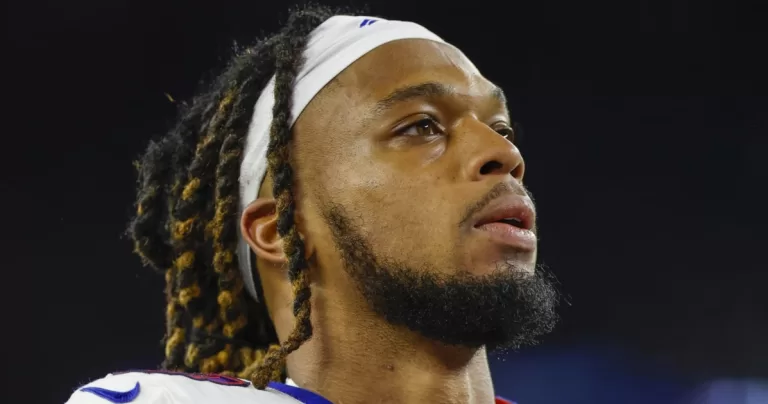
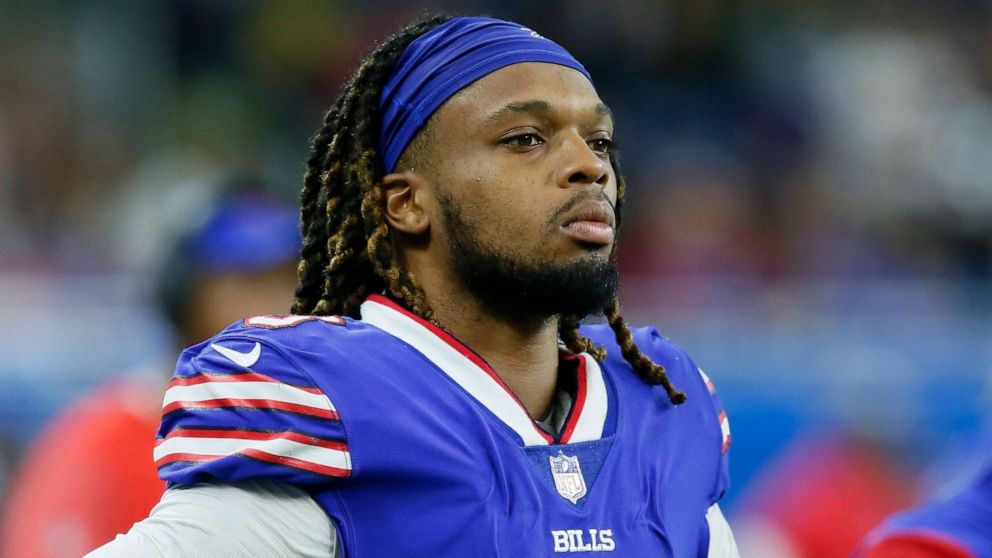
Buffalo Bills safety Damar Hamlin looks on during the second half of an NFL football game against the Cleveland Browns, Nov. 20, 2022, in Detroit.
Duane Burleson/AP, File
Hamlin was down for at least 15 minutes. Paramedics were seen administering CPR as players from both teams gathered around at midfield, some openly weeping.
Hamlin was taken off the field in an ambulance, and both teams went back to their locker rooms minutes later.
The safety was taken to the University of Cincinnati Medical Center.
Hamlin’s family thanked the “dedicated first responders and healthcare professionals” at the hospital for their “exceptional care” in a statement released Tuesday.
“Please keep Damar in your prayers,” the family said, while promising to release updates “as soon as we have them.”
Jordon Rooney, a spokesperson for Hamlin’s family, told “Good Morning America” that the football player is a “fighter” and that his family is in “good spirits.”
“We’re obviously just taking it minute by minute, hour by hour,” Rooney said.
Buffalo Bills players huddle and pray after teammate Damar Hamlin collapsed on the field after making a tackle against the Cincinnati Bengals during the first quarter Jan. 2, 2023 in Cincinnati.
Dylan Buell/Getty Images
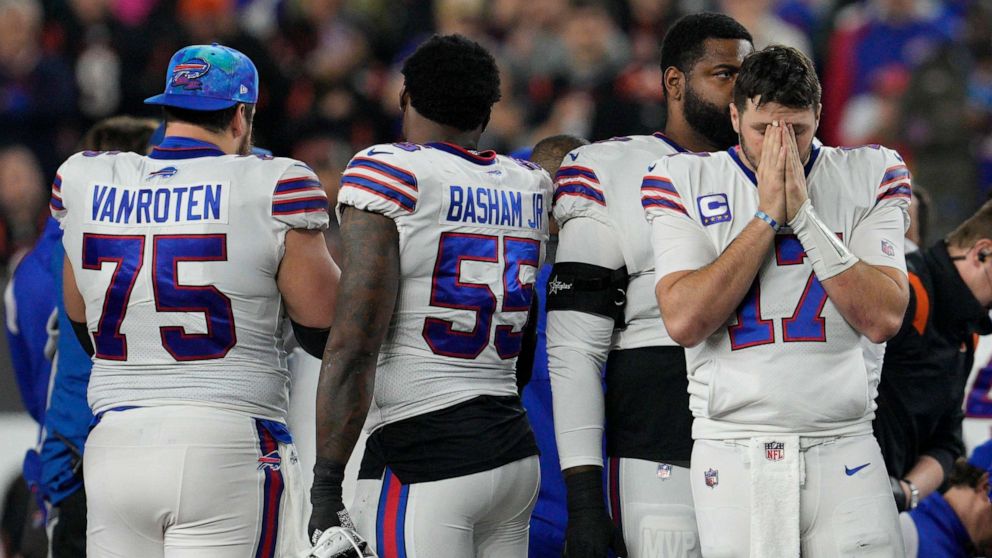
Buffalo Bills quarterback Josh Allen pauses as Damar Hamlin is examined after collapsing during the first half of an NFL football game against the Cincinnati Bengals, Jan. 2, 2023, in Cincinnati.
Jeff Dean/AP
Buffalo Bills quarterback Josh Allen pauses after teammate Damar Hamlin collapsed against the Cincinnati Bengals during the first quarter of their NFL game, Jan. 2, 2023, in Cincinnati.
Kirk Irwin/Getty Images
Following the incident, the Buffalo Bills tweeted a photo of the team on the field on one knee.
“The thoughts and prayers of all of Bills Mafia are supporting you, Damar,” the team said.
Several NFL teams also tweeted that they were sending their prayers to Hamlin, his family and the Bills.
Kansas City Chiefs quarterback Patrick Mahomes tweeted, “Praying hard.. please be okay man.”
Arizona Cardinals defensive end J.J. Watt tweeted: “The game is not important. Damar Hamlin’s life is important. Please be ok. Please.”
Cincinnati Bengals quarterback Joe Burrow pauses as Buffalo Bills’ Damar Hamlin is examined by medical staff during the first half of an NFL football game, Jan. 2, 2023, in Cincinnati.
Emilee Chinn/AP
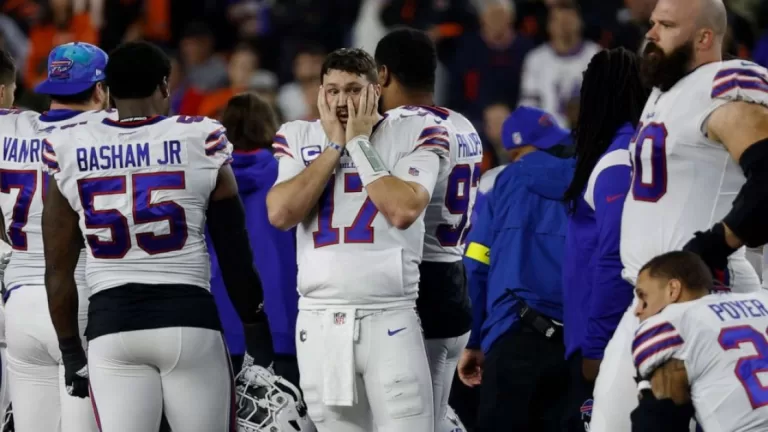
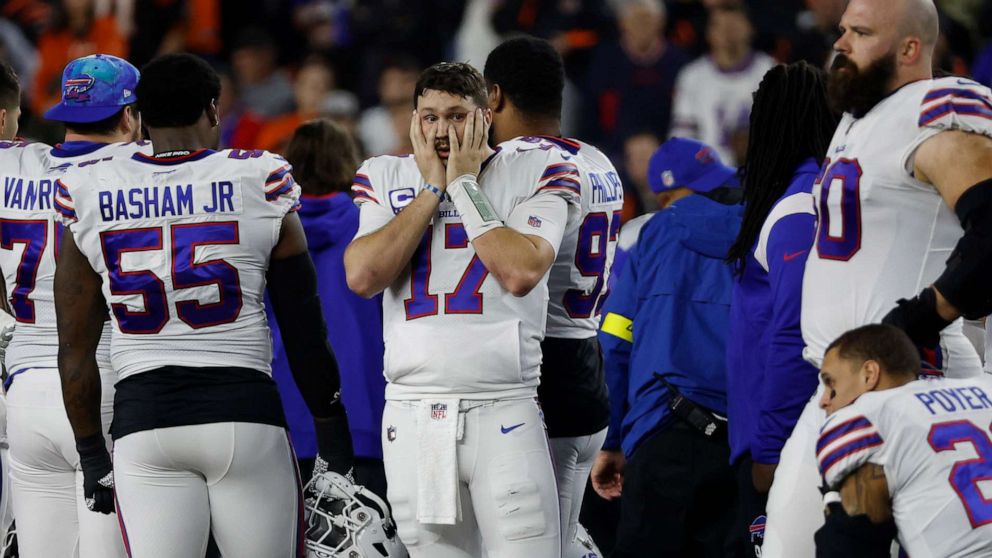
Buffalo Bills players react after teammate Damar Hamlin collapsed during an NFL game against the Cincinnati Bengals, Jan. 2, 2023, in Cincinnati.
Kirk Irwin/Getty Images
Bengals owner Mike Brown called the medical response “extraordinary” and said that both teams “demonstrated respect and compassion.”
Monday night “was supposed to be a great night for the NFL and a great showcase for our hometown. Instead, the human side of our sport became paramount … and in that moment, humanity and love rose to the forefront,” Brown said in a statement.
“The entire City of Cincinnati is sending all of our prayers to Damar Hamlin right now. Our hearts are with you, your family and your friends,” the mayor of Cincinnati, Aftab Pureval, wrote.
In the time since Hamlin collapsed on the field, a toy drive on GoFundMe he organized in 2020 saw donations pouring in — topping more than $1.5 million as of late Monday night, with an initial goal of $2,500. ABC has verified with GoFundMe officials that the page was originally started by Hamlin.
An ambulance leaves the field carrying Damar Hamlin of the Buffalo Bills after he collapsed during and NFL game against the Cincinnati Bengals, Jan. 2, 2023, in Cincinnati.
Dylan Buell/Getty Images
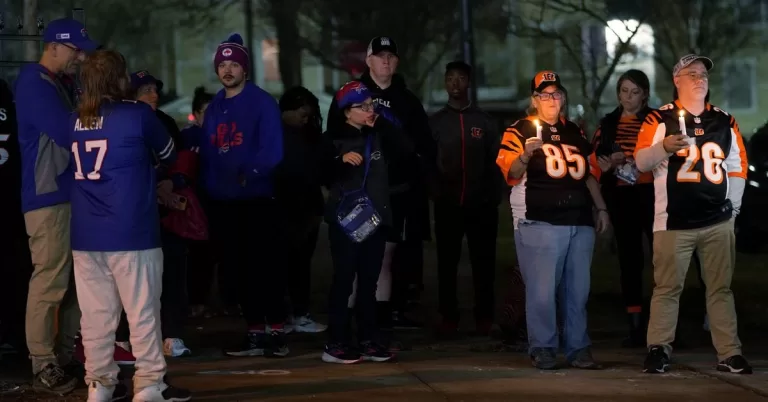
Fans also gathered outside the hospital following the incident to show their support.
“On behalf of our family, we want to express our sincere gratitude for the love and support shown to Damar during this challenging time,” his family said in its statement. “We are deeply moved by the prayers, kind words, and donations from fans around the country.”
“Your generosity and compassion mean the world to us,” the statement continued.
This is a developing story. Please check back up for updates.
ABC News’ Will Reeve, Luke Barr and Keith Harden contributed to this report.
A lot of things happened. Here are some of the things. This is TPM’s Morning Memo.
Everything You Need To Know
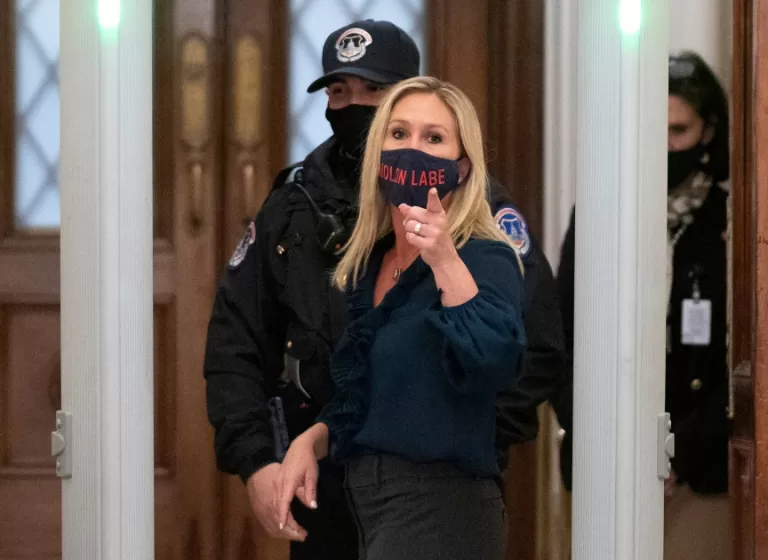
While it couldn’t manage to elect a speaker, the new GOP majority in the House did manage to remove immediately the magnetometers installed at the entrances to the chamber after the Jan. 6 attack:
What’s Next?
After he failed on three separate votes to win the speakership yesterday, Rep. Kevin McCarthy (R-CA) will try again today when the House reconvenes at noon.
McCarthy did not consolidate support Tuesday. Punchbowl has a good rundown of the behind the scenes action.
We’re going to sidestep most of the inscrutable internal machinations because frankly there’s not much evidence that what’s happening behind closed doors is any more meaningful or less comical than what’s happening in public.
It’s So Bad That MTG Comes Off As Reasonable
Never thought I’d see the day:
Joshua Green: “Here’s how screwed up things are in the Republican race for House speaker: Rep. Marjorie Taylor Greene is a voice of reason.”
MTG herself: “Republicans are the party of ‘never,’ and it’s always ‘never’ when they don’t like somebody and that’s how we failed the country.”
Vanity Fair: “Greene, Boebert, Gaetz: The Worst People You Know Are Having A Fight”
AOC Lip-Reading Fun
Two different shots of Rep. Alexandria Ocasio-Cortez (D-NY) chatting on the House floor with extremist Republicans caught of a lot of attention during the speaker vote:
Jomboy, a baseball nerd with a knack for lip-reading players and umps, even got in on the action:
Did You Know?
A fun little bit of insider knowledge about how AOC’s convos were captured on camera:
We are getting these various camera angles today because C-SPAN is controlling the cameras. Once a Speaker is chosen, they clamp down and have their people control the cameras instead.
C-SPAN always asks to keep control after the first day and is always rejected. https://t.co/q9cqkfDXqQ
declined to re-up his endorsement of Kevin McCarthy
attacked Georgia election worker Ruby Freeman all day on his fake Twitter platform
mocked Mitch McConnell, air-quoted Elaine Chao as McConnell’s “wife,” and re-used his favorite old racist tropes against Chao.
House Dems Gloating
They couldn’t help themselves and who can blame them. Rep. Jamie Raskin (D-MD) with the flavor of the day from the Democratic side:
This once-in-a-century humiliation of a party’s nominee for Speaker is chickens coming home to roost for McCarthy, who whitewashed right-wing insurrectionism on the House floor. Nobody’s getting killed now, but the House GOP now sleeps in the bed they made with Trump and Bannon.
Gaetz Trolls McCarthy
The Speaker of the House Office in the Capitol is currently being occupied by Kevin McCarthy.
Kevin McCarthy is not the Speaker of the House. He lost 3 consecutive votes today.
Sen. Patty Murray (D-WA), who became the Senate first female president pro tempore, a role that is third in the line of presidential succession: “Well, today I’m second, because Kevin McCarthy’s not speaker.”
On A More Serious Note
Your occasional reminder that the House GOP majority’s inability and unwillingness to govern has real consequences:
There are other critical functions that the House of Representatives executes that can’t take place until there’s a Speaker in place. Without a Speaker, committee assignments can’t be finalized. 2/
On the very first day of the new Republican-led Congress, we will read every single word of the Constitution aloud from the floor of the House—something that hasn’t been done in years.
Official tours of the U.S. Capitol make no mention of Jan. 6.
Steven A. Sund, the Capitol Police chief during the 2021 riot, has a new book out.
Crickets On Mar-A-Lago Case
The lack of any overt developments in the Mar-a-Lago documents case continues to heighten the suspense. The only new news is that Special Counsel Jack Smith has returned to the U.S. from the Hague.
TPM alum Alice Ollstein: “The FDA on Tuesday updated a rule allowing brick-and-mortar pharmacies to dispense the abortion pill mifepristone — expanding access to the drug amid a wave of state efforts last year to impose restrictions.”
Alice again: The Justice Department has cleared the U.S. Postal Service to deliver abortion drugs to states that have strict limits on terminating pregnancy, and has offered limited assurances that a federal law addressing the issue won’t be used to prosecute people criminally over such mailings.
Texas Tribune: “Texas teens will now need their parents’ permission to get birth control at federally funded clinics, following a court ruling late last month.”
Arrests Made In Substation Attacks
Two men were arrested on federal criminal charges arising from the Christmas Day attacks on four power substations in Washington State.
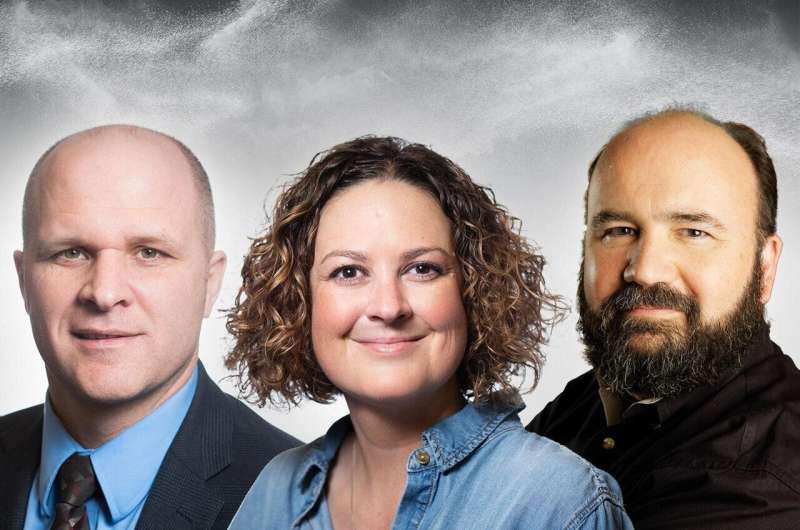
From left to right: Tim Johnson, Hunter Knox, and Harry Miley bring together different perspectives to better detect underground nuclear explosions. Credit: Composite image by Shannon Colson, Pacific Northwest National Laboratory
If an underground explosion occurs anywhere in the world, there is a good chance that a seismologist can pinpoint it. However, they won’t necessarily be able to tell you what kind of explosion had occurred—whether it is chemical or nuclear in nature. New research from Pacific Northwest National Laboratory (PNNL) scientists makes detecting nuclear explosions easier.
“To a seismologist, chemical and nuclear explosions look identical,” said Harry Miley, Laboratory Fellow and physicist in the National Security Directorate at PNNL. “Radionuclide detection technologies, like the PNNL-developed Xenon International and Radionuclide Aerosol Sampler/Analyzer, known as RASA, can discriminate between the two by detecting radioactive atoms that are created in nuclear explosions. However, we have very little scientific understanding of the geologic containment of these atoms following an explosion.”
When an underground explosion occurs, gases travel through fractures in the ground and escape into the atmosphere. Instruments such as Xenon International and RASA can then detect radionuclide gases, but their chemical signatures may be greatly affected by rock damage that the gases must pass through.
Earth scientist Hunter Knox and computational scientist Tim Johnson at the Earth Systems Science Division at PNNL showed up in Miley’s office one day proposing to investigate the effects of rock damage patterns on gas flow paths. The results, recently published in Pure and Applied Geophysics, have been transformational for understanding subsurface gas flow.
Hidden within the exit paths taken by these post-explosion gases are clues to their origin. Monitors around the globe can detect tiny amounts of radionuclides in the atmosphere but cannot differentiate between a radioactive isotope from an explosion or from other activities, such as the production of medical isotopes.
“This research helps us with timing—if a nuclear explosion occurs, when should we expect to detect the radioactive gases it produces? Coupling this information with seismologic data and radionuclide detection can reduce uncertainty in determining if an explosion is chemical or nuclear in nature,” said Johnson.
Ultimately, this research augments existing global nuclear non-proliferation efforts to keep citizens safe.
Global monitoring of airborne radioactive isotopes is critical for the detection of nuclear explosives. Credit: Pacific Northwest National Laboratory
A new way to image rock fractures
Knox knows geophysics well: she’s studied everything from volcanic eruptions to ice quakes to underground explosions. More often than not, you can find her at a remote field site, designing sensor networks to monitor and characterize the subsurface and man-made events. Her work on the Subsurface Technology and Engineering Research (SubTER) program in her previous tenure at Sandia National Laboratories (SNL) sparked her interest in the intersection between underground explosions and fracture imaging.
“ERT has not been used much for characterizing rock damage or gas flow patterns,” said Knox. “Our research lays the groundwork for this emerging use.”
The PNNL damage imaging research team collaborated with explosive research experts at SNL, to conduct three underground chemical explosions at Blue Canyon Dome, which is located on the Energetic Materials Research and Testing Center in Socorro, New Mexico. The research team used ERT to image the test site before and after detonating the subsurface explosions. They also explored the use of common tracers—such as water, hot compressed air, and nitrogen—for enhancing timelapse tomographic imaging. Together, these results can be used to simulate and predict the transport of gases following an underground nuclear explosion.
While more research needs to be done, this work demonstrates the use of ERT as an emerging capability for monitoring the effects of underground explosions. “Seeing the ERT images is like flipping to the back of the book,” said Miley.
Additional PNNL authors are Chris Strickland, Christine Johnson, Justin Lowrey, Parker Sprinkle, Dorothy Linneman, Vince Vermeul, Kirsten Chojnicki, Joshua Feldman, Brad Fritz, and Jonathan Thomle.
More information:
Tim C. Johnson et al, 3D Time-Lapse Electrical Resistivity Imaging of Rock Damage Patterns and Gas Flow Paths Resulting from Two Underground Chemical Explosions, Pure and Applied Geophysics (2022). DOI: 10.1007/s00024-022-03165-y
Citation:
Was that explosion chemical or nuclear? New research makes it easier to differentiate between the two (2023, January 3)
retrieved 4 January 2023
from https://phys.org/news/2023-01-explosion-chemical-nuclear-easier-differentiate.html
This document is subject to copyright. Apart from any fair dealing for the purpose of private study or research, no
part may be reproduced without the written permission. The content is provided for information purposes only.
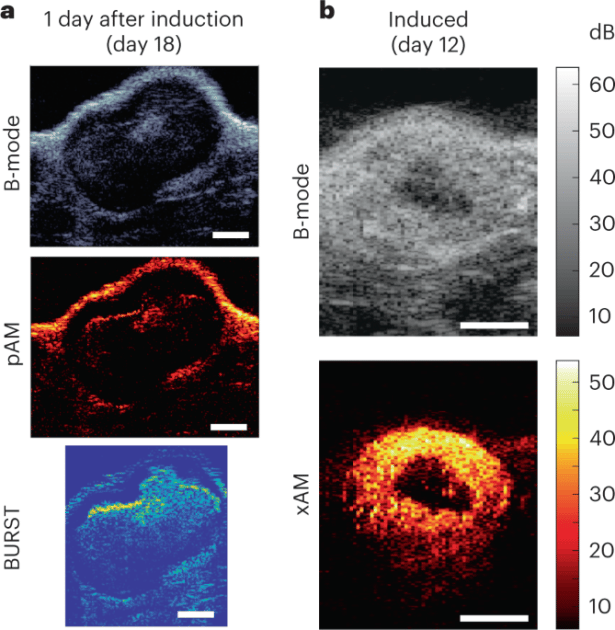
By screening natural prokaryotic gas vesicle gene clusters, we found and engineered new acoustic reporter genes (ARGs) that give bacteria and mammalian cells brighter ultrasound contrast for real-time noninvasive imaging. Expressing these ARGs in engineered cells enabled us to image tumor-homing bacteria and perform genetically guided tumor biopsies in vivo.
Get immediate online access to Nature and 55 other Nature journal
Subscribe to Journal
Get full journal access for 1 year
$99.00
only $8.25 per issue
All prices are NET prices. VAT will be added later in the checkout. Tax calculation will be finalised during checkout.
Buy article
Get time limited or full article access on ReadCube.
$32.00
All prices are NET prices.
Fig. 1: Ultrasound imaging of ARG expression in vivo.
References
Piraner, D. I. et al. Going deeper: biomolecular tools for acoustic and magnetic imaging and control of cellular function. Biochemistry56, 5202–5209 (2017). This review article discusses the challenges of using optical methods to image cells in living tissues and presents acoustic and magnetic methods as alternatives with deeper tissue penetration depth.
Bourdeau, R. W. et al. Acoustic reporter genes for noninvasive imaging of microorganisms in mammalian hosts. Nature553, 86–90 (2018). This paper reports the first-generation bacterial acoustic reporter genes that enabled visualization of bacteria in live animals using ultrasound but were limited because they could not be expressed in situ.
Farhadi, A. et al. Ultrasound imaging of gene expression in mammalian cells. Science365, 1469–1475 (2019). This paper reports the first-generation mammalian acoustic reporter genes that enabled visualization of mammalian cells in live animals using ultrasound but were limited because they required destructive imaging.
Maresca, D. et al. Nonlinear X-wave ultrasound imaging of acoustic biomolecules. Phys. Rev. X8, 041002 (2018). This paper reports an amplitude-modulation pulse sequence that enables nonlinear, nondestructive ultrasound imaging of gas vesicles.
Lakshmanan, A. et al. Acoustic biosensors for ultrasound imaging of enzyme activity. Nat. Chem. Biol.16, 988–996 (2020). This paper reports a use of GVs as genetically encodable intracellular biosensors for enzymatic activity.
Publisher’s note Springer Nature remains neutral with regard to jurisdictional claims in published maps and institutional affiliations.
This is a summary of: Hurt, R. C. et al. Genomically mined acoustic reporter genes for real time in vivo monitoring of tumors and tumor-homing bacteria. Nat. Biotechnol. https://doi.org/10.1038/s41587-022-01581-y (2023).
Rights and permissions
About this article
Cite this article
Real-time monitoring of tumor-homing bacteria and tumor cells in vivo using ultrasound. Nat Biotechnol (2023). https://doi.org/10.1038/s41587-022-01590-x
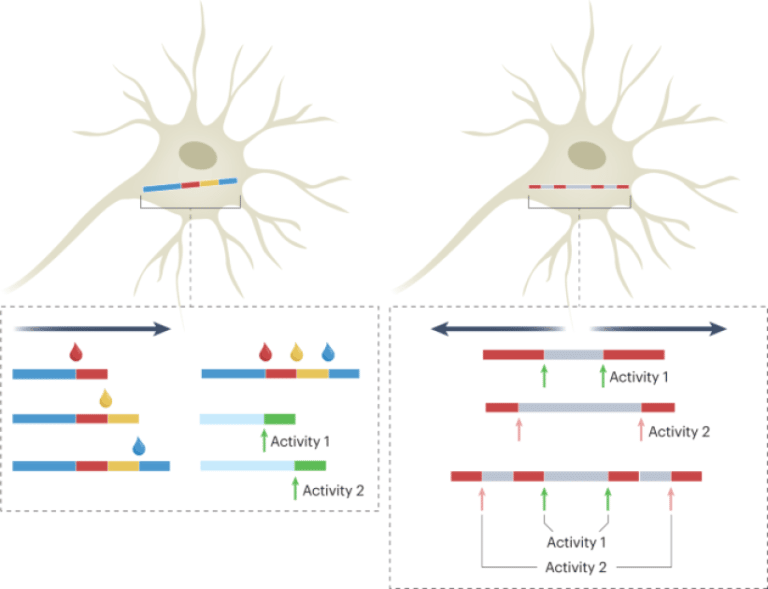
Elongating protein fibers record the transcriptional activity of single cells for later readout by imaging.
Previous studies have demonstrated the feasibility of encoding cellular history in the form of nucleic acid. However, analysis of DNA or RNA sequence modifications requires cell lysis, which eliminates spatial information. In contrast, the protein-based methods of Lin et al. and Linghu et al. retain spatial information, enabling activity mapping in complex cellular populations in the context of intact tissues.
Edited, transgene-free plants are produced without tissue culture by RNA migration from rootstocks to grafts.
Plant engineering and breeding are entering an era of rapid progress thanks to the sophistication of new tools for genomics research and genetic modification1. Foremost among these tools is CRISPR genome editing, which enables precise genetic changes to improve crop phenotypes. Yet several aspects of this technology would benefit from optimization. New work in Nature Biotechnology by Yang et al.2 tackles the lengthy time frames required to produce transgene-free edited plants. The authors introduce a CRISPR delivery method that uses rootstock grafting to transfer mobile CRISPR RNAs from a transgenic donor plant to a compatible wild-type recipient plant, enabling the creation of homozygous edited Arabidopsis thaliana plants in just one generation of breeding.
State Key Laboratory of Plant Cell and Chromosome Engineering, Center for Genome Editing, Institute of Genetics and Developmental Biology, Chinese Academy of Sciences, Beijing, China
Jiacheng Hu & Caixia Gao
College of Advanced Agricultural Sciences, University of Chinese Academy of Sciences, Beijing, China
This article is part of a limited editorial series, called The 2023 Notebook, and is designed to be a guide to marketing and media buying in the new year.Explore the series here.
It’s not often a new revenue opportunity comes along for media agencies, as their traditional sources of income (commissions on planning and buying) dry up in the age of procurement.
That’s in large part why both holding companies and independent agencies have rushed to grow their commerce media units — it’s a new vein of revenue that happens to coincide with and take advantage of the rush of new retail media networks and e-commerce companies formed over the last two years.
IPG’s UM shop recently expanded the scope of its long-time UM Shopper offering to the broader UM Commerce, a tacit realization of the broader commerce media potential. Likewise, Omnicom earlier in 2022 tapped a commerce czar in Frank Kochenash. On the indie side, Court Avenue expanded its e-commerce offerings while Icon Commerce rebranded to reflect its focus in the area.
For one, there are the growing number of retail media networks (RMNs), most of them based in the U.S., which together could haul in something like $100 billion by 2026, according to McKinsey’s report. Seemingly, there’s a new one announced almost weekly, the most recent being Fyllo, a cannabis-themed RMN, as well as a new retail ad network from ad-tech firm Quotient, which introduced an aggregator of sorts to other RMNs just before the holidays.
“At present, retail media only accounts for about one-tenth of a brand’s total ad spending on average, but we’re hearing from our clients and partners that more and more conventional media dollars are going to be reallocated to retail media,” said Lisa Hurst, evp of marketing and strategy at full service creative shop Upshot Agency. “Especially as these networks become more sophisticated and better partners in executing omni-commerce campaigns. We expect to see more retailers launching their own media platforms.”
Agencies with multi-national reach could end up benefiting, as RMNs are expected to grow quickly in other parts of the world as well, noted Carolyn Murphy, vp of Americas with WARC/Ascential.
The shadow of Amazon
Then there’s the broader e-commerce world, which includes the granddaddy of them all, Amazon — a company that seems to grow but under the strains of a competitive pinch from companies like Walmart. E-commerce also includes livestream shopping, which hasn’t quite materialized as its proponents would hope — although not for lack of trying.
Possibly the main challenge within both the agency and client worlds — when progress is being made — is getting one side of the business to talk to the other. Shopper marketing budgets aren’t the same as media budgets, and they’re usually under different P&L lines in both agencies and brands.
Likewise, much of lower-funnel, performance-driven media work relies on wholly different stats, KPIs and measurement tools than upper-funnel brand-driven efforts. For commerce media to deliver better results, those gaps need to be filled by other insights. That doesn’t always happen.
“The distinction at the client level between retail media performance media, or commerce media, is not a clear distinction,” Jay Pattisall, vp and senior agency analyst at Forrester, told Digiday in September.
There’s another potential challenge some brands will have to overcome in this growing space, noted Michael Shields in a recent Next in Marketing blog post. He wrote that brands that don’t already have shelf space with a retailer that offers an RMN can end up paying higher prices.
But on the positive side, there’s a good chance that media agencies will be able to figure out with their clients how to harness the right insights to start getting non-endemic categories (from autos to travel to entertainment) to spend their marketing dollars in commerce media. And why not? Just because you bought more detergent on Kroger’s website doesn’t mean you might not also be interested in a deal on a new car, right?