Home Blog Page 6991

Want a Clue on Health Care Costs in Advance? New Tools Take a Crack at It

0

Need medical treatment this year and want to nail down your out-of-pocket costs before you walk into the doctor’s office? There’s a new tool for that, at least for insured patients.

As of Jan. 1, health insurers and employers that offer health plans must provide online calculators for patients to get detailed estimates of what they will owe — taking into account deductibles and copayments — for a range of services and drugs.

It’s the latest effort in an ongoing movement to make prices and upfront cost comparisons possible in a business known for its opaqueness.

Insurers must make the cost information available for 500 nonemergency services considered “shoppable,” meaning patients generally have time to consider their options. The federal requirement stems from the Transparency in Coverage rule finalized in 2020.

So how will it work?

Patients, knowing they need a specific treatment, drug, or medical service, first log on to the cost estimator on a website offered through their insurer or, for some, their employer. Next, they can search for the care they need by billing code, which many patients may not have; or by a general description, like “repair of knee joint,” or “MRI of abdomen.” They can also enter a hospital’s or physician’s name or the dosage amount of a drug for which they are seeking price information.

Not all drugs or services will be available in the first year of the tools’ rollout, but the required 500-item list covers a wide swath of medical services, from acne surgery to X-rays.

Once the information is entered, the calculators are supposed to produce real-time estimates of a patient’s out-of-pocket cost.

Starting in 2024, the requirement on insurers expands to include all drugs and services.

These estimator-tool requirements come on top of other price information disclosures that became effective during the past two years, which require hospitals and insurers to publicly post their prices, including those negotiated between them, along with the cost for cash-paying or uninsured patients.

Still, some hospitals have not fully complied with this 2021 disclosure directive and the insurer data released in July is so voluminous that even researchers are finding it cumbersome to download and analyze.

The price estimator tools may help fill that gap.

The new estimates are personalized, computing how much of an annual deductible patients still owe and the out-of-pocket limit that applies to their coverage. The amount the insurer would pay if the service were out of network must also be shown. Patients can request to have the information delivered on paper, if they prefer that to online.

Insurers or employers who fail to provide the tool can face penalty fines of at least $100 a day for each person affected, a significant incentive to comply — if enforced.

And there are caveats: Consumers using the tools must be enrolled in the respective health plan, and there’s no guarantee the final cost will be exactly as shown.

That’s because “unforeseen factors during the course of treatment, which may involve additional services or providers, can result in higher actual cost sharing liability,” federal regulators wrote in outlining the rules.

Insurers will not be held liable for incorrect estimates.

Because the cost estimates may well vary from the final price, either because the procedure was more complex than initially expected, or was handled by a different provider at the last minute, one risk is that “I might get a bill for $4,000 and I’m going to be upset because you told me $3,000,” said Gerard Anderson, a professor of health policy and management and of international health at the Johns Hopkins University Bloomberg School of Public Health.

Many insurers have offered versions of cost-estimator tools before, but small percentages of enrollees actually use them, studies have shown.

Federal regulators defended the requirement for estimator tools, writing that even though many insurers had provided them, the new rule sets specific parameters, which may be more detailed than earlier versions.

In outlining the final rule, the Centers for Medicare & Medicaid Services pointed out that some previous calculators “on the market only offer wide-range estimates or average estimates of pricing that use historical claims data” and did not always include information about how much the patient had accumulated toward an annual deductible or out-of-pocket limit.

The agency says such price disclosure will help people comparison-shop and may ultimately help slow rising medical costs.

But that isn’t a given.

“CMS has a lot of people who believe this will make a significant impact, but they also have a long time frame,” said David Brueggeman, director of commercial health at the consulting firm Guidehouse.

In the short term, results may be harder to see.

“Most patients are not moving en masse to use these tools,” said Dr. Ateev Mehrotra, a professor of health care policy at Harvard Medical School.

There are many reasons, he said, including little financial incentive if they face the same dollar copayment whether they go to a very expensive facility or a less expensive one. A better way to get patients to switch to lower-cost providers, he said, is to create pricing tiers, rewarding patients who seek the most cost-effective providers with lower copayments.

Mehrotra is skeptical that the cost estimator tools alone will do much to dent rising medical prices. He’s more hopeful that, in time, the requirement that hospitals and insurers post all their negotiated prices will go further to slow costs by showcasing which are the most expensive providers, along with which insurers negotiate the best rates.

Still, the cost-estimator tools could be useful for the increasing number of people with high-deductible health plans who pay directly out-of-pocket for much of their health care before they hit that deductible. During that period, some may save substantially by shopping around.

Those deductibles add “pressure on consumers to shop on price,” said Brueggeman, at Guidehouse. “Whether they are actually doing that is up for debate.”

Read More
Julie Appleby, Kaiser Health News

Amazon-One Medical deal clears regulatory hurdle in Oregon


Skip to main content


Amazon’s $3.9 billion proposed deal to acquire One Medical surmounted one obstacle when Oregon regulators approved the deal last week.

The Oregon Health Authority cleared the Amazon-One Medical transaction Dec. 28. The regulator concluded the acquisition would be unlikely to affect access and cost for Oregonians and ruled out a more comprehensive review because One Medical operates only five primary care clinics and treats few patients in the Beaver State.

Last July, Amazon announced its intent to acquire One Medical, a membership-based primary care practice that offers virtual and in-person services to commercially insured patients. The companies are awaiting approval from the Federal Trade Commission, which is reviewing the all-cash deal.

If the acquisition goes through, the Oregon Health Authority would conduct a follow-up analysis within five years to determine if the deal influenced quality, access, affordability and equity, according to the agency. In the meantime, Amazon and One Medical would have to provide the state with reports every six months detailing the services they offer, the patient populations they serve and what, if any, changes they make in corporate governance.

Despite approving the deal and emphasizing One Medical’s limited presence in the state, the Oregon Health Agency expressed concern that the provider could siphon off patients with commercial insurance, which tends to pay higher rates than Medicare and Medicaid, from other providers, which could be financially disadvantages to those competitors.


Read More
Gabriel Perna

LCMC Health completes $150M acquisition of 3 HCA hospitals in Louisiana


Skip to main content


LCMC Health has acquired three HCA Healthcare-owned hospitals in southeast Louisiana for $150 million, following approval by state regulators, the nonprofit system announced Tuesday. 

Tulane Medical Center, Tulane Lakeside Hospital and Lakeview Regional Medical Center are part of New Orleans-based LCMC and have transitioned to nonprofit ownership through the deal. The approximately 1,900 employees at the facilities will continue to have jobs, in addition to “new and expanded opportunities for growth and advancement,” according to a news release. LCMC has agreed to invest $220 million over five years in the three facilities.

HCA acquired Tulane Medical Center in 1995 and merged its Lakeside Hospital a decade later, forming Tulane Health System. Lakeview Regional joined the system in 2017.

A larger partnership announced in October between LCMC and Tulane University will focus on specialty care, academic medicine, innovation and training in southeast Louisiana. Tulane will integrate its facilities with LCMC within the next two years. During that time, Tulane Medical Center will shift most of its services to East Jefferson General Hospital and University Medical Center New Orleans. 

Tulane has been investing in its research platform and doubled its external funding for the medical school in the last several years. With the partnership, it plans to keep growing clinical trials and translational research in cardiology, cancer and infectious diseases, as examples, Tulane President Michael Fitts said.

“It really did all sort of come together at a pivotal moment for both of us, and it’ll be transformational for the city of New Orleans and the Gulf South state of Louisiana,” LCMC Health CEO Greg Feirn said. “We’re expanding on a partnership that already existed, so creating more consistency and efficiency across our healthcare system.”

The current Tulane Medical building will house a new nursing program, clinical research and educational space. Tulane University has agreed to invest about $600 million into downtown New Orleans, a project that also includes revitalization of the Charity Hospital building. Tulane plans to move into approximately 400,000 square feet of that building starting as early as 2025. The space will eventually house 600 or more researchers, Fitts said.

The partnership received some pushback from nurses, including members of National Nurses United, who questioned how it would affect patient care and healthcare costs in the region. The deal leaves just two healthcare providers in the area—LCMC and Ochsner Health. 


Related Article

Read More
Caroline Hudson

The Check Up: Andy Danielsen, Mayo Clinic Ventures

0

Get Newsletters

Sign up for enewsletters and alerts to receive breaking news and in-depth coverage of healthcare events and trends, as they happen, right to your inbox.

Subscribe Today

MH Magazine Cover

MH magazine offers content that sheds light on healthcare leaders’ complex choices and touch points—from strategy, governance, leadership development and finance to operations, clinical care, and marketing.

Subscribe

Connect with Us

Our Mission

Modern Healthcare empowers industry leaders to succeed by providing unbiased reporting of the news, insights, analysis and data.

Read More
Modern Healthcare

Healthcare vendors are the new front of the cybersecurity war


Skip to main content


Cybercriminals seeking to seize sensitive health information are increasingly targeting vulnerable vendors to get around the safeguards healthcare providers, insurers and other entities have erected to protect patient data.

As healthcare organizations more commonly tap third-party vendors to handle business functions, cybersecurity experts warn they’re creating opportunities for hackers. Data breaches of vendors, which fall under the business associate category on the Health and Human Services Department’s Office for Civil Rights breach portal, have grown in number and scale over the past five years.

Through November, there have been 116 reported breaches on business associates that affected 17.7 million patients. These accounted for 17.5% of healthcare breaches but 36.1% of patients whose data were exposed so far this year. Only 40 breaches hit business associates, involving 5.9 million patient’s data, during the same period in 2018.

Hackers view the data vendors possess as a “treasure trove,” said Jeff Krull, a partner who leads the cybersecurity practice at the consulting firm Baker Tilly.

Instead of breaching one organization’s data, criminals can obtain data from multiple providers and health plans that includes patient names, addresses, Social Security numbers, and treatment and prescription information. The cyberattack on printing and mailing service OneTouchPoint, detected in April, involved more than three dozen providers and insurers, including Humana, Kaiser Permanente and several Blue Cross and Blue Shield companies, and affected more than 4 million patients—making it the biggest healthcare attack reported this year.

“If a threat actor can identify that a vendor’s working with 10 or 12 hospital systems and healthcare plans, that’s going to make them a very high-value target,” said Alexander Urbelis, a senior counsel at the law firm Crowell & Moring who specializes in identifying cybersecurity threats.

Why now?

Health systems are increasingly using vendors to achieve financial, operational and clinical efficiencies, especially amid the workforce shortage, said John Riggi, the national advisor for cybersecurity and risk at the American Hospital Association.

“They just may not have the human resources or the human capital internally to affect certain business processes,” Riggi said. Large health systems may rely on thousands of vendors for administrative services, including payroll and electronic health records, and for software that runs medical devices such as X-ray machines and radiology equipment.

Stressed supply chains and financial issues at hospitals, exacerbated by the COVID-19 pandemic, are driving them to sign contracts with vendors. “You might be looking to outsource something you did in-house before to save some money,” Krull said.

These broader circumstances make it more difficult for healthcare organizations to invest in stronger security measures, Krull added. “It really creates this perfect storm,” he said.

While healthcare companies are strategically looking to contractors to improve business operations and clinical services, other vendor relationships are falling into their laps as health systems expand. “If there is a merger or acquisition, you’re taking on not only that entity, but also all their relationships,” Riggi said.

Yet health systems may opt to hire vendors to carry out tasks such as patient testing even when they are aware the contractor lacks strong cybersecurity measures if they conclude patient outcomes outweigh the risks, Krull said.

Attacks involving insurers happen less frequently than those on providers. Because they don’t have patients walking in and out doors, insurers can operate more as self-contained businesses and tightly control who has access to information, Krull said.


Bolstering cybersecurity

Cyber risks are now top of mind for many health systems’ executives, Riggi said. Experts stress there’s more to be done as threat actors become more sophisticated.

“Vendor oversight has become a really big thing in the past five years, in that before, health systems and health plans weren’t conducting appropriate due diligence on these [vendors], or maybe no due diligence at all,” said Doriann Cain, a partner at law firm Faegre Drinker who works with healthcare clients on cybersecurity practices.

In addition to avoiding the hefty financial cost of data breaches, improving cybersecurity is important for patient care and brand reputation.

Last December, payroll provider Ultimate Kronos Group revealed it fell victim to a ransomware attack, which caused a stir among the many health systems that relied on it for employee scheduling. The disruption caused a cascading effect that delayed care at numerous hospitals during the COVID-19 omicron surge, Riggi said.

Tightening cybersecurity and properly vetting vendors helps providers improve patient health outcomes, Riggi said. “This is about protecting patients. If you divert an ambulance or you delay cancer treatment, those effects potentially cause physical harm,” he said.

Reputational damage following a cyberattack typically tends to hurt the healthcare organization, not the vendor. But it’s not always easy to change contractors.

“Some of those vendors almost have a monopoly in terms of the services they’re providing, so you see healthcare providers not stuck with them, but maybe not always able to utilize another vendor who may be performing these services that they expect and want to see,” Cain said.

Health system and health insurance company leaders must assess a vendor’s cybersecurity controls before trusting it with patient data. Cataloging third-party relationships across a health system is the first step they should take, Riggi said.

Healthcare companies considering vendors should investigate several key factors to determine if their would-be partners can protect patient data, such as requesting information about their cybersecurity measures, ensuring the vendors’ security controls are certified by third parties, and insisting contractors undergo security audits such as Systems and Organization Controls 2 (SOC 2), the experts Modern Healthcare interviewed said. 

Tim Broderick contributed to this story.


Read More
Lauren Berryman

Ones to watch: Keep an eye on these healthcare leaders in 2023


Skip to main content


Buying sprees, business formations and corporate restructurings meant for a busy 2022 for the nation’s healthcare leaders. As the new year gets underway, here are 10 leaders to watch.


Iman Abuzeid, Incredible Health

Co-founder and CEO Iman Abuzeid leads the healthtech hiring platform’s efforts to fundamentally change the way hospitals recruit nurses. Since founding the company in 2017, Abuzeid has overseen its partnerships with 600 hospitals and managed its software to support approximately 400,000 nurses on Incredible Health’s platform. Rather than having clinicians apply to health systems, the company’s algorithms assess which nurses are a good fit for open positions and send batches of qualified candidates to recruiters. In August, the company’s valuation rose to $1.65 billion. She plans to invest in free tools for nurses such as continuing education and pre-salary estimators, while also introducing educational scholarships and advancing the company’s new nurse graduate suite and personalized career support tools.


Rosalind “Roz” Brewer, Walgreens 

CEO Rosalind “Roz” Brewer led Walgreens on a buying spree in 2022 to expand its U.S. healthcare arm and is eyeing technology-related acquisition opportunities. In the latter half of the year, Walgreens’ VillageMD, a primary care company, announced it would acquire Summit Health-CityMD for $8.9 billion, decided to fully acquire post-acute care company CareCentrix for $392 million and agreed to pay $1.37 billion to fully acquire specialty pharmacy firm Shields Health Solutions. Brewer will continue to grow Walgreens’ integrated network by investing big and boosting the chain’s presence in some of the healthcare industry’s fastest-growing segments.


Mark Cuban, Mark Cuban Cost Plus Drug Co.

Mark Cuban continues stirring the waters. The billionaire entrepreneur is co-founder of the online pharmacy started in January 2021 to slash drug prices and cut pharmacy benefit managers out of the process. Its inventory has grown from 100 generic drugs to nearly 1,000 in a year. Within six months, the team hopes to offer more than 1,500 medications for just 15% more than it pays manufacturers. In October, the company partnered with its first insurer Capital Blue Cross, which will start covering members’ purchases at Cost Plus Drugs this year. The company in December entered the employer market by partnering with and EmansaRx, the pharmacy benefit manager spun out of the Purchaser Business Group on Health, to provide discounted prescription drugs to self-insured employers.


Dr. Marc Harrison, General Catalyst

Marc Harrison left Intermountain Healthcare in August for venture capital firm General Catalyst for an unspecified role and later hinted about the formation of a healthcare company aiming to “make healthcare more equitable, accessible and affordable for millions of people across the country and around the world.” In November, General Catalyst announced a partnership with 10 health systems to create a digital health ecosystem and the company plans to add five more partners. General Catalyst will serve as a “think tank” for the 15 organizations and give them access to companies within its expansive digital health portfolio. Digital health is becoming a more integral part of healthcare delivery and Harrison is expected to be a leading voice in how that dynamic evolves.


Lina Khan, Federal Trade Commission

Lina Khan, appointed chair of the FTC in June 2021 by President Joe Biden, has led the charge to update the merger guidelines used by regulators to determine whether consolidation violates antitrust laws. The FTC, under Khan’s leadership, and the Justice Department, are updating the horizontal and vertical merger guidelines to reflect the latest healthcare transactions and current market imbalances. Regulatory agencies have struggled to keep up with vertically integrated companies that combine insurers, providers, pharmacies and other stakeholders. The pending overhaul is expected to address issues such as worker-specific impacts and other non-price related consequences and the presumption that vertical mergers are beneficial. About 90% of acute-care markets in metro areas are highly concentrated, as many hospitals have expanded market share through small transactions that skirt regulatory review. Her term ends in September 2024.


Wright Lassiter, CommonSpirit Health

Wright Lassiter took the helm as president and CEO of the second-largest nonprofit health system by revenue in August after serving as CEO of Henry Ford Health since 2016. To help stabilize the labor pipeline at the $33 billion, 140-hospital, 27-state system, CommonSpirit launched the nation’s largest nursing residency program in the fall. It also ended a 25-year joint operation with Livonia, Michigan-based Trinity Health when Trinity completed its acquisition of health system MercyOne. CommonSpirit plans to expand services in Maricopa County, Arizona, one of the nation’s fastest-growing markets, and look for potential merger partners to “bolster our ability to deliver high quality, prospective care,” Lassiter said.


Neil Lindsay, as senior vice president of health services, spearheads the tech giant’s ambitions to disrupt healthcare. He was  appointed in November 2021 and his first full year was memorable. In 12 months, the tech giant announced plans to acquire One Medical and shut down Amazon Care, launched Amazon Clinic and stopped supporting an Alexa-specific healthcare project. It remains active in primary care, pharmacy fulfillment, direct-to-consumer telehealth and cloud-based health applications. Amazon isn’t afraid to spend money in healthcare and a challenging macroeconomic environment could mean there are plenty of digital health companies looking for an exit. But in an industry that moves at a glacial pace, Amazon has struggled to scale its healthcare offerings the same way it has done in other sectors.


CEO Sarah London will focus on growing the health insurer’s stock price in 2023 as the company proceeds with a value-creation plan pushed by activist investor Politan Capital Management. Since taking the top role in March, London has focused on selling Centene’s non-health plan businesses, particularly those related to pharmacy services. She also worked to transform the company from a network of local subsidiaries to a single, centralized operation. Centene will likely have to reckon with Medicaid redeterminations next year, and the insurer could face a steep decline in enrollment if it’s unable to convert Medicaid members into exchange customers. She will also have to look for new ways to grow the company’s Medicare Advantage membership, as the insurer’s history of poor-performing plans will limit the quality bonuses and the opportunity to grow in the program in 2023. 


Ana Pujols McKee, The Joint Commission

Dr. Ana Pujols McKee, chief diversity, equity and inclusion officer, is putting health equity at the top of every health system’s strategic plan. This year she will oversee the implementation of new accreditation requirements for primary-care clinics, behavioral health centers, critical access facilities and hospitals that include designating an officer to lead a strategy for reducing health disparities, screening patients for social determinants of health and adding demographic breakdowns to safety and quality data. “My primary agenda for 2023 is to help health care organizations meet these new requirements as they address health care disparities within the communities they serve,” McKee said. 


G. Mike Mikan, Bright Health Group

CEO G. Mike Mikan spent the past year slashing the insurtech’s operations to stabilize its rocky finances. The company exited 15 exchange markets, ended its Medicare Advantage operations in every market except California, sold $175 million worth of stock and cut nearly 20% of its staff. At the end of the year, it received notice from the New York Stock Exchange that its was in danger of being delisted because of its low share price.The company plans to restructure its provider arm, NeueHealth, and focus on contracting with outside payers in Texas and Florida, particularly those that enroll Medicare patients, and expand its participation in the federal ACO REACH program. Mikan has said in he expects to operate a profitable company in 2023 in terms of adjusted earnings before interest, taxes and depreciation.


Read More
Modern Healthcare

Mercy Virtual Care Center: A deep dive into a virtual hospital

0

With nearly a decade of successfully running a virtual ICU and a virtual care hospital known today as Mercy Virtual Care Center, Mercy in St. Louis, Missouri, embarked on amplifying a new digital-first frontier in 2015: A new virtual care model of remote patient monitoring for patients living with complex conditions.

THE PROBLEM

“In our ambulatory virtual programs, we manage complex chronically ill patients,” said Annie Bannister, RN, executive director of vEngagement at Mercy. “We follow these patients longitudinally, meaning when someone enrolls with us, we will manage them alongside their primary care physician and specialists throughout their entire care journey.

“Some of the chronic diseases being managed are CHF, COPD, diabetes and chronic kidney disease, with many patients living with two or more of those conditions,” she continued. “The patients are enrolled in RPM through Mercy Virtual’s patient engagement program, vEngagement – “v” for virtual.”

The program was born out of a need to better manage the sickest tier of Mercy’s patients. The sickest 5% of this cohort are responsible for 50-60% of expenditures. Despite this high-cost care, these patients experienced fragmented care, frequently cycling in and out of inpatient and outpatient settings.

Historically, the traditional healthcare system was not equipped to deliver the high-intensity care required to manage this group of complex patients, she noted.

“Patients with chronic diseases often deal with daily symptom burden,” Bannister explained. “Before vEngagement, the system was not set up to offer on-demand daily symptom triage and management. Sadly, after attempting to navigate this messy world of chronic disease alone, many patients stop trying to figure out what symptoms to be most worried about.

“Also, many patients with chronic disease do not want to be a burden to family members,” she continued. “Because of this, many patients wait until symptoms are so bad that they have no choice but to call 911. The need for daily communication to help a patient navigate ‘Is what I’m feeling normal today?’ and other questions that vEngagement enables was a wholly new concept in care service.”

Bannister and other providers came to vEngagement from internal medicine. They noticed a gap in care for this particular group of patients and believed that virtual care could bridge this gap between ambulatory and inpatient. They hoped to replace fragmentation with cohesive, integrated, patient-centered, data-driven care delivery.

“We started with a small pilot of 50 patients in Washington, Missouri,” Bannister recalled. “We were determined to answer the question, ‘Can we apply higher-intensity care to this cohort and improve outcomes?’ It didn’t take long to determine that the answer was ‘Yes.’

“In a few months, we began to see decreases in hospital utilization, patient satisfaction scores at 98% favorable and closing of gaps in care,” she continued. “Our pilot program became the added layer of support this group of patients desperately needed.”

“We recognized that we couldn’t keep relying on hiring more labor and that personalized, individualized and proactive triage care was fast evolving.”

Dr. Gavin Helton, Mercy

With the early introduction of home biometric monitoring, daily surveys and real-time access to providers, the virtual team was able to deliver the high-intensity, comprehensive, individualized care that was previously not possible.

Many patients in RPM reside either in extremely rural or urban areas. Yet their obstacles to accessing care are the same regardless of geography.

“When talking about their specific diseases, we at Mercy Virtual intentionally take a holistic approach to patient care,” said Dr. Gavin Helton, senior vice president for population health at Mercy. “These individuals can have any number of diseases and chronic conditions that are incurable. Oftentimes, some of their complaints or symptoms might be related to a secondary diagnosis, or perhaps a behavioral health concern or unmet social needs, for example loneliness.

“We realized the need to have a dedicated care team who very intentionally leverages technology to scale and provides the highest quality of care services to those who most need it, all in a proactive manner,” he continued. “But we also very intentionally develop relationships. vEngagement is all about our singular focus on patient engagement. Our goal is to show respect for the dignity of the individual and treat them in a holistic manner.”

As part of treating their chronic illnesses, staff help them to become comfortable maintaining their own self-care in the home. These patients still have continual needs requiring traditional healthcare episodically. When that occurs, they fall in the gaps in care and end up receiving acute care in a facility as opposed to care being brought to them proactively in the home.

Bannister keeps remembering the landscape when she started with this program and the COVID-19 pandemic hadn’t yet hit, virtual visits weren’t a thing that were happening with patients.

“But we knew it was something our patients needed,” she stated. “We needed to bring the care to them. For many of our elderly chronically ill patients, the burden of getting into the car and out of the car and down the office hallway into an exam room often prevented them from getting the care they need in the traditional office setting.

“These patients are short of breath and often don’t move around well,” she continued. “It’s rewarding to just be able to bring care to them. I don’t know that we highlighted how important that was to patients being able to connect them with a physician, or a nurse practitioner, or a nurse without having to have them leave their home.”

It seems normal to Bannister now after the pandemic.

“COVID has really normalized these virtual visits,” she said. “But when we started, one of the greatest things we could accomplish was just bringing care to patients.”

PROPOSAL

During the RPM pilot’s first few years, patients’ days in hospital decreased and satisfaction shot up. vEngagement was closing important gaps delivering the type of quality care so desperately needed, Bannister said.

“Patients increasingly started to enroll, and our healthcare communities called for expansion,” she recalled. “We began scaling vEngagement for growth quickly from Washington to other Missouri communities, such as St. Louis and Springfield, and then to Northwest Arkansas and Oklahoma.

“We had also introduced biometric monitoring and daily surveys early to the program,” she added. “For the first time, these patients with complex, chronic illnesses had real-time access to providers  something unheard of in their world. Like everyone else, they’re used to calling their primary care physician or specialist’s office and hearing a ‘Press one,’ or ‘Press two’ triage, or getting a voicemail.”

Consequently, with the pilot’s success, the objective was to scale this intervention to reach as many high-risk lives as possible.

“As we scaled the program from one community to the next, we also began increasing our team to take care of this ever-growing patient cohort,” Bannister said. “By 2018, our team of registered nurses, advanced practice providers, providers and physicians grew nearly five-fold and continued to increase every time more patients were added.

“When our vEngagement team grew to more than 100 members, we shifted to looking at leveraging software-enabled productivity,” she continued. “We knew we would be unable to continue this growth rate or we would risk encountering a shortage of nurses and advanced practitioners in the St. Louis area.”

Bottom line, staff reasons for considering technology adoption were twofold: One was that once a care team becomes larger, the management infrastructure required serving a team that size becomes unwieldy.

The second reason is that they would soon run out of healthcare workers to hire and, from a fiscal and operational standpoint, program expansion no longer made sense to continue without automation. Further, staff people were sitting on a mountain of productivity data just waiting to be unlocked.

“Five years later, in 2020, we turned to Myia Health’s cloud-based RPM platform to help us accomplish four RPM strategies, reaching more patients without having to add more team members,” she explained.

First, risk-stratify the patient population. This strategy was necessary to deliver the right intensity of care to every patient based on their individual needs at a moment in time. Staff members were still applying a “one size fits all.” If they wanted to add more patients, they needed to know which patients were stable and could have their care de-escalated and which patients needed frequent touchpoints.

Myia Health had the promise of machine learning models to help staff achieve risk stratification and deliver the right intensity of care to patients: an acuity model and time-to-event model. The acuity model would break down the population into high, medium and low acuity levels. The time-to-event model would notify staff when patients appear to be nearing hospitalization.

Second, leverage asynchronous messaging. Then, patient communication was happening over the phone and through video. The staff knew these modes were not the fastest and most convenient for patients to access care.

Myia Health held the promise of “closed-loop,” asynchronous messaging for patients, which was really desirable. Closed loop means a care team member receives “read” and “unread” messaging receipts to let them know if a patient received the intended message.

“For instance, a clinician sends the following e-message to a patient: ‘Hey, Bob, you started taking your antibiotics yesterday. Are you feeling better?'” Bannister explained. “The clinician can move on attending the next patient knowing that in 30 minutes, if Bob doesn’t read their message, an alert will inform the care team, ‘Bob’s message is unread.’

“This closed loop gives clinicians the security of trusting the messaging system knowing all important messages will be received,” she added. “So they can intervene.”

Third, reduce alert volume. Chasing alerts was by far how many of the Mercy caregivers spent most of their day. Complex, chronically ill patients take their vital signs daily, which are automatically transmitted to the care team.

Certain alerts trigger if vital signs are outside the individual patient’s threshold. For example, if blood pressure is greater than a certain number an alert flags the provider. But if thousands of patients are entering daily vitals, the number of alerts being generated skyrockets.

“We needed a way to dial down the volume of false alert noise,” Bannister said. “Myia Health would apply a data-driven approach to ensure clinicians weren’t chasing unnecessary alerts and therefore focused on the patients who they needed to care about.”

Panel views to allow providers (not alerts) to drive care. Mercy’s former software platform was alert-driven. Providers would jump from alert to alert, bypassing assigned patients and their potential care needs.

Instead, the alerts were driving the care.

“In 2023, we plan to launch a codeveloped standard deviation weight model that will reduce the weight alerts by greater than 60% and overall alert volume by 23%.”

Annie Bannister, RN, Mercy

“We wanted to change to a panel view of patients sorted by tiers based on acuity levels and put the provider in the driver’s seat administering care,” said Bannister.

Myia Health’s promise of a human-centered design approach to development was especially attractive, Helton noted.

“A couple years before the pandemic, we were transitioning to virtual care at a time when few health systems were serious about telehealth,” he recalled. “We did not want a turnkey solution, believing that solution type would not actually meet our needs. As our patient populations changed, and as our vEngagement program changes, the RPM program and platform must change with us.

“We were growing and changing and the appeal of iteratively evolving Myia’s solution with clinician feedback was definitely well received,” he continued. “Mercy Virtual’s RPM program is all about serving more patients more effectively. We recognized that we couldn’t keep relying on hiring more labor and that personalized, individualized and proactive triage care was fast evolving.”

There was an intentional dependency on technologies for asynchronous communication, or messaging, that superseded one-on-one scheduling of staff time, was reactive in nature, provided educational and other resources outside the traditional in-person visit, and was more aligned with the patient’s convenience and schedule, he added.

MARKETPLACE

There are many vendors of telemedicine technology and services on the health IT market today. Healthcare IT News published a special report highlighting many of these vendors with detailed descriptions of their products. Click here to read the special report.

MEETING THE CHALLENGE

Myia Health equips Mercy Virtual patients with RPM kits containing a tablet to monitor their vital signs and online capabilities to call, text or conduct a video consult with their virtual care team; biometric monitoring devices such as a blood pressure device, scale, pulse oximeter and thermometer.

Mercy Virtual also sends a “rescue kit” akin to a pencil bag affixed with a precautionary message: “Please do not use these medications without talking to your providers first” and has the appropriate phone number. When the vEngagement provider meets the patient, they determine which health conditions typically send them to the hospital.

They then send medications to their local pharmacy to keep in the rescue kit. For example, if they frequently have COPD exacerbations, staff send steroids and antibiotics to the pharmacy to pick up and put in the rescue kit. The rescue kit comes in handy when, for example, a patient with frequent urinary tract infections needs an antibiotic at 2 a.m. Christmas morning when the pharmacy is closed.

Mercy Virtual implemented four remote patient monitor program strategies.

“First, we risk-stratified the complex, chronically ill population with the machine learning-based acuity and time to-event models,” Bannister said. “The acuity model, which utilizes electronic health record and zip code social determinants of health data, sets appointment cadence to match patients’ right level of acuity assigning a risk status of high, medium or low.

“With that, we scheduled intentionally for the first time each participant’s risk status at weekly (high), bi-weekly (medium) or monthly (low) cadence to match their acuity,” she continued. “Previously, our team saw patients round the clock. The time-to-event model assisted how clinicians monitor and triage through alerts activating at the same time, prioritizing the identified high-risk patients.”

Mercy Virtual implemented its second strategy developing a closed loop asynchronous system for messaging patients. With this system, providers are alerted to any message that went “unread.” This closed loop allowed providers to push much of the conversation previously occurring over the phone to messaging.

“Our third strategy, reducing alert volume, presented one of the greatest value adds to our alerting through Myia,” Bannister said. “A single provider feedback feature attached to every alert poses the question, ‘Did this alert cause a change in care? Yes or no.’

“Every time a clinician clears an alert, this question is a hard stop,” she continued. “The clinician’s response allowed us to gain rich data around which alerts were not yielding changes in care and could be eliminated. While this question seems so simple, its inclusion saved much time prioritizing alerts that mattered and eliminating those that didn’t.”

To date, staff have gained a deeper understanding of the different types of alerts and found that the weight alerts were the highest volume of alerts, accounting for 44%. These alerts, volume-wise, are in the thousands of numbers that staff are clearing on a monthly basis. Low weight alerts result in a change in care only 1.7% of the time. High weight alerts resulted in a change in care only 9.8% of the time.

But when combining a symptom-based patient survey response with vitals, for example, if their weight is abnormal and the patient says they’re short of breath or experiencing swelling, that would increase the likelihood that staff would change care by two to three times. About 71% of all alerts result in care changes less than 10% of the time.

“This closed loop feedback helped us visibly account for our time and acquire an understanding of which levers to pull to reduce alert volume,” Bannister said. “In 2023, we plan to launch a co-developed standard deviation weight model that will reduce the weight alerts by greater than 60% and overall alert volume by 23%.

“For the fourth strategy of implementing panel view, Myia Health created team views that allow a clinician to review a whole team’s work priorities or only their assigned patients,” she continued. “This panel view features a ‘watch list’ empowering providers to add patients to the ‘priority patients’ list for their full focus at any time and drive care, not alerts.”

If the patient answers a survey that they are feeling worse than usual or has vital sign readings out of range, they move into this bucket of priority patients. That gives the provider a chance to see their entire group including priority patients at a glance.

The “watch list” used to be a sticky note on every provider’s desk listing the names of patients who they worried about. Having a list of all patients about whom they are concerned is not only a time saver, but increases the quality and safety of the care provided, Bannister said.

“Now, if a provider is unexpectedly absent, all the other team members know exactly who that provider was concerned about,” she said. “Other software enabled productivity gains through Myia Health are: Calling patients directly to tablet, consumer view ability to call patients, and bundling multiple alerts to one patient for a more efficient, patient-centric workflow.”

The Myia Health platform integrates through an API to Mercy’s Epic EHR. Myia pulls patient demographic data on a nightly basis.

“What is really nice is when entering a patient referral for vEngagement into Epic, a new patient profile is built automatically,” Helton explained. “This demographic data is now accessible in Myia until that patient is assigned to a care team. Once the patient is assigned, Epic will send different types of notifications such as a hospitalization if they are admitted, discharged, scheduled for appointments and so forth visible on the clinician’s tablet.

“Epic EHR is our source of truth and so it was really important that Myia be directly connected bi-directionally” he continued. “What we worked hard to avoid was multiple, siloed data sources that lead to fragmented approaches to care.”

RESULTS

From the initial pilot of 50 patients in 2015 to today, Mercy Virtual’s vEngagement remote patient monitoring program has grown and scaled exponentially. As of October 2022, it has 4,474 active lives under management and 207 patients waiting to onboard. 

Of this population, 60.5% is between the ages of 70-89 and 84% is between the ages of 60-89, which represents the largest number of enrollees; and overall, 56% are female and 42% are male.

Bannister detailed some of the hard results achieved so far:

  • Doubled lives under management without increasing FTEs. One of the biggest problems staff tried to resolve was increasing the number of lives under management without increasing the number of team members. Myia’s approach to RPM technology enabled staff to double the number of patient lives without adding any FTEs. Staff scaled from around 2,300 patients to the current 4,600, with plans to enroll 5,000 more patients on the same staff structure.

  • Reduced cost total operating expense/UOS (patient) from > $750/pmpm to <$300/pmpm. Scaling has reduced the total operating expense per patient per month from more than $750 per patient per month to less than $300.

  • Established an NPS patient satisfaction score of +86. Bannister and staff are proud of their high patient satisfaction rating. Understandably, this group of patients who struggle with daily symptom burden and have experienced prior consumption of fragmented care are not satisfied historically. Their enrollment in the RPM was a turning point. Staff received more than 3,000 patient responses in the last round of quarterly patient surveys as of Nov. 14, 2022. Staff currently are maintaining an NPS 86 score with the latest unique survey capture of 3,128 patient responses.

  • Program evaluations over the years show a 50% reduction in inpatient utilization. Over the years, evaluations have examined the program’s influence on inpatient utilization. That is a metric that staff always are trying to impact; for example, striving to increase the number of healthy days at home and decrease hospital utilization. Internal and external evaluations have hovered around a 50% reduction in inpatient utilization or 50% less times a patient is admitted. An average hospitalization for a CHF admission is approximately $14,000.

“First and foremost, we have an obligation to optimize care for the patients that we’re privileged to serve,” Helton stated. “Secondly, our technology investments must all be sustainable solutions proving cost avoidance and measurable savings, especially as Mercy is committed to moving up the risk curve in terms of our value-based reimbursement model. That’s our financial justification for not only continuing RPM but continuing to grow the program.

“We don’t ask the patients to pay for this service, which is most likely a barrier to adoption,” he continued. “The program’s financial support is derived from our participation in the Mercy Health ACO LLC, with upside and downside risks. We also have multiple Medicare Advantage contracts that place us at either complete or near complete financial risk for the care of these patients.”

While talk of financing seemingly separates Mercy Virtual from its primary goal, both complement one another, he added. It’s important to represent the sustainability of high-quality care, he said.

ADVICE FOR OTHERS

“We knew going into this program that we had years of clinical and operational experience of caring for complex, chronically ill patients in the home,” Helton said. “That’s what led us to seek a better alternative in terms of a platform allowing us to data-drive different clinical behaviors and individually triage patients as well as seek automation and asynchronous messaging.

“But we also recognized there was no solution available on the market to meet those needs,” he continued. “Therefore, we committed to a strategic relationship knowing we had years of experience in this space. We were confident that Myia Health was the right team to evolve their solution to iteratively solve more problems and unlock scale.”

Years later, Helton would look back and say, “Gosh, we knew it would be difficult. We knew it would be time-consuming. We didn’t know it would be this difficult or this time-consuming.”

“I think that’s part of the reality check for both Myia and Mercy,” he said. “Yet looking back, would we do it again? The answer is absolutely. This realization should not be sugar coated. Quite the opposite. We should embrace that operational experience we started with and have gained since forming our relationship with Myia.

“It’s that relationship of a tech software analytics-driven platform, plus our clinical team, that together is surfacing and guiding new requirements, and being willing to change clinical behaviors based on the data,” he continued. “I’m so proud of our progress, because it does allow us to establish a new standard of care for these patients.”

Staff members follow evidence-based guidelines to direct medical therapy with this program, and all the while they are practicing a standard of care far superior to what’s available on the market, he added.

“And that’s only because we’ve taken this collaborative approach that’s been very patient-centered,” he said. “Myia and Mercy have done what’s right for the individual patient with an eye toward sustainability from the start. That makes it sound easier than it has been, but we should not hide from sharing our experience. If it were easy, someone else would have already done this and we would have bought it off the shelf.”

For clinician Bannister, projects take longer than desired to be delivered in the tech space.

“Expect to plan for far more development time than is projected,” she cautioned. “We were surprised by the whole body of work required to analyze our volumes of data. Our data is rich from the collection of vital signs entered and daily surveys entered and messages sent by thousands of patients.

“You must be able to digest and make sense of the data a body of work that we didn’t appreciate initially,” she continued. “While it seems easy to be labeled ‘data driven,’ the actual interpretation of the data was far more difficult and time-consuming than we anticipated.”

Make sure the clinical care delivery model is prepared for incorporating virtual care especially for large integrated healthcare delivery systems, Helton advised.

“In fact, as opposed to thinking in terms of a fee-for-service or a volume-type of mindset, I recommend instead focusing on strong alignment preparing both your care delivery model for digital transformation in tandem with your reimbursement model,” he said. “The two models should focus on the same goals: maintaining the health of the patient, preventing unnecessary utilization, and improving the quality of care and quality of life.”

Bannister recommends reducing as many barriers as possible for patient entry to an RPM program.

“Mercy does not bill our chronically ill patients’ insurance for interactions with the nurses and advanced practitioners, or bill for the cost or use of the vital sign equipment,” she explained. “Our type of RPM program is unique and takes getting used to.

“We build patients’ trust so that they learn to love it; however, adoption is not instant,” she continued. “Even adoption from community providers was not instant. Acceptance and buy-in from our community partners and patients took a long time to earn.”

It took a couple of years for community partners to appreciate and endorse the high intensity delivered by the vEngagement team.

“Patient by patient, community by community, we were able to gain their trust, delivering on-demand, individualized patient experience that had not been replicated previously,” Bannister said. “Lastly, patient adoption of your RPM technologies must be prioritized. Our acceptance rate is still not 100%, despite the fact that our program has measurable, proven results.

“Our acceptance rate is still only about 60%, meaning 40% of patients whom we solicit in outreach to join ultimately decline. ‘Do you want this free program with access to nurse practitioners and physicians whenever you want and all of this free equipment?'” she continued. “Here is where we lean on our community partners to endorse us.”

When a primary care physician advises a patient to join vEngagement, the success rate is threefold higher. Securing buy-in from the community partners is key for RPM enrollment to be successful, she concluded.

Follow Bill’s HIT coverage on LinkedIn: Bill Siwicki
Email the writer: bs******@***ss.org
Healthcare IT News is a HIMSS Media publication.

Read More
Blythe Ramage

Electronic Caregiver launches customizable, animated RPM

A new virtual caregiver from technology developer Electronic Caregiver interacts with people through a patient’s voice and touch via a Lenovo IdeaCentre All-in-One computer or Yoga convertible tablet. The new approach to remote patient monitoring could be a big help for seniors aging in place.

WHY IT MATTERS

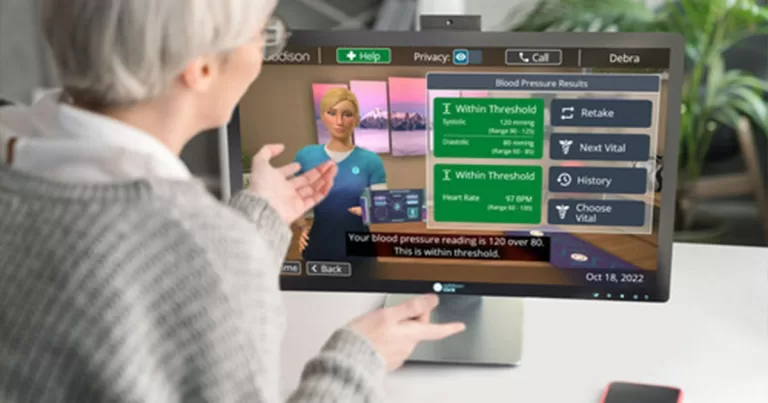
For patients with complex medication regimens, regular physical therapy or daily vitals monitoring programs, a 3D virtual care assistant can offer on-demand healthcare services. The new RPM assistant, called Addison, aims to do just that.

“Addison provides a dynamic, ever-changing, emotionally stimulating, personalized experience to the user. Addison can educate, demonstrate, inquire and connect,” said Anthony Dohrmann, CEO of Las Cruces, New Mexico-based Electronic Caregiver, in a statement.

People who have impaired vision or unsteady hands struggle with small screens and buttons and can become overwhelmed or lose interest, according to the company. Addison can be personalized by language, gender, ethnicity, decor, location, tone, color, clothing and language. Users can interact with objects, animals, musical instruments and media in the virtual care system.

“You know [Addison’s] not human, but it’s nice to have a person there, and it’s fun to watch her,” said Coralee Armstrong, 82, an Addison Care client living in Greenville, Pennsylvania, in a statement. “It’s kind of like an extra person in the house. It’s kind of like company.”

The company says the HIPAA-compliant system can help patients avoid the skyrocketing costs of assisted living and in-home care and help address caregiver shortages. It claims the virtual caregiver offers better oversight and care coordination.

The Addison Care system, which runs on AWS and Intel, can: 

  • Remind users to take prescribed medications.
  • Conduct interactive health assessments.
  • Deliver dosing-compliance verification to caregivers and providers.
  • Assist patients in recording vital sign measurements when monitoring specific conditions.
  • Provide additional support for managing behavioral health conditions.
  • Connect to emergency response services, caregivers, family and friends.

The system can also be paired with various Bluetooth devices, such as a glucometer for patients with diabetes or a weight scale and blood pressure cuff for patients who have or are managing heart disease.

The company also says physical and mental health routines and video telemedicine capabilities are in development. It maintains that the technology will evolve to offer third-party service integrations for needs like grocery delivery, ride sharing and connected-home solutions.

THE LARGER TREND

Electronic Caregiver debuted the Addison virtual caregiver system at HIMSS22

The system can mirror client lighting and weather automatically as it leads patients through the steps of recording vitals and then shares that information in real time with designated caregivers and providers.

The need for remote patient monitoring grew rapidly during the pandemic as it helps providers treat chronic conditions and ease overburdened hospitals. 

Healthcare systems are looking to RPM to provide more robust, timely and cost-efficient care moving forward, said Sarah Carroll, senior director of the Center for Care Transformation at AVIA, a healthcare digital transformation technology and services company.

“Within the next 10 years, there will be more older adults than kids. And of this aging population, two in five adults will have three or more chronic conditions. Seniors want to avoid costly nursing homes, and will need help living independently,” Carroll told Healthcare IT News in June 2022.

ON THE RECORD

“Addison is the most transformational and engaging interface for human interaction with technology ever created,” Dohrmann said in the announcement.

Andrea Fox is senior editor of Healthcare IT News.
Email: af**@***ss.org

Healthcare IT News is a HIMSS publication.

Read More
Qiana Badon

India’s National Health Authority launching HMIS for private, small clinics

The National Health Authority of India is set to release a hospital management information system for private clinics and small health facilities in the country.

Based on a press release, the beta version of the software will have the following features:

  • ABDM (Ayushman Bharat Digital Mission) compliance: allows doctors to generate and fetch Ayushman Bharat Health Account for patients

  • Facility management: manage calendar, appointments, and patient details in a single window

  • Digital services: view patients’ previous health records and prescriptions and take video consultations 

  • e-prescription services: generate and share digital standardised prescriptions with options to modify the prescription layout

WHY IT MATTERS

The NHA, which is implementing the ABDM, said the new HMIS solution will help speed up the digital transformation of small clinics. It will also boost the presence of healthcare providers in the country.

The agency will be conducting a virtual workshop for the HMIS this week, where it will also receive feedback from healthcare providers for improvements.  

THE LARGER TREND

In 2021, the government of Delhi announced a project to set up a cloud-based hospital information management system to connect all the public hospitals across the state. The system, which development was tasked to NEC Corporation India, was expected to be delivered last year. 

Meanwhile, the All India Institute Of Medical Science in New Delhi is working to fully implement the e-hospital HMIS developed by the National Informatics Centre this year. 

Read More
Tama Menjivar

The 2022 College Football All-Bowl Season Team

Football

David KenyonFeatured Columnist IVJanuary 4, 2023

Football The 2022 College Football All-Bowl Season Team

0 of 8

    Football Dee Winters

    Dee WintersChristian Petersen/Getty Images

    Bowl season has come to a close, but Bleacher Report is looking back at the best individual performances of the 2022 showcases.

    TCU is prominently featured with a trio of defenders who played integral roles as the Horned Frogs upset Michigan to reach the national championship game against Georgia.

    Millions of eyeballs watched TCU, but many players had standout games outside of the spotlight. Southern Mississippi running back Frank Gore Jr. set a bowl record, for example, and Memphis cornerback Sylvonta Oliver was the only player with multiple interceptions.

    We’re highlighting the best of the best, emphasizing production but not necessarily factoring in team results.

Football Quarterback

1 of 8

    Football BIRMINGHAM, AL - DECEMBER 27: East Carolina Pirates quarterback Holton Ahlers (12) passes during the TicketSmarter Birmingham Bowl between the East Carolina Pirates and the Coastal Carolina Chanticleers at Protective Stadium in Birmingham, AL on December 27, 2022. (Photo by Chris McDill/Icon Sportswire via Getty Images)

    Chris McDill/Icon Sportswire via Getty Images

    Holton Ahlers, East Carolina

    Easily the toughest decision was quarterback. Only one player can receive the nod, and many players had terrific games.

    You could pick Kansas’ Jalon Daniels because of his 565 total yards and six touchdowns in a Liberty Bowl loss to Arkansas. Alabama’s Bryce Young scorched Kansas State for an efficient 321 passing yards and five scores in a Sugar Bowl rout. Heisman Trophy winner Caleb Williams threw for 462 yards and five touchdowns in USC’s loss to Tulane in the Cotton Bowl.

    But the arrow landed on Holton Ahlers, who guided East Carolina to a 53-29 win over Coastal Carolina.

    The left-hander completed 26 of 38 passes for 300 yards and five scores, adding 48 yards and a touchdown on seven carries. Ahlers also notched a 14-yard reception in the Birmingham Bowl.

    Notably, ECU earned the program’s first bowl victory since 2013.

Football Running Backs

2 of 8

    Football Frank Gore Jr.

    Frank Gore Jr.Jonathan Bachman/Getty Images

    Frank Gore Jr., Southern Mississippi

    The son of NFL legend Frank Gore, Frank Gore Jr. propelled Southern Miss to a 38-24 victory over Rice in the LendingTree Bowl. Gore piled up a bowl-record 329 rushing yards and scored twice, including a 55-yard scamper that sealed the victory late in the fourth quarter. He also completed two of three passes for 19 yards and a touchdown.


    Tyjae Spears, Tulane

    Tulane wrapped up its incredible season with a 46-45 comeback upset of USC in the Cotton Bowl. Tyjae Spears gashed the Trojans for 205 yards and four touchdowns, adding a 14-yard reception to his line. Shortly after the celebration, Spears announced he’s entering the 2023 NFL draft. Pretty good end to his college career.

Football Wide Receivers and Tight End

3 of 8

    Football Johnny Wilson

    Johnny WilsonPeter Joneleit/Icon Sportswire via Getty Images

    WR: Johnny Wilson, Florida State

    The only thing Johnny Wilson didn’t manage is a touchdown. Still, he provided a clutch 58-yard catch late in the fourth quarter to set up Ryan Fitzgerald’s winning field goal. Wilson grabbed eight passes for a bowl-best 202 yards in a 35-32 win against Oklahoma in the Cheez-It Bowl.


    WR: Trea Shropshire, UAB

    Trea Shropshire nabbed the first touchdown of bowl season and played a key role in UAB’s securing the first victory. The graduate student reeled in an early 10-yard score opposite Miami (Ohio) in the Bahamas Bowl. Late in the fourth quarter, his 49-yard catch led to the Blazers’ winning touchdown. Shropshire totaled 183 yards and the score on six receptions.


    WR: Dalvin Smith, Jaylen Hall and Malachi Corley, Western Kentucky

    Absolutely cheating here, but Dalvin Smith, Jaylen Hall and Malachi Corley all deserve a shout. Each one surpassed the century mark. Smith tallied six catches for 145 yards and one touchdown, while Hall notched nine receptions for 138 yards and a touchdown. Corley rounded out the group with 11 grabs for 114 yards and two scores as WKU smashed South Alabama 44-23 in the New Orleans Bowl.


    TE: Beau Johnson, Georgia Southern

    Georgia Southern lost a close Camellia Bowl to Buffalo, but Beau Johnson ended bowl season as the lone tight end to crest the 100-yard barrier. He grabbed five passes for 118 yards, making a 42-yard reception on a fourth down to help the Eagles score a late touchdown and climb within the 23-21 final margin.

Football Offensive Linemen

4 of 8

    Football MEMPHIS, TN - DECEMBER 28: Arkansas Razorbacks quarterback KJ Jefferson (1) during the AutoZone Liberty Bowl between the Kansas Jayhawks and the Arkansas Razorbacks on December 28, 2022 at the Simmons Bank Liberty Stadium in Memphis, TN. (Photo by Kevin Langley/Icon Sportswire via Getty Images)

    Kevin Langley/Icon Sportswire via Getty Images

    Luke Jones, Brady Latham, Beaux Limmer, E’Marion Harris and Dalton Wagner, Arkansas Razorbacks

    You hear about players with big numbers. And in a triple-overtime win over Kansas in the Liberty Bowl, the Razorbacks had impressive stats.

    KJ Jefferson threw for 287 yards and rushed for 130, tallying two touchdowns each way. Rashod Dubinion scampered for 112 yards and two scores, while AJ Green added 99 and a touchdown. Matt Landers caught three passes for 121 yards and a trip to the end zone.

    What you typically don’t see is praise for offensive linemen.

    From left to right, Arkansas leaned on Luke Jones, Brady Latham, Beaux Limmer, E’Marion Harris and Dalton Wagner. Ty’Kieast Crawford also started at right guard before leaving with an injury. Behind this group, the Hogs bulldozed Kansas for 681 yards in a 55-53 victory.

Football Defensive Linemen

5 of 8

    Football Dylan Horton

    Dylan HortonChris Coduto/Getty Images

    Edge: Durrell Johnson, Liberty

    What a day for Durrell Johnson. Despite the Flames’ loss to Toledo in the Boca Raton Bowl, he racked up five tackles for loss and a sack. Johnson, who notched nine tackles, including seven solo stops, ended the season as the nation’s leader with 27.5 takedowns in the backfield.


    DL: Dylan Horton, TCU

    Part tackle, part edge, Dylan Horton made life miserable for the Michigan offensive line. Among the senior’s six tackles, he collected four sacks, one pass breakup and a forced fumble in the 51-45 Fiesta Bowl win.


    DT: Jay Toia, UCLA

    Prior to the Sun Bowl, first-year starter Jay Toia hadn’t registered more than four tackles in a game. During a 37-35 loss to Pitt, he exploded for 10 tackles with two for loss. Toia will return to UCLA in 2023 as a key member of the defensive front.


    DE: Keshawn Banks, San Diego State

    Given that Middle Tennessee tallied just 170 yards, you can’t blame the SDSU defense for a 25-23 loss in the Hawai’i Bowl. Longtime starter Keshawn Banks was a force in his final college game, posting career-high marks of seven tackles, four tackles for loss and two sacks.

Football Linebackers

6 of 8

    Football Aaron Beasley

    Aaron BeasleyPeter Joneleit/Icon Sportswire via Getty Images

    Aaron Beasley, Tennessee

    The leading tackler for the UT defense, Aaron Beasley again carried the Vols in their 31-14 triumph over Clemson in the Orange Bowl. He gathered 12 tackles and set career highs with four tackles for loss and two sacks, adding one pass breakup.


    Dee Winters, TCU

    Senior Dee Winters frustrated Michigan throughout the Fiesta Bowl. He was a constant in run support, registering seven tackles with three for loss. Winters provided a critical play with a 29-yard interception return for a touchdown late in the third quarter and broke up another pass.


    Ivan Pace Jr., Cincinnati

    The Bearcats lost 24-7 to Louisville in the Fenway Bowl, but All-American Ivan Pace Jr. put together one more tremendous day. He tallied 16 tackles, one sack and a forced fumble, elevating his season totals to 20.5 tackles for loss and 10 sacks.

Football Defensive Backs

7 of 8

    Football Sylvonta Oliver

    Sylvonta OliverAP Photo/Daniel Kucin Jr.

    CB: Sylvonta Oliver, Memphis

    Memphis cruised to a 38-10 triumph over Utah State in the First Responder Bowl, and Sylvonta Oliver ended his college career in style. Along with six tackles, he grabbed two interceptions—the only defender with two picks in bowl season.


    S: Bud Clark, TCU

    Bud Clark sparked the Horned Frogs with a 41-yard pick-six in the first quarter. In the second, he jumped on Michigan’s goal-line fumble. Clark finished the victory with five tackles. Not insignificantly, he also tracked down Donovan Edwards on his 54-yard first-quarter run before TCU forced a turnover on downs.


    S: Brian Branch, Alabama

    Brian Branch spent much of the Sugar Bowl frustrating Kansas State no matter where he lined up. The versatile junior posted career bests of 12 tackles, four tackles for loss, one sack and an interception.


    CB: Reddy Steward, Troy

    After falling behind UTSA 12-0 in the Cure Bowl, Troy mounted a comeback behind its defense. Reddy Steward locked down his assignments throughout the game, ending with seven tackles and a bowl season-best four pass breakups.

Football Specialists

8 of 8

    Football GLENDALE, ARIZONA - DECEMBER 31: Jake Moody #13 of the Michigan Wolverines kicks a field goal during the second quarter against the TCU Horned Frogs in the Vrbo Fiesta Bowl at State Farm Stadium on December 31, 2022 in Glendale, Arizona. (Photo by Chris Coduto/Getty Images)

    Chris Coduto/Getty Images

    K: Jake Moody, Michigan

    Though Michigan fell short of TCU, 2021 Lou Groza Award winner Jake Moody showed out. Moody belted a 59-yard field goal, the second-longest kick of the season. He also converted kicks of 42 and 21 yards and buried both of his extra points.


    P: Kyle Ulbrich, Middle Tennessee

    Since the offense struggled, MTSU’s defense and special teams provided the backbone of a 25-23 victory over San Diego State in the Hawai’i Bowl. Kyle Ulbrich punted seven times with a net average of 48.6 yards, pinning SDSU inside its own 20 three times. We’ll forgive him for two touchbacks, considering both punts traveled 60-plus yards.


    KR/PR: Ta’ron Keith, Bowling Green

    Ta’ron Keith provided a much-needed jolt to Bowling Green after New Mexico State extended its lead to 17-0 in the Quick Lane Bowl, taking the kickoff 75 yards to the house. BGSU lost a 24-19 result.

???? SPORTS NEWS ➡️ YOUR INBOX

The latest in the sports world, emailed daily.

Read More David Kenyon