Home Blog Page 6897

Samsung Galaxy S23 leak suggests a price increase for this year’s flagships

The Samsung Galaxy S22 family, propped up with the back of the phones on show


The Samsung Galaxy S22 range
(Image credit: Samsung)

We’re getting new Samsung Galaxy S23 leaks and rumors pretty much every day at this point, and today’s is around price – with indications that you’re going to have to pay a bit more to get your hands on this year’s flagship phones.

As per Twitter tipster @OreXda (opens in new tab) (via Notebookcheck (opens in new tab)), in South Korea we’re looking at prices of 1,199,000 won for the standard model, 1,397,000 won for the Plus edition, and 1,599,400 won for the top-end Ultra version of the Galaxy S23.

For context, in the same country the Samsung Galaxy S22 cost 999,900 won, the Galaxy S22 Plus cost 1,199,000 won, and the Galaxy S22 Ultra went on sale for 1,452,000 won. We’re looking at a price jump of around 10-20% if those figures are correct.

Price hike

At today’s exchange rate, the equivalent price for the standard Galaxy S23 is around $955 / £790 / AU$1,390, while the Galaxy S22 started at $799 / £769 / AU$1,249. What with currency and market fluctuations though, we wouldn’t pay too much attention to those equivalent values, except as rough guides.

There has been talk that the Galaxy S23 handsets would cost more than their Galaxy S22 equivalents, which this rumor backs up. Manufacturers are still recovering from the effects of the pandemic, while inflation continues to push prices up globally.

With those and other factors in mind, it wouldn’t really be a surprise if the Galaxy S23 phones came in at a higher starting price than the 2022 phones they’re replacing. It’s a trend that we may well see across the rest of the year too, as handset makers grapple with costs that are rising across the industry.


Analysis: the flagship cost

As our best cheap phones list shows, there are plenty of bargains to be had when it comes to smartphones. That said, the price of high-end flagship phones looks like it’s only going in one direction for the foreseeable future: up.

Of course there are all kinds of economic factors playing into the price of the smartphones we have in our pockets, but right now none of them are particularly likely to push costs down. The iPhone 14 Pro, for example, started at a slightly higher price than the iPhone 13 Pro for those outside the US.

It’s perhaps going to be in the mid-range where the best value is to be had in 2023: phones that don’t have the very latest processors and camera sensors, but still come with a decent level of polish and performance. The next phone of note in this particular part of the market could well be the Google Pixel 7a.

While premium phones are still going to remain available for those who want the very best components and have the budget to get them, the Galaxy S23 could set the tone in terms of price increases over the coming months. We’ll find out for sure on February 1.

Sign up to get breaking news, reviews, opinion, analysis and more, plus the hottest tech deals!

Dave is a freelance tech journalist who has been writing about gadgets, apps and the web for more than two decades. Based out of Stockport, England, on TechRadar you’ll find him covering news, features and reviews, particularly for phones, tablets and wearables. Working to ensure our breaking news coverage is the best in the business over weekends, David also has bylines at Gizmodo, T3, PopSci and a few other places besides, as well as being many years editing the likes of PC Explorer and The Hardware Handbook.

Read More
Diego Mote

New Apple AR/VR headset leak hints at a launch date – and it’s in 2023

The Meta Quest Pro


Apple’s headset may compete with the Meta Quest Pro
(Image credit: Future)

For years, Apple has been rumored to be working on a headset combining augmented reality (AR) and virtual reality (VR) – sometimes called mixed reality (MR) – and the latest prediction we have about the device is that it’s coming later this year.

Seasoned industry analyst Ming-Chi Kuo, who usually knows what he’s talking about when it comes to Apple, has tweeted (opens in new tab) (via 9to5Mac (opens in new tab)) that the AR/VR headset is behind schedule due to certain hardware tests and the availability of software development tools.

That means, Kuo says, the shipping window may slip from the second quarter of 2023 to the third quarter: July, August or September. Previous leaks, including one from Kuo, had pointed to the device arriving in the first half of this year.

Timing is everything

There’s still a chance Apple will announce the device ahead of time though, way before it actually goes on sale. Kuo says that “based on the current development process”, it could get a grand unveiling at an event around March time, or at the Worldwide Developers Conference that Apple holds every year in June.

Getting app developers on board with the new hardware is going to be crucial – there aren’t going to be too many takers for an expensive AR/VR headset if there’s nothing of note that it can actually be used for.

From earlier leaks it would seem as though Apple could be calling the operating system on the new device realityOS, though that’s by no means certain. After so many years of rumors and speculation, it’ll be fascinating to see what Apple has actually managed to put together when the headset finally gets its grand unveiling.


Analysis: a major move for Apple

It can be easy to take for granted the massive manufacturing operation that Apple runs: it produces millions of iPhones, iPads, Macs and other pieces of hardware every single month, and (on the whole) manages to do it all without any serious issues.

When it comes to entering into a different product category like an AR/VR headset (or a car), there’s a bit more of a challenge involved. Parts and processes are new, and that’s before we get to the issue of whether or not anyone is actually going to buy it.

The Apple Watch was the last time that Apple unveiled something completely fresh, rather than an update on an existing product. After a somewhat bumpy start, consumers eventually embraced the wearable, and it’s now a fixture in Apple’s hardware range.

As with the smartwatch, the AR/VR headset is going to be something of a shot in the dark for Apple. It’s not a gadget category with a whole lot of existing devices on show, which gives Apple more of a chance to set the standards for our mixed reality future.

Sign up to get breaking news, reviews, opinion, analysis and more, plus the hottest tech deals!

Dave is a freelance tech journalist who has been writing about gadgets, apps and the web for more than two decades. Based out of Stockport, England, on TechRadar you’ll find him covering news, features and reviews, particularly for phones, tablets and wearables. Working to ensure our breaking news coverage is the best in the business over weekends, David also has bylines at Gizmodo, T3, PopSci and a few other places besides, as well as being many years editing the likes of PC Explorer and The Hardware Handbook.

Read More
Lloyd Wiers

What each streaming service has up its sleeve in 2023

Major streaming services have upped their game in 2022 with the launch of ad-supported tiers, new live sports deals, hugely successful original series and more. As the streaming wars continue to heat up, media companies have no choice but to raise the stakes. From the HBO Max/Discovery+ merged streaming service to Netflix’s password-sharing offering, here’s what SVOD (subscription video-on-demand) streaming services have planned for next year and beyond.

What HBO Max/Discovery+ is planning for 2023

Earlier this year, Discovery acquired WarnerMedia to form Warner Bros. Discovery (WBD), becoming one of the biggest media companies in the United States.

As TechCrunch has reported many times, HBO Max and Discovery+ are combining in 2023. This spring, WBD will launch a merged streaming service that pairs HBO originals and Warner Bros. films with Discovery+’s content library of unscripted shows, documentaries and more. In total, subscribers will have access to nearly 200,000 hours of programming and over 100 brands, such as CNN, TBS, TNT, TruTV, Cartoon Network/Adult Swim, Food Network, TLC, HGTV, ID, Animal Planet and many others.

The streaming service will reportedly be called just “Max,” and will make its debut in the U.S. before launching in Latin America and then in Europe in 2024. While there will be an ad-free and ad-supported option, its ad-free offering will likely cost more than what subscribers pay now for HBO Max’s premium plan, which is $14.99/month.

“Max,” or whatever the company decides to call it, will be a major contender in the streaming wars. HBO, HBO Max and Discovery+ ended Q3 2022 with a combined total of 94.9 million global subscribers.

WBD is also busy planning a free ad-supported streaming (FAST) service to keep up with competitors in the FAST market, including Peacock, Pluto TV, Tubi and Amazon Freevee, among others.

Recently, the company pulled over a dozen HBO originals from HBO Max that will soon move to third-party streaming services. This includes “Westworld,” “The Nevers,” “Raised by Wolves,” “The Time Traveler’s Wife,” “Love Life,” “Made for Love,” “Minx,” “Finding Magic Mike,” “Head of the Class,” “FBOY Island,” “Legendary,” “Gordita Chronicles” and “The Garcias.”

We predict that once WBD launches its FAST offering, it will offer these titles.

What Netflix is planning for 2023

Netflix had an eventful 2022. The company launched its $6.99/month ad-supported tier, giving consumers the ability to save a few bucks on their streaming habits. The move validates a common trend in the industry right now — ad-supported video-on-demand (AVOD) is in. In 2023, Netflix’s “Basic with Ads” plan is predicted to have 7.5 million domestic subscribers, according to J.P. Morgan analyst Doug Anmuth.

Netflix’s subscriber base also rebounded in Q3 2022 after increasing by 2.41 million subscribers, bringing the total to 223.09 million. The company previously experienced two bleak quarters, losing a total of 1.2 million global subscribers.

As far as we know, the streamer has three notable projects in the works for 2023 and beyond.

In early 2023, Netflix will launch an “Extra Members” feature to monetize password sharing. The feature will prompt account members to pay an extra fee to add a sub-account for people sharing the streaming service.

The company has already launched a “Profile Transfer” feature, which lets a member on an existing account transfer their profile to a brand-new account and a “Manage Access and Devices” feature, which allows account owners to remotely log out of devices they don’t want to be signed in to the account.

Also coming to the streaming service next year is a livestreaming capability, with Chris Rock to be the first to test the offering for his upcoming comedy special. Live content could help the streamer attract new subs.

Unfortunately, Netflix is not planning to launch a live sports offering. During the UBS Global TMT Conference, Netflix co-CEO Ted Sarandos said, “We’ve not seen a profit path to renting big sports.”

Beyond next year, the company is continuing its investment into gaming. At TechCrunch Disrupt 2022, Netflix VP of Gaming Mike Verdu revealed that a cloud gaming offering is on the horizon. This is a smart move for Netflix as the global cloud gaming market had $1.6 billion in revenue in 2021.

Similarly, there’s a possibility that Netflix will get into PC gaming since it’s looking to hire a game director who’ll be in charge of launching a AAA PC game.

Netflix’s mobile gaming library continues to expand. Entering 2023, Netflix will have launched 50 mobile games so far.

What Disney+ is planning for 2023

Looking back on 2022, Disney+ experienced a lot of major changes, including the launch of its ad-supported tier as well as the unexpected return of Bob Iger as CEO.

The “Disney+ Basic” plan is $7.99/month and was launched in order to give Disney+ more subscribers. The company wants to reach 230-260 million Disney+ subscribers by 2024. In the fourth quarter of 2022, Disney+ reported 164.2 million global subscribers in total.

However, there is one major issue with the ad launch: Disney+ Basic is unavailable on Roku devices. TechCrunch estimates that Disney and Roku will reach an agreement to change that sometime in late 2023 — but that’s just a guess.

Alongside Disney+’s new subscription plan, the streamer introduced changes to the Disney Bundle as well as a price hike to its ad-free plan.

In November 2022, Bob Chapek stepped down as CEO of Disney and was replaced by Bob Iger, the former CEO, who had only vacated the spot in 2021. Hopefully, Iger can help the company achieve profitability by its fiscal 2024. In Q4 2022, when Chapek was still CEO, Disney’s direct-to-consumer division lost $1.5 billion in revenue.

In 2023, Disney+ is planning an international expansion to 30 additional countries, which would bring the total to over 160 countries. Over the summer, the streamer launched in 42 countries and 11 territories.

Also, beginning next year, Disney+ will be the exclusive international home for new “Doctor Who” episodes.

One significant feature coming to the streaming service is an exclusive shopping experience for Disney+ subscribers. The online shop, which is currently in the testing phase, offers users merchandise from Disney-owned brands, such as Star Wars, Marvel, Disney Animation Studios and Pixar. The company is also reportedly exploring the idea of a membership program similar to Amazon Prime. There are no official launch dates for either feature.

What Hulu is planning for 2023

Not much happened for the Disney-owned streaming service Hulu this year, apart from annoying price increases and losing titles to rival Peacock. The streamer did however reach a milestone of 58 Emmy nominations. Hulu is also beginning 2023 with 47.2 million subscribers.

If you’ve been following the Disney/Comcast spectacle, then you know that Disney is expected to buy Comcast’s stake in Hulu by the end of 2024. Comcast owns 33%, whereas Disney owns 66%. However, when Chapek was still CEO, he alluded in a Variety interview that Disney could buy the rights sooner than that — perhaps in 2023. This depends on if Comcast “is willing to have discussions that would bring that to fruition earlier,” Chapek said.

Whenever Disney ends up buying Comcast’s stake in Hulu — either by 2023 or 2024 — the company may be planning on merging Hulu with Disney+ and ESPN+. “You know the term soft bundle and hard bundle, right? Soft bundle is, hey, buy all three services for the low price of X. The hard bundle is when things become seamless and without friction. Right now, if you want to go from Hulu to ESPN+ to Disney+, you have to go out of one app to another app. In the future, we may have less friction,” Chapek told Variety.

If Disney+, Hulu and ESPN+ were to live inside one platform, many subscribers who already have the Disney Bundle would be overjoyed. While it most likely won’t be a full integration like HBO Max and Discovery+, it will still be an amalgamation of epic proportions. Disney+, Hulu and ESPN+ have a combined total of 235.7 million subscribers.

What Amazon Prime Video is planning for 2023

Prime Video had a successful 2022, becoming the exclusive home of the NFL’s “Thursday Night Football,” which had its first game watched by 15.3 million viewers, and its “The Lord of the Rings” spinoff was the most-watched series with over 100 million viewers worldwide. “The Lord of the Rings: The Rings of Power” is confirmed for a second season.

It’s fair to say that Amazon is heavily investing in content and will continue doing so for the next few years. For instance, the streaming service keeps putting money toward live sports. In 2023, the company will be the home of an exclusive NFL Black Friday game, the first Black Friday game for the league.

Amazon may also take a gamble with theatrical movies, according to Bloomberg. The publication wrote that Amazon might begin spending more than $1 billion a year to produce 12 to 15 films that will premiere in theaters before they make their debut on the streaming service. This would be a notable yet expensive gamble for the company, as it has yet to invest this much into original movies.

The streamer has various original series in the pipeline, including the greenlit limited series “Blade Runner 2099,” a “God of War” live-action series and even at least one “Warhammer 40,000” title that will have “Man of Steel” actor Henry Cavill as the lead.

Speaking of DC actors, Amazon is in the process of closing a deal with Warner Bros. to develop animated DC series for Prime Video. At the Content London conference, the Chairman of Warner Bros. Television Group, Channing Dungey, said, “We are in the process of closing a big deal with Amazon that’s going to feature some of our DC branded content in animation.” For HBO Max to share IP, especially DC content, is extremely notable and will likely boost subscription growth for Prime Video.

As more SVOD streaming services shift to AVOD, we wouldn’t be surprised if Prime Video considers launching a cheaper ad-supported tier. It’s possible that such an offering would pay off big for Amazon. It’s estimated that Netflix will see $600 million in advertising sales in 2023 alone.

The move makes sense for Amazon as it already has an ad-supported service, Freevee. Amazon Prime Video is also testing an ad format called virtual product placement, which the company announced in May.

What Apple TV+ is planning for 2023

Apple TV+ announced its first foray into live sports this year. We suspect Apple TV+ will keep up with the trend in 2023.

In March 2022, Apple TV+ closed its first live sports deal with Major League Baseball, bringing fans “Friday Night Baseball” games as well as a live show “MLB Big Inning.” The company is launching its subscription service for Major League Soccer fans, “MLS Season Pass” in February 2023.

Like Amazon, rival Apple TV+ would benefit greatly from an ad-supported tier. Apple TV+ recently increased its subscription price to $6.99/month or $69/year.

What Paramount+ is planning for 2023

Paramount+ is ending 2022 with 46 million global subscribers, which was mainly driven by the new partnership with Walmart+, which has a reported 16 million subscribers, as well as offering its premium subscription on The Roku Channel and YouTube. More recently, Paramount+ reported a record number of subscriber sign-ups in November when it premiered its latest hit series “Tulsa King,” starring Sylvester Stallone.

Looking ahead, Paramount+ plans to reach 100 million subs by 2024 and increase streaming content spending to $6 billion, up from $2 billion in 2022. It also has plans to expand international growth, which includes 150 international original titles by 2025.

With the release of high-budget films like “Top Gun: Maverick” and Paramount+ continuing to rely on popular IP, the streamer will likely achieve substantial subscriber growth in 2023. Plus, Paramount+ recently launched an in-app Showtime bundle, giving subscribers access to more content.

That being said, a merger between Paramount+ and Showtime is likely imminent. During Goldman Sachs’ Communacopia + Technology Conference, CEO of Paramount Global, Bob Bakish, confirmed that talks of a merger had taken place internally. While a decision hasn’t been made yet, integrating Showtime into Paramount+ would be the best move for the company.

A price increase is also in the future plans for Paramount+. During the company’s third-quarter earnings call, Paramount Global Executive Vice President and CFO, Naveen Chopra, said that “opportunities to increase price on Paramount+” is to be expected.

What Peacock is planning for 2023

Peacock had a big win in 2022 as it doubled its number of paid subscribers to 18 million this year alone. This was mainly thanks to NBC and Bravo next-day episodes that it pulled from Hulu earlier this year. Peacock was also the Spanish-language streaming home for all World Cup games.

In terms of other content coming to the streaming service in 2023, Peacock will premiere the “John Wick” prequel series, “The Continental,” as well as original series like “Poker Face,” starring “Russian Doll” star Natasha Lyonne. The streamer also recently announced its first original adult animation series, “In the Know,” which will feature “Beavis and Butt-Head” creator Mike Judge and “Silicon Valley” actor Zach Woods.

Beginning in 2023, Peacock will be the exclusive streaming partner of JetBlue, marking a notable deal that will broaden its service to more subscribers.

While things are looking up for Peacock next year, some non-paying subscribers might be very disappointed in the next 12 months or later. NBCUniversal CEO Jeff Shell stated that “at some point” the company wants to convert Xfinity users to paid subscribers of Peacock. This means customers of Comcast’s Xfinity cable and internet services might not be able to get the streaming service as a free perk anymore. However, this move would make sense for Peacock since 30 million monthly active users can access the streaming service at no additional cost.

Read More
Lauren Forristal

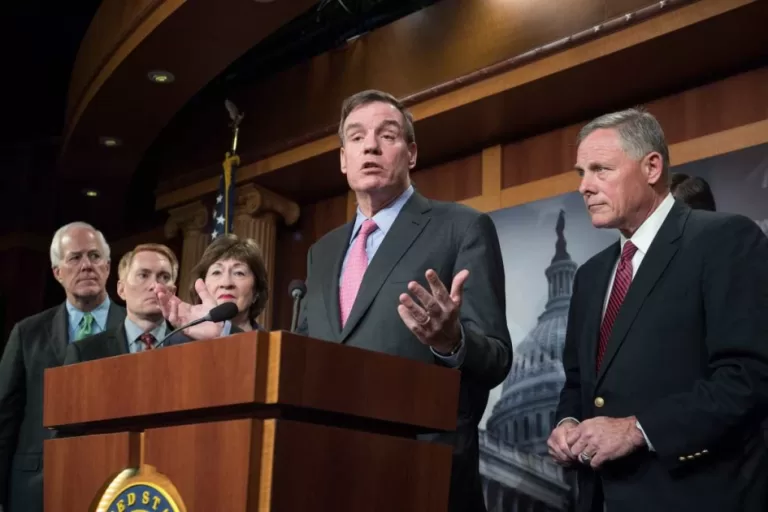
Senator Mark Warner on cybersecurity, Musk’s Twitter and legislating killer robots

This wasn’t Mark Warner’s first CES rodeo. The senior senator from Virginia was on board with this whole tech thing well before being elected the state’s governor back in 2002. His time at Columbia Capital found him knee-deep in the mobile world during its formative years, including his early support of one-time telecom giant, Nextel.

After years away, the CTA invited Warner back to appear on a panel alongside fellow senators Jacky Rosen of Nevada and New Mexico’s Ben Ray Luján. The program was part of a broader, on-going initiate to bring lawmakers to CES, as technology grows ever more central in our lives and the policies that govern them.

Warner has, fittingly, made tech a centerpiece of much of the work he’s done in Congress’ upper chamber, from social media accountability to the long-standing technological cold war between the U.S. and China. He also serves as the chairman of the Senate Select Committee on Intelligence and was a strong proponent of the CHIPS act.

We sat down with the senator in a Las Vegas Convention Center meeting room, to discuss some of the day’s most important technology concerns, from cybersecurity and TikTok/Huawei to Elon Musk’s Twitter roller coaster and the rise of killer robots.

But first, because it’s all anyone was speaking about this week, Kevin McCarthy’s propensity for stepping on rakes on the way to becoming House Speaker. (Note: McCarthy won on the 15th vote, roughly six hours after our conversation.)

(Editor’s note: This interview has been edited lightly for length and clarity.)

At CES this week learning about the future of tech to better be able to legislate for tomorrow’s tech landscape.

Tried Magic Leap’s glasses to see if I could look into the future and find out when we’ll have a Speaker, but turns out they don’t work that way! pic.twitter.com/bfal1fVMwP

— Mark Warner (@MarkWarner) January 6, 2023

What are your thoughts generally on the McCarthy situation?

I don’t know how he gets out of this. I know him, because I’ve dealt with him as part of the Gang of Eight, and frankly, my interactions with him have been fine. [ … ] I’m a little surprised that he’s made all of these concessions he said he wouldn’t make, and he’s not had more push back from the moderates.

By the 10th or 11th vote, you start making more concessions.

People, I understand, can be critical of Nancy Pelosi on things, but you could have never have envisioned this kind of scenario happening to her.

Everyone seems to be following this.

And the fact that it was the two-year anniversary of January 6. The idea that they’re coming in at 10 p.m. on a Friday night.

How did you make the jump into politics?

I started with the interest in politics. I graduated from college, I had no money, and I had done fundraising as a young guy for the Democratic National Committee and Jimmy Carter’s campaign. I remember somebody who went into $300,000 debt after he lost in a race. I couldn’t imagine that. The idea was that, if I’m ever going to have [a political career] as a possibility, I’m going to go and get a financial base first. I failed miserably at two businesses. The third was cell phones, and I was lucky enough to be in the right place at the right time.

You have a technology background, but I think there’s a lack of tech knowledge in leaders generally, and in the government more broadly. Given how much tech touches every piece of legislation, what can we do to catch congress up to speed?

I think people are trying. The good news is that most of the technology issues don’t fall on a liberal-conservative continuum. My tired phrase is, “it’s more future-past than left-right.” I think that makes it easier at times to find coalitions. With Huawei and the semi-conductor – I’ve been up to my eyes in both of them – that technology competition is national security. If we have a conflict with China, I don’t believe it’s going to be who has the most aircraft carriers and airplanes. It’s going to be who dominates satellites; can you turn off the power?

You may never need to get to conflict if you have a communications medium operated by the China Communist Party that has 100 million kids on it, called TikTok. I think people are getting that, and there is a willing bipartisan concern about China and national security. Both make members more willing to learn about technology and realize it’s something that we have to focus on. But it’s been an evolution.

You mentioned Huawei. I, perhaps naively, thought that when Trump left office, there would be a rolling back of the entity list and other issues. These things have remained firmly in place.

Huawei’s a national security threat. Huawei scared me, being a wireless guy. I grew up in a world with Motorola and AT&T and Nortel, Erickson, Nokia, Samsung. You turn around, and all of the North American companies are gone. You suddenly not only have a Chinese company, but you have the Chinese setting the ground rules for the international telecommunications union and all of these standard-setting bodies, which we used to dominate, and then they flooded the zone. We’re starting to tell other countries Huawei’s a challenge. But we didn’t have any alternatives.

You’re talking about infrastructure.

Yeah. Huawei’s cheap and it’s a soup to nuts solution setup. But one of the things that I think is very positive is that even the European companies that went down the Huawei path are doing some version of rip and replace. I think the awareness that these Chinese companies come with national security risks has grown beyond America.

Is it time to start having a serious discussion about legislation around police and killer robots?

Truthfully, I have probably not thought about it enough. Using technology without some guardrails — I think we make a mistake with the notion of “go out and innovate, break things.”

Move fast, break things.

I think that’s created some real issues. It’s one of the issues I’ve made the pitch that we need to be involved in the standard-setting entities around the world. You build your values of transparency or privacy protection. I do think that if you combine technology with AI, you sometimes take the human being out of the decision-making. That scares the dickens out of me. How will you go about legislating those guardrails on the front end? We’re not very good at it. We usually legislate after the fact, and it blows my mind that we still haven’t done a single thing on social media.

That’s a subject I wanted to broach with the recent Twitter news.

I’m a big supporter of Elon Musk, especially with SpaceX.

As a technological innovator.

Yeah. My concern with him on Twitter is not about putting Trump back on Twitter; it’s because his real source of wealth is Tesla, whether he’s going to be dependent so much on the Communist Party of China in terms of the source of all of his batteries. If you look at the comments he’s made about the regulatory structure in China, it’s all been positive. And the comments he’s made about infrastructure in Europe or America are generally negative. I worry about undo influence.

So the worry is him using this as a platform to promote these ideas?

I would be concerned that suddenly Twitter prohibits negative comments about the Communist Party in China.

There was an argument [prior to Musk purchasing Twitter] about “free speech” and how it applies to a platform run by a private sector company. If it’s a company he owns, it’s his purview.

I think you can put some restraints on Section 230. I’m not where a lot of the tech community might be. I support free speech. I think you don’t have the right to necessarily have it amplified eight billion times.

Should the FTC be more aggressive with regard to acquisitions and potential monopolies?

Yes. There are some that argue we don’t need additional legislation; they just need a stronger review. I do think that some of the transactions that were allowed could have been precluded. I think, in the long run, it would have made sense. You made the comment that tech companies are virtual utilities. I am of the view — and I’m not an antitrust expert by any means — that consumer price being the only thing.

Purely capitalistic motives.

Yeah, but also, how do you measure price? People say “Facebook is free; Google’s free.” It’s not free. I’m not saying it’s morally bad they take our data and monetize it.

I’ll say that.

I’m more squishy than that. But people ought to know what it’s worth.

And they ought to know what data they’re giving up.

Right, right. It’s crazy to me that we’ve still never had a data privacy law in this country.

Read more about CES 2023 on TechCrunch

Read More
Brian Heater

Here’s A Sneak Peak Inside Super Nintendo World At Universal Hollywood

Opens next month

Super Nintendo World
Image: Universal Studios Hollywood

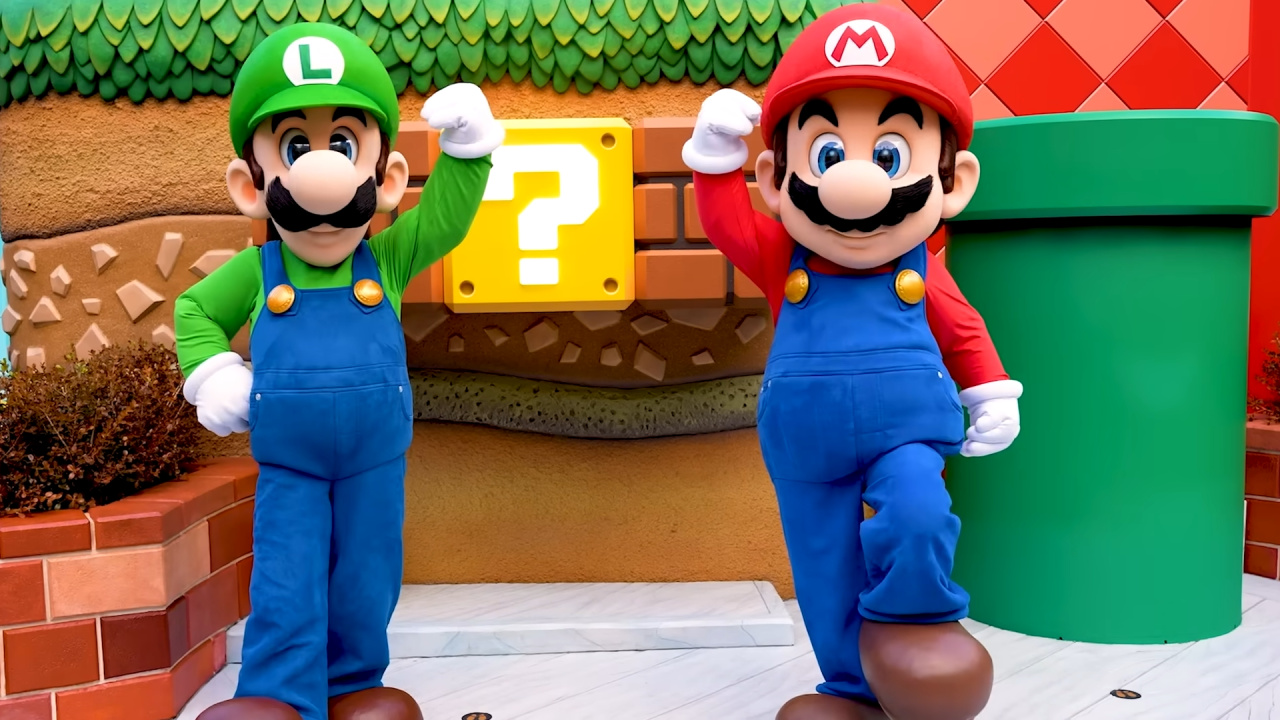
We’re just over a month away from the grand opening of Super Nintendo World at Universal Studios in Hollywood. The theme park will be opening its doors to the public on 17th February 2023, but a few lucky members of the press and theme park enthusiasts have been given access and posted exclusive footage of the attractions.

Theme park YouTube channel MiceChat is one of the lucky few who have been able to have a look around the park ahead of its opening day next month. And the channel has shared around 2 minutes of footage from its tour. We’ve posted the video (along with another impressions piece) further down, but for those of you who don’t want to see the theme park before it opens — or before you can visit yourselves — consider this a spoiler warning!

The theme park enthusiast channel was full of praise in the short video, calling the Toadstool Cafe “amazing” and the merch shop “fantastic”. There are statues, ornaments, and references to all sorts of Mario games like Super Mario Sunshine and the Mario Party series. And, of course, we know about the Mario Kart ride, but here we get a glimpse at some of the decorations around the area, including some snazzy-looking racing suits.

You can check out MiceChat’s recent video on the park below. The channel also has another video on their visit, though the newest video below is a more up-to-date version, but you can still watch the old one here.

MiceChat isn’t the only YouTube channel to share footage and photos from inside the walls of Super Nintendo World. Attractions Magazine also got a chance to explore the new park and posted some extremely detailed impressions on their website, including some incredible photos of things from Mechakoopa to Bowser’s throne.

The Magazine was also extremely positive about their exclusive visit to the park — calling themselves a “lifelong Nintendo fan”, they also pointed out the “emphasis here seems to be on play and exploration, and that to me has always been what both video games and theme parks are all about”.

Check out Attractions Magazine’s video below, which contains lots of still shots and narration which goes into detail about what they saw at the park. To say we’re itching to go is an understatement.

How do you think the park is shaping up so far? Are you going to try and visit Super Nintendo World when it opens next month? Let us know!

[source youtu.be, via attractionsmagazine.com]

Alana Hagues

RPG lover first and Nintendo fan second, Alana is often found overthinking battle strategies, characters, and stories. Fortunately, she’s also easily pleased by anything Yoshi-related, creepy-but-cute Pokémon, and SEGA air pirates.

Read More
Buffy Roberie

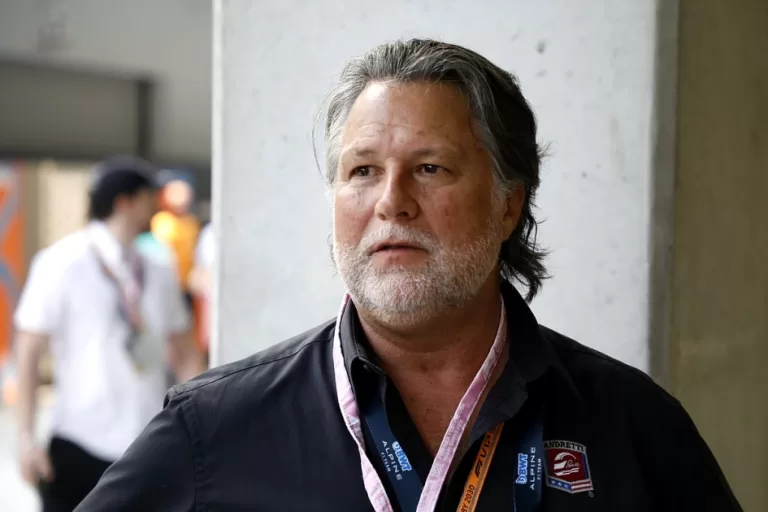
Why F1 and teams are still not impressed by Andretti’s entry plans

After months of facing a cold shoulder from rival outfits and F1 owners Liberty Media, it appeared on the face of it he had got all his ducks in a row.

FIA president Mohammed Ben Sulayem had gone public in his desire to get more teams on the grid, and the GM-backing for a Cadillac-badged operation certainly seemed a big enough deal to prove the value his new team would bring to grand prix racing.

Speaking to the media about the newly restructured bid having more weight behind it with OEM support, Andretti said: “One of the big things was: well, what does Andretti bring to the party?

“Well, we’re bringing one of the biggest manufacturers in the world now with us, with General Motors and Cadillac.

“We feel that that was the one box we didn’t have checked that we do have checked now. I think we’ll be bringing a tremendous amount of support now to F1. It’s hard for anyone to argue that now.”

Read Also:

Lukewarm reception

But if Andretti was hoping his latest efforts would be a game-changer in getting his team an entry, it would not take long for him to find that opinions elsewhere had been swayed very little.

Even before the embargo on the news of the Andretti-Cadillac plans had been lifted, F1 itself had issued a lukewarm response to it – making it emphatic that the American team was not the only team looking to join, and that this was not only a matter for the FIA to deal with.

Furthermore, as rival teams digested Andretti’s plans over the following few days, they were quick to double down on their resistance to F1 of it opening its arms and giving Andretti an automatic place on the grid.

It was the voicing of these opinions, as well as the public stance from FOM, that prompted FIA president Mohammed Ben Sulayem to express his surprise at the weekend about the reluctance of people to embrace the Andretti entry.

He wrote: “It is surprising that there has been some adverse reaction to the Cadillac and Andretti news.

“The FIA has accepted the entries of smaller, successful organisations in recent years. We should be encouraging prospective F1 entries from global manufacturers like GM and thoroughbred racers like Andretti and others.

“Interest from teams in growth markets adds diversity and broadens F1’s appeal.”

While Ben Sulayem is quite correct in saying that F1 should be encouraging entries from manufacturers like GM and teams like Andretti, the situation is not as black-and-white as that.

As one team boss who did not wish to be identified told Motorsport.com: “There’s a lot of smoke and mirrors.”

Indeed, after speaking to multiple sources who have good knowledge of the situation and the mood within teams, there are three intertwined elements that are behind F1’s current stance.

The major driving force remains financial, as new teams need to demonstrate they can bring more to their rivals by being on the grid than is lost from the dilution of current commercial rights income (as will be discussed later).

But, there are other factors at play too.

Read Also:

FIA president Mohammed bin Sulayem tweeted he was surprised by the adverse reaction of F1 against Andretti and Cadillac joining as the relationship between the FIA and F1 continues to be strained.

FIA president Mohammed bin Sulayem tweeted he was surprised by the adverse reaction of F1 against Andretti and Cadillac joining as the relationship between the FIA and F1 continues to be strained.

Photo by: Sam Bloxham / Motorsport Images

The public games

The very first line of F1’s official response to the new Andretti announcement was quite cryptic.

It stated: “There is great interest in the F1 project at this time with a number of conversations continuing that are not as visible as others.”

While this was obviously a reference to there being other teams and manufacturers seriously looking at an F1 entry, there is also a second aspect to this.

Sources have indicated that rival teams and F1 itself have not been impressed by the way that Andretti has so publicly gone about trying to get support for his own entry, and been quite aggressive in his politicking in public and privately among paddock figures.

While other serious potential entrants have kept a low profile and done their bidding in private, Andretti has spoken in public about his ambitions many times – even holding a press conference to notify his expression of interest.

Rivals feel that there has been too much lobbying at play, and Motorsport.com understands that Andretti’s efforts to get a letter of support for his entry signed by all teams at last year’s Miami Grand Prix did not go down well.

Indeed, the fact that it only got two signatures (from Alpine and McLaren) said it all.

Teams are also worried about the political fallout of Andretti using Ben Sulayem’s support to whip up public support and push through the entry, at a time when relations between the FIA and FOM are not as good as they have been in the past.

They also feel of perhaps being aggressively gamed by the timing of Sulayem’s social media messages and the Andretti announcement.

As one source said: “He’s annoyed the other teams, which isn’t a good start.”

While McLaren's Zak Brown has been supportive of his friend Michael Andretti's entry plans, other team bosses including Mercedes' Toto Wolff have been more sceptical of the value the Andretti name would bring to the sport.

While McLaren’s Zak Brown has been supportive of his friend Michael Andretti’s entry plans, other team bosses including Mercedes’ Toto Wolff have been more sceptical of the value the Andretti name would bring to the sport.

Photo by: Erik Junius

The OEM element

When Andretti first attempted to get approval for his new team last year, one of the questions thrown around the paddock was: what benefit will the team bring?

While the Andretti name is big in the United States, a market of key interest to F1, the squad’s ability to increase grand prix racing’s global visibility was not on the scale of what arrivals like Audi and Porsche could do.

That is why F1 was so supportive of Audi’s announcement of its entry last year at the Belgian Grand Prix – devoting a formal press conference and even creating a mock-up liveried car.

Audi’s investment in engine technology, its buy-in of Sauber, and the huge marketing machine that will come in to play, are all things that will help make the F1 grid stronger.

When it came to the Andretti entry, Mercedes boss Toto Wolff was clear that any new team really needed manufacturer support if it was going to bring a benefit to rivals that exceeded the loss of commercial rights income that will come from having an extra entry on the grid.

Speaking last year, Wolff said: “F1 prospers because we have 10 teams, each with a different DNA that have shown commitment to Formula 1, and have most of the team’s contributed over many years more than a few billion in spend. And this is what made F1 what it is today.

“If someone new wants to come in, everybody’s free to pitch that to the FIA. Then the FIA and F1 need to understand how creative that team can be for our business. And that hasn’t been the case so far.

“If a team comes in with an OEM and says this is what we want to do, it’s obviously a very different game. And will trigger different considerations.”

Andretti getting GM on board appeared to be a direct response to this.

However, as teams have dug into what GM is planning to do, they do not see the American manufacturer’s plans being on the same level as what a full-on works effort from an OEM would be.

GM was quite coy last week about what it was up to on the engine front, suggesting that while it would start out in collaboration with another manufacturer, the company would help develop technology going forward.

Mark Reuss, GM president said: “We have a signed agreement with a power unit supply to begin with, and then as we move forward, we bring a lot of our expertise to create things for the future as well.”

That talk of ‘collaboration’ made it logical to assume that Cadillac was potentially looking at a partnership with Honda – with the two companies already working together on road-car technology.

In the world of F1, it would be inconceivable to think that Andretti could sign a customer engine deal with Renault and the French car manufacturer and then allow GM to tinker with changing elements on the power unit.

Reuss certainly did not dismiss the Honda idea last week: “On the EV part of it, obviously we do have a large partnership with Honda. We also compete against Honda in series like IndyCar as well. So we have that natural respect and relationship which is not problematic at all.”

However, it appears that the Honda element is a red herring and that such a tie-up is not being considered.

While there has been no confirmation from Andretti itself, teams believe that the plan is very simple; it is for the American operation to push on with a supply of Renault customer power units that will then be badged as Cadillac.

Read Also:

While Andretti enjoys a strong partnership with Honda in IndyCar, it appears a rebranded Renault customer engine is more likely to power Andretti and Cadillac. But that also raises questions about General Motors' involvement as a bona fide OEM.

While Andretti enjoys a strong partnership with Honda in IndyCar, it appears a rebranded Renault customer engine is more likely to power Andretti and Cadillac. But that also raises questions about General Motors’ involvement as a bona fide OEM.

Photo by: Jake Galstad / Motorsport Images

Rivals, therefore, view the GM entry not as a game-changing new OEM effort in F1, but more akin to a straight sponsorship deal. Some view it as no more significant than what Alfa Romeo has done at Sauber in recent years, or when TAG-Heuer badged the Renault engines in the past.

In fact, the GM plan – which is effectively offering manufacturers the opportunity for a cheap way to hang their coat tails on an F1 entry – has annoyed factions within the paddock so much that there is talk of a push for the rules to change to clamp down on what power units can be rebadged as in the future.

In the long term, what is the point of an OEM spending billions on developing their own power units to achieve success in F1, if the door is open for one of their competitors to sign a sponsorship deal for $20 million to take the same publicity?

Even the current discussions between Ford and Red Bull from 2026 is about a proper involvement in the Milton Keynes-based team’s technical operation, rather than just a badge on an engine.

The $600 million question

Neither of the issues of the public stance and the engine name badge are insurmountable hurdles in getting Andretti on the grid though.

In fact, the team’s plans effectively boil down to a simple financial equation: does Andretti’s presence on the grid as an 11th entry bring an added value for the other 10 teams beyond what they lose from sharing their commercial rights income with someone else?

Teams have long been aware of the fundamentals at play in expanding the grid; for it would mean that rather than sharing team income among ten entrants, it would be split 11 ways; so effectively each team would lose one-tenth of their income.

That is why, when the latest F1 Concorde Agreement was signed for 2021, it included a clause that demanded any new entrant pay a $200 million dilution fund to compensate rival teams.

It was felt that the one-off $20 million payment each competitor would receive was enough of a bump to offset losses that varied from around $5 million per year at the back of the grid to $10 million for the front-runners.

But a lot has changed since the dilution fund was first agreed, with both the commercial rights income and the health of the sport reaching new heights.

Now, a $20 million bump to each team for permanently losing around 10 percent of a team’s income is no longer viewed as good value as it would only cover losses for three or four years at best.

Several F1 teams have cited the example of the finances of the NHL, which has recently expanded its roster. It has a similar arrangement to F1’s ‘dilution’ payment, but it is called the ‘expansion’ fee.

Under an expansion fee that has had to be paid, the Vegas Golden Knights effectively paid $500 million in 2017, while last year the Seattle Kraken paid $650 million to its rivals as part of the formal process of joining the league.

With the franchise value of F1 teams believed to be approaching $1 billion, it is a dilution figure around the $500-600 million level – rather than $200 million – that teams feel is the ballpark level of compensation right now.

F1 teams have already been open in suggesting that, when the new Concorde Agreement gets sorted from 2026, the dilution fee be raised dramatically – and probably to around this area.

Until then, Andretti will find that unless he is willing to stump up a value that rivals think is worth it, his effort will not receive the support he hopes to get it across the line.

PRIME:

Every extra team added to the grid makes it financially harder for the current competitors, and therefore F1's current $200 million dilution fund will not be sufficient to convince existing teams to let Andretti in as the value of F1 entries has skyrocketed.

Every extra team added to the grid makes it financially harder for the current competitors, and therefore F1’s current $200 million dilution fund will not be sufficient to convince existing teams to let Andretti in as the value of F1 entries has skyrocketed.

Photo by: Erik Junius

FOM’s stance

Although F1 teams have no formal say in the acceptance of a new team, what is clear is that FOM, and especially CEO Stefano Domenicali, will act in the interests of the current competitors when it comes to expanding the grid.

For if current teams are not happy about increasing the entries, and there is even a risk of one of the current ten being forced out of business by the arrival of an 11th, then there is not going to be a change of heart.

Every extra team added to the grid makes it financially harder for the current competitors; so there are compromises that need to be made.

Only if a team brings value to everyone will it get the support; and there are other serious entries out there lining up beyond Andretti. F1’s duty is to pick only anyone that brings value to the sport as a whole; and there could be better options out there beyond Andretti who have not gone public yet.

While Domenicali has not said anything public since Andretti’s latest announcement, it is thought his stance from last summer is completely unchanged in doing everything he can to protect the current grid.

“They’ve invested in us, and that’s the reason why we do believe that the community of the teams has to be respected,” he said of the current teams.

“Today, it’s not a problem of having more teams, because we have a list. Some of them are more vocal than the others, but we have a lot of people or a lot of investors who would like to be in Formula 1.

“But we need to protect the teams. This is really another sign of a very healthy system.”

So rather than viewing the reluctance to expand entries as a problem like Ben Sulayem, Domenicali sees it as the complete opposite: a sign of how strong and committed F1 is to the long-term health of the current grid.


Read More
Elida Center

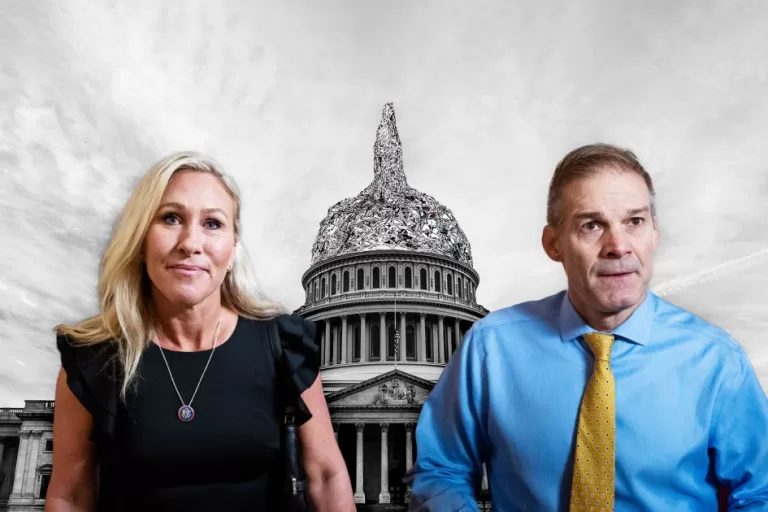
Call it the Conspiracy Theory Congress: Things are about to get dangerously weird on Capitol Hill

Well, Ol’ Ironbutt finally did it: After 14 humiliating votes, Rep. Kevin McCarthy, R-Calif. sucked all the humor out of the Capitol and squeaked into the Speakership on the 15th try, in the dead of night, the proper hour for all shameful moments. Just to make this denouement even more depressing, Republican members of Congress made the disappointing choice to stop Rep. Mike Rogers, R-Ala., in what was the only useful urge he’s had in his life, from issuing a beatdown to Rep. Matt Gaetz, R-Fla.

While the clown show has been highly entertaining to anyone not named Kevin McCarthy, in all the ways that truly matter, it’s been irrelevant. As Heather “Digby” Parton noted Friday at Salon, the members of the insurrectionist caucus “already run everything.” That was true long before Rep. Lauren Boebert of Colorado and Rep. Matt Gaetz of Florida decided to head up the “Humiliate Kevin” fund-raising scheme. It was true last year, when McCarthy cozied up to Rep. Marjorie Taylor Greene of Georgia, cementing the QAnon-loving congresswoman as one of the most powerful people on Capitol Hill. It was true when McCarthy tried to get Rep. Jim Jordan, R-Ohio, on the January 6 committee because he thought Jordan possessed the necessary lying skills to cover for Trump’s guilt. It was true even on January 6, 2021, when McCarthy joined 146 other House Republicans to vote to de-certify the 2020 election, even after Donald Trump sent a murderous mob to the Capitol. The media covered the Speaker fight as one between McCarthy and “election deniers,” but in truth, McCarthy should be considered an election denier himself. 


Want more Amanda Marcotte on politics? Subscribe to her newsletter Standing Room Only.


In a very real sense, the silly drama over the Speaker election has distracted from a larger, more disturbing truth: House Republicans are going to spend the next two years using taxpayer money to wage war on not just democracy, but truth itself. The antics of various House committees, as they work hand-in-glove with Fox News to create and disseminate right wing conspiracy theories, will make an epsiode of Infowars seem downright sober-minded. 

As Crooked editor Brian Beutler noted in his latest “Big Tent” newsletter, the insurrectionist caucus differs from the radical right wingers of GOP caucuses past, whose goals were to “gut Medicare, defund the Affordable Care Act, etc.” Instead, these new Republican radicals “want to steal elections. They want to sabotage criminal investigations that implicate themselves, Donald Trump, and January 6 defendants, current and future.” Having realized that they’ll likely never get their desired ends through democratic means, they’ve determined democracy itself must go. And make no mistake: McCarthy and other GOP leaders are only too happy to go along with the program. 

A crucial part of the war on democracy is a war on facts and reason. Democracy, it’s worth remembering, emerged as an Enlightenment ideal, and cannot be separated from other Enlightenment values, such as the importance of empiricism and the value of critical thinking. As I noted last week, the current iteration of the GOP is functionally a fascist party and adheres to the knee-jerk fascist distaste for thinking, rational debate, and above all, letting facts guide your decision-making. 

Because of this, there’s little doubt that, over the next two years, the Republican-run House will be structured not around legislative goals, but propagandistic ones. Namely, they will use the immense power and resources of the U.S. Congress to be a bullshit-generating machine. Committee hearings will be built around elevating defamatory accusations against perceived political opponents and spawning Fox News and social media-friendly clips that fuel truly unhinged conspiracy theories. 


Want more Amanda Marcotte on politics? Subscribe to her newsletter Standing Room Only.


As I noted last week at Salon, document requests and public statements from House Republicans give us a good idea of what fever swamp stories the Republicans wish to propagate: False accusations that retired head of the National Institute of Allergy and Infectious Diseases, Dr. Anthony Fauci, somehow caused the COVID-19 virus. Lurid nonsense about President Joe Biden’s son, Hunter Biden. Claims that the January 6 insurrectionists and other right wing terrorists are innocent victims of a Biden smear campaign. 

The hearings publicizing the conspiracy theories will be framed as “investigations,” but no one should be fooled. The Republicans behind these lies, much less the right wing “journalists” who will elevate them, know full well it’s all nonsense. Indeed, as I’ve long argued, I don’t think most of the audience for the conspiracy theory circus believe it, either. The idea is not to actually fool anyone into thinking Biden is actually corrupt or that the Capitol rioters were actually innocent.

The purpose of these exercises in fantastical story-telling is, if anything, more diabolical than an old-fashioned desire to fool people. It’s about a larger assault on truth itself, or more specifically, on the value that truth has in our society. The goal of the “alternative facts” crowd is to make truth no more relevant than lies. To assert that “reality” can be whatever they want it to be. After all, as Stephen Colbert once famously noted, “Reality has a well-known liberal bias.” If the facts aren’t on their side, Republicans have come to believe, then facts should have no power. 

Trump is the master of asserting that his preferred lies should take precedence over truth, of course, but this tendency of Republicans predates him. (Colbert’s famous quote comes from a 2006 speech in which he excoriated the George W. Bush administration for lying their way into the Iraq War.) But Trump’s innovation, which is now widely adopted by the GOP, was in this practiced indifference to truth. The liar wants others to believe their falsehoods. The gaslighting Republicans of the Trump era want to evacuate the concept of “truth” itself. Gone are the days when the Bush administration put real effort into falsifying evidence to support false claims about WMDs in Iraq. Nowadays, we have Trump barely putting effort into filling the Big Lie with even fake evidence.

The next two years of “hearings” will be much of the same: Lots of insinuations and false accusations, as well as incoherent ramblings that only make sense to those who are already well-versed in right wing conspiracy theories. Little, if any, effort will be put toward making any of these outlandish stories or conspiracy theories convincing. They aren’t really meant to be believed. They are meant to alter the American relationship with reality so people lose all faith that the difference between true and false matters at all. 

Read More
Amanda Marcotte

NYXI Reveals A GameCube-Inspired Switch Controller With No Drifting

The ultimate Smash pad?

Peripheral brand NYXI has revealed its latest Nintendo Switch wireless joy-pad, dubbed the NYXI Wizard.

Directly inspired by the Nintendo GameCube, the joy-pad features Hall Effect analogue sticks to eliminate drifting, along with interchangable joystick rings, a turbo function, illuminated ‘ABXY’ buttons, and an ergonomic, slip-free design. It goes without saying, of course, that the controller also functions as a set of joy-con; simply slide the two sides from the pad and whack them directly onto your Switch.

Here’s a list of features directly from NYXI:

– The preferred gamepad for Super Smash Bros. Ultimate
– Hall effect joystick, with no drifting
– Designed for performance ZR/ZL buttons, are quieter, lighter, have less resistance, and have shorter trigger distances to help you shoot faster. ABXY buttons have white light effects and a comfortable feel for an enhanced gaming experience.
– Removable joysticks and replaceable joysticks ring
– Ergonomic, non-slip design
– Wireless connection and long-lasting performance
– Adjustable Turbo & Mapping Function
– One-Key Wake-Up & Screenshot Function

The controller can be ordered via the NYXI website right now for $69.00 with options available for international shipping. Of course, if you’re in the market for a GameCube inspired controller but would rather opt for something with a more “traditional” layout, then you might want to check out the below Switch controller case from Retroflag:

What do you make of this GameCube joy-pad from NYXI? Are you after something to satisfy those lengthy Super Smash Bros. sessions? Let us know with a comment!

[source nyxigame.com]

Ollie Reynolds

Nintendo Life’s resident horror fanatic, when he’s not knee-deep in Resident Evil and Silent Hill lore, Ollie likes to dive into a good horror book while nursing a lovely cup of tea. He also enjoys long walks and listens to everything from Motorhead to BB King.

Read More
Gaylene Schroeder

Will young people save American democracy from Republican authoritarians? It’s not that simple

America and the world are facing a range of existential crises and other serious problems.

These challenges are immediate as well as slower and long-term.

They include global climate collapse; resource scarcity; overpopulation; extreme wealth and income inequality; corporatocracy; war; disruptive new technologies like social media, algorithms, and artificial intelligence; pandemics; authoritarianism, fake populism and other forms of illiberalism and extremism; hyper-politics and future shock; the expansion of the surveillance society; and a global legitimacy crisis that malign actors are using to undermine democracy and societal institutions more broadly.

Will the young people save us? That is as much a question as it is an exclamation, plea and statement of exhaustion and surrender.

There are reasons to be hopeful.

As seen in the 2022 midterms, young voters (ages 18-29) were key to defeating the Republican-fascists and their attempt to end multiracial democracy.

And as compared to older Americans, young people are also more likely to support the types of bold and transformative policies required to slow down the global climate disaster, expand the social safety net, improve intergenerational class mobility and create a more humane and inclusive society across a range of issues and policies.

The Republican Party and the “conservative” movement know that time and generational replacement are not on their side. As the United States becomes more racially diverse and young people become more politically active, the Democratic Party will likely grow its base of support to a point where the Republican Party may become obsolete.

In all, the American right wing opposes real democracy and the principle of “one person, one vote” because their policies are unpopular with a growing segment (if not a majority) of the American people.

Instead of broadening their base and changing their policies to win “free and fair elections” in a democracy, today’s Republican Party, the “conservative” movement and their forces have instead decided to create an American apartheid Christofascist plutocracy as a way of getting and keeping political power and control over society for all time.

A new analysis by the Financial Times of polling data from the US General Social Survey, American National Election Studies, British Election Survey, and the Cooperative Election Study provides more evidence of how the generational tides appear to be turning against today’s Republican Party and the forces of “conservatism” here in the United States (and in the UK respectively).

Data reporter John Burn-Murdoch explains how:

Millennials — born between 1981 and 1996 — started out on the same trajectory, but then something changed. The shift has striking implications for the UK’s Conservatives and US Republicans, who can no longer simply rely on their base being replenished as the years pass….

Let’s start with age effects, and the oldest rule in politics: people become more conservative with age. If millennials’ liberal inclinations are merely a result of this age effect, then at age 35 they too should be around five points less conservative than the national average, and can be relied upon to gradually become more conservative. In fact, they’re more like 15 points less conservative, and in both Britain and the US are by far the least conservative 35-year-olds in recorded history.

On to period effects. Could some force be pushing voters of all ages away from the right? In the UK there has certainly been an event. Support for the Tories plummeted across all ages during Liz Truss’s brief tenure, and has only partially rebounded. But a population-wide effect cannot completely explain millennials’ liberal exceptionalism, nor why we see the same pattern in the US without the same shock.

So the most likely explanation is a cohort effect — that millennials have developed different values to previous generations, shaped by experiences unique to them, and they do not feel conservatives share these.

This is borne out by US survey data showing that, having reached political maturity in the aftermath of the global financial crisis, millennials are tacking much further to the left on economics than previous generations did, favouring greater redistribution from rich to poor.

Murdoch concludes:

The data is clear that millennials are not simply going to age into conservatism…. UK millennials and their “Gen Z” younger cousins will probably cast more votes than boomers in the next general election. After years of being considered an electoral afterthought, their vote will soon be pivotal. Without drastic changes to both policy and messaging, that could consign conservative parties to an increasingly distant second place.

However, questions of politics and power and generational change in society are much more complex than a simple story of how young people are “naturally” more inclined towards positive social change than their parents and previous generations.

In the United States and other societies, young people spend much more time online and using social media and other digital technologies than older people. This makes younger people much more vulnerable to being targeted, recruited and radicalized by right-wing extremists, neofascists, white supremacists and other malign actors.


Want a daily wrap-up of all the news and commentary Salon has to offer? Subscribe to our morning newsletter, Crash Course.


Public health and other experts have also repeatedly found that young people are much more likely to report being lonely, socially atomized, and experiencing feelings of alienation than other groups. This also makes young people much more susceptible to radicalization and extremism.

Young white Americans – especially self-identified Republicans and conservatives – also possess high levels of racial resentment, racism, and other anti-Black and brown animus. The claim that young people will “cure” racism is largely a myth. The reality is that young white people are better at performing the public scripts of anti-racism, “colorblindness, “inclusion” and multiculturalism while at the same time privately possessing many of the same racist and white supremacist attitudes and values as their parents.

The American right wing and other anti-democracy forces are waging a multi-spectrum campaign to destroy the country’s public schools, colleges, universities and other institutions of learning and replace them with a system of white supremacist authoritarian gangster capitalist Christofascist indoctrination that does not teach critical thinking, civics, real history, science, ethics, humane philosophy, or otherwise provide the tools necessary for responsible democratic citizenship.

As part of this larger project, for decades the American right wing has been recruiting and indoctrinating young people at the high school and college level (and younger) to attack and delegitimate the country’s educational system from within. This involves enlisting “young conservatives” and other allied forces as agents in harassment campaigns targeting teachers, professors and other educators who are deemed to be committing thought crimes.

Those who believe that “the young people will save us” also have to confront how that group is not a monolith.

In a new essay at Vox, Christian Paz makes this intervention:

While they are more socially liberal, diverse, and open to progressive ideas than older generations, a large plurality still identify as politically moderate. They are mostly independents, eschewing partisan identity at a higher rate than older voters. And more liberal young people have less loyalty to the Democratic Party than their older peers — something that fueled Biden’s unpopularity for most of the year, when this group of voters abandoned him. Meanwhile, the gender gap among young people is also ballooning. Young women, especially women of color, are much more Democratic than young men, according to Tufts University’s Center for Information and Research on Civic Learning and Engagement. And rural youth are much more Republican than those who live in cities.

I highlight all these nuances because young people are often talked about with too broad a brush, and that generality obscures the challenges that Democrats will eventually have with this group of voters. Whether people get more conservative as they age is a perennial question of political science and folk wisdom — “if you’re under 30 and not a liberal, you have no heart, but if you’re over 30 and not conservative, you have no brain,” the saying goes. But research published in the University of Chicago’s journal of politics shows that, for most people, political beliefs are longstanding and stable, but liberals are more likely to become more conservative than the other way around as people grow older. That aligns with research from Chicago Booth’s Sam Peltzman, who argues that age 45 is when aging voters begin to change their political ideologies.

Late capitalism and the extremes of wealth and income inequality that it has generated (and profits from) have helped to birth a global legitimacy crisis – which is especially acute among younger people.  

Part of this crisis is being fueled by what historian Peter Turchin describes as “elite overproduction” in America and other capitalist societies where there are not enough opportunities available for younger people who are seeking intergenerational mobility, and at a minimum to do as well as their parents economically and in terms of social capital — or ideally to enter (or remain in) the professional and managerial class (or perhaps even become a member of the elite or “ruling class”).

A 2020 profile of Turchin at the Atlantic magazine explores his controversial theory:

The past 10 years or so have been discussion. That sickening crunch you now hear—steel twisting, rivets popping—­­is the sound of the ship hitting the iceberg.

“We are almost guaranteed” five hellish years, Turchin predicts, and likely a decade or more. The problem, he says, is that there are too many people like me. “You are ruling class,” he said, with no more rancor than if he had informed me that I had brown hair, or a slightly newer iPhone than his. Of the three factors driving social violence, Turchin stresses most heavily “elite overproduction”—­the tendency of a society’s ruling classes to grow faster than the number of positions for their members to fill. One way for a ruling class to grow is biologically—think of Saudi Arabia, where princes and princesses are born faster than royal roles can be created for them. In the United States, elites over­produce themselves through economic and educational upward mobility: More and more people get rich, and more and more get educated. Neither of these sounds bad on its own. Don’t we want everyone to be rich and educated? The problems begin when money and Harvard degrees become like royal titles in Saudi Arabia. If lots of people have them, but only some have real power, the ones who don’t have power eventually turn on the ones who do.

In the United States, Turchin told me, you can see more and more aspirants fighting for a single job at, say, a prestigious law firm, or in an influential government sinecure, or (here it got personal) at a national magazine…. Elite jobs do not multiply as fast as elites do. There are still only 100 Senate seats, but more people than ever have enough money or degrees to think they should be running the country. “You have a situation now where there are many more elites fighting for the same position, and some portion of them will convert to counter-elites,” Turchin said.

The Atlantic continues:

Elite overproduction creates counter-elites, and counter-elites look for allies among the commoners. If commoners’ living standards slip—not relative to the elites, but relative to what they had before—they accept the overtures of the counter-elites and start oiling the axles of their tumbrels. Commoners’ lives grow worse, and the few who try to pull themselves onto the elite lifeboat are pushed back into the water by those already aboard. The final trigger of impending collapse, Turchin says, tends to be state insolvency. At some point rising in­security becomes expensive. The elites have to pacify unhappy citizens with handouts and freebies—and when these run out, they have to police dissent and oppress people. Eventually the state exhausts all short-term solutions, and what was heretofore a coherent civilization disintegrates.

Turchin’s prognostications would be easier to dismiss as barstool theorizing if the disintegration were not happening now, roughly as the Seer of Storrs foretold 10 years ago.

Many of the great crises and other problems that are haunting American and global society have been identified as being caused by a “gerontocracy” that is unwilling to surrender power and get out of the way so that younger – and presumably more dynamic and bolder – leaders and other voices can take control over governance and society.

Writing at the Atlantic, Franklin Foer explores how:

Not so long ago, I would have described myself as sympathetic to the anti-gerontocracy critique. But the successes of the past Congress have convinced me otherwise. Biden, Schumer, and Pelosi presided over one of the most prolific legislative sessions in recent history. With the narrowest of margins, they have accomplished far more than anyone could have reasonably expected—and far more than their recent Democratic predecessors

One criticism of gerontocracy is that senior citizens are incapable of thinking toward the future, because they won’t be around for it. (Indeed, older voters can be terrible NIMBYs and cultural reactionaries. I won’t apologize for them.) But the 117th Congress has passed a series of bills containing significant investments—in clean energy, in semiconductor manufacturing, and in infrastructure—that the older leaders might not even live to fully enjoy. They spent heavily to decarbonize the economy and to maintain national competitiveness for generations. And they temporarily expanded the child tax credit, a massive intergenerational transfer of wealth.

All of this suggests that at the end of their career, these leaders weren’t thinking about clinging to power so much as attempting to write the first lines of their obituary.

Foer concludes:

To put my argument a bit more carefully, neither age nor youth is inherently virtuous… But the fetishization of youthful vigor—the yearning for the charismatic fresh face—is an ingrained cultural impulse that tends to disregard many of the qualities that make for an effective politician. The good news for the Democrats is that this is probably the ideal moment for generational turnover and opens the thrilling possibility of the nation’s first Black speaker. Because of their midterm defeat in the House, they don’t have much power to wield in Congress. That means fresh leadership will have time to learn on the job, without blowing significant opportunities. And the thing about young leaders is that someday they might become old. Long live Hakeem Jeffries.

In the end, power and decision-making are a function of both societal structures and institutions, as well as individuals and their morals, leadership styles and approaches to decision-making.

There are good leaders and thinkers among both the young and the old. Likewise, there are malign actors, the selfish and the grossly self-interested, and evildoers across all age groups.

Ultimately, the age of the leaders and other influentials will not make much of a difference if a society is not healthy. Why? In the end they will all be touched, tainted, molded and bent by that same system of corrupt power. 

Read More
Chauncey DeVega

Meet MGen, a new STI going around that no one is talking about

In addition to all the other nasty bugs floating around, like COVID, flu and RSV, health experts are raising the alarm about a sharp rise in sexually transmitted infections (STIs). The World Health Organization estimates more than 1 million STIs are acquired every day worldwide, the majority of which don’t cause symptoms. Meanwhile, preliminary data from the Centers for Disease Control and Prevention counted 2.5 million cases of syphilis, chlamydia and gonorrhea in 2021, all on a steep rise compared to previous years.

Some experts are particularly concerned about a tiny bacteria called Mycoplasma genitalium, sometimes shortened to Mgen, which usually doesn’t cause any symptoms. However, when it does, Mgen can trigger pain or discomfort while urinating or abnormal discharges and lead to more serious health problems. And unfortunately, while syphilis, chlamydia, gonorrhea and HIV are all typically tested for in a standard STI test, Mgen isn’t. 

Partly because it’s not always tested for, experts don’t have good numbers for how prevalent Mgen is — meaning many cases may fly under the radar.

In women or those with vaginas, the little pathogen has been linked to inflammation of the cervix, miscarriage, preterm birth and infertility. For men or people with penises, the risk of disease is higher, which usually manifests as the inflammation of the urethra, but can also result in infertility. Experts aren’t sure why Mgen seems to sterilize some people, but it appears to be permanent.

Mgen also helps other STIs feel at home, increasing the risk of HIV infections, for example. Partly because it’s not always tested for, experts don’t have good numbers for how prevalent Mgen is — meaning many cases may fly under the radar. Mgen is treatable with antibiotics, however, the pathogen is rapidly developing resistance, making many drugs useless to fight it. That’s why doctors are urging for more research into this bacteria, as NBC News reported earlier this month.

If you are experiencing any of the symptoms of an STI, such as abnormal discharges, pain with sex, pain with urinating or abnormal bleeding, you should see a doctor.

Mgen is unfortunately hard to treat. The bacteria lacks a cell wall, so it is able to deflect many typical antibiotics that target cell production. However, many researchers are studying new drugs to target these infections. A recent review in the journal 3 Biotech evaluated different strategies, such as using drugs to gum up certain enzymes or block the way these bacteria communicate.

“Inhibiting or modulating these targets could be a rational strategy for developing novel antimicrobial drug molecules against various M. genitalium infections which require extensive further investigations,” the authors wrote in December.

One of the best ways to prevent such diseases (aside from practicing safe sex) is keeping the good bacteria that live inside us happy. For example, Lactobacillus is a category of bacteria that is found in the gut, but also the vagina and urethra. Like its name suggests, Lactobacillus can produce a syrupy chemical called lactic acid, which can maintain the acidity of the vagina. This low-acid environment can prevent opportunistic infections from taking hold.

In some cases, common drugs like azithromycin worked less than 60 percent of the time [against Mgen]. Not a great success rate. 

The more antibiotics you throw at the problem, the worse it can become. A recent study in the journal Elsevier Diagnostic Microbiology and Infectious Disease, analyzed the outcomes of 209 Mgen-infected patients at a hospital in in Guangzhou, China. The researchers also found that Mgen was developing antibiotic resistance to more than one drug at a time, with about 46 percent of samples expressing dual resistance and 10 percent expressing resistance to three different antibiotics.

None of the patients had been screened for antibiotic resistance and in some cases, common drugs like azithromycin worked less than 60 percent of the time. Not a great success rate. And when one drug fails, doctors often switch to others. But if they aren’t tailored specifically for Mgen, like the strategies outlined in the 3 Biotech paper, then it can just end up making Mgen stronger.

“Antimicrobial resistance is a likely explanation for the high rates of clinical treatment failure,” the authors reported. It was just a small study, but it paints a stark picture of what doctors are up against.

Antibiotics are clearly useful and have saved millions of lives, but if they kill off a large portion of Lactobacillus, it can create an imbalance and can develop into bacterial vaginosis (BV), the most common vaginal disorder in women. This condition allows unwanted microbes to set up sticky biofilms that can resist being flushed out by the immune system or medications.

“BV actually sets you up for all viral, bacterial and parasitic sexually transmitted infections,” Dr. Melissa Herbst-Kralovetz, an associate professor and director of the Women’s Health Research Program at University of Arizona Health Sciences in Phoenix, told Salon. That includes HIV, herpes, HPV, gonorrhea, chlamydia, trichomonas and, of course, Mgen. BV can also result in infertility and preterm birth while encouraging HPV to develop into cervical cancers.

Herbst-Kralovetz has studied how both Mgen and BV can facilitate infections by building models that resemble the vaginal microbiome, or the microscopic jungle of bacteria, viruses and fungi that cultivate inside a vagina.

First her lab takes a rotating bioreactor, a kind of vat developed by NASA that is useful for cultivating microbes. Then, they fill the bioreactor with tiny plastic beads coated in a kind of fat called collagen. These beads create healthy environments for growing human epithelial cells, which cover all internal and external surfaces of your body.

In one 2013 experiment, published in The Journal of Infectious Diseases, Herbst-Kralovetz and her team used this bioreactor vagina model to demonstrate how Mgen uses chemistry to change its environment to its liking, not only for itself but for other unwanted guests as well. This helps confirm previous research from Africa that found female patients with Mgen were more likely to acquire HIV. This model can be useful for understanding how STIs like Mgen gain a foothold or develop cancers and reproductive issues, so medical experts can design ways to better fight them.

In the meantime, there have been some advances in the laboratory testing used to detect Mgen, as detailed in a recent study in the Journal of Clinical Microbiology. Like most STIs, it’s probably unlikely humans will ever fully eradicate Mgen, but we clearly need to keep a better eye on it, develop better tools for fighting it and treat Mgen with the same severity as other sexual pathogens.

Read More
Troy Farah