Home Blog Page 6898

Will young people save American democracy from Republican authoritarians? It’s not that simple

America and the world are facing a range of existential crises and other serious problems.

These challenges are immediate as well as slower and long-term.

They include global climate collapse; resource scarcity; overpopulation; extreme wealth and income inequality; corporatocracy; war; disruptive new technologies like social media, algorithms, and artificial intelligence; pandemics; authoritarianism, fake populism and other forms of illiberalism and extremism; hyper-politics and future shock; the expansion of the surveillance society; and a global legitimacy crisis that malign actors are using to undermine democracy and societal institutions more broadly.

Will the young people save us? That is as much a question as it is an exclamation, plea and statement of exhaustion and surrender.

There are reasons to be hopeful.

As seen in the 2022 midterms, young voters (ages 18-29) were key to defeating the Republican-fascists and their attempt to end multiracial democracy.

And as compared to older Americans, young people are also more likely to support the types of bold and transformative policies required to slow down the global climate disaster, expand the social safety net, improve intergenerational class mobility and create a more humane and inclusive society across a range of issues and policies.

The Republican Party and the “conservative” movement know that time and generational replacement are not on their side. As the United States becomes more racially diverse and young people become more politically active, the Democratic Party will likely grow its base of support to a point where the Republican Party may become obsolete.

In all, the American right wing opposes real democracy and the principle of “one person, one vote” because their policies are unpopular with a growing segment (if not a majority) of the American people.

Instead of broadening their base and changing their policies to win “free and fair elections” in a democracy, today’s Republican Party, the “conservative” movement and their forces have instead decided to create an American apartheid Christofascist plutocracy as a way of getting and keeping political power and control over society for all time.

A new analysis by the Financial Times of polling data from the US General Social Survey, American National Election Studies, British Election Survey, and the Cooperative Election Study provides more evidence of how the generational tides appear to be turning against today’s Republican Party and the forces of “conservatism” here in the United States (and in the UK respectively).

Data reporter John Burn-Murdoch explains how:

Millennials — born between 1981 and 1996 — started out on the same trajectory, but then something changed. The shift has striking implications for the UK’s Conservatives and US Republicans, who can no longer simply rely on their base being replenished as the years pass….

Let’s start with age effects, and the oldest rule in politics: people become more conservative with age. If millennials’ liberal inclinations are merely a result of this age effect, then at age 35 they too should be around five points less conservative than the national average, and can be relied upon to gradually become more conservative. In fact, they’re more like 15 points less conservative, and in both Britain and the US are by far the least conservative 35-year-olds in recorded history.

On to period effects. Could some force be pushing voters of all ages away from the right? In the UK there has certainly been an event. Support for the Tories plummeted across all ages during Liz Truss’s brief tenure, and has only partially rebounded. But a population-wide effect cannot completely explain millennials’ liberal exceptionalism, nor why we see the same pattern in the US without the same shock.

So the most likely explanation is a cohort effect — that millennials have developed different values to previous generations, shaped by experiences unique to them, and they do not feel conservatives share these.

This is borne out by US survey data showing that, having reached political maturity in the aftermath of the global financial crisis, millennials are tacking much further to the left on economics than previous generations did, favouring greater redistribution from rich to poor.

Murdoch concludes:

The data is clear that millennials are not simply going to age into conservatism…. UK millennials and their “Gen Z” younger cousins will probably cast more votes than boomers in the next general election. After years of being considered an electoral afterthought, their vote will soon be pivotal. Without drastic changes to both policy and messaging, that could consign conservative parties to an increasingly distant second place.

However, questions of politics and power and generational change in society are much more complex than a simple story of how young people are “naturally” more inclined towards positive social change than their parents and previous generations.

In the United States and other societies, young people spend much more time online and using social media and other digital technologies than older people. This makes younger people much more vulnerable to being targeted, recruited and radicalized by right-wing extremists, neofascists, white supremacists and other malign actors.


Want a daily wrap-up of all the news and commentary Salon has to offer? Subscribe to our morning newsletter, Crash Course.


Public health and other experts have also repeatedly found that young people are much more likely to report being lonely, socially atomized, and experiencing feelings of alienation than other groups. This also makes young people much more susceptible to radicalization and extremism.

Young white Americans – especially self-identified Republicans and conservatives – also possess high levels of racial resentment, racism, and other anti-Black and brown animus. The claim that young people will “cure” racism is largely a myth. The reality is that young white people are better at performing the public scripts of anti-racism, “colorblindness, “inclusion” and multiculturalism while at the same time privately possessing many of the same racist and white supremacist attitudes and values as their parents.

The American right wing and other anti-democracy forces are waging a multi-spectrum campaign to destroy the country’s public schools, colleges, universities and other institutions of learning and replace them with a system of white supremacist authoritarian gangster capitalist Christofascist indoctrination that does not teach critical thinking, civics, real history, science, ethics, humane philosophy, or otherwise provide the tools necessary for responsible democratic citizenship.

As part of this larger project, for decades the American right wing has been recruiting and indoctrinating young people at the high school and college level (and younger) to attack and delegitimate the country’s educational system from within. This involves enlisting “young conservatives” and other allied forces as agents in harassment campaigns targeting teachers, professors and other educators who are deemed to be committing thought crimes.

Those who believe that “the young people will save us” also have to confront how that group is not a monolith.

In a new essay at Vox, Christian Paz makes this intervention:

While they are more socially liberal, diverse, and open to progressive ideas than older generations, a large plurality still identify as politically moderate. They are mostly independents, eschewing partisan identity at a higher rate than older voters. And more liberal young people have less loyalty to the Democratic Party than their older peers — something that fueled Biden’s unpopularity for most of the year, when this group of voters abandoned him. Meanwhile, the gender gap among young people is also ballooning. Young women, especially women of color, are much more Democratic than young men, according to Tufts University’s Center for Information and Research on Civic Learning and Engagement. And rural youth are much more Republican than those who live in cities.

I highlight all these nuances because young people are often talked about with too broad a brush, and that generality obscures the challenges that Democrats will eventually have with this group of voters. Whether people get more conservative as they age is a perennial question of political science and folk wisdom — “if you’re under 30 and not a liberal, you have no heart, but if you’re over 30 and not conservative, you have no brain,” the saying goes. But research published in the University of Chicago’s journal of politics shows that, for most people, political beliefs are longstanding and stable, but liberals are more likely to become more conservative than the other way around as people grow older. That aligns with research from Chicago Booth’s Sam Peltzman, who argues that age 45 is when aging voters begin to change their political ideologies.

Late capitalism and the extremes of wealth and income inequality that it has generated (and profits from) have helped to birth a global legitimacy crisis – which is especially acute among younger people.  

Part of this crisis is being fueled by what historian Peter Turchin describes as “elite overproduction” in America and other capitalist societies where there are not enough opportunities available for younger people who are seeking intergenerational mobility, and at a minimum to do as well as their parents economically and in terms of social capital — or ideally to enter (or remain in) the professional and managerial class (or perhaps even become a member of the elite or “ruling class”).

A 2020 profile of Turchin at the Atlantic magazine explores his controversial theory:

The past 10 years or so have been discussion. That sickening crunch you now hear—steel twisting, rivets popping—­­is the sound of the ship hitting the iceberg.

“We are almost guaranteed” five hellish years, Turchin predicts, and likely a decade or more. The problem, he says, is that there are too many people like me. “You are ruling class,” he said, with no more rancor than if he had informed me that I had brown hair, or a slightly newer iPhone than his. Of the three factors driving social violence, Turchin stresses most heavily “elite overproduction”—­the tendency of a society’s ruling classes to grow faster than the number of positions for their members to fill. One way for a ruling class to grow is biologically—think of Saudi Arabia, where princes and princesses are born faster than royal roles can be created for them. In the United States, elites over­produce themselves through economic and educational upward mobility: More and more people get rich, and more and more get educated. Neither of these sounds bad on its own. Don’t we want everyone to be rich and educated? The problems begin when money and Harvard degrees become like royal titles in Saudi Arabia. If lots of people have them, but only some have real power, the ones who don’t have power eventually turn on the ones who do.

In the United States, Turchin told me, you can see more and more aspirants fighting for a single job at, say, a prestigious law firm, or in an influential government sinecure, or (here it got personal) at a national magazine…. Elite jobs do not multiply as fast as elites do. There are still only 100 Senate seats, but more people than ever have enough money or degrees to think they should be running the country. “You have a situation now where there are many more elites fighting for the same position, and some portion of them will convert to counter-elites,” Turchin said.

The Atlantic continues:

Elite overproduction creates counter-elites, and counter-elites look for allies among the commoners. If commoners’ living standards slip—not relative to the elites, but relative to what they had before—they accept the overtures of the counter-elites and start oiling the axles of their tumbrels. Commoners’ lives grow worse, and the few who try to pull themselves onto the elite lifeboat are pushed back into the water by those already aboard. The final trigger of impending collapse, Turchin says, tends to be state insolvency. At some point rising in­security becomes expensive. The elites have to pacify unhappy citizens with handouts and freebies—and when these run out, they have to police dissent and oppress people. Eventually the state exhausts all short-term solutions, and what was heretofore a coherent civilization disintegrates.

Turchin’s prognostications would be easier to dismiss as barstool theorizing if the disintegration were not happening now, roughly as the Seer of Storrs foretold 10 years ago.

Many of the great crises and other problems that are haunting American and global society have been identified as being caused by a “gerontocracy” that is unwilling to surrender power and get out of the way so that younger – and presumably more dynamic and bolder – leaders and other voices can take control over governance and society.

Writing at the Atlantic, Franklin Foer explores how:

Not so long ago, I would have described myself as sympathetic to the anti-gerontocracy critique. But the successes of the past Congress have convinced me otherwise. Biden, Schumer, and Pelosi presided over one of the most prolific legislative sessions in recent history. With the narrowest of margins, they have accomplished far more than anyone could have reasonably expected—and far more than their recent Democratic predecessors

One criticism of gerontocracy is that senior citizens are incapable of thinking toward the future, because they won’t be around for it. (Indeed, older voters can be terrible NIMBYs and cultural reactionaries. I won’t apologize for them.) But the 117th Congress has passed a series of bills containing significant investments—in clean energy, in semiconductor manufacturing, and in infrastructure—that the older leaders might not even live to fully enjoy. They spent heavily to decarbonize the economy and to maintain national competitiveness for generations. And they temporarily expanded the child tax credit, a massive intergenerational transfer of wealth.

All of this suggests that at the end of their career, these leaders weren’t thinking about clinging to power so much as attempting to write the first lines of their obituary.

Foer concludes:

To put my argument a bit more carefully, neither age nor youth is inherently virtuous… But the fetishization of youthful vigor—the yearning for the charismatic fresh face—is an ingrained cultural impulse that tends to disregard many of the qualities that make for an effective politician. The good news for the Democrats is that this is probably the ideal moment for generational turnover and opens the thrilling possibility of the nation’s first Black speaker. Because of their midterm defeat in the House, they don’t have much power to wield in Congress. That means fresh leadership will have time to learn on the job, without blowing significant opportunities. And the thing about young leaders is that someday they might become old. Long live Hakeem Jeffries.

In the end, power and decision-making are a function of both societal structures and institutions, as well as individuals and their morals, leadership styles and approaches to decision-making.

There are good leaders and thinkers among both the young and the old. Likewise, there are malign actors, the selfish and the grossly self-interested, and evildoers across all age groups.

Ultimately, the age of the leaders and other influentials will not make much of a difference if a society is not healthy. Why? In the end they will all be touched, tainted, molded and bent by that same system of corrupt power. 

Read More
Chauncey DeVega

Meet MGen, a new STI going around that no one is talking about

In addition to all the other nasty bugs floating around, like COVID, flu and RSV, health experts are raising the alarm about a sharp rise in sexually transmitted infections (STIs). The World Health Organization estimates more than 1 million STIs are acquired every day worldwide, the majority of which don’t cause symptoms. Meanwhile, preliminary data from the Centers for Disease Control and Prevention counted 2.5 million cases of syphilis, chlamydia and gonorrhea in 2021, all on a steep rise compared to previous years.

Some experts are particularly concerned about a tiny bacteria called Mycoplasma genitalium, sometimes shortened to Mgen, which usually doesn’t cause any symptoms. However, when it does, Mgen can trigger pain or discomfort while urinating or abnormal discharges and lead to more serious health problems. And unfortunately, while syphilis, chlamydia, gonorrhea and HIV are all typically tested for in a standard STI test, Mgen isn’t. 

Partly because it’s not always tested for, experts don’t have good numbers for how prevalent Mgen is — meaning many cases may fly under the radar.

In women or those with vaginas, the little pathogen has been linked to inflammation of the cervix, miscarriage, preterm birth and infertility. For men or people with penises, the risk of disease is higher, which usually manifests as the inflammation of the urethra, but can also result in infertility. Experts aren’t sure why Mgen seems to sterilize some people, but it appears to be permanent.

Mgen also helps other STIs feel at home, increasing the risk of HIV infections, for example. Partly because it’s not always tested for, experts don’t have good numbers for how prevalent Mgen is — meaning many cases may fly under the radar. Mgen is treatable with antibiotics, however, the pathogen is rapidly developing resistance, making many drugs useless to fight it. That’s why doctors are urging for more research into this bacteria, as NBC News reported earlier this month.

If you are experiencing any of the symptoms of an STI, such as abnormal discharges, pain with sex, pain with urinating or abnormal bleeding, you should see a doctor.

Mgen is unfortunately hard to treat. The bacteria lacks a cell wall, so it is able to deflect many typical antibiotics that target cell production. However, many researchers are studying new drugs to target these infections. A recent review in the journal 3 Biotech evaluated different strategies, such as using drugs to gum up certain enzymes or block the way these bacteria communicate.

“Inhibiting or modulating these targets could be a rational strategy for developing novel antimicrobial drug molecules against various M. genitalium infections which require extensive further investigations,” the authors wrote in December.

One of the best ways to prevent such diseases (aside from practicing safe sex) is keeping the good bacteria that live inside us happy. For example, Lactobacillus is a category of bacteria that is found in the gut, but also the vagina and urethra. Like its name suggests, Lactobacillus can produce a syrupy chemical called lactic acid, which can maintain the acidity of the vagina. This low-acid environment can prevent opportunistic infections from taking hold.

In some cases, common drugs like azithromycin worked less than 60 percent of the time [against Mgen]. Not a great success rate. 

The more antibiotics you throw at the problem, the worse it can become. A recent study in the journal Elsevier Diagnostic Microbiology and Infectious Disease, analyzed the outcomes of 209 Mgen-infected patients at a hospital in in Guangzhou, China. The researchers also found that Mgen was developing antibiotic resistance to more than one drug at a time, with about 46 percent of samples expressing dual resistance and 10 percent expressing resistance to three different antibiotics.

None of the patients had been screened for antibiotic resistance and in some cases, common drugs like azithromycin worked less than 60 percent of the time. Not a great success rate. And when one drug fails, doctors often switch to others. But if they aren’t tailored specifically for Mgen, like the strategies outlined in the 3 Biotech paper, then it can just end up making Mgen stronger.

“Antimicrobial resistance is a likely explanation for the high rates of clinical treatment failure,” the authors reported. It was just a small study, but it paints a stark picture of what doctors are up against.

Antibiotics are clearly useful and have saved millions of lives, but if they kill off a large portion of Lactobacillus, it can create an imbalance and can develop into bacterial vaginosis (BV), the most common vaginal disorder in women. This condition allows unwanted microbes to set up sticky biofilms that can resist being flushed out by the immune system or medications.

“BV actually sets you up for all viral, bacterial and parasitic sexually transmitted infections,” Dr. Melissa Herbst-Kralovetz, an associate professor and director of the Women’s Health Research Program at University of Arizona Health Sciences in Phoenix, told Salon. That includes HIV, herpes, HPV, gonorrhea, chlamydia, trichomonas and, of course, Mgen. BV can also result in infertility and preterm birth while encouraging HPV to develop into cervical cancers.

Herbst-Kralovetz has studied how both Mgen and BV can facilitate infections by building models that resemble the vaginal microbiome, or the microscopic jungle of bacteria, viruses and fungi that cultivate inside a vagina.

First her lab takes a rotating bioreactor, a kind of vat developed by NASA that is useful for cultivating microbes. Then, they fill the bioreactor with tiny plastic beads coated in a kind of fat called collagen. These beads create healthy environments for growing human epithelial cells, which cover all internal and external surfaces of your body.

In one 2013 experiment, published in The Journal of Infectious Diseases, Herbst-Kralovetz and her team used this bioreactor vagina model to demonstrate how Mgen uses chemistry to change its environment to its liking, not only for itself but for other unwanted guests as well. This helps confirm previous research from Africa that found female patients with Mgen were more likely to acquire HIV. This model can be useful for understanding how STIs like Mgen gain a foothold or develop cancers and reproductive issues, so medical experts can design ways to better fight them.

In the meantime, there have been some advances in the laboratory testing used to detect Mgen, as detailed in a recent study in the Journal of Clinical Microbiology. Like most STIs, it’s probably unlikely humans will ever fully eradicate Mgen, but we clearly need to keep a better eye on it, develop better tools for fighting it and treat Mgen with the same severity as other sexual pathogens.

Read More
Troy Farah

Toyota believes customer LMH cars possible, not just LMDh

The FIA World Endurance Championship will allow the new breed of LMDh cars to compete against LMH machinery in the Hypercar class from 2023 as part of a convergence process with the IMSA WeatherTech SportsCar Championship.

The LMDh has been devised as a cost-effective entry route into the pinnacle of sportscar racing, with each car based on an LMP2 chassis and running a hybrid system that is supplied externally for a fixed price.

This makes it an attractive proposition for independent teams wanting to race at Le Mans 24 Hours, and Porsche has already managed to sell four examples of the 963 to customers across WEC and IMSA for the first year of its LMDh programme.

By contrast, no manufacturer has so far managed to ink a deal to supply an LMH car, which must feature a bespoke chassis and powertrain as part of regulations that allow greater technical freedom than LMDh.

Toyota says it currently has no plans to make the title-winning GR010 Hybrid available to customers, but believes an independent outfit won’t find racing an LMH car very different to an LMDh.

Asked if it was possible for a customer team to run an LMH car such as the Toyota, Ferrari or the Peugeot, the Japanese marque’s technical director Pascal Vasselon said: “It’s definitely possible.

“If you ask me [if] it’s our strategy at the moment, no. But it’s definitely possible. It would be possible to have customer teams in LMH.”

LMDh programmes “not much” cheaper than LMH 

Toyota also believes the cost of running an LMDh programme isn’t much lower than LMH, citing the amount of testing the likes of Porsche, Cadillac, BMW and Acura have completed as proof that one route isn’t necessarily cheaper than the other.

Asked if running an LMH car would be more expensive than LMDh, Vasselon said: “Not much, no. The LMDh car has proved to be a bit more expensive than expected. And in the end it should not be that different.

“At the moment when you see the testing intensity of [some manufacturers], for sure it’s a lot of budget. 

“Whether you test with an LMDh or an LMH, in the end you should not have a massive number of test days, which matters.”

#7 Porsche Penske Motorsport, Porsche 963, GTP: Mathieu Jaminet, Michael Christensen, Nick Tandy

#7 Porsche Penske Motorsport, Porsche 963, GTP: Mathieu Jaminet, Michael Christensen, Nick Tandy

Photo by: Richard Dole / Motorsport Images

The LMDh regulations have brought Porsche back to endurance racing, with the German manufacturer about to embark on parallel programmes in WEC and IMSA from 2023 in collaboration with Team Penske.

Porsche will supply customer cars to JOTA (WEC), JDC-Miller (IMSA) and Proton Competition (WEC and IMSA) for the first year of its LMDh project, although those won’t be ready until the end of April at the soonest.

Porsche rolled out the 963 LMDh back in January and has since spent considerable resources in testing the car in both North America and Europe for its first racing programme of this scale since it withdrew from LMP1 at the end of the 2017 WEC season.

But the German manufacturer disputes Toyota’s claims about the cost of operating an LMDh car versus an LMH.

Asked if LMDh has proved to be more expensive than originally thought, Porsche motorsport chief Thomas Laudenbach told Motorsport.com: “No, I wouldn’t say so. Not in general. 

“I think the concept of an LMDh is you have restricted freedom but you still have freedom in enough areas that from a manufacturer you can show your abilities. So for me it’s a good trade off between cost control and the freedom you have in building your own car. 

“Also having the rules and boundary conditions in mind, it is quite a good approach to have this Balance of Performance running because we are very transparent to the sanctioning body. 

“No, I wouldn’t say it has proved to be more expensive than we originally thought.”

Read Also:

Read More
Lloyd Schroeder

UK Charts: Mario And Pokémon Hold Firm In Another Strong Week For Nintendo

Nintendo takes up seven of the top ten

New Super Mario Bros. U Deluxe
Image: Nintendo

With no big new releases to speak of, this week’s UK boxed charts paints a very similar picture to what we might expect (bar the switch of positions three and four, the first nine places are identical to last week). While God of War Ragnarok continues to sit on the top spot with the likes of FIFA 23 and Call of Duty: Modern Warfare II in positions two and three respectively, it has been yet another strong week for Nintendo.

Once again, Mario Kart 8 Deluxe is Nintendo’s top scorer in fourth place. This is something that we have become used to as of late, but with the game nearing its 300th week in the charts (this is its 298th), the stats continue to dazzle.

From here on in, the top ten is a wash with Nintendo titles. The remaining positions are occupied by classics such as Nintendo Switch Sports, Animal Crossing: New Horizons and Minecraft, relative newbies in the shape of both Pokémon Scarlet and Violet taking up places five and seven, and even a surprise appearance from New Super Mario Bros. U Deluxe which jumps back into the charts down at the bottom.

All said and done, it is a pretty picture for Nintendo fans! Here’s your look at this week’s UK boxed charts:

Last WeekThis WeekGame

1

1God of War Ragnarok

2

2FIFA 23

4

3Call of Duty: Modern Warfare II

3

4Mario Kart 8 Deluxe

5

5Pokémon Violet

6

6Nintendo Switch Sports

7

7Pokémon Scarlet

8

8Animal Crossing: New Horizons

9

9Minecraft

16

10New Super Mario Bros. U Deluxe

[Compiled by GfK]

< Last week's charts

Have you purchased any of the top ten this week? Let us know what you picked up in the comments below!

Jim Norman

Be it rambling about video games or superheroes, Jim wears his passions on his sleeve. Usually found replaying a Zelda title instead of working through his ever-growing backlog, he is a huge fan of all-things fantasy and likes nothing more than to chat about it.

Read More
Tyisha Wiers

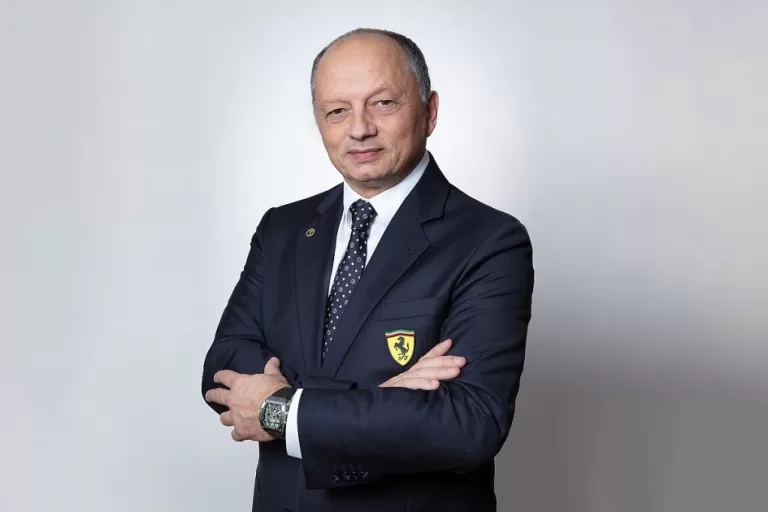
Why Vasseur will have no excuses for Ferrari failure

While Vasseur is wise enough to know there is no magic switch he can flick that will automatically propel Ferrari to the front, he’s equally aware that he has been drafted in for one thing: world championship glory.

With Ferrari chiefs John Elkann and Benedetto Vigna having lost patience with and faith in Vasseur’s predecessor Mattia Binotto, who they could so easily have given another year for a make-or-break title campaign, the timing of going for a change now is significant.

It is not a case, as so often happens, of a team electing to make a switch because the results have fallen off a cliff and a spiral of decline needs reversing.

Instead, Ferrari looked beyond Binotto for a simple reason: it wants to win the world championship now. As Vigna said so famously over the winter: “We have made some progress. I’m happy with the progress we’ve made. I’m not happy with second place. I think the team has what it takes to improve over time.”

The target from on top is clear then and, if second place was felt to not be good enough in 2022, then the only thing that will serve to satisfy in 2023 is P1.

For Vasseur, who has been in charge of the Renault and Alfa Romeo teams that have battled in the midfield, it means there is no real honeymoon period as he learns about life at the front, and no potential to talk of long-term ambitions and a steady march to glory.

Instead, it really is about wins and the title in 2023. No ifs. No buts. No excuses.

On the one hand, such pressure to deliver a result that Ferrari has not achieved for 15 years seems immense. It is little wonder some have suggested that Vasseur has inherited a poisoned chalice in taking over at Ferrari right now.

Ferrari started 2022 on the front foot before problems emerged

Ferrari started 2022 on the front foot before problems emerged

Photo by: Ferrari

With the Prancing Horse having started the 2022 campaign so strongly, any early lack of results in the new season will prompt questions about whether or not Ferrari made the right choice in changing team bosses now.

And can you imagine what the response in the Italian media or among the tifosi is going to be if there are any of the strategy blunders that cast such a dark cloud over Ferrari through last year?

To silence any such criticisms, Vasseur is going to need to ensure that Ferrari performs faultlessly, something that, in the high-pressure world of F1, is never easy to do. His focus is inevitably going to be on fine-tuning and honing the potential that is clearly there – and ironing out the costly mistakes.

It will be no surprise if part of his initial focus is not actually on the car itself but on the race team structure: diving deep into the organisation trackside to eradicate the poor processes that triggered some wrong strategy calls last year. He will not have to throw the baby out with the bath water and sack the strategy team to start again. But it is clear that things can – and must – be improved on this front.

But while the odds may appear to be stacked against Vasseur in being able to unleash a campaign that will be plain sailing and have no hurdles, equally there are a lot of factors that do work in his favour.

He is arriving at a team that is on the up. Ferrari has been steadily building and improving for several years now, and, despite all the negative headlines last year, did deliver its most successful campaign for a while. Vasseur is inheriting a team whose structure seems solid.

Binotto spent a great deal of his early time in charge getting the different departments working well together to help maximise the potential within Maranello.

Joining at this time also means that Vasseur is being presented with an almost complete car, with Binotto having already guided its development into the winter and made the crucial decisions in terms of concept and areas of improvement.

On the engine side, too, Vasseur should find that the situation is much improved compared to those dark days around the Spanish and Azerbaijan Grands Prix last year when Ferrari saw potential victories snatched from its grasp with reliability problems.

By the season’s end in Abu Dhabi, it had found cures for the problems that had triggered the blow-ups. Insiders say the squad was finally able to turn its power unit up again, having had to run things a bit more conservatively in the second half of the season.

Vasseur will aim to build on the initial success started by Binotto

Vasseur will aim to build on the initial success started by Binotto

Photo by: Ferrari

There is also talk of Ferrari having made further reliability improvements over the winter, to give it more confidence to extract even greater performance out of the engine for 2023 – which could be a boost to the straightline speed performance where it lost out to Red Bull in 2022.

What will be especially interesting to see though is whether or not Vasseur will have as a holistic view of the Ferrari car and engine package, and its technical intricacies, as Binotto did.

There is no doubt that one of Binotto’s strengths as a team principal was his detailed knowledge of F1 car performance, and the understanding of the complexities and competing forces at play (including high-level paddock politics) that all have an impact on the track performance.

But if there is a single thing that should offer Vasseur encouragement that his task at Ferrari, however difficult it may be, is at least possible – it’s actually the words of Binotto himself. Speaking last summer, Binotto felt that Ferrari was mostly on the right path necessary to get itself championship trophies again. All that was needed was a bit of sharpening up.

Asked what he felt Ferrari needed to do differently to triumph, Binotto said: “I don’t think that there is anything different that we need to do. I think it is simply to continue on our journey of continuously improving ourselves step by step, focusing on each single race.

“There are no silver bullets and I don’t think we need to change ourselves. We have proved that we can do a good job. It’s only a matter of step by step getting there, get used to it, and whatever will be the outcome for 2022, try to be prepared for 2023.”

It’s up to Vasseur to complete that task. And for all the smiles and jokey persona he shows in the paddock, behind him is a steely determination to get the job done.

As Valtteri Bottas, who has known Vasseur for years, said: “He can seem very laid back and always making jokes, but he can also be tough. He knows when is the right moment to give a motivational speech or a constructive talk. So yeah, he’s good.”

Now it’s time to put his qualities to work and deliver for Ferrari.

What will Ferrari look like under Vasseur's leadership?

What will Ferrari look like under Vasseur’s leadership?

Photo by: Mark Sutton

Read More
Rubi Buresh

Did Pence put himself on the bestseller list by buying copies of his own book?


Former U.S. Vice President Mike Pence (Drew Angerer/Getty Images)

This article originally appeared on Raw Story

rawlogo

Former Vice President Mike Pence’s Simon and Schuster autobiography “So Help Me God” was released Nov. 15, 2022, but on Nov. 9, Pence spent a hefty sum at an online bookstore, according to financial reports from the Federal Elections Commission.

In the fourth quarter of 2022, Pence showed that he spent a whopping $91,000 at Books On Call, LLC, the largest expenditure in his full financial report. The book then suddenly, or perhaps coincidently, scored a spot on the New York Times’ Bestseller’s List.

It’s unclear if Pence’s massive expenditure was for his own book, though it’s unlikely he was stocking up on the seven volumes of Harry Potter for 10,000 people. The category for the disbursement in the report was “collateral materials,” which is the marketing term for media used to promote yourself and your brand.

In 2019, Donald Trump Jr. scored the top spot on the New York Times’ Bestseller list after his father and others bought his book in bulk. The Republican Party even went so far as to send out a promotional email for Trump Jr. They spent nearly $100,000 on the book.

A Trump campaign email offered free signed copies to anyone who donated $50. Ultimately, nine conservative groups were found buying up Trump Jr.’s book in bulk.

After being ridiculed for the marketing ploy, Trump Jr. announced he was “self-publishing” his 2020 book “Liberal Privilege,” which contained a typo on the cover.

Trump’s campaign or super PAC hasn’t sent out an email to promote Pence’s book, however.

By Sarah K Burris


Trending Articles from Salon

Read More
Sarah K Burris

Supporters of Brazil’s former president storm Congress


Supporters of Brazilian former President Jair Bolsonaro clash with the police during a demonstration outside Brazil’s National Congress headquarters in Brasilia on January 8, 2023. (EVARISTO SA/AFP via Getty Images)

This article originally appeared on Raw Story

rawlogo

Supporters of former Brazilian President Jair Bolsonaro have stormed government buildings in scenes that evoke the Jan. 6 attacks on the U.S. Capitol.

Images and videos shared on social media showed Bolsonaro supporters reportedly ransacking Brazil’s National Congress building, Supreme Court and the presidential palace.

Brazilian police used tear gas Sunday to try to repel hundreds of supporters of far-right ex-president Jair Bolsonaro after they stormed onto Congress grounds one week after President Luis Inacio Lula da Silva’s inauguration, an AFP photographer witnessed.

The area around the parliament building in Brasilia had been cordoned off by authorities, but Bolsonaro backers who refuse to accept leftist Lula’s election victory broke through, marched up ramps and gathered on a roof of the modernist building.

Members of former President Donald Trump’s MAGA movement have been largely supportive of Bolsonaro’s bid to overturn the country’s election.

By David Edwards


Trending Articles from Salon

Read More
David Edwards

How Lawson’s first test brought back memories of Palou

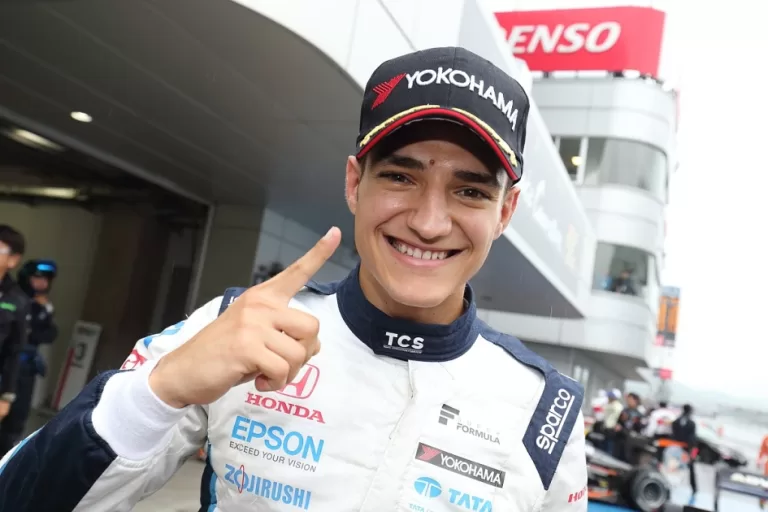
Lawson will race in Super Formula this year after two seasons in Formula 2, and had his first taste of the Japanese championship in December’s post-season rookie test at Suzuka driving the #15 car raced last season by Ukyo Sasahara.

The New Zealander impressed on the opening day of the test by finishing ninth in the afternoon session and getting within a second of the pace.

Engineer Tomo Koike, who ran Sasahara to two wins last season, said that working with Lawson reminded him of Palou, of whose Nakajima Racing crew he was part in 2019 before joining Mugen.

“We were using Ukyo’s car for the test, and the set-up wasn’t changed much,” Koike told Motorsport.com. “Lawson’s driving style is similar to Ukyo’s, he likes the car to oversteer. 

“We knew our car was not as fast as it could have been in those [cold] conditions, because the base set-up was from Rounds 9 and 10. But because of his driving capacity, he has been able to get up to speed quickly.

“There are still some things he can improve, sector three [including the hairpin and Spoon Curve] especially, but in sector one he was already one of the fastest. 

“My first impression of him is that he is similar to Alex Palou. His driving capacity is better than most Japanese drivers, I think. 

“His comments are also intelligent even though he is just 20 years old; he seems much more mature. I have enjoyed working with him so far.”

Palou famously came close to winning the Super Formula title in his rookie season in 2019, with only a rare intercooler tube issue in the final race at Suzuka leaving him third overall behind Nick Cassidy and Naoki Yamamoto.

He was then handed the chance to make the switch to IndyCar in 2020, and won the title in the American series the following year driving for Chip Ganassi Racing.

Koike believes Lawson, who says he is aiming to use Super Formula as a springboard to a Formula 1 drive with AlphaTauri in 2024, has the potential to make a similar impact to Palou.

“I think we have a chance because the aero package is changing,” said Koike. “We have a better chance than if he was making his debut last year.”

Read Also:

Read More
Dion Klemp

‘It Appears All the Cylinders Are Firing Within His Brain’: What We Heard This Week

Business News

Business News — Quotable quotes heard by MedPage Today‘s reporters

by

“It appears that all the cylinders are firing within his brain.” — Timothy Pritts, MD, PhD, of the University of Cincinnati Medical Center, where NFL safety Damar Hamlin was treated after he collapsed on the field during a Monday Night Football game.

“All of a sudden, this guy in a pink dress came up next to me on my left hand side. He says, ‘I’m a doctor.’ I said to myself, ‘Thank God.'” — Natalie Spencer, RN, of Sanatoga Center nursing home in Pottstown, Pennsylvania, about the doctor in a Mummer costume who helped her revive a collapsed fan during a Philadelphia Eagles game.

“Every day, people who use cannabis present for surgery.” — Samer Narouze, MD, PhD, president of the American Society of Regional Anesthesia and Pain Medicine, about new guidelines recommending surgical candidates undergoing anesthesia be screened universally for cannabis use.

“I think it’s a bit odd for the FDA to do this, to start writing opinion pieces.” — Bart Vanhaesebroeck, PhD, of University College London, commenting on an FDA-authored article about the safety and efficacy of PI3K inhibitors in hematologic malignancies.

“The natural curiosity and climbing ability of toddlers means that they can often get into edibles stored on a high shelf or in a plain-looking closed container.” — Antonia Nemanich, MD, of Rush University Medical Center in Chicago, on the over 10-fold increase in kids being exposed to edible cannabis products in the past few years.

“This increasing sensitivity to social information in teens who habitually check social media might prompt future compulsive social media checking.” — Eva Telzer, PhD, of the University of North Carolina at Chapel Hill, about brain changes in adolescents that were linked with checking social media at least 15 times per day.

“We are assuming a lot.” — Anuradha Lala, MD, of the Icahn School of Medicine at Mount Sinai in New York City, on what might be motivating or deterring applicants for advanced heart failure and transplant cardiology fellowships.

“It doesn’t mean that it’s not happening to them, but they have a different framing of it” — Yue-Yung Hu, MD, MPH, of Northwestern University in Chicago, on how foreign international medical graduates working in U.S. surgery residency programs report bullying and sexual harassment less frequently than others.

“That’s my worry.” — Ushma Upadhyay, PhD, MPH, of the University of California San Francisco, on some FDA restrictions that remain in place for retail pharmacies dispensing the medication abortion pill mifepristone (Mifeprex) that may hinder access.

“Gender-based discrimination does not occur in a vacuum in academic medicine.” — Maya Iyer, MD, MEd, of Nationwide Children’s Hospital in Columbus, Ohio, on how some men serving as academic department chairs are opting to not to intervene after witnessing gender-based discrimination against female colleagues.

Read More
Tami Pecora

Which Surgery Patients Should Be Screened for Cannabis?

— You passed medical training, now see if you can pass our weekly quiz

by

The 24-hour news cycle is just as important to medicine as it is to politics, finance, or sports. At MedPage Today, new information is posted daily, but keeping up can be a challenge. As an aid for our readers, here is a 10-question quiz based on the news of the week. Topics include screening for cannabis before surgery, Ashton Kutcher’s health scare, and the brains of teens who frequent social media. After taking the quiz, scroll down in your browser window to find the correct answers and explanations, as well as links to the original articles.

Read More
Leigha Kazmierczak