Home Blog Page 7032

Netgear Wi-Fi routers need to be patched immediately

Red padlock open on electric circuits network dark red background


(Image credit: Shutterstock/Chor muang)

Netgear has issued a patch for a high-severity vulnerability found in almost a dozen of its Wi-Fi routers (opens in new tab) and urged its users to apply the fix immediately. 

Given the destructive potential of the flaw, Netgear did not disclose the details, other than saying that it’s a pre-authentication buffer overflow vulnerability, which could be used for all kinds of malicious activity, from crashing the device after a denial of service, to arbitrary code execution.

To abuse the vulnerability, the attackers do not need user permission or user interaction. The flaw can be used in low-complexity attacks, it was said.

Pre-authentication buffer overflow

Issuing a security advisory (opens in new tab) about the flaw, Netgear said it “strongly recommends” users download and install the latest firmware as soon as possible.

“The pre-authentication buffer overflow vulnerability remains if you do not complete all recommended steps,” Netgear added. “Netgear is not responsible for any consequences that could have been avoided by following the recommendations in this notification.”

The list of all of the affected devices, which includes multiple Wireless AC Nighthawk, Wireless AX Nighthawk (WiFi 6), and Wireless AC models, can be found on this link (opens in new tab).

Those looking to patch up their routers should navigate to the Netgear Support (opens in new tab) website, and type in their Wi-Fi router’s model number in the search box. Once the right version is identified, press Downloads, and under Current Versions, select the first download with “Firmware Version” in the beginning of the title.

Detailed instructions on how to apply the fix can be found in the Release Notes file accompanying the firmware download. 

Wi-Fi routers are a popular target for cybercriminals due to the fact that all of a user’s traffic must go through the device. What’s more, users rarely change the factory settings, and update the firmware even less frequently. 

Via: BleepingComputer (opens in new tab)

Sign up to theTechRadar Pro newsletter to get all the top news, opinion, features and guidance your business needs to succeed!

Sead is a seasoned freelance journalist based in Sarajevo, Bosnia and Herzegovina. He writes about IT (cloud, IoT, 5G, VPN) and cybersecurity (ransomware, data breaches, laws and regulations). In his career, spanning more than a decade, he’s written for numerous media outlets, including Al Jazeera Balkans. He’s also held several modules on content writing for Represent Communications.

Read More
Rebecka Klemp

The Best Way To Clean Your Xbox Series X To Keep It Running Like New

Xbox Series X|S consoles and controllers upright

Miguel Lagoa/Shutterstock

Gamers know that keeping your Xbox Series X clean helps aid in the console’s continued performance. Having too much dust accumulate inside your console (or any high performance technology) can cause serious damage. Dust, dirt, and hair can build up inside your console, blocking the fan, air vents, and damaging the disc drive. It can lead to your console overheating and malfunctioning.

Not only is it important to keep the inside of your Xbox Series X clean, but the outside as well. Not only do you want to keep your Xbox Series X running like new, but you want to keep it looking new, too. Thankfully, Microsoft shares with its customers the tools needed to keep your Xbox Series X looking and running like new.

To clean the outside of your Xbox Series X, Xbox support recommends using a dampened, microfiber cloth with mild soap or moistened disinfectant wipes. Wipe the exterior every 3-6 months or as needed. Remember to make sure your console is turned off completely before you begin cleaning.

How to clean the dust from your Xbox Series X

Xbox Series X held in hand

Mr.Mikla/Shutterstock

Cleaning the interior of the Xbox Series X is a tad bit more complex, and officially, Xbox support does not recommend opening your Xbox Series to clean internally. However, to keep dust from accumulating, cleaning the interior is necessary. According to SortaTechy, you should make sure you have these tools handy before you open your Xbox Series X console to begin cleaning.

  • Compressed air can
  • Microfiber cloth
  • Soft-bristle brush
  • Rubbing alcohol or mild soap
  • T8 screwdriver

To begin cleaning the inside of the Xbox Series console:

  1. Turn off and unplug the console.
  2. Clean the exterior of the console and its vents with a microfiber cloth.
  3. Remove the sticker above the connection port and the warranty sticker at the bottom to expose two screws underneath.
  4. Use the T8 screwdriver to remove the screws and unclip the back of the case, working your way from the bottom.
  5. Remove the three screws at the upper part of the base of the fan to reveal the fan, allowing you to clean the fan blades and wipe the fan down.
  6. Turn the case upside down and find the clip that fastens the base plate to the case.
  7. Remove the exposed screws to disconnect the optical drive from the case, allowing you to detach the rest of the components from the case.

To reassemble, follow these steps in reverse.

How to clean the Xbox your Xbox Series X Controller

Xbox Series X controller in hand

Diego Thomazini/Shutterstock

Caring for Xbox Series accessories is just as important as taking care of the console. The Xbox Series controller can get dirty or even sticky with hours upon hours of gameplay — especially if you snack while playing. Luckily, cleaning the controller is much easier than the console.

When to properly clean your controller, tech care company Asurion advises Xbox One and Xbox series users to:

  1. Turn off your controller completely by pressing and holding the Xbox button for 5-10 seconds.
  2. Use a microfiber cloth with isopropyl/rubbing alcohol or a disinfectant wipe to clean the analog sticks. Don’t forget to clean the base of the analog sticks by moving the sticks around.
  3. Before turning the controller back on for use, let the controller dry completely.

If your Xbox Series X overheats or malfunctions due to dust and dirt accumulation, cleaning your console can help. However, if you still have issues with overheating or malfunctioning after cleaning your Xbox Series, contact Xbox support for servicing.

Read More
Becki Mote

How To Set Up Your Google Pixel 7’s Free VPN

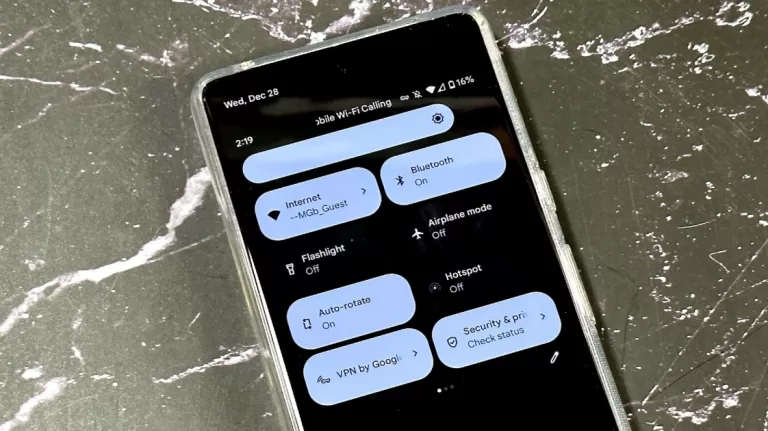
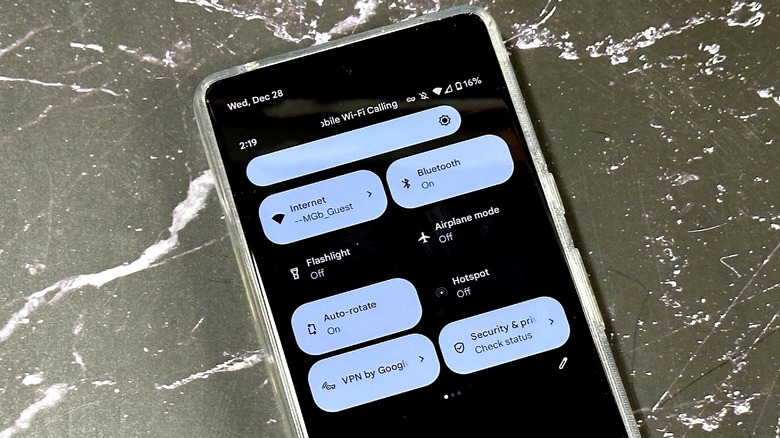
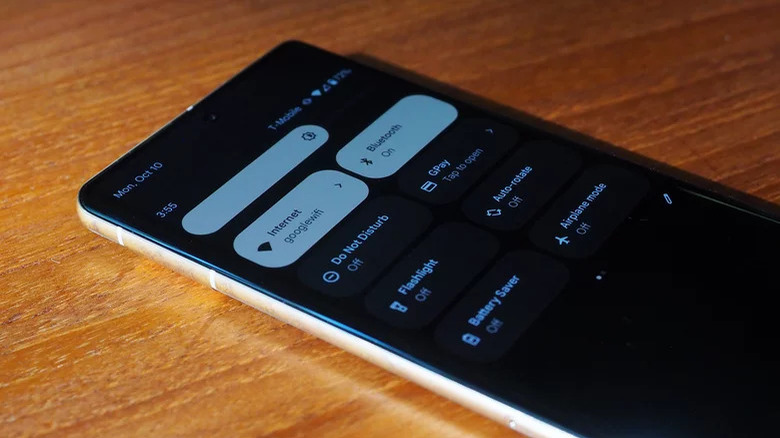
Google Pixel 7 smartphone quick settings

Adam Doud/SlashGear

Google’s Pixel smartphone lineup doesn’t hold much Android market share, and while that doesn’t seem to be a big deal to the internet giant, Google does toss in some perks to make its mobile phones a tad more appealing. One of those perks is free access to the company’s virtual private network that everyone else has to pay for — it’s the same VPN you get when subscribed to Google One, which Pixel owners must pay for as well if they want to use the cloud storage and other bundled features.

The VPN offers some of the same benefits you’d get with any other paid alternative: enhanced privacy and security while on open Wi-Fi networks, the ability to torrent without risking a copyright strike from your ISP, and similar. The big exception is that Google One’s VPN doesn’t allow you to change the IP address region used when connected with the virtual private network, which makes the service less than useful if your goal is to get around geo-based content blocks.

As Google had promised, the Pixel 7 smartphone lineup comes with the free VPN perk, though the feature was delayed at launch. Google finally rolled out the free access with the December 2022 feature drop, and upon installing the update, users in eligible countries can enable the service whenever they’d like.

How to set up the free VPN on a Pixel 7

Person using Google Pixel 7

Google

Google’s VPN is part of the Google One subscription, and though it is made available for free to Pixel 7 owners, you’ll still need to download and install the companion app to set up and access the virtual private network (via Google). The Google One app is available for free from the Google Play Store, and is designed to automatically detect when it’s installed on a Pixel 7 — meaning you won’t have to do anything cumbersome to enable the free access.

  1. Download the Google One app from the Play Store.
  2. Install the Google One app on your Pixel 7.
  3. Open the Google One app, scroll down, and tap “Benefits.”
  4. Tap “View Details” next to the VPN feature.
  5. Toggle on the “Enable VPN” switch.
  6. Tap “Allow” on the VPN connection and notification prompts when they appear.

Your phone’s internet traffic will go through the Google One VPN as long as the toggle switch is set to “On.” Generally speaking, you’ll need to open the app to turn the VPN on and off, but there’s also the option of adding the function to Quick Settings on the Pixel 7 so that it’s easier to access. To do that, open Quick Settings by swiping down two times, tap “Edit,” and then tap, hold, and drag the Google One VPN tile to the spot you find most convenient.

How to configure the free VPN on a Pixel 7

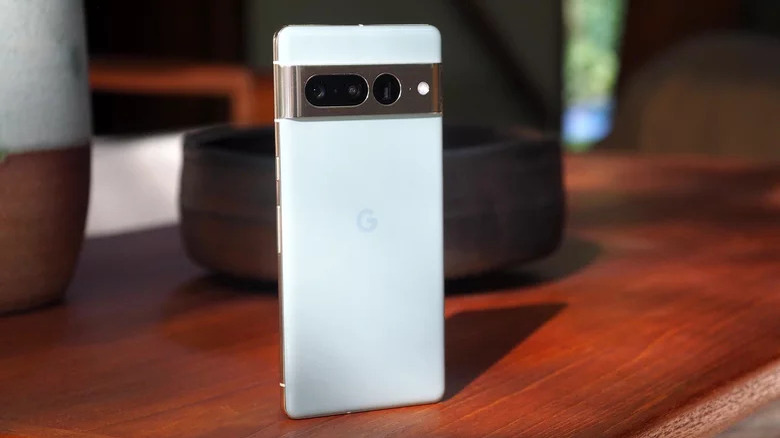
Pixel 7 Pro smartphone upright rear panel

Chris Davies/SlashGear

Many VPN apps include special features beyond simply “on” and “off” that give users more control over when and how the service connects to the provider’s servers. Arguably the most popular (and important) of these features is called a “kill switch.” As the name implies, a kill switch will block internet traffic if the VPN disconnects from the provider’s server, which is vital for users in situations where losing anonymity puts their safety at risk. The Google One app has a VPN kill switch feature, and though it doesn’t use that term, it is very simple to enable the setting.

  1. Open the Google One app, scroll down, and tap “Benefits.”
  2. Tap “View Details” next to the VPN feature.
  3. Tap “Manage VPN Settings” to open the configuration menu.
  4. Toggle on the setting called “Block internet if VPN disconnects.”

If you enable this feature, your Pixel 7 will only allow you to access the internet when the VPN is connected. If Google’s VPN servers experience a hiccup that causes your device to disconnect, the Google One app will flip the kill switch, in a manner of speaking, to keep your personal IP address from being revealed. For the average user, this is most commonly enabled to prevent the IP address from being revealed while torrenting copyrighted content. If you’re not concerned about your IP address reaching the destination, however, leaving this feature disabled will prevent connectivity disruptions.

How Google’s free Pixel 7 VPN works

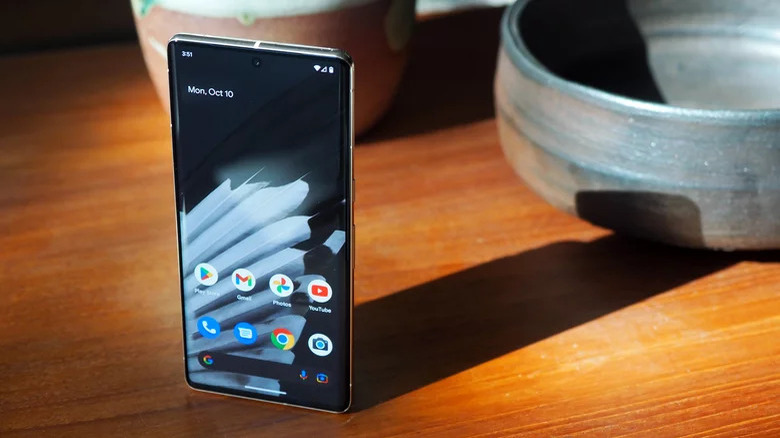
Pixel 7 Pro smartphone upright front panel

Chris Davies/SlashGear

Ordinarily when you use an app, access a website, or send someone messages, you’re doing so with an IP address that can reveal certain information about you, such as your location. Information sent over the network can be viewed by other people connected to the same Wi-Fi if the data isn’t encrypted, as well. This isn’t a big deal if you are, for example, updating your blog from the comfort of your own password-protected home Wi-Fi network.

However, if you’re connected to a public Wi-Fi network such as the ones offered at libraries and coffee shops, browsing the internet without a VPN could be a security and privacy risk. As with other VPN services, the Google One VPN helps mitigate this risk by encrypting the data and shuttling it through its own servers, as the company explains in a support document

As a result, the websites you visit while connected to the VPN will see the IP address related to Google’s server rather than the IP address from, for example, the coffee shop. Because the information is encrypted, other people connected to the coffee shop’s Wi-Fi won’t be able to snoop on your activity, either.

Alternative VPNs for Google Pixel 7 smartphones

Pixel 7 Pro smartphone quick settings

Chris Davies/SlashGear

While Google says that it doesn’t collect the information that you access while connected with its VPN, the company is known for gobbling up user data in general, so it’s no surprise that some consumers simply do not feel comfortable using its virtual private network. If you’re included among those individuals, there are alternative VPN services you can use with the Pixel 7, though you’ll likely need to pay for them, as many free VPN apps come with privacy risks.

The good news is that paid VPN services are often very inexpensive at only a few dollars per month, and there are many options to choose from, including Private Internet Access, Nord VPN, Proton VPN, TorGuard, and ExpressVPN. When selecting a VPN service, you should verify that it supports the platforms you want to use it on, and that its data collection policy matches your needs and comfort level. 

Some VPN providers require you to manually enter the connection details, for example, while others offer a downloadable Android app that greatly simplifies the connection process — such as the PIA app. Some providers have a policy that allows them to collect and store user data for a certain period of time, while other providers may not keep user logs at all.

Read More
Larisa Stoval

Today’s Wordle Answer #560 – December 31, 2022 Solution And Hints

Playing the Wordle puzzle game on an Android smartphone.

Tada Images/Shutterstock

Wordle’s year-end puzzle ends on a rather daring note. The word you’ll be hunting today defines traits like gallantry and dauntlessness. At the same time, it also personifies acts that are gutsy, or to put it more accurately for the Urban Dictionary-loving generation, ballsy or macho. However, the Wordle solution you seek is also used to describe a person with a virile and robust physique, someone engaged in hardy and brawny activities.

Getting away from riddle hints toward the alphabetical side of things. The last Wordle puzzle of 2022 features a single vowel, a semi-vowel at the end, and no repeating letters. Interestingly, it has spawned a whole IMDB list of a certain type of movies that include the likes of “Point Break,” “Unforgiven,” and Rambo, among others.

You can imagine the kind of characters played by Chuck Norris, Jean-Claude Van Damme, or Clint Eastwood, and you’ll likely land at the answer. Here’s some more hint. It’s a conjugate word, in the same vein as the word “properly,” turning a noun into an adjective.

Ending the year on a brave note

Playing the Wordle game on an iPhone.

Wachiwit/Shutterstock

The answer to Wordle #560 (December 31, 2022 edition) is “manly.” Cambridge defines it as “having the qualities that people think a man should have.” It could be used as a substitute for masculine or virile from a gender-specific perspective, or qualities like bravery from a neutral standpoint.

As expected, the word is a combination of “man” and “ly.” Interestingly, the word “man” is still used as a generic term for someone belonging to the human race, a trend that can be traced all the way back to the Old English of the 13th century. As for the “ly” suffix part, it finds similarities in Old Germanic, but the real root is in the Old English term “lic,” which means “having qualities of, of the form or nature of.”

Given the word’s significance and versatility, there are a number of fun quotes out there, but this sums it up quite well: “Man is never so manly as when he feels deeply, acts boldly, and expresses himself with frankness and with fervor.” It’s attributed to former British Prime Minister Benjamin Disraeli, who was also a prolific writer as well as a renowned statesman with close ties to Queen Victoria herself.

Read More
Margarett Pecora

Now May Be The Best Time To Buy The Chevy Bolt

If the Chevy Bolt’s small size doesn’t turn you away, it might be one of the best electric vehicles (EVs) for the money currently on the market. In its base configuration, the Bolt can go for an estimated 259 miles before the battery runs dry. That’s leaps and bounds better than the base Nissan Leaf’s 212 miles of gasoline-free driving. Every Bolt model is only equipped with a single EV motor, yet it puts out a healthy 200 horsepower and will go from 0-60 in about 6.5 seconds, according to Chevy. A single motor and a sub-7 second 0-60 time aren’t earth-shattering compared to horsepower and torque monsters like a Tesla Model S, Lucid Air, or GMC Hummer EV, but it’s still measurably faster than and more powerful than many economy hatchbacks offered today.

The 2023 Bolt has an MSRP of $25,600 according to Chevy, making it the cheapest new EV on the market, beating out the Nissan Leaf’s $28,040 starting price. The Bolt is a great choice if you’re about to make the leap into EV ownership, or you’re a Tesla owner wanting to distance yourself from all the bad press. Either way, you may want to act soon as the Bolt is eligible for several EV-centric discounts that are on the way out.

An EV bargain

According to Electrek, the Bolt qualifies for $7,500 in tax credits, slashing the MSRP to $18,100, but there’s a catch. That hefty tax credit is only valid until March of 2023, then the credit drops to $3,750. With the discount, the Bolt solidifies its status as the least expensive EV, but it additionally makes it the cheapest new car in General Motors’ entire lineup of brands, gas or electric, beating out the Chevy Trax. 

Even entry-level EVs aren’t exactly inexpensive. For example, the Kia Niro EV starts at $39,450, a full $12,960 more than the starting MSRP of the hybrid version. With the Ford F-150 Lightning’s numerous price hikes and the six-figure price tags of offerings from Tesla, Lucid, and GMC, EV ownership can sometimes feel like it’s outside the financial reach of normal people. But if the Chevy Bolt is any look at the path of EVs going forward, it could be a bright future, at least for your wallet. 

Read More
Nancie Wrona

What To Do If Your Android Phone Has Been Hacked

Android phone with malware

Prostock-studio/Shutterstock

Android is designed to be inherently secure — primarily because of its sandbox approach to processes and file management. Apps run in isolated environments, so they can’t see or access other apps or services (via Android). You have to grant access and permissions expressly for that to happen (which is why it’s a good idea to be cautious before granting unusual permissions requests from apps). This greatly reduces the potential attack vectors of malware. Modern Android devices also feature an extra security layer called Google Play Protect that quietly scans and flags suspicious applications (per Google). 

Still, there are ways to hack into a device. Android has the option to sideload apps from outside the Google Play Store. If used unwisely, sideloading can make Android more vulnerable than Apple’s more restrictive iOS.

Once a phone or tablet is infected with malware, hackers can use it to dig for personal information. They might steal banking information and login credentials or hold your data for ransom, according to Google. You might notice things like unexpected pop-ups or apps that you didn’t install. The device might be overheating, lagging, crashing, or consuming too much data or battery (via Google). You could receive unusual spam texts, notifications, or link prompts. If you notice odd behavior like this, here are some steps you can take to secure it.

Examine your apps

apps on smartphone

Kaspars Grinvalds/Shutterstock

You need to be careful when installing APK files since it is the most common way hackers gain unauthorized access to your device. The Google Play Store isn’t immune from malware since malicious apps do occasionally pop up on the platform, but Google takes them down once they’re reported (per Google). You can read our guide on how to detect fake Android apps for further details.

On the other hand, apps sideloaded from third parties or unofficial stores should never be completely trusted. You always run the risk of sideloading hostile apps if you’re installing from sources outside of the Google Play Store. This is especially true of pirated apps or anything that promises to “unlock” or enhance certain apps. If you notice unusual behavior after sideloading an app, that app is probably responsible.

Head to Settings > Apps (or your device’s equivalent section) to uninstall suspicious apps. You should also delete any compromised APK files. Some malware apps can attempt to stop users from uninstalling them. If this happens, try safe-booting your device. The exact steps can vary between manufacturers (consult yours for exact instructions), but many current Android models can reach safe mode by holding down the power button and then long-tapping the power icon that appears. From safe mode, you’ll be able to uninstall the malicious app (via Google).

Update Android

performing a smartphone update

Andrey_Popov/Shutterstock

If you notice issues even within safe mode, your device could have been hacked using another method. Hackers can also break in by exploiting vulnerabilities in the Android operating system. Google developers regularly find and patch security threats in Android (via Google), but until those flaws are discovered and their patches released, there’s little the user can do to defend themselves against them.

This is why Google regularly sends out over-the-air (OTA) updates for Android. Besides major OS updates, your device can also receive regular security updates, so it’s important to install these as soon as you can. You can review the details of published patches on the Android Security Bulletin page. Keep in mind that older devices may eventually no longer be eligible for security updates, depending on your manufacturer’s policies. In these cases, upgrading is your best option from a security standpoint (per MakeUseOf).

Make sure you’re on the newest version of Android and running the latest security patches by heading to your device’s Settings app and looking for the software update section.

Run security checks or reset

malware on phone

If you can’t manually pin down and remove the exploit that hacked your device, launch Google Play Store, tap your profile icon, then Google Play Protect. Tap the green scan button to scan for any potentially harmful apps. Some manufacturers preload their version of Android with their own security solutions. Samsung devices, for instance, feature Samsung Knox protection which can scan and quarantine threats.

If everything else fails, you can always reset to factory settings to foil the hackers. A factory reset erases your files, preferences, and accounts (via Google). We recommend memorizing the login credentials for the Google account(s) on your device before resetting (you’ll need them to log back in). Try and back up what files you can, but be careful that you don’t copy any files that might be compromised and capable of spreading the malware again.

1. Go to Settings and search for the reset menu there.

2. Tap Reset and follow the on-screen instructions.

3. Your device will reboot and present you with a fresh setup.

If hackers have locked you out of the device entirely, you can also perform a hard reset. Exact instructions may vary, but most manufacturers require you to power down completely and hold the volume up or down key while powering back on. This will usually launch a boot menu with the option to wipe the system entirely.

Read More
Alejandro Kazmierczak

How we covered the creator economy in 2022

This summer, I went straight from VidCon — the largest creator conference — to a labor journalism seminar with the Sidney Hillman Foundation. One day, I was chatting with famous TikTokers about their financial anxieties (what if they accidentally get banned from TikTok tomorrow?), and the next, I was learning about the history of American labor organizing.

These topics are not at all unrelated: at its core, writing about creator economy is labor journalism. The creator beat is a labor beat.

Creators are rebelling against the traditional route to making a living in artistic industries, taking control over their income to make money for themselves, rather than big media conglomerates. Consider creators like Brian David Gilbert, who built a devoted fanbase as a chaotically hilarious video producer for Polygon, the video game publication at Vox Media. Gilbert quit to work on other creative projects full time, likely because he realized that with his audience, he could make way more money independently than his media salary paid him. Then there’s YouTube channels like Defunctland and Swell Entertainment, which are basically investigative journalism outlets run by individual video producers. We see chefs building their brands by going viral on TikTok, or teachers who supplement their income by sharing educational content on Instagram. In artistic industries that notoriously underpay for the expertise that its laborers provide, YouTubers, Instagrammers and newsletter writers alike are proving that creativity is a monetizable skill — one that they deserve to make more than a living wage with.

This belief — that the creator economy is a labor beat — has guided my coverage of the industry this year. Below, I’ve rounded up some of our best stories about the state of the creator economy.

There are no laws protecting kids from being exploited on YouTube — one teen wants to change that

Like most teens, Chris McCarty spent a lot of time on YouTube, but they had a serious question. How can the children of influencers protect themselves when they’re too young to understand what it means to be a constant fixture in online videos? As part of their Girl Scouts Gold Award project, McCarty worked with Washington State Representative Emily Wicks to introduce a bill that seeks to protect and compensate children for their appearance in family vlogs.

As early as 2010, amateur YouTubers realized that “cute kid does stuff” is a genre prone to virality. David DeVore, then 7, became an internet sensation when his father posted a YouTube video of his reaction to anesthesia called “David After Dentist.” David’s father turned the public’s interest in his son into a small business, earning around $150,000 within five months through ad revenue, merch sales and a licensing deal with Vizio. He told The Wall Street Journal at the time that he would save the money for his children’s college costs, as well as charitable donations. Meanwhile, the family behind the “Charlie bit my finger” video made enough money to buy a new house.

Over a decade later, some of YouTube’s biggest stars are children who are too young to understand the life-changing responsibility of being an internet celebrity with millions of subscribers. Seven-year-old Nastya, whose parents run her YouTube channel, was the sixth-highest-earning YouTube creator in 2022, earning $28 millionRyan Kaji, a 10-year-old who has been playing with toys on YouTube since he was 4, earned $27 million from a variety of licensing and brand deals.

Is MrBeast actually worth $1.5 billion?

I’m fascinated by MrBeast, but kind of in a “watching a car crash” way. MrBeast is still cruising comfortably along the highway, but I worry about the guy (… not too much. I mean. He’s doing fine). His business model just doesn’t seem sustainable to me, despite his immense riches and irreplaceable success. As he attempts to raise a unicorn-sized VC round, we’ll see if he can keep escalating his stunts without becoming yet another David Dobrik.

Is going bigger always better? MrBeast’s business model is like a snake eating its own tail — no one is making money like he is, but no one is spending it like him either. He described his margins as “razor-thin” in a conversation with Logan Paul, since he reinvests most of his profits back into his content. His viewers expect that each video will be more impressive than the last, and from the outside looking in, it seems like it’s only a matter of time before MrBeast can no longer up the ante (and for other creators, this has led to disaster). So, if MrBeast’s business really is a unicorn — I’d wager it is — then he has two choices. Will he use the cushion of $150 million to make his business more sustainable, so he doesn’t have to keep burying himself alive? Or will he keep pushing for more until nothing is left?

Casey Neistat’s David Dobrik documentary explores what happens when creators cross the line

Speaking of David Dobrik, longtime YouTuber Casey Neistat debuted a documentary at SXSW this year about the 26-year-old YouTuber. When Neistat started working on the documentary, he wanted to capture the phenomenon that was Dobrik and his Vlog Squad, who used to be YouTube royalty. The documentary took a turn after Insider surfaced allegations of sexual assault on Dobrik’s film set — then, Dobrik nearly killed his friend Jeff Wittek in a stunt gone horribly wrong. Neistat does a brilliant job capturing the creator’s fall from grace, plus the way in which the lack of regulations on YouTube film sets can set the stage for disaster, especially when creators are incentivized to do crazier and crazier stunts to stay relevant.

Television series like “Hype House” and “The D’Amelio Show” dedicate entire plotlines to creators’ fear of being “cancelled,” but Dobrik is still doing okay, calling into question just how far a creator has to go to lose his fans. Dobrik just opened a pizza shop in LA and has his own Discovery TV show. Wittek has had at least nine surgeries to date as a result of his accident on Dobrik’s set.

“I think that there’s always a pursuit. It’s relevant for a musician – how do you keep your music interesting?” Neistat said. “But what makes individuals like David Dobrik different is that their pursuit is not coming out with the next song or making the next movie. Their pursuit is, how can I be more sensationalist? And that is a very, very, very dangerous pursuit, because the minute you achieve something that was crazier than the last, you then have to go past that.”

YouTube Shorts could steal TikTok’s thunder with a better deal for creators

The biggest open secret in short form video is that you can’t get rich on TikTok alone, because even the most viral creators earn a negligible portion of their income from the platform itself. TikTok has long been dominant in the short form scene, but YouTube Shorts could give TikTok a run for its money next year as it becomes the first platform to share ad revenue with short form creators. Ad revenue doesn’t seem that glamorous, but I couldn’t be more excited to see how this program will change the short form game in 2023.

A big reason why TikTok and other short-form video apps haven’t unveiled a similar revenue-sharing program yet is because it’s trickier to figure out how to fairly split ad revenue on an algorithmically-generated feed of short videos. You can’t embed an ad in the middle of a video — imagine watching a 30-second video with an eight-second ad in the middle — but if you place ads between two videos, who would get the revenue share? The creator whose video appeared directly before or after it? Or, would a creator whose video you watched earlier in the feed deserve a cut too, because their content encouraged you to keep scrolling?

OnlyFans CEO says adult content will still have a home on the site in 5 years

At TechCrunch Disrupt, I interviewed OnlyFans CEO Ami Gan and Chief Strategy Officer Keily Blair about the platform’s future, especially in regard to sex workers. In large part due to the success of adult creators, OnlyFans has paid out over $8 billion to creators since 2016. For comparison, the mostly safe-for-work competitor Patreon has paid out $3.5 billion since 2013. Online sex workers are some of the savviest, highest-earning creators in the business, yet they are the most vulnerable. Changing credit card company regulations and internet privacy laws can wipe out their business, and last year, that almost happened on OnlyFans. The company said it would ban adult content, then walked back that ban — but even still, adult creators have been skeptical about how long they can keep making a living on the platform. On our stage, I asked Gan if adult content will still be on OnlyFans in 5 years. She said yes.

OnlyFans has been putting a lot of effort into upcycling its image from an adult content subscription platform to a Patreon-like home for all kinds of creators, but it’s far from moving away from them as users. Today CEO Ami Gan of the platform confirmed that adult content will still have a home on the site in five years, and those creators can continue to make a living on it.

The confirmation, made today on stage at TechCrunch Disrupt, is notable because of the rocky relationship OnlyFans has had with adult creators. Last year, the company announced it would ban adult content on the site after pressure from card payment companies and efforts it reportedly was making to raise outside funding. Then it abruptly suspended the decision less than a week later after an outcry from users.

Read More
Amanda Silberling

The year customer experience died

This was a rough year for customer experience.

We’ve been hearing for years how important customer experience is to business, and a whole business technology category has been built around it, with companies like Salesforce and Adobe at the forefront. But due to the economy or lack of employees (perhaps both?), 2022 was a year of poor customer service, which in turn has created poor experiences; there’s no separating the two.

No matter how great your product or service, you will ultimately be judged by how well you do when things go wrong, and your customer service team is your direct link to buyers. If you fail them in a time of need, you can lose them for good and quickly develop a bad reputation. News can spread rapidly through social media channels. That’s not the kind of talk you want about your brand.

We’re constantly being asked for feedback about how the business did, yet this thirst for information doesn’t seem to ever connect back to improving the experience.

And make no mistake: Your customer service is inexorably linked to the perceived experience of your customer. We’re constantly being asked for feedback about how the business did, yet this thirst for information doesn’t seem to ever connect back to improving the experience.

Consider the poor folks who bought tickets for Southwest Airlines flights this week. One video showed airline employees had sicced the police on their own passengers. Consider that the airline admittedly screwed up, but one representative of the same airline actually called the police on passengers for being at the gate. When it comes to abusing your customers and destroying your brand goodwill, that example takes the cake.

For too long we’ve been hearing about how data will drive better experiences, but is that data ever available to the people dealing with the customers? They don’t need data — they need help and training and guidance, and there clearly wasn’t enough of that in 2022. It seemed companies cut back on customer service to the detriment of their customers’ experience and ultimately to the reputation of the brand.

Read More
Ron Miller

How China is building a parallel generative AI universe

The gigantic technological leap that machine learning models have shown in the last few months is getting everyone excited about the future of AI — but also nervous about its uncomfortable consequences. After text-to-image tools from Stability AI and OpenAI became the talk of the town, ChatGPT’s ability to hold intelligent conversations is the new obsession in sectors across the board.

In China, where the tech community has always watched progress in the West closely, entrepreneurs, researchers, and investors are looking for ways to make their dent in the generative AI space. Tech firms are devising tools built on open source models to attract consumer and enterprise customers. Individuals are cashing in on AI-generated content. Regulators have responded quickly to define how text, image, and video synthesis should be used. Meanwhile, U.S. tech sanctions are raising concerns about China’s ability to keep up with AI advancement.

As generative AI takes the world by storm towards the end of 2022, let’s take a look at how this explosive technology is shaking out in China.

Chinese flavors

Thanks to viral art creation platforms like Stable Diffusion and DALL-E 2, generative AI is suddenly on everyone’s lips. Halfway across the world, Chinese tech giants have also captivated the public with their equivalent products, adding a twist to suit the country’s tastes and political climate.

Baidu, which made its name in search engines and has in recent years been stepping up its game in autonomous driving, operates ERNIE-ViLG, a 10-billion parameter model trained on a data set of 145 million Chinese image-text pairs. How does it fair against its American counterpart? Below are the results from the prompt “kids eating shumai in New York Chinatown” given to Stable Diffusion, versus the same prompt in Chinese (纽约唐人街小孩吃烧卖) for ERNIE-ViLG.

Stable Diffusion

ERNIE-ViLG

As someone who grew up eating dim sum in China and Chinatowns, I’d say the results are a tie. Neither got the right shumai, which, in the dim sum context, is a type of succulent, shrimp and pork dumpling in a half-open yellow wrapping. While Stable Diffusion nails the atmosphere of a Chinatown dim sum eatery, its shumai is off (but I see where the machine is going). And while ERNIE-ViLG does generate a type of shumai, it’s a variety more commonly seen in eastern China rather than the Cantonese version.

The quick test reflects the difficulty in capturing cultural nuances when the data sets used are inherently biased — assuming Stable Diffusion would have more data on the Chinese diaspora and ERNIE-ViLG probably is trained on a greater variety of shumai images that are rarer outside China.

Another Chinese tool that has made noise is Tencent’s Different Dimension Me, which can turn photos of people into anime characters. The AI generator exhibits its own bias. Intended for Chinese users, it took off unexpectedly in other anime-loving regions like South America. But users soon realized the platform failed to identify black and plus-size individuals, groups that are noticeably missing in Japanese anime, leading to offensive AI-generated results.

Of course also clearly not having the model adjusted properly for darker-skinned folks, sigh

Anyway Different Dimension Me is the name, but sorry they already blocked / limit overseas users as couldn’t handle the traffic pic.twitter.com/cYi6rJwTaC

— Rui Ma 马睿 (@ruima) December 7, 2022

Aside from ERNIE-ViLG, another large-scale Chinese text-to-image model is Taiyi, a brainchild of IDEA, a research lab led by renowned computer scientist Harry Shum, who co-founded Microsoft’s largest research branch outside the U.S., Microsoft Research Asia. The open source AI model is trained on 20 million filtered Chinese image-text pairs and has one billion parameters.

Unlike Baidu and other profit-driven tech firms, IDEA is one of a handful of institutions backed by local governments in recent years to work on cutting-edge technologies. That means the center probably enjoys more research freedom without the pressure to drive commercial success. Based in the tech hub of Shenzhen and supported by one of China’s wealthiest cities, it’s an up-and-coming outfit worth watching.

Rules of AI

China’s generative AI tools aren’t just characterized by the domestic data they learn from; they are also shaped by local laws. As MIT Technology Review pointed out, Baidu’s text-to-image model filters out politically sensitive keywords. That’s expected, given censorship has long been a universal practice on the Chinese internet.

What’s more significant to the future of the fledgling field is the new set of regulatory measures targeting what the government dubs “deep synthesis tech”, which denotes “technology that uses deep learning, virtual reality, and other synthesis algorithms to generate text, images, audio, video, and virtual scenes.”As with other types of internet services in China, from games to social media, users are asked to verify their names before using generative AI apps. The fact that prompts can be traced to one’s real identity inevitably has a restrictive impact on user behavior.

But on the bright side, these rules could lead to more responsible use of generative AI, which is already being abused elsewhere to churn out NSFW and sexist content. The Chinese regulation, for example, explicitly bans people from generating and spreading AI-created fake news. How that will be implemented, though, lies with the service providers.

“It’s interesting that China is at the forefront of trying to regulate [generative AI] as a country,” said Yoav Shoham, founder of AI21 Labs, an Israel-based OpenAI rival, in an interview. “There are various companies that are putting limits to AI… Every country I know of has efforts to regulate AI or to somehow make sure that the legal system, or the social system, is keeping up with the technology, specifically about regulating the automatic generation of content.”

But there’s no consensus as to how the fast-changing field should be governed, yet. “I think it’s an area we’re all learning together,” Shoham admitted. “It has to be a collaborative effort. It has to involve technologists who actually understand the technology and what it does and what it doesn’t do, the public sector, social scientists, and people who are impacted by the technology as well as the government, including the sort of commercial and legal aspect of the regulation.”

Monetizing AI

As artists fret over being replaced by powerful AI, many in China are leveraging machine learning algorithms to make money in a plethora of ways. They aren’t from the most tech-savvy crowd. Rather, they are opportunists or stay-home mums looking for an extra source of income. They realize that by improving their prompts, they can trick AI into making creative emojis or stunning wallpapers, which they can post on social media to drive ad revenues or directly charge for downloads. The really skilled ones are also selling their prompts to others who want to join the money-making game — or even train them for a fee.

Others in China are using AI in their formal jobs like the rest of the world. Light fiction writers, for instance, can cheaply churn out illustrations for their works, a genre that is shorter than novels and often features illustrations. An intriguing use case that can potentially disrupt realms of manufacturing is using AI to design T-shirts, press-on nails, and prints for other consumer goods. By generating large batches of prototypes quickly, manufacturers save on design costs and shorten their production cycle.

It’s too early to know how differently generative AI is developing in China and the West. But entrepreneurs have made decisions based on their early observation. A few founders told me that businesses and professionals are generally happy to pay for AI because they see a direct return on investment, so startups are eager to carve out industry use cases. One clever application came from Sequoia China-backed Surreal (later renamed to Movio) and Hillhouse-backed ZMO.ai, which discovered during the pandemic that e-commerce sellers were struggling to find foreign models as China kept its borders shut. The solution? The two companies worked on algorithms that generated fashion models of all shapes, colors, and races.

But some entrepreneurs don’t believe their AI-powered SaaS will see the type of skyrocketing valuation and meteoric growth their Western counterparts, like Jasper and Stability AI, are enjoying. Over the years, numerous Chinese startups have told me they have the same concern: China’s enterprise customers are generally less willing to pay for SaaS than those in developed economies, which is why many of them start expanding overseas.

Competition in China’s SaaS space is also dog-eat-dog. “In the U.S., you can do fairly well by building product-led software, which doesn’t rely on human services to acquire or retain users. But in China, even if you have a great product, your rival could steal your source code overnight and hire dozens of customer support staff, which don’t cost that much, to outrace you,” said a founder of a Chinese generative AI startup, requesting anonymity.

Shi Yi, founder and CEO of sales intelligence startup FlashCloud, agreed that Chinese companies often prioritize short-term returns over long-term innovation. “In regard to talent development, Chinese tech firms tend to be more focused on getting skilled at applications and generating quick money,” he said. One Shanghai-based investor, who declined to be named, said he was “a bit disappointed that major breakthroughs in generative AI this year are all happening outside China.”

Roadblocks ahead

Even when Chinese tech firms want to invest in training large neural networks, they might lack the best tools. In September, the U.S. government slapped China with export controls on high-end AI chips. While many Chinese AI startups are focused on the application front and don’t need high-performance semiconductors that handle seas of data, for those doing basic research, using less powerful chips means computing will take longer and cost more, said an enterprise software investor at a top Chinese VC firm, requesting anonymity. The good news is, he argued, such sanctions are pushing China to invest in advanced technologies over the long run.

As a company that bills itself as a leader in China’s AI field, Baidu believes the impact of U.S. chip sanction on its AI business is “limited” both in the short and longer term, said the firm’s executive vice president and head of AI Cloud Group, Dou Shen, on its Q3 earnings call. That’s because “a large portion” of Baidu’s AI cloud business “does not rely too much on the highly advanced chips.” And in cases where it does need high-end chips, it has “already stocked enough in hand, actually, to support our business in the near term.”

What about the future? “When we look at it at a mid- to a longer-term, we actually have our own developed AI chip, so named Kunlun,” the executive said confidently. “By using our Kunlun chips [Inaudible] in large language models, the efficiency to perform text and image recognition tasks on our AI platform has been improved by 40% and the total cost has been reduced by 20% to 30%.”

Time will tell if Kunlun and other indigenous AI chips will give China an edge in the generative AI race.


Read More
Rita Liao

Fidelity slashes the value of its Twitter stake by over half

Fidelity, which was among the group of outside investors that helped Elon Musk finance his $44 billion takeover of Twitter, has slashed the value of its stake in Twitter by 56%. The recalculation comes as Twitter navigates a number of challenges, most the result of chaotic management decisions — including an exodus of advertisers from the network.

Fidelity’s Blue Chip Growth Fund stake in Twitter was valued at around $8.63 million as of November, according to a monthly disclosure and Fidelity Contrafund notice first reported today by Axios. That’s down from $19.66 million as of the end of October.

Macroeconomic trends are likely to blame in part. Stripe took a 28% internal valuation cut in July, while Instacart this week reportedly suffered a 75% cut to its valuation.

But Twitter’s wishy-washy policies post-Musk clearly haven’t helped matters.

The network’s become less stable at a technical level as of late, on Wednesday suffering outages after Musk made “significant” backend server architecture changes. Twitter recently laid off employees in its public policy and engineering department, dissolving the group responsible for weighing in on content moderation and human rights-related issues such as suicide prevention. And the company’s raised the ire of regulators after banning — and then quickly reinstating — accounts belonging to prominent journalists.

Then again — as Axios business editor Dan Primack pointed out, appropriately in a tweet — Fidelity seems to rely heavily on public market performance where it concerns valuations. It’s quite possible that the firm doesn’t have any inside info on Twitter’s financial performance.

Cutbacks at Twitter abound as the company approaches $1 billion in interest payments due on $13 billion in debt, all while revenue dips. A November report from Media Matters for America estimated that half of Twitter’s top 100 advertisers, which spent almost $750 million on Twitter ads this year combined, appear to no longer be advertising on the website. Twitter’s heavily pushing its Twitter Blue plan, aiming to make it a larger profit driver. But third-party tracking data suggest it’s been slow to take off.

Some Twitter employees are bringing their own toilet paper to work after the company cut back on janitorial services, the New York Times recently reported, and Twitter has stopped paying rent for several of its offices including its San Francisco headquarters.

Musk has attempted to save around $500 million in costs unrelated to labor, according to the aforementioned Times report, over the past few weeks shutting down a data center and launching a fire sale after putting office items up for auction in a bid to recoup costs.

Separately, Musk’s team has reached out to investors for potential fresh investment for Twitter at the same price as the original $44 billion acquisition, according to The Wall Street Journal.

A poll put up by Musk asking if he should step down as head of the company closed December 19 with users voting resoundingly in favor of him leaving. Musk responded several days afterward, saying he’d resign as CEO “as soon as [he found] someone foolish enough to take the job” and after that “just run the software and servers teams.”

Read More
Kyle Wiggers