Check out all the on-demand sessions from the Intelligent Security Summit here.
Say the word “multicloud” to CIOs or other tech leaders, and you’re almost guaranteed to get an eyeroll. The prospect of simultaneously maintaining on-premises data centers, migrating to one public cloud, and then redundantly staffing for two or more additional clouds on top of that is a recipe for frustration and disappointment.
There are good reasons to want multicloud — avoiding vendor lock-in, access to best-of-breed cloud services, and the flexibility to integrate with business partners (among others). But despite these potential benefits, most businesses will not achieve a viable multicloud strategy anytime soon, for the simple reason that it’s just too costly and complex for most businesses.
If ever there were ever a need for an innovative alternative from the market, now is the time.
Enter Supercloud.
Event
Intelligent Security Summit On-Demand
Learn the critical role of AI & ML in cybersecurity and industry specific case studies. Watch on-demand sessions today.
Supercloud is what comes after public cloud: It’s a cloud-spanning value-add layer that hides complexity, exposes differentiated service capabilities, and adds new business (and business network) leverage beyond the raw “Lego bricks” of existing public and private clouds.
Supercloud represents the natural democratization of the current “wall of complexity” facing both developers and businesses. As a technical or business leader, how can you make the most of the rise of this new supercloud category of vendors? What best practices can be followed today, when supercloud is still an emerging concept?
Here are some basic guidelines for thinking about cloud investments during the era where both cloud-specific infrastructure and supercloud vendors will coexist as critical elements of an IT portfolio.
Select supercloud vendors who already “get it”
The simplest and most highly leveraged way to incorporate change is to select a vendor who can successfully encapsulate it. Unlike hiring an SI for public cloud migration, this strategy aligns well with supercloud’s emergence because multicloud is best delivered as a product feature. Moreover, the SaaS delivery and packaging approach of supercloud means that the majority of improvements made by vendors will transparently flow through to their users without the expensive and challenging upgrades of the past. In other words, as supercloud enabled products get better, so do the businesses that use them.
Avoid “accidental multicloud”
Multicloud strategies and investments are among the most costly and complex in a CIO’s portfolio. Leaving them to chance (or differing internal opinion) is perilous, as it can result in costly migrations down the road. Foundational elements, like how analytic and operational data are handled, should be viewed through multiple lenses, including how to avoid redundant spending and staffing. Early and intentional supercloud vendor selection can focus those decision processes, reducing complexity and spending over time.
Design and invest for network effects, not for individual applications
One of the most important emerging best practices is to shift focus from the micro (each application owned or operated by IT) to the macro (the value of automating and digitizing business networks and their associated workflows). This new era of inherently distributed and decentralized applications demands even more from the “IT plumbing” on which it runs. It also means that decisions about multicloud and cross-vendor technology capabilities have become a mission-critical, CIO-level decision.
Supercloud may be another tidal wave for technology managers to surf, but it’s one that’s coming our way. Businesses that ride it successfully will lower their cloud costs, improve time to market, and reap competitive advantages in this next wave of cloud adoption.
Tim Wagner is cofounder and CEO of Vendia
DataDecisionMakers
Welcome to the VentureBeat community!
DataDecisionMakers is where experts, including the technical people doing data work, can share data-related insights and innovation.
If you want to read about cutting-edge ideas and up-to-date information, best practices, and the future of data and data tech, join us at DataDecisionMakers.
[RichardG] has noticed a weird discrepancy – his Ryzen mainboard ought to have had fourteen USB3 ports, but somehow, only exposed thirteen of them. Unlike other mainboards in this lineup, it also happens to have a USB-C port among these thirteen ports. These two things wouldn’t be related in any way, would they? Turns out, they are, and [RichardG] shows us a dirty USB-C trick that manufacturers pull on us for an unknown reason.
On a USB-C port using USB3, the USB3 TX and RX signals have to be routed to two different pin groups, depending on the plugged-in cable orientation. In a proper design, you would have a multiplexer chip detecting cable orientation, and routing the pins to one or the other. Turns out, quite a few manufacturers are choosing to wire up two separate ports to the USB-C connector instead.
In the extensive writeup on this problem, [Richard] explains how the USB-C port ought to be wired, how it’s wired instead, shows telltale signs of such a trick, and how to check if a USB-C port on your PC is miswired in the same way. He also ponders on whether this is compliant with the USB-C specification, but can’t quite find an answer. There’s a surprising amount of products and adapters doing this exact thing, too, all of them desktop PC accessories – perhaps, you bought a device with such a USB-C port and don’t know it.
As a conclusion, he debates making an adapter to break the stolen USB3 port out. This wouldn’t be the first time we’re cheated when it comes to USB ports – the USB2 devices with blue connectors come to mind.
Often we think of motivation and productivity as being connected by a sort of feedback loop. When we’re
motivated we make progress and seeing that progress keeps us motivated.
But that relationship is missing something important.
Motivation is the willingness to want to do something. This is of course an important first step in
potentially being productive. We are better at things we want to do, rather than things we’re forced to
do by others, or by our own self discipline.
But motivation is nothing more than that. It helps us start, but it doesn’t mean we’ll finish, or even
produce half of what we want to. Even when we are motivated, if we don’t make enough progress our
motivation has a way of epically disappearing.
I could be 100% motivated to learn to speak German, literally jumping out of bed each morning to do
another lesson. But what if my tutor is too hard on me? What if she gives me work far beyond my ability?
Of course I won’t progress as much as I want to and my motivation will start to diminish.
Motivation by itself gives us the willingness to do something, but nothing more. Once we make a start,
the game changes and it becomes about knowing how to make progress.
Knowing how to make progress and making progress are two different things, but we often conflate them
and treat them as the same thing. We basically jump into the task and start. Only, it’s not really
starting because we’re repeatedly stopping to think about design, architecture, security, how it will
look, how it will work, which database to use. The list goes on.
But knowing how to make progress before you start is important. Before you start your next task,
complete the following in as much detail as possible:
Describe exactly what the new [feature/bug/thing] will do
Describe exactly how it will do it, giving as much technical detail as you can think of now
If it has a visual element, quickly sketch out how it’ll look
If you can do this before you start, you’ll have a good idea of:
What you’re doing and what the definition of complete is
What to add (or what to change) in order to make it happen
Roughly how it looks or feels, which often clarifies details of the point above
Your mileage may vary in terms of how much detail you’re able to think about before starting, but the
more detail you have the fewer interruptions you’ll need to bear while actually trying to make progress.
Productivity doesn’t come from feeling motivated, it comes from knowing what you need to do in enough
detail that you can complete it without continually stopping and losing your focus.
In the end, it’s all about preparation.
You need to be prepared in order to be productive, don’t just expect it to happen as a side effect of
feeling motivated.
A file image from 2013 provided by the Florida Department of Law Enforcement shows financier Jeffrey Epstein.
AP
hide caption
toggle caption
AP
A file image from 2013 provided by the Florida Department of Law Enforcement shows financier Jeffrey Epstein.
AP
The government of the U.S. Virgin Islands alleges in a lawsuit filed this week that JPMorgan Chase “turned a blind eye” to evidence that disgraced financierJeffrey Epstein used the bank to facilitate sex-trafficking activities on Little St. James, the private island he owned in the territory until his 2019 suicide.
In a more than 100-page complaint filed by U.S.V.I. Attorney General Denise George in the Southern District of New York in Manhattan on Tuesday, the territory alleges that JPMorgan failed to report Epstein’s suspicious activities and provided the financier with services reserved for high-wealth clients after his 2008 conviction for soliciting a minor for prostitution in Palm Beach, Fla.
The complaint says the territory’s Department of Justice investigation “revealed that JP Morgan knowingly, negligently, and unlawfully provided and pulled the levers through which recruiters and victims were paid and was indispensable to the operation and concealment of the Epstein trafficking enterprise.”
It accused the bank of ignoring evidence for “more than a decade because of Epstein’s own financial footprint, and because of the deals and clients that Epstein brought and promised to bring to the bank.”
“These decisions were advocated and approved at the senior levels of JP Morgan,” it said.
The bank allegedly “facilitated and concealed wire and cash transactions that raised suspicion of — and were in fact part of — a criminal enterprise whose currency was the sexual servitude of dozens of women and girls in and beyond the Virgin Islands,” according to the complaint, which included several pages that were redacted in whole or in part.
It said that human trafficking “was the principal business of the accounts Epstein maintained at JP Morgan.”
When NPR reached JPMorgan Chase, the bank declined to comment.
Tuesday’s legal action comes just weeks after the U.S.V.I. announced a $105 million settlement with Epstein’s estate, meant in part to claw back “more than $80 million in economic development tax benefits that Epstein and his co-defendants fraudulently obtained to fuel his criminal enterprise,” the attorney general’s office said in a Dec. 1 statement.
Additionally, the settlement calls for the territory to receive half of the proceeds from the sale of Little St. James island “on which Epstein resided and on which many of his crimes occurred.”
After a family had reported that Epstein had sexually abused her 14-year-old daughter in 2005, police in Palm Beach opened an investigation that led to a guilty plea three years later. Under the terms of the deal with the state of Florida, Epstein served 13 months in a work-release program, was forced to pay restitution to the victims and register as a sex offender.
Epstein was again arrested on similar charges in New York in 2019, but killed himself in federal prison while awaiting trial.
Deutsche Bank was investigated in 202o by New York state authorities for failing to report suspicious activity in Epstein’s account despite knowing of his criminal history. The bank later agreed to pay a $150 million penalty.
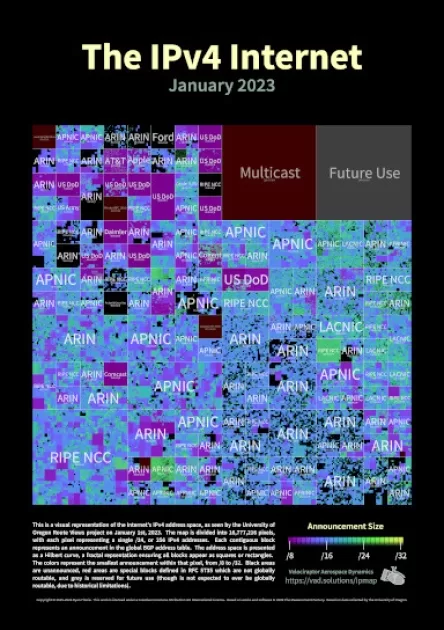
These posters are visual representations of the Internet’s in-use IPv4 and IPv6 address spaces, as seen by the University of Oregon Route Views project on January 1st, 2023.
Each map is divided into 16,777,216 pixels in a 4,096 × 4,096 pixel grid. The IPv4 map depicts the entire global 32-bit address space, with each pixel representing a /24, or 256 IPv4 addresses. The IPv6 map depicts the current in-use global unicast address space (2000::/4), with each pixel representing a /28, or 16 ISP-level /32 allocations. Twelve other IPv6 /4s may be allocated in the future, and are not depicted on the IPv6 map.
Each contiguous block represents an announcement in the global BGP address table. The address space is presented as a Hilbert curve, a fractal representation ensuring all blocks appear as squares or rectangles.
The colors represent the smallest announcement within that pixel, from /8 to /32 on the IPv4 map, and /12 to /64 on the IPv6 map. Black areas are unannounced, red areas are special blocks which are not globally routable, and grey is reserved for future use (though IPv4 240.0.0.0/4 is not expected to ever be globally routable, due to historical limitations).
100% scale view of a single /8 (152.0.0.0/8) of the IPv4 map. An individual pixel represents a /24, or 256 IPv4 addresses.
100% scale view of a single /12 (2a00::/12) of the IPv6 map. An individual pixel represents a /28, or 16 ISP-level /32 allocations.
This is a visual representation of the Internet’s IPv4 address space, as seen by the University of Oregon Route Views project on January 1st, 2023. The map is divided into 16,777,216 pixels, with each pixel representing a single /24, or 256 IPv4 addresses. Each contiguous block represents an announcement in the global BGP address table. The address space is presented as a Hilbert curve, a fractal representation ensuring all blocks appear as squares or rectangles. The colors represent the smallest announcement within that pixel, from /8 to /32. Black areas are unannounced, red areas are special blocks defined in RFC 5735 which are not globally routable, and grey is reserved for future use (though is not expected to ever be globally routable, due to historical limitations).
This is a visual representation of the Internet’s in-use global unicast IPv6 address space, as seen by the University of Oregon Route Views project on January 1st, 2023. The map is divided into 16,777,216 pixels, with each pixel representing 16 ISP-level /32 allocations. A /32 contains approximately 4.3 billion standard /64 networks, and a /64 contains approximately 18 quintillion IP addresses. Each contiguous block represents an announcement in the global BGP address table. The address space is presented as a Hilbert curve, a fractal representation ensuring all blocks appear as squares or rectangles. Colors represent the smallest announcement within that pixel, from /12 to /64. The space depicted is 2000::/4; 3000::/4 is currently allocated but not in use, and 11 more /4s may be allocated to meet future demand.
How It’s Made
Data is taken from the University of Oregon Route Views project‘s BGP data archives (IPv4, IPv6), specifically rib.20230101.0200.bz2 for the 2023 maps. Each announcement is split into aggregate blocks (/24 for the IPv4 map, /28 for IPv6), with the smallest announcement found for that aggregate block being recorded.
This information is then fed to ipv4-heatmap, which has been modified with several stylistic changes (different color range, font sizes, etc). Map annotations and shadings are hand-compiled from several sources:
The output of ipv4-heatmap is a 4096 × 4096 pixel PNG file which is used in the final poster.
All sources and data (minus the BGP inputs, ipv4-heatmap and bgpdump) are available on GitHub. This includes the collation scripts, annotation data, shading data, and patches. Note that collating the source data can be time consuming and memory demanding.
Previous Posters
While the 2023 poster is the latest available, previous years’ posters are still available to purchase:
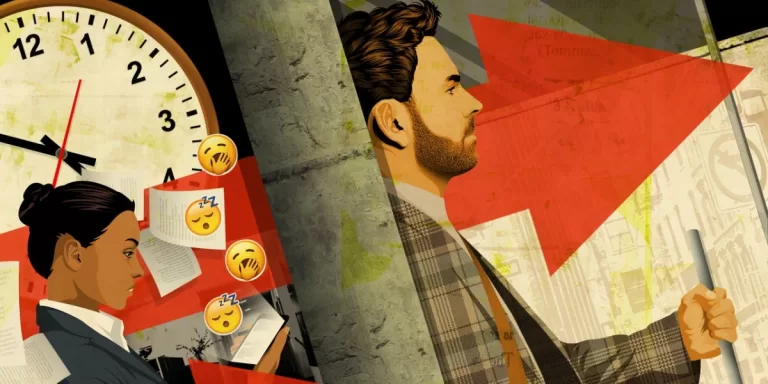
At law firm Nixon Peabody LLP, associates have started saying no to working weekends, prompting partners to ask more people to help complete time-sensitive work. TGS Insurance in Texas has struggled to fill promotions, and bosses often have to coax staffers to apply. And Maine-based marketing company Pulp+Wire plans to shut down for two weeks next year now that staffers are taking more vacation than they used to.
Continue reading your article with a WSJ membership
All my life, I’ve had this weird, annoying voice in my head.
It’s not necessarily an evil voice. It’s not convincing me to commit murder or rob banks. No, this voice is mostly about making me do stupid stuff. When I was a kid it might say something like “bet you can’t run to that point in the horizon without stopping.” Or “bet you can’t backflip off that precarious ledge.”
We all have inner voices, but my “bet you can’t” voice has been part of my makeup for as long as I can remember. And, on balance, it’s a net positive. Usually it’s forcing me to eat well and exercise. Today, at age 41, I’m mostly fit and healthy.
And that’s partly thanks to the voice which, to this day, pipes up often. Always the same…
“Bet you can’t run a marathon” or “bet you can’t learn a second language” or “bet you can’t quit drinking soft drinks.” Most of the time the voice is my friend, but sometimes it leads me astray. Once it had me doing a sleep experiment that sent my mind into meltdown. That’s probably the worst thing the little voice told me to do.
The second worst? Cold showers. Please allow me to tell you why I’ve been taking nothing but cold showers for the entirety of 2022.
It was the tail end of 2021. My wife and I had family staying over for Christmas. Twenty people all up. We had fun, we made merry, but there were issues. Mainly logistics. My house has two showers. One inside shower — a very normal shower with hot water — and a less normal outdoor shower that only has access to cold water.
To make things easier for guests, I started taking showers outside. Cold showers.
Christmastime is bang in the middle of summer in Sydney, Australia, where I live, so that was mostly fine. It was hot, often over 110 Fahrenheit hot. Sometimes I’d go for a run, get all sweaty and annoyed and just dive into the cold shower. A salve, pure relief.
That’s when the little voice popped into my head…
“Hey you little bitch, bet you can’t do cold showers for the entire year…”
Stupid moron brain voice
You’ve probably heard about the “health benefits” of cold showers. According to the research, there are more than a few good reasons to take them.
One study reports that by increasing the availability of endorphins and another hormone, norepinephrine, cold showers can ease symptoms of depression. (Obvious caveat here: I absolutely do not believe depression can be cured with cold water.)
But to be perfectly honest, none of these reported benefits were in my conscious thoughts when I committed to cold showers for a full calendar year. I was merely listening to the voice.
As a middle-aged man, burdened with decades of ingrained toxic masculinity equating overcoming physical and mental struggle with inner strength, I enjoy putting myself through ridiculous “challenges” for the sake of it. This is my personality. I’m too old to change now. When the voice speaks, I listen and, almost always, I obey.
Enlarge Image
My weird outdoor shower. Where it all began.
Mark Serrels/CNET
A part of me hoped cold showers might help me increase my metabolism or recover faster from training (I’m a keen rock climber), but mostly I wanted to try something different. To have something new to talk about when conversation dried up at school pickups. I’m a shallow man with shallow needs.
Mostly I reckon it’s useful to do something difficult each day for the pure satisfaction of having completed that task. It’s an ego boost, it sets the tone and has an energizing effect that has the potential to reverberate for the remainder of that day.
So I began.
It was relatively easy at first. In my experience, most challenges like this are. Possessed with the psyche of trying something new, I stood in cold showers for five minutes at a time and emerged shivering and proud. I marched into the shower like a madman, frantically rubbing my belly like a hysterical hiker searching for ticks. I just gutted it out.
What became more challenging later was the grind — committing to the bit after my initial enthusiasm waned. Picture yourself stinky, exhausted after a long difficult day of work, suddenly remembering you need a shower before going to bed. This is when temptation kicks in, when it feels more than justified to run a warm bath or stand for 15 minutes in a scalding hot shower.
But I persisted, often on the verge of angry tears, into the breach of Baltic water and shriveled genitals.
Yeah, take that. I sure showed you, you stupid little moron brain voice.
Easy mode
I have a rigid cold shower routine I follow every single time without fail. It wasn’t a process I developed consciously. It emerged naturally in the petri dish of cold shower survival mode.
It goes like this: I turn on the shower. I get naked. I stand in front of the cold, spraying water for a few seconds reflecting on my life choices. In some ways, this is the worst part: before the shower. That’s when you have to make the “choice.”
I take two steps forward. There’s no face- or hair-wetting at this juncture, just pain and unintelligible grunts for about 20 seconds. Then I turn around. That’s always the most difficult part. The large, flat surface of my back exposes the highest percentage of nerve endings to the cold water. But once that’s done? I’m mostly good. I get the soap, start washing. I turn around to wash the soap off, dip my head and hair in. I’m cooking. All is good.
Unfortunately, I soon discovered that Australian cold showers are “easy mode.”
It was during a work trip to New York in March that I discovered not all cold water is created equal. My soft summer body was crucified at the hands of New York’s freezing-ass winter ice water. I was shocked to my core. I couldn’t believe how cold it was. But I persisted, clumsily squeezing out single-serve hotel shower gel as I jogged on the spot like a confused caveman, somehow trying to shift my internal temperature into something bearable.
Later in the year things got worse.
In October, I went on a family trip to the southern part of Chile, where, I assume, the water in my brother-in-law’s shower was piped directly from the icy, snow-capped mountains that surrounded us. The water in Chile was Baltic, to the point where I would get literal brain freeze if I stayed in for too long. Complete agony.
Enlarge Image
On this day, I really wanted a warm shower.
Osiel Aqueveque
The closest I’ve come to bailing on the cold water challenge was during that trip.
We’d just gotten back from a once-in-a-lifetime experience: scaling the summit of Villarica, one of Chile’s most active volcanoes. It was brutal. It took us eight hours to get to the summit and roughly four hours to get back down, navigating snow and icy conditions the entire time. We were geared up to the max, crampons and ice axes, and it was a genuine struggle to get to the top. On the way down everyone eagerly discussed getting home and jumping into a nice warm shower. My heart sank. I knew I would be starved of this well-earned thermal feast.
My family was shocked when I said I still planned to have a cold shower that night. “You can have hot water this one time, surely,” they said.
But they didn’t know the limits of my stubborn stupidity. I’d spent almost a year doing this dumb shit, I wasn’t going to break my streak because I felt a bit frosty. But I can’t lie — I doubt my cold shower that night lasted more than a minute. Enough to get clean and scramble out, into the false solace of a dry towel and steaming hot mug of tea.
But why?
The question I always get is “why?” Outside of “the voices told me,” I still don’t have a good answer for that.
Did I feel any long-term benefits? I’m unsure. This is an experiment with a sample size of one. I didn’t take many sick days in 2022, but outside of that, I’m not convinced cold showers changed anything. I’m not convinced they aid recovery, or cure dementia, or whatever it says on the tin.
Was it worth it? Hell no. Would I recommend going all in on cold showers? Nah. Probs not.
Am I going to stop doing cold showers once the year is up? I’m still not sure. Bizarrely, I think I’m going to keep going.
Am I contradicting myself here? Absolutely. But my feelings about this cold shower experiment are complex, rooted in weird ideas about trying difficult things and not giving up, even if there’s no good reason to forge ahead. Basically I’ve watched way too much anime.
The simple fact is this: I never regretted a single cold shower. I’ve always felt better immediately afterward. Alert, happier. Some people suggested it would help with my skin, and make my hair… better? Thicker? Silkier? I dunno. Maybe it’s my imagination, but my skin did seem clearer, better, softer. I think.
More importantly, after cold showers, I always felt like I had achieved something. I never had that groggy feeling you get when you spend too long in a piping hot shower. It was good to have done something difficult. That was nice.
In some ways cold showers make me happy. I think.
But I also believe willpower is finite. Could the mental energy required to endure cold showers for a year have made it more difficult to achieve the other, less stupid goals I set for myself in 2022? Is it a coincidence that I [checks notes] put on 10 to 12 pounds, felt more anxious and exercised markedly less during the same period? It’s impossible to say.
A part of me believes the resolve I poured into having daily cold showers left my willpower reserves wanting, making it tougher to continue eating healthy, or head to the gym regardless of my motivation levels. Normally, those were habits I followed through on without question. This year? Not so much.
Regardless, I know I will find it difficult to stop. At this point, taking cold showers is a habit so ingrained I know my inner voice will fight back against going back to “normal.” As stupid as it sounds, warm showers will feel like cheating to the little voice in my head. I suspect one year might not be enough for that little bastard.
Because ultimately these things become normalized. Like quitting sugar or caffeine, taking cold showers is difficult, especially at first, and the effort required to maintain the habit never truly goes away, but it does fade. It’s much easier now. Cold showers aren’t necessarily challenging anymore; what was once an active struggle is just noise. A low-frequency hum you’d barely notice until someone shuts it off.
That’s where I’m at. For the foreseeable future I’m a cold shower guy. Thanks, stupid little voice in my head. Thanks for nothing. And possibly everything.
This story is part of 12 Days of Tips, helping you make the most of your tech, home and health during the holiday season.
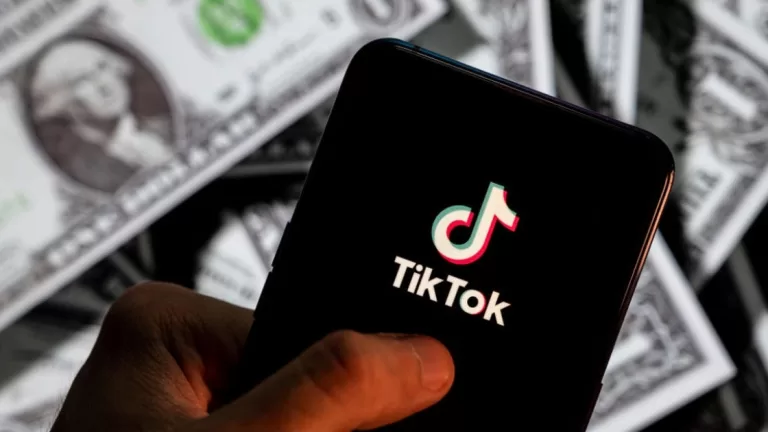
TikTok is good for a few things: niche memes, butter boards and dance routines, for sure. But you might want to look elsewhere when seeking out financial advice. Risky money advice abounds online — but social media makes it even easier to stumble upon dangerous strategies that claim to help you save cash.
With more than one-third of Gen Zers turning to TikTok for financial advice, avoiding tips that seem too good to be true is crucial. Following bad money advice can not only cost you financially — in some cases, it could land you in legal trouble.
We spoke with an attorney and a credit counselor who’ve seen firsthand what can happen when people listen to bad money advice on TikTok. Here are a few TikTok money tips that can land you in financial and legal trouble.
Anyone can claim to be an ‘expert’ on TikTok
Michelle Creeden and David A. Gelinas work for the National Legal Center, where they help people dealing with credit and debt issues. Creeden is an attorney licensed to practice law in New Hampshire and is experienced in consumer and debtor rights. Gelinas has over 20 years of experience in credit counseling, not-for-profit debt management and debt resolution.
Both have helped clients who have had the misfortune to follow the wrong financial advice on TikTok.
“There are plenty of people who are going to teach you things that they don’t fully understand,” Creeden said. “I see a lot of clients that will bring me or send me links … and it really is just terrible advice from someone who might have known a little bit of information — ‘just enough to be dangerous’ is how I refer to it.”
According to Gelinas, FinTokers tend to give a lot of general information. Such advice doesn’t consider the level of risk for the viewer or how dire their financial situation may be. It also can skip some important specifics.
“It can easily get someone in trouble,” he said.
For instance, one of Creeden’s clients saw TikToks about the snowball debt repayment method. It’s a popular strategy for getting rid of credit card debt that suggests paying off the cards with the lowest balances first to keep yourself motivated.
The creator hasn’t said anything wrong, and this debt repayment strategy does work for many people. However, @thecreditbrothers, like many others on FinTok, fail to mention that you still need to continue paying all your other debts too.
“Not everybody realizes that,” Creeden said. “If you’re following a piece of information or advice without really understanding the whole scheme, it can really cause problems. So I had [a client] that decided to follow the advice of paying the smallest balance first. And so she stopped paying her taxes and her student loans.”
This caused immediate problems. As a result, the person who was simply trying out the snowball method had to seek Creeden’s services.
The same creator, @thecreditbrothers, has offered another piece of advice that’s common on the platform about dealing with debt:
Another one of Creeden’s clients decided to try it.
“They didn’t have any plan on how to deal with the debt or how to minimize the risk,” Creeden said. “Then they came to us after they’d been sued on multiple debts. And they just had no plan. Nothing.”
Creeden’s client didn’t think a plan was necessary. They were just following credit advice on TikTok that seemed simple enough. However, according to Creeden, the advice was given without any explanation of the risks and resulted in garnishment that Creeden had to help fight.
Legal advice on TikTok is particularly dangerous
Things can get even more dangerous when TikTokers provide advice that veers into legal territory.
For example, this TikTok from @ksmithcredit talks about the time frame you have to respond to a collection lawsuit:
However, response windows vary by state, and the risks mentioned don’t apply in all states. For instance, wages are not garnished for collection cases in Texas, South Carolina and a few other states.
“Scaring people into filing answers in all situations makes no sense and can cost money,” Creeden said. “Filing fees can be large — $400 in some courts.”
This TikTok from @thedisputeher suggests you remove your valid addresses from your Experian credit report:
The idea is that the credit bureau will also remove the negative accounts associated with those addresses. However, credit bureaus won’t delete the information that’s accurate. Plus, even if this “hack” works, you risk losing the positive information tied to the removed addresses too. So, taking this advice could still end up hurting your credit score.
TikTok creator @epiccreditscore offers legal advice in all states, despite states having different laws.
In this TikTok, the creator suggests using the “statute of limitations” defense (referring to the time period a company has to take legal action against you) if a collections agency sues you. This general legal tactic is common advice on TikTok, but it’s also misleading.
“It’s true that [statute of limitations] is an important aspect,” Gelinas said. “[But] that is not always that simple.” According to him, the best practice is for an in-state attorney to review the case, since it can often be highly complicated.
“I don’t advise people outside of the area that I’m capable of practicing in,” Creeden said. “When people who are not attorneys are doing it in all the states, they are more likely to give the wrong information.”
The consequences, she said, can be severe and can impact your wages and credit.
How to find helpful TikTok money advice
Does this mean you should never come to TikTok and social media for financial advice? Not necessarily.
Both Creeden and Gelinas agree that there are benefits to browsing money tips on FinTok. Creeden acknowledges enjoying using TikTok and finds some FinTokers incredibly positive and helpful: @journeycreditacceptance, for instance, is someone she follows and appreciates.
Plus, before the days of financial influencers, money advice wasn’t as accessible.
“My generation didn’t know much about credit or debt or… how to invest,” Creeden said. “You know, those aren’t things that we discussed at all in school.”
Today, social media is changing that. Young people can get familiar with these topics simply by scrolling on TikTok. They can learn important financial terms and gain an understanding of money basics. All they need to do to keep their wallets safe is to stay vigilant.
There’s no official entity monitoring TikTok to check whether creators offer valid financial advice. The Consumer Financial Protection Bureau isn’t going to come after FinTokers who offer inaccurate information. It’s up to you to choose what advice to trust.
Gelinas recommends being “very diligent… and very discerning.” If you find money advice on TikTok you want to try, verify it against multiple sources. Dig in to research the topic in full before taking any steps. It’s also a good idea to take a closer look at the creator. Are they a recognized expert on the matter? What credentials do they have to prove it?
Remember that personal finance is also always personal. What works for others might not apply in your situation, especially if you’re experiencing financial trouble. When you’re in a crisis, it’s best to reach out to a professional for help. You wouldn’t (or at least shouldn’t) go to TikTok for medical advice on a serious health issue. It’s smart to treat your financial health the same way.
Most of us can relate: There’s that minor pain or nagging feeling somewhere in your body that’s led you, at least once, to the thought, “I better get that checked out.” Or maybe you already know the diagnosis, but you’ve been putting off follow-up care for diabetes, high blood pressure, a mental health condition or an addiction.
Yes, the pandemic has disrupted primary care and caused people to put off non-virus related health care, but many people have been avoiding preventative health care for a long time. Some reasons for avoiding a visit might include, but aren’t limited to:
Fear of medical costs.
Limited time or feeling too busy with work or home life.
Negative past experiences with a medical provider, including racial prejudice and weight-shaming.
Lack of access to health care.
Fear of medical diagnoses and health care anxiety.
Avoiding care after engaging in activities that carry a greater health risk, like heavy drinking.
The heavy hand of procrastination doesn’t discriminate when it comes to our health, but your health and well-being are the last things you want to downplay or put off. And while the growing body of wearables, smart watches and new health gadgets can offer great insight into what could be going on in our bodies, a signal that something might not be quite right is meaningless unless you act on it and find the right care.
Here’s why you should get a checkup this year, which screenings might be best for you, and how to cut corners if you don’t have a go-to doctor.
House calls are a thing of the past, but virtual doctor’s visits can make scheduling the first appointment that much easier.
Getty Images
Dealing with medical anxiety
Some people have health anxiety, and a sense of urgency about their health may prompt them to make more trips than they even need to the doctor. But on the other side are people who put off getting a test or going to a doctor because they’re afraid of the results, or they’re afraid they’ll be judged by their provider.
As many as one in three Americans avoid medical care, even when they suspect they might need it, according to the Cleveland Clinic. This is for a variety of reasons: fear of catching a virus at the doctor’s office, fear of getting bad news about your health after you’ve been using substances like drugs or alcohol, fear of a cancer diagnosis, and much more.
The first step to getting over worries like these is narrowing down the root of the fear. Are you worried about the results of the blood test? Imagine a sense of relief once you get your results, knowing that the same blood is pumping through you whether or not you go in for the test. Other people may have an easier time at a medical appointment when another person comes with them, when they make a telemedicine appointment instead, or when they tell their doctor exactly what they’re fearing.
Do you need a primary care doctor?
Having a primary care doctor is a big benefit when it comes to general wellness and preventative care. It’s helpful to have a provider with whom you feel comfortable sharing your health details and who can recommend specific activities or diets and order tests when needed, all based on your individual health. If you have insurance, it’s worth shopping around for a primary care doctor. Start by calling your health insurance company or using its online “find a doctor that accepts my insurance” resource.
If you don’t have a regular doctor, or aren’t able to establish a new relationship with one, some of the screenings we discuss below may be offered at local health clinics or walk-in centers. Such facilities may take up-front payments instead of insurance and can be cheaper options for the uninsured. Telemedicine or virtual appointments might also be an option, but check ahead to ensure the service will allow you to address what you want.
Screening for the most common contributors to early death: high blood pressure and diabetes
If you haven’t been to the doctor in a while and aren’t sure where to begin, getting your blood pressure and sugar levels checked is a great start. Heart disease and diabetes are some of the top chronic illnesses in the US, and both can cause complications that lead to early death.
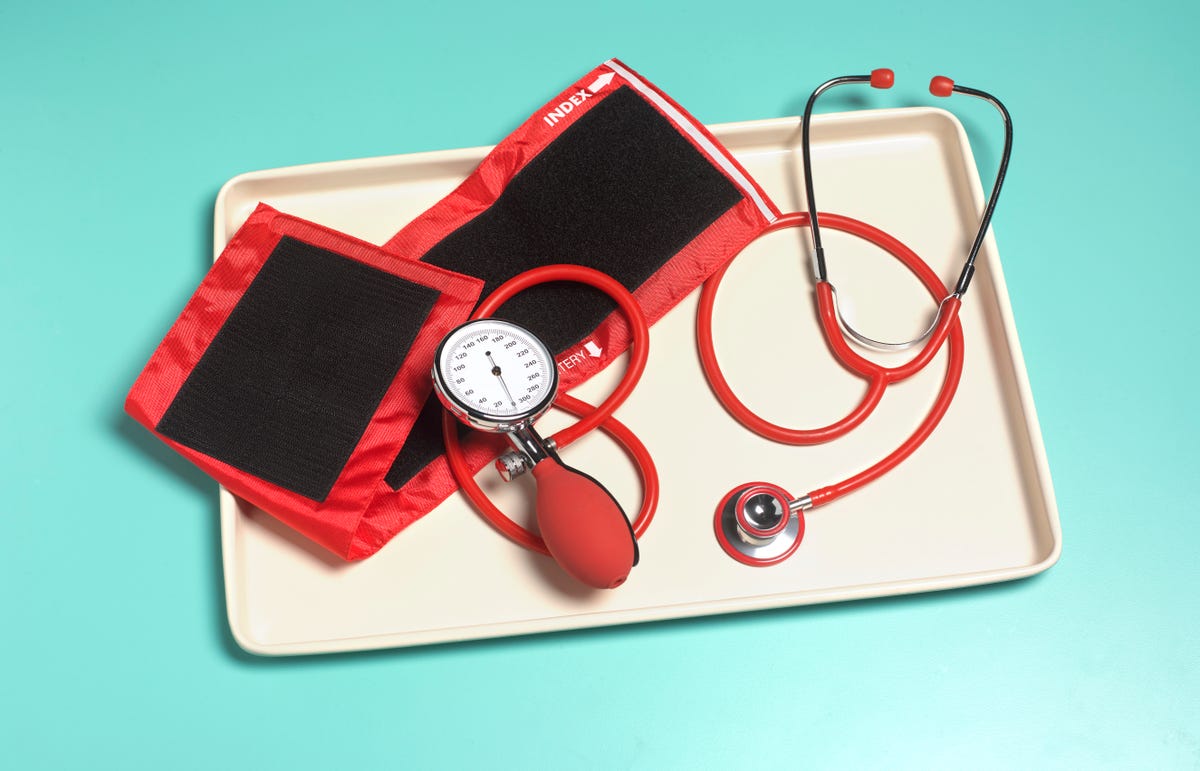
High blood pressure, or hypertension, often has no symptoms and people can go years without realizing their blood pressure is dangerously high.
Getty Images
Cancer screening
Cancer was the second leading cause of death in the US in 2020, behind heart disease, according to the US Centers for Disease Control and Prevention. Screening for cancer helps catch it early, when treatments are more effective. Some cancer screenings, such as a Pap smear for cervical cancer and the screening for colorectal cancer, detect precancers, which can be removed before they advance into cancer.
Which cancer you should be screened for depends on your age, family history and individual risk factors, but the top five most common cancers in 2020 were breast, lung-bronchus, prostate, colon-rectal and skin (melanoma).
Mammograms for breast cancer are typically recommended starting in your 50s, but some people would benefit from getting tested earlier — for example, if there’s a history of people with breast cancer in their family.
You should get a screening for skin cancer if you notice a new mole or blemish that seems different in color, asymmetrical in shape or otherwise off.
A lung cancer screening requires a low-dose CT scan and is recommended for adults with an extensive smoking history.
Screening for prostate cancer includes a blood test called the PSA test, and most men will benefit from a prostate test in their 50s and 60s, according to Johns Hopkins Medicine.
Finding mental health care as an adult
Feeling sad or hopeless, being unable to cope with daily stress, feeling like you’re a burden to others or experiencing excessive worry are all symptoms of a mental health disorder such as depression or anxiety. The more researchers learn about the brain, the better they understand how mental health is an extension of our physical health and impacts our physical health; home and work life; sense of well-being and more.
If you’re an adult who’s never tried it before, finding a therapist or someone to talk to might sound daunting, but you probably have more options than ever before, thanks to virtual services and a growing awareness of mental health. Here’s a list of online therapy services, and here are some tips for finding mental health care when you’re worried you can’t afford it.
The information contained in this article is for educational and informational purposes only and is not intended as health or medical advice. Always consult a physician or other qualified health provider regarding any questions you may have about a medical condition or health objectives.
This story is part of 12 Days of Tips, helping you make the most of your tech, home and health during the holiday season.
Interest in calorie counting goes hand-in-hand with New Year’s resolutions. If you’re looking to “finally get fit” in 2023, it makes sense that counting calories in (and out) would be a good place to start. But there’s some controversy about whether or not calorie counting is a good way to get healthy or lose weight. Some experts argue that counting calories can lead to food restriction beyond what’s healthy and encourage disordered eating. Other experts say that counting calories is an efficient and effective approach to weight loss.
If one thing is for certain, it’s that there’s no “best” approach to health or weight loss. Just like some people thrive on HIIT training while others find fitness through running — and others don’t like structured exercise at all — some people will find success with calorie counting and others will not.
Our favorite all-around fitness tracker: the Fitbit Charge 5.
You’re receiving price alerts for Pro tip!
Counting calories for weight loss and weight gain
Weight management is simply a game of calories in and calories out. A calorie is a unit of measurement that describes how much energy a given food or drink has. The same unit of measurement is used to describe how much energy you exert in a day (calories burned).
To lose weight, you must burn more calories than you consume, and to gain weight, you must consume more calories than you burn. If you’re interested in changing your weight one way or the other, you’ll need to create a calorie deficit or a calorie surplus — and to make sure you stay in your desired surplus or deficit, you need to keep track of the calories you eat and burn. You can create the calorie balance you desire by counting the calories you eat and burn.
Based on the 3,500-calorie estimate, you need to create a calorie deficit of 3,500 calories each week to lose that one pound. You can do this in a few ways:
Reduce your calorie consumption by 500 calories per day
Increase or intensify exercise to burn 500 calories per day
A mix of the two, e.g. reduce your calorie consumption by 250 calories per day and burn an additional 250 calories per day through exercise
Purple Carrot is one of the only fully plant-based meal kit services, which scores points for its inventive and interesting fresh meat-free ingredients.
When calorie counting works and when it doesn’t
Calorie counting isn’t for everyone. Nor is any sort of food-tracking or logging, for that matter. Some people just want to eat food and enjoy it without worrying about caloric value. Some people don’t have the time or energy to count calories (that’s most of us, probably), and others have health goals that don’t involve counting calories.
Calorie counting works when:
Your focus is strictly losing or gaining weight
You want a simple, no-frills way to keep tabs on your diet
You need to keep track for medical reasons
Calorie counting isn’t the best method if:
You want to change your body composition (tracking macros is a better approach for body recomposition)
You want or need to keep track of micronutrients, such as particular vitamins or minerals
You have a history of disordered eating and feel the urge to drastically cut calories to an unhealthy level
You’re not actually sure how many calories you need to eat
How to start counting calories the right way
The first thing you need to do is determine how many calories you need each day. Counting them does you no good if you’re eating too few or too many. The absolute best way to determine your daily calorie allowance is to work with a registered dietitian, physician or certified nutritionist who can take your weight, height, health history and goals into account for an ideal daily calorie number.
If seeing a pro isn’t on the table, however, you can use an online calorie calculator, like this one from Mayo Clinic, to find out. Most calorie calculators use the same formula, the Mifflin-St Jeor equation, which accounts for gender, height, weight, age and activity level. Like the disclaimer on Mayo Clinic’s calorie calculator says, other factors also influence your daily calorie needs. Pregnancy, illnesses and occupation contribute, too.
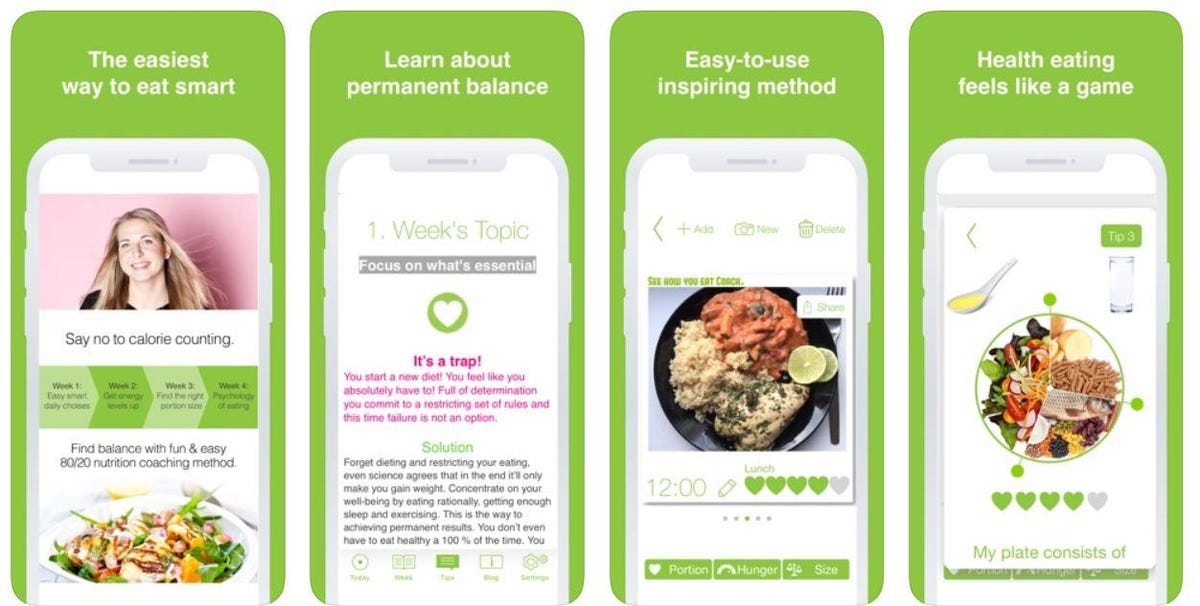
Once you have your number, you can start counting your calories. To create a deficit, eat fewer calories than your maintenance number, and to create a surplus, eat more. You can keep track in a pen-and-paper journal or use a calorie-counting app.
The See How You Eat food journal app focuses on taking photos, rather than logging words. This is a great approach to food journaling if you find yourself forgetting to write down the details.
See How You Eat/App Store
Logging packaged foods
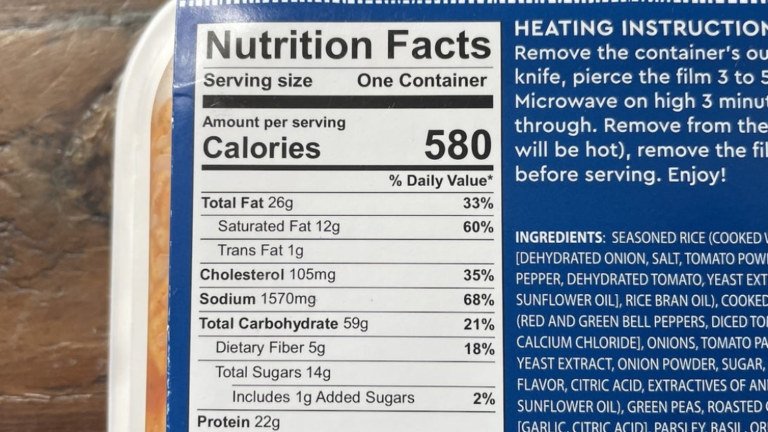
Counting the calories in packaged foods is easy: Just look at the nutrition label and write down the calorie amount. Don’t forget about serving sizes, though — if you eat two servings, double the calorie count that’s on the label.
Logging fresh foods
Tracking fresh foods is a little harder than tracking packaged foods because there’s typically no label. But it’s easy to find calorie data online. You can search virtually any food on the FDA’s FoodCentral database to find complete nutrition info. Most food-tracking apps have massive databases of foods, too, so don’t let the lack of a nutrition label deter you from eating fresh foods.
Logging restaurant meals
Logging the calories in restaurant meals can be tricky if the restaurant isn’t a chain. In 2018, the FDA mandated that all restaurants with more than 20 locations must disclose calorie information for all menu items, so it’s easy enough if you’re eating at a regional or national chain restaurant. Local restaurants aren’t required to disclose calorie counts, but if you ask your server, there’s a good chance they can find out.
Don’t forget to log your coffee!
Getty Images
Logging beverages
Don’t forget to count the calories in the beverages you drink throughout the day. Unless you drink nothing but plain water and zero-calorie beverages (including black coffee and tea without sweeteners or milk), your drinks contribute to your daily calorie intake. Make sure to count the calories from the creamer in your coffee, sports drinks, alcohol, soda and juices.
Calories can’t tell you about the quality of your diet
While calories are useful for intentional weight loss or weight gain, they don’t tell you anything in the way of micronutrients. The quality of your diet is arguably just as important as the number of calories you eat each day: Where your calories come from makes a big difference in your overall health. A calorie is more than a simple unit of measurement when assessing how foods influence your overall health.
A 100-calorie serving of almonds affects your body much differently than 100 calories worth of a Twinkie, for instance. Almonds have fiber, protein, healthy fats, vitamins and minerals, whereas a Twinkie contains mostly sugar and saturated fat. A handful of almonds will give you sustained energy; a Twinkie will probably cause your blood sugar to spike and crash — and those are only the short-term effects.
Long-term, almonds offer health benefits like blood sugar control and lower cholesterol levels. Many of the ingredients in Twinkies — sugar, high fructose corn syrup and hydrogenated oils, to name a few — have been associated with increased risk of chronic diseases.
For the same number of calories in a candy bar, you can eat far more fruits and vegetables.
Getty Images
The great thing, though, is that filling your diet with fruits, vegetables, whole grains, lean protein and healthy fats should naturally curb your calorie intake. You’ll get full on fewer calories because nutritious foods tend to be less calorie-dense than sugary, fatty or processed foods.
If you’re interested in the pursuit of health, want to fend off chronic diseases, keep up your fitness and age healthfully, your best bet is to pay attention to both your calorie intake and the quality of the foods you eat.
The information contained in this article is for educational and informational purposes only and is not intended as health or medical advice. Always consult a physician or other qualified health provider regarding any questions you may have about a medical condition or health objectives.