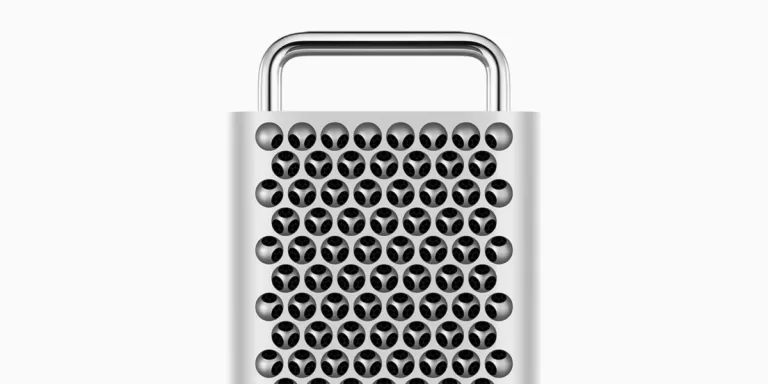
In his first Power On newsletter of 2023, Bloomberg‘s Mark Gurman has several pieces of information regarding Apple’s upcoming product announcements. One of the gadgets he writes about is the long-anticipated Mac Pro with Apple silicon. Here’s what you need to know.
A new Mac Pro has been rumored since Apple announced it would start making its silicon. Then, last year, during the March event, the company teased it was working on a successor of this product, but no further comments were made after that.
As rumors went by, Apple was expected to introduce a high-end configuration of the Mac Pro with 48 CPU cores and 152 graphics cores, but it has reportedly been canceled. Now, Gurman says Apple plans to release a version with the M2 Ultra, which, according to him, makes unclear, beyond the machine’s expandability, why most users would buy it over the cheaper and smaller Mac Studio.
In addition, the once-rumored M2 Extreme processor is apparently canceled as well. Bloomberg’s journalist reports that the new Mac Pro will look identical to the 2019 model – it was once rumored to be half the size of the current generation.
Gurman continues:
It will also lack one key feature from the Intel version: user-upgradeable RAM. That’s because the memory is tied directly to the M2 Ultra’s motherboard. Still, there are two SSD storage slots and for graphics, media and networking cards.
This Mac Pro is expected to be announced in the coming months, most likely at a spring Mac event alongside high-end MacBook Pro models. A successor of the Pro Display XDR is also in the works, but Gurman doesn’t think Apple will announce it in 2023.
Without a new look, a new display, and a proper processor, it’s hard to imagine what will be the selling point of this Mac Pro, especially due to the high cost of the current Intel version.
Apple’s first mixed-reality headset is a wearable device that should offer users virtual (VR) and augmented reality (AR) experiences. The AR/VR headset has appeared in an increasing number of rumors in the past few years, signaling a 2023 launch for the mixed reality gadget. However, Apple won’t hold an announcement event this month, Bloomberg’s Mark Gurman said in a new report.
Instead, Apple will unveil the mixed reality headset in the spring during a launch event separate from WWDC 2023. Sales should start in the second half of the year, although there’s no precise release date.
Gurman detailed Apple’s purported plans for the wearable handset in his Power On newsletter. Apparently, Apple is still dealing with development delays, and it’s been plundering resources from other departments.
The AR/VR wearable is Apple’s main priority for the year, and other projects might suffer as a result.
Gurman says Apple has already shared the device with a small number of high-profile developers for testing and app development.
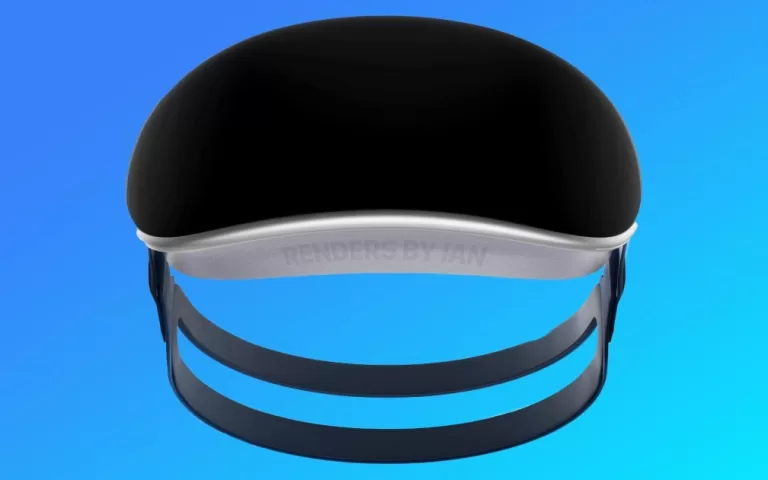
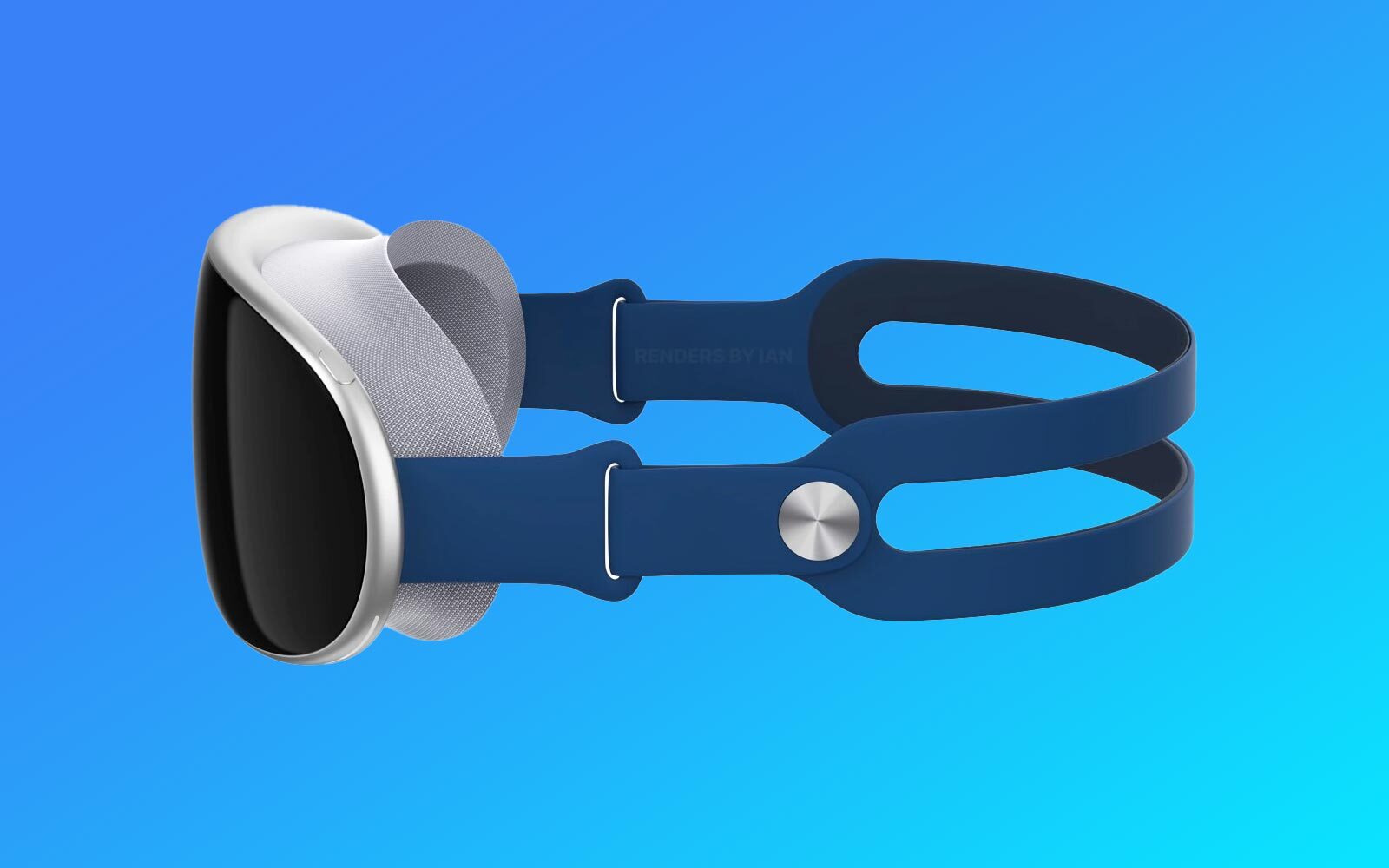
Apple mixed reality glasses render – side view. Image source: Ian Zelbo
Apple’s current plan is to unveil the headset as the Reality Pro this spring. The device would run a new operating system called xrOS. The company will then get developers up to speed on the software features this June. The mixed reality headset would ship this fall, although there’s no clear release date or release window.
Recently, well-known Apple insider Ming-Chi Kuo said that Apple has been dealing with hardware and software development delays. As a result, the headset would hit stores late in the second quarter or the third quarter of the year.
Gurman also notes that Apple has “many kinks to work out with the device,” including hardware, software, and services. Apple also has to figure out how to market and sell the AR/VR headset.
The device is Apple’s top priority for the year, given that it’s a brand-new product, one that Apple has never manufactured before. That’s why Apple has been diverting resources from other projects to the mixed reality headset. As a result, other projects might suffer, with Gurman noting that Apple might have fewer breakthroughs to show off this year.
This story was originally reported on and published on our sister site, Glossy.
At this year’s Consumer Electronics Show in Las Vegas, beauty devices are once again joining smart TVs, laptops and home robots on the convention floor.
With major companies including L’Oréal Group and Amorepacific regularly unveiling new technologies, the beauty tech presence remains constant at the Consumer Technology Association’s annual event. Taking place from January 5-8, this year’s show spotlights beauty launches that use AI technology to tap into themes including personalized product mixing and computerized makeup application.
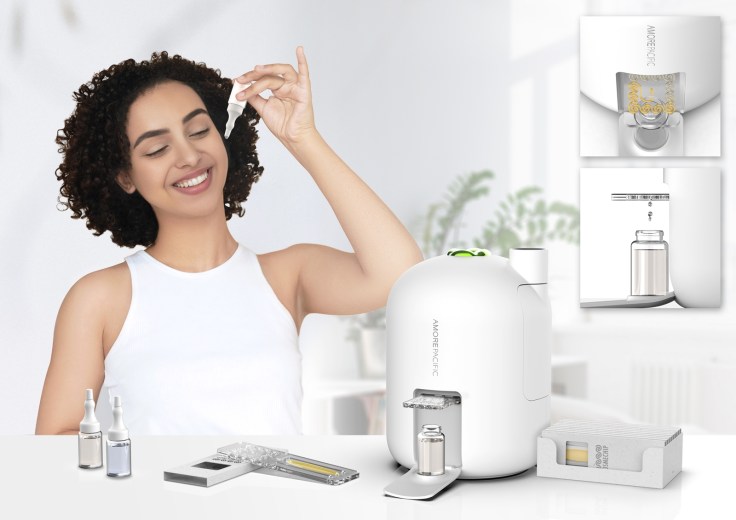
K-beauty conglomerate Amorepacific received the CES Innovation Award for the fourth year in a row this year for two of its launches focused on customized products. Its Authentic Color Master by Tonework allows users to scan their face. Using AI facial recognition technology, it can that create personalized foundation and lip shades with its robotic arms. Meanwhile, the brand’s at-home Cosmechip device creates customized skin care by allowing users to enter dry “chips” with skin-care ingredients and water into the apparatus to create skin-care products on the spot.
“Global customers are now creating ‘hyper-personalization’ and ‘me-centric’ trends, and the bespoke beauty market has great growth potential backed by remarkable development of beauty technologies,” said Park Youngho, head of Amorepacific’s R&I Center.
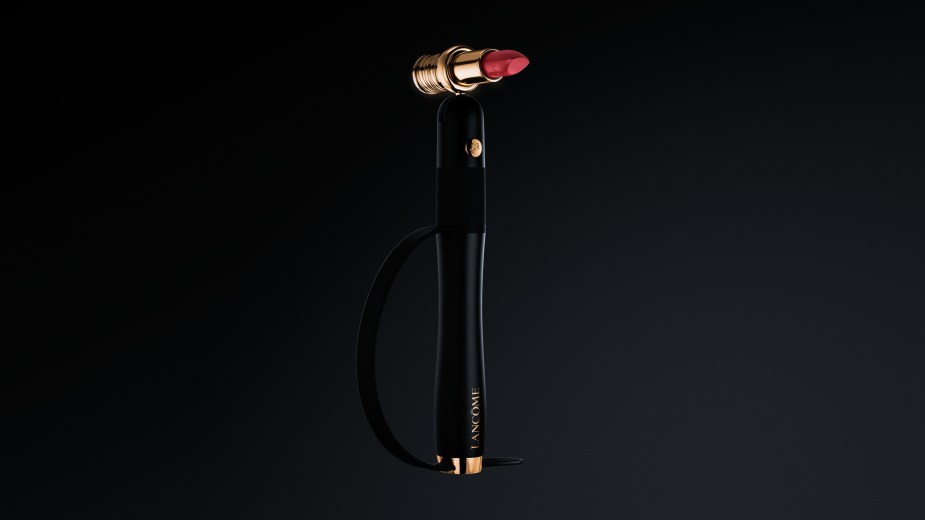
The CES launches of L’Oréal Group, meanwhile, focus on automatic makeup application with two prototypes announced on January 3. The company’s handheld HAPTA device offers computerized lipstick application for people with limited hand and arm mobility.
“For L’Oréal, the future of beauty is inclusive. And this future will be made more accessible by technology,” said Nicolas Hieronimus, CEO of the L’Oréal Group, in a statement about the device.
The technology used in the device was created by Alphabet Inc.’s health tech company Verily. It was first created by Verily for the company’s Liftware dining utensils, which were designed to automatically stabilize when being used by people with hand tremors and limited mobility. The lipstick applicator uses the same smart motion controls and provides customizable attachments to improve the range of motion.
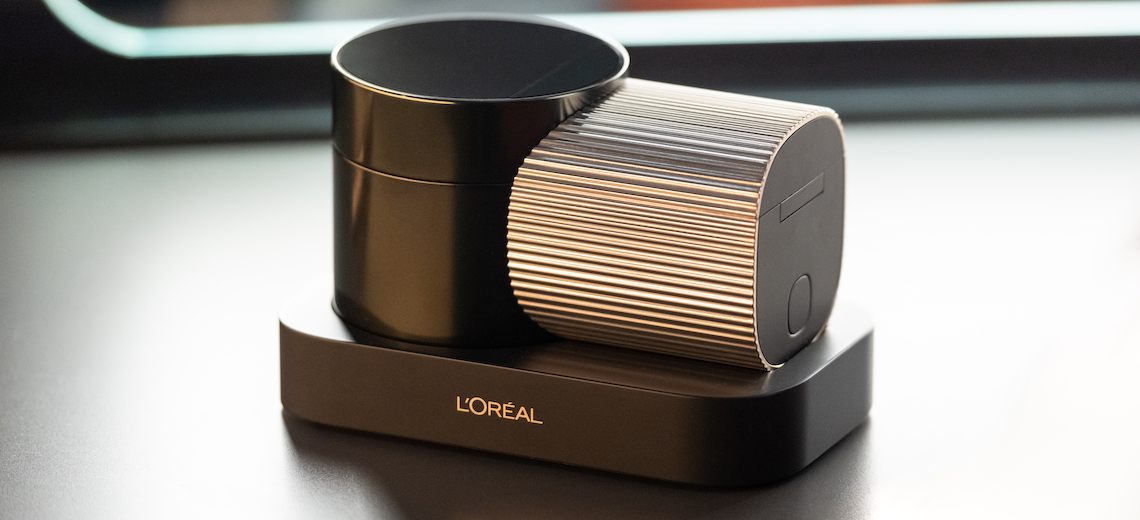
The company also released a prototype for eyebrow makeup application called Brow Magic. Users scan their face with L’Oréal-owned AI beauty app Modiface, and select the shape, thickness and effect of their ideal brow. They can then hold the device up to their face, where 2,400 nozzles “print” 1,200 drops per inch of eyebrow makeup to create the look. Using technology from non-permanent tattoo startup Prinker, the gadget’s eyebrow art can be washed off with regular makeup remover.
Some beauty prototypes unveiled at CES will make their way to the market. L’Oréal Group will make its HAPTA device available through Lancôme this year, and the Brow Magic tool is “expected to launch in 2023,” according to the company’s press release.
Amorepacific, meanwhile, has deployed multiple CES-unveiled technologies in stores over the years. Customers can already try out the Tonework technology at store locations in Seoul, including its Laneige showroom in the Myeongdong shopping neighborhood, its Etude store in Sinchon, its futuristic Amore Seongsu flagship store and the Amorepacific headquarters. Park said the company is focused on “broadening the customer touch points for the customizing services, in collaboration with our brands.”
CES prototypes that make their way to the market have been met with mixed results. Procter & Gamble’s $600 Opte skin-care apparatus, for example, is shuttering its operations after hitting the market in 2020. First unveiled as a prototype at CES two years earlier, Opte initially received buzz as the winner of the CES 2020 Innovation Award, multiple Allure Best of Beauty awards and a Time Best Inventions award.
Opte’s website states that the company has “decided to pause” its business, and its $99 serum refill kits will be available until January 15, 2023. The brand’s Instagram account is receiving comments from angry consumers who paid a hefty price for the gadget. One commenter noted they just bought the device last year, and another stated that “it isn’t right” to end the refills because “it’s an expensive tool.”
L’Oréal Group, which has been launching prototypes at CES since the founding of its Global Technology Incubator in 2012, has also brought previous years’ products to market. Its $299 YSL Beauty custom lipstick maker is listed on the brand’s site, but is currently not available for sale. Neutrogena’s MaskID system for customized sheet masks, meanwhile, was unveiled at CES in 2019 and set to la
Tito’s Handmade Vodka is working with Martha Stewart to showcase the ways its vodka can be useful for things other than drinking — like say, as a disinfectant spray or in a pasta sauce. The spirits brand is doing so to reach out to millennials and Gen Z consumers during Dry January, the burgeoning annual trend of people giving up alcohol for the first month of the year.
“Going into the New Year, I think there’s a lot of New Year’s resolutions and obviously Dry January has become a little bit of a cultural phenomenon,” said Taylor Berry, vice president of brand marketing at Tito’s. “No matter what their personal preferences, if they decided to dry January, if they don’t, I think this is just kind of a tongue-in-cheek way of being present throughout.”
The brand worked with creative agency Arts and Letters on the effort, which will appear on Instagram and YouTube. The spot portrays Martha Stewart using alcohol in everyday household items such as a disinfectant spray, meat tenderizer and pasta sauce. The ads will run on the social platforms until the end of January. The financial agreement between the parties was not disclosed.
The recognition of Dry January by the vodka brand comes as more marketers look to tap into and appeal to the sober lifestyle that has become more popular in recent years with the rise of wellness culture. Tito’s is in good company: Non-alcoholic brand Bare Zero Proof as well as alcohol brand Smirnoff have talked more about drinking in moderation in ad campaigns recently, according to previous reporting by Digiday and sister publication Modern Retail.
For Tito’s new campaign, the brand decided not to use its marketing dollars to advertise on TikTok due to the platform’s ban on alcohol promotion. Thus, the brand chose Instagram and YouTube for its Dry January marketing. “In an effort to kind of focus on both where the dollars are going to go and the impact of the campaign, we chose to focus on where we felt like we could make the biggest impact as a spirits brand,” said Berry.
It is unclear how much of Tito’s advertising budget is allocated to this campaign, as Berry declined to share overall budget specifics. According to Pathmatics data, the brand spent a little over $2.2 million so far on advertising efforts in 2022, higher than the $1.1 million it spent in 2021. The data also showed that the brand spent $329,000 on Instagram, $21,000 on Twitter and $204,000 on digital desktop displays throughout 2022. Berry said that the ad spend for the Dry January campaign was split evenly between Instagram and YouTube.
As for Martha Stewart’s ambassador role, Tito’s said Stewart aligns with the company’s core values and that her unique personality complements the brand’s image. “Martha Stewart is the queen of all household adventures, and it just felt like she would be the perfect choice to take on the role of bringing this to life,” said Berry.
In addition to the digital ads with Stewart, Tito’s is launching a limited-edition do-it-yourself January bottle-top attachment collection including the deodorizer, the flavorizer and the cleanerizer, all of which are household item bottle tops. All net proceeds from the sales of the bottle tops go to nonprofits that the brand has teamed up with, including Frontline Foods, Feed It Forward and Greater Good.
Martha Stewart has been a popular choice among brands for co-marketing initiatives in recent months due to her social media following and celebrity status. Green Mountain Coffee Roasters updated their social media strategy with Martha Stewart’s help, and water brand Liquid Death partnered with Martha Stewart as part of a Halloween campaign.
“Successful advertising must be unexpected, relevant, and social media shareability and Tito’s nails all three of these requirements,” said Allen Adamson, cofounder of Metaforce, a marketing collective and brand consultancy. “While Martha Stewart is spot-on for the upscale Vodka target market, the last celebrity you would expect to pitch a vodka, but a clever play off her core brand, a fun script combined with the relevant Dry January context makes this effort pay off for Tito’s.”
Thanks to Teads for sponsoring Digiday’s CES coverage and presenting this edition of the Digiday+ Media Buying Briefing, normally available exclusively to paying subscribers.
Amidst all the gadgetry and technology the Consumer Electronics Show is known for — you may now be able to smell scents in virtual reality — there was a palpable sense of sobriety emanating from the agency world. Perhaps not at the restaurants or craps tables, but certainly at the C Space, the part of CES that devotes itself to marketing and media matters.
Although all the major holding companies sent delegations of people to CES, offering curated tours of all the tech, the sessions at the C Space focused more on how to optimize and improve on what’s here and now. Less prominent were the blue-sky efforts that promise to solve all of marketing’s problems with something that’s just around the corner (much like artificial intelligence has been treated the last few years).
“Traditionally the CES perspective is about five to 10 years out, but returning to CES for the first time since 2020, we’re seeing an event that offers a much better balance between the theoretical and the practical,” said George Manas, CEO of OMD Worldwide. “Less flying cars and robots on the moon, more AI and e-commerce applications that our clients can activate now. This shift has made the event more relevant and useful to marketers, and more aligned with our goal in coming to Las Vegas: to discover immediate innovation that will drive better outcomes for our clients.”
On the ad-tech side of the media world, The Trade Desk used CES to showcase its updated efforts to move beyond cookies with a strategic lynchpin to its Unified ID 2.0 offering, something called Galileo that helps advertisers better use the open internet without cookies. Again, the focus is on what can be done now to prepare for a different future — in this case, the no-longer-surprising retiring of cookies by Google.
(Speaking of Google, though it wasn’t announced per se at CES, Microsoft’s news it would fold its AI-based ChatGPT tech into its Bing search engine certainly had a lot of people in Las Vegas talking about how the news could spark a new level of competition in the search space, which Google has dominated for decades.)
Even the creator economy, as low-tech an option as you’ll find in media, has been a part of the discussions in Las Vegas. Havas announced an expanded partnership with Spotter, a startup that provides upfront funding for creators. Havas Media Group and Spotter said they plan to increase investments in YouTubers with the aim of helping brands expand their presence on YouTube by collaborating with diverse creators. The partnership follows a 2022 commitment with Spotter, which says it has deployed 30% of capital to creators of multicultural backgrounds. (So far it has paid out $740 million to YouTubers and plans to reach $1 billion this year.)
Spotter and Havas didn’t disclose any monetary commitments at CES, but Spotter CMO Galvea Kelly told Digiday last year that creators are driving “a societal shift” in the overall economy. That’s led a number of brands, agencies and tech companies to partner with diverse creators through a number of investment commitments and other programs.
“The one thing that YouTubers and others have is this really intense connection with their fans versus a television show,” said Spotter founder and CEO Aaron DeBevoise. “The opportunities to create more value for themselves is so big, but the issue is it has to be very simple.”
No doubt some media agencies will return back to the office with visions of newfangled tech to test out and find application. But given economic concerns about how 2023 will shake out, thinking more about today’s tech holds the potential to generate revenue now. — Marty Swant and Antoinette Siu contributed to this reporting
Color by numbers
Out of home advertising may be making a post-Covid comeback, at least according to an analysis by the Out of Home Advertising Association of America (OAAA) and financial advisory firm Solomon Partners. Their 2023 benchmark measured ad effectiveness based on recall comparison across television, audio, online, OOH and print from 2017 to 2022. Results show that OOH ads generate higher ad recall with consumers compared to streaming, podcasts and radio, as well as online and print formats, and OAAA expects OOH ad spend for 2023 to outpace total media growth overall. — Antoinette Siu
More stats:
Recent findings from OAAA-Harris Poll research showed that 49% of adult consumers are noticing OOH ads more than one year ago as Americans transition in post-Covid.
OOH printed ads were 38% to 86% effective in ad recall, while digital ones were 46% to 84% effective.
By comparison linear TV generated a 20% to 60% effectiveness in ad recall, while streaming was slightly higher between 28% to 72%. In audio, podcast ads seemed more effective with 59% to 77% ad recall compared to radio with 11% to 46%.
Online ads actually saw some of the lowest numbers. Mobile ads were 12% to 57% effective in ad recall, while desktop ads were 9% to 48% effective.
Takeoff & landing
BMW of North America put its creative and media agency work up for review. Defending media-side agencies include IPG’s UM as media agency incumbent, as well as independent Anchor, which handles social.
Jay Friedman was promoted from president to CEO of independent media and marketing services firm Goodway Group. Charged with expanding the company’s growth into retail media and measurement, Friedman replaces David Wolk, who becomes executive chairman.
TV ad sales firm Ampersand launched an automated addressable technology for its main customers, cable operators that represent 70 percent of all addressable TV homes in the U.S.
Independent OH Partners has re-formed into an independent holding company called The Harkey Group, which will house five offerings: a production company, a creative agency, a consulting firm, a market research company, and OH itself.
Direct quote
“Instead of starting with the technology and trying to figure out where to deploy it, try to come up with the problems we’re trying to solve and what is the best technology [that] solves it.”
— Raja Rajamannar, chief marketing & communications officer, and president of healthcare for Mastercard, on the value CES can and should offer
Digiday platforms reporter Krystal Scanlon examined the consequences and implications of the European Union’s privacy watchdog’s massive fine levied against Meta.
Digiday’s senior reporter for marketing & technology Marty Swant reviewed the most interesting uses of Web3 and the metaverse by marketers last year — part of Digiday’s The 2023 Notebook series, which can be viewed in its entirety here.
OMG and Albertsons’ retail media network are partnering on targeting and measuring CTV inventory accessed through The Trade Desk, the two companies announced at CES today.
Stagwell is launching a new unit in its Marketing Cloud division, incorporating augmented reality, QR codes and a new travel media marketplace — all to be announced at CES.
Could the modern upfront marketplace, in which some $20 billion or so in marketing dollars are committed to be spent across the video spectrum, be starting to wane?
Holding companies are feverishly updating their offerings and breaking down silos to become more nimble, while independents exploit their niches to the best of their abilities.
Unfortunately, staff cuts and layoffs are on the brain these days — for publishers just as much as any other industry. And on that note, staff increases were down for publishers last year, with the economy as a likely driving factor, according to data from Digiday+ Research.
We already know that there’s a lack of confidence among publishers when it comes to revenues heading into the new year. To follow that, in a December survey of more than 70 publisher professionals, Digiday found that fewer publishers added staff last year than the year before, and that publishers expect the economy to be a drag on business into 2023.
The percentage of publishers who said their full-time staff increased fell from 58% in 2021 to 41% in 2022, Digiday’s survey found. Meanwhile, the percentage of publishers who said their staff decreased jumped to 29% last year, up from 19% the year prior. Just under a third of publishers (30%) said their full-time staff was unchanged in 2022, up from 23% in 2021.
Another notable difference between Digiday’s survey results in 2022 and 2021 is the number of publishers who said their staff increased significantly. Nearly a quarter of respondents (22%) said their full-time staff increased significantly in 2021, compared with only 12% who said the same in 2022. And while the percentage of those who said their staff decreased significantly held steady at a very small 4% between 2021 and 2022, the percentage of publisher pros who said their staff decreased somewhat shot up from 15% in 2021 to 25% in 2022.
These trends in publishers’ staffing make sense when we compare them to Digiday’s data on how they feel about the economy.
Digiday’s survey found that the majority of publishers agree that the economy hurt their companies’ performances in 2022 and that it will continue to do so in 2023 — which provides one explanation for the drop in publishers’ staff increases. Specifically, 62% of publisher pros agreed that the economy hurt their companies last year, with 59% agreeing that it will hurt in 2023 as well.
The most significant difference between 2022 and 2023 is actually among the respondents who disagree that the economy is hurting their companies: 19% of publishers disagreed that the economy hurt their performance in 2022, but that percentage dropped to only 6% when they thought ahead to this year.
Breaking down the data even further, it turns out that not one respondent to Digiday’s survey said they disagreed strongly that the economy will hurt their company’s performance in 2023. Six percent disagreed strongly that the economy hurt their performance in 2022.
Future plc has closed its office in Atlanta, Georgia, originally billed to be the new U.S. video production hub to create more lifestyle, home and entertainment content.
Holding companies and independent agencies have rushed to build up commerce media units — it’s a new vein of revenue that takes advantage of the surge of new retail media networks and e-commerce companies.
For years — and especially over the past three years — the end of the upfront, as TV ad industry observers’ favored forecast, has been rivaled only by the divining of Netflix’s entry into advertising. Well, now that the latter has happened, surely the former isn’t far off. Erm, probably not.
Despite the financial confines of the upfront’s year-long commitments, TV ad buyers and sellers continue to seek economic comfort in the upfront model’s revenue guarantees and pricing assurance, as broken down in the video below.
The humble honeybee hasn’t had an easy go of things recently. Between climate change, habitat destruction, pesticide use and attrition from diseases, one of the planet’s most important pollinators has seen its numbers decline dramatically in recent years. All of that bodes poorly for us humans. In the US, honeybees are essential to about one-third of the fruit and produce Americans eat. But the good news is that a solution to one of the problems affecting honeybees is making its way to farmers.
This week, for the first time, the US Department of Agriculture granted conditional approval for an insect vaccine. A biotech firm named Dalan Animal Health recently developed a prophylactic vaccine to protect honeybees from American foulbrood disease. The drug contains dead Paenibacillus larvae, the bacteria that causes the illness.
Thankfully, the vaccine won’t require beekeepers to jab entire colonies of individual insects with the world’s smallest syringe. Instead, administering the drug involves mixing it in with the queen feed worker bees eat. The vaccine then makes its way into the “royal jelly” the drones feed their queen. Her offspring will then be born with some immunity against the harmful bacteria.
The treatment represents a breakthrough for a few reasons. As The New York Times explains, scientists previously thought it was impossible for insects to obtain immunity to diseases because they don’t produce antibodies like humans and animals. However, after identifying the protein that prompts an immune response in bees, researchers realized they could protect an entire hive through a single queen. The vaccine is also a far more humane treatment for American foulbrood. The disease can easily wipe out colonies of 60,000 bees at once, and it often leaves beekeepers with one choice: burn the infected hives to save what they can.
Dr. Annette Kleiser, the CEO of Dalan, told The Times the company hopes to use the vaccine as a blueprint for other treatments to protect honeybees. “Bees are livestock and should have the same modern tools to care for them and protect them that we have for our chickens, cats, dogs and so on,” she said. “We’re really hoping we’re going to change the industry now.”
All products recommended by Engadget are selected by our editorial team, independent of our parent company. Some of our stories include affiliate links. If you buy something through one of these links, we may earn an affiliate commission. All prices are correct at the time of publishing.
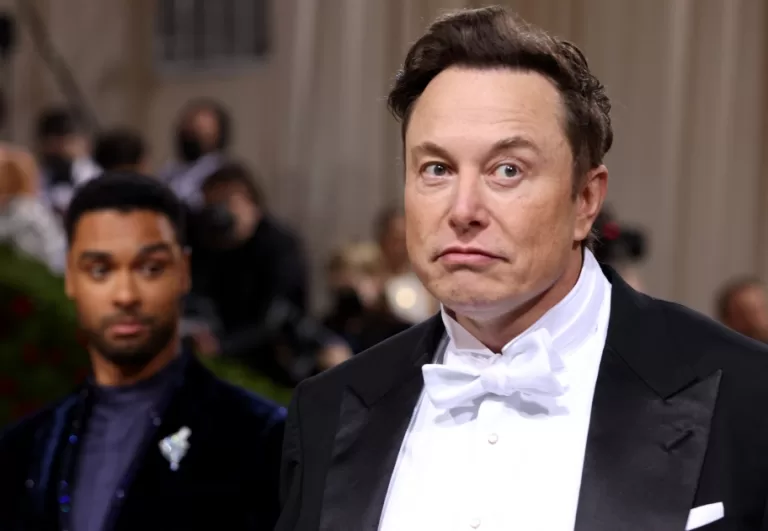
Elon Musk has asked a federal judge to move his upcoming Tesla shareholder trial out of San Francisco. Per the Associated Press, Alex Spiro, the billionaire’s personal lawyer, filed the request late Friday, less than two weeks before the trial is scheduled to kick off on January 17th. Musk’s legal team argues “a substantial portion” of the potential jury pool in San Francisco is likely to hold a bias against Musk due to recent media coverage criticizing his actions at Twitter and the seemingly never-ending layoffs at the company. Musk has asked to move the trial to Texas, which has been home to Tesla headquarters since late 2021.
The class action lawsuit involves “false and misleading” statements Musk made in 2018 when he said he was considering taking Tesla private at $420 per share. Musk’s now-infamous “funding secured” tweet landed the billionaire in trouble with the US Securities and Exchange Commission, eventually leading to a $40 million settlement with the agency. The shareholders involved in the suit won an early victory last spring when federal judge Edward Chen concluded that Musk had “recklessly made the statements with knowledge as to their falsity.” The upcoming trial will determine whether Musk’s tweet affected the automaker’s stock price and if he should be held accountable for potential damages.
“Musk’s concerns are unfounded and his motion is meritless,” Nicholas Porritt, one of the lawyers representing Tesla shareholders, told the Associated Press. “The Northern District of California is the proper venue for this lawsuit and where it has been actively litigated for over four years.” On Saturday, Judge Chen told the two sides he would hear Musk’s request on January 13th.
All products recommended by Engadget are selected by our editorial team, independent of our parent company. Some of our stories include affiliate links. If you buy something through one of these links, we may earn an affiliate commission. All prices are correct at the time of publishing.
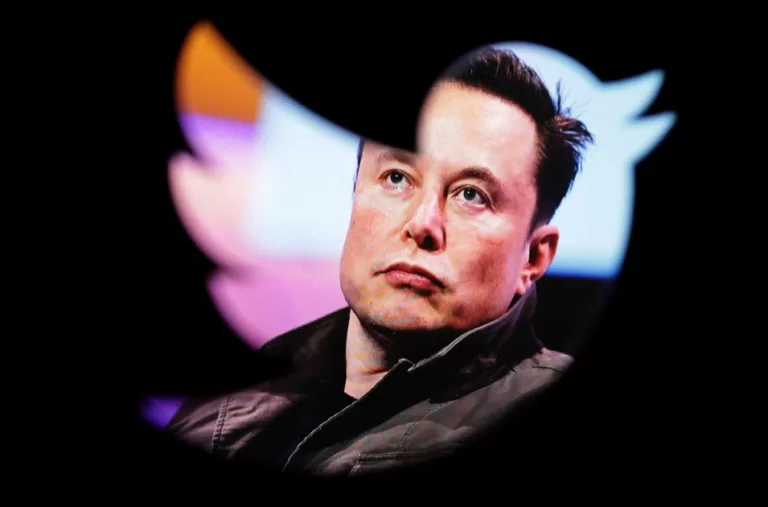
In what has become a monthly occurrence at Twitter, the company has cut more of its workforce. On Friday night, Twitter reportedly laid off “at least a dozen” workers across its Dublin and Singapore offices. According to Bloomberg, the casualties include Analuisa Dominguez, the company’s former senior director of revenue policy. The outlet reports that Twitter also cut workers responsible for handling the company’s misinformation policy, in addition to a handful of employees involved with the platform’s global appeals process and state media program.
Ella Irwin, Twitter’s head of trust and safety, confirmed the company recently laid off more staff but disputed the teams impacted by the cuts. “It made more sense to consolidate teams under one leader (instead of two) for example,” she told Bloomberg, adding Twitter eliminated roles in areas where the company didn’t see enough “volume” to justify the talent expenditure. She also said Twitter increased staffing at its appeals department and would continue to have a head of revenue policy.
On November 21st, shortly after issuing his “extremely hardcore” ultimatum to Twitter employees, Elon Musk reportedly said the company wouldn’t fire or lay off any more workers during an all-hands meeting. While the scale of Twitter’s subsequent layoffs hasn’t matched those that came shortly after Musk’s takeover, the company has cut staff despite the billionaire’s pledge. The company let go of part of its infrastructure division halfway through last month. One recent estimate by The Information puts the company’s headcount at around 2,000 employees or a little over a quarter of what it had before Musk’s purchase.
All products recommended by Engadget are selected by our editorial team, independent of our parent company. Some of our stories include affiliate links. If you buy something through one of these links, we may earn an affiliate commission. All prices are correct at the time of publishing.