

MAE SOT, Thailand — For people fleeing the conflict in Myanmar, the injuries are often more than just physical.
Four years after a military coup that has morphed into a grinding civil war, experts say there is a growing mental health crisis in the Southeast Asian nation, made worse by the junta’s atrocities against civilians and a humanitarian disaster that has left more than 3 million people displaced.
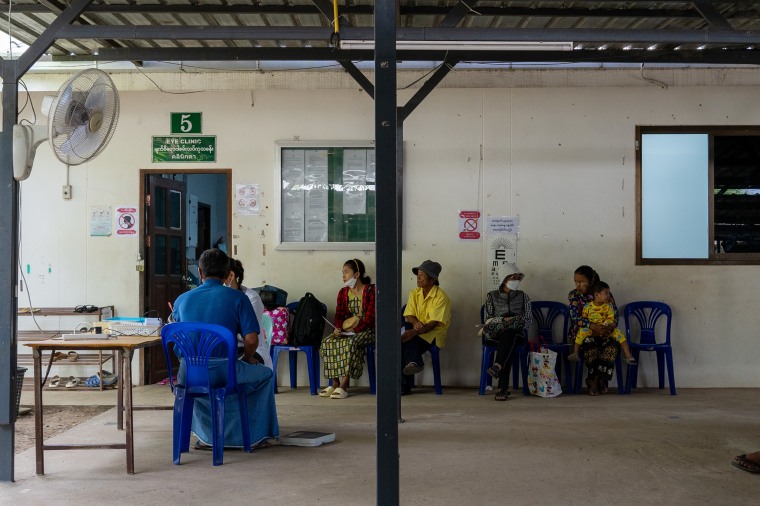
They find some relief at the Mae Tao Clinic on the outskirts of Mae Sot, a border town in neighboring Thailand.
Each morning, hundreds of Burmese arrive at the clinic, waiting to see a doctor, receive vaccinations or get a prenatal checkup. Some are living in refugee camps along the Thai-Myanmar border, while others have jobs as migrant workers or have crossed into Thailand illegally.
The donor-funded clinic, which opened in the 1980s with only four beds, has since evolved into a full-fledged primary health facility that offers a range of free services, including psychiatric care. It says its 700 doctors, nurses, medics and volunteers treat 120,000 people a year, a number that may increase after a freeze on foreign aid by the Trump administration that threatens to close U.S.-supported health care facilities treating Myanmar refugees in Thai border camps.
Those who have fled Myanmar “have so many traumas,” said Thein, a Myanmar refugee who is one of the psychiatric care unit’s two Burmese-speaking psychiatrists.
On Tuesdays and Fridays, the two days the unit is open, Thein walks past the bustling outpatient wards and crosses a tranquil bamboo garden to his office. It is a single-story cement building painted light blue, with the windows and doors covered in translucent black film to protect patients’ privacy.
Thein, 36, sees about 10 patients a day in one-on-one sessions. They include rebel soldiers injured on the front lines as well as political refugees and migrant workers.
“They have flashbacks and nightmares at night and they cannot sleep,” said Thein, who has been in Mae Sot for a year and asked not to be identified by his full name to protect his safety and that of his family.
While the clinic has social workers and counselors for patients with milder mental health issues, Thein works with the most serious cases.
“I can give counseling to them, like mindfulness or meditation or breathing,” he said. But often his patients also require medication, which the clinic provides for free.
Thein said he sometimes struggles with anxiety himself stemming from the abuse he received from the junta.
Like most of his patients, Thein’s life took a turn on Feb. 1, 2021, when the Myanmar military — which has ruled the former British colony for much of its history since it gained independence in 1948 — overthrew democratically elected leader Aung San Suu Kyi. Peaceful protests broke out immediately, to which the new military government responded with deadly violence.
According to the Assistance Association for Political Prisoners, a nonprofit group that has documented killings and arrests since the coup, the junta has killed at least 6,000 people and arrested more than 28,000. On Friday, Myanmar state media reported that the state of emergency that has been in place since the coup had been extended for another six months, further delaying promised elections.
Though the junta remains in charge, its hold on power has slipped in the face of a coordinated offensive by ethnic rebel groups that have fought the Myanmar military for decades. In the past year the government has lost control of vast swaths of territory around the country, creating instability along Myanmar’s borders with Thailand, India, China and others.
“I want to help my friends, but I don’t want to kill people,” Thein said. “So I treated the wounded people or wounded soldiers.”
Thein was arrested in 2022 on suspicion of helping the resistance and sent to Myanmar’s notorious Insein Prison.
“They tortured me with a whip. I think six people beat me during the interrogation. It was really scary,” Thein recalled, as he raised his hands around his head to demonstrate how he tried to protect himself.
Thein was released after a year of detention. Fearing another arrest, he left his life in Yangon, Myanmar’s largest city, and fled to Thailand.
Mae Sot has long been a place for Burmese to seek sanctuary, but it is an uneasy refuge. It is filled with people waiting for resettlement, living with constant anguish while facing the risk of arrest and deportation.
Every month, Burmese who lack the documents needed to stay in Thailand legally have to pay local police 300 baht ($9) to obtain a card that prevents them from being detained or deported, but many find this fee unaffordable.
“Some patients were arrested on the way to the clinic by the Thai police because they have no documents,” Thein said.
The clinic’s founder, Cynthia Maung, was also a doctor in Myanmar before she fled in 1988 amid a crackdown by the military government on a pro-democracy uprising.
“I think the struggles now and back then are very similar,” she said.
Mental health is often neglected in Myanmar, where Thein was trained. According to the World Health Organization, as of 2019 there were only 117 psychiatrists and two mental health hospitals in the country of 54 million people.
Shwe Zin Aung is one of Thein’s patients and has been struggling with bipolar disorder for a decade.
The 35-year-old teacher arrived in Mae Sot from Myanmar’s capital city, Naypyidaw, in early December, following in her brother’s footsteps. She said that in addition to free medication, the clinic provided her with a safe place to talk about her feelings.
Though she said she had not personally faced any abuse from the junta, “it is so frustrating to see them brutally shoot the protesters,” she said.
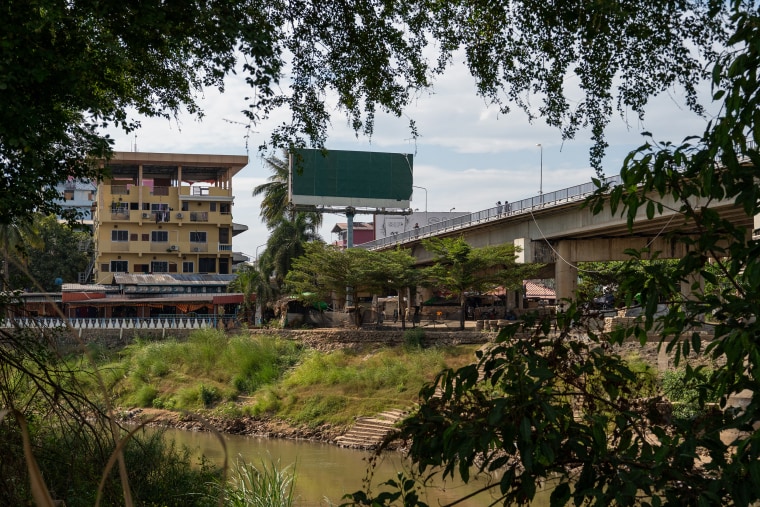
Back home, Thein and his patients had respectable careers and stable lives, but here they are stateless — as are more than half a million people in Thailand, most of them from Myanmar.
Though Bangkok has not ratified the 1951 United Nations Refugee Convention and does not officially recognize refugees, Thai authorities have largely tolerated the influx of people from Myanmar, even before the coup in 2021.
In October, the government of Thailand said it would grant citizenship to nearly 500,000 long-term residents as well as some children born in the country in an effort to address their legal status.
Though her clinic is well known in Myanmar, Maung, 65, has not been in the country for almost four decades.
When she first arrived in Thailand at the age of 28, Muang assumed she would return home in a few months once the political environment stabilized. But months soon turned into years.
She felt newly hopeful in November 2020, when Suu Kyi’s National League for Democracy was elected to a second consecutive term in a landslide. The military coup took place within three months, shattering Maung’s dreams.
Among those driven out of Myanmar by the coup, she said, were psychiatrists and psychologists who came to Mae Sot and have enabled the clinic to expand its services to help others struggling with displacement.
“Sometimes, some people feel that this way is usual,” Maung said, “but this is not normal.”
Anne Chan
Anne Chan is a freelance journalist based in Hong Kong.
Anne Chan
Read More