

Business
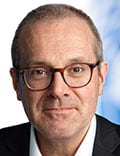
In an interview with Medscape Medical News, Hans Henri P. Kluge, who recently was reappointed the World Health Organization’s (WHO’s) regional director for Europe, reflected on the lessons he learned during his past mandate, outlined strategic priorities for the region, and discussed innovative approaches to strengthening healthcare systems. The interview has been edited for clarity and length.
What do you see as the most pressing health challenges facing Europe in the next 5 years, and how is WHO/Europe preparing for them?
It’s been more than 5 years since COVID-19 first emerged, and it pains me to say that not a single health system in the European Region has fully recovered, nor is any single health system fully prepared for the severe health challenges that are coming our way in the years ahead.
Climate change is causing a quarter of a million additional deaths each year globally. Meanwhile, temperatures in the WHO European Region are rising at around twice the global average rate. Chronic diseases like cancer, heart disease, or diabetes will eventually take the lives of 9 out of 10 people in our Region. Mental health issues, particularly among young people, are on the rise, driven by anxiety about the future and the growing negative influence of social media. Our populations are rapidly aging, placing an enormous financial burden on already strained health systems. For the first time ever, there are more people aged over 65 years than under 15 years in Europe. And in the face of all of this, doctors, nurses, and health staff are overworked and undervalued.
Health must have its place at the top of the political agenda. It is not just a health sector issue. This is about national, regional, and global security. It is about competitiveness and economic stability. It is about social cohesion.
Health threats can weaken nations, fracture communities, and leave populations exposed. We need real political commitment to build health systems that drive continuous innovation and learning and implement health policies that reinforce equity and solidarity — ensuring no one is left behind. And we must defend the voice of science. Truth over misinformation. Facts over disinformation.
You mentioned noncommunicable diseases (NCDs), mental health, and aging populations. What new strategies are WHO/Europe considering to address these long-term health issues?
To accelerate action toward tackling NCDs, WHO/Europe is recommending so-called quick buys: Actions that can demonstrate public health impact within 5 years. These actions include increasing taxes on harmful products like tobacco and alcohol, marketing bans and access restrictions on harmful products, front-of-package health labeling, food reformulation, smoking bans, treating hypertension, statin use, HPV vaccine and cervical cancer screening, and breast and colorectal cancer early diagnosis programs.
WHO/Europe aims to address the root causes of chronic disease, what we call “commercial determinants of health,” such as industry interference in tobacco, alcohol, and unhealthy food policies, or access to physical activity and green spaces. WHO is also advancing NCD data systems to track policy impact and define high-impact interventions and discontinue interventions that aren’t working.
The COVID-19 pandemic has exposed vulnerabilities in healthcare systems across the region. What structural changes do you believe are necessary to build resilience against future health crises?
WHO/Europe has identified some of the key lessons learned, including building more collaborative surveillance systems, ensuring safe and scalable care, enhancing community protection, enhancing access to countermeasures (eg, therapeutics, diagnostics, and personal protective equipment), and strengthening emergency coordination.
But ultimately, our best defense against future pandemics and health emergencies is building regional resilience coupled with interregional solidarity.
Strong regional blocs like the European Union (EU), the Association of Southeast Asian Nations, BRICS, the African Union, and others have a key role to play in pandemic preparedness, perhaps more than global bodies that can be highly politicized and slow to act.
Regional organizations have a better grasp of local health systems, cultural practices, and specific regional challenges. They can tailor health responses to the specific needs of member states, offering more relevant and immediate solutions. And with fewer members, compared with global bodies, regional blocs can reach consensus and mobilize resources more quickly.
Many regional blocs already have integrated systems for trade, travel, and communication that can be adapted for health emergencies. They can implement travel restrictions, cross-border health checks, and contact tracing more efficiently within the region.
That’s why last year I launched the Pan-European Network for Disease Control to better coordinate disease outbreaks across the region, crucially including both EU and non-EU countries. The Network is rapidly evolving into a vital information-sharing mechanism for Europe and Central Asia.
You’ve spoken about making WHO Europe “future-proof.” What does that mean in practical terms? Is this a reference to the withdrawal of the United States from the WHO?
Futureproofing WHO/Europe means being nimble and agile, going back to the basics, and focusing on who we are and what we stand for: Namely, technical excellence. It means being hyperresponsive to the needs of our 53 member states and remaining politically neutral at all times and in all interactions. It means harnessing digital and artificial intelligence (AI) tools to improve efficiency and productivity across the organization, showing value for money. It means being 100% prepared for humanitarian emergencies anywhere in our region. And finally, it means genuinely involving young people — the next generation of leaders, scientists, and doctors — in discussions about health.
How do you plan to navigate political and financial challenges, including shifting global alliances, to ensure that WHO/Europe remains an effective force for public health?
Our volatile and politically unstable world calls for a simple yet profound action: Listening.
I see listening as one of my most important tasks as WHO regional director for Europe. Listening to our member states; listening to health workers of all types; listening to presidents, prime ministers, and other leaders; listening to children and young people; listening to our donors; and perhaps most importantly, listening to our critics. Indeed, some of our biggest critics are also our biggest supporters. This is a good thing.
WHO is here to serve. If we are not serving the needs of the people, it means we failed to listen to them. This is why I am constantly on the road. I draw strength from my many discussions and interactions with people, at every level of society. And these discussions then inform WHO/Europe’s activities and strategies.
We simply must be responsive to the needs of the people we claim to serve. Besides listening, this also calls for a steadfast commitment to political neutrality at all times and for exploring new avenues and partnerships in a changing world. Here I would like to thank the leadership shown by the European Commission, a dear partner to WHO/Europe, in always championing public health and supporting our life-saving cross-border work.
With increasing digitalization in healthcare, from AI to telemedicine, how does WHO/Europe plan to harness technology while addressing concerns about equity and data privacy?
At WHO/Europe, we are fully committed to ensuring that digital health serves all individuals, leaving no one behind.
Digital health and AI have a key role to play in strengthening personalized treatment, providing real-time health information, improving the interoperability between primary care, hospitals, and social care, and reducing administrative burdens so that healthcare workers can focus on what matters most: People.
But no technology, no matter how advanced, can replace empathy, trust, and human care. Instead, it should enhance them, ensuring that healthcare is not only just more efficient but also more compassionate and responsive.
I believe in harnessing technology to build inclusive, efficient, and human-centered health systems.
For example, imagine a future where care is organized around you, accessible at home and in the community, and blends digital and face-to-face interactions in a way that respects individual needs and preferences. Imagine a future where AI enhances precision and efficiency, allowing doctors and nurses to spend more time with patients, not paperwork. Imagine a future where no one struggles to afford care because stronger welfare systems guarantee universal access.
This is the future I envision — one where technology empowers, trust is strong, and healthcare remains deeply human at its core.
Manuela Callari is a freelance science journalist specializing in human and planetary health. Her work has been published in The Medical Republic, Rare Disease Advisor, The Guardian, MIT Technology Review, and others.
Read More
Lawanda Howe