Home Blog Page 7015

Up close and personal: Dolphin POV caught on camera while hunting for tasty fish

On the eighth day of Christmas —

Accompanying audio recorded dolphins squealing in victory when they captured prey.


Enlarge / “I spy with my dolphin eye… something that looks like prey!”

There’s rarely time to write about every cool science-y story that comes our way. So this year, we’re once again running a special Twelve Days of Christmas series of posts, highlighting one science story that fell through the cracks in 2022, each day from December 25 through January 5. Today: Scientists attached video cameras onto dolphins to capture the sights and sounds of the animals as they hunted for prey to learn more about their feeding behavior.

Scientists attached GoPro cameras to six dolphins and captured the sights and sounds of the animals as they hunted and devoured various species of fish—even squealing in victory at the capture of baby sea snakes, according to an August paper published in the journal PLoS ONE. While sound and video has previously been recorded for dolphins finding and eating dead fish, per the authors, this is the first footage combining sound and video from the dolphins’ point of view as they pursued live prey while freely swimming. The audio element enabled the scientists to learn more about how the dolphins communicated while hunting.

Sam Ridgway and his colleagues at the National Marine Foundation in San Diego, California, have conducted previous research on dolphins. They thought they could learn even more about the animals’ hunting and feeding strategies using inexpensive commercial GoPro cameras to record sounds as well as visuals. The high frames per second (60, 90, or 120 FPS) enabled them to observe changes in behavior frame by frame.

The US Navy trains captive dolphins to identify mines, among other uses. (Although the dolphins are technically free to swim away, most “choose” to stick around.) Two of those dolphins—identified as S and K—were led out by their trainer’s boat into San Diego Bay. There they were given free rein to forage for food for 50 minutes. Footage was captured for 15 such outings for dolphin S, and 5 outings for dolphin K. Dolphins B and T wore cameras while swimming in an above-ground 6×12 meter sea water pool. Live Pacific mackerel, sardines, and Northern anchovies from a live bait supplier were set free in the pool so  B and T could hunt. Finally, dolphins Y and Z were filmed incidentally capturing prey while freely swimming in the open ocean.

Over the course of the study, S caught 69 fish and K caught 40 fish, including spotted sand bass, barred sand bass, smelt, yellowfin croaker, California halibut, and pipefish. The fish were captured both near the surface (notably smelt) and, more frequently, on the sea floor, lurking in patches of vegetation. The audio revealed that S, for example, would buzz and squeal to find the hidden fish in the latter scenario, gobbling up a mouth full of the sediment, swallowing the fish and ejecting the sediment and any plant material back into the water. (One fish did manage to escape the dolphin jaws of death and swim away.)

  • Dolphin S with camera attached to the left side of her harness.

  • Dolphin S drills into the sea floor to seize a fish. Notice the white of the eye or sclera (arrow) shows the eye rotated toward the fish. C. Dolphin S brings out the fish with lips flaring in the posterior half of the gape area to show the upper tooth row and gular area expanding.

  • Dolphin T (a) locates a fish, right eye rotated forward. (b) Upon capture, the lower posterior lip is pulled down showing the gums and teeth and fish (arrow) inside the mouth. (c) The dolphin reorients the fish while still pulling the lip down and expanding the gular area apparently eliciting intraoral pressure reduction, yet the fish almost escapes.

  • Fish capture sequence. A. View of dolphin fore body while capturing fish. B. Relative amplitude of sound recorded as dolphin S located, chased and captured wild fish. C. Spectrogram of audible sound showing variations in pulse rate and peak frequency characteristic of a squeal.

Among the surprising findings was the ability of all the dolphins to open their upper and lower lips to suck prey into their mouths. That’s how dolphins B (collected in the 1980s in the Gulf of Mexico) and T captured their fish in the sea water pool, using a side swipe motion of the head. There were a few examples of so-called “ram feeding”—in which prey is rapidly overtaken and clasped in the jaws before being swallowed—especially when hunting near the surface, but most feeding events primarily used the suction method.

T had been stranded on a Florida beach as a baby in 2013 and raised at Sea World of Florida, so T had never been observed catching live fish before. But after watching B capture prey, T caught on and began hunting with glee. “His captures were attended by much squealing,” the authors wrote.

Dolphins Z and Y were also recorded squealing in victory while capturing prey, and Z actually fed on 8 (possibly newborn) yellow-bellied sea snakes—an unusual choice, since dolphins haven’t previously been known to feed on sea snakes (although they have been observed playing “cat and mouse” with sea snakes). “Perhaps the dolphin’s lack of experience in feeding with dolphin groups in the wild led to the consumption of this outlier prey,” the authors wrote. Fortunately, “Our dolphin displayed no signs of illness after consuming the small snakes.”

DOI: PLoS ONE, 2022. 10.1371/journal.pone.0265382  (About DOIs).

Dolphin Z catching sea snakes in the Pacific Ocean with head jerks and a victory squeal. Credit: Ridgway et al., 2022

Read More
Jennifer Ouellette

Ancient Chinese text reveals earliest-known record of a candidate aurora

On the seventh day of Christmas —

Passage in Bamboo Annals describes a “five-colored light” in 10th century BCE.


Auroral display over snow-capped mountains in Hangzhou, China.

Enlarge / Auroral display over snow-capped mountains in Hangzhou, China.

Liu Míng Sun/EyeEm/Getty Images

There’s rarely time to write about every cool science-y story that comes our way. So this year, we’re once again running a special Twelve Days of Christmas series of posts, highlighting one science story that fell through the cracks in 2022, each day from December 25 through January 5. Today: New analysis of an ancient Chinese text revealed the earliest candidate aurora yet found, predating the next oldest by three centuries.

A pair of researchers has identified the earliest description, in an ancient Chinese text, of a candidate aurora yet found, according to an April paper published in the journal Advances in Space Research. The authors peg the likely date of the event to either 977 or 957 BCE. The next-earliest description of a candidate aurora is found on Assyrian cuneiform tablets dated between 679-655 BCE, three centuries later.

As we’ve reported previously, the spectacular kaleidoscopic effects of the so-called northern lights (or southern lights if they are in the Southern Hemisphere) are the result of charged particles from the Sun being dumped into the Earth’s magnetosphere, where they collide with oxygen and nitrogen molecules—an interaction that excites those molecules and makes them glow. Auroras typically present as shimmering ribbons in the sky, with green, purple, blue, and yellow hues.

There are different kinds of auroral displays, such as “diffuse” auroras (a faint glow near the horizon), rarer “picket fence” and “dune” displays, and “discrete aurora arcs”—the most intense variety, which appear in the sky as shimmering, undulating curtains of light. Discrete aurora arcs can be so bright, it’s possible to read a newspaper by their light. That was the case in August and September 1859, when there was a major geomagnetic storm—aka, the Carrington Event, the largest ever recorded—that produced dazzling auroras visible throughout the US, Europe, Japan, and Australia.

The Bamboo Annals is a chronicle of ancient China, written on bamboo strips, that begins with the age of the Yellow Emperor and runs through the so-called Warring States period (5th century–221 BCE), when rival states were engaged in intense competition. It ended when the state of Qin unified the states. The original text of the Bamboo Annals was buried with King Xiang of Wei, who died in 296 BCE, and wasn’t discovered until 281 CE, thus surviving Emperor Qin Shi Huang’s burning of the books in 212 BCE (not to mention burying hundreds of Confucian scholars alive).

Bamboo Annals.” src=”https://cdn.arstechnica.net/wp-content/uploads/2022/04/aurora1-640×437.jpg” width=”640″ height=”437″ >

Enlarge / Variant fragments of the Bamboo Annals.

M.A. van der Sluijs & H. Hayakawa, 2022

The original text consisted of 13 scrolls that were lost during the Song dynasty (960–1279 CE). There are two versions of the Bamboo Annals still in existence. One is known as the “current text,” consisting of two scrolls printed in the late 16th century. Many scholars believe this text is a forgery, given the many discrepancies between its text and portions of the original quoted in older books, although some scholars have argued that some parts might be faithful to the original text. The other version is known as the “ancient text,” and was pieced together by studying the aforementioned quoted portions found in older books, especially two dating back to the early 8th century CE.

Independent researcher Marinus Anthony van der Sluijs and Hisashi Hayakawa of Nagoya University relied on the ancient text for their new analysis. This text describes the appearance of a “five-colored light” visible in the northern part of the night sky toward the end of the reign of King Zhao of the Zhou dynasty. Auroras tend to only be visible in polar regions because the particles follow the Earth’s magnetic field lines, which fan out from the vicinity of the poles. But powerful geomagnetic storms can cause the auroral ovals to expand into lower latitudes, often accompanied by multicolored lights. Per the authors, during the 10th century BCE, Earth’s north magnetic pole was about 15 degrees closer to central China than today, so the people there may well have witnessed such displays.

While this is technically an unconfirmed candidate aurora, “The explicit mention of nighttime observation rules out daytime manifestations of atmospheric optics, which sometimes mimic candidate events,” the authors wrote. Furthermore, “The occurrence of a multicolored phenomenon in the northern sky during the nighttime is consistent with visual auroral displays in mid-latitude regions.” According to van der Sluijs and Hayakawa, the 16th century current text’s translation of the passage in question described the event as a “comet,” rather than a “five-colored light,” which is why the candidate aurora has not been identified until now.

DOI: Advances in Space Research, 2022. 10.1016/j.asr.2022.01.010  (About DOIs).

Read More
Jennifer Ouellette

Mastodon—and the pros and cons of moving beyond Big Tech gatekeepers

NOT EXTINCT —

Standards-based interoperability makes a comeback, sort of.


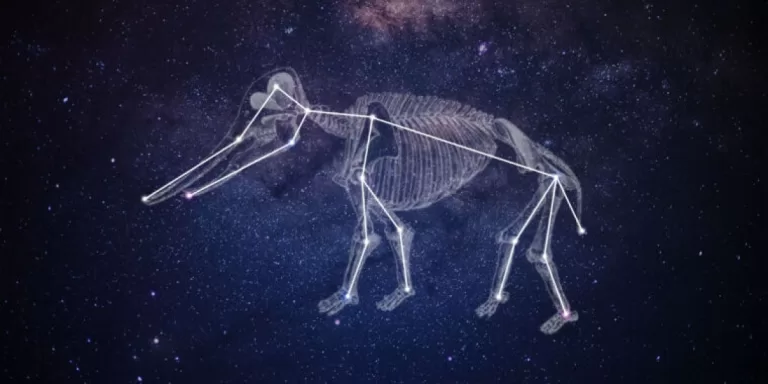
A mastodon seen as a constellation in the night sky.

Aurich Lawson | Getty Images

As Elon Musk’s Category 5 tweetstorm continues, the once-obscure Mastodon social network has been gaining over 1,000 new refugees per hour, every hour, bringing its user count to about eight million.

Joining as a user is pretty easy. More than enough ex-Twitterers are happy finding a Mastodon instance via joinmastodon.org, getting a list of handles for their Twitter friends via Movetodon, and carrying on as before.

But what new converts may not realize is that Mastodon is just the most prominent node in a much broader movement to change the nature of the web.

With a core goal of decentralization, Mastodon and its kin are “federated,” meaning you are welcome to put up a server as a home base for friends and colleagues (an “instance”), and users on all instances can communicate with users on yours. The most common metaphor is email, where yahoo.com, uchicago.edu, and condenast.com all host a local collection of users, but anybody can send messages to anybody else via standard messaging protocols. With cosmic ambitions, the new federation of freely communicating instances is called “the Fediverse.”

I started using Mastodon in mid-2017 when I faintly heard the initial buzz. I found that the people who inhabited a world whose first major selling point was its decentralized network topology were geeky and countercultural. There were no #brands. Servers were (and are) operated by academic institutions, journalists, hobbyists, and activists in the LGBTQ+ community. The organizers of one instance, scholar.social, run an annual seminar series, where I have presented.

The decentralization aspect that was such a selling point for me was also a core design goal for Mastodon and the predecessors it built upon, such as GNU Social. In an interview with Time, lead developer Eugen Rochko said that he began development of Mastodon in 2016 because Twitter was becoming too centralized and too important to discourse. “Maybe it should not be in the hands of a single corporation,” he said. His desire to build a new system “was generally related to a feeling of distrust of the top-down control that Twitter exercised.”

As with many a web app, Mastodon is a duct taping together of components and standards; hosting or interacting with a Mastodon instance requires some familiarity with all of these. Among them, and the headliner at the heart of The Fediverse, is the ActivityPub standard of the World Wide Web Consortium (W3C), which specifies how actors on the network are defined and interact.

Mastodon and ActivityPub evolved at about the same time, with Mastodon’s first major release in early 2017 and ActivityPub finalized as a standard by the W3C in January 2018. Mastodon quickly adopted ActivityPub, and it has become such a focus of use that many forget that ActivityPub is usable in many contexts beyond reporting what users had for lunch.

Like Mastodon, ActivityPub represents a rebellion against an increasingly centralized web. Christine Lemmer-Webber is the lead author of the 2018 ActivityPub standard, based on prior work led by Evan Prodromou on another service called pump.io. Lemmer-Webber tells Ars that, when developing the ActivityPub standard, “We were like the only standards group at the W3C that didn’t have corporate involvement… None of the big players wanted to do it.”

She felt that ActivityPub was a success for the idea of decentralization even before its multi-million user bump over the last few months. “The assumptions that you might have, that only the big players can play, turned out to be false. And I think that that should be really inspiring to everybody,” she said. “It’s inspiring to me.”

Standards setting

The idea of an open web where actors use common standards to communicate is as old as, well, the web. “The dreams of the 90s are alive in the Fediverse,” Lemmer-Webber told me.

In the late ’00s, there were more than enough siloed, incompatible networking and sharing systems like Boxee, Flickr, Brightkite, Last.fm, Flux, Ma.gnolia, Windows Live, Foursquare, Facebook, and many others we loved, hated, forgot about, or wish we could forget about. Various independent efforts to standardize interoperation across silos generally coalesced into the Activity Streams v1 standard.

Both the original Activity Streams standard, and the current W3C Activity Streams 2.0 standard used by Mastodon and friends, offer a grammar for expressing things a user might do, like “create a post” or “like???? a post with a given ID” or “request to befriend a certain user.” The vocabulary one would use with this grammar is split into its own sub-standard, the Activity Vocabulary.

Now that we have a way to express a person’s stream of thought and action in JSON blobs, where do all these streams go? The ActivityPub standard is an actor-based model which specifies that servers should have a profile for each actor providing a universal resource indicator (URI) for each actor’s inbox and outbox. Actors can send a GET request to their own inbox to see what the actors they follow have been posting, or they can GET another actor’s outbox to see what that specific actor has been posting. A POST request to a friend’s inbox places a message there; a POST request to the user’s own outbox posts messages for all (with the right permissions). The standard specifies that these various in- and outboxes hold activities in sequential order, much like our familiar social media timelines.

(PS: If you want to see what an activity stream looks like, and your browser renders JSON nicely, just grab a random outbox and have a look.)

Here we have the vision of the Fediverse: a set of ActivityPub nodes, scattered across the globe, all speaking a common language. Mastodon is one of many efforts to implement the inboxes and outboxes of the ActivityPub standard. There are dozens of others, ranging from other microblogging platforms (“It’s like Mastodon, but…”) to an ActivityPub server that runs a chess club.

In theory, they all intercommunicate; in practice, not so much. The sources of incompatibility stem from several issues, from imperfections in the standard to questions of how online communities should form to efforts to reach beyond the standard post/comment/follow format of typical social networks.

Read More
Ars Staff

Ars Technica’s favorite films in 2022

Ars Technica’s favorite films in 2022

Aurich Lawson | Getty Images

In 2022, film lovers weary of two years of a raging pandemic started gingerly dipping their toes back into the theatrical movie experience. And while the pickings might have been a bit slimmer than in pre-pandemic years, there were still plenty of tantalizing options, from the usual blockbuster superhero movies from the Marvel and DC cinematic universes, to quirky indie features and surprise gems from Netflix.

We’re once again opting for an unranked list, with the exception of our “year’s best” vote at the very end so you might look over the variety of genres and options and possibly add surprises to your eventual watchlist. As ever, we invite you to head to the comments and add your own suggestions for films released in 2022.

Barbarian. ” src=”https://cdn.arstechnica.net/wp-content/uploads/2022/12/barbarian-1-640×427.jpg” width=”640″ height=”427″ >

Enlarge / Things get weird when two strangers double-book a rental home in Barbarian

20th Century Studios

Barbarian 

Don’t watch the trailer, don’t even read a synopsis—just watch this movie.

Such was the advice I got before watching this year’s buzzy horror film Barbarian, and I’m glad I took it. It’s advice I’d extend to anyone reading this—if you enjoy horror, don’t even read the rest of this blurb. Just watch it—you can stream it on HBO Max right now.

But okay, for those who need a little more convincing, I’ll give the lightest of introductions. The film opens on a woman checking into a rental home in Detroit—until she realizes it has been double-booked and is already being occupied. She decides to stay the night anyway. Things get weird. Then they get weirder.

That’s about all I’m willing to give up here. At no point during my viewing did I know where the film was heading next, and I think that’s the best way to experience this movie. Barbarian is one of those wild-ride horror romps that’s best enjoyed with similarly uninitiated friends—everyone squirming and exclaiming and jumping out of their seats together as the craziness unfolds.

The movie has its fair share of chills and thrills, sure, but it’s also hilarious—it gave me the biggest, most genuine belly laughs of any film I saw all year. A respectable amount of good horror films came out in 2022, but if you’re looking for the best, look no further.

Aaron Zimmerman

The Batman.” src=”https://cdn.arstechnica.net/wp-content/uploads/2022/02/rev-1-TBM-56056JOrv4_High_Res_JPEG-640×427.jpeg” width=”640″ height=”427″ >

Enlarge / Selina Kyle (Zoë Kravitz) and Batman (Robert Pattinson) lead the long-but-enjoyable proceedings of The Batman.

The Batman

The Batman is a DC Comics film for people who watch way too many movies. Director and co-writer Matt Reeves (War for the Planet of the Apes) has concocted an intoxicating mix of indulgence, pulp, bombast, and vulnerability that absolutely answers the question of why the world needs another Batman film. Even better, Robert Pattinson (The Lighthouse) resurrects a role that has been otherwise run into the ground. Better than Michael Keaton? Oof, that’s a coin flip. Best Batman actor since Keaton? Absolutely.

What Reeves is really interested in is showing us a very different kind of Bruce Wayne than in other films: millennial, rich, sullen, ineffectual, and bewildered. Other Batman actors have shrugged off the weirdness of a rich man turned masked vigilante, but Pattinson convincingly wrestles with his inherited privilege—making Wayne more likable and empathetic as a result.

It’s not a perfect Batman production. You’ll have to endure roughly 15 minutes of aggressively grim, dark tone setting before Reeves and Pattinson settle into their vengeance-filled Batusi dance. And Reeves absolutely loses control of his Batmobile by the film’s end, especially as he fakes viewers out with one ending in order to lead them through an overlong, undramatic coda. But I’m not sure a “producer’s cut,” which would strip The Batman of its most indulgent tendencies, would make this a better film, and I applaud DC for letting Reeves go wild. The result makes Batman fascinating and tangible all over again, much like when filmmaker Tim Burton and Keaton reimagined the character in the wake of the over-the-top ’60s TV series.

—Sam Machkovech

Read More
Jennifer Ouellette

This seamless productivity app is just $25 now

Alarm Clock Pro

StackCommerce

Read More
Margarett Schroeder

Explore new cities in 2023 with these translation earbuds — now 55% off

Mymanu CLIK S

StackCommerce

Read More
Randy Volkman

Meet Stable Horde, the crowd-powered Folding@Home of AI art

Skip to content

Stable Horde Artbot robot smiling holding champagne

Mark Hachman / IDG via Artbot

, Senior Editor

As PCWorld’s senior editor, Mark focuses on Microsoft news and chip technology, among other beats. He has formerly written for PCMag, BYTE, Slashdot, eWEEK, and ReadWrite.

Read More
Bong Antes

Gamify your routines and become the best you with 88% off Ultiself

Ultiself

StackCommerce

Read More
Buffy Coby

Apple AirPods Pro Year of the Rabbit Special Edition announced – NotebookCheck.net News

The AirPods Pro Year of the Rabbit Special Edition. (Source: Apple)

Apple has unveiled a new limited edition of the second-generation AirPods Pro in China, themed after the transition from the Year of the Tiger (2022) to that of the Rabbit (2023). The TWS earbuds’ case come with an appropriately-themed engraving, which is also picked out on their retail box. They are available on the OEM’s Store from now.

2023 is to be the Year of the Rabbit on the Chinese calendar, and Apple has decided to mark this change in advance with new Special Editions of the AirPods Pro. They follow the tradition of their predecessors with additional distinctive, cutesy graphics super-imposed on the typical blank white packaging and charging case, found just below the indicator LED in the latter case.

These Year of the Rabbit Special Edition earbuds are 2nd-gen AirPods Pro, and as such also come with Apple’s latest active noise cancellation (ANC) tech, “personalizedspatial audio and a new lanyard bracket for its MagSafe-compatible case.

The AirPods Pro Year of the Rabbit Special Edition are only available on China’s version of the Apple Store, priced at 1,899 yuan (~US$275) – the same as standard AirPods Pro 2 with a wireless charging-capable case on the same platform., although Apple has not specified how long they may be available for.

Meanwhile, they remain at US$249 on apple.com or via channels such as Best Buy in the US.

The Year of the Rabbit Special Editions. (Source: Apple CN)

Related Articles

Deirdre O’Donnell, 2022-12-31 (Update: 2022-12-31)

Read More
Deirdre O'Donnell

MSI Raider GE66 with Intel Core i7-12700H and RTX 3070 Ti 24% off on Amazon – NotebookCheck.net News

MSI Raider GE66 gaming laptop (Source: MSI)

With a list price of US$2,599, the MSI Raider GE66 12UGS-238 gaming laptop is quite expensive. However, the 24% Amazon discount brings this Intel Core i7-12700H-powered machine below the US$2,000 threshold. It also sports NVIDIA GeForce RTX 3070 Ti graphics, Thunderbolt 4, 32 GB memory, and 1 TB storage.

The MSI Raider GE66 is available in multiple hardware configurations, with up to 12th generation Intel Core i9 processors and NVIDIA GeForce RTX 3080 graphics options. Depending on the model, the 15.6-inch display can go from FHD to QHD and from 60 Hz to 360 Hz. Although not the fastest in the family, the discounted 12UGS-238 model packs quite a punch thanks to the CPU/GPU pair that brings together the Intel Core i7-12700H processor and the NVIDIA GeForce RTX 3070 Ti mobile graphics adapter. After a 24% discount, the US$2,599 Amazon list price goes down to US$1,965.07.

In addition to the processor and graphics card mentioned above, the MSI Raider GE66 12UGS-238 also features a 15.6-inch QHD 240 Hz display with 2.5 ms response time and 100% DPI-P3 color gamut, Thunderbolt 4 connectivity, 32 GB DDR5-4800 memory, and a single 1 TB NVMe SSD. It runs Windows 11 Home out of the box and is covered by MSI’s 1-year limited warranty.

With only 4 ratings, the Amazon global score of 4.7 out of 5 is irrelevant. However, what is relevant is that those interested can also grab this laptop directly from MSI. While the manufacturer’s website does not mention any discount, the price tag reads US$1,999 and includes a free Immerse GH20 gaming headset (a US$30 value). Extending the warranty by one year costs US$80, and a two-year extension is charged US$140. A few MSI Clutch gaming mice are also available to add to the bundle for discounted prices between US$19.99 to US$54.99.

Buy the MSI Raider GE66 (Intel Core i7-12700H, NVIDIA GeForce RTX 3070 Ti, 32 GB/1 TB) on Amazon

Disclaimer: Notebookcheck is not responsible for price changes carried out by retailers. The discounted price or deal mentioned in this item was available at the time of writing and may be subject to time restrictions and/or limited unit availability.

Amazon (see affiliate link at the end of the article)

Related Articles

Codrut Nistor, 2022-12-31 (Update: 2022-12-31)

Read More
Codrut Nistor