
LAFC forward Gareth Bale has retired from professional soccer after an esteemed 18-year career, the Welsh superstar announced Monday. Bale, 33, joined LAFC last June after leaving Spanish powerhouse side…
Read MoreElida Mongold
Gareth Bale announces retirement from professional soccer | MLSSoccer.com

Why every team should be excited as 2023 preseason begins | MLSSoccer.com

Preseason is here. Here’s what each team has to look forward to as Matchday 1 for 2023 grows ever closer. 2023 MLS Preseason Schedule & Results Atlanta United Atlanta United…
Read MoreTama Drews
Will LAFC miss Gareth Bale? Here are their options in attack | MLSSoccer.com

The Gareth Bale era at LAFC will always be remembered fondly because of one goal, one header, one moment deep into extra-time of MLS Cup 2022. Bale, at age 33…
Read MoreZonia Coby
Inside The Secretive World Of Shark Tank Deals: Who The Real Winners Are
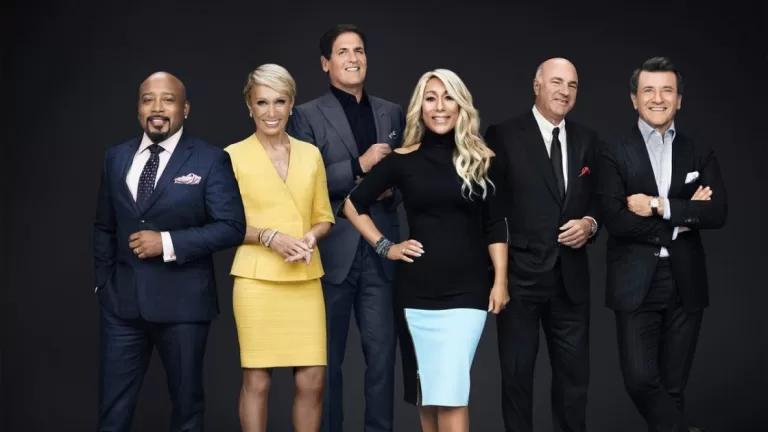
Which judges close the most deals, which ones change the terms off the air, and the surprising response from some entrepreneurs who don’t win over a shark.
With additional reporting by Richard J Chang and Conor Murray.
As Vladislav Smolyanskyy made his way out of the tank, he started to panic. It was 2016 during the filming of Shark Tank’s eighth season and the then-21-year-old had just agreed to a deal that would give away majority control of his company, Pinblock, to celebrity investor Kevin O’Leary.
After sharing his “American Dream” story about immigrating from Kyiv, Ukraine to New York and starting his toy business—a Lego competitor in which every block is the same shape, allowing users to create complex, 3D models—O’Leary offered the young entrepreneur a typically sharky deal: He’d give Smolyanskyy $100,000 in return for half of the company, contingent on the pair striking a partnership with a major toy manufacturer. Smolyanskyy owned 85% of Pinblock (his cofounder, who was no longer involved, had the remaining 15%) so he’d be left with a minority stake if the deal went through. No other shark put an offer on the table, and O’Leary made a strong case: “I’ll bring it to the toy industry because they all return my calls and I’ll bring deals to you,” the investor said during the episode, noting his close relationship with industry giant Mattel. “You have no chance of doing it successfully yourself,” O’Leary added.
Smolyanskyy was visibly upset while taping his exit interview after the pitch, feeling he had given too much away, and a Shark Tank producer tried to reassure him off camera that the deal with O’Leary would be worth it. “I had to go through a lot of mental gymnastics to convince myself that it’s a good idea,” said Smolyanskyy. But he did, and soon became excited at the prospect of working with the investor.
Then, about four months later, Smolyanskyy says he received a lengthy email from O’Leary’s team, notifying him that his investor was calling off the deal. There was too much competition in the toy industry and manufacturers likely wouldn’t want to take the risk of working with Pinblock, the email said. There was no opportunity for negotiation. Smolyanskyy was devastated. Not only had he wanted to work with O’Leary, but by that point, Smolyanskyy also was depending on the promised $100,000 to meet the demand he was anticipating from his episode, which coincided with the holiday season. “I was so distraught, honestly,” said Smolyanskyy, noting that Pinblock, which sold out of 80% of its inventory when the show aired, is now “sort of dormant” after floundering post-Shark Tank. “I went in with a lot of trust in the show, sometimes forgetting that the show is a show.”
First aired in 2009, ABC’s Shark Tank, now in its 14th season, has grown to become a sort of American Idol of entrepreneurship. Each year, tens of thousands of small business owners compete for the opportunity to pitch their products before a national audience of millions and secure a deal with one of the show’s high-profile investors. About two-thirds of the nearly 100 entrepreneurs who make it on air each season walk away with a handshake deal and big plans for expansion outlined by their investor. But an analysis of 112 businesses offered deals on seasons 8 through 13 of the show reveals that roughly half those deals never close and another 15% end up with different terms once the cameras are turned off. (Forbes reached out to roughly 300 or so companies that got deals but only 112 responded). A similar 2016 survey that Forbes conducted found that about 73% of the deals in the first seven seasons either changed or fell through.
Many of the entrepreneurs interviewed by Forbes asked for anonymity because of strict non-disclosure agreements they sign to get on the show that hold them personally liable if they discuss the details of their deals or even their experience on set. Still, Forbes was able to go deep inside the tank and get an unprecedented look at what really happens when taping finishes.
Pitches are filmed months and sometimes even more than a year in advance of when the episodes air. Several entrepreneurs said they were told to accept the deals or risk not being shown on television, a fact that billionaire investor Mark Cuban confirmed to Forbes. A handful admitted that they went on the show for publicity and never really wanted to bring on a new investor. And at least 10 others said it was a “mutual decision” between them and their shark to drop the deal.
But most confessed it was either the shark’s decision to pull out – sometimes with no explanation – or theirs after the terms changed so significantly they felt they were unacceptable, and in some cases, even put their businesses at risk.
“The Shark Tank process takes so long and it’s so high risk that it’s really not about raising money.”
The odds varied quite a bit by shark, with real estate mogul Barbara Corcoran the most likely to close her handshake deals (60% of entrepreneurs we spoke to said the deals they made with her were finalized after filming), followed by Daymond John (56%). Though likely to close a deal, John, who made his millions through his apparel company FUBU, was also the most likely to change the terms – four of the five entrepreneurs who said they closed deals with John said the terms changed after filming. Billionaire Mark Cuban, who closed 54% of the 37 deals we tracked, invested in more than double the number of companies as other investors. Cuban said he likely closes even fewer deals than Forbes calculated and blamed entrepreneurs who “just came for the commercial,” which he said has become more common in recent seasons.
O’Leary (45%), cyber security entrepreneur Robert Herjavec (30%) and retail inventor and “Queen of QVC” Lori Greiner (29%) were the least likely to close their deals, according to Forbes’ research. The data collected by Forbes does not include the dozens of companies whose episodes do not air each season; many of these entrepreneurs are offered deals, too, but it’s unclear how many of them actually close (Cuban and O’Leary said they sometimes will, while John said he does “vary rarely.”)
Cuban, John and O’Leary were the only investors who responded to questions for this story. John and Cuban both said many of their deals fell through because of new information they learned during the due diligence period after filming. “When we do deals on Shark Tank, these are based on oral pitches with people who present well on TV on their ‘first date’ who are only providing their word and no written documentation to their business and its state of play,” said John in an emailed response.
O’Leary, who has drawn controversy recently for his role as a spokesperson for the bankrupt cryptocurrency firm FTX and subsequent defense of its disgraced founder Sam Bankman-Fried, acknowledged in a phone call that entrepreneurs have to give up a lot on Shark Tank but argued that it is still more than worth it. “I don’t want to sound arrogant, but there’s only one Mr. Wonderful… I’m not like a typical venture capitalist. Nobody can do what I can do for you, and you’re going to pay for that. If you don’t want to pay for it, don’t do it. Go get your generic VC,” O’Leary said. “In a minute someone else is going to walk through that door and you’ll be dead to me. I’ll never remember what you said.”
ABC declined to comment for this article, but speaking with Forbes for a September 2022 cover story on Cuban, longtime Shark Tank producer Clay Newbill pointed out that ABC does not control what happens after filming. “From that point on, it’s between the entrepreneurs and the sharks,” said Newbill. “We think of ourselves as the matchmakers if you will, where we’re going to try to find… the best entrepreneurs in the country and hope they fall in love and that a deal is made.”
Deal or no deal, almost every entrepreneur interviewed by Forbes said going on Shark Tank was worth it for the exposure alone. An average of 4.2 million people tuned into each episode of Shark Tank season 14 when it began airing in September 2022, according to data from Nielsen. Episodes are also syndicated to CNBC, streamed on Hulu and uploaded to YouTube in snippets, attracting millions more viewers. Many businesses report the equivalent of months of sales taking place in just a few nights after the show’s airing, in a phenomenon known as “The Shark Tank Effect”; many also credit the current success of their business to the opportunities that arose from appearing on the show. “Shark Tank is designed to help companies started in basements, in small towns, started by inexperienced founders to take their companies places they could never dream of going,” said Cuban.
While Shark Tank’s producers spend months vetting businesses prior to filming, the sharks themselves have no information before the pitch, which is edited to about 10 minutes on TV but runs anywhere from 30 minutes to over two hours in person. The investor begins their own due diligence only after making a handshake deal (immediately following the pitch, one of their representatives goes to visit the entrepreneur in their trailer on set). It’s no surprise then that even those who say they will invest aren’t obligated to do so. As John said in his email, businesses go on Shark Tank “without having to clear a credit check, give collateral or meet the requirements that traditional banks require.”
Still, many contestants describe due diligence as an opaque and drawn out process that left them questioning whether their shark ever wanted to invest. One entrepreneur, who asked to remain anonymous because of their NDA, said their shark, Daymond John, would not respond to questions about their deal during the months-long stretch between filming and when their episode aired. When they finally heard back after their episode aired, John had changed the deal entirely, making it much less favorable for the entrepreneur and would not negotiate. The two parties ultimately agreed to abandon any agreement (this person declined to be quoted on the specifics of their deal for fear that they be identified). “It was more like talking to a loan shark,” the entrepreneur said of the negotiations. “The only time it felt like they wanted to close was the handshake on TV.”
Not closing the deal was not altogether surprising, but it did hurt the business, says the person, who wasn’t able to look for other funding because of an exclusivity contract they had signed with the shark. It took years before they found another investor. “When we had that opportunity to raise millions, they just sat there and sat there and sat there and did nothing and at the end of the day finally bailed. We were a little upset by how the process went there.” John said he did not have enough information to comment on this individual experience, but confirmed the introduction of exclusivity contracts after season 4 to “help weed out the people that want to abuse that platform and already have funding.”
Why sharks didn’t follow through on their handshake deals wasn’t always clear. One person said they went back and forth with Greiner for more than a year, with Greiner rebuffing every attempt to finalize the deal, before she finally walked away. “Speaking to other Shark Tank people afterwards, I’ve heard more and more horror stories about the whole thing,” this entrepreneur said. “The sharks just find excuses not to make it happen.” A spokesperson for Greiner said she could not respond to questions for this article because of a family emergency.
“They told us they were not moving forward with no explanation why, even though we asked several times,” said Jon Shanahan, cofounder of men’s makeup company Stryx, who initially made a deal with Herjavec for $600,000 in exchange for 10% equity on season 13 of the show. Holly Cooper, the founder of Nashville-based food truck business Fried Green Tomatoes, said she still hasn’t gotten a definitive answer from Corcoran on the deal they made three years ago on season 11, though Cooper would still like to move forward with it.
“I don’t want to sound arrogant, but there’s only one Mr. Wonderful… I’m not like a typical venture capitalist. Nobody can do what I can do for you, and you’re going to pay for that.”
If they do close, the deals can look very different than they did on television, though just how much they differ seems to depend on the size and maturity of the business when it went on the show. Samy Kobrosly, the founder of healthy chip company Snacklins, said it took 60 days from when they filmed their deal with Cuban to close, with no changes to their original agreement. “We already had investors, we already had a board, so maybe their people just felt more comfortable,” said Kobrosly.
Businesses in their earlier stages were more likely to report sweeping changes or off-putting clauses added in by their sharks after filming. Of course, even with onerous terms, some still decide to go ahead.
Multiple entrepreneurs cited clauses in their contracts that gave investors outsized control over the company as the reason they walked away. This included vetoes over hiring and firing, fundraising and the sale of the company. “With all that control they were trying to put on it, I felt like it was not going to be beneficial for the business in the long run,” said Guy Vaknin, who struck a $1.5 million on-air deal with Greiner and guest shark Matt Higgins on season 10 for his vegan restaurant business Beyond Sushi, but decided to walk away from it. “It’s vital for a smaller scale company to be able to adapt quickly to what’s going on.”
At least two people said they were offered loans instead of the equity deals they agreed to. One said they were offered a $500,000 recourse loan from Cuban, which meant their assets would be on the line as collateral if they couldn’t repay it within 12 months. The entrepreneur says they were advised by an attorney that it would be “really dangerous for our business” so they didn’t accept the loan.
Cuban said he would only change a deal drastically, offering a recourse loan for example, to mitigate risk “what [an entrepreneur] said doesn’t match up with what we see in diligence or creates other questions.” He described the control measures in some deals as a way to make sure their investment goes “to building the business, not increasing the founders salaries.” (There have been a fair few lawsuits linked to previous Shark Tank entrepreneurs including for faulty products and fraud.)
Another who made an equity deal with John on air said that when they received their real-life offer, there was no money on the table at all. John wanted a percentage of the sales of any business he directed the entrepreneur’s way and then a stake in the company if it surpassed a certain revenue threshold. “There was never anything coming my way in terms of investments aside from being part of the Shark Tank machine,” said the entrepreneur. John said that he would make a sales agreement like this “usually because the business is not investment worthy. But I like the entrepreneur and want to get them to that point instead of passing.”
One entrepreneur said their deal with Herjavec did not close because of a “redemption rights” clause, which gave the shark the option to pull his money out at any point over the next three years at the future value of the company. This clause was never mentioned when they were making the deal on air, the entrepreneur said, and though they wanted to close the deal, they couldn’t agree to those terms: “The way I told it to him was that it would literally bankrupt me. I’d have to carry the amount of cash in order to pay him off at any time in the future and I told him I wasn’t OK with that.” Herjavec would not budge on that clause, so the entrepreneur walked away.
Josh Fox, a lawyer with the firm Mintz who advises entrepreneurs on venture capital financing, said small business owners are more vulnerable to onerous terms because they lack the same plethora of options for financing as larger business. “If the entrepreneur can get several different investors to propose terms for an investment, the entrepreneur is going to be in a better position in its ability to resist the protections that certain investors may request,” said Fox.
When a deal does close, the shark’s personal involvement varies – some say their investor is closely involved in business decisions, while others describe them more of a silent partner. There are some who say they expected more from their partner: “People ask me what it’s like working with Daymond John and I really don’t know,” said one entrepreneur, who spoke anonymously. This entrepreneur said they received a few calls from John during the first year after their deal closed, but never got any feedback of “substance.”
But the vast majority say they were happy to close their deals. Even if the shark doesn’t have time to give personal guidance, most (if not all) of the investors have a team of experts dedicated to helping their Shark Tank companies, including in-house lawyers, marketers and accountants. On top of using the investor’s name in marketing materials and conversations with potential clients, entrepreneurs who close deals can also use the crucial “as seen on Shark Tank” label to market their products (those that don’t close deals can’t do the same even if they went on the show.)
Eric Bert, cofounder of the outdoor pizza oven Bertello, said his investor O’Leary has helped him generate millions by organizing appearances on QVC and Good Morning America, and by frequently mentioning Bertello on social media. Before Covid-19, O’Leary would also host annual retreats for his entrepreneurs. All this made it worth it to give up a quarter of his company for $120,000, said Bert. Bertello is now doing more than $10 million in sales. “It’s better to have a percentage of a watermelon than 100% of a grape and it’s so true, because Kevin brings a lot to the table.”
Peterson pitched her product, the Shower Toga, on season 10 of Shark Tank.
Eric McCandless/ABC
Kressa Peterson, the founder of Shower Toga who got an $80,000 investment from Mark Cuban in exchange for a 40% stake, said Cuban (with whom she still communicates weekly) covered the company’s costs when it started giving away its product – a privacy slip that allows users to shower on the go – to hospitals during the pandemic. He also helped fund a donation to migrant shelters at the U.S.-Mexico border, despite all this putting her company in the red. “I didn’t expect Mark to be like ‘Let’s pay for this,’” said Peterson. “He’s not just there to fund all my philanthropic efforts, that’s not his job.”
Husband-and-wife duo Allison and Stephen Ellsworth’s healthy soda alternative was originally named Mother Beverage and was rebranded after Shark Tank.
Courtesy of Poppi
A handful of people, including Allison Ellsworth, the cofounder of Poppi prebiotic soda, which got an investment from guest shark Rohan Oza on season 10, even said their sharks later reinvested. In Poppi’s case, Oza has re-upped in all four fundraising rounds, leading the last one in December 2022 that raised $25 million, according to Pitchbook. The company did more than $50 million in sales last year, which Ellsworth largely credits to Shark Tank. “Still to this day, if I post anything about Shark Tank on TikTok, the views go crazy. People love it,” said Ellsworth.
Even those who didn’t close their deals benefitted from appearing on Shark Tank. In fact, some of the show’s most successful companies walked away without deals, such as Kodiak Cakes, which turned down a deal on season 5 of the show but benefited heavily from the publicity and ended last year with $500 million in retail sales, according to cofounder Cameron Smith (net revenues are likely significantly lower). Another well-known example is the smart-home security company Ring, whose inventor, Jamie Siminoff, didn’t reach an agreement when he pitched his business, then named DoorBot, to the sharks on season 5. Amazon purchased Ring in 2018 for more than $1 billion.
“We got the $300,000, except we got it for free without having to give away part of the company, so there’s no question it was all worth it,” said Patrick Coddou, cofounder of Supply Razor, who didn’t close the deal he made with Herjavec but got a sales spike from its 2019 Shark Tank appearance. He and his wife, Jennifer, his cofounder, sold the company last year for an undisclosed price but said it was “definitely more than” what Herjavec offered them.
Some were able to parlay their appearance on the show into an even better deal for their company, like brother duo Tyson and Miles Walters of Shed Defender, a onesie for pets designed to prevent the mess from pet hair shedding. Tyson said he and his brother “mutually” parted ways with Greiner and were able to get a private equity deal a few months later “that was a much better deal.” That was on top of the $30,000 in sales they generated in the week after the show.
“The Shark Tank process takes so long and it’s so high risk that it’s really not about raising money,” said Max Feber, whose coffee company BRUW raised $50,000 from Mark Cuban in exchange for 25% equity following its season 10 appearance. (BRUW was acquired by another Shark Tank business, Snarky Tea, in 2020.) “It’s about gaining a strategic partner and gaining publicity, both of which you don’t usually get with conventional VCs, and getting the badge of Shark Tank.”
MORE FROM FORBES
MORE FROM FORBESBinance Is Bleeding Assets, $12 Billion Gone In Less Than 60 DaysBy Javier PazMORE FROM FORBESTwitter Still Hasn’t Sent Severance Agreements, And Ex-Workers Are Demanding AnswersBy Cyrus FarivarMORE FROM FORBESThe Best Of Forbes Illustration 2022By Forbes StaffMORE FROM FORBESTikTok’s Parent ByteDance Pushes Into Payments With Help From J.P. MorganBy Alexandra S. Levine
Read More
news
Determining Risk And Trust With Geospatial Analysis

Ari Jacoby is the CEO and cofounder of Deduce, a leading provider of cybersecurity solutions powered by real-time customer identity data.
getty
Security teams at businesses, merchants and banks all routinely pose the question: “Are you actually who you say you are?” to their customers. The industry has tried many tactics to answer this question. That was the idea behind passwords, but those quickly fell short. Two-factor and multifactor authentication functions were a step in the right direction but also had their own flaws.
One of the most reliable ways to verify the identities of online users is location data. The technology behind gathering and assessing this data has come a long way in the last decade, and thankfully so—traditionally, it’s not been simple to utilize.
In a perfect scenario, users’ online identities and physical locations would always be in sync, so a quick check that their location matches what’s written down would be all that’s needed. The reality can never be that simple, though. People travel for work. They go on vacation or visit relatives. They may purchase something and have it shipped to a different address than they live or are currently located in.
Online purchases already present a higher risk for merchants, processors and banks, as they’re categorized as “card not present” transactions and are, by definition, more difficult to verify. And according to the U.S. Census, in 2021, 8.4% of people changed their home address from the year before. Simple, reasonable location changes can trick security controls when these discrepancies are mistaken for fraud.
Additionally, research results from Security.org, using Deduce’s data, found that 22% of adults in the U.S. have had an account taken over (ATO). The simple fact is that people get hacked, and without real-time location data for orders, account creation and login activity, many security systems can look at legitimate user activity and see an ATO, unnecessarily locking down the account. This is frustrating for users and eats away at customer loyalty.
Yet, businesses can’t ignore potential fraud. When fraudsters successfully impersonate real users, the costs climb due to chargebacks, higher payment processing rates and a required increase in merchant account reserves.
How Does Geospatial Analysis Work?
Geospatial analysis can unify users’ digital and physical identities in real time, providing crucial context when there are location discrepancies. That context takes many forms, such as behavioral data from anonymized everyday activities, which correlates users’ digital profiles with their observed activity linked to their geographies, networks and related IP addresses that are known to be associated with that user. Geospatial analysis then serves to evaluate the activity and verify an identity based on IP address geolocation, billing and shipping addresses used in the past and the context of that customer’s past location data.
During an analysis, the following questions are asked to confirm whether it’s a trusted user behind the screen or if something fraudulent is going on.
• Is the customer active in their current location? Are they within their billing area?
• What’s the relationship between the customer and the shipping location?
• Are there abnormal/impossible travel patterns?
• Is the customer ordering via a known network, ISP and/or device?
• What threat intelligence exists on the user and their device, network and IP address?
Geospatial Analysis Use Case Examples
In a typical trusted transaction, geospatial analysis could show that IP location, shipping address and billing address are all relatively close to each other and correlate with past activity for that user at that location—for example, an at-home purchase for a ship-to-store pickup a few miles away from the customer’s home. This is a very common online purchase activity across apps and services, and you can have a high degree of confidence that the purchase should be trusted.
Sometimes, a trusted customer will place an order while traveling, meaning their IP geolocation will conflict with their billing address and/or shipping address. This scenario isn’t uncommon but can sometimes result in the security system declining the transaction—what we call a false decline. Here, geospatial analysis goes to work putting locations into context. Identifying that such travel is normal for the customer signifies that this is likely to be a trusted transaction.
Geospatial analysis can identify fraud attempts when an unscrupulous actor has taken control of a customer’s account or has stolen a credit card. Out-of-context location discrepancies trigger red flags. For example, let’s say that 90% of a user’s activity takes place in Miami. So, if someone uses their stolen card in St. Louis through a VPN set up in New York and puts in a Boston shipping address for an order, the analysis can recommend that the system decline the order and block the card.
Reasons To Consider Geospatial Analysis
Beyond simply assessing individual transactions, merchants and banks can track trends for risk and trust across users with geospatial analysis. Our research at Deduce has shown that as the distance between activity centers grows, so does the percentage of transactions that could be labeled as risky.
The ability to verify customers at the time of account creation is extremely important. Linking digital and physical location data is almost impossible for fraudsters to fake online—therefore, utilizing this type of analysis is a nearly fool-proof way to prevent this type of security breach. Banks and organizations in regulated industries have higher requirements for address verification and risk running into multimillion-dollar fines if those aren’t met.
Also, address verification through credit bureaus can delay new account applications or even lose new customers altogether, and secondary reviews can cost around $100 per application. But geospatial analysis can help. A new account request that can be linked to historical activity at both the applicants’ current and previous addresses can allow banks to verify the customer quickly and with accuracy without the need for a manual review.
Depending on your business needs, it’s worth considering geospatial analysis, which can help make identity verification more accurate, less costly and less obtrusive to legitimate users’ online activity—while still catching fraudulent actors in their tracks.
Forbes Technology Council is an invitation-only community for world-class CIOs, CTOs and technology executives. Do I qualify?
Read More
Ari Jacoby
McDonald’s ex-CEO is paying an extra $400,000 for obscuring the reason behind his termination
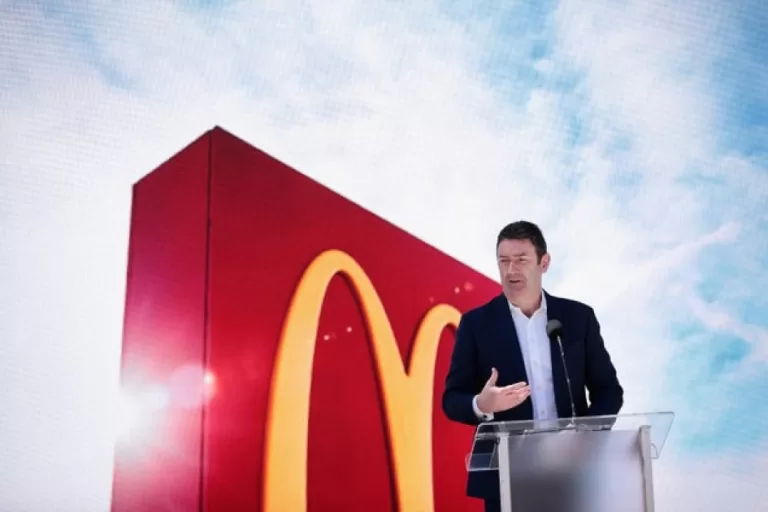
The Securities and Exchange Commission found that McDonald’s dismissal of its ex-CEO Stephen J. Easterbrook was not by the book—but only the former business executive is facing repercussions for the affair.
In 2019, McDonald’s abruptly fired Easterbrook, but key details leading to the decision were left out in the initial briefing to investors. The company ousted him for having a consensual relationship with a subordinate but did not say so in his separation agreement.
Since Eastbrook’s firing was initially deemed to be “without cause” he remained entitled to a cushy equity compensation. More than half a year after Easterbrook was ousted, an internal probe found that he had engaged in not one but a string of undisclosed, improper relationships with other McDonald’s employees. Easterbrook’s failure to disclose these additional violations of company policy—McDonald’s prohibits dating or sexual relationships between employees with a direct or indirect reporting relationship to each other—influenced the accuracy of the fast-food giant’s disclosures to investors related to his departure and severance package.
The SEC yesterday (Jan. 9) charged Easterbrook with “making false and misleading statements to investors” about the circumstances leading to his November 2019 firing. McDonald’s was also charged for holes in its public disclosures related to the termination.
Without admitting or denying the SEC’s acquisition of fraud, Easterbrook agreed to enter the SEC’s cease-and-desist order. He has to pay a $400,000 civil penalty, and he has been banned from serving in officer or director positions at any firm for five years.
McDonald’s ex-CEO broke trust and misled investors, the SEC says
“When corporate officers corrupt internal processes to manage their personal reputations or line their own pockets, they breach their fundamental duties to shareholders, who are entitled to transparency and fair dealing from executives. By allegedly concealing the extent of his misconduct during the company’s internal investigation, Easterbrook broke that trust with–and ultimately misled–shareholders.” —Gurbir S. Grewal, director of the SEC’s division of enforcement.
The money in Easterbrooks’s exit from McDonalds, by the digits
$41.8 million: Easterbrook’s severance package including six months of pay, shares he can cash out later, and other equity.
$23.8 million: Value of stock options he could exercise at the time of firing
$12.37: Average hourly pay for a McDonald’s crew worker in the US
$105 million: How much Easterbrook repaid, in cash and stock, in December 2021 to settle a lawsuit McDonald’s brought against him in August 2020, alleging he had inappropriate relationships with subordinates and covering it up.
Why is McDonald’s not being fined?
Often, in cases where executives violate its anti-fraud rules, the company is fined, too. To name a few:
✈️ Last September, the SEC levied penalties of $200 million and $1 million on Boeing and then-CEO Muilenburg, respectively, for sharing misleading information about the Boeing 737 Max which was involved in some deadly crashes;
???? In May 2022, the federal authority charged New York-based SCWorx upwards of $600,000 in penalties and disgorgement, and sought an officer and director bar against Schessel, for lying about the planned distribution of their covid-19 rapid testing kits;
???? Publicly-traded asset manager Medley Management and its former co-CEOs, Brook B. Taube and Seth B. Taube, were together told to pay a total of $10 million in April 2022 after the SEC accused them of “making misrepresentations to investors and clients that created the illusion of Medley’s likely future growth.”
In McDonald’s case, though, the key difference is that the misrepresentation wasn’t about the business itself. And for some of the incidents, it could not disclose Easterbrook’s consensual relationships with subordinates because the company itself was not aware of them. Plus, it tried to remedy the situation.
“We fired him, and then sued him upon learning that he lied about his behavior,” the company said in a statement.
Taking all this into consideration, and then the “the substantial cooperation it provided…including voluntarily providing information not otherwise required to be produced in response to the staff’s requests,” the SEC rebuked McDonald’s, but chose not to impose a financial penalty on the fast food chain.
Read More
Ananya Bhattacharya
Iran confirms 28-year jail term for Belgian on spying charges – Tasnim


Advertisement
Advertisement
Updated: Jan 10, 2023, 13:07 UTC•1min read
DUBAI (Reuters) – Iran confirmed on Tuesday the 28 year-sentence imposed on a detained Belgian national, who will also receive 74 lashes, the semi-official Tasnim news agency reported.

DUBAI (Reuters) – Iran confirmed on Tuesday the 28 year-sentence imposed on a detained Belgian national, who will also receive 74 lashes, the semi-official Tasnim news agency reported.
The Belgian was convicted of spying, cooperating with the United States against Iran and money-laundering, charges he denied.
(Reporting by Dubai Newsroom; Editing by Jon Boyle)
Don’t miss a thing! Sign up for a daily update delivered to your inbox
Sponsored Financial Content
Trade With A Regulated Broker
Read More
Reuters
Small Business Jobs Boom Reported in December

Published: Jan 9, 2023
by Lisa Price
In Small Business News
0

Small businesses had a great month in December, gaining 195,00 jobs, according to the ADP Research Center’s national employment report, calculated in conjunction with the Stanford Digital Economy Lab.
Counting businesses of all sizes (small, medium and large) there were 235,000 jobs gained nationally during December. Small businesses (195,000 gain) and medium businesses (191,000 gain) pulled up the average, while large businesses of more than 500 employees lost 151,000 jobs.
ADP Chief Economist Nela Richardson called the labor market “strong but fragmented.” She said that job gains and losses varied significantly by industry and size.
ADP Small Business Jobs Report
Small businesses with 1-19 employees gained 65,000 jobs during December. Small businesses of 20-49 employees gained 130,000 jobs.
Nationally, including businesses of all sizes, people who stayed in the same job saw a pay increase over the year of 7.3%. Job stayers in small businesses of 20-49 employees saw a pay increase of 6.9%, while those working in businesses of 1-19 employees saw a pay increase of 5.4%.
The annual pay increase is calculated based on the pay/salary amount for the same month during the preceding year. The numbers are crunched using the payroll transactions of more than 25 million workers.
Which Industries Saw the Most Growth?
Nationally, amongst businesses of all sizes, the industry with the biggest gain was Leisure and Hospitality, which gained 123,000 jobs. Leisure and Hospitality also saw the biggest annual pay increase, 10.1%.
Other industries with strong growth were:
- Professional and Business Services: 52,000 jobs
- Education and Health Services: 42,000 jobs
- Construction: 41,000 jobs
Industries which was a reduction in jobs were Trades, Transportation and Utilities, a decrease of 24,000 jobs, and Financial Activities, a decrease of 12,000 jobs.
For the latest, follow us on Google News.

Lisa Price is a freelance writer living in Barnesville, Pennsylvania. She has a B.A. in English with a minor in journalism from Shippensburg State College (Pennsylvania). She has worked as a trucking company dock supervisor, newspaper circulation district manager, radio station commercial writer, assistant manager of a veterinary pharmaceutical warehouse and newspaper reporter.
Read More
Lisa Price
Vrbo Vs Airbnb
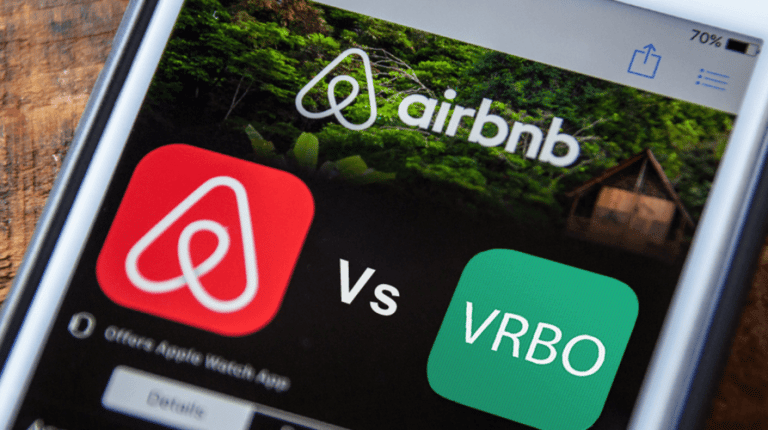
Airbnb and Vrbo have similarities and differences. Each is a vacation rental platform, listed by property owners.
Airbnb has more vacation rental listings, but that’s largely because the site includes more types of rentals. Airbnb offers stand-alone houses, dorm-style rooms, apartments, small suites and even single rooms in private homes.
Vrbo listings include rentals of stand-alone entire properties, such as houses and cabins. You rent the entire property.
Airbnb and Vrbo – which is better? Whether you’re a traveler or a property owner seeking to earn extra income, here are things you need to know about these vacation rental platforms.
Facts About Vacation Rental Online Marketplaces
Both Airbnb and Vrbo are examples of online accommodation marketplaces. With both Airbnb and Vrbo, the traveler searches the sites and arranges to book online. The traveler can chat with property managers or property hosts, with contact information included on the property vacation rental site listing page.

- READ MORE: How to Start an AirBnb Business
Here are facts that both Airbnb and Vrbo have in common:
- They offer short-term rentals and long-term rentals.
- You can find an Airbnb and Vrbo rental almost anywhere in the world. They are both popular vacation rental sites.
- Both Vrbo and Airbnb will add fees such as a cleaning fee or guest service fee, but in many cases, travelers will still beat the cost of quality hotel rooms.
- Airbnb properties and Vrbo rentals have filters that can be applied to a search. For example, travelers can search by price or pet policy. They can also search by reviews, seeking properties that have a high rating.
- The property manager or host must approve your request to book.
Airbnb vs Vrbo Vacation Rentals Types
The standard listings for Vrbo properties are stand-alone properties such as a house. Vrbo property owners may also list “special” properties such as beachfront cottages, tiny houses or rustic cabins.
Airbnb rentals also include stand-alone properties. In addition to those traditional vacation destinations, Airbnb hosts also offer “non-traditional” lodging such as private rooms within a home, with shared spaces such as kitchens. Airbnb offers may be unique, with luxury rentals such as a room in a castle or rustic choices such as a bedroom on a working farm.
Vrbo vs Airbnb for Hosts
Do you want to become a host for an Airbnb or Vrbo property and earn rental income? Your first step is to find out if “short-term rentals” are a permitted use of your property. You have to check with your local governing body.
The Airbnb service fee charged to the host is 3% of the nightly booking subtotal. Vrbo hosts don’t pay a service fee, and in general, many Vrbo fees are lower. But figuring out whether Airbnb or Vrbo rental sites offer higher or lower rates is a moving target. Here’s why:
Each has a different fee structure, and that varies by the type of property. The hosts or property owners set the cleaning fee amount. But the cleaning fee is the only fee the host sets. Hosts should be aware that a common complaint listed by hosts who provide vacation rental services is the difficulty in finding reliable cleaning services.
Vrbo and Airbnb users also pay service fees, which on average range from 14 to 20% of the nightly booking cost. The service fees are paid by guests and collected and kept by the rental site, not the vacation rental owner.
The rental site may charge higher service fees for traditional vacation destinations, such as coastal properties. Service fees may be higher for rental properties which offer unique, extra experiences, such as horseback riding or participation in farm chores (loved by city travelers).
As a host, you can set house rules. For example, some hosts set an age limit or restrict large parties. Some allow pets, but only of a certain size. And yes, you’ll earn income which must be reported to the IRS. The rental company, whether Vrbo or Airbnb, will send the property owner the accounting of the yearly income. The property owner files the information along with the tax return.
Airbnb vs Vrbo for Guests
If you’re a guest you’ll start on the home page for either Vrbo or Airbnb. Those seeking traditional vacation destinations flock to either one.
Some say Vrbo shines for the family vacation because Vrbo properties carry the promise of privacy. That’s because Vrbo offers stand-alone properties.
Some prefer an Airbnb listing and may seek shared spaces in city destinations in an effort to save costs.
It’s fun to shop each Vrbo or Airbnb property listing page, but guests need to include dates, especially for last-minute bookings. If a property is really great, it’s often booked well in advance.
Prospective guests should filter by Vrbo and Airbnb reviews. Each respective property listing will include its reviews, but you can also filter by the average review rating. For example, with the best rating being 5-star, you can filter your search by limiting it to properties with a four-star or better rating.
Vrbo vs Airbnb Fees
As stated, the fees add to the total reservation cost. On either the Vrbo or Airbnb listing page, the vacation renters can work through the booking process to find the total reservation cost.
On average, the total fee for either rental site is about 20% of the nightly booking price. The fees are set by the rental company and can vary depending on location and any unique services/activities that are associated with the property listing.
Guest Service fees alone can vary from 5 to 12% depending on the location and the property. There’s also a sliding scale that travelers can choose to cover themselves should they have to cancel the booking.
Vrbo vs Airbnb Cancellation Policies
In addition to the host-only fee for cleaning, the host can also choose the cancellation policy.
The cancellation policy may range from a rating of “strict” to “flexible”. For example, a “strict” cancellation policy may mean that the traveler won’t receive any money back unless they cancel at least 7 days before the booking begins. A “flexible” cancellation policy may mean that the host allows guests to cancel up to 48 hours before the booking begins.
The host chooses the time frame and also the percentage of the refund.
Airbnb vs Vrbo Reviews
Reviews are a useful tool for both hosts and guests. And they work both ways.
A property that is not true to its description will warrant unfavorable reviews from guests. For example, the pictures don’t reflect the actual condition of the property. In other words, the Airbnb is beautiful, but you have to drive through dilapidated junk vehicles to get there!
Or a host may gain insight due to a guest’s thoughtful review. For example, a guest may suggest a change to the property which makes it much more attractive for future travelers.
Travelers can search for a property based on its average review rating. The property owner who takes action to correct conditions that caused an unfavorable review rating can erase the negativity.
Vrbo vs Airbnb Pricing
Yes, there are a number of fees. But overall, you’ll still usually beat the cost of a stay in a quality hotel.
Both Vrbo and Airbnb hosts may offer discounts for long-term stays. For Airbnb, that discount is automatically calculated. With Vrbo, the traveler should contact the host to request such a discount.
Does Airbnb or Vrbo Offer More Property Listings?
Vrbo offers fewer rentals but that’s because the listings are limited to stand-alone properties. Vrbo presently offers more than 2 million properties in 190 countries.
Airbnb offers nearly 6 million listings in 200 countries.
Which Is Safer, Airbnb or Vrbo?
That depends on the traveler’s definition of safety. If there are COVID concerns, the traveler may opt to rent a stand-alone property rather than have a room with shared spaces (as with some Vrbo listings.). Each property should include a description of its COVID policy and adherence to cleanliness guidelines.
Travelers may opt to choose a property that includes the host being involved with check-in, rather than self-check-in. For example, if this option is available a traveler arriving after dark may prefer to have the host help with check-in.
If in doubt, look at the reviews. If a guest felt the condition of the property and/or its location were unsafe, that would be mentioned in a review.
Why Is Airbnb More Expensive Than Vrbo?
That’s a generality. There are so many variables, it’s difficult to say that one rental platform is more expensive than the other. So much depends on the location and type of property.
Should You List Your Vacation Rental Properties With Airbnb or Vrbo?
It’s time to create a list of Pros and cons for each. Here are some additional facts to help you make your decision:
Type of vacation rental property – Will you be renting a stand-alone house or cabin, or a basement apartment?
Host profiles – Both Airbnb and Vrbo offer special “higher” status to people who are great hosts. For Airbnb, those are Super Hosts; for Vrbo, those are Premier Partners. Are you willing to do the extra things to become elevated to that status? That will make your property more attractive to renters.
Both Airbnb and Vrbo listings are great ways to earn extra income. They’re a great fit for those who genuinely like people, and want to ensure that their stays are comfortable, safe, and enjoyable.
List your Pros and Cons, and make an informed decision.
Image: Depositphotos
Read More
Lisa Price
Your Ancestry Could Hold the Key to Your Business Success
Published: Jan 9, 2023
by Small Business Radio Show
In Small Business News
0
In the last few decades, many Americans have become obsessed with their ancestry; where did I come from and who was my family? This is a change from the past when traditionally children did not follow in their parents’ footsteps when it came to a career; in American, the old adage was you could be anything you wanted. But what if your ancestry held all the clues to what is holdings you back?

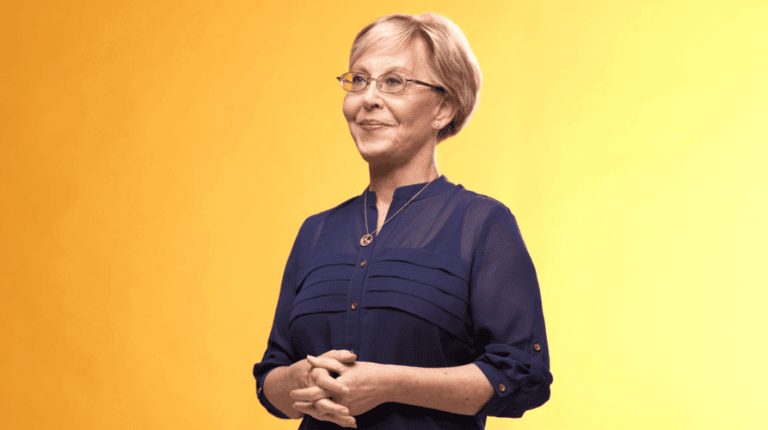
On The Small Business Radio Show this week, this is exactly what Judy Wilkins-Smith is the Founder of System Dynamics for Individuals and Organization believes. She has 18 years of expertise assisting high-performance individuals, Fortune 500 executives (Chevron, JP Morgan, Kellogg’s, ExxonMobil). She helps legacy families end limiting cycles and create lasting breakthroughs and transitions into peak performance. She is the author of “Decoding Your Emotional Blueprint: A Powerful Guide to Transformation Through Disentangling Multigenerational Patterns.”
People the world over are fascinated with their ancestry. Over 100M family trees have been built on Ancestry.com alone because, not only are we curious about where we came from, but Judy believes we know there is something important about our heritage. She discusses how our ancestry holds all the clues what prevents us from moving forward and can unlock our future potential.
Judy and I discussed:
- The scientific evidence for “Emotional DNA”, how we can research it, and what we can learn from it.
- How we can best identify the inherited family patterns that stymie your resilience and activate your ‘Figure It Out’ gene.
- The science behind Judy’s “Systemic Work”.
- The multi-sensorial power of “Constellations” to create profound embodied transformation.
- Why and how we can mindfully wire new shifts and adaptations into our minds and bodies for success.
- How we can realign with the American ‘Can-do’ Meta Pattern.
Get the latest headlines from Small Business Trends. Follow us on Google News.
Image: judywilkins-smith

As a small business expert, Barry Moltz gets owners growing again by unlocking their long forgotten potential. With decades of entrepreneurial experience in his own business ventures as well as consulting countless other entrepreneurs, Barry has discovered the formula to get stuck business owners unstuck and marching forward. As a small business expert, Barry applies simple, strategic steps to facilitate change.
Read More
Small Business Radio Show