Home Blog Page 35

Two Indian-flagged tankers fired upon in Strait of Hormuz as Iran asserts control over waterway

Two Indian-flagged vessels carrying crude oil came under gunfire in the Strait of Hormuz on Saturday as Iran declared it would control traffic through the vital waterway in retaliation for an ongoing US naval blockade.

Following the attack, the Indian Ministry of External Affairs summoned Iran’s ambassador to New Delhi. During the meeting, Indian External Affairs Minister Vikram Misri conveyed “India’s grave concern over the shooting incident that occurred earlier today and involved two vessels flying the Indian flag in the Strait of Hormuz,” according to a ministry statement.

Misri reminded the envoy that Iran had previously facilitated safe passage for ships bound for India, urging him to convey New Delhi’s views to Iranian authorities and promptly resume the facilitation process.

Three maritime security and shipping sources told Reuters that at least two merchant vessels reported being hit by gunfire while attempting to cross the strait. Britain’s maritime trade agency confirmed a tanker had come under fire from two gunboats, adding that authorities were investigating and the full extent of any damage remained unclear.

The attacks coincide with an assertion from Iran’s Supreme National Security Council that Tehran “is determined to control traffic through the Strait of Hormuz, until the war is definitively ended, and lasting peace is achieved in the region,” according to Iranian media.

The council stated that “as long as the enemy continues to impose a naval blockade, Iran will consider this a violation of the ceasefire, and will prevent the conditional and limited opening of the Strait of Hormuz.” It added that Iranian control includes the collection of fees for security, safety, and environmental protection services.

The US maritime blockade, announced by President Donald Trump after talks with Iran in Islamabad failed to produce an agreement, is currently being enforced. Central Command (CENTCOM) reported its forces have turned back 23 ships since the measures against Iranian ports and coastal areas began this week.

Speaking to reporters in the Oval Office, Trump said Washington would not allow Tehran to use the strait to put pressure on the United States, stating that Iran “cannot blackmail us.” He added that “very good talks are currently taking place with Iran” but noted they “want to close the Strait of Hormuz again,” with more information expected by the end of the day.

The geopolitical standoff has caused significant confusion among shipowners and oil traders attempting to gauge Iran’s commitment to keeping the waterway open. In a statement on Saturday morning, a spokesperson for Iran’s Revolutionary Guards (IRGC) said: “Based on previous agreements that were reached in the negotiations, the Islamic Republic of Iran agreed, in good faith, to a managed passage for a limited number of oil tankers and commercial ships through the Strait of Hormuz.”

Prior to the attacks, tracking data from MarineTraffic showed a convoy of eight vessels—including a Very Large Crude Carrier (VLCC), several product and chemical tankers, and liquefied petroleum gas (LPG) carriers—crossing Iranian waters south of Larak Island, with other tankers following from the Gulf. Shipowners, speaking on condition of anonymity due to the sensitivity of the matter, expressed hope they could leave the Gulf during a short ceasefire in the Iran war.

Read More

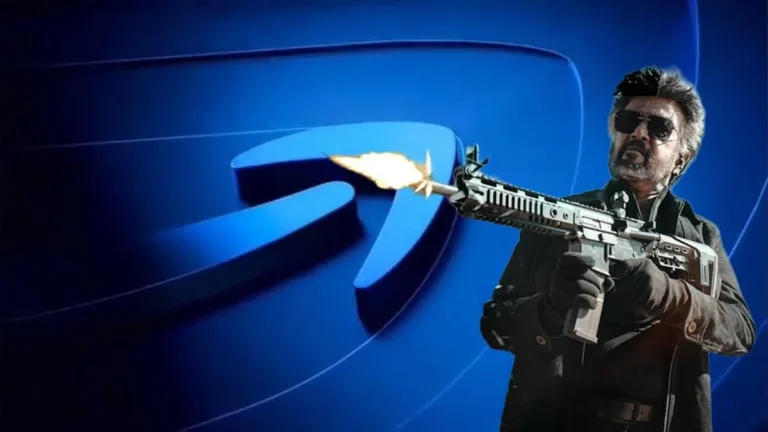
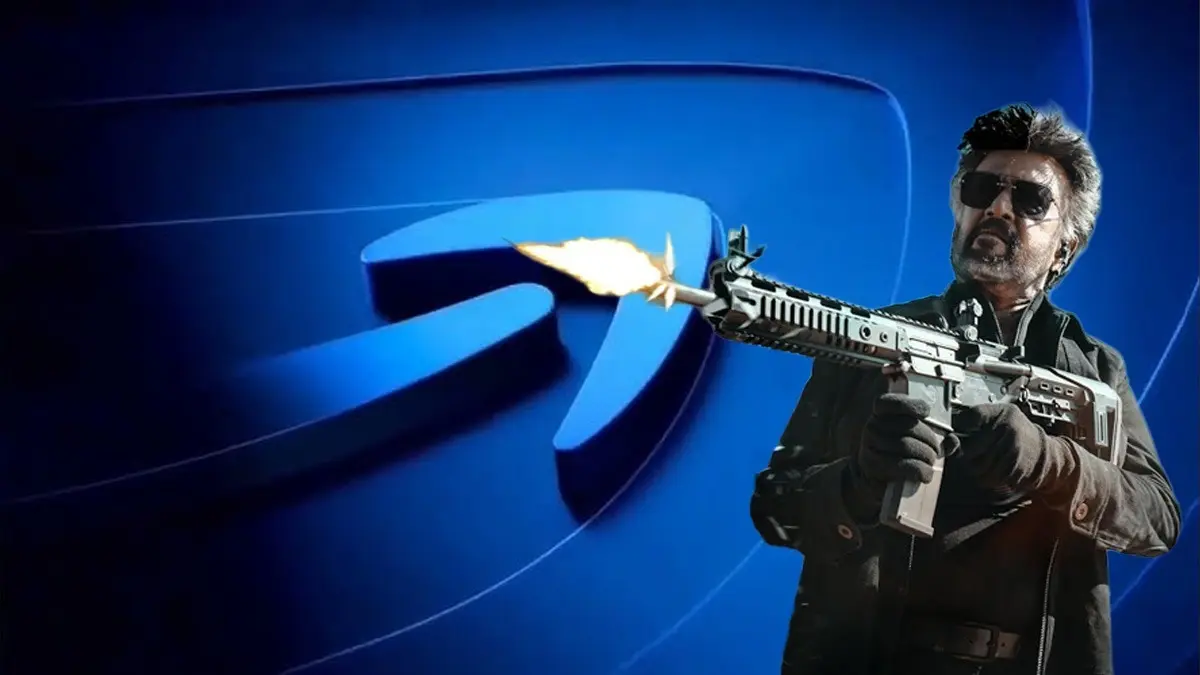
₹160 Crore For Jailer 2? Streaming Deal For Rajinikanth Starrer Sets A New Benchmark In Kollywood

Jailer 2 is expected to release over the Independence Day weekend
Jailer 2 is expected to release over the Independence Day weekend | Image:
Republic

Rajinikanth starrer Jailer 2 is shaping up to be one of the biggest Indian movies this year. The release date of the action comedy has not been shared officially by the makers, but speculation is rife that it may hit the screens over the Independence Day weekend, just like the first installment did in 2023. Director Nelson Dilipkumar has roped in what is being perceived as possibly the biggest star cast, with cameos of stars like Nandamuri Balakrishna, Vidya Balan, Mithun Chakraborty, Nora Fatehi, Vijay Sethupathi and more set to entertain fans, alongside the returning cast of Rajini, Mohanlal and Shiva Rajkumar.

A few days back, the team of Jailer 2 faced a major issue when the movie’s scenes were reportedly leaked online. Sun Pictures even warned against the circulation of the leaked footage from the movie. This followed right after Thalapathy Vijay’s Jana Nayagan, which is held up over its censor clearance, fell victim to piracy. While Jailer 2 leak has been plugged for now, the team is making sure that no such incident is repeated.

Meanwhile, several media reports claim that the team has locked its OTT partners and the deal has been cracked at a staggering amount, making Jailer 2 the highest-grossing Kollywood film for its digital rights. It is said that Prime Video has splurged ₹160 crore for acquiring the post-theatrical streaming rights of the Rajinikanth starrer. Jailer 2 has broken the record of Mani Ratnam and Kamal Haasan’s Thug Life, whose streaming rights were sold for a whopping ₹150 crore to Netflix.

Jailer 2 is expected to release over the Independence Day weekend this year | Image: X

The first installment of Jailer is streaming on Prime Video in multiple languages, and almost three years ago, its OTT rights were sold for ₹100 crore. The 60% hike in the streaming rights of the sequel rests on the promise that Jailer 2 could turn out to be the first ₹1000 crore grosser in Tamil cinema.

Read More

Caesars Agrees to Be Acquired by Fertitta Entertainment in $17.6B Deal

Entertainment

Caesars Entertainment has officially confirmed that it has agreed to be acquired by billionaire Tilman Fertitta. The deal was talked about for months and is finally becoming a reality.

In its official announcement, Caesars confirmed that it has entered into a definitive agreement to be acquired by Fertitta Entertainment in a deal valued at a staggering $17.6 billion, including the assumption of $11.9 billion of Caesars’ outstanding debt.

Per the deal, Caesars shareholders will receive $31 in cash for each outstanding Caesars share – a price representing a 49% premium over Caesars’ price as of February 25, the day before the first rumors associated with the transaction. The price also represents a 46% premium over the unaffected 30-day volume-weighted average price as of that same date.

The transaction is not subject to a financing condition and will be financed through a combination of equity contributed by Fertitta Entertainment, assumed Caesars’ debt, and new committed debt financing arranged by a group comprising 10 banks.

Caesars elaborated that the arrangement has been approved by its board of directors, although its passing is subject to the approval of Caesars shareholders. The board therefore recommended that Caesars shareholders approve the merger, saying that the cash premium is “compelling for Caesars shareholders.” The Carano family, which owns a 5% stake in the casino company, has already agreed to roll a portion of their equity interests into Fertitta Entertainment.

Once the deal closes, Caesars’ common stock will no longer be traded on NASDAQ.

As mentioned, the Fertitta acquisition of Caesars has been something that has been talked about for a while. Caesars emphasized that Fertitta Entertainment’s impressive track record in hospitality and entertainment made it a perfect fit for Caesars.

The transaction positions Caesars to continue executing on the strategy that has made it the leading casino-entertainment company in the United States. Together, Caesars and Fertitta Entertainment have a shared commitment to operational excellence, customer service, and disciplined growth, with employees and guests remaining at the heart of the business.

Caesars statement

Caesars added that most of its C-suite and management are expected to remain in place following the acquisition.

Once the two businesses are combined, guests will enjoy access to what Caesars called an “expansive suite of diversified offerings.” This will include 60 casino resorts and gaming facilities, iGaming and online betting, retail sportsbooks, online poker, more than 200 third-party William Hill locations, and over 600 Fertitta Entertainment outlets.

However, the transaction isn’t fully set in stone yet, as the deal includes a go-shop period through July 11, during which Caesars could consider third-party acquisition proposals.

Read More
Angel Hristov

At Last, Berlin’s Pergamon Museum Has A (Partial) Reopening Date


BERLIN (AP) — Berlin’s Pergamon Museum, traditionally one of the German capital’s top tourist attractions, will reopen next year after the first part of a painstaking restoration effort that has kept its centerpiece out of the public eye for more than a decade.

The Prussian Cultural Heritage Foundation, which oversees many of Berlin’s museums, announced Monday that the museum will reopen on June 4, 2027.

The museum’s centerpiece is the 2nd-century B.C. Pergamon Altar. Decorated with a marble frieze, it was built between 197 and 156 B.C. in what is now Bergama, Turkey.

The Pergamon Museum has been closed altogether since October 2023. The part of the building containing the Pergamon Altar has been closed for far longer, since 2014.

Some parts will remain closed for work even after next year’s reopening, notably the wing containing Babylon’s Ishtar Gate. The museum is slated to reopen fully in 2037.

The museum is being restored as part of a long-term plan to overhaul the neoclassical Museum Island complex, which was built between 1830 and 1930 and is a UNESCO World Heritage site.

Parts of the island were badly damaged during World War II, and cash-strapped communist East Germany never fully restored it. Work on three of the five museums has already been completed and a new entrance building for the complex, the James Simon Gallery, was opened in 2019.

AP
Read More

UWM rolls out 1-0 buydowns, expands into home equity lending

Article Summary

UWM is covering lender-paid 1-0 temporary buydowns on eligible conventional and government purchase loans via a lender credit through 06/30/2026. The lender also launched fixed-rate, fixed-term home equity loans as standalone or piggyback seconds.  AI Summary

United Wholesale Mortgage (UWM) is rolling out free 1-0 temporary rate buydowns on purchase loans alongside a new suite of home equity products aimed at helping brokers retain borrowers.

Effective immediately, the lender will cover the cost of 1-0 buydowns on both conventional and government purchase mortgages, issuing a credit to fully offset the expense. The offer—available on 8- and 30-year terms—runs through June 30. 

Under a 1-0 buydown, the borrower’s payment is calculated as if the interest rate were 1 percentage point lower in the first year. UWM’s structure gives borrowers a lower first-year payment at no additional cost to the borrower or the broker, with the lender credit covering the buydown.

Temporary buydowns have been one of the most widely used tools to manage payment shock in a high-rate environment, particularly on purchase loans. By removing the buydown cost, lenders give brokers another concession they can bring to sellers or listing agents and a way to differentiate in a market where rate competition is tight and margins are thin.

In a separate move, UWM also introduced home equity loans, offered as both standalone and piggyback second liens. The products provide a fixed rate and fixed term, funded in a single lump sum.

The loans allow debt-to-income ratios up to 50%, and range from $25,000 to $500,000. They’re available on primary residences, second homes and investment properties.

The standalone option targets homeowners looking to tap equity without disturbing a low-rate first mortgage—whether for renovations, debt consolidation or education costs.

The piggyback structure, meanwhile, can be used at purchase to avoid private mortgage insurance by keeping the first lien within conforming loan-to-value limits, or to sidestep jumbo financing by pairing a conforming first with a second lien.

Flávia Furlan Nunes reported and wrote this article with drafting assistance from HousingWire Automation, an editorial tool that helps transform announcements and industry data into HousingWire-style news coverage.

Flávia Furlan Nunes, HousingWire Automation
Read More

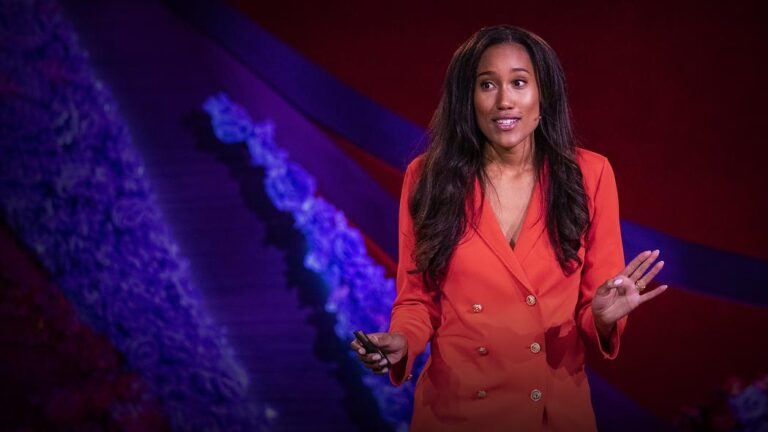
How moms shape the world | Anna Malaika Tubbs (re-release)

0

TEDWomen 2021

• December 2021

Mothers undeniably impact and shape history — but their stories are often left out or misrepresented, says sociologist and author Anna Malaika Tubbs. This erasure limits policies to support mothers and their essential roles in society. Citing the remarkable lives of Alberta King, Louise Little and Berdis Baldwin (the mothers of Martin Luther King Jr., Malcolm X and James Baldwin, respectively), Tubbs emphasizes the need to shift the perspective on motherhood at a cultural level — to better reflect the presence, power and influence of moms as our first leaders, caretakers and teachers. “Would the world be different today if we had been telling their stories all along?” she asks.

TED is supported by ads and partners

TED
Read More

Ethos lands $22.75m Series A to fix what AI broke about hiring

0

The London-based AI expert-matching platform, founded by ex-DeepMind and ex-McKinsey alumni, is being valued at the moment hiring is becoming the part of the labour market AI has most visibly degraded. Andreessen Horowitz now leads the round; General Catalyst, the seed lead, is back in.


Generative AI has, in the space of about 30 months, made it dramatically easier for someone to look qualified for a job and dramatically harder for an employer to tell whether they actually are.

The asymmetry runs in one direction: candidate-side tools have flooded the market with frictionless CVs, polished cover letters, and AI-burnished portfolios, while the recruiter-side tools that traditionally separated signal from noise, screening, interviews, references, have not improved at remotely the same pace.

The result, by mid-2026, is a hiring market in which the cheapest input has scaled fastest and the most expensive one, the recruiter’s time, has been overwhelmed.

Ethos, a London-based AI startup founded by alumni of Google DeepMind and McKinsey, has decided that this is a fundable problem. On Wednesday morning, the company announced a $22.75m Series A funding round led by Andreessen Horowitz, with participation from General Catalyst (which led the seed in 2024), XTX, and Evantic.

It is one of the larger Series A rounds for a UK AI startup this year, and the size of the cheque tells you something about how seriously a16z, in particular, is taking the labour-market dimension of AI’s commercial impact. 

What Ethos actually does

Ethos is, in plain terms, an AI-driven expert network. Where companies like GLG and Guidepoint have spent decades building human-curated rosters of consultants, retired executives, and domain specialists available for paid calls, Ethos uses AI to do the curation.

TNW’s parallel coverage of the broader expert-network landscape (in the context of Anthropic’s $1.5bn enterprise services firm) is useful here: the GLG and Guidepoint rosters have themselves now been signed up as data partners inside Claude Opus 4.7. Ethos is, on this evidence, building a counter-pattern: rather than feeding existing expert networks into AI products, it builds the expert profiles themselves with AI, then matches them to opportunities at the scale only a model-based system can manage.

The mechanism, as described on the company’s product page, is two-pronged. An Ethos voice agent conducts an extended interview with each expert, surfacing the texture of their professional knowledge in a way a static CV cannot.

Alongside that, Ethos’s AI ingests the expert’s existing portfolio of work, academic papers, code repositories, blog posts, podcast appearances, conference talks, and builds a richer understanding of what the person actually knows. The combined profile is then matched, autonomously, against opportunities flowing in from the platform’s customer base.

Those opportunities cover an unusually broad range. Per the company’s own framing, Ethos matches its experts to consulting engagements, expert calls, market research surveys, AI data-labelling projects, and full-time roles. The AI-data line is structurally important.

Frontier model labs need high-quality, domain-specific training data in fields where general-purpose web scrapes are insufficient, finance, medicine, law, advanced engineering, and Ethos has, on its launch materials, positioned itself as a route through which those labs can access verified domain experts at scale.

The traction figures in the announcement are the kind that, if accurate, justify the Series A size. The company says that more than 5,000 experts join the platform each week across accounting, banking, consulting, law, technology, and healthcare, alongside skilled tradespeople including electricians and plumbers.

The cross-collar reach (white-collar specialists alongside qualified tradespeople) is unusual for an expert network and consistent with Ethos’s broader pitch that the unit of value is verified expertise, regardless of the credentialing path that produced it.

On earnings, the average expert on Ethos earns £4,500 in additional income per month through the platform, with the top 10% making more than £7,000. Since January, the company says, the number of experts earning income through Ethos has grown six-fold.

An independent review on AItrainer.work (which evaluates AI-training-adjacent expert platforms for prospective participants) reported per-hour rates on Ethos in the range of $105 to $225, materially higher than standard AI-training pay tiers and consistent with the platform’s mid-to-senior positioning.

Whether those figures hold under scrutiny will, in the standard pattern of expert-network economics, depend on the durability of the underlying customer demand. The unit economics of paid expert calls collapse if any one of three things happens: the customer base contracts, the supply of qualified experts saturates the demand, or the AI-driven matching produces enough successful engagements to commoditise the experts themselves.

Ethos’s bet is that none of those happens fast enough to outpace its growth, and that, in the meantime, expanding the addressable customer base from PE and consultancy through to AI labs and corporate research functions creates structural runway.

The founders, and why a16z bought in

Ethos’s two co-founders bring complementary backgrounds. James Lo, the chief executive, was a strategy consultant at McKinsey and an investor at SoftBank’s Vision Fund before founding Ethos.

Daniel Mankowitz, the chief technology officer, was a research scientist at Google DeepMind, where, he spent years working on AlphaZero, DeepMind’s reinforcement-learning system that mastered chess, shogi, and go without prior human game data.

The combination, a McKinsey-and-Vision-Fund commercial brain paired with a DeepMind systems-design brain, is exactly the kind of founder pairing a16z has historically favoured for enterprise-AI bets that need both customer-development discipline and serious technical underwriting.

General Catalyst’s continued participation matters too. Jeannette zu Fürstenberg, the firm’s President and Managing Director who led the seed round, is now one of European AI’s most consistently consequential investors, with current board roles at Mistral and Helsing among others.

Her decision to follow into the Series A, rather than treat the seed as a punt, is the European-investor signal the round needed to attract Andreessen Horowitz’s lead. The transatlantic structure is now common in European AI Series As, but it does not happen automatically. The seed-stage commitment usually has to perform first.

The labour-market context

There is a wider context that explains why Ethos’s pitch landed. The labour market in 2026 is, by any objective measure, in the middle of an AI-driven structural reshape. White-collar professional roles, the historical core of LinkedIn’s product, are simultaneously the easiest to apply for (because AI tools have automated the application side) and the hardest to evaluate candidates for (because AI tools have homogenised the application side).

At the same time, the demand side has fragmented: companies that used to hire one full-time analyst now want fractional access to ten experts in different domains, and the platforms that historically served that demand have not kept up. TNW has tracked the broader European AI workforce question through the past year, and the consistent finding is that the supply side of expertise exists; the matching layer between supply and demand is what has broken.

Ethos is one of several startups now building that matching layer specifically for the AI economy. The competitive set spans an existing tier (GLG, Guidepoint, Third Bridge) that is being absorbed into AI products as data-partner integrations rather than competing with them, a new tier of AI-native challengers building the platform from scratch, and a long tail of consulting marketplaces.

Ethos’s positioning, voice-led profile capture, broad sector coverage, AI-lab customer focus, and a pricing tier well above standard AI-training rates, places it inside the second category, the AI-native challengers attempting to redefine how expertise is priced and matched.

The risks behind the round

There are, as always, real ones. The first is competitive pace. Expert-matching is a category in which scale produces self-reinforcing data: the more experts and the more matched engagements you accumulate, the better your matching model gets.

If a competitor reaches scale faster, on the same broad customer base, the network-effects argument compounds against Ethos. The £4,500 average and the six-fold January growth suggest the company is moving quickly, but expert-network economics historically reward the operator that gets to scale first and consolidates the customer relationships.

The second is voice-AI quality. Ethos’s product depends on the quality of its voice agent’s interview, and on the willingness of mid-to-senior professionals to spend an extended conversation talking to a machine.

If the experience is good, the resulting profiles are richer than any CV could be; if the experience falls short, supply-side adoption stalls. Voice AI has improved dramatically over the past 18 months, but the threshold for a credible interview at this professional tier is high.

The third is regulatory. AI-driven hiring and matching tools are now under increasing scrutiny in the UK, EU, and US, with the EU AI Act’s high-risk classifications for employment-adjacent AI systems coming into force later this year.

TNW has tracked the broader European AI sovereignty and regulatory arc; Ethos’s matching engine, if classified as a high-risk system under the Act’s employment provisions, would face documentation, audit, and explainability requirements that could materially affect product velocity. The company’s London headquarters and European customer base put it inside that regulatory envelope by default.

Tuesday’s Series A is, in some ways, the cleanest example yet of how AI is reshaping what venture capital is willing to fund inside the labour-market category. TNW’s earlier coverage of European AI investment patterns noted that General Catalyst alone committed $2bn to European AI and resilience over three years at Davos 2025; the Ethos cheque is a small but characteristic piece of that programme.

Andreessen Horowitz’s lead, on the same round, signals that a16z is not ceding the labour-market AI category to European challengers and is willing to underwrite UK-based teams at competitive valuations.

The customer trajectory will, over the next twelve months, indicate whether the bet pays. Ethos’s stated customer base, per its own materials, spans frontier AI labs, investment funds, and corporates seeking on-demand human expertise. Each of those segments is structurally short of the right experts at the right time.

If Ethos can demonstrate, in 2027 retention figures, that it consistently solves that bottleneck better than the human-curated incumbents do, the Series A valuation will, in retrospect, look modest. If it cannot, the funded experiment will at least have settled an important question: whether AI-driven expert matching, at scale, is a real category or a structurally over-funded version of an existing one.

Lo, in his own framing of the announcement, kept it concise.

“A CV is a poor proxy for what someone is truly capable of,” he said in the company’s release. “AI is reshaping the labour market faster than our tools for valuing human expertise can keep up. Ethos is built to change that.”

The Series A has now provided $22.75m of runway to test that thesis. The next twelve months will indicate whether the tools, finally, can keep up.


Ana-Maria Stanciuc
Read More

Households urged to act as fuel price shock bites

403 ERROR


Request blocked.
We can’t connect to the server for this app or website at this time. There might be too much traffic or a configuration error. Try again later, or contact the app or website owner.


If you provide content to customers through CloudFront, you can find steps to troubleshoot and help prevent this error by reviewing the CloudFront documentation.


Generated by cloudfront (CloudFront)
Request ID: qR-W7f-SYMVNxTkU_CwpFC1n6JuO952iL-aaxekxClz6nPCooWRxLg==

Boitumelo Kgobotlo
Read More

VEGF Inhibitor Implant Preserves Visual Acuity, Retinal Anatomy in Wet AMD

You don’t have permission to access “http://www.medpagetoday.com/meetingcoverage/arvo/121139” on this server.

Reference #18.70743617.1779992318.46e64301

https://errors.edgesuite.net/18.70743617.1779992318.46e64301

Raleigh Lanz
Read More

Anna Konkle of PEN15 Revisits Her Complicated Childhood In Debut Memoir, The Sane One

“When something’s awkward, I inherently find it funny,” Anna Konkle, best known for cocreating the Emmy-nominated Hulu comedy series Pen15, tells Vanity Fair. “So even in the most painful moments, there tends to be someone above me going, ‘I know that’s hurting you right now, but that’s also really fucking funny.’” That inner voice inspired her to write her debut memoir, The Sane One, a deeply personal look at Konkle’s complex dynamics with her mother Janet and father Peter, whom she refers to now as “eccentric, funny outsiders.”

The book is not about Konkle’s comedy career, but rather the familial dysfunction that may have helped cultivate it. Like other stories of fractured childhoods, including Jennette McCurdy’s I’m Glad My Mom Died and Jeannette Walls’s The Glass Castle, Konkle writes in unflinching detail about how her relationship with her parents devolved under the weight of a messy divorce and financial strain. “There’s been so much validation that I wasn’t actually the freak that I thought I was,” Konkle says of shedding any shame that comes with sharing her story. “We’re all probably a lot more freaky than we even know—at that age, and always. That’s the working thesis of my art, is to push the edge of exposing freakiness until people are like, ‘Okay, you’re alone on that. You’re on an island.’”

‘The Sane One’ by Anna Konkle

Konkle’s complicated bond with her father, whom she once believed to be her “childhood best friend,” is a focal point. During a particularly tense visit to his Florida home in her early 20s, Konkle confronts her dad about being inappropriate with her and other female friends. He denies any wrongdoing, but the fight incites a five-year estrangement between Konkle and Peter. Before his 2019 death, Konkle’s father battled prostate cancer, which spread to his lungs shortly after their reconciliation.

Konkle learned her father would be checked into hospice while on the set of PEN15, the semi-autobiographical Hulu series she cocreated and starred in with her close friend Maya Erskine, in which they both played middle-school versions of themselves surrounded by a cast of actual children. Now, with the two-season show wrapped in 2021, Konkle has unearthed another chapter of her complicated coming of age. In conversation with VF, the author shares where she stands with her mother, why she and Erskine are better friends than business partners, and how she accidentally got Meghan Markle back to acting.

Vanity Fair: How long after closing the PEN15 chapter did you consider exploring your adolescence through a book?

Anna Konkle: In the last weeks of my dad’s life—granted he was on morphine—he was like, “Write our story. The whole story.” And it hit me like, “Oh, he’s aware, even on morphine, of how impactful our journey has been on me.” There was a layeredness to my relationship with my dad that would have been simplified in film or TV form. I felt like the literary world got off the bat, but I don’t think that would have happened if I was trying to pitch it [as a show or movie.]

Did mining your childhood with PEN15 prepare you for writing the book?

PEN was helpful in that I had cocreators Sam Zvibleman and Maya Erskine going, “This show works when we are very accurately, unapologetically holding up a mirror to what the moment really was.” And it’s the most exciting to hold up a mirror to the moments you haven’t seen that often: masturbation, crying after my first kiss. That’s not in the Hilary Duff version of middle school, you know?

Image may contain Human Person Restaurant and Finger

Maya and Anna on PEN15 (played by show cocreators Maya Erskine and Anna Konkle).BY ALEX LOMBARDI/HULU.

This is the gift that I got from PEN15 because there were so many moments of me being like, “Oh my God, you too?” I did an interview the other day and afterwards an intern was like, “My dad tried to kiss my friends on the lips too.” And I was like, “Weird, what’s up with dads?”… I have realized that my work is where I get to be like an anarchist. Maybe when I’m 99 I’ll have arrived at, “Fuck all of you. Who cares?” I’m not there yet, but my art is ahead of me in that, I think.

How has your bond with Maya Erskine, whom you write about meeting in a comedy program with John Early and Rachel Bloom, changed since your daily working relationship ended?

Maya’s still one of my absolute best friends. We deeply connected, as you read in the book, during the early days of estrangement with my father. That was a time of complete unraveling for me where I wasn’t comfortable showing my undoneness that had been saved for the loud nights behind closed doors at my house. I was always told growing up, without words, you put on a happy face, do well in school, look well-adjusted. That’s the job.

That time—[Konkle pauses, her voice breaking] I don’t want to get emotional—of meeting Maya and moving to LA and having what felt like her just cradle me was… She appreciated going against the grain. She was like a teacher and a caretaker, as were a lot of other friends, like Jessy Hodges, who’s married to Beck Bennett. I lived in their house for a while. This community that surrounded me—it was the opposite of what I thought LA was supposed to be, which was fake and Rodeo Drive.

Image may contain Maya Erskine Face Happy Head Person Laughing Adult Clothing Footwear Shoe Conversation and Coat

Maya Erskine and Anna Konkle during a 2021 interview with host Seth Meyers.NBC/Getty Images

The work with Maya was coming from a need to laugh and survive that hard time. It was a very, very, creatively fulfilling, amazing time, but it was so hard and brutal. The act of being business partners…It ends up being before a best friendship because we’re working 16-hour days for years, and it’s all about work. So [now] we basically got to totally give back to the friendship. It feels like coming home in some ways. She’s part of my community first, not my business partner, if that makes sense?

Did appearing on Hacks’ final season make you miss working in episodic comedy?

There’s a total love for Paul [W. Downs] specifically—being in [your show] and showrunning, going from being in front of the camera, and then running back to the monitors to see how that scene played out. That was very much me and Maya’s experience. Lucia [Aniello] and Jen [Statsky] are incredible. I’m constantly reminded how tired I was when I see other showrunners. It was further confirmation that I want to show-run again, but in-front and behind [the camera]: no, thank you. I’m trying to focus behind the camera, at least for a couple years. Then maybe I’ll go back to insisting on playing freaks, if I’m going to play anyone.

Image may contain Face Head Person Photography Portrait Adult Happy Smile Teen Clothing Dress People and Child

Anna Konkle as final season love interest to Hacks co-creator and star Paul W. Downs.Courtesy of Warner Bros.

You are in the film Close Personal Friends, which marks Meghan Markle’s return to the screen. Did you have any interactions with her on set?

No, I filmed in London and LA with Lily Collins, Brie Larson, and Jack Quaid. My character is childhood best friends with Lily’s character, who’s getting close with Brie, who’s playing a huge movie star. My character follows the tabloids on her new best friend. We got to improv. I think they went on a yacht in the story and I’m grilling them like, “Was Meghan Markle there? Are we talking Harry?” And in the improv, they were like, “Yeah, she was there.” I totally forgot about it. Then the director Jason Orley was like, “Oh, I wanted to tell you, we asked Meghan to be in [the movie] off of that.” I heard she was nice on set!

In The Sane One, you write that, at some of your darkest moments, you contemplated self-harm and questioned the physical nature of your relationship with your father. What was important to you in sharing those vulnerable thoughts?

Subjects that I feel the greatest shame or discomfort around sharing are, for whatever reason, what I’m compelled to write about. I was first pitching that in the PEN15 writers’ room in the “Vendy Wiccany” episode in season two that I wrote. Everyone’s supportive, but it was maybe an odd place to put it. It felt like a big admission, but I don’t know how it hit.

The feeling of wanting to disappear in its simplest form, or passive suicidal ideation, according to my therapist, started when I was really young. It started with recognizing how much pain I was in at an early age. Then it gave me permission to start detailing my childhood day-to-day. And once I started to do that, it made more sense how I ended up where I did with my dad in my mid-20s. The level of pain was the gateway to detailing the memories. Why am I literally ending up in a fetal position on the floor wanting to disappear, fantasizing about self-harm, after I fell out with my mom?

Putting the puzzle pieces together of how things atrophied with my dad, I realized it was in conjunction with my sexual relationship with men in general. I’m having my sexual awakening/realizing there were a ton of ways I did not feel comfortable sexually, but thought I would. There’s discomfort with being around my father physically, and realizing there was synergy to those two things.

Then I’m in the car with my dad and his hand on my thigh feels different than before. There’s physical boundaries with my dad that I started to realize I needed and didn’t feel comfortable asking for. Or when I didn’t feel as respected as I wanted to be in conjunction with feeling like my body wasn’t respected as I was experimenting with sexuality for the first time with guys. It was not where I intended to go when I pitched the book. Some stories knock at me, like, “Tell this story.” It felt integral to tell the full story of this murky time in my life, and so it had to be in.

Image may contain Fashion Adult Person Clothing Dress Blonde Hair Formal Wear Evening Dress Face and Head

Anna Konkle at the premiere of the Apple TV series Murderbot, on which she starred in 2025.Kristina Bumphrey/Getty Images

What has it been like to share the book with your mother?

My mom has been nervous since I pitched it four years ago. But she has been incredibly supportive. I’ve had many deep conversations along the way of, “I just want you to know this is the scene or chapter that I’m writing.” There’s a deep breath on the other side of the phone, sometimes an apology, and gathering herself back up, going, “It’s your art and I’m proud of you and I’m sorry.” What more could I ask for? It’s probably why we’re quite close now. I do feel bad that I’m dredging up difficult memories when she’s worked really hard to move forward and grow. But the fact that she’s not fighting against me writing all this and releasing it, tells me that there’s real accountability. And there’s been a lot for me to take accountability about as well.

You write: “No matter how many times you try to kill it, self-doubt will always find a safe home inside the making of art.” How did you keep self-doubt at bay while writing the book?

Some people are probably really not going to like this. I obviously hope there’s more people that really like it. But if a couple people who felt the level of leperness that I felt after Florida with my dad, or are going through that dark period like when I first moved to LA, or are even younger, their parents fighting and they feel alone, if [the book] does for somebody else what so many artists have done for me, telling their story and being honest about low points in their life, then it’s totally worth it. You just have to write assuming that’s going to happen.

This interview has been edited and condensed for clarity.

  • Spencer Pratt Really Thinks He Can Be the Next Mayor of Los Angeles

  • The Wild, Strange Case Todd Blanche Can’t Seem to Escape

  • Miles Davis’s Complicated Legacy as Artist—and Abuser

  • Carlos Alcaraz on “Living the Dream Life” and His Rivalry With Jannik Sinner

Savannah Walsh
Read More