iFani Pens Heartfelt Tribute to Late Friend Bravo Le Roux: “Gone But Never Forgotten”
iFani Drops “Shake [Remix]” Music Video On TV And YouTube. South African hip hop artist iFani celebrates a vibrant comeback as the music video for his “Shake [Remix]” lights up television screens and lands on YouTube.
iFani Drops “Shake [Remix]” Music Video On TV And YouTube
The track revives his 2012 hit “Shake” with fresh energy from featured artists Sosoboy Fosho, Gaffi, Khitha Pinca, and Musa. Produced under a new deal with Asanda Empire, the remix captures the same infectious groove that made the original a dance floor staple more than a decade ago. TikTok users recently breathed new life into the classic, sparking renewed interest across social platforms and paving the way for this updated version.
iFani expressed heartfelt gratitude to fans for welcoming him back into the spotlight. “Thank you for having me back,” he shared alongside the announcement. The video, which builds directly on the spirit of the original, earned an early television boost with airplay on Trace Ngoma and Channel O before its full YouTube rollout.
Viewers can stream the official music video here: https://youtu.be/Q_gcUy8Fp0g. This release marks a promising return for the rapper, blending nostalgia with contemporary flair and reminding audiences why “Shake” remains a timeless party anthem in South African music. Fans have already begun sharing their excitement, hailing the track as a perfect fusion of old-school charm and modern collaboration.
Bad reviews be damned, Lionsgate’s Michael Jackson biopic “Michael” is doing very big business at the box-office.
Domestic previews for the film pulled in around $13 million on Thursday night – easily the best preview numbers ever for a musical biopic, and the best for Lionsgate since the last “The Hunger Games” a decade ago.
That’s also about the same preview numbers as “Project Hail Mary,” which went on to an $81 million opening domestically.
Also helping is that the film is a smash hit with audiences, landing a 96% on Rotten Tomatoes, which easily slams the film’s 40% critical score.
Meanwhile, the film’s international release has begun rolling out in 82 markets starting on Wednesday, with an $18.5 million first day in those markets.
Earlier this week, projections had the film opening to $150 million worldwide, with $65-70 million of that coming from domestic.
“We Got A Few In The Vault”: Ginger Trill Boasts About Unreleased Music With Touchline. SA Hip hop’s conversation has been set alight after Ginger Trill shared a confident and highly charged message about his creative partnership with Touchline, hinting at unreleased music while placing his collaborator at the very top of the current rap hierarchy.
“We Got A Few In The Vault”: Ginger Trill Boasts About Unreleased Music With Touchline
“Me and Touchline got a few in the vault, and honestly, I don’t know if anybody is rapping at a higher level right now! Yessis that boy is good,” Ginger Trill posted, delivering a statement that quickly caught fire across timelines. The tone was unmistakable, blending admiration with the kind of streetwise slang that signals genuine respect among peers.
Me and Touchline got a few in the vault and honestly, i don’t know if anybody is rapping at a higher level right now! Yessis that boy good 🥵🔥🔥🔥
The timing of the claim adds even more weight. The duo’s 2023 joint project Boyzen Da Hood was widely embraced by fans, powered by standout cuts such as “We Up,” “Tell A Friend,” and “Amen” featuring Mandy ZA. Their musical chemistry has become one of the most talked-about dynamics in local rap, with Ginger Trill’s unpredictable, razor-sharp lyricism colliding seamlessly with Touchline’s reflective and expansive delivery.
Speculation is now building around what exactly sits in that “vault.” Listeners are questioning whether the stash includes a handful of loose tracks or something more substantial, like a full follow-up project. Given the pair’s track record, expectations are already running high.
Touchline has steadily earned a reputation for consistency and thoughtful storytelling, while Ginger Trill continues to stand out for his technical aggression and playful unpredictability. Together, they offer a blend of narrative depth, flair, and kasi authenticity that resonates locally while holding global appeal.
No official release dates have been announced, but the message is clear. The collaboration is far from over, and more music is on the way. At a time when many artists focus on solo runs, their continued partnership is emerging as one of the most compelling alliances in the game.
Antoine Fuqua’s Michael is a surface-level replay of the iconic King of Pop’s life. Audiences get toe-tapping entertainment value and an impressive impersonation by nephew Jaafar Jackson at the expense of virtually any investigation into the mind and motivations of the eponymous star.
Antoine Fuqua-directed biopic puts theatrics above investigation in replay of King of Pop’s life
The audio version of this article is generated by AI-based technology. Mispronunciations can occur. We are working with our partners to continually review and improve the results.
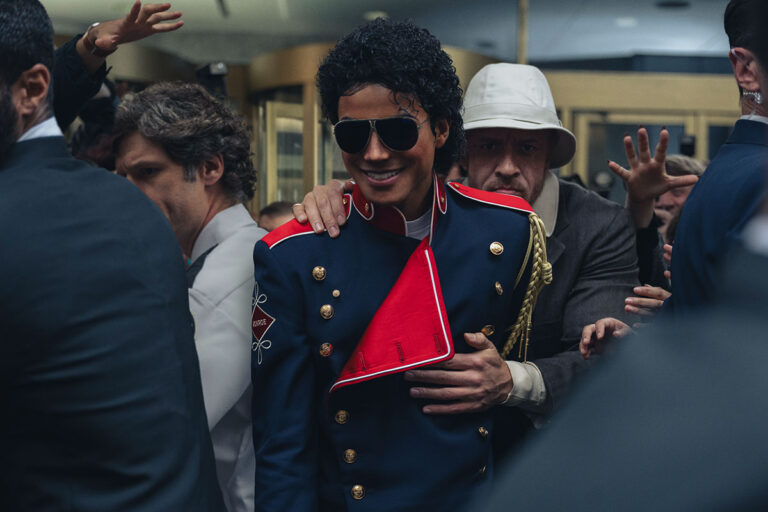
Jaafar Jackson, centre, appears as Michael Jackson in Michael. As with many authorized biopics, you’re more likely to encounter brand management than incisive and honest character examinations in Antoine Fuqua’s take on the King of Pop. (Glen Wilson/Lionsgate)
Where did Michael Jackson’s high-pitched, whispery speaking voice come from? Did he ever struggle with the massive weight of near-universal fame? How significantly, or even consciously, did he mourn a childhood stolen from him?
Also: did Janet Jackson actually exist?
If you’d like to learn all this and more … well, don’t bother watching Antoine Fuqua’s new biopic/hagiography, Michael. Because, instead of engaging with the fraught backstory of one of the most famous men to ever live, audiences get toe-tapping entertainment value and an impressive impersonation by nephew Jaafar Jackson at the expense of virtually any investigation into the mind and motivations of its eponymous star.
You could blame legal issues for the surface-level replay of the iconic King of Pop’s life: While an initial, longer cut of the film both started and ended with allegations of sexual abuse from a 13-year-old boy, the fine print of a settlement between the Jackson family and the young accuser barred his depiction in film.
Late-stage reshoots focused solely on MJ’s rise as an eight-year-old wunderkind to the heights of his fame decades later, with an ending situated years before any serious allegations surfaced.
WATCH | Michael biopic trailer:
Other historically important figures, such Kat Graham’s portrayal of Diana Ross, were similarly cut for legal reasons. The reshoots reformed what Fuqua initially intended to operate as an explicit exoneration of MJ into something less directly controversial, if now completely thematically inert.
The complete and bizarre omission of Michael’s sister Janet, meanwhile, was reportedly at her own request — a rejection that may prove to be a smart artistic and reputational decision.
Because in place of introspection, Michael occasionally brushes past themes sure to raise eyebrows, only to obstinately refuse to explore them. With these obvious and intentional omissions, Fuqua’s Michael plays all the hits and none of the duds of MJ’s career and life.
By the time the sequel-teasing credits roll, it almost feels as if this was by design. As if all those triumphs were spliced together to prove Leaving Neverland director Dan Reed’s take on why audiences are not bothered by the allegations of child sexual assault that his documentary so uncomfortably levied.
Because, he argued, MJ won the PR campaign. He says “people just don’t care” and would much rather do the Thriller dance than think about the complicated and potentially legend-shattering complications of an actual human being.
Jaafar Jackson appears as Michael Jackson alongside Michael director Antoine Fuqua. (Glen Wilson/Lionsgate)
Though to be fair, Michael Jackson was acquitted on all criminal charges of sexual assault. His estate has consistently and vociferously denied any allegations of impropriety — calling Reed’s film “a complete fiction” that was “completely one-sided.”
But to be even more fair, this filmic response is, at best, completely one-sided in the other direction. Nearly every character is boiled down to either a one-dimensional saint, the equivalent of jokey name-drop (including an awkwardly offhand origin story for LaToya Jackson’s seeming fascination with snakes) or simply excluded to please everyone’s agents.
Not that Michael is uniquely unoriginal; instead, it does what the music biopic is increasingly designed to do. That is, turn their heroes into Jesus.
It’s a failing seen in Bob Marley: One Love, Springsteen: Deliver Me From Nowhere, partially defied in Bob Dylan biopic A Complete Unknown but now back in Michael. That in the unfortunately audience-appetizing world of “authorized” biographies, you’re more likely to encounter brand-management than incisive and honest character examinations.
This one relies on the narrative of a pure-hearted, unflaggingly self-sacrificing genius — nearly killing himself in trying to soothe a damaged world through the gift of his divine talents. Michael visits more sick children in hospitals than we can count. Childhood Michael (played with incredible proficiency by Arco‘s Juliano Krue Valdi) croons I’ll Be There to a crying young girl in a wheelchair — whose appreciative, tear-stained face comes to fill the whole frame in a way that feels crassly heavy-handed.
In this telling, warring factions of Crips and Bloods are united in affectionate togetherness solely through the dulcet tones and awesome choreography of Beat It.
These are, to be clear, more-or-less factual events. But they perhaps happened a little less happy-go-luckily than Fuqua’s vision (according to music video director Bob Giraldi, the Beat It shoot specifically nearly devolved into a crime scene).
Other memorable life events are either nowhere to be found, or are touched on so glancingly they require an encyclopedic Jackson knowledge to pick up on — like the supposedly sustained jealousy and rivalry between Michael and brother Jermaine, or their mother’s multiple attempted divorce proceedings due to husband Joe Jackson’s infidelity.
Colman Domingo appears as Joe Jackson in Michael. (Glen Wilson/Lionsgate)
Music Unanswered questions
Some questions are hinted at, then dropped to shoehorn in yet another song. Will Fuqua suggest young MJ was so disinclined to meet his father’s eyeline because he was on the autism spectrum? Did he affect his high-pitched speaking voice in a deliberate attempt to bolster his fame through fabricated mystique?
And, of course, there’s the dearth of any examination (or even attempted refutation) of Michael’s attitudes and behaviour toward children and childhood, despite children — and the repeated motif of Peter Pan and Neverland — popping up so often it can’t help but feel intentional.
But why bother making an MJ movie uninterested in crafting actual multi-dimensional characters — save for Colman Domingo’s fascinatingly evil (and safer to vilify) patriarch, Joe Jackson?
If you were to ask James Baldwin in 1985, there is a cultural reason to push back on “Wacko Jackson” characterizations. A recognition that Black people — and the gender-nonconforming — have historically been seen as so antithetical to the American ideal, that a reckoning on the most successful artist of all time (who also happened to be Black) necessarily becomes “not about Jackson at all.”
Instead, it becomes a referendum on whether Black people deserve to be thought of as humans.
Juliano Krue Valdi, third from right, appears as a young Michael Jackson in Michael. Other performers, from left, are Judah Edwards as Young Tito, Jaylen Hunter as Young Marlon, Nathaniel McIntyre as Young Jackie and Jayden Harville as Young Jermaine. (Lionsgate)
“All that noise is about America, as the dishonest custodian of Black life and wealth; the Blacks, especially males, in America; and the burning, buried American guilt,” he wrote in an essay before serious allegations of sexual abuse were raised.
“Freaks are called freaks and are treated as they are treated — in the main, abominably — because they are human beings who cause to echo, deep within us, our most profound terrors and desires.”
So maybe, Fuqua’s Michael maintaining what Paris Jackson described as the “fantasy” of her father’s life, is in some ways performing a larger service. But when dealing with a star as multi-faceted and complex as MJ, says Globe and Mail critic Sarah-Tai Black, offering up nothing more than shallow fan service perpetuates a continuing defensiveness at odds with true art.
“The Black community — a lot of the time, we like to protect men in power,” Black said, pointing to the anti-Blackness Michael faced throughout his career — but also Fuqua’s complete refusal to even investigate any negative aspects of his character.
“Storytellers have a responsibility to audiences … to try to grapple with difficult things. To not just give us stories and neat, tidy packages that really conveniently gloss over histories of alleged harm and violence and abuse.”
Music ABOUT THE AUTHOR
Jackson Weaver is a reporter and film critic for CBC’s entertainment news team in Toronto. You can reach him at ja************@*bc.ca.
South African singer-songwriter and performer, UVemvane Oluncane, debuts a captivating new track titled “IPlan“.
This latest release from UVemvane Oluncane is a must-have addition to your music collection. “IPlan” showcases the artist’s unique style and talent, making it a standout single for the year 2026.
With its infectious melody and heartfelt lyrics, “IPlan” is sure to resonate with listeners of all backgrounds. The song’s production is top-notch, highlighting UVemvane Oluncane‘s vocal prowess and storytelling ability.
For fans of soulful and authentic music, “IPlan” is a track that you won’t want to miss. Be sure to give it a listen and add it to your favorite playlist today.
To stay updated on UVemvane Oluncane‘s music and upcoming releases, be sure to follow them on social media and streaming platforms. This talented artist continues to make waves in the music industry with their soulful sound and meaningful lyrics.
Don’t miss out on the opportunity to discover the magic of UVemvane Oluncane and their latest single, “IPlan”. Listen and download below.
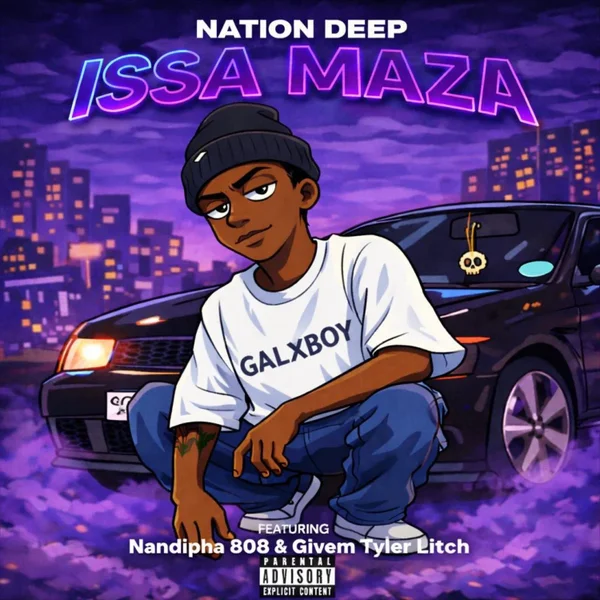
South African songwriter and talented artist, Nation Deep, presents his latest single titled “Issa Maza“.
The track “Issa Maza” is a captivating piece of music that is sure to captivate listeners with its infectious beats and catchy lyrics. It showcases Nation Deep‘s unique style and musical prowess, solidifying his position as a rising star in the South African music scene.
Adding to the allure of the song are the stellar contributions from Award-winning artists, Nandipha808, Givem Tyler Litch and CAAZA, who deliver impressive verses that complement Nation Deep‘s vocals perfectly.
Listeners are in for a treat with this collaboration, as each artist brings their own flair to the table, creating a dynamic and engaging listening experience. “Issa Maza” is a must-have addition to any music lover’s playlist, guaranteed to have you hitting the repeat button.
Don’t miss out on this incredible track – be sure to give it a listen and download below to immerse yourself in the musical world crafted by Nation Deep and his talented collaborators.
About the artist: Nation Deep is a versatile musician hailing from South Africa, known for his ability to blend various genres seamlessly to create a unique sound that resonates with audiences worldwide. With a growing fan base and a string of successful releases under his belt, Nation Deep continues to make waves in the music industry, solidifying his status as a promising talent to watch.
“Curriculum Design for Today’s Online Instrumental Music Educator,” a new book by Dr. D. Franklin Price, has been released by Dorrance Publishing Co., Inc.
“Curriculum Design for Today’s Online Instrumental Music Educator” by Dr. D. Franklin Price is a timely and essential guide for musicians and educators navigating the digital frontier. As the demand for remote learning continues to skyrocket, Dr. Price provides a comprehensive roadmap for transforming traditional instrumental instruction into a sustainable, high-impact online experience.
Using the Technological Pedagogical Content Knowledge (TPACK) framework, the book explores the vital intersection of musical expertise, teaching methodology, and digital innovation. Dr. Price delves into the evolution of distance learning, from 18th-century correspondence courses to today’s streaming era, and identifies the specific tools and strategies online educators use to foster student success.
Bridging the gap between timeless musical fundamentals and cutting-edge technology, Dr. Price’s work is an indispensable resource for anyone committed to the future of music education in a globalized, connected world.
Emtee Issues Heartfelt Apology for Missing Kota Festival Performance
Emtee Claims Dominance As Metro Awards Nomination Renews Spotlight. Emtee has reignited conversation around his place in the country’s hip-hop hierarchy after celebrating yet another Metro FM Music Awards nomination with a bold and unapologetic statement.
Emtee Claims Dominance As Metro Awards Nomination Renews Spotlight
Taking to social media, the award-winning rapper asserted his dominance in the industry, pointing to a consistent track record of success that he believes sets him apart from his peers. “Nominated at the metros AGAIN. No project of mine hasn’t won an award. I don’t even see fonem on line ups, nominated, setting trends and being a big homie to those coming after us. Mane stop playing with me,” he wrote, underlining a career he views as both decorated and unmatched.
Nominated at the metros AGAIN. No project of mine hasn’t won an award. I don’t even see fonem on line ups, nominated, setting trends and being a big homie to those coming after us. Mane stop playing with me.
The statement did not stop at celebration. Emtee used the moment to draw a sharp comparison between himself and other artists, suggesting that many of his contemporaries are absent from key industry spaces. He added that he rarely sees “fonem” featured on major line-ups, earning nominations, or influencing the culture at the level he claims to operate.
Beyond the competitive tone, Emtee also positioned himself as a mentor figure within South African hip-hop. Referring to himself as a “big homie,” he highlighted his role in guiding and inspiring the next generation of artists entering the scene. The comment reflects a dual narrative often present in his public persona: both a chart-topping artist and a seasoned figure intent on shaping the future of the genre.
Emtee’s remarks arrive just ahead of the Metro FM Music Awards ceremony, set to take place tomorrow at the Durban International Convention Centre. As anticipation builds, his comments are likely to intensify debates about who truly leads the culture and what metrics define greatness in today’s music industry.
This year, Emtee’s nomination comes from his featured appearance on Abazazi Bafunani, a track by Big Zulu that has gained significant traction across the local music scene. The recognition adds another milestone to a catalogue that continues to secure industry acknowledgement.
Photo Credit: Michael Tilson Thomas (michaeltilsonthomas.com)
Music Michael Tilson Thomas, a longtime conductor of the San Francisco Symphony, as well as a storied composer and pianist, has passed away. He was 81.
Michael Tilson Thomas, a conductor, composer, and pianist who spent 25 years as music director of the San Francisco Symphony, passed away on Wednesday at his San Francisco home. He died of glioblastoma, an aggressive form of brain cancer, his publicist confirmed. He was 81.
“It is with deep sadness that we let you know of Michael Tilson Thomas’ passing on April 22, 2026,” began a statement on his website. “Through his illness, he continued to make music—a testament to his legacy as an artist and communicator. He was preceded in death by his husband, Joshua Robison, and passed away at home surrounded by loved ones and family. Joshua and Michael are survived by their sisters, nieces, and nephews.”
In the summer of 2021, Thomas announced that he had undergone surgery for a brain tumor. In March 2022, he announced that he had been diagnosed with glioblastoma.
He was forced to cancel some scheduled performances as a result, but he led a number of concerts in San Francisco, Los Angeles, London, and more, over the past three years. In September 2024, he opened the New York Philharmonic’s season with a celebrated account of Mahler’s Fifth Symphony. He also began teaching at the San Francisco Conservatory of Music.
Last February, he announced that his tumor had returned and he conducted his last performance in April 2025 that coincided with a belated celebration of his 80th birthday in San Francisco.
Thomas served as music director at the San Francisco Symphony from 1995 to 2020 and was by far the orchestra’s longest-serving music director. He won 12 Grammy awards, and the San Francisco Symphony achieved new levels of technical acumen.
Thomas studied at the University of Southern California with composer Ingolf Dahl, and it was there that he took up conducting. He worked with Igor Stravinsky and other major composers during this time. In addition to Stravinsky, Aaron Copland and Leonard Bernstein became friends and mentors to Thomas when he was in his 20s.
In the 1970s, while living in New York, Thomas was contacted by his childhood friend Robison via his sister, noted flutist Paula Robison. By 1976, Thomas and Robison had become life partners, while Robison was also Thomas’ business partner and manager. The couple married in 2014.
Robison passed away on February 22, 2026, after having suffered a spinal cord injury last August. The two were partners for nearly 50 years.
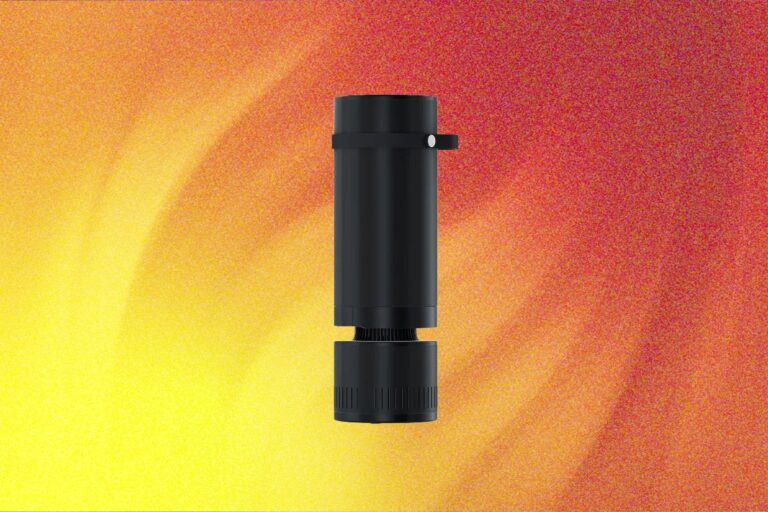
But once you’ve set up your device, Heatbit will track and file your mining revenue to your phone, even if you don’t yet have a bitcoin wallet set up. After you reach the transfer minimum of 100,000 satoshis, or one thousandth of one bitcoin ($66 at April 2026 prices), you can transfer this to your wallet and, presumably, spend it. Heatbit’s app is compatible with the Lightning networks and most major exchanges (Coinbase, Binance, OKX, BitFinex).
Unlike many air purifiers that activate only when there are air quality issues, the Heatbit continually pushes air through its HEPA filter while the miner and heater are active. While Heatbit recommends filter replacement once every six months, in practice, the app showed that the filter was being used up by about 1 percent a day. For whatever reason, my Heatbit app refused to believe that I was not in Seattle, and so my exterior air quality readings were all tied to King County, Washington.
Early quirks aside, the ease of onramp is admirable for a device not aimed at crypto-loving engineers. At current prices, if I run my heater/miner nonstop, this would net me about a $70 to $100 rebate on my heating bills once every two months. Pretty cool, right?
Bitcoins Why the Math on Heatbit Doesn’t Pencil
Heatbit via Matthew Korfhage
But here’s the problem with that math. I’d also need to pay at least $1,500 upfront (the current discounted price of the Maxi Pro) before I get access to these savings. This is about $1,350 more than the best space heaters I’ve tested. It’s also around $900 or $1,000 more than a combination purifier–heater from Dyson. So your money-saving math needs to take this upfront cost into account.
At this rate, assuming my energy costs and bitcoin prices stayed constant, it would take me between five and eight years to “make my money back” in bitcoin if I ran this thing 24/7 for four months a year. That’s on a device with a one-year warranty. (Heatbit’s founders say there has been a failure rate only in the “low single digits” after three years for the first-generation Heatbit Trio.)
These numbers assume I would otherwise run a space heater nonstop at full blast for months on end as a primary heat source—which is not how most people use space heaters. I tend to turn on a space heater only when I’m in a room, and direct it toward myself. For heating a whole house, natural gas or a heat pump are both far more cost-effective options, if available.
But let’s say you have only electricity for heat. And you would always be running a space heater. And let’s assume the Heatbit keeps running at the same efficiency for at least five years. Is the Heatbit now the best choice, economically? Well, still maybe not.
Bitcoins Every Crypto Miner Is a Heater
Every crypto mining device will heat your house, whether or not its makers advertise it as a space heater. Each miner will release heat with 100 percent efficiency, according to how much power it uses. That’s because one way or another, all power waste will eventually get converted to heat.
The most efficient combination space heater and bitcoin miner will always be the one that mines bitcoin most efficiently. At that point, you could just pick up a Canaan Avalon Q ($1,900) and get a 50 percent better hash rate and produce about the same amount of heat. Newfangled ASIC Application-Specific Integrated Circuit) miners might net you even better efficiency. Pretty much anything you use, with the same amount of power, will release this much heat.

![iFani Drops “Shake [Remix]” Music Video On TV And YouTube](https://newsycanuse.com/wp-content/uploads/2026/05/908966-ifani-drops-shake-remix-music-video-on-tv-and-youtube.png "iFani Drops “Shake [Remix]” Music Video On TV And YouTube")