
Sugar-Free Isn’t Risk-Free: How Aspartame Triggers Insulin Spikes and Heart Risks

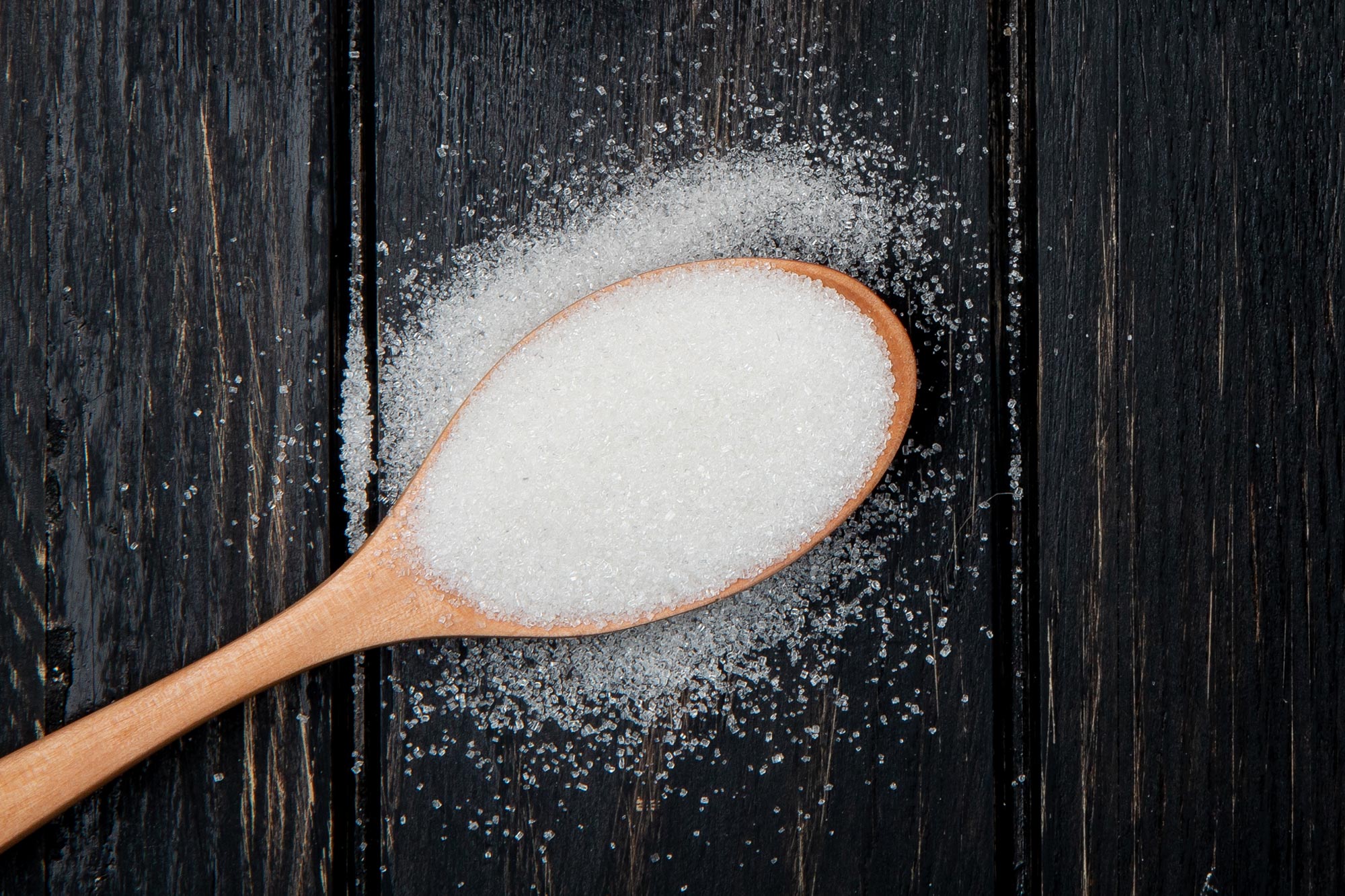
Sugar Sweetener Wooden Spoon
Artificial sweeteners might not be the guilt-free indulgence we think they are. Researchers found that aspartame causes insulin spikes, leading to fatty plaque buildup in arteries and increasing the risk of heart disease.

Artificial sweeteners are everywhere, marketed as a healthier alternative to sugar, but new research suggests they may not be so harmless.

A team of scientists discovered that aspartame, a common sugar substitute, triggers an Mice Artery Plaque After Sweetener

Aspartame-fed mice (right) developed larger and more plaques (red) in their arteries (pink) compared to mice that never consumed the sweetener. Credit: Wu et al., Cell Metabolism

Testing Aspartame’s Effects on Cardiovascular Health

For this study, the researchers fed mice daily doses of food containing 0.15% aspartame for 12 weeks—an amount that corresponds to consuming about three cans of diet soda each day for humans. Compared to mice without a sweetener-infused diet, aspartame-fed mice developed larger and more fatty plaques in their arteries and exhibited higher levels of inflammation, both of which are hallmarks of compromised cardiovascular health.

When the team analyzed the mice’s blood, they found a surge in insulin levels after aspartame entered their system. The team noted that this wasn’t a surprising result, given that our mouths, intestines, and other tissues are lined with sweetness-detecting receptors that help guide insulin release. But aspartame, 200 times sweeter than sugar, seemed to trick the receptors into releasing more insulin.

Damaged Mice Muscle After Sweetener
Compared to mice that never consumed the sweetener (left), aspartame-fed mice (right) showed damaged smooth muscle (red) and an increased presence of immune cells (green) in their arteries, indicating early signs of cardiovascular trouble. Credit: Wu et al., Cell Metabolism

The Role of CX3CL1 in Arterial Inflammation

The researchers then demonstrated that the mice’s elevated insulin levels fueled the growth of fatty plaques in the mice’s arteries, suggesting that insulin may be the key link between aspartame and cardiovascular health. Next, they investigated how exactly elevated insulin levels lead to arterial plaque buildup and identified an immune signal called CX3CL1 that is especially active under insulin stimulation.

“Because blood flow through the artery is strong and robust, most chemicals would be quickly washed away as the heart pumps,” says Cao. “Surprisingly, not CX3CL1. It stays glued to the surface of the inner lining of blood vessels. There, it acts like a bait, catching immune cells as they pass by.”

Blocking CX3CL1 to Prevent Harmful Effects

Many of these trapped immune cells are known to stoke blood vessel inflammation. However, when researchers eliminated CX3CL1 receptors from one of the immune cells in aspartame-fed mice, the harmful plaque buildup didn’t occur. These results point to CX3CL1’s role in aspartame’s effects on the arteries, says Cao.

Looking ahead, Cao and his team plan to verify their findings in humans. Cao also foresees CX3CL1 as a potential target for chronic conditions beyond cardiovascular disease, given that blood vessel inflammation is involved in stroke, arthritis, and diabetes.

“Artificial sweeteners have penetrated almost all kinds of food, so we have to know the long-term health impact,” says Cao.

Reference: “Sweetener aspartame aggravates atherosclerosis through insulin-triggered inflammation” by Weijie Wu, Wenhai Sui, Sizhe Chen, Ziheng Guo, Xu Jing, Xiaolu Wang, Qun Wang, Xinshuang Yu, Wenjing Xiong, Jiansong Ji, Libo Yang, Yuan Zhang, Wenjing Jiang, Guohua Yu, Shuzhen Liu, Wei Tao, Chen Zhao, Yun Zhang, Yuguo Chen, Cheng Zhang and Yihai Cao, 19 February 2025, Cell Metabolism.
DOI: 10.1016/j.cmet.2025.01.006

This work was supported by funding from the Swedish Cancer Foundation, the Strategic Research Areas–Stem Cell and Regenerative Medicine Foundation, the Karolinska Institute Foundation, the NOVO Nordisk Foundation, the Swedish Research Council, the Swedish Research Council, the National Natural Science Foundation of China, the Hong Kong Centre for Cerebro-Cardiovascular Health Engineering, the Horizon Europe grant-PERSEUS, Key R&D Program of Shandong Province, the National Natural Science Foundation of China, and State Key R&D Program of China.

Cell Press
Read More

Latest

Philippines SEC Signals Readiness for Real-World Asset Tokenization

You are here: Home / Cryptocurrency News / Philippines SEC Signals Readiness for Real-World Asset Tokenization The Philippines SEC has signalled the readiness of the country to tokenize its real-world assets (RWAs), with more and more trust being invested in the blockchain-powered financial tools. As per the opinion of the regulator, all the legal frameworks

FIFA president Infantino brushes off World Cup criticism as crypto ambitions linger in the background

Giovanni Infantino has never been accused of lacking confidence. At press conferences held between June 10-14, the FIFA president addressed a growing list of complaints about the 2026 World Cup by telling critics to “chill and relax.” The tournament, he insisted, would be a success. The critics have material to work with. Ticket prices for

Morocco’s World Cup win over Scotland sparks crypto prediction market frenzy

Morocco’s 1-0 victory over Scotland on June 19 wasn’t just a statement win for the Atlas Lions. It was also one of the most heavily traded sporting events in crypto prediction market history, with volumes exceeding $2 billion around the Group C opener alone. Ismael Saibari scored just 71 seconds into the match at Boston

Newsletter

Don't miss

Philippines SEC Signals Readiness for Real-World Asset Tokenization

You are here: Home / Cryptocurrency News / Philippines SEC Signals Readiness for Real-World Asset Tokenization The Philippines SEC has signalled the readiness of the country to tokenize its real-world assets (RWAs), with more and more trust being invested in the blockchain-powered financial tools. As per the opinion of the regulator, all the legal frameworks

FIFA president Infantino brushes off World Cup criticism as crypto ambitions linger in the background

Giovanni Infantino has never been accused of lacking confidence. At press conferences held between June 10-14, the FIFA president addressed a growing list of complaints about the 2026 World Cup by telling critics to “chill and relax.” The tournament, he insisted, would be a success. The critics have material to work with. Ticket prices for

Morocco’s World Cup win over Scotland sparks crypto prediction market frenzy

Morocco’s 1-0 victory over Scotland on June 19 wasn’t just a statement win for the Atlas Lions. It was also one of the most heavily traded sporting events in crypto prediction market history, with volumes exceeding $2 billion around the Group C opener alone. Ismael Saibari scored just 71 seconds into the match at Boston

5 Small Business Ideas for Retirees Who Don’t Want to Sit Still

Please enable JS and disable any ad blocker

Business delegation visits Kazakhstan to strengthen economic and trade cooperation

Astana, Kazakhstan, Jun 2, 2026 - (ACN Newswire) - A business delegation led by the Chief Executive of the Hong Kong Special Administrative Region (HKSAR), John Lee, and organised by the Hong Kong Trade Development Council (HKTDC), began its visit to Astana, the capital of Kazakhstan, on 1 June. During the visit, a total of 43

13 Real Business Trip Stories That Prove Work Travel Collects More Stories Than Miles

Real business trips almost never go the way the itinerary promised. They start with a confidently-packed suitcase and an eight-page agenda, and somewhere between the airport gate and the hotel breakfast they quietly turn into something nobody could have invented — equal parts comedy, chaos, and unscheduled adventure. These 13 real business trip moments are exactly that kind of work-trip plot

Your business texts could look like scam messages from July 1 if you don’t act now

From July 1, any branded SMS your business sends without a registered sender ID will be labelled “Unverified” and grouped with scam messages.  What’s happening: From 1 July 2026, any business or organisation that sends SMS using a branded name, such as “MyShop” or “AcmeServices”, instead of a phone number, must have that sender ID