

Science & Nature
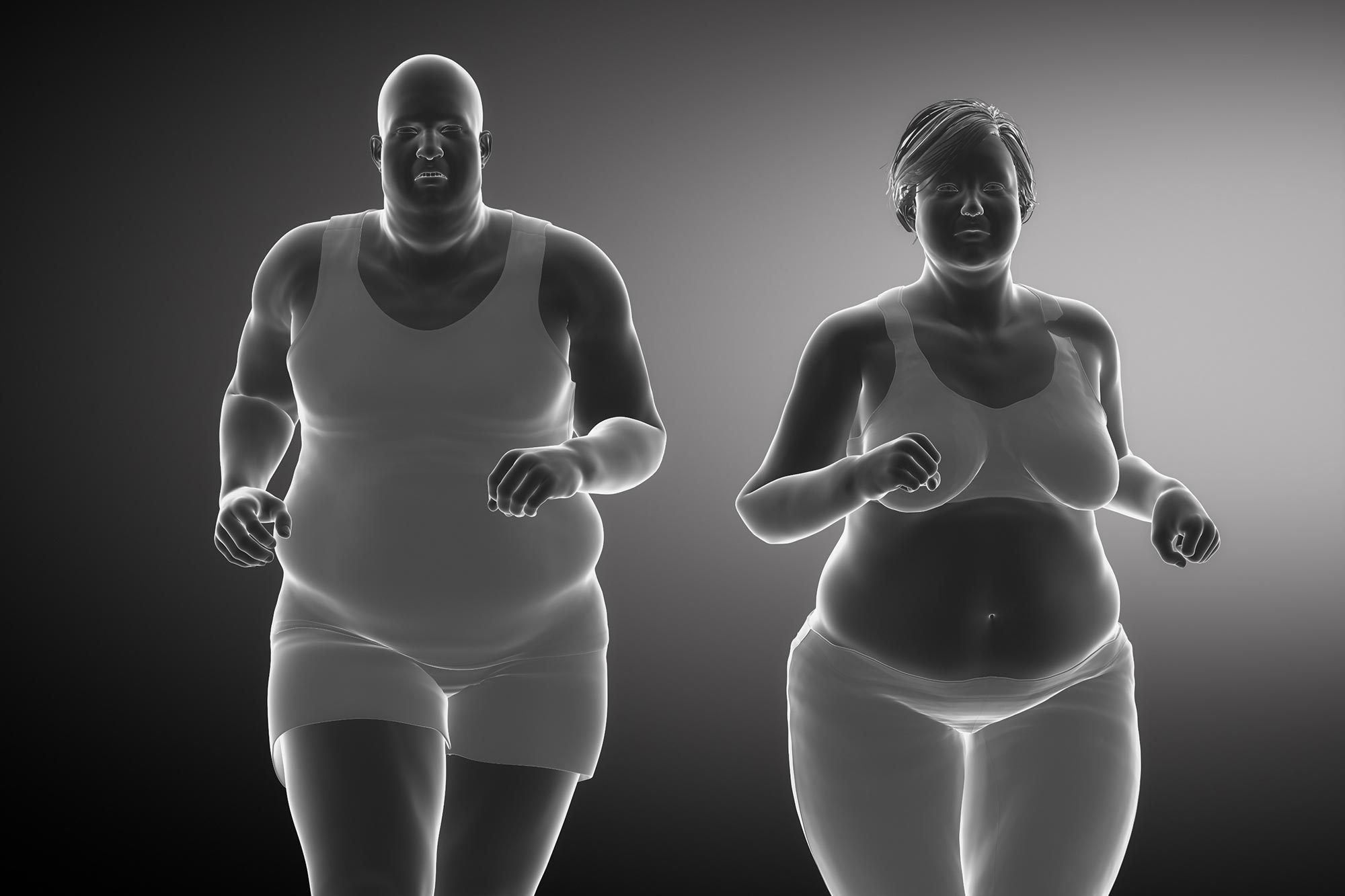
A UCLA study published in Brain Communications has identified sex-specific brain signals that influence obesity development in men and women. By combining MRI data with clinical features and personal histories, researchers found differences in several brain networks associated with early life adversity, mental health quality, and sensory stimulation experiences. The study showed that women’s obesity tends to be linked to emotion-related and compulsive eating, while men’s eating behavior is more affected by gut sensations and visceral responses. The findings may help in developing more targeted obesity interventions based on an individual’s sex and improve understanding of obesity-related drives and behaviors.
Researchers use integrated imaging data to identify sex-specific brain signatures driving obesity.
A study discovered sex-specific brain signals that affect obesity development, with women’s obesity linked to emotion-related eating and men’s eating behavior influenced by gut sensations. The findings may enable more precise, sex-based obesity interventions.
A new study from earlier UCLA study in which Gupta and colleagues examined sex-related differences in the prominence and signaling of brain regions in obesity. In addition to finding that emotion-related and compulsive eating appear to play a major role in obesity in women, that study showed that men’s eating behavior tends to be affected by a greater awareness of gut sensations and visceral responses – those related to abdominal discomfort.
The new study supports and corroborates many findings from that and earlier studies and provides MRI evidence of differences in brain structure, function, and connectivity that may help researchers better understand obesity-related drives and behaviors. For example, alterations in certain brain networks suggest that compared to men, women with a high body mass index (BMI) may be more keenly aware of and drawn to highly processed foods, with an increased risk of developing cravings and food addiction.
“In designing treatment plans for females with high BMI, it may be important to focus on emotional regulation techniques and vulnerability factors,” Gupta said.
The study, conducted through the G. Oppenheimer Family Center for Neurobiology of Stress and Resilience, Ingestive Behavior and Obesity Program at UCLA, included 183 participants, ages 18-55. Forty-two males had non-obese BMI, 23 males had high BMI, 63 females had non-obese BMI, and 55 females had high BMI. All participants filled out a battery of self-report questionnaires assessing childhood trauma, anxiety and depression, visceral sensitivity, food addiction, bowel symptoms, personality traits, and many other factors.
Each participant also underwent three different brain MRIs to assess structure, function and connectivity. Data sets from the three scans and from clinical information were analyzed using an analytical tool that seeks to identify a limited number of variables from multiple data sets to predict an outcome.
The results show specific network connectivity changes associated with high BMI, regardless of sex. In females, the study identified brain regions and networks with alterations associated with early life trauma. These appear consistent with previous observations that females with obesity, compared to males, may have greater anxiety, lower resilience and difficulty integrating emotions with action-directed goal planning. Females also may be more susceptible to the sight, smell and taste of ultra-processed foods.
Importantly, the authors said the study identified associations, not cause and effect. Future studies will be needed to determine whether changes in the brain are a factor in the development of obesity or a result of the condition.
“Although causality is unknown, the strong associations between clinical markers, such as anxiety, depression, obesity, and neural signatures suggest the importance of the bidirectional mechanistic connection of the gut-brain axis,” the authors said.
Reference: “Integrated multimodal brain signatures predict sex-specific obesity status” by Ravi R Bhatt, Svetoslav Todorov, Riya Sood, Soumya Ravichandran, Lisa A Kilpatrick, Newton Peng, Cathy Liu, Priten P Vora, Neda Jahanshad and Arpana Gupta, 4 April 2023, Brain Communications.
DOI: 10.1093/braincomms/fcad098
Ravi Bhatt, a PhD student at the University of Southern California, is the paper’s first author. In addition to senior author Gupta, authors include Svetoslav Todorov, Riya Sood, Soumya Ravichandran, Lisa Kilpatrick, Newton Peng, Cathy Liu, Priten Vora, and Neda Jahanshad, all of UCLA.
This research was supported by grants from the National Institutes of Health including R01 MD015904 (AG), K23 DK106528 (AG), R03 DK121025 (AG), ULTR001881/DK041301 (UCLA CURE/CTSI Pilot and Feasibility Study; AG); the National Science Foundation Graduate Research Fellowship 2020290241 (RB), and pilot funds provided for brain scanning by the Ahmanson-Lovelace Brain Mapping Center.
Read More
University of California – Los Angeles Health Sciences