

These gene-edited fish, pigs, and other animals could soon be on the menu.
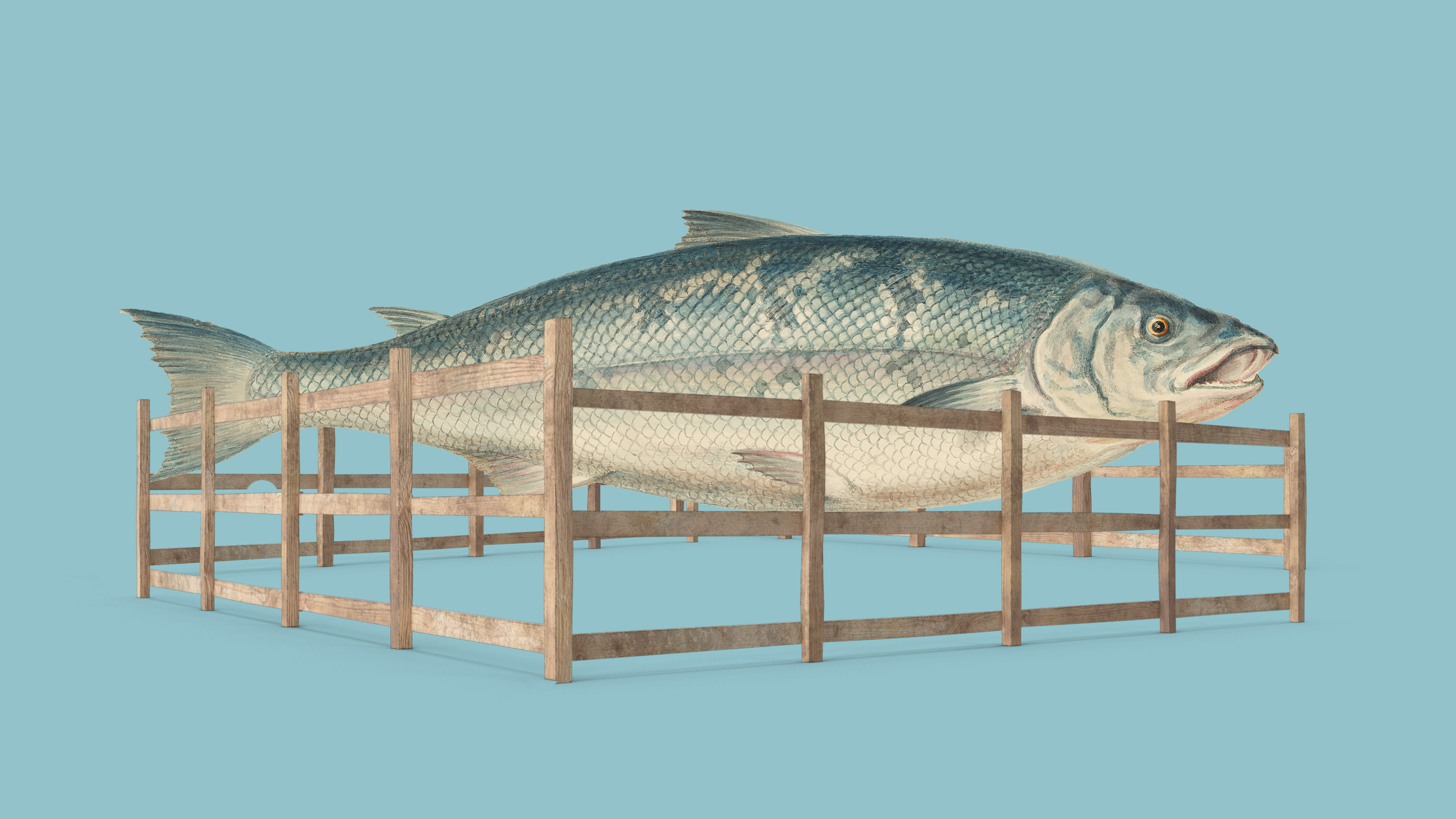
This article is from The Checkup, MIT Technology Review’s weekly biotech newsletter. To receive it in your inbox every Thursday, sign up here.
The CRISPR gene-editing tool has been making headlines for the last 10 years, since scientists showed it could be used to easily alter the genome of a living organism.
Even a small bump in resilience could have huge consequences for fish farming. As things stand, around 40% of fish farmed worldwide die before they can be harvested. Imagine being able to prevent even part of that loss.
This isn’t the first time scientists have tried to tweak the genomes of farm animals. Of course, farmers have used selective breeding to try to make animals big, muscular, docile, and easy to rear for generations. But gene-editing tools like CRISPR should allow them to fast-forward the process.
CRISPR offers a major advance over previous gene-editing tools. For a start, it’s relatively cheap, quick, and easy to use. Newer forms of CRISPR allow scientists to do more to a genome, too. Some forms allow us to change the base letters of DNA, such as swapping a C for a T. Others let us insert entirely new genes.
So perhaps it’s no surprise that scientists have started experimenting with CRISPR in farm animals. One popular target is a gene called myostatin, which codes for a protein that controls muscle growth. Interfering with this gene can lead to muscle overgrowth. In other words, you end up with big, muscly animals. And, eventually, more meat.
Scientists have already experimented with using CRISPR to generate super-muscly cattle, pigs, sheep, rabbits, and goats. These studies have not had perfect results. Many of the animals didn’t survive infancy. And a lot of them had weirdly large tongues.
Research in fish is also well underway. Using CRISPR to target the myostatin gene, scientists in Japan have generated red sea bream that are bigger and heavier, with 17% more muscle than their unmodified counterparts, despite being fed the same amount of food.
And similar approaches have been used to beef up carp, tilapia, catfish, and other aquatic animals, including oysters. Other researchers are experimenting with different ways of using CRISPR to boost disease resistance or create salmon that make more omega-3.
You won’t find CRISPR animals as products on supermarket shelves just yet. But some are remarkably close. In 2021, Japan approved the sale of two CRISPR-edited fish. One of them is the beefed-up red sea bream. The other is a tiger puffer fish that’s also designed to be heavier.
The researchers behind the transgenic catfish are hoping they’ll get it approved for commercial production in the US. But that could take a while. Only one gene-edited fish has so far been approved for sale in the US—and it took decades to get to that point.
That fish, AquAdvantage salmon, has a genetic modification that makes it grow bigger. As a result, it takes 25% less feed to get these salmon to the size at which they can be sold, says Sylvia Wulf, CEO and president of AquaBounty, the company that produces the fish.
The company made its first genetically engineered fish in 1992. But it didn’t enter the US market until 2021. “For a startup company founded in 1991, it took over 30 years to bring its innovative Atlantic salmon to the market, at a cost exceeding US$100 million,” says Wulf.
The approval of gene-edited pigs had a similar timeline. It was in 2001 that PPL Therapeutics (now known as Revivicor) created pigs genetically engineered to lack a sugar called alpha-gal. The company’s main goal is to use the pigs to grow organs that can be transplanted into people, whose immune systems would be likely to reject an organ with this sugar in its cells.
But in 2020, the FDA approved the animals for human consumption. These gene-edited pork products, which could be safe for people who are allergic to alpha-gal, will initially be available by mail order only, according to an FDA news release.
It’s difficult to predict how quickly CRISPR animals will progress through the US approval process. But they are on their way.
Read more from Tech Review’s archive:
Here’s the piece about catfish that were given an alligator gene to make them more resistant to infections and disease. They’re also sterile unless given a hormone, which should limit any impact they might have on the natural environment should they ever escape.
It’s not just farmed animals. The first gene-edited pet dogs were created in China back in 2015—a pair of super-muscly beagles called Tiangou (after the “heaven dog” in Chinese myth) and Hercules, as my colleague Antonio Regalado reported.
A heart from one of Revivicor’s gene-edited pigs was transplanted into a man with terminal heart disease last year, in a world first, as my colleague Charlotte Jee reported.
But the heart given to the man, who died a few months later, turned out to have been infected with a pig virus, as Antonio exclusively reported in May.
Gene-editing animals can have unexpected consequences. Cows that were genetically engineered to be hornless ended up with additional DNA for bacteria, including a gene that confers antibiotic resistance, Antonio reported.
From around the web
Two gene therapies for sickle-cell disease could soon enter clinics. But choosing to take one of these therapies—and potentially lead an entirely different life—is not an easy one. (The New York Times)
Online pharmacies that sell abortion pills are sharing sensitive data with third parties like Google. This data could potentially be used by law enforcement officials to prosecute people who end their pregnancies. (ProPublica)
Moderna says its mRNA vaccine for respiratory syncytial virus (RSV) works. The results of the trial—which involved 37,000 volunteers, all over the age of 60—suggest the vaccine lowered the rate of disease by 83.7%. (Moderna)
A probiotic might help reduce the risk of infection with Staphylococcus aureus, a bacterium that can cause disease. A small trial in Thailand found that people who took the probiotic had less S. aureus in their feces. (The Lancet Microbe)
Last week, my colleagues and I released our annual list of the year’s top 10 breakthrough technologies. Here are some that didn’t quite make the cut. (MIT Technology Review)
Read More
Jessica Hamzelou