
Context is everything – especially in a world driven by AI
By
- Taroon Mandhana
Published: 18 Sep 2026

On 22 September 2026, Computer Weekly turns 60. To mark the milestone, we asked some of our friends – experts, parliamentarians, IT leaders and suppliers – for their perspectives on how tech has changed their lives over six decades. What’s changed the most for you since then?
Over my career I have watched a long line of technologies arrive with enormous fanfare – client-server, the internet, big data, the cloud, and now AI. Each of these genuinely moved what was possible, often in a non-linear leap, and AI is the most powerful of them yet. But the headlines always skip the more interesting half of the story – what actually lets a leap like that pay off.
Because here is what struck me each time the frontier moved – the vehicle kept changing, but what it carried did not, and it only grew more important. The work itself – what a team is doing, what has been decided, who owns what comes next – has to be captured somewhere shared and trustworthy, or the new capability has nothing solid to stand on. In every era, that shared, reliable record of work is what let the leap actually translate into progress rather than noise.
New capability raises the value of the fundamentals
The instinct is to assume that each powerful new tool makes the plumbing beneath it matter less. My experience is the reverse.
Technology changes what a team can do – it does not remove the need for a team to agree on what it is doing and to trust a common picture of where things stand. Coordination – planning, alignment, keeping everyone pointed at the same outcome – has been the quiet constraint on human work since long before computers.
Every wave of technology either strengthened that foundation or strained it. The waves that endured were the ones that made the shared record of work better. The more capable the layer on top, the more it leans on that foundation being solid.
Why AI makes this more foundational, not less
AI sharpens this to a point. We are now putting agents to work alongside people at real scale – in my own organisation, thousands of them working next to several thousand engineers. On a recent panel I was asked what breaks first at that scale. My honest answer – knowing what is actually going on with any given project or team.
As the number of actors participating in the work multiplies – humans and agents – holding an accurate, shared picture of the work becomes dramatically harder and, at the same time, more valuable. You need a place where the effort of both people and agents is tracked together in one view – a system of record like Jira and a context graph like the Teamwork Graph that captures how the organisation actually works.
“Technology changes what a team can do – it does not remove the need for a team to agree on what it is doing and to trust a common picture of where things stand”
Taroon Mandhana
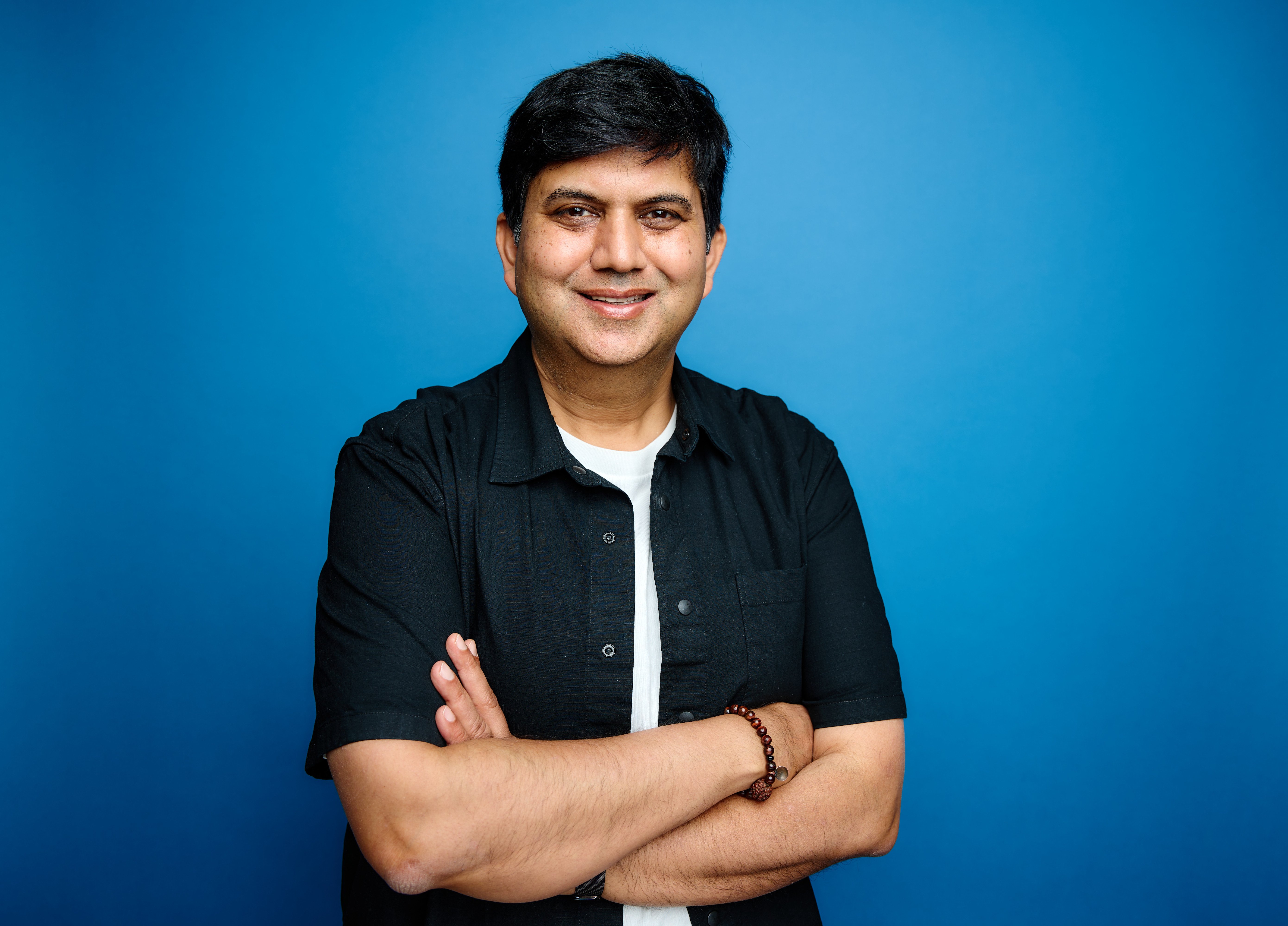
That shared organisational context is what lets a new person, or a new agent, pick up work without starting from zero or missing something crucial. Speed is only useful if everyone, and everything, is building towards the same thing. The more autonomous participants you add, the more that connective tissue becomes the thing that determines whether all that new capability compounds or fragments. Every agent both produces and consumes work signals, so there is simply more to keep straight – which is exactly why the shared record has to hold.
What changed for me
I have felt the shift personally. For most of my career, a large part of leading meant chasing information – asking people for the current state of their work, the micro-decisions they had made and why, then assembling an accurate view from a dozen partial updates.
AI changed what I can do with that. I created an agent that surfaces risks and blockers across every key project I care about. Instead of sifting through the noise of Slack threads, emails, alerts, pages, and comments, I get an immediate, accurate signal about where a team genuinely needs help.
My job has moved from gathering the picture to acting on it. But the agent is only as good as what it draws on – it works because the underlying system of record and context graph are doing their job faithfully.
Building for the next 60 years
If sixty years of technology has taught me anything, it is that the new capability and durable foundations are not in tension – they make each other more valuable. The models will keep changing – whatever is state-of-the-art this year will be ordinary the next, and I want us riding every one of those advances. What makes them worth adopting is the accumulated context of how an organisation works and the shared, trusted record that holds it together.
That foundation has quietly made every leap in my career pay off. As AI multiplies what teams and agents can do, I would bet on the contextual layer to matter more than ever.
Taroon Mandhana is CTO at Atlassian.
Read more on Collaboration software and productivity software








Read More
Diego Coby