
A “Double Punch” Nanoparticle Could Reveal and Destroy Brain Cancer Cells

Brain Tumor Anatomy Cancer
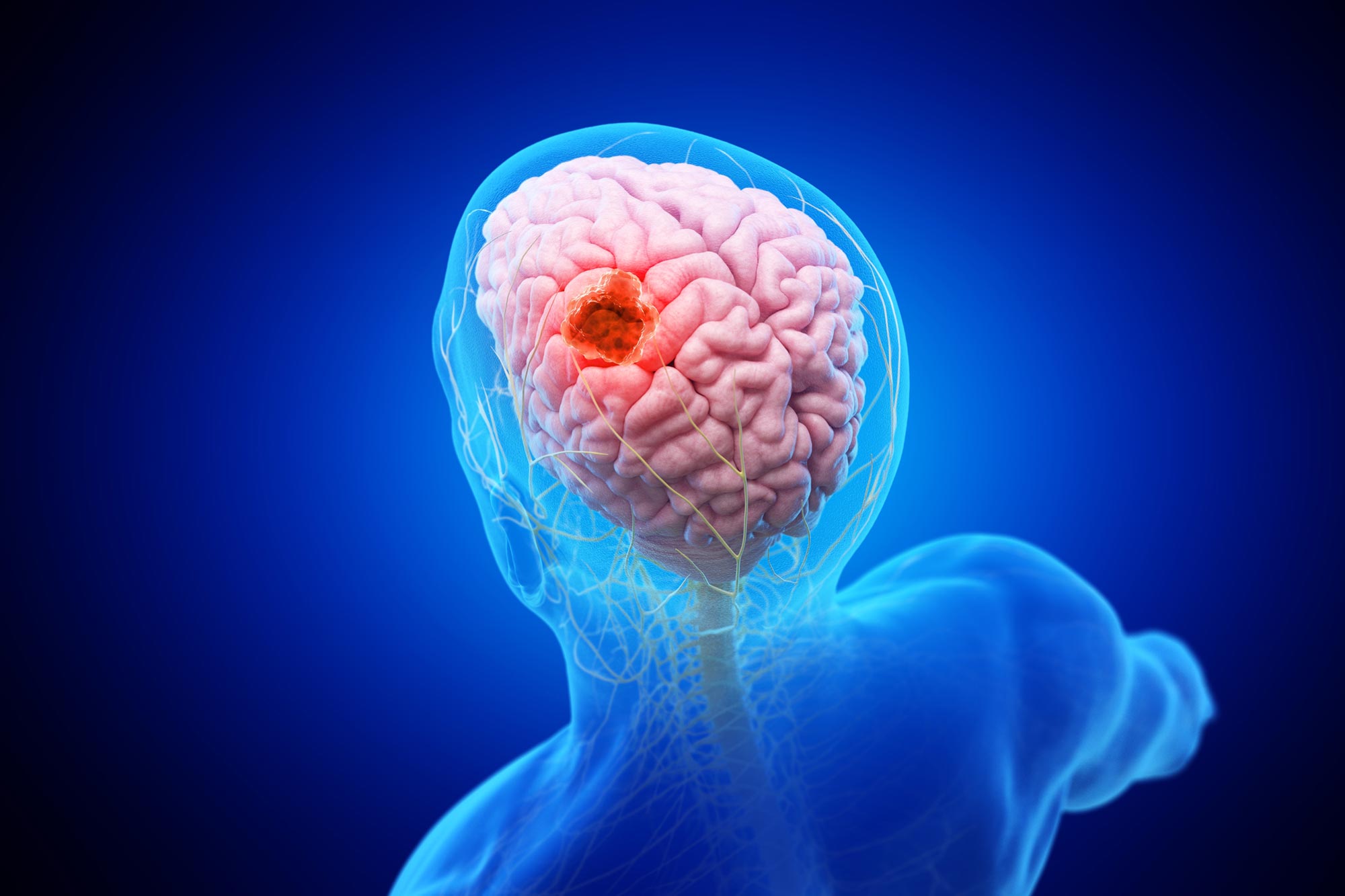
Glioblastoma is the most aggressive form of primary brain cancer, known for its rapid growth and ability to infiltrate healthy brain tissue with microscopic tumor cells. This diffuse spread makes complete surgical removal extremely difficult, while the blood-brain barrier can limit the effectiveness of many drugs. Credit: Shutterstock

Light-activated nanoparticles could help surgeons see glioblastoma more clearly and destroy cancer cells that remain after surgery.

Glioblastoma can spread microscopic cancer cells into healthy brain tissue, making the most aggressive form of brain cancer exceptionally difficult to remove completely. Surgeons must eliminate as much of the tumor as possible without damaging surrounding areas that control essential functions.

Treatment faces another obstacle in the blood-brain barrier, which restricts the ability of drugs and radiotherapy to reach the brain. Together, these challenges contribute to a five-year survival rate of only about 7 percent.

Researchers from the University of Technology Sydney (UTS), Harvard, and Henan universities have developed a ‘double punch’ nanozyme platform intended to tackle both problems using the same smart nanoparticle material. The work was published in Science Translational Medicine.

One material handles two stages

“We’ve engineered a single material that does two jobs in sequence,” said Dr. Bingyang Shi, Chair Professor of nanomedicine from the School of Electrical, Mechanical and Biomedical Engineering at UTS. “It’s a precise guide for the surgeon during the operation, and then a targeted clean-up treatment afterward.”

At the center of the platform is an extremely thin, two-dimensional sheet containing individually positioned atoms. The atoms are deposited one at a time using a method adapted from semiconductor manufacturing.

This structure allows the material to perform two separate functions. It can help image cancer during surgery and then provide phototherapy after the operation, with both functions activated by the same near-infrared light.

Light exposes tiny tumor clusters

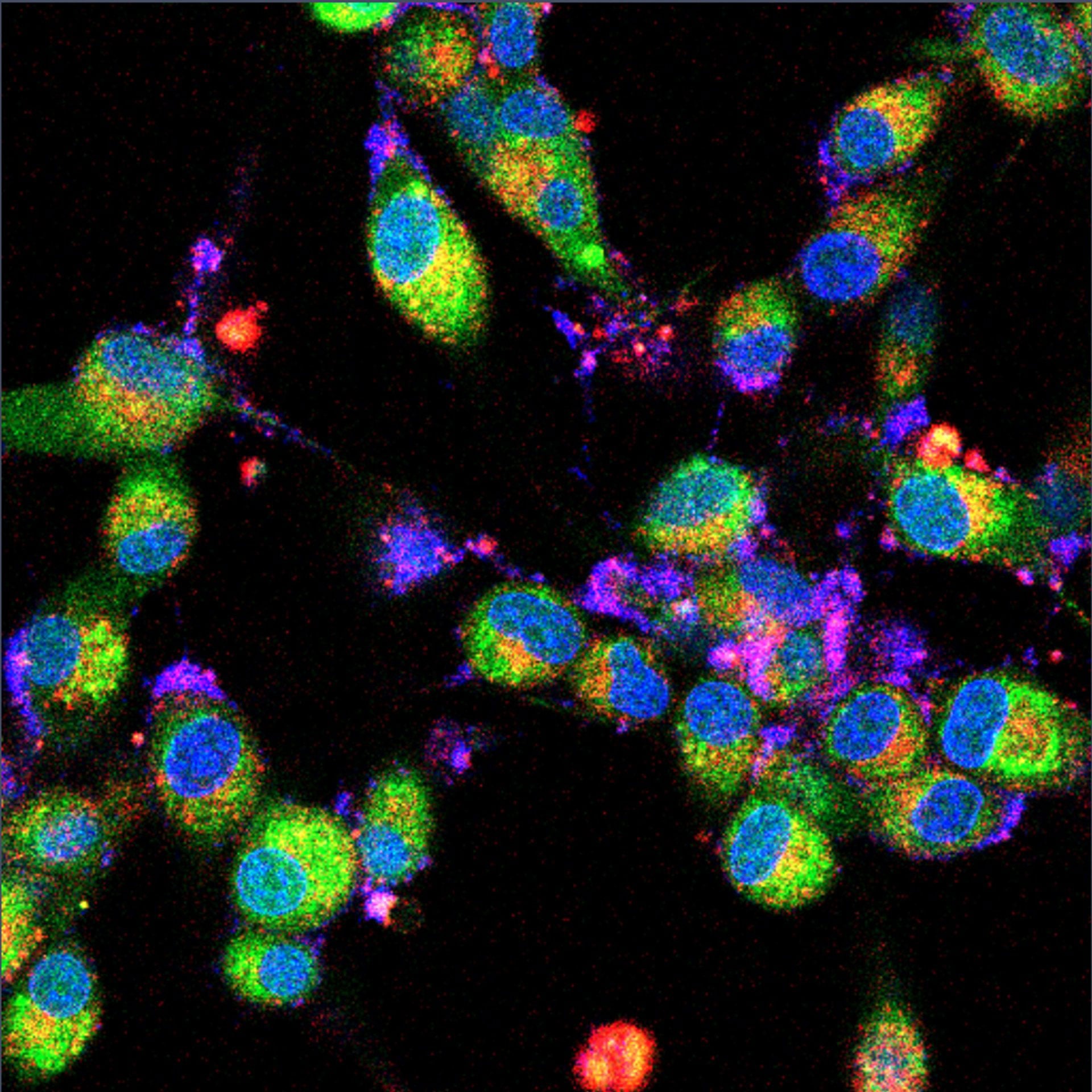
“During surgery, it functions as a highly sensitive imaging agent,” said Professor Shi. “A fluorescent dye engineered onto the sheet glows under a near-infrared wavelength invisible to the naked eye, allowing surgeons to see individual tumor cell clusters as small as 44 micrometers, a resolution beyond current clinical imaging tools. A targeting molecule attached to the material also helps it cross the blood-brain barrier and accumulate specifically in glioma cells.

This could allow surgeons to identify clusters of cancer cells too small for current clinical imaging methods to reveal. The targeting molecule is also designed to help the material pass through the blood-brain barrier and concentrate inside glioma cells.
Targeted Cancer Surgery and Treatment Platform
The platform provides a precise guide for the surgeon during the operation, and then a targeted clean-up treatment afterward. Credit: University of Technology Sydney

“After the visible tumor is removed, the same material is administered into the surgical cavity and reactivated with the same wavelength of light for postoperative phototherapy,” he said. “The platinum atoms convert the tumor’s own hydrogen peroxide into oxygen, counteracting the low-oxygen environment that normally shields cancer cells from treatment, while the light simultaneously generates heat and reactive molecules that destroy microscopic cancer cells that surgery could not reach.”

The second stage is intended to attack cancer cells that remain after the visible tumor has been removed. Platinum atoms in the material turn hydrogen peroxide produced by the tumor into oxygen, helping counter the oxygen-poor conditions that can protect cancer cells from treatment. At the same time, light produces heat and reactive molecules that can damage residual cancer cells.

In mouse models of glioblastoma, the treatment suppressed tumor recurrence following surgery. Every treated mouse was alive at 60 days, compared with a survival of 42 days for animals that received surgery alone. Follow-up testing detected no neurological or motor deficits caused by the treatment.

Human testing remains the key hurdle

“The results are very encouraging, but this is still early-stage research carried out in mouse models, not in people – and that distinction is important,” said Professor Shi. “Its imaging and therapeutic performance will also need to be confirmed at the scale of a human brain.

The results therefore remain preclinical, and the technology still needs substantial testing before its performance in people can be determined. In particular, researchers will need to establish whether its imaging and treatment capabilities can work effectively across the much larger scale of a human brain.

“If this continues to hold up through that process, the hope is that surgeons could one day see more of the tumor during an operation and treat more of what’s left behind afterward. It’s a meaningful step towards reducing recurrence, which remains one of the biggest challenges for people with glioblastoma.”

Reference: “Spatiotemporal-switchable 2D NIR-II single-atom nanozyme for single-cell–level surgical navigation and glioblastoma phototherapy” by Ping Shangguan, Yong Zhong, Haigang Wu, Yisheng Liu, Gaoyang Wang, Cai Qi, Jiang Ouyang, Senfeng Zhao, Xin Wang, Jinlong Yin, Xiaoyuan Ji, Feng Bai, Kelong Fan, Jiefei Wang, Wei Tao and Bingyang Shi, 5 August 2026, Science Translational Medicine.
DOI: 10.1126/scitranslmed.aeb8054

Funding: National Natural Science Foundation of China, National Natural Science Foundation of China, Natural Science Foundation of Henan Province, Henan Provincial Science and Technology Research Project, China Postdoctoral Science Foundation, Science and Technology Innovation Talents in Universities of Henan Province

Never miss a breakthrough: Join the SciTechDaily newsletter.
Follow us on Google and Google News.

University of Technology Sydney
Read More

Latest

BREAKING: Kidnappers Raise Anambra Businessman Joseph Ezeokafor’s Ransom to N1.5bn

Kidnappers holding the Chairman of Jezco Group, Chief Sir Joseph Ezeokafor, have reportedly increased their ransom demand from N700 million to N1.5 billion, raising fresh concerns over the safety of the septuagenarian businessman. According to a report by Arise News, the abductors established contact with Ezeokafor’s family after kidnapping the businessman in Anambra State. A

Farage likely to storm potential record-breaking Clacton by-election according to bookies

Credit: Joshua Sukoff / Shutterstock Nigel Farage looks a surefire bet to continue as MP for Clacton, according to betting companies Betfair and Star Sports.  Though Farage is the heavy favourite to reclaim his seat, the election has driven a lot of interest among political bettors, perhaps even more so than the election which returned

Joseph Ezeokafor: Kidnappers Increases Jowizaza’s Father’s Ransom From N700m To N1.5bn

Kidnappers who abducted Anambra businessman Chief Sir Joseph Ezeokafor have reportedly increased their ransom demand from N700 million to N1.5 billion. Joseph Ezeokafor, Chairman of Jezco Group and father of businessman Jowizaza, was reportedly abducted in the early hours of Tuesday, August 4, after leaving his home for a prayer ground in Awka. It was

Italian senior couple dancing in Rome piazza become internet sensation

Bopping to Michael Jackson and Elvis Presley in a Roman square, an elderly dancing duo has become a viral sensation in Italy – something they hope will inspire other seniors to take up a more active lifestyle. Retired dance teacher Pasquale Iannotta, 70, and his dancing partner Elisa Fava, 79, have won praise from Rome's

Newsletter

Don't miss

BREAKING: Kidnappers Raise Anambra Businessman Joseph Ezeokafor’s Ransom to N1.5bn

Kidnappers holding the Chairman of Jezco Group, Chief Sir Joseph Ezeokafor, have reportedly increased their ransom demand from N700 million to N1.5 billion, raising fresh concerns over the safety of the septuagenarian businessman. According to a report by Arise News, the abductors established contact with Ezeokafor’s family after kidnapping the businessman in Anambra State. A

Farage likely to storm potential record-breaking Clacton by-election according to bookies

Credit: Joshua Sukoff / Shutterstock Nigel Farage looks a surefire bet to continue as MP for Clacton, according to betting companies Betfair and Star Sports.  Though Farage is the heavy favourite to reclaim his seat, the election has driven a lot of interest among political bettors, perhaps even more so than the election which returned

Joseph Ezeokafor: Kidnappers Increases Jowizaza’s Father’s Ransom From N700m To N1.5bn

Kidnappers who abducted Anambra businessman Chief Sir Joseph Ezeokafor have reportedly increased their ransom demand from N700 million to N1.5 billion. Joseph Ezeokafor, Chairman of Jezco Group and father of businessman Jowizaza, was reportedly abducted in the early hours of Tuesday, August 4, after leaving his home for a prayer ground in Awka. It was

Italian senior couple dancing in Rome piazza become internet sensation

Bopping to Michael Jackson and Elvis Presley in a Roman square, an elderly dancing duo has become a viral sensation in Italy – something they hope will inspire other seniors to take up a more active lifestyle. Retired dance teacher Pasquale Iannotta, 70, and his dancing partner Elisa Fava, 79, have won praise from Rome's

Netflix loves Ben Affleck

It feels like Ben Affleck has been really busy as a director, but Air, the last film he directed, came out in 2023. How has it already been three years since the time Ben Affleck made a biopic for a shoe? In other areas, he has stayed busy, acting in The Rip earlier this year

Bright young business brains bring ideas to life

Friday 17 July, 2026 Young Cumbrian entrepreneurs showed off their innovative business ideas, from AI virtual assistants to African food, at two celebration events this week. Fifteen young people from Furness and West Cumbria aged 14 to 25 were selected to take part in the Positive Enterprise programme back in January...

No, no, no — business travel is not dead. It’s still moving, and rather well at that

Par Bruno COURTIN Published on 7 Aug 2026 - Updated on 7 Aug 2026 3 min reading time According to forecasts from GBTA, the world's leading organisation representing business travel stakeholders, global business travel spending is set to hit a record $1.71 trillion in 2026, while the number of trips is expected to reach 1.84

How AI is changing the business analyst role for the better

By offering the ability to automate routine note-taking, requirements gathering, and data analysis tasks, AI is helping to make the decisive human side of this key business-IT role more impactful. AI’s impact has been felt across nearly every industry, and its rise has already started to alter several roles in tech, including that of the