

Music
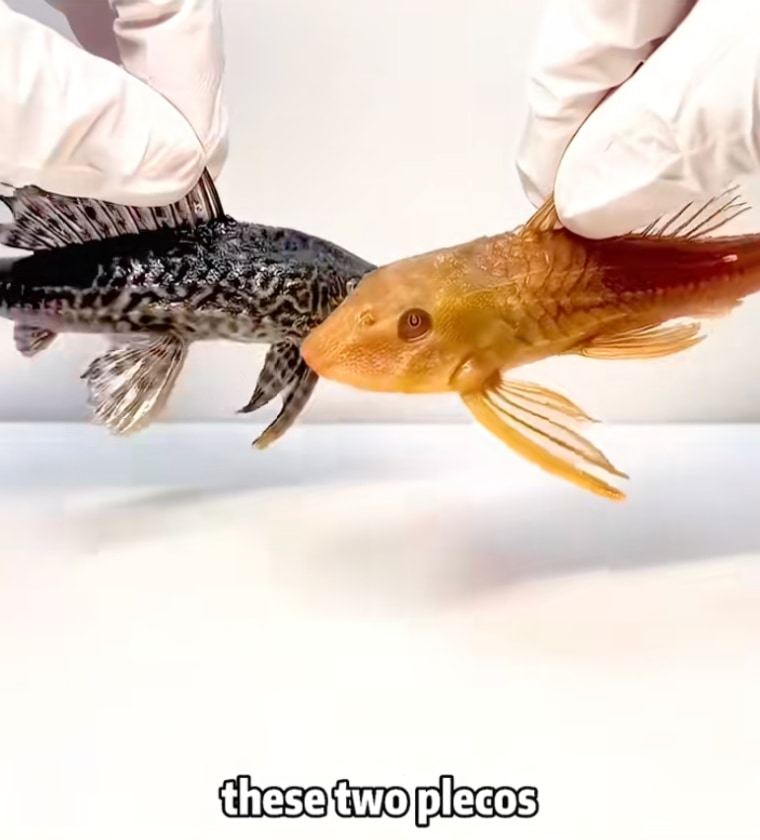
Most of the hundreds of “LabGerm” videos posted and reposted to social media in recent weeks start out the same way: A pair of gloved hands appears against a white backdrop as an AI-generated voice narrates and upbeat music plays in the background.
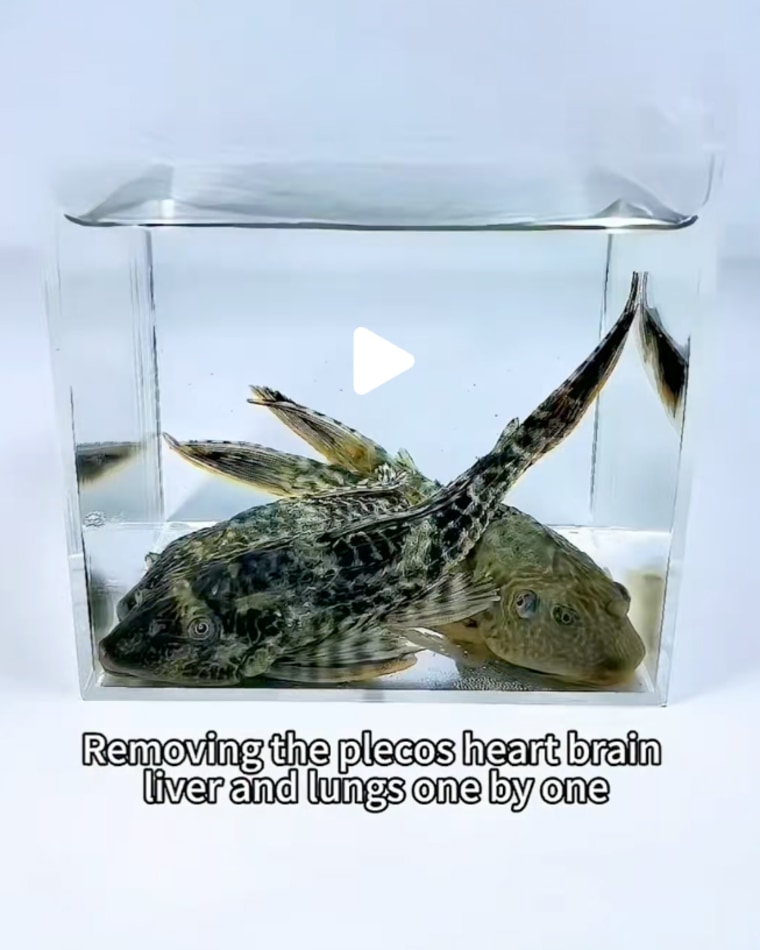
In the foreground, a fish undergoes a torturous “experiment.” Some of the videos appear to have been made entirely or at least in part with AI, while others seem to show real animals in distress. None offer any sort of finding or conclusion. The shocking nature of the content appears to be the point.
These videos, posted by dozens of accounts across TikTok, Instagram and Facebook from Chinese social media, have amassed millions of views and become notorious across the internet, sparking outrage that has only seemed to fuel their spread — a phenomenon now commonly called “rage bait.” The videos — and even the term “LabGerm” — have spawned their own small internet niche of reaction videos, discussion, bizarre memes and even merch.
An NBC News review of dozens of videos found that the content, which showed small animals such as pleco “suckermouth” catfish, leeches, snails, slugs and various insects being physically maimed, appeared to start on the Chinese social media app Douyin, with NBC News uncovering at least 49 accounts spreading pleco fish torture content on the platform.
TikTok has removed at least three accounts spreading the videos, saying they violate its community guidelines. But a search on the platform still turned up more than 20 imitators as of mid-May. Plenty of videos, many expressing outrage about “LabGerm,” can be found on YouTube and Meta platforms.
The videos point to the ongoing challenge of policing objectionable content on the internet, where engagement — good and bad — remains a dominant force.
“Members of the public might see this content and be outraged. But we’ve even seen people creating content about the content, which is then, I think, leading people back to the content,” said Nicola O’Brien, the lead coordinator for the Social Media Animal Cruelty Coalition, which was started by the Asia for Animals Coalition to stop animal abuse content on social media.
This new crop of animal abuse videos mirrors what O’Brien said her organization has seen in previous eras of animal torture content, which has involved monkeys, cats and dogs.
But while that content was largely relegated to the dark corners of the internet, pleco fish videos are getting a much wider audience, O’Brien told NBC News.
Disturbing media has a long history on the internet dating back to the early days of web forums and message boards, eventually giving rise to now-notorious websites that offered a mix of material meant to shock and disgust.
That content tended to remain in its own digital spaces until the advent of social media created the incentives and the distribution systems to spread it widely. Those companies in turn began to create and enforce new rules against a wide range of videos including animal abuse.
Moderating modern social media platforms that have ballooned to hundreds of millions and even billions of users has proved challenging, even with the advent of automated systems.
That leaves many videos to fall through the cracks, particularly when they may not be the worst of the worst.
While many companies have become more proactive in finding and removing such videos, the incentives to post them remain — as do the automated systems that do little to differentiate between interest and outrage.
“It doesn’t matter if someone’s putting a thumb up or a thumb down or they’re writing a negative comment or calling out content. All of that is seen as engagement,” O’Brien said. “So that’s pushing that content to more viewers. And so inadvertently, these really awful things that are happening to animals are being shared more and more with the public, who are maybe making their own videos calling it out or they’re commenting on the content.”
A TikTok spokesperson said that the platform deleted all the accounts after they were flagged by NBC News. The spokesperson pointed to its community guidelines, which prohibit “animal abuse, cruelty, neglect, trade or any other form of animal exploitation.”
Users can report content that violates TikTok’s policies via the app and a web form, the spokesperson said, adding that the platform also has support resources to learn how to identify and report animal abuse on the app.
A spokesperson for Meta did not respond to a request for comment.
It is not clear who is behind the videos or their spread. It is also unclear why these videos have attracted a following on social media, what the motivations are for posting them, and how exactly they made their way from Douyin and Chinese social media to TikTok and Meta. Douyin has restricted access to mainland China, Macau and Hong Kong, although people from outside China can access it by setting their Apple ID to these regions or via other workarounds. Likewise, access to TikTok and Instagram is restricted in mainland China.
Douyin’s parent company, ByteDance, told NBC News on Wednesday that the platform prohibits the publication of videos that describe or promote “animal abuse or the killing of animals.” As of mid-May, the videos and accounts containing such content that NBC News sent Douyin for review were still up.
In mid-April, before the account got deleted by TikTok, the main LabGerm account posted that it would no longer be posting pleco fish content due to fear of having its account removed.
“The anthropomorphic pleco memes and related were partly from my banned account,” the deleted account wrote. “The rest are reposts or made by others and have nothing to do with me. Please do not blame me for any of this.”
The “LabGerm” videos tend to feature the pleco, a relatively unassuming species known among aquarium enthusiasts as a bottom-feeder that can keep tanks clear of algae. Sometimes videos note it’s an invasive species in some regions, which many commenters cite to justify the abuse.
Simply put, it’s not an animal that many people care deeply about.
“Unfortunately, fish are often not recognised by the public — or by moderation systems — as sentient animals capable of suffering in the same way as more familiar animals,” O’Brien said via email. “We think this may be one reason why this content remains available and is not taken down by platforms at the rate we would expect.”
Peter Li, a professor at the University of Houston specializing in animal policy in China, told NBC News that he has been monitoring the pleco abuse videos for several months now.
“We thought that was something like a temporary vogue, you know, it would be gone,” said Li, who is also a consultant for the animal welfare organization Humane World.
But the videos have had some staying power, he said, in part because people are also using AI to make them.
Under several videos on Douyin and TikTok, some commenters request specific “experiments” on pleco fish or other creatures, often referring to the animals as “volunteers.”
“If they can find the real thing, they will do it,” Li said of video creators. “If they don’t find the real thing, they would mix it with AI-generated images or even videos.”
Li noted that China lacks a nationwide law against animal cruelty, making it difficult to prosecute those who post animal torture content.
And while some companies have taken action — Li himself has reported videos and accounts to Douyin — the pipeline of fish torture videos remains.
“The fish that feasts on the waste of other fish is considered a lower rank on the fish scale, so it’s least likely to evoke sympathy,” Li said. “If these creatures should evoke sympathy like dogs and cats, they would probably not do it, right?”