

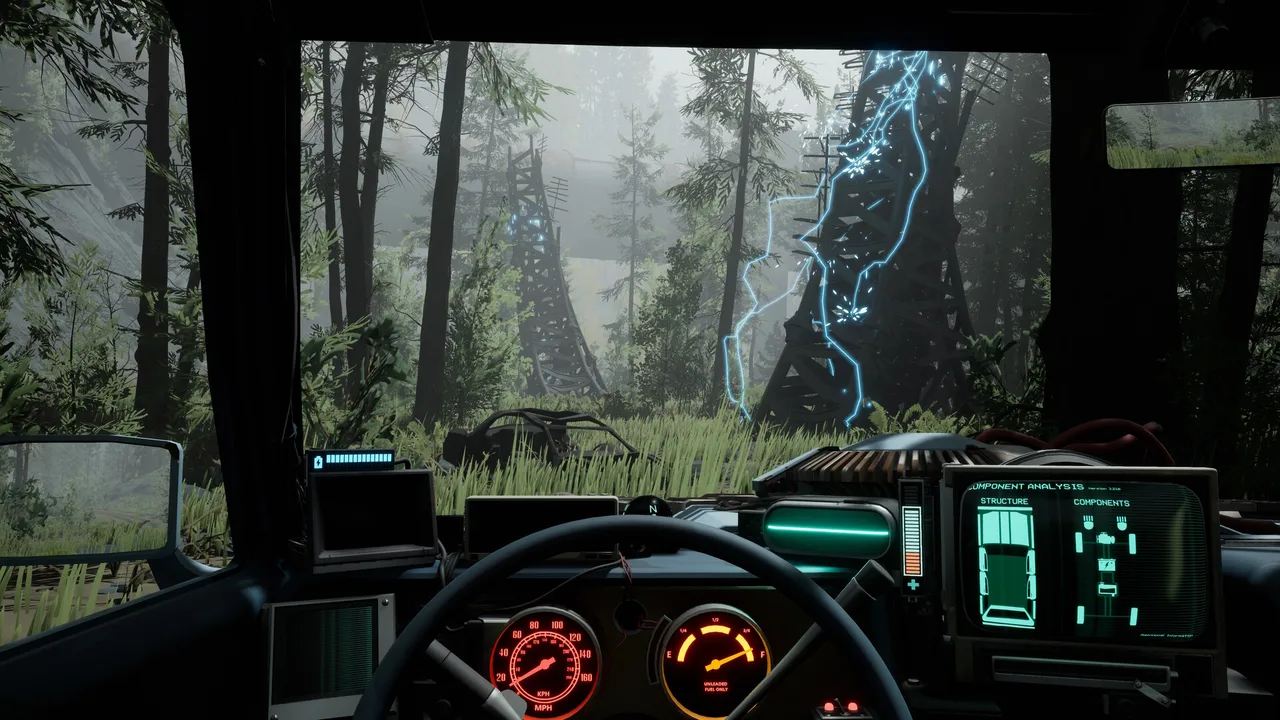
Ironwood Studios/Kepler Interactive
Survival games are tough to define. Many of them force the player to “survive” as a main component of gameplay, of course, but does that involve gathering food so you don’t starve? Finding or building shelter? Does it involve combat? Is it something else entirely?
According to Seth Rosen, game director and lead designer on Ironwood Studios’ Pacific Drive, survival games are actually simpler to explain.
“Fundamentally, survival games are time management games,” he said during his GDC Festival of Gaming 2026 talk, “Pacific Drive Under the Hood: Survival Fundamentals, Systems Design, and Speeding Past Tropes.”
Rosen has experience with survival games. Before Ironwood Studios, he was a technical designer at Klei Entertainment working on the Don’t Starve series. He had no interest in the genre at first. In fact, he criticizes it in the talk, saying that the market is filled with games that are busy but that “[lack] richness.” They give players tasks to complete without a goal to work toward, a fantasy to live out, or even an interesting setting.
Related:Data and player sentiment highlight the value of authentic LGBTQ narratives

But those pitfalls come from other developers misunderstanding what is actually at the core of these kinds of games. In order for designers to create survival crafting games that feel meaningful rather than just tasks upon tasks, Rosen suggests focusing on just one element: time management.
“The moment to moment gameplay—gathering materials, crafting, managing, ticking meters—none of that matters. That’s the smoke and mirrors. They’re just differently patterned plates to spin as you move through the game world. Time is the only real resource.”
Time management? More like plate management
According to Rosen, survival crafting games have their players balance plates, which he defines as “a cycle or loop that the player goes through as problems appear and get resolved.” Anybody who’s played a survival game can understand what he’s talking about. These kinds of games often have the player juggle a bunch of different systems and tasks. In the case of Pacific Drive, you’re tasked with escaping the Olympic Exclusion Zone, a quarantined and mostly abandoned area in the Pacific Northwest full of dangerous anomalies that threaten to kill you. To do this, you have one tool: an old station wagon that quickly becomes your best friend.
To escape, you have to manage your car’s “health” in the face of those anomalies. That involves repairing and upgrading your car, so you need to gather materials. (Rosen says the car has 27 different parts you need to maintain.) You also need to upgrade your shop so that you can make those upgrades. Then while you’re out in the Zone, you must keep your car topped off with power and gas. That’s not even getting into “quirks” your car can incur or all the anomalies you have to face, with each bringing a unique obstacle to your journey.
Related:Finding inspiration and a bit of hope in CorgiSpace
Pacific Drive is, like many survival games of its ilk, a mechanically complex game. There are a lot of moving parts, but they’re not just there for the sake of it. They all come together to create friction that forces the player to juggle multiple tasks at once.
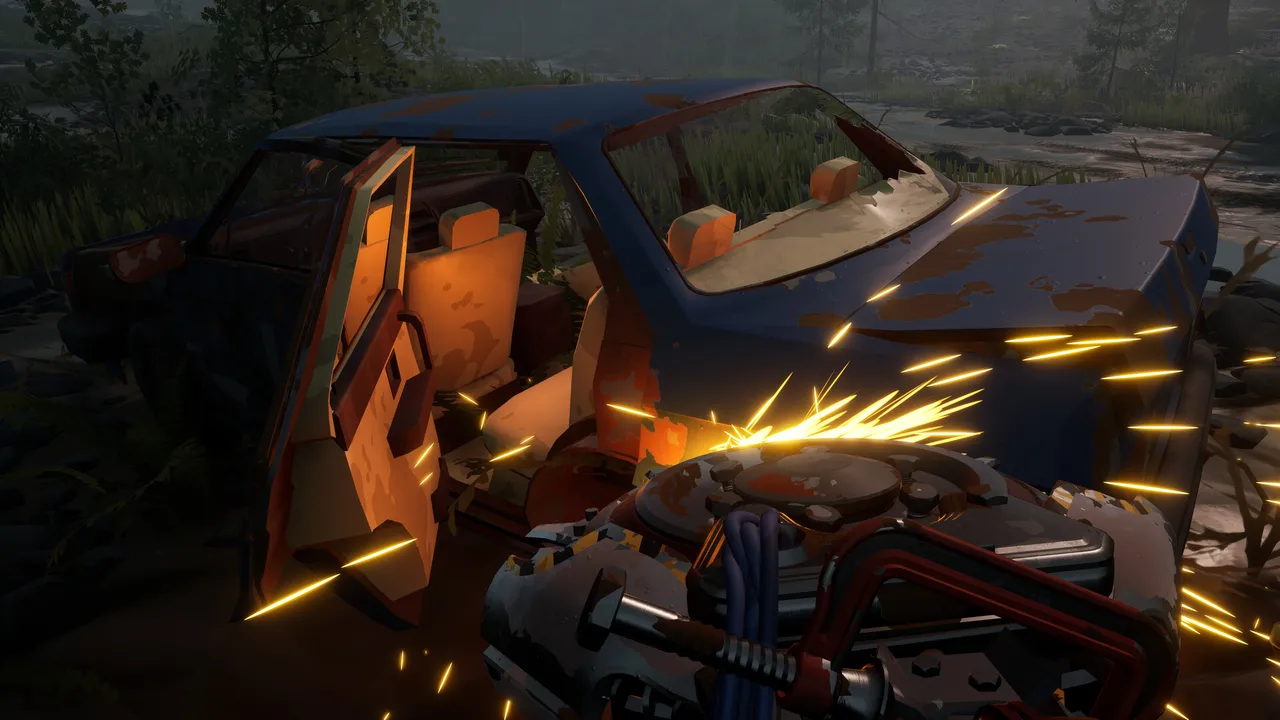
Take this common situation in Pacific Drive. You’re out in the Zone looking for resources to get the next upgrade for your Fabrication Station. However, a Bolt Bunny attaches itself to your car, shooting electricity through the whole body and causing your car’s battery to drain much faster. So now, you have to figure out how to get out of that area, either by finding a new battery source or the nearest exit. This upends your plan, so you have to come up with a new one.
This is the cycle of Pacific Drive, and one that has three elements: pressure, stakes, and failure.
“Numerous plates create pressure through competing demands on the player’s time. Even when the cycles are slow or their impact is small, the variety of cycles under spin rates and consequences provide heuristics for the player to take into account as they constantly update their plan and the inevitable collisions happen at different and interesting times through the different schedules,” Rosen said.
Related:How can your game win the ‘attention war?’ Turn to storytelling
It’s annoying and could cause the end of your run, but it equips you with new knowledge you can use to adapt later. When you overcome this new tension, you feel accomplished and fulfilled. You survived the encounter, and therefore, you can keep going.
“This combination produces the emotional core of survival, which means problem solving under duress,” Rosen said. “These are games about working your way out of trouble after you poke something with a stick or things didn’t go according to your plan. These moments generate drama and little systemic stories that feel deeply and intimately your own.”
Make sure all the plates present a substantial meal
All of this comes back to one idea: to make a survival crafting game stick, just make sure all that survival and crafting means something. Present the main goal of your game while making it seem like there’s a lot going on. That’s the point of plate spinning.
This is all the more important as these kinds of games grow in popularity. Besides the releases of more classic survival fare like Palworld and Satisfactory, the industry has seen the rise of survival “friendslop” games like Peak and the continued success of sandbox titles like Minecraft that take classic survival gameplay and remove the pressure and danger from other titles like Pacific Drive.
For developers working on survival games right now, focusing on the basics is the key to making something worthwhile.
“[Friendslop] has a huge market share, but when you look at top-rated lists, you see games like Pacific Drive: single-player games that are less about construction and more about their setting, theme and player fantasy. These are the games that connect most with players,” Rosen said.
Game Developer and GDC are sibling organizations under Informa Festivals.
About the Author

Contributor
Carli Velocci is a freelance technology and video games writer and editor. They’ve written for Digital Trends, Windows Central, The Verge, and more. You can find them on Twitter @velocciraptor or at carlivelocci.com
Carli Velocci
Read More