

Luna Band enters one of consumer tech’s most subscription-heavy markets with a deliberate no-fee positioning, and a 10-day battery.

Whoop charges $30 per month, while Fitbit Air keeps some of its advanced metrics behind the Google Health Premium subscription, which costs $9.99 per month. The Oura Ring isn’t free either. The screenless fitness tracker market, I’d say, has quietly become one of the most subscription-heavy corners of consumer tech.
Luna is betting that enough people have already noticed this to build a business around an alternative. The company behind the Ring smart ring is gearing up to launch its first screenless fitness band in July 2026.

When will Luna Band be available for pre-orders?
The Luna Band was first showcased at the CES 2026 and an official microsite is already live with the key features. Now, the company has confirmed that the pre-orders open on July 4, and the Band ships on July 31, 2026.
Though Luna hasn’t confirmed the pricing yet, it has explicitly mentioned that the Band won’t require a subscription, which, in this market, is a practical differentiator if you ask me, as that’s how the company can attract a good number of buyers who don’t want to pay every month to get their own fitness data.
Regarding the feature list, it goes further than just basic activity and sleep tracking. Luna Band lets users log food intake, supplements, and recent bloodwork, and stores relevant medical data for reference, something that neither of the competitors address directly.

What other features does the Luna Band offer?
The fitness band runs on Luna’s LifeOS, which supports integration with Siri (for iPhone users) and Gemini (for Android users), allowing for custom agentic workflows, including haptic alerts and schedule management.
Voice-based health logging is also expected on the fitness band, according to CNET, though whether the band itself features a microphone or the feature works via paired phones is something that remains unclear. On one charge, its battery should last up to 10 days, which is quite comparable to Whoop.
The design, for now, sits closer to Whoop than Fitbit Air. It features a broader, textured strap, with a variety of materials and colors. The buckle appears to be metal, while other materials used on the band are hypoallergenic, meaning that they’re suitable for extended use.

For more than five years, Shikhar has consistently simplified developments in the field of consumer tech and presented them…
Xreal Aura glasses put Android on your face and they will “try” to cost under $1,500
Xreal Aura tries to squeeze a whole XR headset into glasses
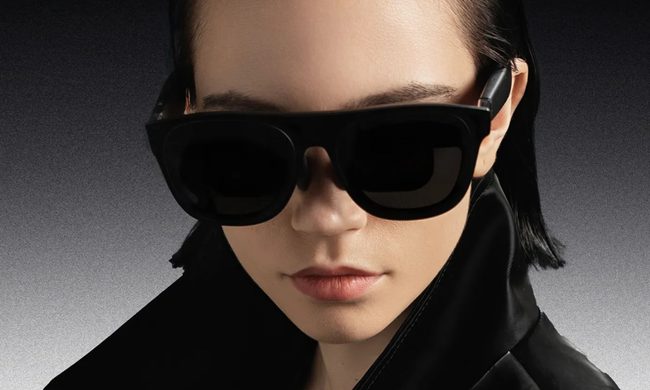
Xreal Aura is now one step closer to landing on your face. The company has opened reservations for Xreal Aura, its Android XR-powered smart glasses built with Google. The device was previously known as Project Aura, and it is shaping up to be one of the most important early tests for Android XR beyond full headset hardware.
Xreal is marketing Aura as a portable spatial computing device in a glasses-style form factor. So it’s more than just a simple pair of glasses that records or keeps track of your notifications. Aura combines lightweight glasses with a dedicated compute puck, letting the heavier processing and battery hardware sit off your face.
Samsung Display just showed why XR’s future may come down to better tiny screens
Its AWE USA lineup connects high-brightness OLEDoS, MR demos, and glasses-free 3D concepts into one bigger bet.
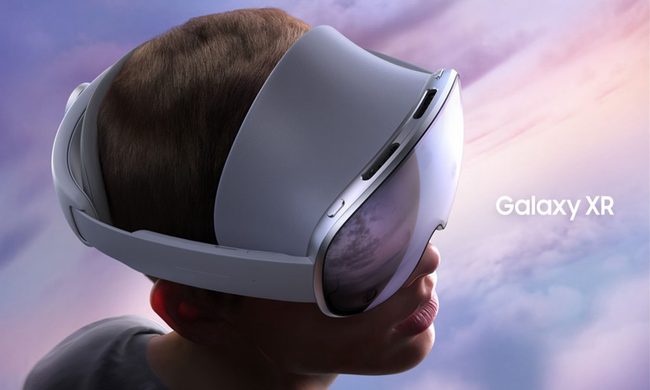
Samsung Display is using AWE 2026 to push RGB OLEDoS as a core building block for the next wave of XR hardware. The showcase centers on displays designed for mixed reality headsets and augmented reality smart glasses, where brightness, size, and efficiency all collide.
The standout spec is a 1.3-inch RGB OLEDoS panel rated at 40,000 nits. Samsung Display is presenting it in a dark-room Big Dipper installation, where only two of seven panels use the ultra-bright tech to make the brightness and color gap obvious. It’s a booth demo with a sharper message underneath.
Got a smartwatch? You can now join a study measuring how the football world cup is affecting your heart
Your World Cup heartbreak might be valuable smartwatch data now

Watching the World Cup can be an intense (and fun) affair that makes your heart race. And now, your smartwatch could be ready to track just how worked up you got over your favorite team winning or losing. Researchers at Bielefeld University are inviting football fans to join the World Cup Fever Study, a project that uses smartwatch and fitness tracker data to measure how fans physically respond to matches during the 2026 FIFA World Cup.
The study is looking at heart rate, stress levels, movement, and sleep to understand how football events like goals, wins, losses, and tense moments show up in the body.
Shikhar Mehrotra
Read More