

Friday, 05/06/2026 | 07:28 GMT by
FM
- iFX Hack 2026: Free 24h AWS-powered fintech hackathon in Limassol, June 13–14.
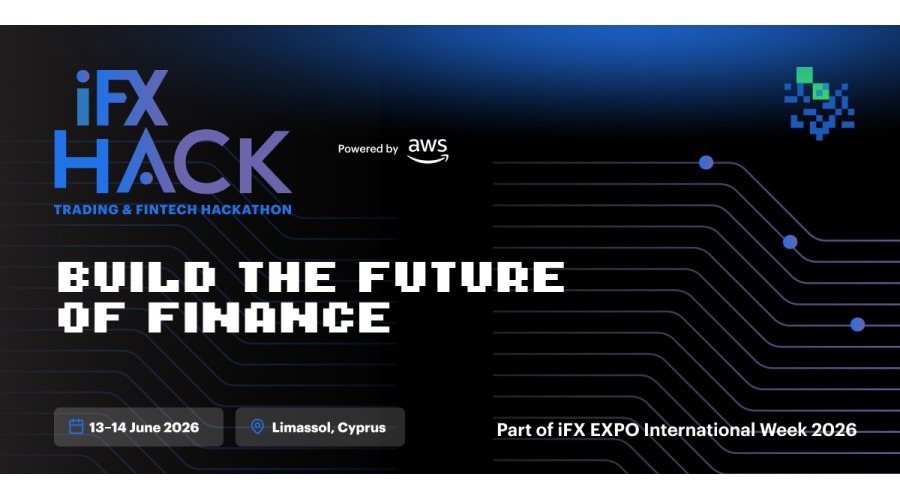
iFX EXPO International has announced the launch of iFX Hack 2026, a 24 hour Trading & Fintech Hackathon powered by Amazon Web Services (AWS), bringing together developers, students, fintech professionals, entrepreneurs, traders, designers, and innovators to build solutions addressing real world challenges across trading, financial services, artificial intelligence, payments, and technology.
Taking place on 13–14 June 2026 at the University of Limassol, iFX Hack will see participants come together for 24 hours of collaboration, development, and innovation as they build solutions addressing challenges across trading, fintech, artificial intelligence, payments, and financial technology.
Designed as an innovation challenge for the next generation of builders, creators, and technology professionals, the hackathon aims to encourage practical problem solving and foster new ideas that can help shape the future of online trading and financial technology.
Participants will work individually or in teams to create solutions across a range of challenge areas, including:
• AI and Intelligent Trading
• Financial Security and Fraud Prevention
• User Experience and Financial Innovation
Over the course of 24 hours, teams will build, test, and present their projects to a panel of judges from the technology and fintech ecosystem. Entries will be evaluated on innovation, technical execution, functionality, problem solving approach, and potential industry impact.
As the official title sponsor, AWS will support participants through access to world leading cloud technologies and resources while helping encourage innovation within the fintech and trading sectors.
The launch of iFX Hack reflects the growing importance of technology driven innovation across the online trading and fintech sectors. By bringing together developers, students, entrepreneurs, and industry professionals, the initiative aims to encourage collaboration between emerging talent and the wider financial technology ecosystem while providing a platform for the development of practical solutions to real industry challenges.
The hackathon is open to university students, software developers, engineers, data scientists, AI specialists, fintech professionals, product managers, startup founders, traders, and technology enthusiasts. No previous hackathon experience is required.
Participation is completely free of charge, with complimentary food and beverages available throughout the competition. Participants will also have the opportunity to compete for prizes and industry recognition while showcasing their ideas and technical capabilities to leaders from across the online trading, fintech, payments, and technology sectors.
Winning teams will be announced and recognized during iFX EXPO International 2026, taking place on 17–18 June at City of Dreams Mediterranean in Limassol, Cyprus. As one of the industry’s leading gatherings, iFX EXPO International brings together brokers, fintech innovators, technology providers, investors, affiliates, and financial services professionals from around the world, providing participants with a unique platform to gain visibility for their work and connect with industry decision makers.
The event forms part of iFX EXPO International’s broader commitment to supporting innovation, entrepreneurship, and technology development across the online trading and fintech industries. By creating opportunities for emerging talent, developers, and technology innovators to collaborate and experiment, iFX Hack aims to help bridge the gap between new ideas and real world industry applications.
With participation limited to just 50 participants, interested applicants are encouraged to register early via the official iFX Hack registration page or Eventbrite.
Event Details
Event: iFX Hack 2026 – Trading & Fintech Hackathon Powered by AWS
Date: 13–14 June 2026
Time: Registration from 11:00 AM on 13 June 2026. The Hackathon will commence at 12:00 PM and conclude at 3:00 PM on 14 June 2026.
Format: 24 Hour In Person Hackathon
Venue: University of Limassol
Agias Filaxeos 92, Limassol 3086, Cyprus
Capacity: Limited to 50 participants
Registration Fee: Free
Complimentary Food & Drinks: Available throughout the competition
Parking: Free parking available for all participants
https://maps.app.goo.gl/fkSL2HwfgHFLqh8AA
Prizes: Awards, prizes, and industry recognition for winning teams
Winning Teams Recognition: During iFX EXPO International 2026, 17–18 June 2026, City of Dreams Mediterranean, Limassol, Cyprus
Registration: Registration is now open. Interested participants can register at https://shorturl.at/lRNfc
About iFX EXPO International
iFX EXPO International is one of the world’s leading B2B events for the online trading, fintech, payments, and financial services industries. Bringing together brokers, fintech providers, affiliates, technology companies, investors, and industry professionals from around the world, the event serves as a platform for networking, business development, thought leadership, and innovation. Through its exhibitions, conferences, networking experiences, and industry initiatives, iFX EXPO International continues to support the growth and evolution of the global fintech and online trading ecosystem.
iFX EXPO International has announced the launch of iFX Hack 2026, a 24 hour Trading & Fintech Hackathon powered by Amazon Web Services (AWS), bringing together developers, students, fintech professionals, entrepreneurs, traders, designers, and innovators to build solutions addressing real world challenges across trading, financial services, artificial intelligence, payments, and technology.
Taking place on 13–14 June 2026 at the University of Limassol, iFX Hack will see participants come together for 24 hours of collaboration, development, and innovation as they build solutions addressing challenges across trading, fintech, artificial intelligence, payments, and financial technology.
Designed as an innovation challenge for the next generation of builders, creators, and technology professionals, the hackathon aims to encourage practical problem solving and foster new ideas that can help shape the future of online trading and financial technology.
Participants will work individually or in teams to create solutions across a range of challenge areas, including:
• AI and Intelligent Trading
• Financial Security and Fraud Prevention
• User Experience and Financial Innovation
Over the course of 24 hours, teams will build, test, and present their projects to a panel of judges from the technology and fintech ecosystem. Entries will be evaluated on innovation, technical execution, functionality, problem solving approach, and potential industry impact.
As the official title sponsor, AWS will support participants through access to world leading cloud technologies and resources while helping encourage innovation within the fintech and trading sectors.
The launch of iFX Hack reflects the growing importance of technology driven innovation across the online trading and fintech sectors. By bringing together developers, students, entrepreneurs, and industry professionals, the initiative aims to encourage collaboration between emerging talent and the wider financial technology ecosystem while providing a platform for the development of practical solutions to real industry challenges.
The hackathon is open to university students, software developers, engineers, data scientists, AI specialists, fintech professionals, product managers, startup founders, traders, and technology enthusiasts. No previous hackathon experience is required.
Participation is completely free of charge, with complimentary food and beverages available throughout the competition. Participants will also have the opportunity to compete for prizes and industry recognition while showcasing their ideas and technical capabilities to leaders from across the online trading, fintech, payments, and technology sectors.
Winning teams will be announced and recognized during iFX EXPO International 2026, taking place on 17–18 June at City of Dreams Mediterranean in Limassol, Cyprus. As one of the industry’s leading gatherings, iFX EXPO International brings together brokers, fintech innovators, technology providers, investors, affiliates, and financial services professionals from around the world, providing participants with a unique platform to gain visibility for their work and connect with industry decision makers.
The event forms part of iFX EXPO International’s broader commitment to supporting innovation, entrepreneurship, and technology development across the online trading and fintech industries. By creating opportunities for emerging talent, developers, and technology innovators to collaborate and experiment, iFX Hack aims to help bridge the gap between new ideas and real world industry applications.
With participation limited to just 50 participants, interested applicants are encouraged to register early via the official iFX Hack registration page or Eventbrite.
Event Details
Event: iFX Hack 2026 – Trading & Fintech Hackathon Powered by AWS
Date: 13–14 June 2026
Time: Registration from 11:00 AM on 13 June 2026. The Hackathon will commence at 12:00 PM and conclude at 3:00 PM on 14 June 2026.
Format: 24 Hour In Person Hackathon
Venue: University of Limassol
Agias Filaxeos 92, Limassol 3086, Cyprus
Capacity: Limited to 50 participants
Registration Fee: Free
Complimentary Food & Drinks: Available throughout the competition
Parking: Free parking available for all participants
https://maps.app.goo.gl/fkSL2HwfgHFLqh8AA
Prizes: Awards, prizes, and industry recognition for winning teams
Winning Teams Recognition: During iFX EXPO International 2026, 17–18 June 2026, City of Dreams Mediterranean, Limassol, Cyprus
Registration: Registration is now open. Interested participants can register at https://shorturl.at/lRNfc
About iFX EXPO International
iFX EXPO International is one of the world’s leading B2B events for the online trading, fintech, payments, and financial services industries. Bringing together brokers, fintech providers, affiliates, technology companies, investors, and industry professionals from around the world, the event serves as a platform for networking, business development, thought leadership, and innovation. Through its exhibitions, conferences, networking experiences, and industry initiatives, iFX EXPO International continues to support the growth and evolution of the global fintech and online trading ecosystem.
Keep Reading
Thought Leadership

Libertex Returns to Monaco for the Ultimate Superyacht Experience
Libertex Returns to Monaco for the Ultimate Superyacht Experience
Libertex Returns to Monaco for the Ultimate Superyacht Experience
Libertex Returns to Monaco for the Ultimate Superyacht Experience
Libertex Returns to Monaco for the Ultimate Superyacht Experience
Libertex Returns to Monaco for the Ultimate Superyacht Experience
Libertex Returns to Monaco for the Ultimate Superyacht Experience
Libertex Returns to Monaco for the Ultimate Superyacht Experience
Libertex Returns to Monaco for the Ultimate Superyacht Experience
Libertex Returns to Monaco for the Ultimate Superyacht Experience

ATFX Connect Partners in South Africa with the JSE to Bring JSE-Listed CFDs to Institutional Clients Across The Continent
ATFX Connect Partners in South Africa with the JSE to Bring JSE-Listed CFDs to Institutional Clients Across The Continent
ATFX Connect Partners in South Africa with the JSE to Bring JSE-Listed CFDs to Institutional Clients Across The Continent
ATFX Connect Partners in South Africa with the JSE to Bring JSE-Listed CFDs to Institutional Clients Across The Continent
ATFX Connect Partners in South Africa with the JSE to Bring JSE-Listed CFDs to Institutional Clients Across The Continent
ATFX Connect Partners in South Africa with the JSE to Bring JSE-Listed CFDs to Institutional Clients Across The Continent
ATFX Connect Partners in South Africa with the JSE to Bring JSE-Listed CFDs to Institutional Clients Across The Continent
ATFX Connect Partners in South Africa with the JSE to Bring JSE-Listed CFDs to Institutional Clients Across The Continent
ATFX Connect Partners in South Africa with the JSE to Bring JSE-Listed CFDs to Institutional Clients Across The Continent
ATFX Connect Partners in South Africa with the JSE to Bring JSE-Listed CFDs to Institutional Clients Across The Continent

The return of the travel concierge, this time powered by artificial intelligence
The return of the travel concierge, this time powered by artificial intelligence
The return of the travel concierge, this time powered by artificial intelligence
The return of the travel concierge, this time powered by artificial intelligence
The return of the travel concierge, this time powered by artificial intelligence
The return of the travel concierge, this time powered by artificial intelligence
The return of the travel concierge, this time powered by artificial intelligence
The return of the travel concierge, this time powered by artificial intelligence
The return of the travel concierge, this time powered by artificial intelligence
The return of the travel concierge, this time powered by artificial intelligence

The most valuable partnership is the one built to last
The most valuable partnership is the one built to last
The most valuable partnership is the one built to last
The most valuable partnership is the one built to last
The most valuable partnership is the one built to last
The most valuable partnership is the one built to last
The most valuable partnership is the one built to last
The most valuable partnership is the one built to last
The most valuable partnership is the one built to last
The most valuable partnership is the one built to last

The Communication Bottleneck Behind Brokerage Underperformance
The Communication Bottleneck Behind Brokerage Underperformance
The Communication Bottleneck Behind Brokerage Underperformance
The Communication Bottleneck Behind Brokerage Underperformance
The Communication Bottleneck Behind Brokerage Underperformance
The Communication Bottleneck Behind Brokerage Underperformance
The Communication Bottleneck Behind Brokerage Underperformance
The Communication Bottleneck Behind Brokerage Underperformance
The Communication Bottleneck Behind Brokerage Underperformance
The Communication Bottleneck Behind Brokerage Underperformance

Moneta Markets Launches SpaceX CFD Trading
Moneta Markets Launches SpaceX CFD Trading
Moneta Markets Launches SpaceX CFD Trading
Moneta Markets Launches SpaceX CFD Trading
Moneta Markets Launches SpaceX CFD Trading
Moneta Markets Launches SpaceX CFD Trading
Moneta Markets Launches SpaceX CFD Trading
Moneta Markets Launches SpaceX CFD Trading
Moneta Markets Launches SpaceX CFD Trading
Moneta Markets Launches SpaceX CFD Trading

Libertex Returns to Monaco for the Ultimate Superyacht Experience
Libertex Returns to Monaco for the Ultimate Superyacht Experience

ATFX Connect Partners in South Africa with the JSE to Bring JSE-Listed CFDs to Institutional Clients Across The Continent
ATFX Connect Partners in South Africa with the JSE to Bring JSE-Listed CFDs to Institutional Clients Across The Continent

The return of the travel concierge, this time powered by artificial intelligence
The return of the travel concierge, this time powered by artificial intelligence

The most valuable partnership is the one built to last
The most valuable partnership is the one built to last
Featured Videos
FM Daily Brief – 5 June 2026
FM Daily Brief – 5 June 2026
FM Daily Brief – 5 June 2026
FM Daily Brief – 5 June 2026
Today’s Friday, the 5th of June 2026, and these are our main stories: The5ers-backed CFD brokerage’s Seychelles licence, Poland–Ukraine forex fraud raids, and China’s offshore broker exit deadline.
Today’s Friday, the 5th of June 2026, and these are our main stories: The5ers-backed CFD brokerage’s Seychelles licence, Poland–Ukraine forex fraud raids, and China’s offshore broker exit deadline.
Today’s Friday, the 5th of June 2026, and these are our main stories: The5ers-backed CFD brokerage’s Seychelles licence, Poland–Ukraine forex fraud raids, and China’s offshore broker exit deadline.
Today’s Friday, the 5th of June 2026, and these are our main stories: The5ers-backed CFD brokerage’s Seychelles licence, Poland–Ukraine forex fraud raids, and China’s offshore broker exit deadline.
Industry Talks | Vinay Trivedi | CEO, SGX CurrencyNode | FM Singapore Summit 2026
Industry Talks | Vinay Trivedi | CEO, SGX CurrencyNode | FM Singapore Summit 2026
Industry Talks | Vinay Trivedi | CEO, SGX CurrencyNode | FM Singapore Summit 2026
Industry Talks | Vinay Trivedi | CEO, SGX CurrencyNode | FM Singapore Summit 2026
Industry Talks | Vinay Trivedi | CEO, SGX CurrencyNode | FM Singapore Summit 2026
Industry Talks | Vinay Trivedi | CEO, SGX CurrencyNode | FM Singapore Summit 2026
Here is our conversation with Vinay Trivedi, CEO of SGX CurrencyNode, on Singapore’s growing role in global FX markets, exchange innovation, and the future of institutional liquidity.
We begin with Singapore’s rise as one of the world’s leading foreign exchange centers and discuss the role SGX plays in an ecosystem traditionally dominated by OTC trading. Vinay explains how SGX has expanded its footprint across exchange-traded and OTC markets, building a comprehensive suite of solutions spanning execution, distribution, risk management, market data, and liquidity provision.
The conversation then turns to innovation and digital assets. Vinay shares how SGX has embraced blockchain initiatives, collaborated on tokenization projects, and launched institutional crypto derivatives to bridge the gap between traditional finance and digital asset markets. We explore how exchanges can adapt to emerging technologies while maintaining the infrastructure, governance, and trust expected by institutional participants.
We also discuss the relationship between SGX and the retail trading ecosystem. Vinay outlines the exchange’s efforts to support broker growth through education, technology, and liquidity solutions, while highlighting the importance of retail participation in building vibrant and sustainable capital markets.
Finally, we look ahead to the second half of the year and the challenges facing market participants in an increasingly volatile environment. From geopolitical uncertainty and commodity price swings to shifting macroeconomic trends, Vinay explains why the industry’s focus must remain on providing resilient infrastructure, deep liquidity, and efficient risk management tools for every segment of the market.
Here is our conversation with Vinay Trivedi, CEO of SGX CurrencyNode, on Singapore’s growing role in global FX markets, exchange innovation, and the future of institutional liquidity.We begin with Singapore’s rise as one of the world’s leading foreign exchange centers and discuss the role SGX plays in an ecosystem traditionally dominated by OTC trading. Vinay explains how SGX has expanded its footprint across exchange-traded and OTC markets, building a comprehensive suite of solutions spanning execution, distribution, risk management, market data, and liquidity provision.
The conversation then turns to innovation and digital assets. Vinay shares how SGX has embraced blockchain initiatives, collaborated on tokenization projects, and launched institutional crypto derivatives to bridge the gap between traditional finance and digital asset markets. We explore how exchanges can adapt to emerging technologies while maintaining the infrastructure, governance, and trust expected by institutional participants.
We also discuss the relationship between SGX and the retail trading ecosystem. Vinay outlines the exchange’s efforts to support broker growth through education, technology, and liquidity solutions, while highlighting the importance of retail participation in building vibrant and sustainable capital markets.
Finally, we look ahead to the second half of the year and the challenges facing market participants in an increasingly volatile environment. From geopolitical uncertainty and commodity price swings to shifting macroeconomic trends, Vinay explains why the industry’s focus must remain on providing resilient infrastructure, deep liquidity, and efficient risk management tools for every segment of the market.
Here is our conversation with Vinay Trivedi, CEO of SGX CurrencyNode, on Singapore’s growing role in global FX markets, exchange innovation, and the future of institutional liquidity.
We begin with Singapore’s rise as one of the world’s leading foreign exchange centers and discuss the role SGX plays in an ecosystem traditionally dominated by OTC trading. Vinay explains how SGX has expanded its footprint across exchange-traded and OTC markets, building a comprehensive suite of solutions spanning execution, distribution, risk management, market data, and liquidity provision.
The conversation then turns to innovation and digital assets. Vinay shares how SGX has embraced blockchain initiatives, collaborated on tokenization projects, and launched institutional crypto derivatives to bridge the gap between traditional finance and digital asset markets. We explore how exchanges can adapt to emerging technologies while maintaining the infrastructure, governance, and trust expected by institutional participants.
We also discuss the relationship between SGX and the retail trading ecosystem. Vinay outlines the exchange’s efforts to support broker growth through education, technology, and liquidity solutions, while highlighting the importance of retail participation in building vibrant and sustainable capital markets.
Finally, we look ahead to the second half of the year and the challenges facing market participants in an increasingly volatile environment. From geopolitical uncertainty and commodity price swings to shifting macroeconomic trends, Vinay explains why the industry’s focus must remain on providing resilient infrastructure, deep liquidity, and efficient risk management tools for every segment of the market.
Here is our conversation with Vinay Trivedi, CEO of SGX CurrencyNode, on Singapore’s growing role in global FX markets, exchange innovation, and the future of institutional liquidity.We begin with Singapore’s rise as one of the world’s leading foreign exchange centers and discuss the role SGX plays in an ecosystem traditionally dominated by OTC trading. Vinay explains how SGX has expanded its footprint across exchange-traded and OTC markets, building a comprehensive suite of solutions spanning execution, distribution, risk management, market data, and liquidity provision.
The conversation then turns to innovation and digital assets. Vinay shares how SGX has embraced blockchain initiatives, collaborated on tokenization projects, and launched institutional crypto derivatives to bridge the gap between traditional finance and digital asset markets. We explore how exchanges can adapt to emerging technologies while maintaining the infrastructure, governance, and trust expected by institutional participants.
We also discuss the relationship between SGX and the retail trading ecosystem. Vinay outlines the exchange’s efforts to support broker growth through education, technology, and liquidity solutions, while highlighting the importance of retail participation in building vibrant and sustainable capital markets.
Finally, we look ahead to the second half of the year and the challenges facing market participants in an increasingly volatile environment. From geopolitical uncertainty and commodity price swings to shifting macroeconomic trends, Vinay explains why the industry’s focus must remain on providing resilient infrastructure, deep liquidity, and efficient risk management tools for every segment of the market.
Here is our conversation with Vinay Trivedi, CEO of SGX CurrencyNode, on Singapore’s growing role in global FX markets, exchange innovation, and the future of institutional liquidity.
We begin with Singapore’s rise as one of the world’s leading foreign exchange centers and discuss the role SGX plays in an ecosystem traditionally dominated by OTC trading. Vinay explains how SGX has expanded its footprint across exchange-traded and OTC markets, building a comprehensive suite of solutions spanning execution, distribution, risk management, market data, and liquidity provision.
The conversation then turns to innovation and digital assets. Vinay shares how SGX has embraced blockchain initiatives, collaborated on tokenization projects, and launched institutional crypto derivatives to bridge the gap between traditional finance and digital asset markets. We explore how exchanges can adapt to emerging technologies while maintaining the infrastructure, governance, and trust expected by institutional participants.
We also discuss the relationship between SGX and the retail trading ecosystem. Vinay outlines the exchange’s efforts to support broker growth through education, technology, and liquidity solutions, while highlighting the importance of retail participation in building vibrant and sustainable capital markets.
Finally, we look ahead to the second half of the year and the challenges facing market participants in an increasingly volatile environment. From geopolitical uncertainty and commodity price swings to shifting macroeconomic trends, Vinay explains why the industry’s focus must remain on providing resilient infrastructure, deep liquidity, and efficient risk management tools for every segment of the market.
Here is our conversation with Vinay Trivedi, CEO of SGX CurrencyNode, on Singapore’s growing role in global FX markets, exchange innovation, and the future of institutional liquidity.We begin with Singapore’s rise as one of the world’s leading foreign exchange centers and discuss the role SGX plays in an ecosystem traditionally dominated by OTC trading. Vinay explains how SGX has expanded its footprint across exchange-traded and OTC markets, building a comprehensive suite of solutions spanning execution, distribution, risk management, market data, and liquidity provision.
The conversation then turns to innovation and digital assets. Vinay shares how SGX has embraced blockchain initiatives, collaborated on tokenization projects, and launched institutional crypto derivatives to bridge the gap between traditional finance and digital asset markets. We explore how exchanges can adapt to emerging technologies while maintaining the infrastructure, governance, and trust expected by institutional participants.
We also discuss the relationship between SGX and the retail trading ecosystem. Vinay outlines the exchange’s efforts to support broker growth through education, technology, and liquidity solutions, while highlighting the importance of retail participation in building vibrant and sustainable capital markets.
Finally, we look ahead to the second half of the year and the challenges facing market participants in an increasingly volatile environment. From geopolitical uncertainty and commodity price swings to shifting macroeconomic trends, Vinay explains why the industry’s focus must remain on providing resilient infrastructure, deep liquidity, and efficient risk management tools for every segment of the market.
Industry Talks | Philip Huang | CRO, Orient Futures Singapore | FM Singapore Summit 2026
Industry Talks | Philip Huang | CRO, Orient Futures Singapore | FM Singapore Summit 2026
Industry Talks | Philip Huang | CRO, Orient Futures Singapore | FM Singapore Summit 2026
Industry Talks | Philip Huang | CRO, Orient Futures Singapore | FM Singapore Summit 2026
Industry Talks | Philip Huang | CRO, Orient Futures Singapore | FM Singapore Summit 2026
Industry Talks | Philip Huang | CRO, Orient Futures Singapore | FM Singapore Summit 2026
Here is our conversation with Philip Huang, Chief Risk Officer at Orient Futures Singapore, on navigating market volatility, modern risk management, and Singapore’s growing role as a global liquidity hub.
We begin by reflecting on the heightened volatility seen across commodities and energy markets in recent months. Philip shares how risk frameworks were stress-tested during periods of geopolitical uncertainty, why correlations breaking down is one of the toughest challenges for risk teams, and what stood out most to him was the composure and preparedness displayed by market participants throughout the turbulence.
The discussion then turns to the evolving nature of risk management. Drawing on insights from a private industry roundtable, Philip explains why successful risk functions increasingly require a combination of quantitative expertise, technological understanding, and strong governance. We explore the growing role of AI, automation, and human oversight, and why effective risk management is becoming a multidisciplinary discipline rather than a collection of isolated specializations.
We also examine Singapore’s position in the global liquidity landscape. Philip discusses how the city-state has developed a distinct identity compared to other major financial centers, driven by institutional participation, regulatory stability, and a market structure that continues to attract sophisticated participants from across the region.
Finally, we look ahead to the second half of the year and the challenges risk teams are preparing for. Philip shares how simulation exercises, stress-testing programs, and forward-looking risk indicators are becoming increasingly important as firms adapt to an environment where volatility remains the norm and resilience is a competitive advantage.
Here is our conversation with Philip Huang, Chief Risk Officer at Orient Futures Singapore, on navigating market volatility, modern risk management, and Singapore’s growing role as a global liquidity hub.We begin by reflecting on the heightened volatility seen across commodities and energy markets in recent months. Philip shares how risk frameworks were stress-tested during periods of geopolitical uncertainty, why correlations breaking down is one of the toughest challenges for risk teams, and what stood out most to him was the composure and preparedness displayed by market participants throughout the turbulence.
The discussion then turns to the evolving nature of risk management. Drawing on insights from a private industry roundtable, Philip explains why successful risk functions increasingly require a combination of quantitative expertise, technological understanding, and strong governance. We explore the growing role of AI, automation, and human oversight, and why effective risk management is becoming a multidisciplinary discipline rather than a collection of isolated specializations.
We also examine Singapore’s position in the global liquidity landscape. Philip discusses how the city-state has developed a distinct identity compared to other major financial centers, driven by institutional participation, regulatory stability, and a market structure that continues to attract sophisticated participants from across the region.
Finally, we look ahead to the second half of the year and the challenges risk teams are preparing for. Philip shares how simulation exercises, stress-testing programs, and forward-looking risk indicators are becoming increasingly important as firms adapt to an environment where volatility remains the norm and resilience is a competitive advantage.
Here is our conversation with Philip Huang, Chief Risk Officer at Orient Futures Singapore, on navigating market volatility, modern risk management, and Singapore’s growing role as a global liquidity hub.
We begin by reflecting on the heightened volatility seen across commodities and energy markets in recent months. Philip shares how risk frameworks were stress-tested during periods of geopolitical uncertainty, why correlations breaking down is one of the toughest challenges for risk teams, and what stood out most to him was the composure and preparedness displayed by market participants throughout the turbulence.
The discussion then turns to the evolving nature of risk management. Drawing on insights from a private industry roundtable, Philip explains why successful risk functions increasingly require a combination of quantitative expertise, technological understanding, and strong governance. We explore the growing role of AI, automation, and human oversight, and why effective risk management is becoming a multidisciplinary discipline rather than a collection of isolated specializations.
We also examine Singapore’s position in the global liquidity landscape. Philip discusses how the city-state has developed a distinct identity compared to other major financial centers, driven by institutional participation, regulatory stability, and a market structure that continues to attract sophisticated participants from across the region.
Finally, we look ahead to the second half of the year and the challenges risk teams are preparing for. Philip shares how simulation exercises, stress-testing programs, and forward-looking risk indicators are becoming increasingly important as firms adapt to an environment where volatility remains the norm and resilience is a competitive advantage.
Here is our conversation with Philip Huang, Chief Risk Officer at Orient Futures Singapore, on navigating market volatility, modern risk management, and Singapore’s growing role as a global liquidity hub.We begin by reflecting on the heightened volatility seen across commodities and energy markets in recent months. Philip shares how risk frameworks were stress-tested during periods of geopolitical uncertainty, why correlations breaking down is one of the toughest challenges for risk teams, and what stood out most to him was the composure and preparedness displayed by market participants throughout the turbulence.
The discussion then turns to the evolving nature of risk management. Drawing on insights from a private industry roundtable, Philip explains why successful risk functions increasingly require a combination of quantitative expertise, technological understanding, and strong governance. We explore the growing role of AI, automation, and human oversight, and why effective risk management is becoming a multidisciplinary discipline rather than a collection of isolated specializations.
We also examine Singapore’s position in the global liquidity landscape. Philip discusses how the city-state has developed a distinct identity compared to other major financial centers, driven by institutional participation, regulatory stability, and a market structure that continues to attract sophisticated participants from across the region.
Finally, we look ahead to the second half of the year and the challenges risk teams are preparing for. Philip shares how simulation exercises, stress-testing programs, and forward-looking risk indicators are becoming increasingly important as firms adapt to an environment where volatility remains the norm and resilience is a competitive advantage.
Here is our conversation with Philip Huang, Chief Risk Officer at Orient Futures Singapore, on navigating market volatility, modern risk management, and Singapore’s growing role as a global liquidity hub.
We begin by reflecting on the heightened volatility seen across commodities and energy markets in recent months. Philip shares how risk frameworks were stress-tested during periods of geopolitical uncertainty, why correlations breaking down is one of the toughest challenges for risk teams, and what stood out most to him was the composure and preparedness displayed by market participants throughout the turbulence.
The discussion then turns to the evolving nature of risk management. Drawing on insights from a private industry roundtable, Philip explains why successful risk functions increasingly require a combination of quantitative expertise, technological understanding, and strong governance. We explore the growing role of AI, automation, and human oversight, and why effective risk management is becoming a multidisciplinary discipline rather than a collection of isolated specializations.
We also examine Singapore’s position in the global liquidity landscape. Philip discusses how the city-state has developed a distinct identity compared to other major financial centers, driven by institutional participation, regulatory stability, and a market structure that continues to attract sophisticated participants from across the region.
Finally, we look ahead to the second half of the year and the challenges risk teams are preparing for. Philip shares how simulation exercises, stress-testing programs, and forward-looking risk indicators are becoming increasingly important as firms adapt to an environment where volatility remains the norm and resilience is a competitive advantage.
Here is our conversation with Philip Huang, Chief Risk Officer at Orient Futures Singapore, on navigating market volatility, modern risk management, and Singapore’s growing role as a global liquidity hub.We begin by reflecting on the heightened volatility seen across commodities and energy markets in recent months. Philip shares how risk frameworks were stress-tested during periods of geopolitical uncertainty, why correlations breaking down is one of the toughest challenges for risk teams, and what stood out most to him was the composure and preparedness displayed by market participants throughout the turbulence.
The discussion then turns to the evolving nature of risk management. Drawing on insights from a private industry roundtable, Philip explains why successful risk functions increasingly require a combination of quantitative expertise, technological understanding, and strong governance. We explore the growing role of AI, automation, and human oversight, and why effective risk management is becoming a multidisciplinary discipline rather than a collection of isolated specializations.
We also examine Singapore’s position in the global liquidity landscape. Philip discusses how the city-state has developed a distinct identity compared to other major financial centers, driven by institutional participation, regulatory stability, and a market structure that continues to attract sophisticated participants from across the region.
Finally, we look ahead to the second half of the year and the challenges risk teams are preparing for. Philip shares how simulation exercises, stress-testing programs, and forward-looking risk indicators are becoming increasingly important as firms adapt to an environment where volatility remains the norm and resilience is a competitive advantage.
Industry Talks | Vidushan Premathiratne | Founder, 8 Circle & TechLabs | FM Singapore Summit 2026
Industry Talks | Vidushan Premathiratne | Founder, 8 Circle & TechLabs | FM Singapore Summit 2026
Industry Talks | Vidushan Premathiratne | Founder, 8 Circle & TechLabs | FM Singapore Summit 2026
Industry Talks | Vidushan Premathiratne | Founder, 8 Circle & TechLabs | FM Singapore Summit 2026
Industry Talks | Vidushan Premathiratne | Founder, 8 Circle & TechLabs | FM Singapore Summit 2026
Industry Talks | Vidushan Premathiratne | Founder, 8 Circle & TechLabs | FM Singapore Summit 2026
Here is our conversation with Vidushan Premathiratne, Founder of 8 Circle and TechLabs, on startup growth, business development, AI opportunities, and the evolving digital asset ecosystem.
We begin with Vidushan’s work across both ventures, from participating in the Bank of England’s digital securities and digital pound initiatives through TechLabs to helping businesses accelerate growth through curated introductions, investor connections, and strategic networking with Eight Circle.
The discussion then turns to one of the most persistent challenges facing startups: go-to-market execution. Vidushan explains why customer acquisition remains harder than product development in the AI era, how founders can better identify decision-makers within target organizations, and why face-to-face interactions continue to outperform digital channels when it comes to building trust and closing deals.
We also explore the opportunities emerging from AI and agentic workflows. Vidushan shares his perspective on where startups can still create meaningful value, from workflow automation and digital transformation to AI-powered research, customer acquisition, and localized solutions tailored to specific markets across Asia.
Finally, we discuss stablecoins and digital asset adoption in the region. Vidushan outlines why cross-border payments and remittances remain one of the strongest use cases for stablecoin infrastructure, how regulatory and compliance challenges are being addressed, and why Singapore continues to position itself as a leading hub for innovation at the intersection of finance and technology.
Here is our conversation with Vidushan Premathiratne, Founder of 8 Circle and TechLabs, on startup growth, business development, AI opportunities, and the evolving digital asset ecosystem.We begin with Vidushan’s work across both ventures, from participating in the Bank of England’s digital securities and digital pound initiatives through TechLabs to helping businesses accelerate growth through curated introductions, investor connections, and strategic networking with Eight Circle.
The discussion then turns to one of the most persistent challenges facing startups: go-to-market execution. Vidushan explains why customer acquisition remains harder than product development in the AI era, how founders can better identify decision-makers within target organizations, and why face-to-face interactions continue to outperform digital channels when it comes to building trust and closing deals.
We also explore the opportunities emerging from AI and agentic workflows. Vidushan shares his perspective on where startups can still create meaningful value, from workflow automation and digital transformation to AI-powered research, customer acquisition, and localized solutions tailored to specific markets across Asia.
Finally, we discuss stablecoins and digital asset adoption in the region. Vidushan outlines why cross-border payments and remittances remain one of the strongest use cases for stablecoin infrastructure, how regulatory and compliance challenges are being addressed, and why Singapore continues to position itself as a leading hub for innovation at the intersection of finance and technology.
Here is our conversation with Vidushan Premathiratne, Founder of 8 Circle and TechLabs, on startup growth, business development, AI opportunities, and the evolving digital asset ecosystem.
We begin with Vidushan’s work across both ventures, from participating in the Bank of England’s digital securities and digital pound initiatives through TechLabs to helping businesses accelerate growth through curated introductions, investor connections, and strategic networking with Eight Circle.
The discussion then turns to one of the most persistent challenges facing startups: go-to-market execution. Vidushan explains why customer acquisition remains harder than product development in the AI era, how founders can better identify decision-makers within target organizations, and why face-to-face interactions continue to outperform digital channels when it comes to building trust and closing deals.
We also explore the opportunities emerging from AI and agentic workflows. Vidushan shares his perspective on where startups can still create meaningful value, from workflow automation and digital transformation to AI-powered research, customer acquisition, and localized solutions tailored to specific markets across Asia.
Finally, we discuss stablecoins and digital asset adoption in the region. Vidushan outlines why cross-border payments and remittances remain one of the strongest use cases for stablecoin infrastructure, how regulatory and compliance challenges are being addressed, and why Singapore continues to position itself as a leading hub for innovation at the intersection of finance and technology.
Here is our conversation with Vidushan Premathiratne, Founder of 8 Circle and TechLabs, on startup growth, business development, AI opportunities, and the evolving digital asset ecosystem.We begin with Vidushan’s work across both ventures, from participating in the Bank of England’s digital securities and digital pound initiatives through TechLabs to helping businesses accelerate growth through curated introductions, investor connections, and strategic networking with Eight Circle.
The discussion then turns to one of the most persistent challenges facing startups: go-to-market execution. Vidushan explains why customer acquisition remains harder than product development in the AI era, how founders can better identify decision-makers within target organizations, and why face-to-face interactions continue to outperform digital channels when it comes to building trust and closing deals.
We also explore the opportunities emerging from AI and agentic workflows. Vidushan shares his perspective on where startups can still create meaningful value, from workflow automation and digital transformation to AI-powered research, customer acquisition, and localized solutions tailored to specific markets across Asia.
Finally, we discuss stablecoins and digital asset adoption in the region. Vidushan outlines why cross-border payments and remittances remain one of the strongest use cases for stablecoin infrastructure, how regulatory and compliance challenges are being addressed, and why Singapore continues to position itself as a leading hub for innovation at the intersection of finance and technology.
Here is our conversation with Vidushan Premathiratne, Founder of 8 Circle and TechLabs, on startup growth, business development, AI opportunities, and the evolving digital asset ecosystem.
We begin with Vidushan’s work across both ventures, from participating in the Bank of England’s digital securities and digital pound initiatives through TechLabs to helping businesses accelerate growth through curated introductions, investor connections, and strategic networking with Eight Circle.
The discussion then turns to one of the most persistent challenges facing startups: go-to-market execution. Vidushan explains why customer acquisition remains harder than product development in the AI era, how founders can better identify decision-makers within target organizations, and why face-to-face interactions continue to outperform digital channels when it comes to building trust and closing deals.
We also explore the opportunities emerging from AI and agentic workflows. Vidushan shares his perspective on where startups can still create meaningful value, from workflow automation and digital transformation to AI-powered research, customer acquisition, and localized solutions tailored to specific markets across Asia.
Finally, we discuss stablecoins and digital asset adoption in the region. Vidushan outlines why cross-border payments and remittances remain one of the strongest use cases for stablecoin infrastructure, how regulatory and compliance challenges are being addressed, and why Singapore continues to position itself as a leading hub for innovation at the intersection of finance and technology.
Here is our conversation with Vidushan Premathiratne, Founder of 8 Circle and TechLabs, on startup growth, business development, AI opportunities, and the evolving digital asset ecosystem.We begin with Vidushan’s work across both ventures, from participating in the Bank of England’s digital securities and digital pound initiatives through TechLabs to helping businesses accelerate growth through curated introductions, investor connections, and strategic networking with Eight Circle.
The discussion then turns to one of the most persistent challenges facing startups: go-to-market execution. Vidushan explains why customer acquisition remains harder than product development in the AI era, how founders can better identify decision-makers within target organizations, and why face-to-face interactions continue to outperform digital channels when it comes to building trust and closing deals.
We also explore the opportunities emerging from AI and agentic workflows. Vidushan shares his perspective on where startups can still create meaningful value, from workflow automation and digital transformation to AI-powered research, customer acquisition, and localized solutions tailored to specific markets across Asia.
Finally, we discuss stablecoins and digital asset adoption in the region. Vidushan outlines why cross-border payments and remittances remain one of the strongest use cases for stablecoin infrastructure, how regulatory and compliance challenges are being addressed, and why Singapore continues to position itself as a leading hub for innovation at the intersection of finance and technology.
Industry Talks | Luke Boland | Head of Fintech Coverage, Standard Chartered | FM Singapore Summit 26
Industry Talks | Luke Boland | Head of Fintech Coverage, Standard Chartered | FM Singapore Summit 26
Industry Talks | Luke Boland | Head of Fintech Coverage, Standard Chartered | FM Singapore Summit 26
Industry Talks | Luke Boland | Head of Fintech Coverage, Standard Chartered | FM Singapore Summit 26
Industry Talks | Luke Boland | Head of Fintech Coverage, Standard Chartered | FM Singapore Summit 26
Industry Talks | Luke Boland | Head of Fintech Coverage, Standard Chartered | FM Singapore Summit 26
Here is our conversation with Luke Boland, Global Head of Fintech Coverage at Standard Chartered, on the evolving relationship between traditional banking and digital assets.
We begin by discussing how banks’ attitudes toward crypto and digital assets have changed over the past few years. Luke explains Standard Chartered’s journey from banking the ecosystem to actively building infrastructure across key markets, and how the bank sees itself as a bridge between traditional finance and the crypto-native world.
The conversation then explores the challenges and opportunities facing banks as digital asset adoption accelerates. Luke shares why stablecoins have emerged as one of the most compelling use cases, how client demand continues to shape the bank’s strategy, and what lessons the wider banking sector can learn from the rapid evolution of blockchain-based financial services.
We also dive into real-world applications beyond the hype cycle, including digital asset custody, collateral management, and partnerships between global financial institutions and crypto exchanges. Luke discusses how Standard Chartered is helping institutional clients access digital asset markets while maintaining the security, governance, and trust expected from a global bank.
Finally, we look ahead to the next phase of financial innovation, with a focus on stablecoins, on-chain financial infrastructure, and the future of payments. Luke shares insights into Standard Chartered’s recent Hong Kong stablecoin initiative and explains why the bank believes that a growing share of financial services will ultimately move on-chain.
Here is our conversation with Luke Boland, Global Head of Fintech Coverage at Standard Chartered, on the evolving relationship between traditional banking and digital assets.We begin by discussing how banks’ attitudes toward crypto and digital assets have changed over the past few years. Luke explains Standard Chartered’s journey from banking the ecosystem to actively building infrastructure across key markets, and how the bank sees itself as a bridge between traditional finance and the crypto-native world.
The conversation then explores the challenges and opportunities facing banks as digital asset adoption accelerates. Luke shares why stablecoins have emerged as one of the most compelling use cases, how client demand continues to shape the bank’s strategy, and what lessons the wider banking sector can learn from the rapid evolution of blockchain-based financial services.
We also dive into real-world applications beyond the hype cycle, including digital asset custody, collateral management, and partnerships between global financial institutions and crypto exchanges. Luke discusses how Standard Chartered is helping institutional clients access digital asset markets while maintaining the security, governance, and trust expected from a global bank.
Finally, we look ahead to the next phase of financial innovation, with a focus on stablecoins, on-chain financial infrastructure, and the future of payments. Luke shares insights into Standard Chartered’s recent Hong Kong stablecoin initiative and explains why the bank believes that a growing share of financial services will ultimately move on-chain.
Here is our conversation with Luke Boland, Global Head of Fintech Coverage at Standard Chartered, on the evolving relationship between traditional banking and digital assets.
We begin by discussing how banks’ attitudes toward crypto and digital assets have changed over the past few years. Luke explains Standard Chartered’s journey from banking the ecosystem to actively building infrastructure across key markets, and how the bank sees itself as a bridge between traditional finance and the crypto-native world.
The conversation then explores the challenges and opportunities facing banks as digital asset adoption accelerates. Luke shares why stablecoins have emerged as one of the most compelling use cases, how client demand continues to shape the bank’s strategy, and what lessons the wider banking sector can learn from the rapid evolution of blockchain-based financial services.
We also dive into real-world applications beyond the hype cycle, including digital asset custody, collateral management, and partnerships between global financial institutions and crypto exchanges. Luke discusses how Standard Chartered is helping institutional clients access digital asset markets while maintaining the security, governance, and trust expected from a global bank.
Finally, we look ahead to the next phase of financial innovation, with a focus on stablecoins, on-chain financial infrastructure, and the future of payments. Luke shares insights into Standard Chartered’s recent Hong Kong stablecoin initiative and explains why the bank believes that a growing share of financial services will ultimately move on-chain.
Here is our conversation with Luke Boland, Global Head of Fintech Coverage at Standard Chartered, on the evolving relationship between traditional banking and digital assets.We begin by discussing how banks’ attitudes toward crypto and digital assets have changed over the past few years. Luke explains Standard Chartered’s journey from banking the ecosystem to actively building infrastructure across key markets, and how the bank sees itself as a bridge between traditional finance and the crypto-native world.
The conversation then explores the challenges and opportunities facing banks as digital asset adoption accelerates. Luke shares why stablecoins have emerged as one of the most compelling use cases, how client demand continues to shape the bank’s strategy, and what lessons the wider banking sector can learn from the rapid evolution of blockchain-based financial services.
We also dive into real-world applications beyond the hype cycle, including digital asset custody, collateral management, and partnerships between global financial institutions and crypto exchanges. Luke discusses how Standard Chartered is helping institutional clients access digital asset markets while maintaining the security, governance, and trust expected from a global bank.
Finally, we look ahead to the next phase of financial innovation, with a focus on stablecoins, on-chain financial infrastructure, and the future of payments. Luke shares insights into Standard Chartered’s recent Hong Kong stablecoin initiative and explains why the bank believes that a growing share of financial services will ultimately move on-chain.
Here is our conversation with Luke Boland, Global Head of Fintech Coverage at Standard Chartered, on the evolving relationship between traditional banking and digital assets.
We begin by discussing how banks’ attitudes toward crypto and digital assets have changed over the past few years. Luke explains Standard Chartered’s journey from banking the ecosystem to actively building infrastructure across key markets, and how the bank sees itself as a bridge between traditional finance and the crypto-native world.
The conversation then explores the challenges and opportunities facing banks as digital asset adoption accelerates. Luke shares why stablecoins have emerged as one of the most compelling use cases, how client demand continues to shape the bank’s strategy, and what lessons the wider banking sector can learn from the rapid evolution of blockchain-based financial services.
We also dive into real-world applications beyond the hype cycle, including digital asset custody, collateral management, and partnerships between global financial institutions and crypto exchanges. Luke discusses how Standard Chartered is helping institutional clients access digital asset markets while maintaining the security, governance, and trust expected from a global bank.
Finally, we look ahead to the next phase of financial innovation, with a focus on stablecoins, on-chain financial infrastructure, and the future of payments. Luke shares insights into Standard Chartered’s recent Hong Kong stablecoin initiative and explains why the bank believes that a growing share of financial services will ultimately move on-chain.
Here is our conversation with Luke Boland, Global Head of Fintech Coverage at Standard Chartered, on the evolving relationship between traditional banking and digital assets.We begin by discussing how banks’ attitudes toward crypto and digital assets have changed over the past few years. Luke explains Standard Chartered’s journey from banking the ecosystem to actively building infrastructure across key markets, and how the bank sees itself as a bridge between traditional finance and the crypto-native world.
The conversation then explores the challenges and opportunities facing banks as digital asset adoption accelerates. Luke shares why stablecoins have emerged as one of the most compelling use cases, how client demand continues to shape the bank’s strategy, and what lessons the wider banking sector can learn from the rapid evolution of blockchain-based financial services.
We also dive into real-world applications beyond the hype cycle, including digital asset custody, collateral management, and partnerships between global financial institutions and crypto exchanges. Luke discusses how Standard Chartered is helping institutional clients access digital asset markets while maintaining the security, governance, and trust expected from a global bank.
Finally, we look ahead to the next phase of financial innovation, with a focus on stablecoins, on-chain financial infrastructure, and the future of payments. Luke shares insights into Standard Chartered’s recent Hong Kong stablecoin initiative and explains why the bank believes that a growing share of financial services will ultimately move on-chain.
Read More
FM Contributors