

For more than a century, a football was simply something players kicked. The official FIFA World Cup 2026 ball, Trionda, represents the latest chapter in football’s technological evolution.
By CNBC-TV18 June 4, 2026, 1:35:58 AM IST (Published)
 1 / 7
1 / 7
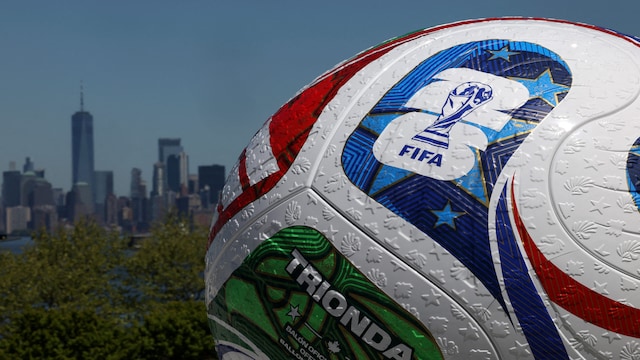
For more than a century, a football was simply something players kicked. The official FIFA World Cup 2026 ball, Trionda, represents the latest chapter in football’s technological evolution. Engineered through mathematics, aerodynamics and connected data systems, it is one of the most advanced footballs ever designed for the world’s biggest sporting stage. (Image Source: Reuters)
2 / 7
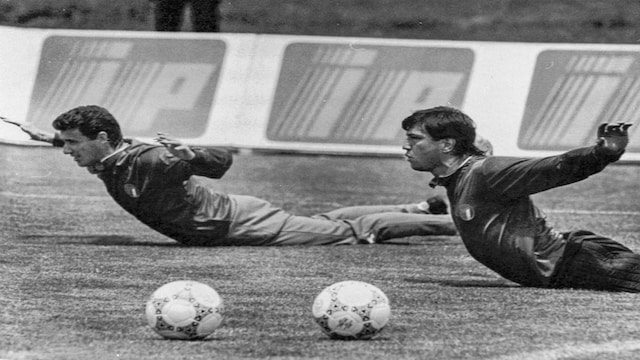
A quest for greater speed, stability and control has driven the evolution of World Cup balls. Panel counts through the years:
• Teamgeist (2006): 14 panels
• Jabulani (2010): 8 panels
• Brazuca (2014): 6 panels
• Telstar 18 (2018): 6 panels
• Al Rihla (2022): 20 panels
• Trionda (2026): 4 panels
With just four panels, Trionda uses the fewest ever in FIFA World Cup history. (Image Source: Reuters)

3 / 7
The Geometry Behind Trionda: At the heart of Trionda’s design is a tetrahedron, a geometric shape made of four triangles, with three meeting at every point.
Engineers curved and reshaped these triangular faces to create a near-perfect sphere. The result is a football whose structure is rooted in one of geometry’s most elegant forms while delivering enhanced consistency on the pitch. (Image Source: Reuters)

4 / 7
The Trionda’s four-panel construction is more than a design choice, as fewer panels mean fewer seams, creating a smoother and more consistent surface. The design reduces manufacturing variation, improves precision and gives engineers greater control over how the ball behaves in flight. Every seam affects airflow, making panel design a crucial part of football engineering. (Image Source: Vincent Carchietta-Imagn Images)
5 / 7
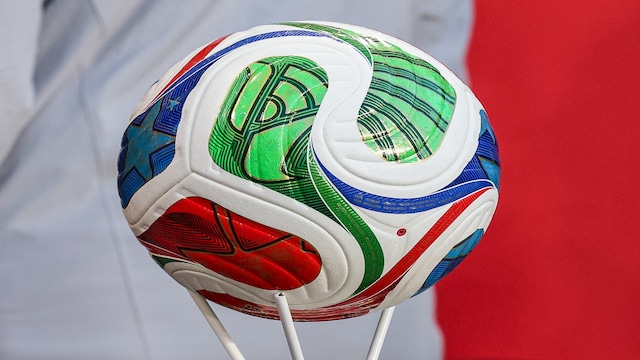
The Science of Flight: As a football travels through the air, it creates turbulence behind it. Too little turbulence can make a ball unpredictable. Too much can slow it down. Modern football design focuses on controlling airflow to produce shots that are both fast and stable. Trionda has been engineered to deliver lower drag, greater distance, enhanced stability and more predictable flight than many of its predecessors. (Image Credit: Vincent Carchietta-Imagn Images)
6 / 7
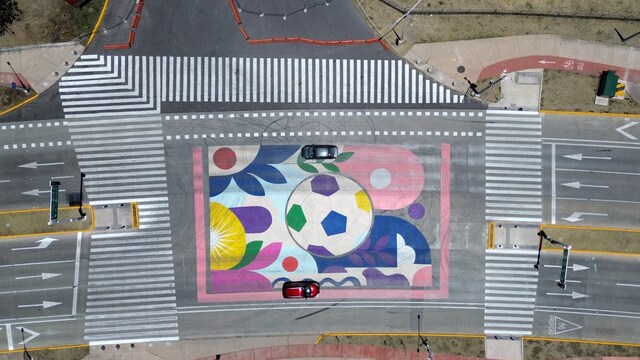
Trionda’s sensor works alongside AI tracking systems and stadium cameras to assist match officials. The technology can pinpoint the exact moment a player touches the ball, helping offside analysis and VAR systems deliver faster and more accurate decisions. By combining mathematics, physics and data technology, Trionda has transformed the football from a simple sporting object into one of the most sophisticated pieces of equipment ever used at a FIFA World Cup. (Image Source: Reuters)

7 / 7
Read More
Anjali Jha