

New Study Challenges Long-Held Assumptions About Cancer and Aging

Human Cancer Cell Illustration
New findings suggest that melanoma does not behave uniformly across the lifespan, with immune defenses and tumor activity shifting in unexpected ways between youth, middle age, and advanced age.

Cancer research may be overlooking a crucial variable: age.

Cancer becomes more common with age and is often harder to treat in older adults. Yet most lab studies still rely on young mice, roughly equivalent to humans in their early 20s. Fewer than 10% of experiments include aged animals. This mismatch may be one reason many cancer therapies that succeed in early testing fail later in human trials, where patients are typically much older.

New findings from Fox Chase Cancer Center, presented at the American Association for Cancer Research annual meeting, indicate that melanoma does not behave the same across age groups. Researchers found that cancer spread was lowest in young mice, highest in middle-aged mice, and then dropped again in very old mice.

Age Matters in Cancer Research

“The vast majority of studies are done in these very young mice that have a healthy and intact immune system,” said Mitchell Fane, PhD, a cancer biologist who specializes in aging and cancer, and lead investigator of the study. “Right now, it’s easy to personalize care for someone who’s young and fit, who’s potentially not going to experience as many toxicities; understanding how therapies affect older patients would give us more and better treatment options.”
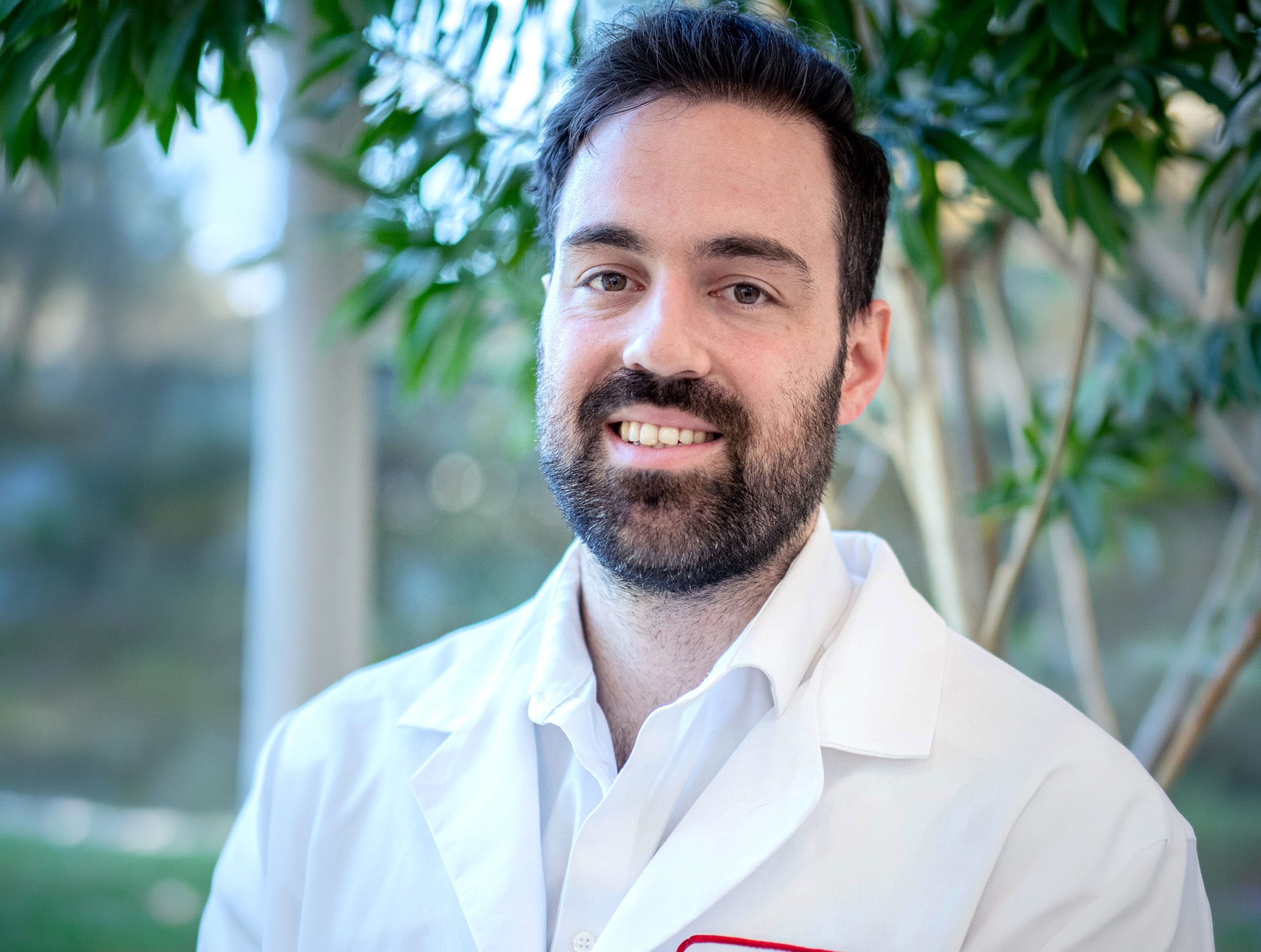
Mitchell Fane
Fane’s work, including studies presented at the American Association for Cancer Research annual meeting, could lead to better and more personalized treatments for older patients. Credit: Fox Chase Cancer Center

The researchers point to a group of immune cells known as gamma delta (γδ) T cells as a key factor. These cells act as early defenders that help stop cancer from spreading. Young and very old mice had higher levels of γδ T cells, and their tumors were more likely to remain dormant or spread less.

Middle-aged mice showed the opposite pattern. They had fewer γδ T cells, and their melanoma was much more likely to spread to organs such as the lungs and liver.

How Tumors Evade the Immune System

The study also found that melanoma cells can weaken the immune system as animals age. In middle-aged mice, tumors released molecules that suppressed or exhausted γδ T cells. This allowed previously inactive cancer cells to “wake up” and spread more aggressively.

When scientists removed γδ T cells from young and very old mice, cancer spread increased. This suggests these immune cells normally help control tumor growth. In contrast, blocking immune-suppressing signals restored immune activity and reduced cancer spread, but only in middle-aged mice.

One reason older mice are rarely used in research is cost and time. Young mice are easier and less expensive to obtain. In comparison, mice must be raised for about 18 to 24 months before they are considered aged.

To address this, Fane and his colleague Yash Chabra, PhD, both Assistant Professors in the Cancer Signaling and Microenvironment Research Program, helped create an aged mouse facility at Fox Chase. This resource gives scientists better tools to study how cancer develops in older individuals.

“Now we have a facility with established aged mouse colonies, which lowers the cost and time barriers to aging research,” he said. “It allows us to tell colleagues, ‘Your model is interesting, why not test it in aged mice?’”

Rethinking Cancer Risk Across the Lifespan

Understanding how aging affects cancer is essential for improving treatment in older patients. Fane’s lab is also exploring why cancer risk does not follow a simple upward trend with age.

“While risk increases steadily as people age, it abruptly decreases after ages 80-85, said Fane. “We want to explain the mechanism of why very old patients are getting less cancer, but middle-aged patients are getting more.”

Reference: “Abstract 2072: Role of the aging on the ᵧδ; T-cells in metastatic cutaneous melanoma progression.” by Kelly Coutant, Christopher Price, Jhon Pasamonte, Pulkit Datt and Mitchell Fane, 3 April 2026, Cancer Research.
DOI: 10.1158/1538-7445.AM2026-2072

Never miss a breakthrough: Join the SciTechDaily newsletter.
Follow us on Google and Google News.

Temple University Health System
Read More

Latest

Kusha Kapila’s Underneat co-founder left ₹3 crore job to travel the world: ‘People said I was crazy’

Reflecting on his career before taking the break, he said his work routine had become all-consuming. For 13 years, he spent most of his time at work. Underneat CEO Vimarsh Razdan says quitting ₹3 crore job to travel reshaped his approach to work. Vimarsh Razdan, co-founder and chief executive officer (CEO) of actor Kusha Kapila's

Top Stories | Iran tensions rise, Fed stands pat, M&M delivers, Assam floods and more

It was another volatile day on Dalal Street, but the bulls managed to stay in control. Strong foreign buying, corporate earnings, and optimism from global tech giants like Microsoft helped benchmarks finish in the green. Closing bell | Five key takeaways from today's market action Indian shares ended on a positive note in a volatile

Pricol Q1 profit jumps 34% as revenue crosses ₹1,100 crore

Auto components maker Pricol reported a strong June quarter, with net profit rising 34% and revenue growing 24% year-on-year. Higher operating profit and a modest improvement in margins reflected healthy business momentum despite cost pressures. 2 Min Read Pricol Ltdreported a 34.3% year-on-year (YoY) rise in consolidated net profit for the first quarter ended June

Newsletter

Don't miss

Kusha Kapila’s Underneat co-founder left ₹3 crore job to travel the world: ‘People said I was crazy’

Reflecting on his career before taking the break, he said his work routine had become all-consuming. For 13 years, he spent most of his time at work. Underneat CEO Vimarsh Razdan says quitting ₹3 crore job to travel reshaped his approach to work. Vimarsh Razdan, co-founder and chief executive officer (CEO) of actor Kusha Kapila's

Top Stories | Iran tensions rise, Fed stands pat, M&M delivers, Assam floods and more

It was another volatile day on Dalal Street, but the bulls managed to stay in control. Strong foreign buying, corporate earnings, and optimism from global tech giants like Microsoft helped benchmarks finish in the green. Closing bell | Five key takeaways from today's market action Indian shares ended on a positive note in a volatile

Pricol Q1 profit jumps 34% as revenue crosses ₹1,100 crore

Auto components maker Pricol reported a strong June quarter, with net profit rising 34% and revenue growing 24% year-on-year. Higher operating profit and a modest improvement in margins reflected healthy business momentum despite cost pressures. 2 Min Read Pricol Ltdreported a 34.3% year-on-year (YoY) rise in consolidated net profit for the first quarter ended June

Seoul Police Arrest Three in $19M Fake XRP Staking Scam

South Korean police have uncovered one of the country’s biggest XRP related crypto scams after arresting three suspects linked to a fake staking platform that promised fixed monthly returns.  Authorities say the fraud pulled in about 3.4 million XRP from 71 victims, while blockchain tracking shows total wallet flows linked to the operation reached 27.3

‘Sabah is open for business’: Hajiji courts investors with promise of sustainable growth, carbon‑negative credentials

Sabah is pitching itself as an Asia-Pacific hub for impact investing, betting that its forests, biodiversity and natural resources can become drivers of economic growth as it seeks private capital for sustainable development. — Picture by Firdaus Latif By Julia Chan First Published: Monday, 13 Jul 2026 11:44 AM MYT KOTA KINABALU, July 13 —

Want Your Business to Be Seen Everywhere? Meet Tonia Ryan, Creator of Fix Your Search

Some people are good at their jobs. Then there is Tonia Ryan, who has turned “getting found online” into something close to magic. She is the creator of Fix Your Search, and if you have ever wondered why some businesses pop up everywhere while others seem invisible...

Grey Business processes $61 million as stablecoins dominate payments

Grey Business enables startups and SMEs to open US Dollar (USD) corporate accounts, send and receive international payments, convert currencies, and transact using stablecoins such as USDC and USDT...