

Latest
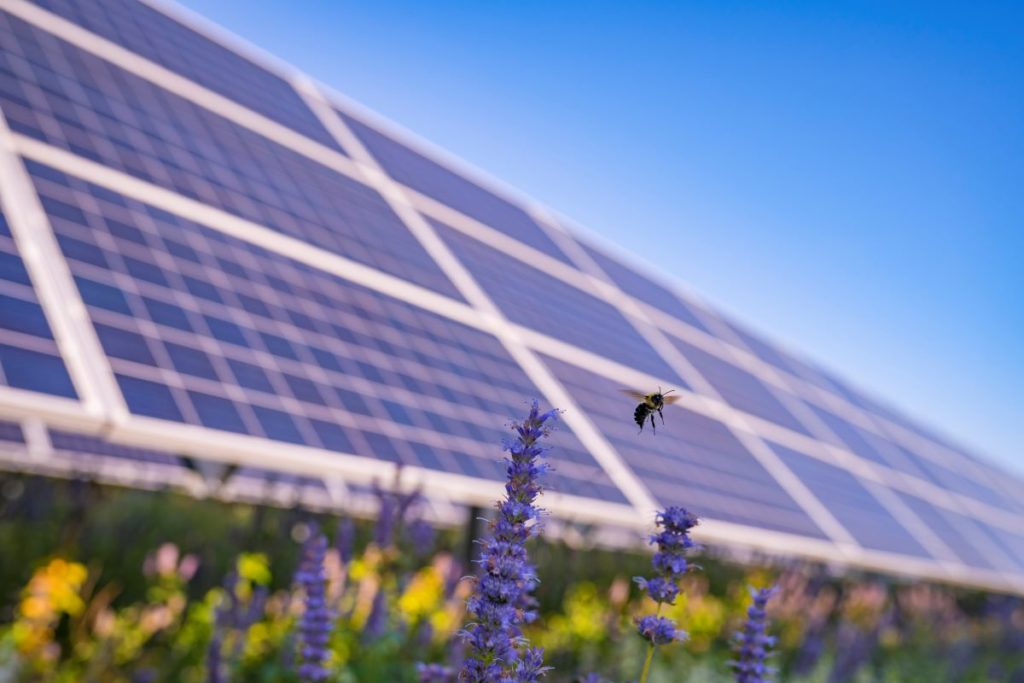
Italian renewables platform Whysol Renewables has secured financing towards four agrivoltaics (agriPV) plants and two battery energy storage systems (BESS) in southern Italy.
The company closed a €319 million (US$366.5 million) financing facility from a group of Italian and international banks and financiers. It will support the development of the agrivagriPV ltaics and BESS projects with a cumulative capacity of around 328MW.
This article requires Premium SubscriptionBasic (FREE) Subscription
Already a subscriber? Sign In
Try Premium for just $1
- Full premium access for the first month at only $1
- Converts to an annual rate after 30 days unless cancelled
- Cancel anytime during the trial period
Premium Benefits
- Expert industry analysis and interviews
- Digital access to PV Tech Power journal
- Exclusive event discounts
Or continue reading this article for free
The projects will be developed in the regions of Apulia, Sardinia and Campania in southern Italy.
The financing was led by Italian bank Cassa Depositi e Prestiti (CDP), along with Italian branches of BNP Paribas, Crédit Agricole Corporate & Investment, ING Bank N.V, and Intesa Sanpaolo-IMI Corporate & Investment Banking Division and UniCredit.
The agriPV projects will be eligible for the Italian government’s FER-X scheme, which provides contracts for difference (CfDs) for renewable energy sources; and the Energy Release 2.0 scheme, which incentivises energy-intensive companies to build renewable energy capacity. The BESS projects will qualify for the Electricity Storage Capacity Procurement Mechanism.
In its last auction for FER-X CfD capacity, the Italian government implemented the EU’s Net Zero Industry Act (NZIA) “non-price criteria” for equipment procurement. It effectively barred projects from using Chinese-made cells and modules in its process. Patrizio Donati, the co-founder and managing director at independent power producer (IPP) Terrawatt, wrote about the implications of the auction in a blog for PV Tech.
Italy is a relatively mature market for agriPV projects, which pair solar and agricultural practices on the same piece of land. The government has issued two tenders for agriPV capacity, amounting to €1.7 billion (US$1.94 billion) in backing for over 1.5GW of solar generation capacity.
Politics has impacted the growth of agriPV, with complex zoning laws around the use of “suitable areas” for solar development and its intersection with agricultural practices. Back in 2024, the government attempted to ban PV installations on agricultural land over apparent conflicts between the two sectors. That move was partially repealed in 2025.
Read Next
kWh Analytics subsidiary, Solar Energy Insurance Services, has launched a data-sharing initiative that rewards renewable energy assets for efforts in extreme weather mitigation.
Societe Generale and the EIB have signed a US$178.9 million financing agreement for the construction of a 137MW solar PV project in Italy.
Turkey must deploy around 8GW of new capacity annually to meet its 2035 target of 120GW of installed solar and wind, a new report says.
PV manufacturing capital expenditure is expected to rebound this year, following two years in the doldrums as the industry weathered a global oversupply of modules, new figures show.
After a sharp decline in 2023, PV manufacturing capital expenditure is set to bounce back this year, and not just in China, writes Moustafa Ramadan.
Embattled solar manufacturer Maxeon has applied for ‘judicial management’ in Singapore, following a challenging year for the company.
Most Read
Upcoming Events
San Francisco Bay Area, USA
Will Norman
Read More