

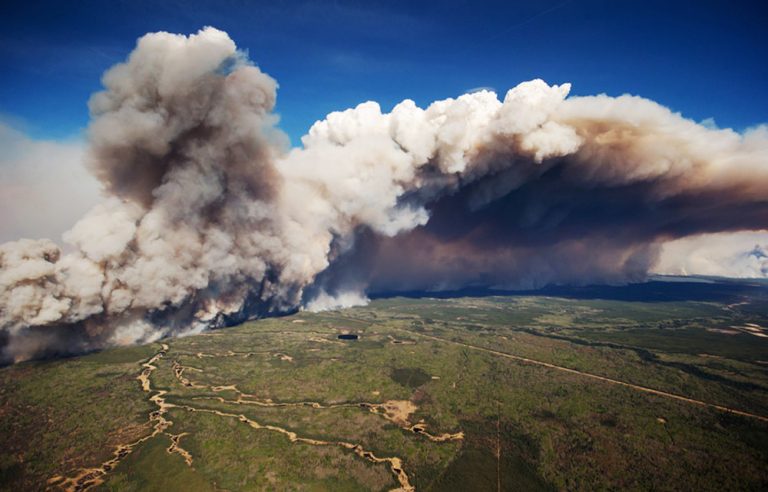
Improving efficiency, reducing waste and emissions, strengthening supply-chain transparency and shifting finance away from harmful activities can all reduce risk while protecting ecosystems. (File Photo)
The accelerating loss of nature has become a critical systemic risk that threatens global economic stability, financial markets and human well-being.
That’s the stark conclusion of a landmark new report published this week by the Intergovernmental Platform on Biodiversity and Ecosystem Services (Ipbes).
The assessment, known as the Business and Biodiversity report — approved by representatives of more than 150 governments — reframes biodiversity loss not as a distant environmental concern, but an immediate economic threat that reaches into boardrooms, supply chains and households alike.
From food production and water security to insurance, tourism and global trade, it finds that every sector of the economy depends, directly or indirectly, on nature’s continued stability. Yet economic growth has come at a staggering ecological cost and the systems that reward profit continue to penalise protection.
Between 1820 and 2022, the global economy grew from $1.18 trillion to more than $130 trillion. Businesses played a central role in that expansion. But the failure to account for nature — and to integrate its value into economic and financial systems — has driven unprecedented biodiversity loss, with 14 out of 18 categories of nature’s contributions to people now in decline.
The consequences are not evenly shared. While wealth and material capital have grown, natural capital has shrunk. The benefits of growth have accrued to some, while the ecological costs — degraded land, polluted water and collapsing ecosystems — have fallen disproportionately on others, particularly in poorer regions and among Indigenous and local communities.
This imbalance has now reached a tipping point, Ipbes warns. The decline of biodiversity and ecosystem services is no longer a background trend but a critical systemic risk, with implications for human rights, economic resilience and long-term prosperity.
The report describes how business governance and strategy have developed in systems that largely ignore or undervalue biodiversity, creating a gap between how companies operate and what nature needs to survive.
Business decision-making is driven by short-term timelines driven by quarterly profits, annual reports and fast investment returns while ecosystems recover over much longer periods.
Because of this mismatch, biodiversity loss is rarely factored into corporate decisions and companies struggle to justify action under traditional ideas of fiduciary duty that prioritise short-term shareholder returns. At the same time, markets do not properly price biodiversity or the services nature provides, such as clean water, climate regulation and pollination.
Companies therefore face little financial penalty for harming nature and gain few rewards for protecting it, leaving weak incentives to conserve, restore or sustainably use biodiversity.
Business-as-usual still dominates
Despite mounting evidence, the report finds that the conditions in which businesses operate continue to reward behaviour that drives nature’s decline.
Large subsidies still flow to activities that degrade biodiversity, often with the support of industry lobbying. In 2023, global public and private finance flows with directly negative impacts on nature were estimated at $7.3 trillion. Of that, private finance accounted for $4.9 trillion, while environmentally harmful public subsidies made up about $2.4 trillion.
By contrast, just $220 billion — roughly 3% of that amount — was directed towards conservation and restoration.
“The loss of biodiversity is among the most serious threats to business,” said professor Stephen Polasky, a co-chair of the assessment. “Yet the twisted reality is that it often seems more profitable to degrade biodiversity than to protect it.”
Short-term incentives, weak enforcement and voluntary reporting regimes have allowed ecological damage to remain largely invisible on balance sheets. While individual projects may appear profitable, their cumulative impacts can push ecosystems past irreversible thresholds – with cascading economic consequences.
Blind spot in boardrooms
One of the report’s most striking findings is how poorly biodiversity is understood and managed within the corporate world.
Less than 1% of publicly reporting companies mention their impacts on biodiversity. Among financial institutions representing about 30% of global market capitalisation, the most commonly cited barriers to assessing nature-related risk are a lack of reliable data, models and scenarios.
Too often, the report notes, businesses spend more time navigating competing frameworks for disclosure than taking meaningful action. Scientific research, meanwhile, is rarely written with business decision-makers in mind, further widening the gap between knowledge and practice.
“This report cuts through that confusion,” said Matt Jones, another co-chair of the assessment. “It brings together years of research and practice into a single integrated framework that shows both the risks of nature loss to business and the opportunities for business to help reverse this.”
Measuring what matters
The report emphasises that while no single method can capture all business impacts and dependencies on nature, useful tools already exist.
It proposes three core principles for assessing biodiversity-related methods: coverage, accuracy and responsiveness.
What needs to be measured depends on the context — whether a decision is being made at a single site, across a supply chain or at a portfolio level. Local, site-specific decisions require bottom-up approaches, including on-the-ground observations and participatory monitoring.
Corporate and financial decisions can rely on broader, top-down models that assess risk across regions and sectors.
Indigenous lands, knowledge and exclusion
The report, too, highlights how industrial development now threatens 60% of indigenous lands globally and a quarter of all indigenous territories are under high pressure from resource extraction.
Yet indigenous peoples and local communities, who are often the most effective stewards of biodiversity, remain underrepresented in business research and decision-making.
“Data and knowledge are siloed,” said professor Ximena Rueda, a co-chair of the assessment. “There is limited recognition of indigenous peoples and local communities as holders of knowledge on conservation, restoration and sustainable use.”
Respectful collaboration, the report argues, is not only an ethical imperative but a practical one. Better integration of scientific and Indigenous knowledge can improve risk management, reduce conflict and unlock long-term value.
What businesses can do better
While the scale of the crisis is daunting, the assessment stresses that many actions that benefit biodiversity also make business sense.
Improving efficiency, reducing waste and emissions, strengthening supply-chain transparency and shifting finance away from harmful activities can all reduce risk while protecting ecosystems. Financial institutions, in particular, have the power to redirect capital at scale.
Crucially, the report warns against greenwashing. Transparent strategies, credible metrics and public disclosure of both impacts and lobbying activities are essential if business action is to translate into real biodiversity outcomes.
“Better engagement with nature is not optional for business — it is a necessity,” said Rueda. “It is vital for their bottom line and long-term prosperity.”
Ipbes is clear that businesses cannot deliver transformative change on their own. Governments, financial actors and civil society must work together to reshape the conditions under which markets operate.
The report identifies five pillars of an enabling environment: policy and regulation, economic and financial systems, social norms and culture, technology and data and capacity and knowledge. Across these areas, it sets out more than 100 concrete actions that could align economic activity with ecological reality.
“We need to move beyond the false choice between being pro-business or pro-environment,” Polasky said. “All business depends on nature. Protecting it is not a constraint on prosperity – it is a prerequisite.”