

1348 Ex Voto Review
I appreciate it when developers take a big, ambitious swing, even if it doesn’t connect. But I also like games that have a narrow focus, because it allows developers to do a few things well. 1348 Ex Voto is a medieval-themed action-adventure. At around 6-8 hours, it has a short running time that’s perfectly aligned with the scope of its story and gameplay. It’s a compact and narrowly focused experience.
Cusp of the Renaissance
The narrative premise is a classic quest: you play as a young would-be knight, Aeta, who must find her beloved friend Bianca, perhaps kidnapped or killed by invaders. Seasoned veteran actors Alby Baldwin as Aeta and Jennifer English as Bianca do their best to elevate the material. Their performances are one of the game’s highlights.
Aeta goes on a very linear journey through the sunny Italian countryside, the ruins of ancient towers, shaded forests, and abandoned keeps as she searches for Bianca. The landscape, lighting, and environments are often detailed but generally, the world is quite often empty. This makes trekking across the world feel a bit lonely. Aside from a few consumable food items, scrolls, and weapon parts, there isn’t a lot to interact with. The few humans Aeta meets are either NPCs with long-winded narratives or enemies ready for combat.
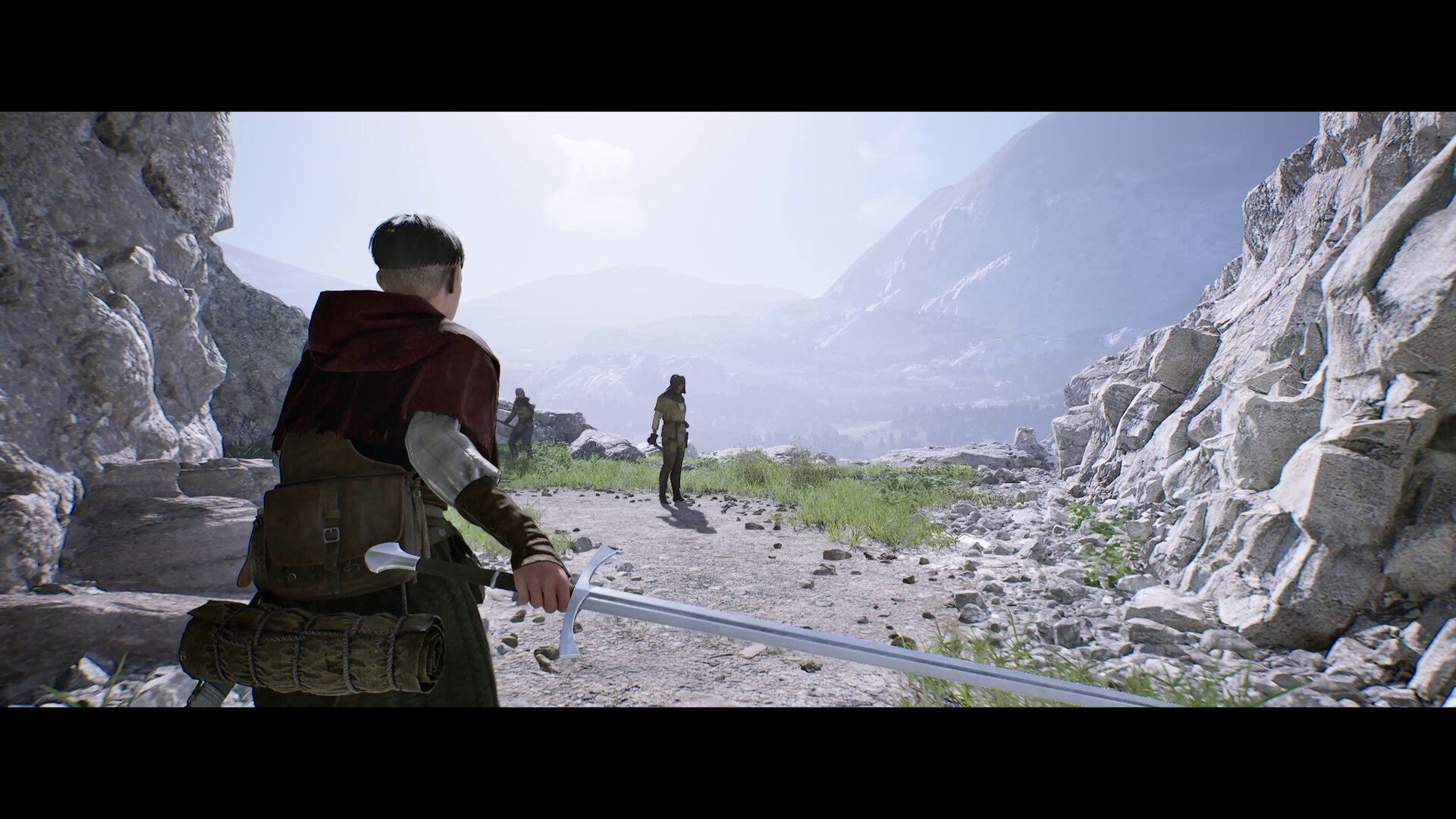
Found scrolls unlock upgrades to basic stats, plus unlock new combat mechanics. Food items replenish health. In other words, the game’s RPG elements are pretty bare bones. The game’s systems expand a little as the game progresses, but not by much.
Swinging and Missing
Combat is clearly the focus of 1348 Ex Voto, and unfortunately, it comes up short. On one hand, the game’s back-to-basics mechanics are refreshingly direct. There’s a light and heavy one-handed swing, a devastating two-handed attack, a block, and a dodge. These fundamentals are supplemented later on by poorly explained skills from the upgrade tree. The game’s combat feels a little like a less refined version of Kingdom Come: Deliverance. It’s generally slow and rightfully feels cumbersome, as swinging many pounds of steel would be.
On the other hand, the decent core combat systems are like a gemstone forced into an ugly setting. The game’s lock on mechanic is straight-up broken, swinging wildly from one target to the next, outside of the player’s control. Combine that with the too-close field of view and squirrelly camera, and you have a recipe for frustration, if not literal motion sickness. Enemies spawn in behind you out of nowhere. Their weapons have impossible reaches and they regain stamina just like you do. There’s no save-anywhere system. Sometimes the game saves right before a major fight, but not always.
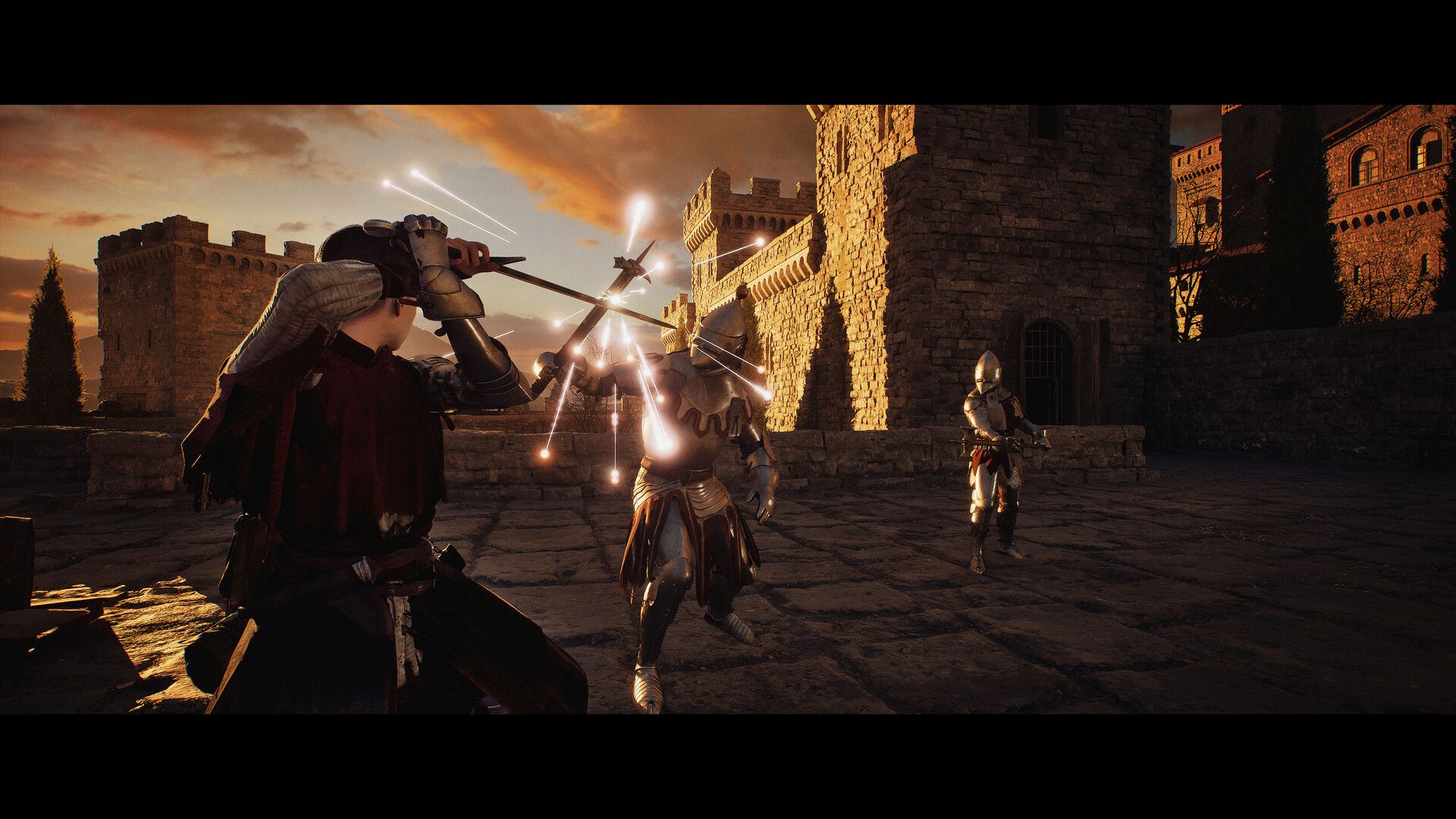
Those hard-to-overlook negatives aside, there are definitely moments when the combat clicks into place. It’s a bit heartbreaking, really. You realize that with a fair amount of tinkering, 1348 Ex Voto could have been an awesome little medieval combat sim.
Tales as Old as Time
With its Arthurian overtones and references to classic myths like Orpheus and Eurydice, 1348 Ex Voto feels at times like a classic quest story, with generally decent writing and acting. Frame rate stutters and a handful of crashes on start-up aside, the game ran generally well. The musical score and voices often had to fight it out for prominence, and combat was marred by a lot of repeated lines and dramatic music cues during fights.

1348 Ex Voto joins games like A Plague’s Tale and Kingdom Come: Deliverance in giving players a slice of medieval life. Unlike those titles, 1348 Ex Voto is a short time commitment with a relatively simple story and unique character dynamics. If the world weren’t quite so barren and the combat were less frustrating, 1348 Ex Voto’s attractive environments could be the foundation for a special little game.
***PC code provided by the publisher for review***
The Good
- Attractive environments
- Decent voice acting
- Interesting story premise
58
The Bad
- Frustrating combat and mechanics
- Broken lock on and camera
- Performance issues
- World is very empty
Mark Steighner
Read More