

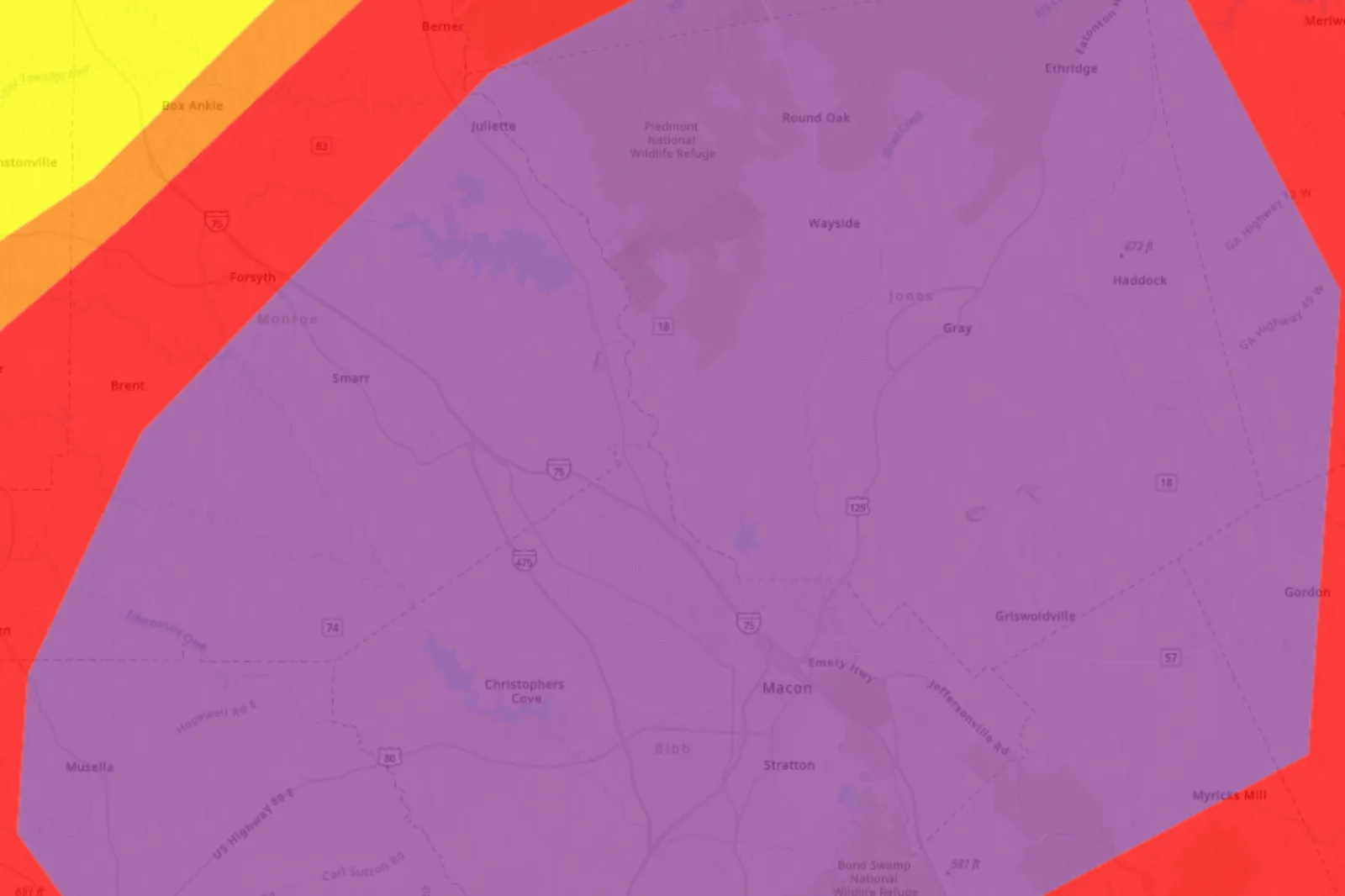
Thousands of people in Georgia have been advised to avoid going outside amid concerns over dangerous levels of air pollution, according to a map from AirNow.
The map shows an area of fine particle (PM2.5) pollution in the “very unhealthy” category on the Air Quality Index (AQI) around Macon, Gray, and Haddock as of 2.45 a.m. ET on Wednesday.
This means the risk of experiencing serious health effects from poor air quality is “increased for everyone,” AirNow says.
When air quality reaches the “very unhealthy” category, the Environmental Protection Agency (EPA) advises that those in sensitive groups—including children, older adults, and people with certain medical conditions—should avoid all outdoor physical activity. Everyone else should avoid long or intense outdoor activities.
What To Know
PM2.5 refers to tiny, inhalable particles of pollution measuring 2.5 micrometers or less in diameter—smaller than a strand of hair. These particles can be unknowingly inhaled, penetrating deep into the lungs and even entering the bloodstream.
Exposure to this pollution can trigger symptoms ranging from mild eye, nose, and throat irritation, to chest tightness and shortness of breath. In severe cases, it may lead to serious health conditions and hospitalization. It can also trigger or worsen health conditions including asthma.
The particles of pollution come from a variety of sources, including dust from unpaved roads, construction sites, and emissions from vehicles and industrial plants.
The EPA warns that “even if you are healthy, you may experience temporary symptoms from exposure to elevated levels of particles.”
How is Air Quality Measured?
The EPA uses the Air Quality Index (AQI) to categorize and communicate air quality across the United States. The AQI ranges from 0 to 301+, and organizes pollution levels into six color-coded categories:
- 0 – 50 – Good: Air pollution poses little or no risk to the public.
- 51 – 100 – Moderate: The quality of air may be a risk for some people, especially those who are unusually sensitive to air pollution.
- 101 – 150 – Unhealthy for sensitive groups: People in sensitive groups—including young children, older adults, and those with certain medical conditions—could be affected by poor air quality.
- 151 – 200 – Unhealthy: All members of the public could be affected by the air quality, but those in sensitive groups could experience more serious health effects.
- 201 – 300 – Very Unhealthy: The health risks from poor air quality are increased for everyone.
- 301+ – Hazardous: An emergency health warning is issued as everyone is more than likely to be affected by the quality of the air.
What Residents Should Do In Areas With “Very Unhealthy” Air Quality
When particle pollution is particularly high, it can also affect indoor air quality. The EPA therefore advises people in affected areas to use air filters to clear their air as much as possible, and to reduce using candles, wood-burning stoves, and indoor open fires.
Residents should closely monitor the AirNow air quality maps and look out for updates from the EPA.
Amanda Greenwood
Read More