

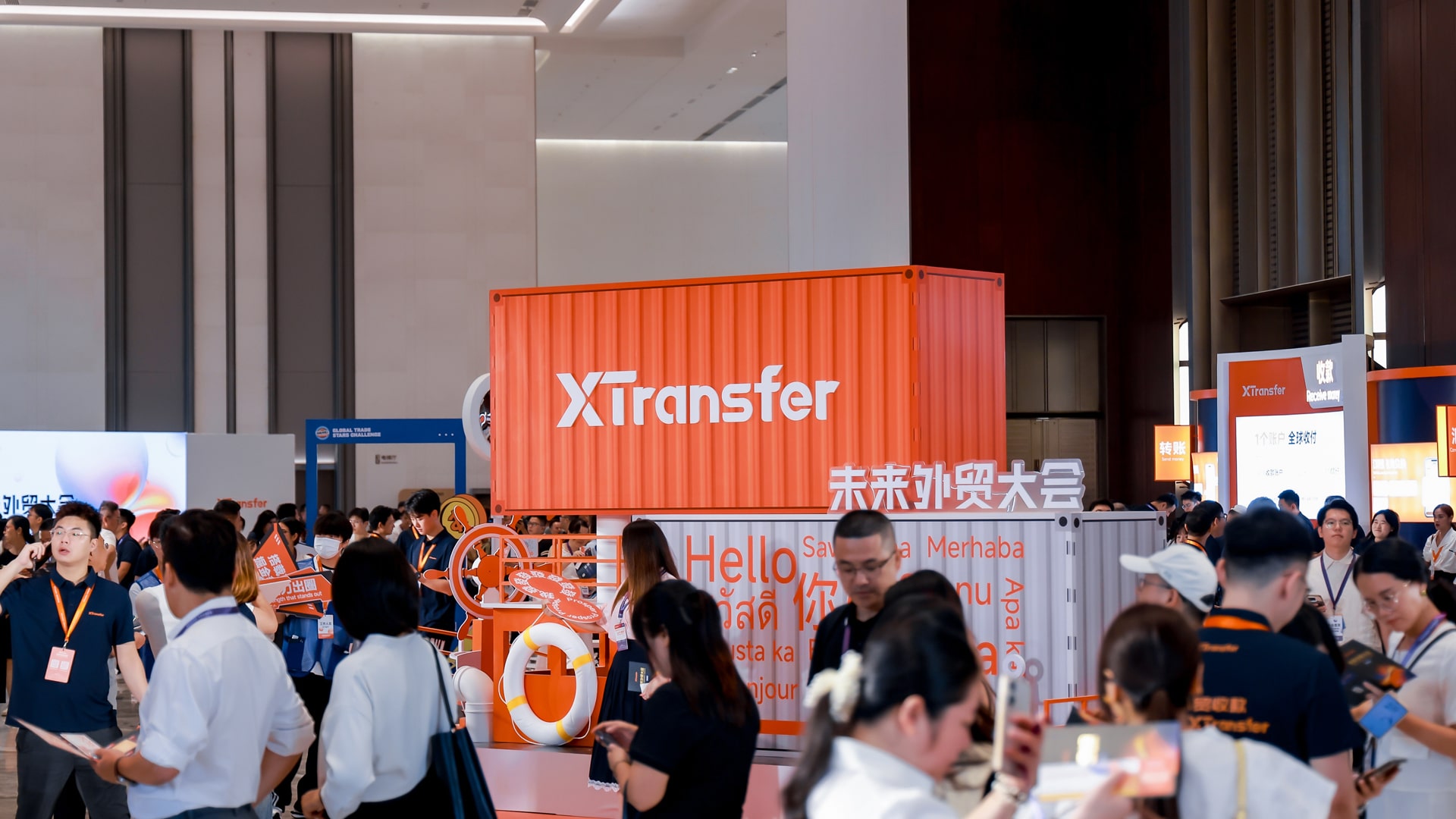
On August 26, Guangzhou hosted the 2025 TradeVision Summit, one of China’s key annual trade gatherings, where more than 3,000 representatives of exporters, factories, and trading companies met to explore new opportunities in shifting global markets.
The event was organized by XTransfer, a Shanghai-headquartered B2B cross-border payments platform that has grown into one of China’s leading providers of trade payment and risk control solutions for small and medium enterprises. Since its founding in 2017, the company has reportedly expanded rapidly to serve more than 700,000 enterprise clients worldwide and secured payment licenses across mainland China, Hong Kong SAR, Singapore, the UK, the Netherlands, the US, Canada, and Australia.
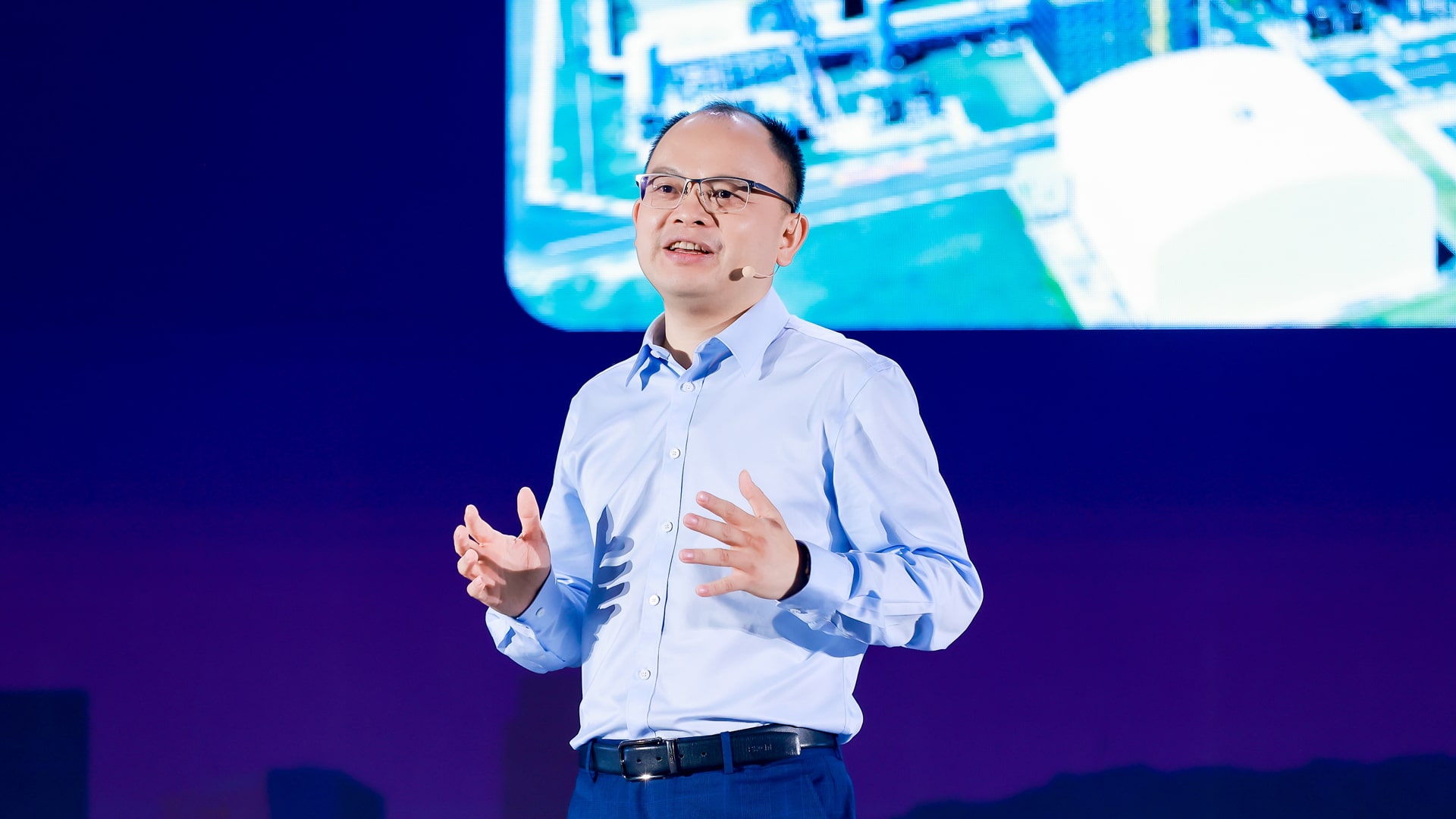
Bill Deng, founder and CEO of XTransfer, framed his keynote address around three central questions shaping the future of foreign trade:
- Where are the new market opportunities?
- How can cross-border payments balance freedom with compliance?
- And how will XTransfer’s upcoming financial network, known as X-Net, redefine the role of small businesses in global trade?
Repositioning in global markets under tariff barriers
Deng began by acknowledging the turbulence exporters faced this year. In April, the US imposed tariffs of up to 145% on Chinese imports in what was dubbed the “Liberation Day” offensive, escalating trade tensions into a global conflict. For XTransfer, the share of inflows from US buyers has fallen from 22% in 2018 to 9% this year. Even with a temporary truce in May that pulled tariff rates lower, Deng cautioned that “global supply chains will not return to their old form.”
That sentiment aligns with the World Trade Organization’s latest forecast. After expanding by 2.9% in 2024, world merchandise trade is projected to contract by 0.2% this year, though a rebound of about 2.5% is expected in 2026. The reversal highlights how tariff disputes and policy uncertainty have reshaped trade dynamics in less than a year.
The disruption is also visible in XTransfer’s PMI for B2B export trade. Released at the summit, the July reading stood at 52.4%, signaling continued expansion. A reading above 50% indicates growth compared with the previous month, while below 50% signals contraction. African markets posted the highest performance at 53.7%, led by Ghana and Nigeria, while ASEAN (53.3%) and Latin America (52.8%) also showed resilience.
Among product categories, the “new trio” of lithium batteries, electric vehicles, and solar cells stood out. Their export price index hit 58.3%, significantly above the overall goods price index of 54.1%. This suggests that higher-value, green-oriented exports are outpacing traditional categories such as clothing, furniture, and home appliances, which showed more stable pricing.
External forecasts reinforce the trend: the International Energy Agency (IEA) expects global electric vehicle sales to surpass 20 million this year, or roughly one in four cars sold, up from 17 million in 2024. By 2030, the IEA foresees EVs making up more than 40% of all cars sold if current policy settings remain largely unchanged.
Still, challenges persist. The PMI’s sub-indices showed cash flow management at a robust 68.4%, but logistics efficiency lagged sharply at 41.5%, reflecting shipping bottlenecks in the Red Sea, Middle East, and European ports. Falling container costs have offered some relief, with Drewry’s World Container Index declining to about USD 2,250 per 40-foot container as of August 21, though inefficiencies remain a pressing concern.
XTransfer’s PMI report includes case studies illustrating how exporters are adapting. A Guangzhou-based heavy machinery exporter, for example, has been building overseas warehouses and service networks, while a textile trader in Ningbo is expanding in West Africa to capture demand driven by a stable local currency and infrastructure growth. These are only two examples, underscoring how SMEs are finding ways to push forward despite headwinds.
Freedom and compliance in payments
One of the most acute pain points for exporters, Deng said, is payment collection in emerging markets. Buyers often struggle to remit US dollars, leaving sellers unable to complete transactions.
XTransfer’s answer is a local collection account system developed in cooperation with local banks. Exporters can now receive payments directly in local currencies such as the Nigerian naira, Ghanaian cedi, Brazilian real, and South African rand. Covering destinations that represent more than 80% of China’s foreign trade volume, these accounts bridge the “last mile” of fund repatriation and reduce reliance on costly intermediaries.
The company applies a two-pronged strategy. In mature markets such as the US, UK, and Singapore, it focuses on obtaining licenses, complying with strict data and privacy regulations, and serving offshore-registered companies. In developing markets, where financial infrastructure is often rudimentary, XTransfer said it replicates and adapts China’s digital finance capabilities, replacing informal underground channels with compliant, government-recognized systems.
To make this possible, the company has standardized API requirements for banking partners and offers clear commercial incentives. By sharing 90% of transaction value with clients and splitting the remaining 10% with banks, XTransfer positions compliance infrastructure as a profitable investment for local institutions.
AI risk control and global compliance
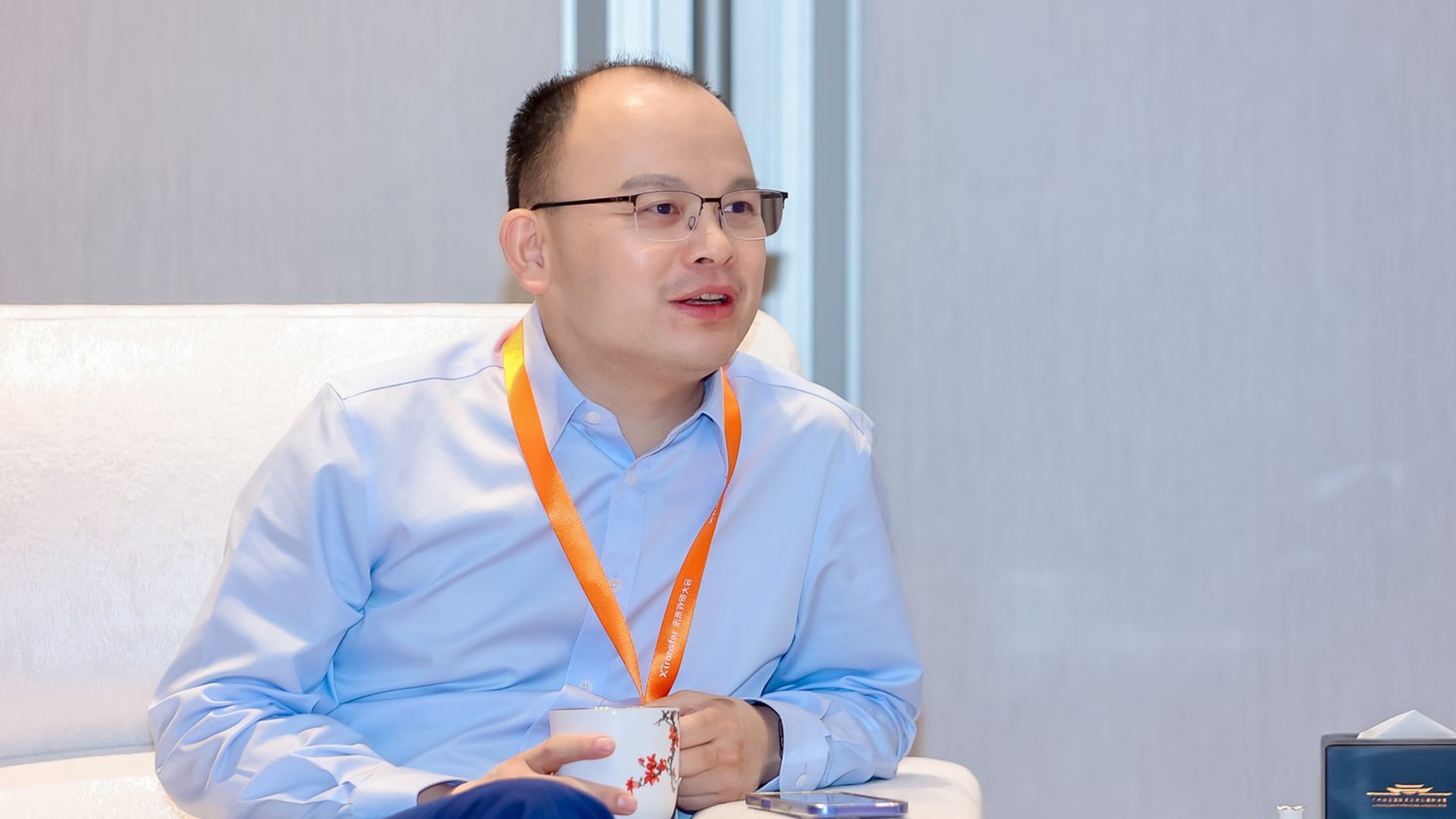
Running global operations means navigating highly fragmented financial environments. Deng admitted that XTransfer’s biggest challenge has been balancing efficiency with compliance across jurisdictions. The company’s solution has been to invest heavily in artificial intelligence, keeping complex risk control processes within its own systems.
Over the past year, XTransfer’s “invisible approval rate,” the share of transactions processed automatically without user disruption, rose from 96% to more than 99%, reflecting improvements in its systems. The platform analyzes client data from company websites, customs records, storefronts, and even multilingual social media. In one case involving a payment note containing a string of random characters that traditional systems could not decode, the system was able to infer it referred to a new ceramic tile product and validated the transfer without delay.
This proficiency draws on XTransfer’s combined use of open-source large models with a smaller domain-specific model the company said is trained for trade payment use cases such as fraud detection and error reduction.
The company also follows a structured five-step compliance alignment process with banks and regulators:
- Identify customer profiles.
- Analyze risk exposure points.
- Establish risk control measures.
- Measure risk control results.
- Review and optimize strategies.
Speaking with KrASIA at a post-event media session, Deng noted that AI’s role extends beyond compliance. SMEs, he said, can now use AI to analyze trade policies or forecast demand in specific markets, cutting down on field research costs:
“AI is a great equalizer as it lowers the barrier to knowledge. Even a one-person company can now operate globally.”
Bringing SMEs onto the global financial map
The summit also marked the release of XTransfer’s white paper for X-Net. The initiative envisions a platform that connects global banks, import-export enterprises, and stablecoin infrastructure to establish new cross-border payment standards.
While X-Net is currently a roadmap rather than a live product, recent regulatory moves have made its ambitions more tangible. Hong Kong’s stablecoin ordinance took effect on August 1, and the US passed the GENIUS (Guiding and Establishing National Innovation for US Stablecoins) Act in July, laying down frameworks for stablecoin adoption in mainstream finance.
Stablecoins, Deng said, could solve exporters’ longstanding frustrations with correspondent banking, where payments can cost USD 50–100 and take up to a week to settle. By contrast, stablecoins generally transfer instantly, are traceable, and operate around the clock. Combined with XTransfer’s local collection accounts, they could streamline the entire payment chain.
Deng expects stablecoin use in trade to scale rapidly. “Within three years, stablecoin payments will exceed half of total transactions,” he told KrASIA. He believes adoption will accelerate quickly due to the network effect in trade, a factor he noted also drove the rapid rise of WeChat Pay and Alipay in China.
Rather than issue its own stablecoins, XTransfer envisions its role as providing the payment rails for those launched by major banks and financial institutions. It also plans to introduce dual-currency wallets supporting both fiat and stablecoins, a move that some clients already describe as making it “the Alipay or WeChat Pay for foreign trade.”
Charting a “digital Silk Road”
Through a strategy that combines deepening presence in emerging markets, pioneering AI-driven compliance, and laying out a new vision for global B2B settlement with X-Net, XTransfer seeks to position itself as a critical bridge for the next phase of globalization.
Africa in particular stands out. According to the African Development Bank, the continent currently faces an infrastructure funding gap of USD 68–108 billion per annum. This mismatch underscores the demand Deng described as a “new blue ocean” for SMEs.
For Deng, the significance also goes beyond payments. He reminded attendees that trade is also about services, culture, and resilience. From Chinese companies building factories abroad to the global success of cultural exports like toys and video games, the meaning of “going global” is evolving.
In that sense, the TradeVision Summit was not only about tariffs and payments, but about charting what Deng called a “new beginning” for SMEs in China and beyond.
“Our mission has never wavered,” Deng said. “To make financial services accessible to SMEs worldwide.”
This article was published in partnership with XTransfer.
T. K. Lin
Read More