

Business News
Susan Monarez, the former director of the Centers for Disease Control and Prevention, testified before the Senate Health, Education, Labor and Pensions Committee on Sept. 17 in her first public remarks since she was fired. Some Republicans on the committee accused her of lying and said she hadn’t been on board with the administration’s agenda.
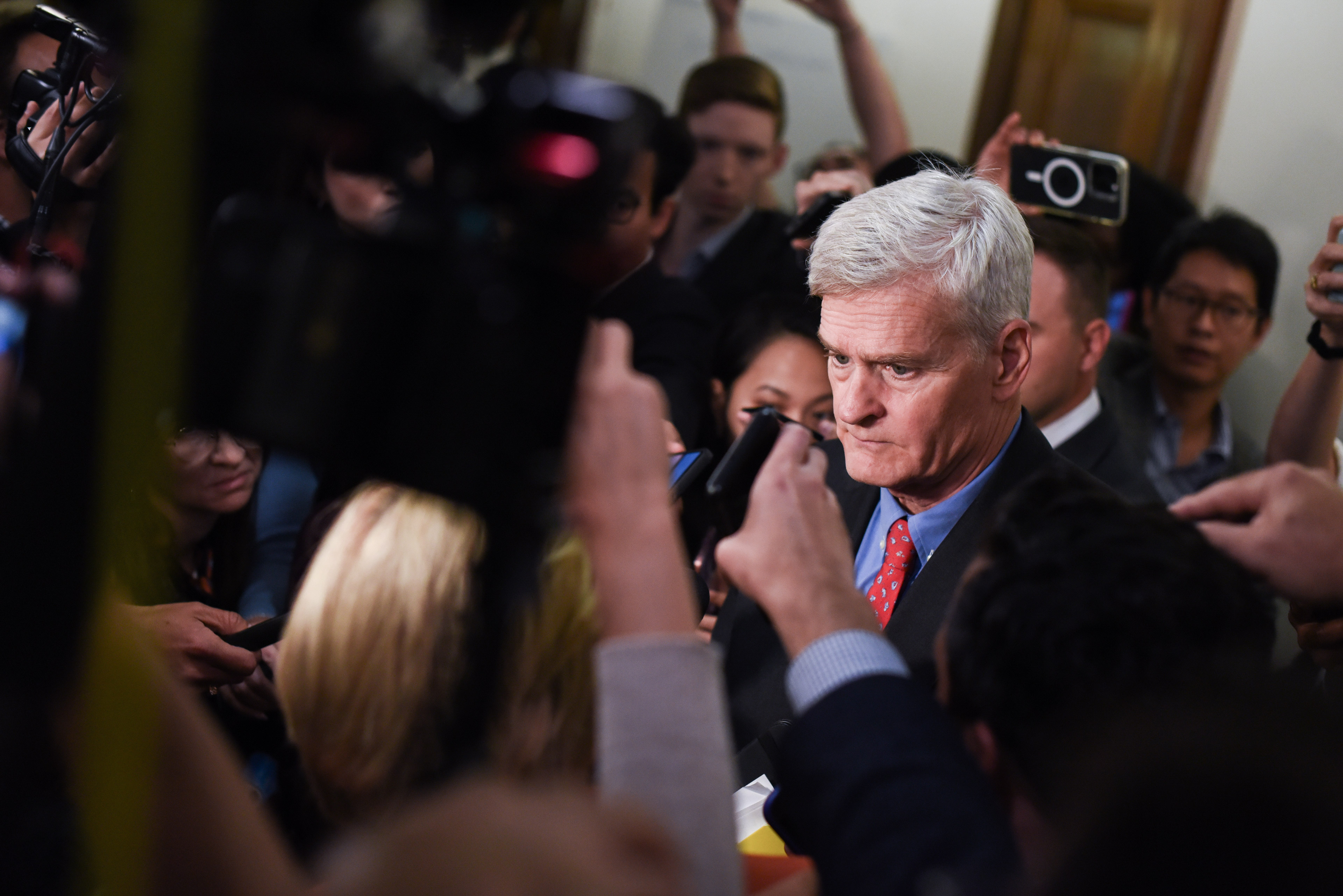
As in earlier hearings concerning Robert F. Kennedy’s performance as secretary of the Department of Health and Human Services, the focus was on Sen. Bill Cassidy (R-La.), who cast the deciding vote as HELP Committee chair to confirm Kennedy early this year. Since that vote, Cassidy has repeatedly expressed skepticism about Kennedy’s leadership.
Cassidy noted that when Kennedy swore in Monarez on July 31, he extolled her “unimpeachable scientific credentials.” Less than a month later, she was fired. “What happened?” Cassidy said. “Turmoil at the top of the nation’s top public health agency is not good for the health of the American people.”
Monarez said she came into the job aligned with Kennedy’s goals of improving America’s health and was open to changing the policies and structures at the CDC. She wasn’t ready to compromise her scientific judgment, however.
“I could have kept the office, the title, but I would have lost the one thing that cannot be replaced: my integrity,” she said.
Email Sign-Up
Subscribe to KFF Health News’ free Morning Briefing.
Monarez said that at an Aug. 25 meeting, Kennedy demanded she fire senior scientists and agree to approve all changes in vaccine policy put forward by the new members of the Advisory Committee on Immunization Practices. In June, Kennedy fired its members and replaced them with a smaller group that includes leading opponents of the U.S. vaccination program.
When Monarez refused both requests, she said, Kennedy told her to resign. She refused, and the White House fired her, she said.
Kennedy, in testimony this month, denied he’d made the ultimatums and said Monarez had lied. Republican senators repeated that claim at Wednesday’s hearing. Markwayne Mullin of Oklahoma said a recording of the Aug. 25 meeting contradicted Monarez’s account. But later in the hearing, Cassidy said that Mullin had retracted his statement, saying there was no such recording.
The hearing appeared to confirm reports that Kennedy intends to change the childhood vaccine schedule, moving initially against recommending a hepatitis B vaccination shortly after birth, a practice the CDC has supported for more than three decades.
The CDC recommends that children be vaccinated against 16 pathogens with about 25 shots, sprays, or oral vaccinations in their first two years of life. The vaccines protect kids against such diseases as influenza, measles, whooping cough, meningitis, diarrhea, chickenpox, cancer, and pneumonia. It’s up to states to decide which vaccinations are required for schoolchildren.
Sen. Lisa Blunt Rochester (D-Del.) noted that for decades universal vaccination of newborns for hepatitis B has reduced case rates of the disease among young people by 99%, as reported by KFF Health News. Sens. Ashley Moody (R-Fla.), Ed Markey (D-Mass.), and Cassidy (R-La.) asked about plans, first reported by KFF Health News, for ACIP to vote to recommend pushing the first dose of the hepatitis B vaccine from the hours after birth to age 4.
Cassidy, in closing the hearing, spoke gravely of the dangers of ending the hepatitis B dose for newborns. He noted that before 1991 as many as 20,000 babies would become infected with hepatitis B, often leading to liver disease and sometimes death. Today, fewer than 20 babies a year contract the virus from their mothers, he said.
“That is an accomplishment to make America healthy again, and we should stand up and salute the people that made that decision,” he said.
Asked by reporters after the hearing whether the American public should have confidence in the advisory committee if it votes to delay the hepatitis B dose for newborns, he replied, “No.”
Read More
Arthur Allen and Hannah Norman, KFF Health News