

The growth of South Africa’s sports betting sector tells a positive economic narrative. However, stakeholders may turn to the government to improve oversight and civic responsibilities to protect the most vulnerable communities of the Rainbow Nation.
Sports betting is driving a boom in South Africa’s gaming industry according to government figures, which are being mirrored in financial results from some of the country’s biggest licences.
In contrast, the long-standing casino sector remains flat, the latest stats from the government’s statistics department suggest. The National Gambling Board of South Africa, put total gaming revenue for the 2023/24 financial year at R59.3bn (€2.9bn).
This marked a 25.7% increase from the R47.2bn (index €€) in 2022/23, 41% more than R34.4bn in 2021/22 and 60% more than R23.3bn in 2020/21 – betting on sports has been the main driver behind this, though casinos continue to lead by overall volume.
Diverse sports audience benefits Sports Betting
Given South Africa’s varied sports scene and national enthusiasm for various sports, this isn’t too surprising. The country is home to Africa’s largest and oldest horse racing industry, while football, rugby union, cricket, boxing and MMA also have a huge following.
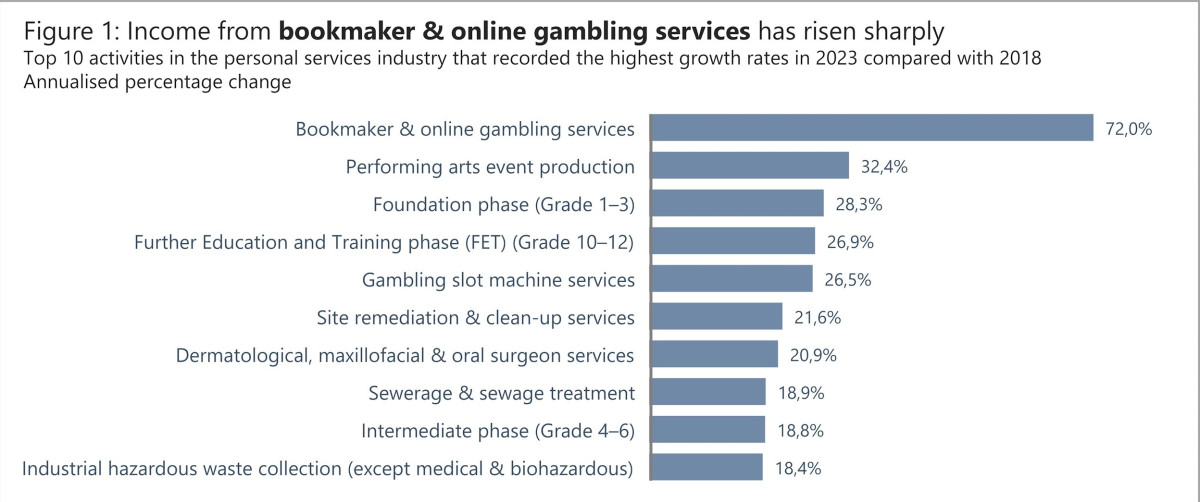
Government data shows that revenue for betting and online gaming rose 72% between 2018 and 2023, the sharpest growth rate out of all personal services industry sectors in South Africa during this time period.
Revenue from gambling slot machines also rose by 26.5%, but overall the government notes that casino revenue has fallen flat despite being, as mentioned above, the most common form of gaming in South Africa with market share well over 80%.
These trends can also be seen in the financial filings of some of the country’s largest gaming groups. Sun International, which runs various casino resorts throughout the country as well as the SunBet Group online bookmaker, can attest to this.
The firm published its interim results earlier this week, showing revenue growth of 70.7% YoY to R874m (H1 2024: R512m) for the SunBet Group. Similar to national stats, casino accounted for the vast majority of the group’s revenue at R3.2bn (from urban casinos), down 1% YoY – a figure which could be described as flat.
Betting and the South African economy
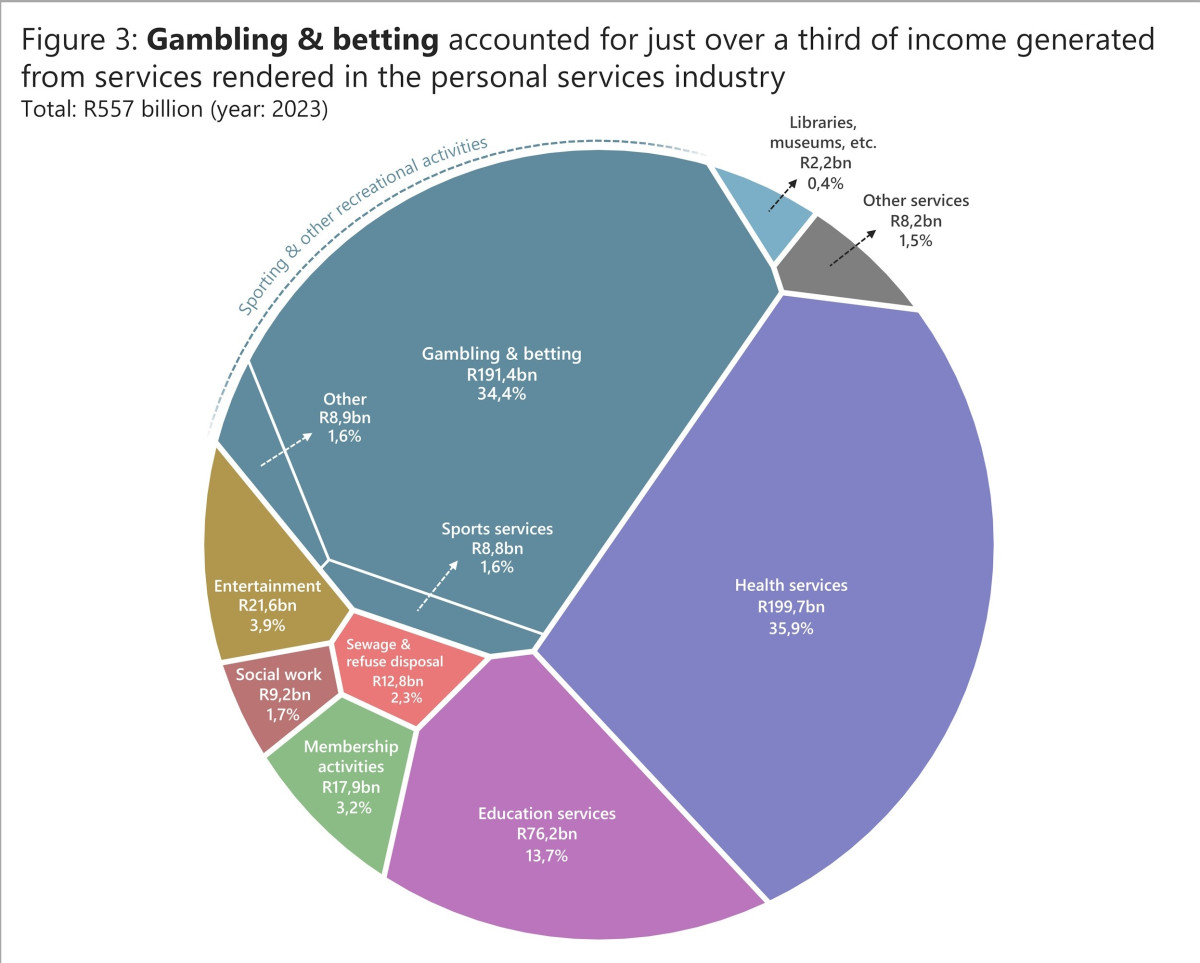
As indicated above, betting and gaming has established itself as one of the biggest service industries in South Africa. From a financial standpoint, this is great news for the South African government, serving as a lucrative source of tax revenue and an employer.
South Africa’s national debt currently stands at around $300.2bn as of December 2024, although Q2 economic figures did show 0.8% growth in GDP – better than some observers expected, and the government will want to see this continue. The growth of the country’s gaming sector may be encouraging.
Urgent reforms for civic responsibilities?
However, as a country with some estimates putting the proportion of South Africa’s 60 million population living in poverty as high as 63% and with unemployment estimated at 33%, the growth of the gaming sector may require a thorough conversation around social responsibility and gambling harm.
This is a conversation familiar to many other markets. In Brazil, for example, the government opted to ban recipients of the Bolsa Familia and Continuous Cash Benefit (BPC) state welfare schemes from participating in the regulated gaming market, amounting to around 30% of the population.
A conversation around regulation in South Africa has already been underway for some time, with Sean Coleman, CEO of the South African Bookmakers Association (SABA) telling SBC News that a “lack of regulation in the illegal/unauthorised gambling space is affecting the rule of law and criminality” way back in 2022.
The years since have seen the government move to upgrade regulations with the Remote Gambling Act, launched in December 2024 with the intention of modernising the legal framework around gambling which dates back to 2008.
The efforts by the governing Democratic Alliance (DA) have, as expected in any legislative discussion around gambling, run into some hurdles. Some opposition politicians are concerned about the increase in online gambling in South Africa, driven by more widespread mobile phone usage, and the potential for addiction.
Figures showing the vast revenue made by South Africa’s regulated gaming industry will likely further fuel this discussion. The huge economic contribution the sector is making could add yet another dynamic to this.
September 15 will see SBC organise a ground breaking charity football event in Lisbon. Make sure you get the chance to see some of the most legendary names in football by securing your ticket today at https://www.legendscharitygame.com/
Ted Orme-Claye
Read More