

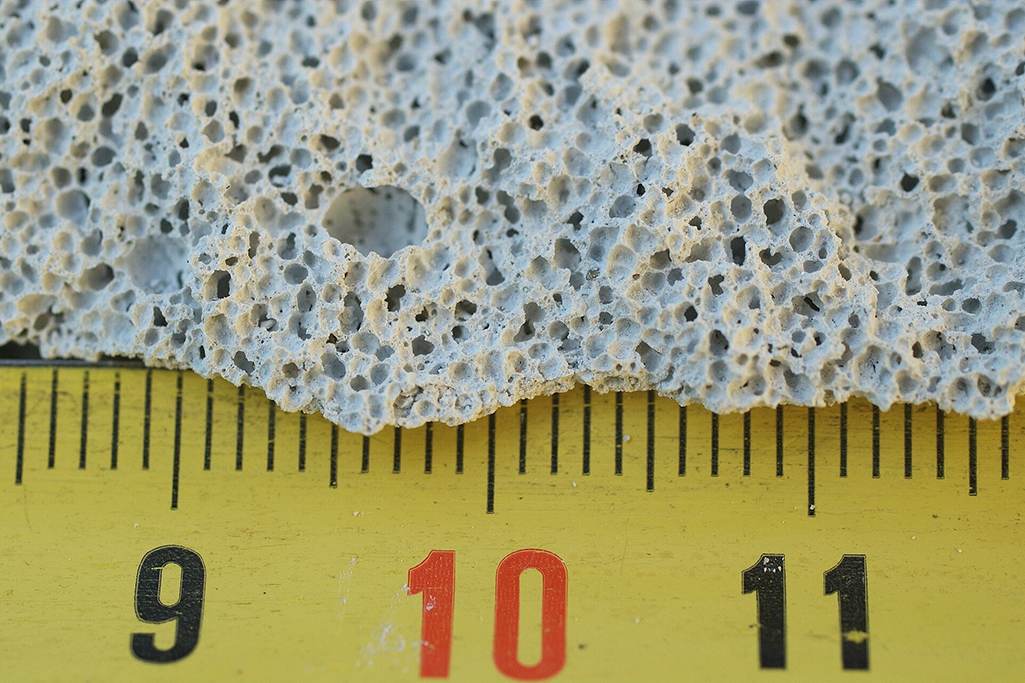
Close-up of RAAC. CREDIT: Marco Bernardini/Wikimedia
Reinforced autoclaved aerated concrete (RAAC) has been discovered at another hospital site in the past year, the Department of Health and Social Care (DHSC) has revealed.
The Manchester University NHS Foundation Trust’s Oxford Road site was found to contain the material.
Two years on from the issue coming to national prominence when more than 100 schools were not allowed to reopen for their new academic term, the latest update from the government’s programme to remove it from the NHS estate shows problems are still being discovered.
Popular in the years after the Second World War, RAAC has an approximate lifespan of 30 years and its safety has been the subject of warnings from bodies such as the Government Property Office and Building Research Establishment.
The government aims to remove all RAAC from all health buildings in England by 2035.
The Manchester University NHS Foundation Trust was already known to have two buildings containing the material – at North Manchester General Hospital and Wythenshawe Hospital – after surveys uncovered issues in 2023. The trust stressed at the time that it was not found in areas containing patients’ beds.
It allocated £7.4m to deal with the issue in its 2025/26 draft capital plan earlier this year.
The trust has been approached about the Oxford Road RAAC and why it was not picked up in the earlier survey.
The DHSC said seven hospitals had their RAAC completely removed in the past year.
These were Kidderminster Hospital, Broomfield Hospital in Chelmsford, Homerton University Hospital in London, Scunthorpe General, Churchill Hospital in Oxford, Queen Victoria Hospital in East Grinstead and New Cross Hospital in Wolverhampton.
A total of 41 hospitals remain in the programme for RAAC removal.
Twelve more are due to be completed by the end of the financial year. These are: the Countess of Chester Hospital; Royal Blackburn Hospital; Royal Hampshire County Hospital in Winchester; St Mary’s Community Hospital in Portsmouth; Guildford Hospital; Royal United Hospital in Bath; Rowley Regis Hospital; Queen Elizabeth Hospital in Birmingham; Clatterbridge Hospital in Liverpool; Leigh Infirmary in Wigan; North Devon District Hospital; and Stamford and Rutland Hospital.
Minister for elective care Karin Smyth said: “Our nation’s hospitals have been starved of investment and left to crumble for more than a decade. Patients and staff deserve safe, modern hospitals and an NHS they can rely on. Today’s progress means thousands more people can walk into NHS hospitals with confidence, knowing this government is putting safety first.
“Thanks to the record investment this government is providing, we are cleaning up the mess we inherited, ripping out potentially dangerous concrete and rebuilding our NHS.”
Read More
Ian Weinfass