


Author
Tim Alper
Author
Tim Alper
About Author
Tim Alper is a British journalist and features writer who has worked at Cryptonews.com since 2018. He has written for media outlets such as the BBC, the Guardian, and Chosun Ilbo. He has also worked…
Last updated:

Crypto advocates, IT experts, and media outlets are concerned that lawmakers’ deliberations on South Korea’s stablecoin legislation have “slowed to a standstill.”
The South Korean newspaper Busan Ilbo reported that all four stablecoin-related draft laws submitted to the National Assembly in recent months are currently stuck in the committee stage.
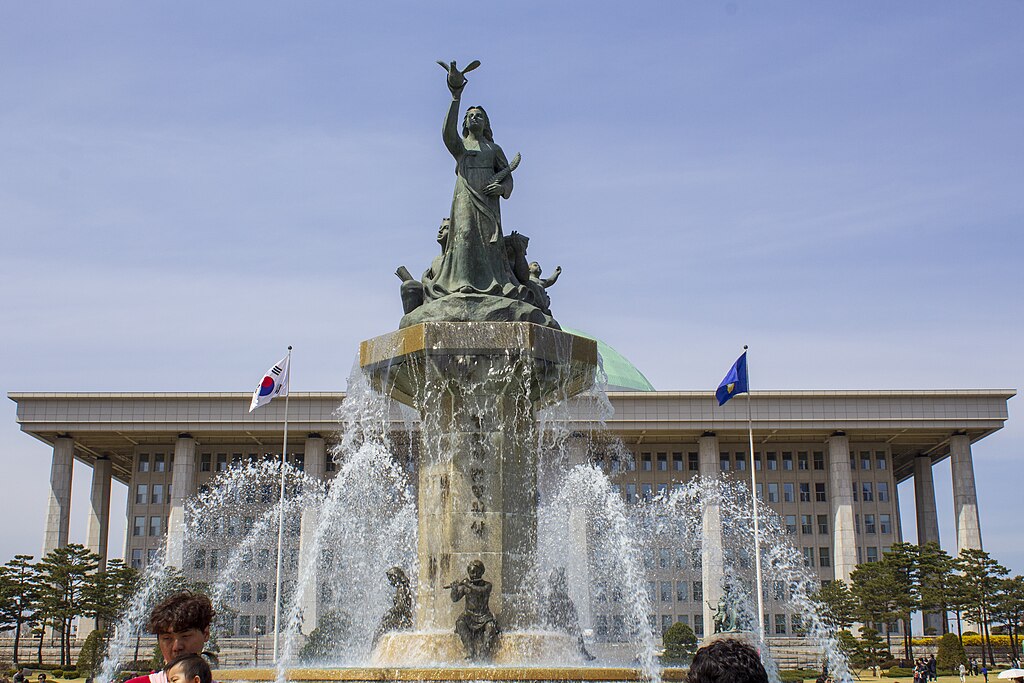
S Korea’s Stablecoin Legislation: Stuck in Committee
The bills’ delay, the newspaper wrote, is due to the fact that regulators and lawmakers cannot agree on key terms. Busan Ilbo wrote:
“Discussions on institutionalizing stablecoins in South Korea are stuck at a standstill. This stems from persistent disagreements between the National Assembly, the government, and the Bank of Korea (BOK).”
The outlet noted that the parties cannot agree on the question of whether they should let fintech and IT firms issue coins.
More conservative voices at the BOK and in the government want to restrict issuance to domestic commercial banks.
The question of whether or not to let fintech firms issue KRW-pegged coins is extremely sensitive in South Korea.
The country’s business space is dominated by large conglomerates known as chaebol. All of these firms have advanced finance and tech subsidiaries.
In recent years, internet giants such as Naver and Kakao have also moved into the space. The BOK and others fear that letting firms issue KRW-pegged coins will lead to the rise of big tech-controlled “private currencies.”
Historically, chaebol have wielded enormous political and financial influence in South Korea. The BOK is concerned that surrendering its monopoly on currency issuance to these firms (or new tech giants like Naver) will erode its power.
Conversely, the BOK exercises considerable regulatory powers over the commercial banking space. As such, it seems ready to dig its heels in on the matter.
More than 16 Korean business leaders, including the heads of the country’s four major conglomerates, will accompany President Lee Jae Myung as part of a business delegation to support the Korea-U.S. summit scheduled for Monday. https://t.co/F854pSVlxw
— The Korea JoongAng Daily (@JoongAngDaily) August 25, 2025
Equity Requirements
The four bills all feature varying requirements for stablecoin issuers. The most progressive of the quartet proposes ensuring issuers have a minimum of 500 million won ($360,026) in equity capital.
This bill would essentially open the door to startups that wish to start issuing KRW-pegged stablecoins.
But the most conservative of the bills states that only firms with a minimum of 5 billion won ($3.6 million) in equity capital can enter the market.
Busan Ilbo wrote that the review process has been divided between two of the National Assembly’s committees, namely the Political Affairs Committee and the Strategy and Finance Committee.

This split is “hindering progress,” the outlet remarked. A senior official at a South Korean blockchain industry firm, speaking to Cryptonews.com on condition of anonymity, said:
“This delay is very frustrating. The government should make up its mind quickly, either way. Our rivals in other countries aren’t being left in limbo like us.”
Playing Catchup with Washington
South Korean critics have pointed to progress on stablecoins in Germany, China, and Japan, as well as the US.
The Japanese Financial Services Agency is reportedly set to authorize the Tokyo-based fintech company JYPC’s bid to issue the nation’s first yen-pegged stablecoin.
Experts in Seoul think that Berlin, Tokyo, and Beijing are all acting in response to events in Washington; keen to avoid a “unipolar” drift toward the US dollar.
US President Donald Trump signed the GENIUS Act into law in July this year. The act sets out a range of regulatory requirements for would-be stablecoin issuers.
Last week, the President of the USD Coin (USDC) issuer Circle Heath Tarbert held a stablecoin-themed meeting with the BOK Governor Rhee Chang-yong.
Tarbert also met with some of South Korea’s top bankers. The Circle chief spoke to top executives from financial behemoths like Kookmin, Woori, and Shinhan.
Follow us on Google News
Read More
Anthony Buresh