

Bitcoins
Key Takeaways:
- Over 90% of global bitcoin mining hardware is built by three Chinese firms: Bitmain, Canaan, and MicroBT.
- All three are now manufacturing in the U.S. to sidestep Trump-era tariffs and ease geopolitical tensions.
- U.S. firms and officials warn of national security risks as Chinese hardware integrates into American infrastructure.
As the U.S. ramps up its trade and tech rivalry with China, the crypto supply chain is undergoing a major transformation. Bitmain, Canaan, and MicroBT — responsible for the vast majority of global bitcoin mining machines — are relocating core operations to American soil. The move is not just a response to tariffs but a strategic recalibration of the global crypto mining landscape.
Bitcoins The Hardware Trifecta: Bitmain, Canaan, and MicroBT
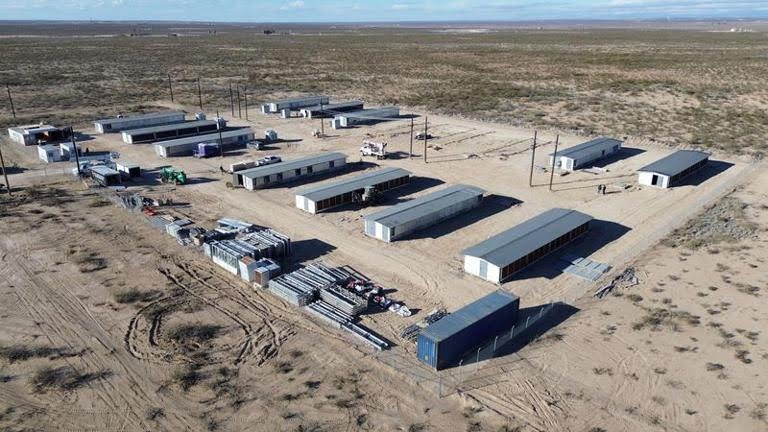
Bitmain, headquartered in Beijing, has long dominated the bitcoin mining industry with its Antminer series. It began assembling machines in the U.S. in late 2024, shortly after the presidential election signaled renewed pressure on Chinese tech imports.
Canaan, once based entirely in China, initiated pilot production in the U.S. in early 2025, labeling it as an “exploratory move” in response to fluctuating trade rules. MicroBT followed suit, announcing its own U.S. localization strategy aimed at avoiding tariffs and staying close to American clients.
Combined, the three companies control more than 90% of the global bitcoin mining hardware market. Industry analysts from Frost & Sullivan estimated their collective market share reached 95.4% by computing power sold in late 2023.

Bitcoins Why the U.S.? Tariffs, Pressure, and Opportunity
The Trump Tariff Effect
President Donald Trump’s second term has intensified trade pressure on Chinese tech sectors. His administration reinstated sweeping tariffs in early 2025 under the “Liberation Day” trade agenda, slapping a 30% import duty on tech products, including cryptocurrency mining hardware.
To maintain competitive pricing and ensure uninterrupted access to the North American market—now responsible for over 30% of global bitcoin mining activity—Chinese manufacturers have turned to domestic U.S. production.
“The U.S.–China trade war is no longer a temporary tension,” said Guang Yang, CTO at Conflux Network. “It’s reshaping the crypto mining supply chain in a way that will permanently shift production and influence.”
Bitcoins Security Concerns Mount Over Chinese Hardware
Despite the move to manufacture locally, U.S. companies and officials remain cautious. Sanjay Gupta, Chief Strategy Officer at California-based crypto hardware firm Auradine, warned that overreliance on Chinese-built machines—even if assembled in the U.S.—poses a risk.
“Hundreds of thousands of these rigs are now connected to the U.S. electrical grid,” Gupta said. “That’s not just an economic issue. It’s a potential national security concern.”
Auradine, which is backed by publicly traded miner Marathon Digital (MARA), has been lobbying for stricter rules on Chinese hardware imports and advocating for increased investment in domestic alternatives.
Read More: A Study of Bitcoin Mining’s True Cost: Environmental, Economic, and Grid-Level Impacts of Mining
An Uneven Crypto Playing Field

While the U.S. is home to major bitcoin mining companies—such as Riot Platforms, CleanSpark, Core Scientific, and Marathon Digital—nearly all still rely heavily on Chinese-made rigs.
This imbalance has created what Gupta calls “a dangerous dependency.” If China were to restrict exports or manipulate prices, the ripple effects could destabilize the global mining network. Attorney and crypto legal analyst John Deaton echoed the sentiment, stating, “Bitcoin’s decentralization is only as strong as its hardware diversity. And right now, it’s not very decentralized.”
Bitcoins Chinese Firms Tread Carefully on U.S. Soil
The shift to U.S. manufacturing isn’t without risks for the Chinese companies involved.
Bitmain’s artificial intelligence (AI) subsidiary, Sophgo, was recently placed on the U.S. Entity List, which limits its ability to access American technology owing to national security concerns. Sophgo does not make mining hardware but rather focuses on AI chips, and its blacklisting signals broader scrutiny of the financial supply chains that underpin Chinese tech companies’ operations.
Canaan has attempted to distance itself from its Chinese roots. It relocated its headquarters to Singapore and reported that 40% of its 2024 revenue came from U.S.-based operations.
MicroBT, which once operated largely from Shenzhen, has begun exploring partnerships with U.S. data centers and energy providers to support its American clients.
Read More: Landmark Bill Protecting Bitcoin Mining Rights Passes in Arizona
Industry’s $12 Billion Future Hinges on Hardware
The global bitcoin mining hardware market is projected to hit $12 billion by 2028, according to research from Statista and Frost & Sullivan.
This makes the ongoing power struggle over supply chains more than a regulatory issue—it’s a high-stakes commercial battleground.
North America’s miners need machines. Chinese firms make them. The question is: who will control the process in the next five years?
Bitcoins A Strategic Shift, Not Just a Business Move
What is clear is that this migration is not just about evasion of tariffs.
With the ongoing spectacle of U.S.-China relations, and growing hostility and distrust around the world, Chinese firms are hoping to be seen as long-term partners. Meanwhile, American businesses are racing to reduce their reliance by developing domestic rivals and lobbying for federal support.
This collision of crypto, hardware and geopolitics represents the beginning of a global hardware bifurcation in the Web3 era. The ripple effects could change everything from mining economics to the geographic distribution of crypto power.
Bitmain, Canaan and MicroBT are playing the long game — some of the youngest in the industry are repositioning themselves at the center of the world’s largest mining market while trying to stay a step, or a phone call, ahead of changing regulations.
Isabella Flores Read More