

Japan has announced the revision of its Basic Plan for Food under the larger Basic Law for Food, Agriculture and Rural Areas, a change which will impact the country’s food and agriculture trade for the next two decades.
Major themes in Japan’s new Basic Law for Food, Agriculture and Rural Areas
- Ensuring food security
- Establishing a food system in harmony with the environment
- Sustainable development of agriculture
- Promoting rural areas
Japan is one of the largest food importers in the region due to its low food self-sufficiency rate and large ageing population. This also makes it a significant player in terms of regional and global food trade, so this new major policy change is likely to have major implications for many markets.
Here are some of the most important takeaways for global food firms that have trade dealings with Japan:
1) Increased focus on accessibility

In light of the current economic downturn, Japan is moving to firm up what it calls ‘food security for every citizen’. This includes both the establishment of a sustainable food supply as well as ensuring all consumers have access to it.
“In addition to further development of the food industry, ensuring reasonable pricing will be at the core of all policies under the Basic Plan,” Japan’s Ministry of Agriculture, Forestry and Fisheries (MAFF) stated via a new 444-page white paper submitted to the Japanese National Diet of legislatures.
“This will include promoting pricing determination for all products throughout the food system that take reasonable costs into account, by both being clear on the production costs as well as fostering consumer understanding.”
In terms of physical accessibility, the plan will include strategies to improve last-mile logistics to consumers, match unused food providers to recipients needing it, and strengthening the functions of food banks and other such operators.
2) Disaster prevention, response and recovery as a main theme

Japan has faced several high-magnitude earthquakes, the most recent being the August 2024 Hyūga-nada earthquake (7.1 magnitude) and the Noto earthquakes in January 2024 (7.5) and May 2023 (6.2) respectively.
Several warnings also sounded in the first six months of 2025. This includes one in March where researchers believed ‘stress energy’ in a trench off Hokkaido could lead to a ‘potential’ 9.0 megaquake.
Most recently, on June 4 2025 the country was put on alert regarding a string of ‘moderate’ earthquakes between 4.3 to 6.3 in magnitude off the coast of Hokkaido. The authorities urged residents to take precautions “just in case” this was the precursor to said ‘megaquake’.
“Natural disasters have become more severe and frequent, Japan needs to strengthen our agriculture sites and rural area responses to achieve stability and safety in these areas,” a spokesman for the ministry said.
The guidelines to forming special response teams in the event of various such disasters have also been laid out, in order to establish a clear chain of command amid any emergencies.
“In order to prevent situations where food supply is affected during national emergencies, the government has established the Food Supply Difficulties Countermeasures Act to allow urgent implementation of any necessary measures,” he added.
“[Ensuring the accessibility of] specified staple foods such as rice, wheat, soybeans, various vegetable oils and fats, livestock products, sugar and so on which are crucial for consumer diets and the national economy will receive priority during these times.
3) Expansion of exports
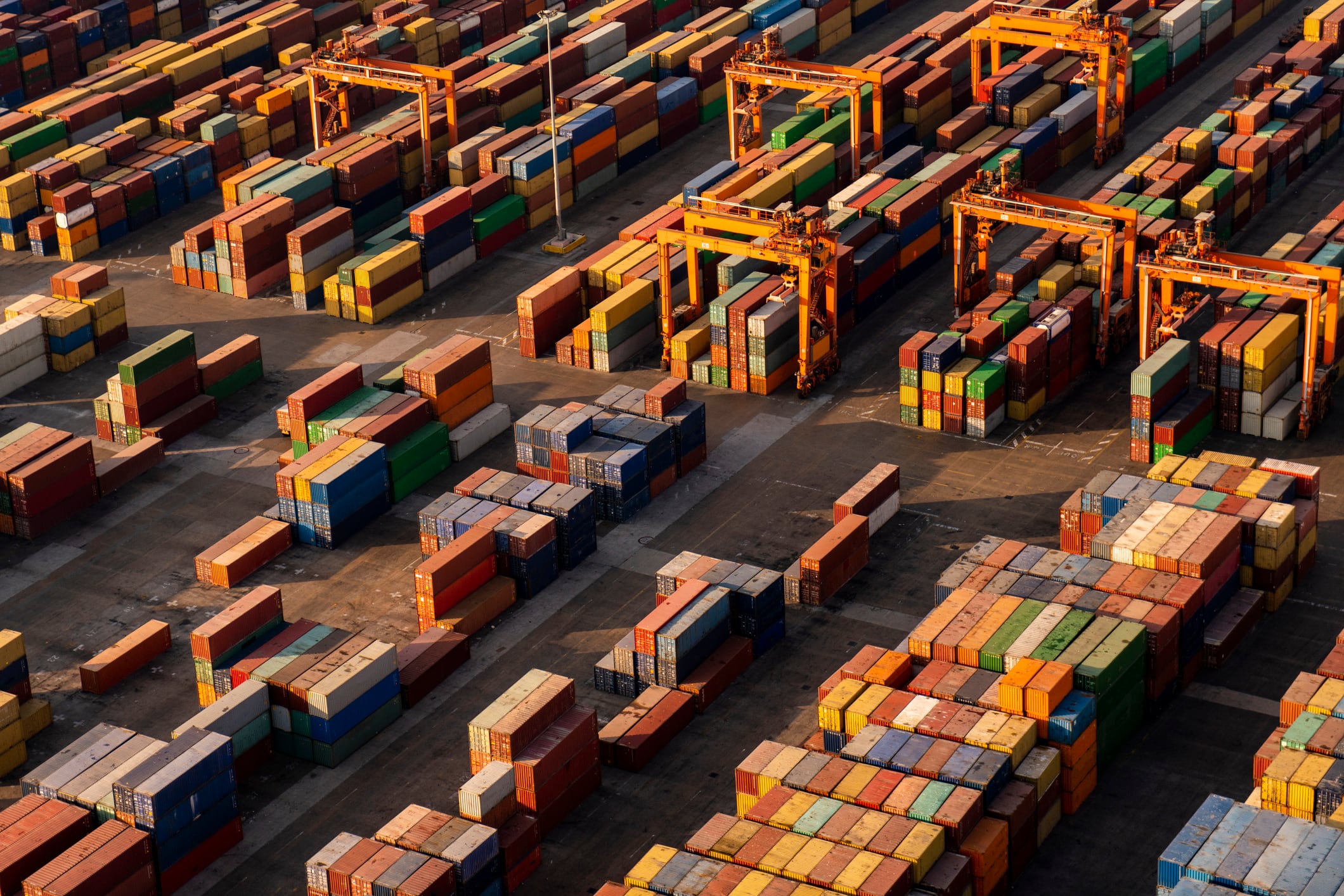
Food and agriculture exports continue to be a focus for Japan and are set to continue to be a priority over the next 20-plus years.
“We want to focus on capturing the growing overseas food market, and increase our foreign earnings by promoting the export of food, agricultural, forestry and fishery products,” the ministry spokesman said.
“This will require us to strengthening our capacity for food production promoting the development of new export destinations, nurturing export production areas, and building a consistent domestic and international supply chain.”
Rice is the one commodity that Japan is comfortably self-sufficient in, so MAFF also plans to leverage this for its export strategies.
“The first step will be a complete review of our current paddy field policies from FY2027, which will include incentives such as subsidies for rice producers that improve productivity at each crop,” he said.
“We will also develop new low-cost rice production areas for to further expand Japanese rice exports, and promote demand expansion overseas more aggressively.”
4) Technology at the core
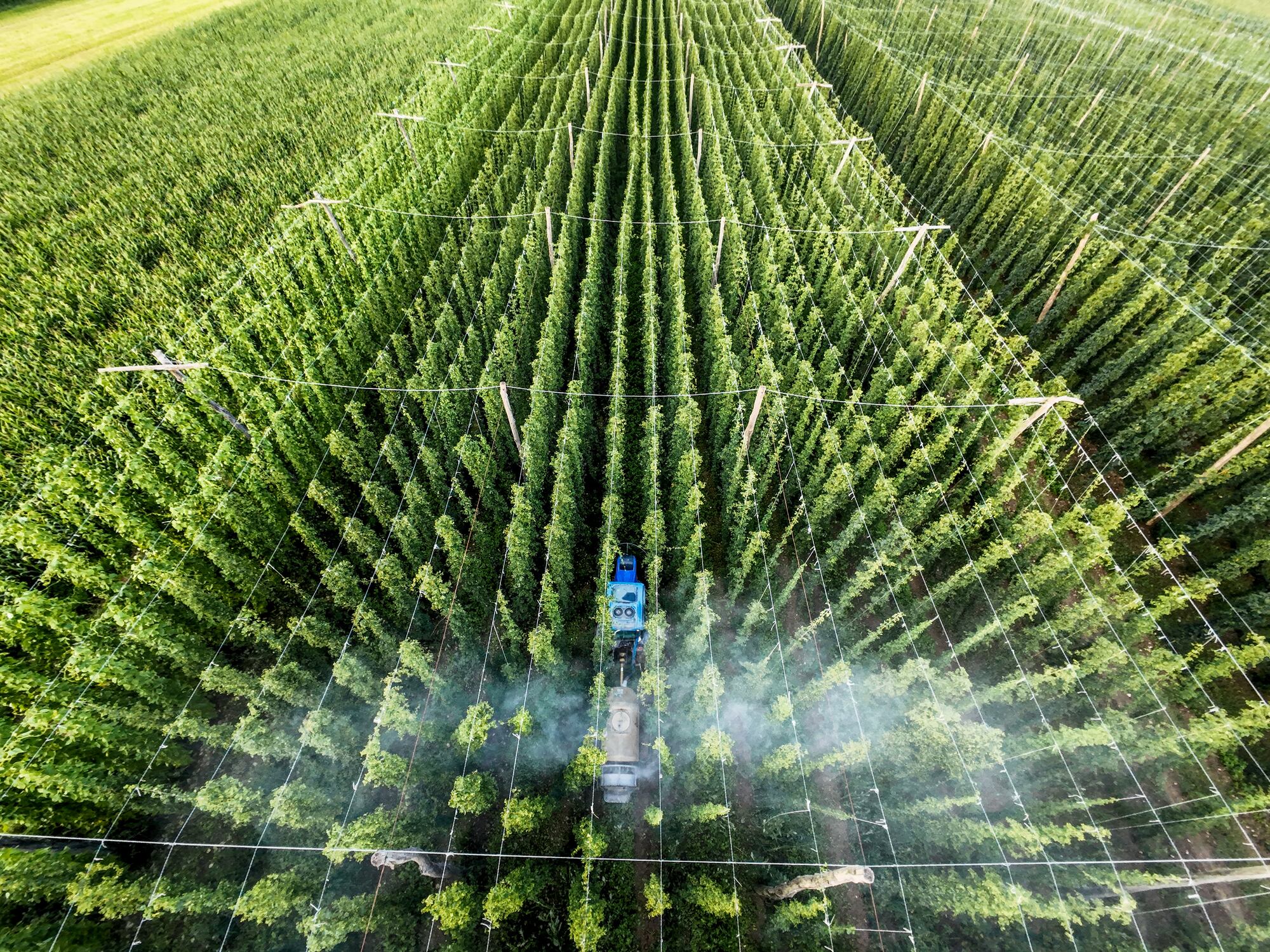
Japan is known to be one of the most technologically-advanced markets in Asia when it comes to sectors like entertainment and automobiles, but this advancement has unfortunately not been similar in its food and agriculture sector.
One of the reasons for this has been the location of many agricultural locations, either in very rural or difficult-to-access settings such as mountainous areas.
MAFF aims to resolve this issue over the next two decades via technological and marketing support, to potentially open up new avenues of food productivity and commercial opportunities.
“There is a lot of potential in the food and agriculture products coming from our rural communities, which can be unlocked by helping them to improve access,” MAFF said via the whitepaper.
“We plan to support food producers in these locations by developing and introducing smart agricultural technologies specific to addressing local issues, as well as establishing rural marketing organisations that can help to improve their incomes by focusing on local characteristics of their products.”
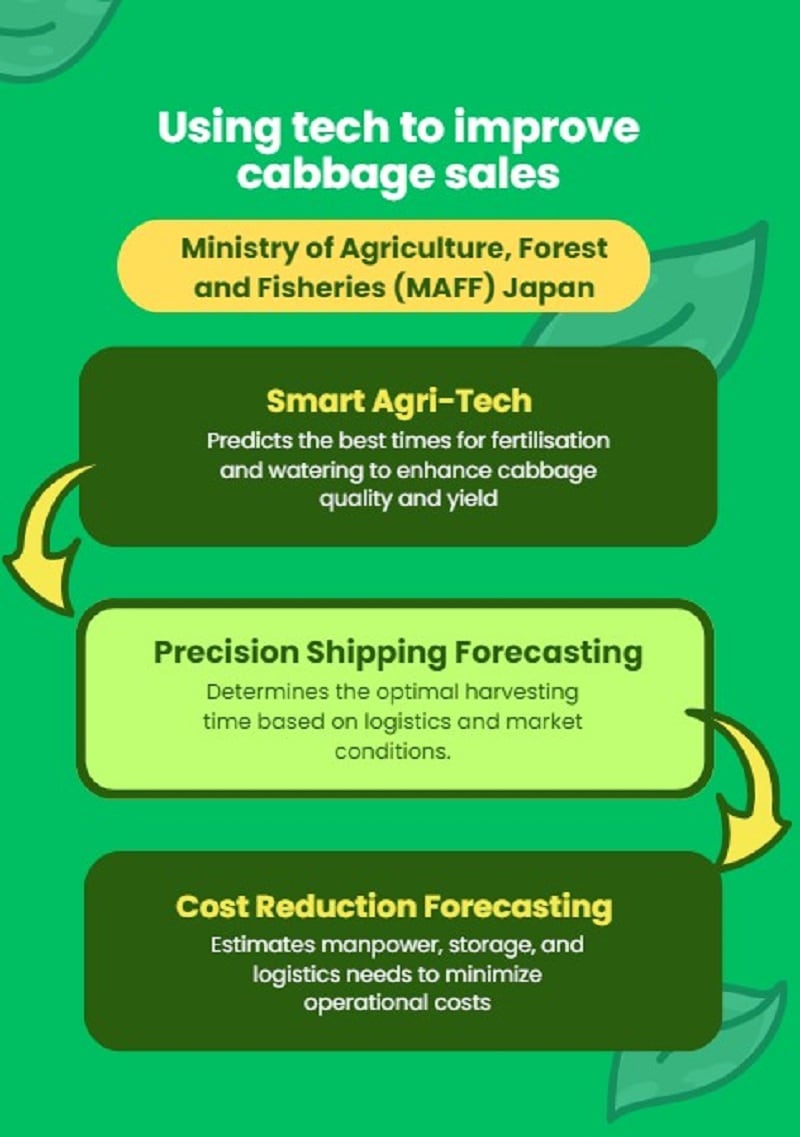
Using cabbage – a core commodity in the country due to its role as a kimchi ingredient – as an example, the ministry laid out a case study of using technology to make such improvements.
Pearly Neo
Read More