

Efren Ramos did not have a good impression of the Liberals on .
Volunteers for the party had swarmed polling booths in Ramos’s western Sydney electorate of Werriwa and he remembers feeling overwhelmed by them.
The 57-year-old says three Liberal volunteers approached him with how to vote cards.
“It’s not nice. Why three of you? Why not only one? It’s intimidating,” the Carnes Hill resident tells SBS News.
For weeks, the Liberals had been chasing voters in outer suburban electorates like Werriwa, which it hoped would be key to forming government under now-former leader Peter Dutton.
But the party’s efforts appear to have been misguided, with its vote in these areas actually falling in this election.
Almost every marginal Coalition seat in outer metropolitan areas flipped to Labor in a stunning reversal of fortune.
The government picked up eight seats from the Coalition, including in Victoria, where the unpopularity of the state Labor government had been expected to be a drag on its vote.
Labor has not yet lost any of its existing seats in outer suburban areas, although the result in Calwell is still to be decided.
As of Saturday, election analysts Redbridge predict Labor will secure an overwhelming majority of 92 seats in the next parliament, up from the 77 seats it got in the 2022 election.
Coalition seats have fallen from 58 to 40 — with seven seats still to be counted.
So, how did the Coalition’s strategy go so wrong?
Wipeout of Coalition seats in outer suburban areas
In Sydney electorates like Werriwa, which has been held by Labor since 1919 (with the exception of one term), votes for the party actually increased.
Speaking with SBS News days after the election, residents indicated there had been votes up for grabs.
“We need change here, Labor’s been in power [in western Sydney for] 80-odd years and nothing’s changed — it’s literally getting worse,” resident Michelle Raguz says.
Prices are going up, the roads are ridiculous, the streets are ridiculous — potholes everywhere — we’ve busted our tyres three, four times, the council says ‘too bad’.
Raguz is among a number of disgruntled voters SBS News spoke with, but she was the only one to cast a ballot for the Liberals.
Before the election, Labor had a 5.3 per cent margin in Werriwa following a seat redistribution, which makes it a marginal seat. After last weekend’s poll, Werriwa MP Anne Stanley has received a swing of around 1.2 per cent towards her.
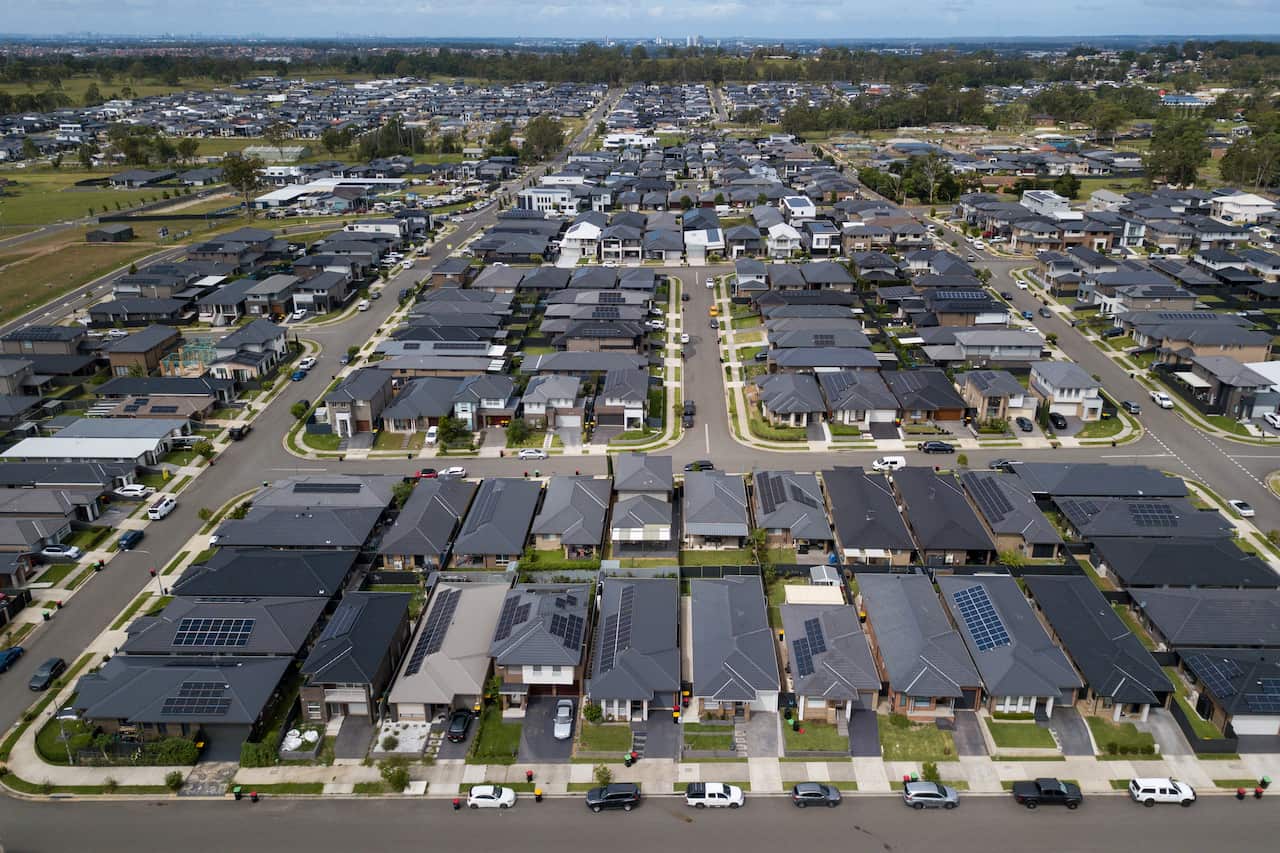
Residents in suburbs like Austral in the electorate of Werriwa are very reliant on their cars to get around. Source: AAP / Dan Himbrechts
The nearby electorates of Macquarie and Macarthur in Sydney’s south-west also recorded increased support for Labor.
The seat of Hughes, a marginal seat in southern Sydney previously held by the Coalition, is now in Labor’s hands.
In Melbourne, the Coalition no longer holds any outer suburban seats after losing Deakin and Menzies to Labor.
Calwell is the only electorate still to be decided, but is more likely to go to an independent if Labor loses.
Across Australia, the post-election picture is equally grim for the Coalition.
It now holds just seven of the 45 outer metropolitan electorates, which accounts for 15 per cent of total seats. In 2022, it held 16 of these electorates (35 per cent).
In Brisbane, four seats held by the Coalition are now Labor’s.
The results fly in the face of commentary and polling leading up to election day, which suggested the Coalition could scoop up disenchanted voters in so-called commuter suburbs.
Former Liberal MP Jason Falinski says the Coalition’s strategy for the past three years has been focused on increasing its presence in these outer suburban areas and this was “seen as the pathway to government”.
Dutton visited Labor electorates such as Hawke and McEwen in Victoria several times throughout the campaign.

Peter Dutton held a campaign rally in the Labor-held seat of Hawke on 27 April. Source: AAP / Mick Tsikas
“The decrease in the fuel excise … that was absolutely targeted at people in the outer suburbs who tend to have to travel further than people close to [the centre of] cities,” Falinski tells SBS News.
“It would be fair to say that the strategy did not work,” he says, noting it failed even in places like Victoria where “Labor’s brand was very much on the nose”.
Coalition’s ‘strange’ decision to focus on outer metropolitan areas
Falinski, who lost his seat of Mackellar in Sydney’s northern beaches to independent Sophie Scamps in 2022, says it would be arrogant for him to suggest he understands why people voted the way they did, but says he did sense a “general theme” from Labor that painted the Coalition as “risky”.
This includes its messaging that Medicare was under threat, despite the Coalition pledging to match Labor’s funding, and raising questions around how would be funded and whether this would require cuts to the public service.
I think particularly for women with children, who are very sensitive to access to healthcare for themselves and their families, that became a lightning rod for them.
Falinski says concern around United States President Donald Trump’s unpredictable actions on tariffs and the Russia-Ukraine war also made people more risk-averse.
But analysts have told SBS News there were other factors at play in outer suburban seats.
Amy Remeikis, chief political analyst at the Australia Institute, says the Coalition’s focus on these electorates, in particular, was a “strange” strategy considering there is little historical data to suggest these seats would swing to the Coalition, or that voters had any strong affinity for it.

“I think it’s something that the party room might have convinced themselves was happening,” Remeikis says.
The outer metropolitan seats that the Coalition were targeting have never swung very hard to the Coalition.
Remeikis says she doesn’t understand why the Coalition didn’t target seats it had previously held, such as those in the inner city.
“Wouldn’t you go to the seats where you actually previously had support rather than these ones that have never — even with the demographic changes — swung comprehensively to you?”
‘Hi vis’ campaign missed the mark
Remeikis says there was also very little in the Coalition’s platform to appeal to the voters they were trying to win over.
“They formed their campaign [around] what they thought these outer suburban seats actually wanted — which was basically an entirely high-vis campaign,” she says.
It was entirely geared towards tradies and people who drove very big utes. But they missed out on pensioners, they missed out on young families. They missed out on women.
“They missed out on people who were living below the poverty line, all of which you find represented in [these seats].”

Peter Dutton’s campaign was too narrowly focused on utes and tradies, one expert says. Source: AAP / Mick Tsikas
Redbridge Group director Simon Welsh thinks some of Dutton’s culture war comments about reducing immigration and were also misguided.
He says if outer suburban areas were the target audience for that type of messaging, they aren’t what the Liberals imagine them to be.
“They are young, they are diverse [and] they are increasingly progressive,” he says.
“The culture wars messaging is a clear values disconnect.”
Werriwa, for example, has one of the highest proportions of millennial voters in Australia. Around half of its adult population (aged over 16) is under 45 years old. The median age is 34, which is lower than the average for NSW (39).
The electorate also has a highly diverse population, with more than 50 per cent of residents having been born overseas and 77 per cent with at least one parent born overseas.
Falinski acknowledges that when the Coalition indulges in culture war issues, its vote fractures.
If [issues are] framed in cultural terms, we’re losing the debate, if they’re framed in economic terms, we’re winning the debate.
Falinski says every political party has an electoral hand to play that galvanises voters, and for the Liberals, it tends to be economic issues.
“The 2019 election — which we shouldn’t have won — was about economic issues, specifically tax and franking credits. Our electoral coalition … in rural, regional and urban areas, all came together to unite and provide us with a surprise victory,” he says.

Seats that have changed hands in outer metropolitan electorates around Australia are marked in different colours. Source: SBS News
Labor’s education and health policies were a vote-winner
Carnes Hill resident Ramos, who was put off by overzealous Liberal volunteers in Werriwa on election day, says he doesn’t always vote for Labor but did this time, partly because of its plan to reduce HECS debts by 20 per cent — which would be good for his son.
His impression of Dutton was that he was “too angry” and he also didn’t like the proposed public service cuts because his wife works in the sector and works from home.
While Dutton backtracked on scrapping work-from-home arrangements, Ramos says he wasn’t sure if he really meant it, especially because English is not Ramos’ first language.
When my wife is at home, it’s good for me too. When I come home, the dinner’s already ready.
Werriwa MP Anne Stanley says voters wanted what Labor was offering — support for Medicare, a reduction of HECS debt, more people going to TAFE and money for road upgrades.
She says Labor has also promised to build an urgent care clinic and a mental health facility in Werriwa.
When asked about criticism of Labor’s performance over the years, Stanley acknowledged some federally funded road upgrades had not yet been delivered, and said she also needed to be better at publicising what they have done.
“We’ve got funding for local schools, we’ve got university hubs …. we’ve got significant funding for roads,” she tells SBS News.
“I think also we have a very good track record on supporting Medicare, on reducing the costs of medicines, of supporting pensioners.”

Werriwa MP Anne Stanley, with Prime Minister Anthony Albanese, announced an upgrade to Fifteenth Avenue, located in the electorate of Werriwa, in January this year. Source: AAP / Jeremy Ng
During her door knocking, Stanley says voters were sceptical about whether Coalition policies like the fuel excise cut would actually make a difference to their weekly petrol bills. She also noted concerns about its nuclear energy and working-from-home policies.
Selina Rice, who has traditionally voted Labor, this year supported the minor party, the Trumpet of Patriots, because she didn’t want either major party to get her vote.
“I’m sick of Labor and Liberal, they keep saying they’re going to do this, do that … and nothing changes, it just gets worse,” the 52-year-old says.
The cost of living, including petrol prices, was the most important issue for her, and even though the Coalition promised to lower the fuel excise, Rice was sceptical they would actually deliver.
Support for the Greens increases
The primary vote for the Greens Party also increased this year, including a 4.5 per cent swing towards them in Werriwa. The party increased its vote in neighbouring Macquarie and Macarthur as well.
Werriwa constituent Connor Thomson, who voted for the Greens first and Labor second, is a blue-collar worker and first-time voter. His family have traditionally voted for Labor, but Thomson says he liked the Greens’ policy on free education in particular and was also swayed by footage of playing the popular online video game Fortnite.
“I thought the nuclear plan from Liberals was okay but the $600 billion, that’s just way too much money,” the 18-year-old tells SBS News.

A sign warning voters “Don’t risk Dutton” remains in place in Werriwa this week after election day. Source: SBS News
Thomson was also put off by the Coalition’s right-wing associations.
“We’re Australia, we’re not for that,” he says.
“That turned me off Liberal, even though I was never going to vote for them.”
Another first-time voter, Guven Gergoy, 20, also voted for the Greens because, in his view, the party seemed to have the best housing policies.
Over the course of the campaign, Gergoy says he heard mostly negative commentary about Dutton, including that he wanted to get rid of Medicare, that he was “super rich” and had made money buying bank shares days before news of a bailout was announced during the global financial crisis.
[Dutton] said all young people need to do to get a house is save diligently, and he got his at 19 [years old], which I’m sure back then it was a different situation.
The Edmondson Park resident had a more positive impression of Prime Minister Anthony Albanese, even though he says his mother held a negative view because Labor had not reduced the cost of energy bills as promised.
The way forward
Falinski says the Coalition needs to spend the next year having meaningful conversations with communities across Australia and gain a clear understanding of what their lives are like.
“In the year after that, we need to focus on explaining to people how we think we can help them,” he says.
“In the third year, we need to be announcing policies that do that, and adjusting those policies if it turns out they’re not going to work for people.”
He says this shouldn’t be done just before or in the middle of a campaign.
“I do think there was too much focus [this year] on ‘[are] we going to win the election or not?’ rather than what do we need to do to give Australians a credible alternative.”
For the latest from SBS News, and .