

Serving tech enthusiasts for over 25 years.
TechSpot means tech analysis and advice you can trust.
Forward-looking: While night vision is typically associated with bulky goggles that display only monochromatic images, recent experiments suggest the technology could be miniaturized for everyday eyewear. New applications of thin, lightweight filters may allow humans to perceive both infrared and visible light simultaneously.
Contact lenses and eyeglasses could one day enable people to see beyond the natural visible light spectrum. Eyewear equipped with this special technology holds promise for enhancing visibility in challenging conditions and introducing new ways to convey information.
Researchers from the University of Science and Technology of China are developing contact lenses that allow mice and humans to perceive infrared light in multiple colors.
Unlike traditional night vision goggles, these lenses don’t require an external power source. Additionally, because they are transparent, they don’t block visible light – allowing wearers to combine natural and infrared vision.
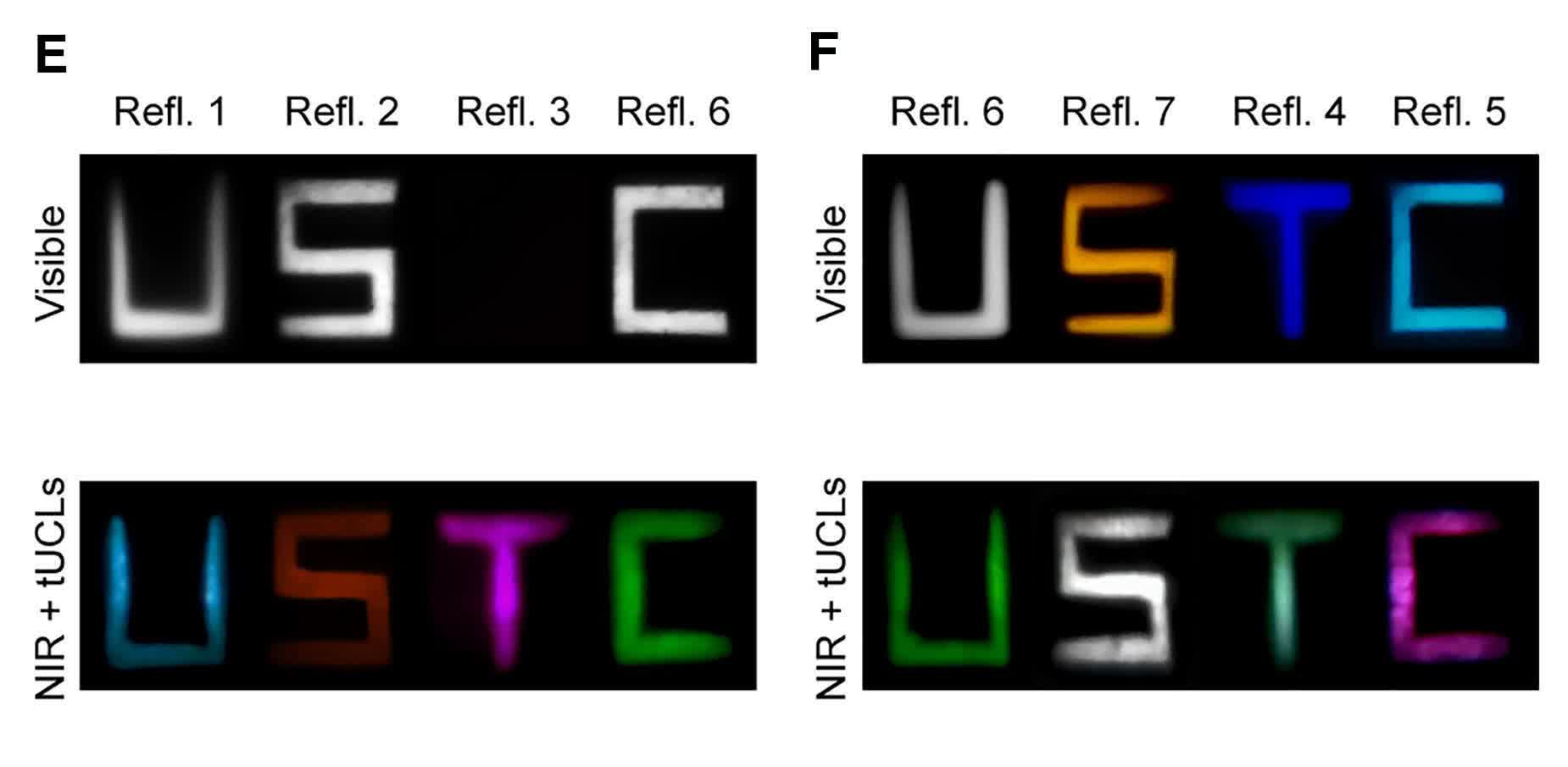
In the image above, the lenses change how letters appear under near-infrared light (bottom) compared to visible light (top), in one case revealing a previously hidden letter. In another experiment, mirrors that appeared monochromatic in visible light became more colorful under near-infrared, while those showing color in visible light shifted hues under NIR.
The study, published in Cell, describes how upconversion nanoparticles convert light just outside the visible spectrum – known as near-infrared – into visible red, green, and blue light. Test subjects wearing the lenses were able to detect previously invisible colors and perceive near-infrared light beams.
Although night vision is the most obvious application, the technology could also enhance visibility in foggy or dusty environments. Smart devices could use it to assist during emergencies, and wearers could receive information encoded in infrared light. The technology may also benefit individuals with color blindness.
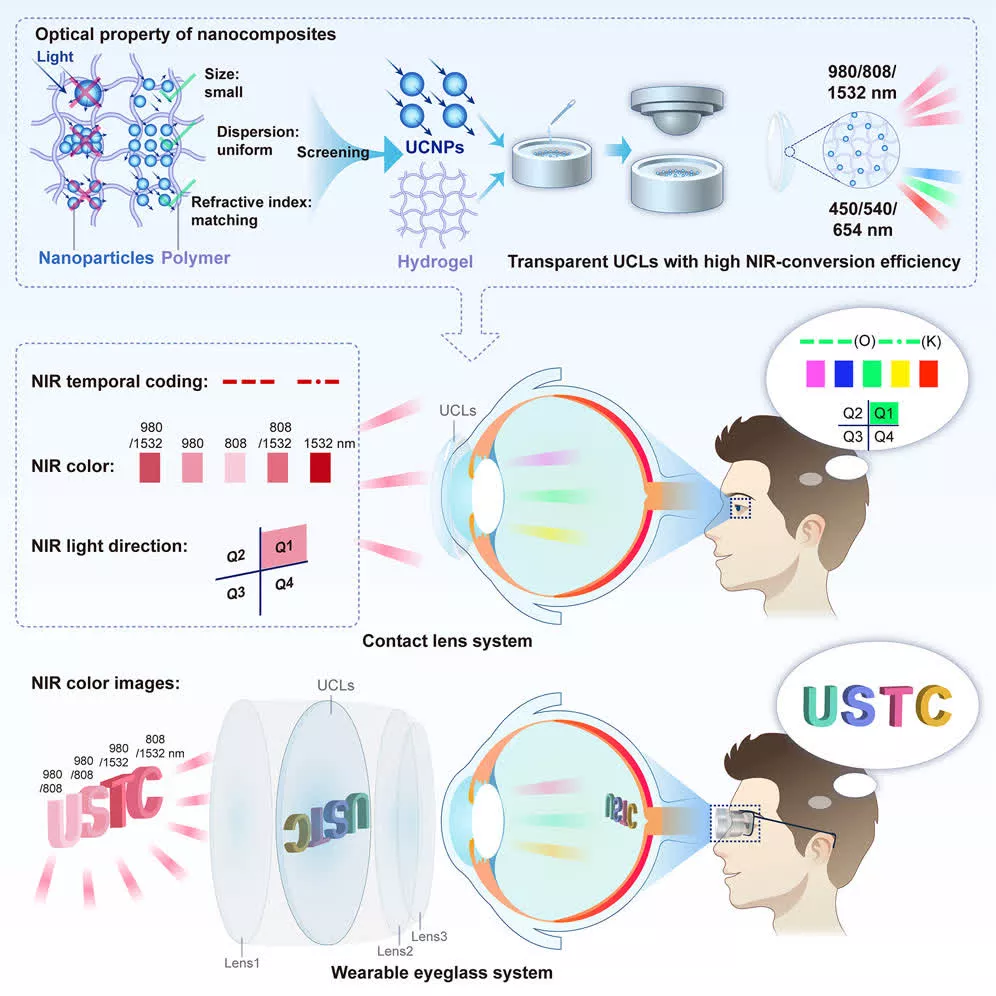
Although the experimental lenses do not yet provide a sharp infrared image, specially designed eyeglasses incorporating this technology can enhance image quality, and nanoparticle development is ongoing. Interestingly, wearing the lenses allows near-infrared light to be seen even with closed eyes, as infrared light penetrates eyelids more effectively than visible light – making near-infrared information clearer.
The study parallels a paper published last year by Australian researchers, who used metasurface-based upconversion technology to demonstrate eyeglasses that merge infrared and visible light. Their goal: to create thinner, lighter, and more practical night vision gear. Continued research aims to expand access to more of the infrared spectrum.
Read More
Augustine Mongold