


Spotted thanks to a fleeting light distortion in 2011, a mysterious duo — a tiny star and its hefty companion — has turned out to be much faster and stranger than first imagined.
Astronomers have observed hypervelocity stars before, but Hypervelocity stars are rare celestial objects that travel at incredible speeds, often hundreds of kilometers per second. These stars are usually ejected from their home galaxies by powerful gravitational interactions, such as close encounters with supermassive black holes or other massive stars. Some travel so fast that they can escape the gravitational pull of the Finding objects like this in space is tricky. This object was first seen in 2011 following analysis of data from the Microlensing Observations in Astrophysics survey that had been conducted by the University of Canterbury in New Zealand. The study had been on the lookout for evidence for exoplanets around distant stars. The presence of a mass between Earth and a distant object creates these microlensing events. As such, when a mass passes between us and a star, its presence can be revealed through analysis of its light curve. In the 2011 data, the signals revealed a pair of celestial bodies and allowed the researchers to calculate that one was about 2,300 times heavier than the other. The 2011 study suggested the star was about 20 percent as massive as the Sun and a planet 29 times heavier than Earth. Either that, or it was a nearer planet about four times the mass of Keck Observatory and the Gaia satellite. They found the star was located about 24,000 light years away, so still within the Milky Way. By comparing the location of the star in 2011 and then ten years later in 2021, the team was able to calculate its speed. Having calculated the speed of the star to be around 540,000 kilometers per second, the team is keen to secure more observations in the years ahead. If it is around the 600,000 kilometers per second mark, then it’s likely to escape the gravity of the Milky Way and enter intergalactic space millions of years in the future. Adapted from an article originally published on Universe Today. Explore Further: NASA Spots a Star and Planet Racing at 1.2 Million MPH Reference: “A Candidate High-velocity Exoplanet System in the Galactic Bulge” by Sean K. Terry, Jean-Philippe Beaulieu, David P. Bennett, Aparna Bhattacharya, Jon Hulberg, Macy J. Huston, Naoki Koshimoto, Joshua W. Blackman, Ian A. Bond, Andrew A. Cole, Jessica R. Lu, Clément Ranc, Natalia E. Rektsini and Aikaterini Vandorou, 10 February 2025, The Astronomical Journal. Never miss a breakthrough: Join the SciTechDaily newsletter.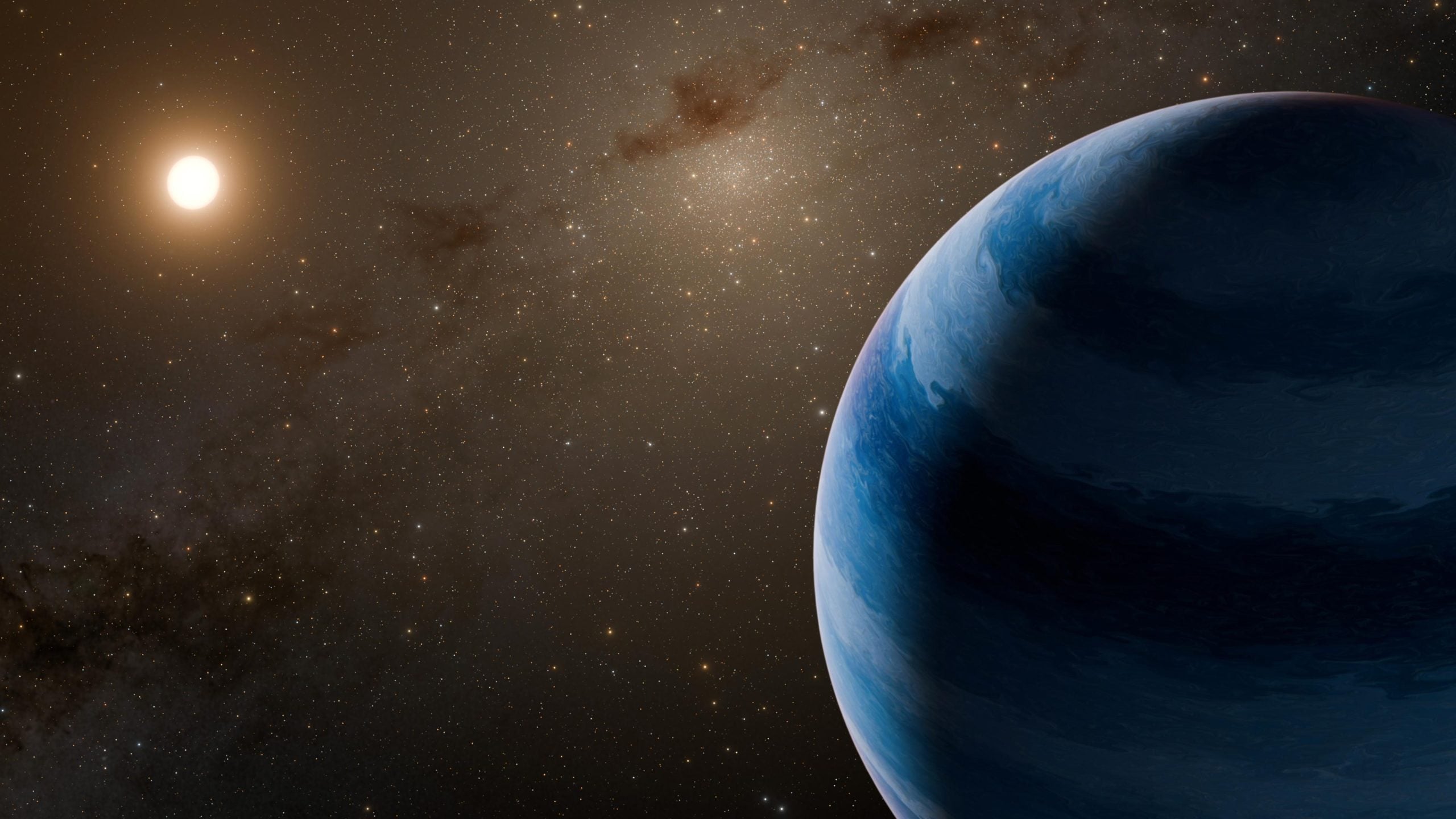
Racing Through the Cosmos at Incredible Speeds

Tracing the Signal Back to 2011
Chasing a Star Into Intergalactic Space
DOI: 10.3847/1538-3881/ad9b0f
Mark Thompson, Universe Today
Read More