

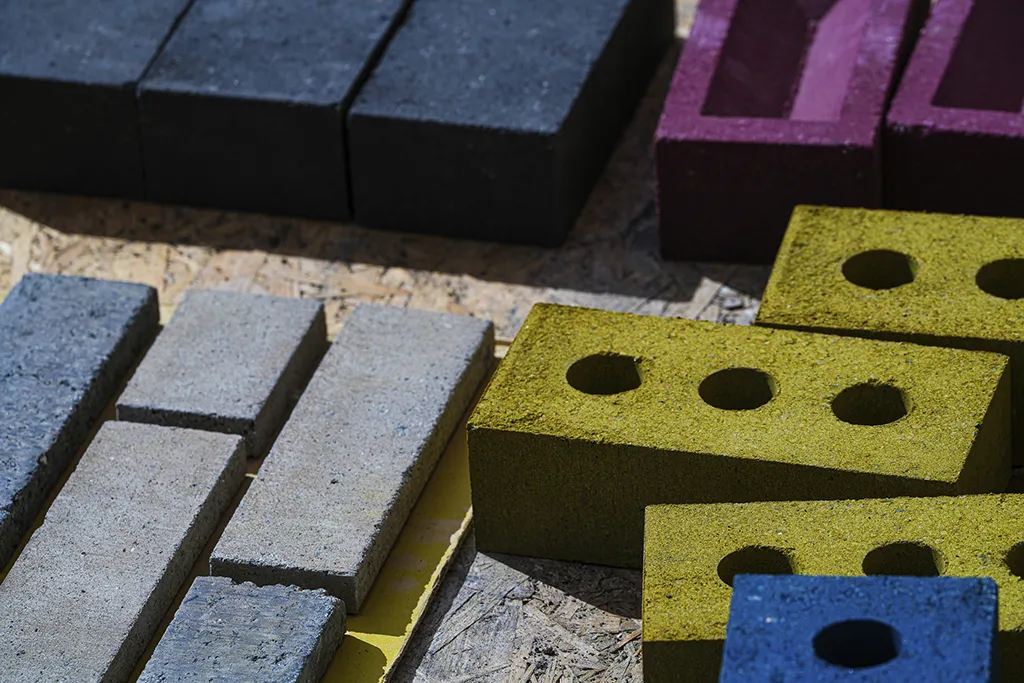
Low-carbon bricks made from construction waste have been approved for use by the British Board of Agrément (BBA), a UK construction products certification body.
Scottish firm Kenoteq developed the K-Briq using gravel, mortar and plasterboard and it is made up from nearly 100 per cent recycled construction and demolition waste.
Now that it has gained full certification, the firm is preparing to increase production to two million bricks a year and hopes to double this to four million in the coming years.
Kenoteq says the carbon footprint for making the product is significantly less than using clay as the brick contains under 20g of CO2 equivalent per unit and requires no firing.
The process takes less than 24 hours and is up to three times faster than traditional methods.
Construction News reported last year that producing the K-Briq consumes less than 10 per cent of the energy used in traditional clay brick production.
A study in the International Journal of Engineering and Technology found that bricks made from ordinary Portland cement and fly ash – mixed with construction and demolition waste as coarse and fine aggregate – were stronger and less water absorbent than conventional burnt clay bricks.
Sam Chapman, co-founder and executive director of Kenoteq, said: “This certification marks the arrival of a truly transformative building material for the construction and interior design industries.
“With our certification secured, we can now scale up production to meet market requirements.
“The construction industry is under increasing pressure to reduce its environmental impact while maintaining high standards of quality and safety. The BBA certification of the K-Briq demonstrates that these goals are not mutually exclusive – we can build better while building greener.”
The product has also gained certification for use in the US through the DrJ Technical Evaluation Report.
Kenoteq said the brick had achieved 100 tonnes of carbon savings in demonstration projects delivered to date and has 95 per cent less embodied carbon than a traditional brick.
Katy Roberts, sales and marketing director at the BBA, said: “In a sector where safety, performance and trust are non-negotiable, third-party certification plays a crucial role in enabling innovation.
“Independent certification provides a rigorous, evidence-based pathway for new products to gain market acceptance. It reassures stakeholders, supports regulatory compliance, and ultimately helps turn groundbreaking ideas into real-world construction solutions.”
Kenoteq said it was planning to set up regional production in the UK and internationally.
Read More
Nicola Harley