

If your dream is to retire to Italy, there are things you can do now to prepare for the move and make sure all goes smoothly in your new life.
We’re not questioning your commitment to your job – but are you already dreaming of the moment when you retire and can move to Italy?
If so, you’re not alone; every year, thousands of people retire to Italy hoping to enjoy a new, more relaxed lifestyle in the land of olive groves and espressi.
But you might be wondering what you could do to plan ahead if you’re still a few months or years away from retirement.
Here are some suggestions.
Will your visa allow you to work?
Not everyone wants to go directly from full-time work to total retirement, so you might be planning a change in professional direction such as opening a B&B or running tours or workshops.
First, however, you need to know whether you will be legally able to work in Italy.
If you have citizenship of an EU country, then this will be no problem, but if you are a non-EU citizen, whether you have the right to work will depend on the type of visa/residency card you get.
The elective residency visa – the most popular choice for retirees – does not allow you to work in Italy.
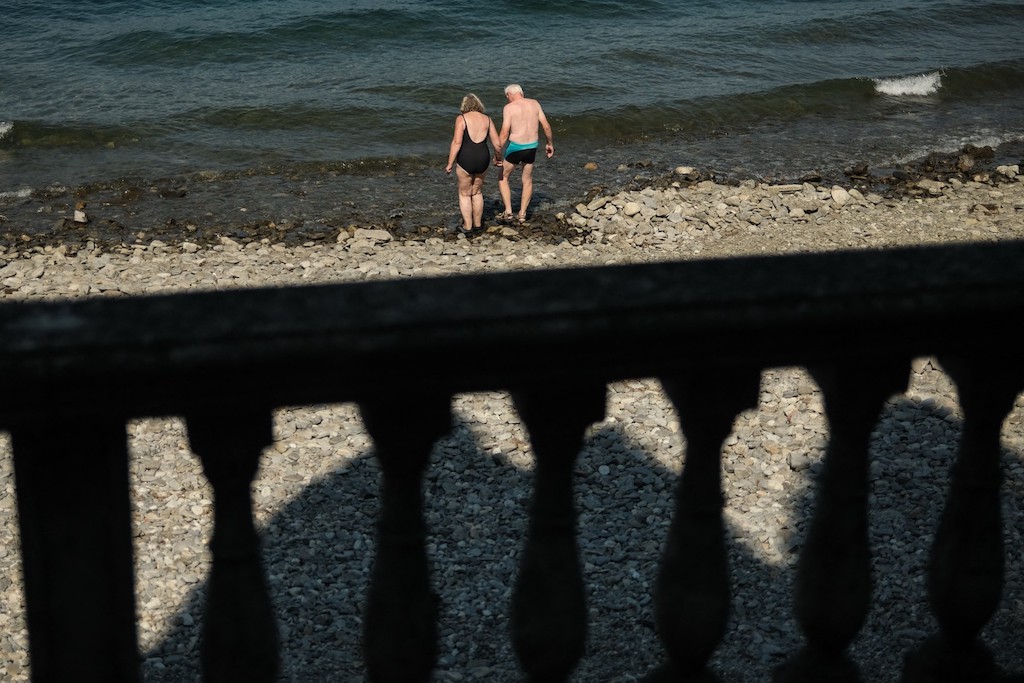
If you’re preparing to plunge and retire in Italy, you’ll need to look into your visa options. (Photo by MARCO BERTORELLO / AFP)
Italy does have an investor or ‘golden’ visa, but you’ll need to commit to investing anywhere between €250,000 and €2 million in an Italian start up, company, philanthropic initiative, or government bonds.
The digital nomad visa, introduced last year, does allow applicants to work, but you’ll need to jump through a number of hoops, including demonstrating an annual income of at least €28,000.
READ ALSO: ‘Bureaucratic hell’: How one American got Italy’s digital nomad visa
You can find more information on visas and residency here.
Find a place to live
Once you’ve figured out what paperwork you’ll need to move to Italy and sorted out your financial situation, the next step is finding somewhere to live – and you’ll want to make sure you do your homework.
Some second-home owners use their Italian homes as a holiday home while they are working, and then move to Italy to live there full time once they retire.
If, however, you don’t have a place in Italy, then you can use the years leading up to retirement to narrow down where you want to live – and we say years, not months, because it’s strongly recommended to visit a place in both the winter and the summer before you commit.
READ ALSO: ‘Research and more research’: How do you choose the right part of Italy to move to?
This is especially important in rural areas and holiday destinations, which can be very different in the off-season.
If you’re considering a move to a rural area think about whether you will need a car and, if so, whether you’ll need to take an Italian driving test and what would happen if you are no longer able to drive.
Research your healthcare options
If you’re planning on moving to Italy as a non-EU national, it’s important to consider your healthcare options well in advance, not least because adequate health coverage is one of the conditions for getting your permesso di soggiorno, or residency permit.
While a short-term private healthcare plan is often the only solution available to new foreign residents as they wait for their permits, permit holders have two options: either register with the country’s national health system (Servizio Sanitario Nazionale, SSN) or take out private health insurance.

Even if you’re in excellent shape, as a non-EU national you’ll still need to ensure you have full health coverage before retiring to Italy (Photo by Tiziana FABI / AFP).
If you fall into the category of foreign residents that are eligible for ‘mandatory registration’ (iscrizione obbligatoria), you can register with the SSN for free. If you don’t, you can still register with the system on a ‘voluntary’ basis (iscrizione volontaria) – but will have to pay a fairly hefty fee, as the minimum amount was raised from under €400 to €2000 in 2024.
READ ALSO: SSN: Who can register for national healthcare in Italy?
Learn Italian
This is consistently one of the top pieces of advice given by readers of The Local who’ve relocated to Italy.
Italy ranks among Europe’s worst member states for English proficiency, coming 32nd out of 35 in the international learning company Education First’s English Proficiency Index (EPI) for 2024.
READ ALSO: ‘You’ll survive but not settle’: Can you move to Italy without any Italian?
Not only is a basic grasp of Italian key for tackling the many bureaucratic tasks you’ll face on arrival; you’ll also have a much richer experience if you can chat to your neighbours, follow Italian news and TV shows and get fully integrated into your local community.
A good place to start is by watching Italian films and TV shows on streaming platforms with both English and Italian subtitles. A number of Italian language schools now also provide online classes if you aren’t able to attend an immersive in-person programme.
Check your tax situation
It’s also worth checking out the tax situation in Italy and having a conversation with a tax expert who is qualified in both Italy and your home country to ensure that all your plans are fully tax compliant.
You’ll be considered a tax resident in Italy if, for at least 183 days a year, you are physically present in the country, registered as a local resident with Italy’s Anagrafe registry office, or have your place of “residence or habitual residence” in Italy.
As an Italian tax resident you’ll be required to declare your global income, i.e. income generated not just in Italy but anywhere in the world (foreign pensions, foreign rental income, etc.).
Cross-border tax treaties are complicated and vary consider between countries, so it’s a good idea to seek specialist advice for your particular situation.
Italy has dual taxation agreements with several countries, including the UK and US, meaning that if you have already paid tax on your income in another country, you likely won’t be taxed on it again – though you’ll still have to tell the Italian taxman about it.
Zonia Kucera
Read More