

Business News
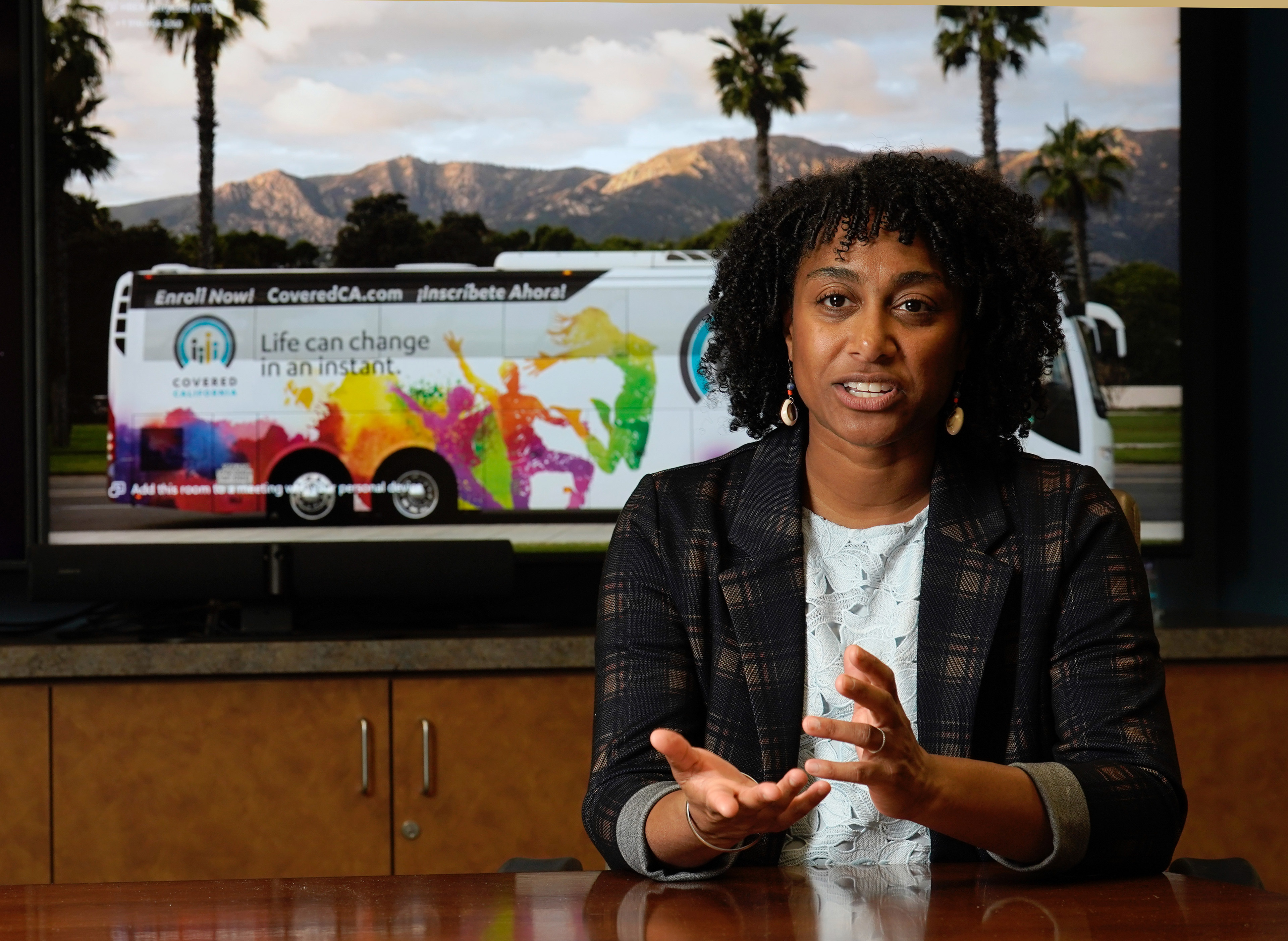
Faced with potential federal spending cuts that threaten health coverage and falling childhood vaccination rates, Monica Soni, the chief medical officer of Covered California, has a lot on her plate — and on her mind.
California’s Affordable Care Act health insurance exchange covers nearly 2 million residents and 89% of them receive federal subsidies that reduce their premiums. Many middle-income households got subsidies for the first time after Congress expanded them in 2021, which helped generate a boom in enrollment in ACA exchanges nationwide.
From the original and enhanced subsidies, Covered California enrollees currently get $563 a month on average, lowering the average monthly out-of-pocket premium from $698 to $135, according to data from Covered California.
The 2021 subsidies are set to expire at the end of this year unless Congress renews them. If they lapse, enrollees would be on the hook to pay an average of $101 a month more for health insurance — not counting any premium hikes in 2026 and beyond. And those middle-income earners who did not qualify for subsidies before would lose all financial assistance — $384 a month, on average — which Soni fears could prompt them to drop out.
At the same time, vaccination rates for children 2 and under declined among 7 of the 10 Covered California health plans subject to its new quality-of-care requirements. Soni, a Los Angeles native who came to Covered California in May 2023, oversees that program, in which health plans must meet performance targets on blood pressure control, diabetes management, colorectal cancer screening, and childhood vaccinations — or pay a financial penalty.
Email Sign-Up
Subscribe to KFF Health News’ free weekly newsletter, “The Week in Brief”
Lack of access to such key aspects of care disproportionately affects underserved communities, making Covered California’s effort one of health equity as well. Soni, a Harvard-trained primary care doctor who sees patients one day a week at an urgent care clinic in Los Angeles County’s public safety net health system, is familiar with the challenges those communities face.
Covered California reported last November that its health plans improved on three of the four measures in the first year of the program. But childhood immunizations for those under 2 declined by 4%. The decline is in line with a national trend, which Soni attributed to postpandemic mistrust of vaccines and “more skepticism of the entire medical industry.”
Most parents have heard at least one untrue statement about measles or the vaccine for it, and many don’t know what to believe, according to an April KFF poll.
Health plans improved on the other three measures, but not enough to avoid penalties, which yielded $15 million. The exchange is using that money to fund another effort Soni manages, which helps 6,900 Covered California households buy groceries and contributes to over 250 savings accounts for children who get routine checkups and vaccines. Some of the penalty money will also be used to support primary care practices around California.
In addition to her bifurcated professional duties, Soni is the mother of two young children, ages 4 and 7. KFF Health News senior correspondent Bernard J. Wolfson spoke with Soni about the impact of possible federal cuts and the exchange’s initiative to improve care for its enrollees. This interview has been edited for length and clarity.
Q: Covered California has record enrollment of nearly 2 million, boosted by the expanded federal subsidies passed under the Biden administration, which end after this year. What if Congress does not renew them?
A: Our estimates are that it will approach 400,000 Californians who would drop coverage immediately. We hear every day from our folks that they’re really living on the margins. Until they got some of those subsidies, they could not afford coverage.
As a primary care doctor, I am the one to treat folks who show up with preventable cancers because they were too afraid to think about what their out-of-pocket costs would be. I don’t want to go back to those days.
Q: Congress is considering billions in cuts to Medicaid. How would that affect Covered California and the state’s population more broadly, given that more than 1 in 3 Californians are on Medi-Cal, the state’s version of Medicaid?
A: Those are our neighbors, our friends. Those are the people working in the restaurants we eat at. Earlier cancer screenings, better chronic disease control, lower maternal mortality, more substance use disorder treatment: We know that Medicaid saves lives. We know it helps people live longer and better. As a physician, I would be hard-pressed to argue for rolling back anything that saves lives. It would be very distressing to watch that come to California.
Q: Why did Covered California undertake the Quality Transformation Initiative?
A: We were incredibly successful at covering nearly 2 million, but frankly we didn’t see improvements in quality, and we continue to see gaps for certain populations in terms of outcomes. So, I think the question became much more imperative: Are we getting our money’s worth out of this coverage? Are we making sure people are living longer and better, and if not, how do we up the ante to make sure they are?
Q: There’s a penalty for not meeting the targets, but no bonuses for meeting them: You meet the goals or else, right?
A: We don’t say it like that, but that is true. And we didn’t make it complicated. It’s only four measures. It’s things that as a primary care doctor I know are important, that I take care of when I see people in my practice. We said get to the 66th percentile on these four measures, and there’s no dollars that you have to pay. If you don’t, then we collect those funds.
Q: And you use the penalty money to fund the grocery assistance and child savings accounts.
A: That’s exactly right. We had this opportunity to think about what would we use these dollars for and how we actually make a difference in people’s lives. So, we cold-called hundreds of people, we sent surveys out to thousands of folks, and what we heard overwhelmingly was how expensive it is to live in California; that folks are making trade-offs between food and transportation, between child care and food — just impossible decisions.
Q: You will put up to $1,000 a child into those savings accounts, right?
A: That’s right. It’s tied to doing those healthy behaviors, going to child well visits and getting recommended vaccines. We looked at the literature, and once you get to even just $500 in an account, the likelihood of a kid going to a two- or four-year school increases significantly. It’s actually because they’re hopeful about their future, and it changes their path of upward mobility, which we know changes their health outcome.
Q: Given the rise in vaccine skepticism, are you worried that the recent measles outbreak could grow?
A: I am very concerned about it. I was actually reading some posts from a physician colleague who trained decades earlier and was talking about all the diseases that my generation of physicians have never seen. We don’t actually know how to diagnose and take care of a number of infectious diseases because they mostly have been eradicated or outbreaks have been really contained. So, I feel worried. I’ve been brushing off my old textbooks.
This article was produced by KFF Health News, which publishes California Healthline, an editorially independent service of the California Health Care Foundation.
Read More
Bernard J. Wolfson