

The town of Llerena in southwestern Spain has no lack of historical monuments. A Muslim settlement at the time of Arab rule over southern Spain, it came under Christian control in the 13th century. For a brief period in the mid-1400s, Llerena was a center of religious tolerance and scholarship, a place where Jews, Christians, and Muslims lived and worked together.
This rich history produced a cluster of fine churches and no less than seven convents, enriched with large numbers of artworks for such a small town.
In fall 2023, restoration began on an altarpiece in the parish church of St. James the Apostle. The altarpiece consists of an 18th-century painting of John of Nepomuk, a 14th-century Czech priest martyred for refusing to reveal the secrets of the confessional.
The painting is an import ant artwork in its own right. But the restorers found some thing even more exciting behind it: frescoes that had been hidden for centuries.
(Some of the most magnificent frescoes can be found in the ‘Paris of the Balkans’.)
Hidden faces
The restorers first glimpsed two faces staring out at them. As they painstakingly removed a layer of whitewash, it became clear that the image was partly painted in gold leaf.
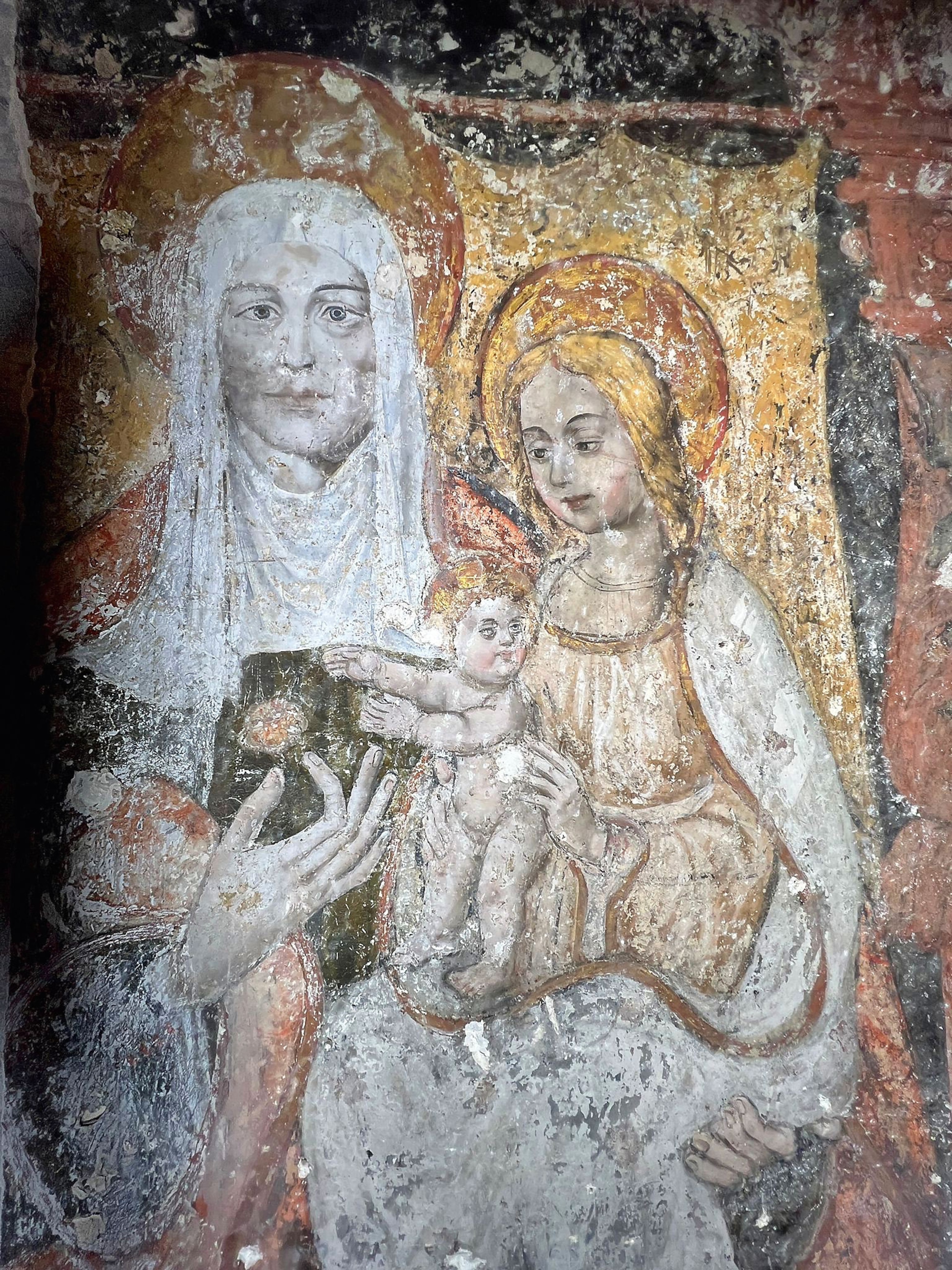
A detail of St. Anne with the Virgin and Child
Turismo Llerena
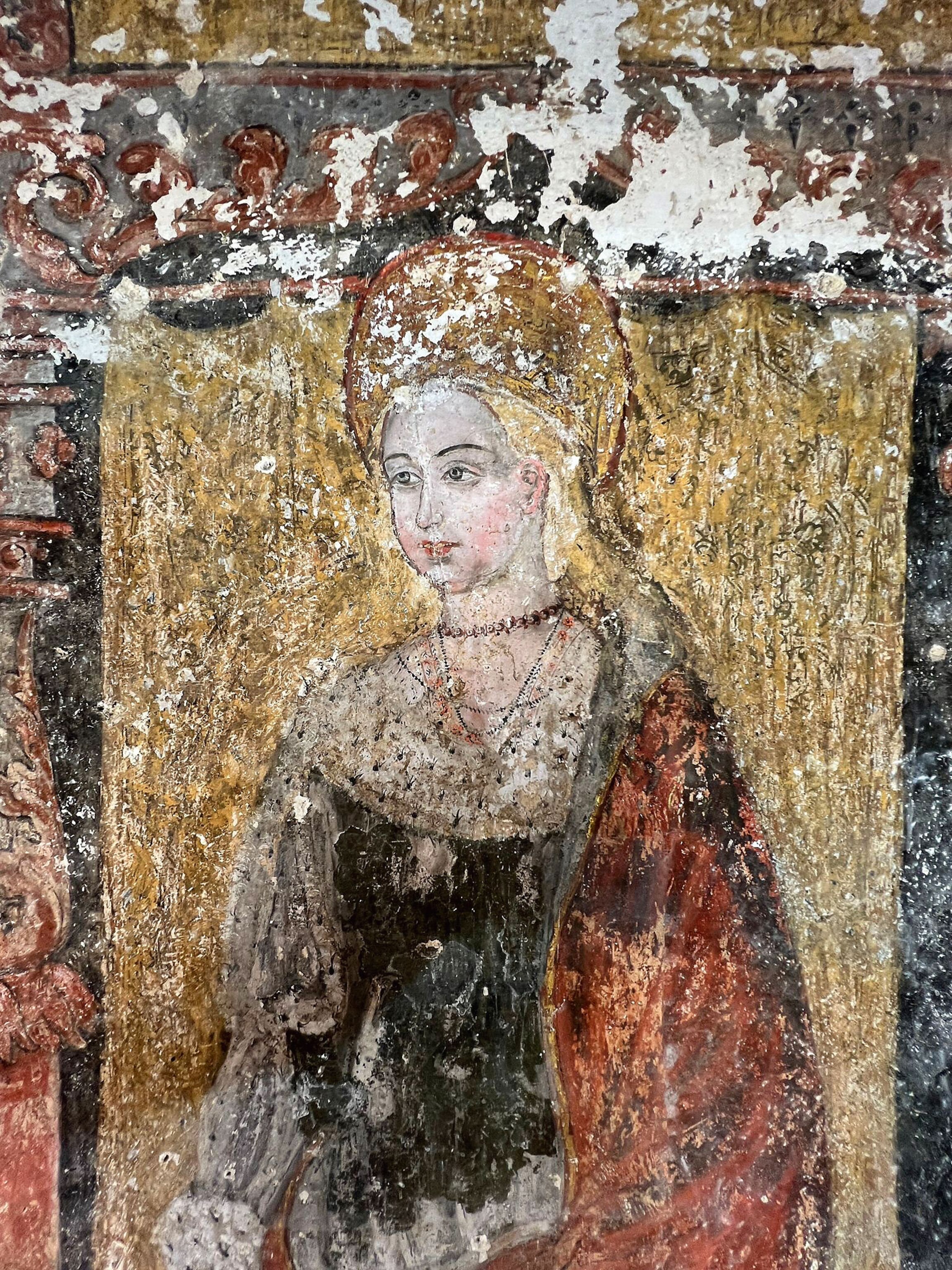
A detail of St. Catherine of Alexandria.
Turismo Llerena
More details are coming to light in what is now an ongoing restoration project. The section uncovered so far comprises a stunning, Renaissance-era altarpiece. On the central panel, the Virgin of Mercy welcomes the faithful under her mantle, providing them with protection.
The left-hand lateral panel depicts St. Anne, accompanied by her daughter the Virgin Mary with Jesus on her lap. The right-hand panel shows St. Catherine of Alexandria, carrying the sword with which she was beheaded.
(How the Virgin Mary became the world’s most powerful woman.)
Gilded Age
Although the identity of the artist has not been established, historians believe the themes, and the opulence of the materials, suggest the frescoes were commissioned by the wealthy Order of Santiago. Santiago, the Spanish name for St. James the Great, was one of the Twelve Apostles and was buried, according to tradition, in northwestern Spain.
This powerful religious order had controlled Llerena since it was wrestled from the Muslims in the 13th century. The frescoes were painted in the first half of the 16th century, coinciding with the last phase of the church’s construction and the town’s cultural and economic peak.
(These frescoes shattered conventions in the Italian art world.)
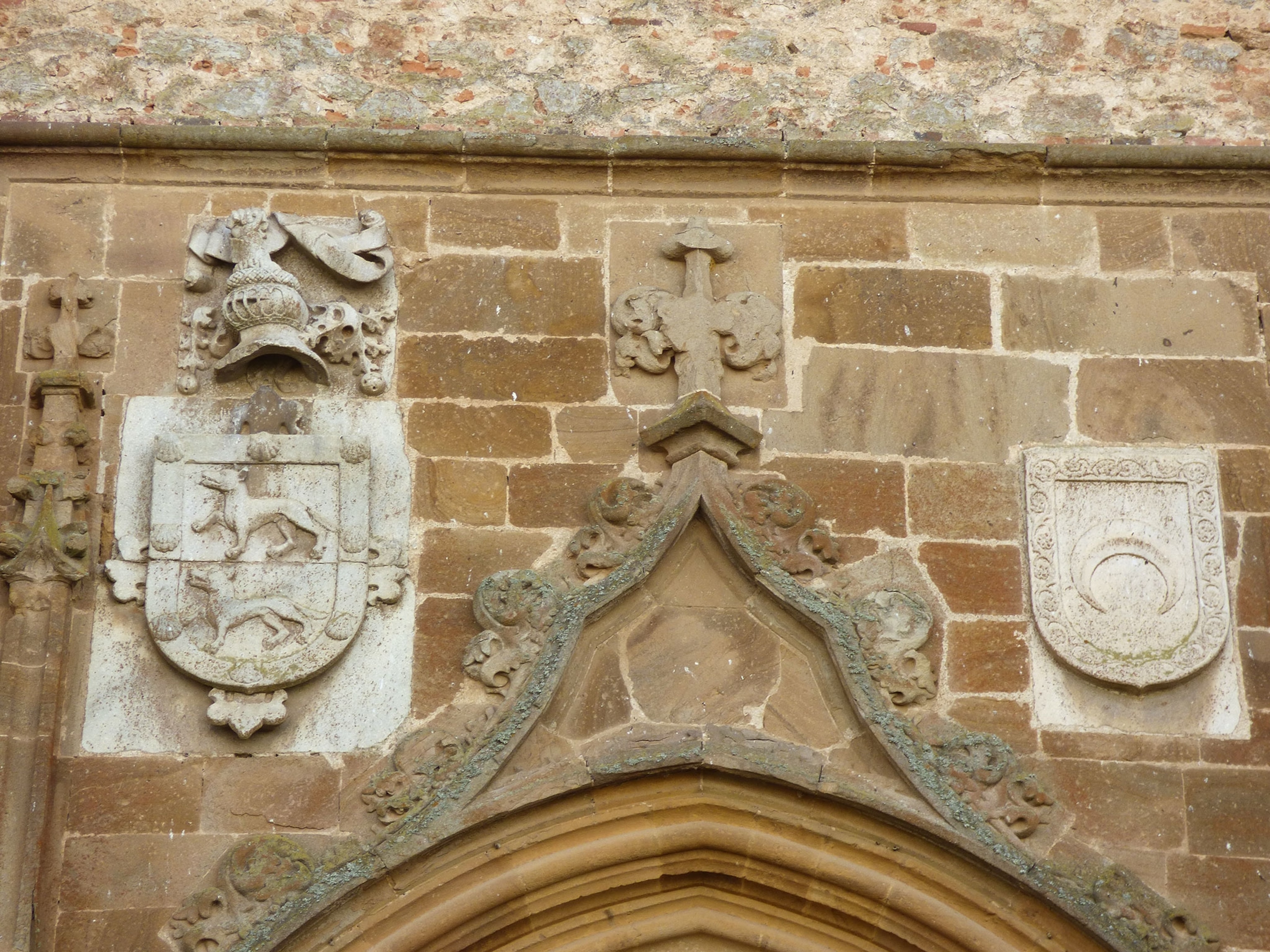
Shields of the founders of the parish church of St. James flank the doorway. On the left is the shield of Alonso de Cárdenas, the last master of the Order of Santiago, rulers of Llerena since the 1200s. The shield of his wife, Leonor de Luna, is on the right.
Turismo Llerena
This story appeared in the January/February 2025 issue of National Geographic History magazine.
Editors of National Geographic
Read More