

The chair of the UK COVID-19 Inquiry will not “hesitate to make recommendations about the use of social media” and its role in spreading “misinformation and disinformation” around vaccines, the secretary to the inquiry has told Sky News.
The independent public inquiry resumes on Tuesday with Module 4 looking at Vaccines and Therapeutics.
Ben Connah, secretary to the inquiry, said: ‘In this module, we will be looking specifically at misinformation and disinformation and whether that led to vaccine hesitancy.
“If the chair, Baroness Hallett, thinks there are recommendations to be made about the use of social media, then she won’t hesitate to do that. She’s got a very broad scope and she’s determined to use it.”
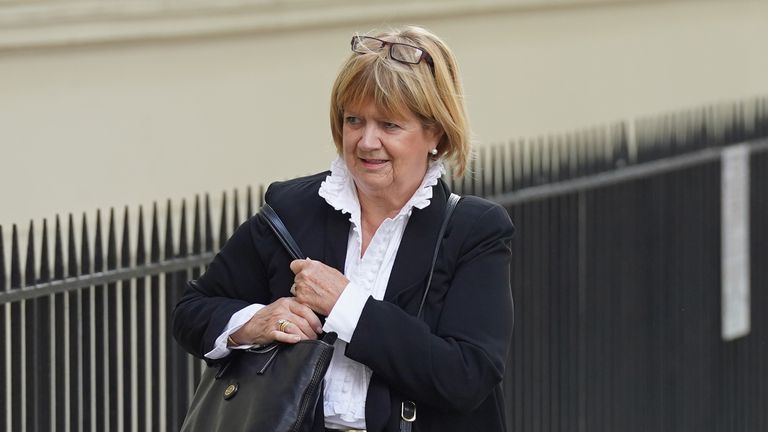
UK COVID Inquiry chair Baroness Hallett
The inquiry has been set up to examine the UK’s response to and impact of the COVID-19 pandemic and to learn lessons for the future.
This includes the way the government used public health messaging to engage with sometimes hard-to-reach communities. The lessons learned during the pandemic can be applied to encourage vaccine uptake for childhood immunisation programmes for diseases like polio and measles.
One of the reasons that this inquiry is looking specifically at vaccines is to make sure that the UK is in the best position possible going forward when it comes to not just a COVID vaccine, but that of other vaccines.
“If there are issues around things like vaccine hesitancy that the chair of the inquiry, Baroness Hallett, can make recommendations on that would lead to broader benefits for society, I’m sure she’ll do that’,” Mr Connah explained.
Kirit Mistry worked as a COVID champion in Leicester during the pandemic and has contributed to the inquiry’s Every Story Matters campaign which allows the public to share their story. His job was to try to engage with local communities to counter the disinformation being promoted on social media.
Mr Mistry, who comes from the south Asian community, said: “I think a lot of misinformation was coming from our own countries back home but also in this country as well.
“People may have lost somebody and they were putting it down to the vaccination that was the cause of that, so it was trying to get people to understand that being hesitant and working off misinformation is not the right way because we need to protect ourselves,” he told Sky News.
Please use Chrome browser for a more accessible video player
Matt Hancock: ‘We got funeral guidance wrong’
Read more:
COVID-19 was like a daily ‘terrorist attack’, doctor tells inquiry
UK public ‘failed’ by preparation for ‘wrong pandemic’
Kirit said his job was made more difficult because of the lack of real information coming from the government at the time. This vacuum was filled with disinformation that impacted his own family.
“Well, the messaging was very low and misinformation was coming through various WhatsApp communications. That was really kind of what was noticeable, you know.
“Certainly within our own family, my own brother, elder brother, was hesitant about taking the vaccination based on this misinformation.”
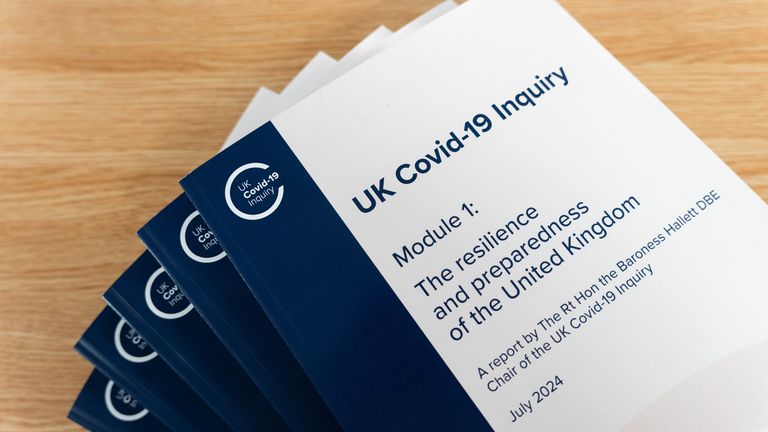
The inquiry has already published its first findings. Pic: COVID-19 Inquiry
Kirit’s twin brother Kanak did want the vaccine but it came too late. He caught the virus and almost died.
He spent two weeks on a ventilator in intensive care. Kanak survived but now lives with the life-changing impact of long COVID.
Before the infection, he walked miles every day in his job as a postman. Now he can barely manage a few steps.
“I still struggle to walk any distance and I struggle to do my housework and I get help to do my washing and cleaning I can’t do, I have to get someone in to help with the cleaning,” he said.
It’s not just a physical struggle for Kanak. Long COVID has left him with anxiety that prevents him from socialising in public spaces.
“I am aware about going into social environments where I would only interact with people that I know who I’m close with, like small groups of, you know, a small group of people or family that I know. I’m a little bit more wary of strangers now. Well because of COVID I tend not to be as sociable.”