
In the first-ever global study of its kind, researchers concluded that more attention needs to be paid to physical attacks and threats against land defenders, since those incidents often are the precursor to death.
Last year, a human rights and environmental watchdog group determined that 177 land defenders were killed in 2022. Land defenders are people who seek to protect their communities and environmental resources from destructive development projects ranging from pipelines to mines to farms to wind projects.
This month, however, the Alliance for Land, Indigenous, and Environmental Defenders, or ALLIED, found that there were 916 nonlethal incidents in 46 countries in 2022 — or about five for every death. Nonlethal incidents range from written and verbal threats to kidnapping, detention, or physical assaults. The probable perpetrators identified by ALLIED include paramilitary forces, police, local government officials, private security guards, and corporations.
“While police was the commonly named probable perpetrator of the violence, often we see state actors operating on behalf or at the request of other parties, including private businesses,” said Eva Hershaw, who co-chairs ALLIED as part of her work with the International Land Coalition, where she heads global data and land monitoring.
ALLIED drew on news outlets, social media posts, eyewitness interviews, court filings, and police reports to make its conclusions. The group’s researchers consulted data sets from 12 organizations and talked with affected communities in these countries to assure accuracy. Roughly a third of the organizations that ALLIED worked with used locally based data collectors who confirmed acts of violence with municipalities. For many of these data collectors, this was the first time their data had been used in a global study, Hershaw said.
Of the 916 incidents that didn’t lead to death, nearly a quarter of the victims were Indigenous, despite the fact that Indigenous people make up only 6 percent of the global population. With respect to the assaults and threats that often lead up to killings, “Indigenous peoples were disproportionately targeted with such violence,” Hershaw said.
Violent attacks and threats against Indigenous land defenders are often underreported, due to victims’ fear of retaliation. Also, attacks often happen in rural places away from the eye of the media. The report detailed repeated violence and harassment against individuals as well as whole communities.
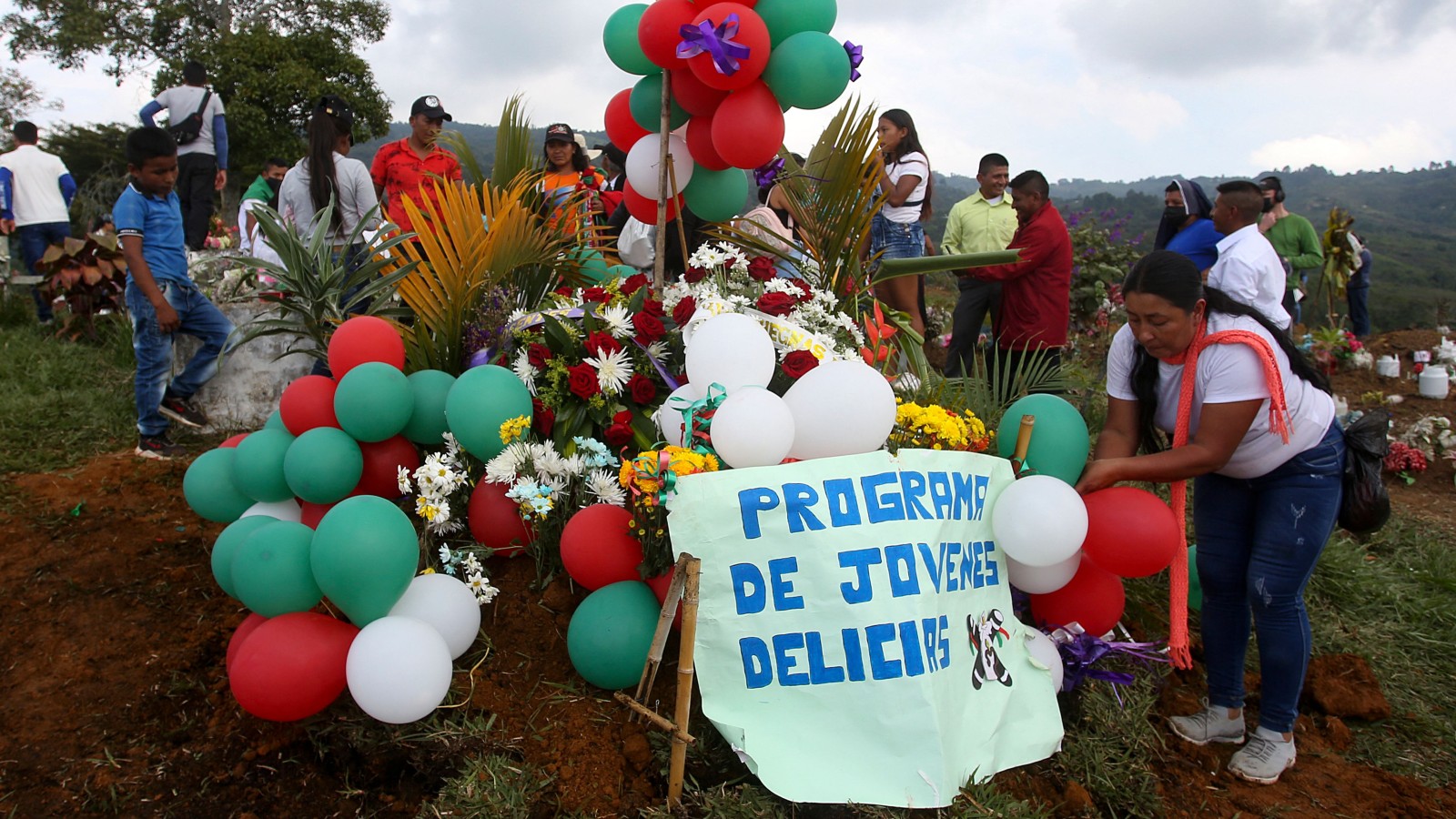
Among the most violent places for Indigenous land defenders were Colombia, Guatemala, and Mexico, which together accounted for 75 percent of all attacks and threats. Across the 46 countries included in the report, land defenders who spoke out against industrial agriculture and mining were the most at risk.

Philippe Le Billon, a professor at the University of British Columbia who focuses on natural resources and armed conflicts, said this data is important for preventing further violence and should be utilized to develop transparency that doesn’t exist in a lot of places. “Early warning mechanisms need to be developed using this data,” he told Grist. He said companies need to hold themselves accountable to the communities in which they operate and develop procedures to address conflicts when they arise.
Risk factors for violent incidents included vague and undefined land rights in a particular nation. When private businesses or infrastructure developments are already present in a community, that can increase the risk as well. Around 40 percent of violent incidents happened while the victims were actively protesting development projects that threatened their land or communities.
Another risk factor is what the report calls weak rule of law. “Weak rule of law indicates that laws are not properly or equally enforced,” said Hershaw, meaning that laws that were supposed to protect Indigenous land defenders did not lessen the threats.
Verbal and written threats were the biggest act of violence documented in the report, comprising 33 percent of all nonlethal incidents. Arbitrary detentions — the act of detaining someone without evidence or without following legal due process — made up 10 percent of the incidents.
According to the report, around 30 percent of all nonlethal incidents in 2022 targeted not individuals, but entire Indigenous communities. For instance, the Tumandok, an Indigenous people living in the mountains of the Philippines, have a long history of conflict with various development projects.
In 2018, six tribal members were killed, then a steady stream of violence and killings led up to the forced removal of Tumandok people to make way for a hydroelectric dam. The Philippine government is courting projects in the mining sector as well, and other tribal communities across the country have decried the government’s disregard for Indigenous rights.
As mining operations increase worldwide in the service of the energy transition, Indigenous people are at greater risk of potential violence. The report recommends that national governments better document attacks and create stronger legal protections for vulnerable communities. ALLIED also says corporations need to be held accountable for violence and threats that advance their business interests.
Hershaw gave one example of what accountability could look like: This year, Hudbay Minerals settled three lawsuits filed a decade ago by the Q’eqchi’, an Indigenous Mayan group in Guatemala. The Q’eqchi’ alleged that the Canadian-owned company was responsible for the sexual assaults of nearly a dozen women and the killing of a community leader during a land rights dispute. The Q’eqchi’ were compensated for an undisclosed amount.
Le Billon said that pursuing compensation for the loss of loved ones and land is incredibly difficult for tribal communities. “Court cases are hard to put together,” he said. “You need lawyers. It costs money.” Le Billon said information and documentation, like the data ALLIED uncovered, is hard to get and it takes a lot of time to collect, creating another barrier for environmental land protectors seeking justice. “These things can last decades, literally.”
At COP30, the United Nations climate change conference slated to take place next year in Brazil, ALLIED plans to release data on nonlethal attacks in 2023 and 2024.