

| Updated:

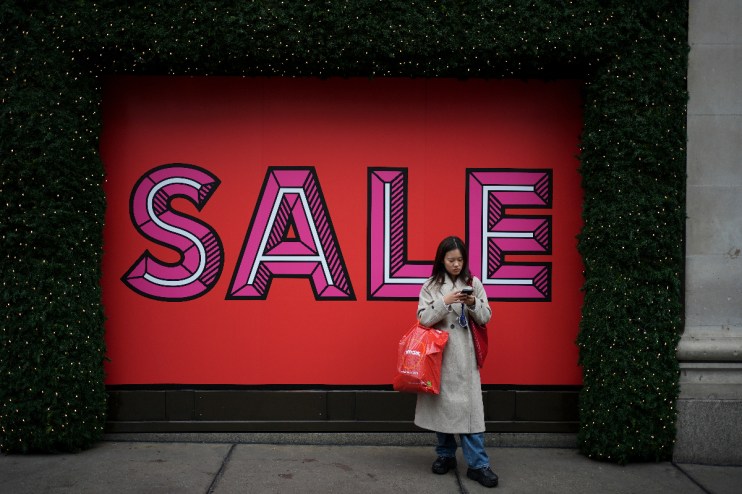
2024 has been a tough year for retail.
From companies sounding the alarm on business rates in the first half of the year to low consumer confidence and footfall proving stickier than expected, the festive period has now been overshadowed by stark warnings about further cost rises next year.
Restructuring partner at RSM UK, Gordon Thomson, has warned that “only the strongest businesses will survive” without government intervention.
But there are opportunities on the horizon: disposable income is set to go up, inflation has largely stabilised, and, if this year’s Black Friday was anything to go by, shoppers are still happy to spend.
So, how are retailers planning on attracting these customers next year as Brits’ wallets (hopefully) start to get a little more padded?
Personalisation will be key
Personalisation has been steadily taking off across pretty much all consumer-facing industries, from fashion to food.
Tesco chief Ken Murphy came under fire earlier this year when he suggested AI could be used to “nudge” consumers into making healthier decisions by personalising recommendations to their shopping history, but experts suggest we’re only at the start of seeing what personalisation can do.
Business advisory firm BDO have suggested there will be “an explosion” of AI driven experiences.
“Everything from product recommendations to intuitive sizing and customer service will be explored,” BDO have said, with those able to get on the front foot the “winners”.
Experts have predicted fast-moving and granular algorithms to identify individual users’ preferences in real-time and generate constant updated recommendations.
“Utilisation of data in tech is number one [going forward]”, Henrietta Bamford, consultant at Freshminds, said earlier this year. In-store products will also become increasingly personalised in the future, she added.
“There’s a [mattress] manufacturer [which is] looking at integrating a mobile app to measure your sleep and the way that you position yourself on a mattress… and then in the store, they’re going to design the mattress to be long-lasting and conducive to your posture,” she said.
Sustainability comes to the fore
Another trend it’s important for retailers to get their heads round is sustainability. While by no means a new trend, it’s predicted to move to the centre of customers’ expectations.
“Consumers are increasingly interested in the entire carbon footprint of products and it’s becoming a bigger factor in purchasing decisions, forcing organisations to take their green credentials more seriously if they want to strengthen their customer retention,” Dr Silvia Tedesco, associate professor of sustainability at the University of Salford, said.
Data from NielsonIQ has found three quarters of consumers will quit brands who are guilty of greenwashing.
“We’ll continue to see customers hold the brands they shop with accountable if they’re found to be misleading them on the environmental impact of their products,” Tedesco said.
“Transparency is becoming essential, especially in the beauty sector, where companies are showcasing clinical evidence and clear ingredient sourcing to build trust with consumers,” BDO said.
Plus, retailers have been warned by the Government to “stay on right side of the law” with regards to their eco-credentials by the Competition and Markets Authority as it clamps down on misleading marketing.
There has been an overall increase in lawsuits and class action cases over misleading green claims in recent years, with fresh updates to consumer protection law in multiple markets.
Want Gen Z? Look to affordable, social media-friendly items
Sectors like wellness and beauty, which have the advantage of being both trendy and relatively low cost, have taken off with Gen Z.
With customers increasingly on the lookout for affordable treats in the wake of the cost-of-living crisis, sectors which cater to these preferences are set to boom.
“After years of high interest rates and decreasing disposable income, affordability continues to be a drag on demand for most industries, however beauty is perfectly positioned to be the exception, and this theme shows little signs of slowing,” BDO said.
Circana have found that sales of prestige beauty gift sets in the UK were up by five per cent compared to last year, particularly those priced under £30.
“Consumers are balancing their desire for luxury gifts or self-purchases with a careful approach to spending,” Circana said.
Brands like Millie Bobbie Brown’s make-up company, which manage to convey authenticity and create audience connection whilst simultaneously positioning themselves at the forefront of social media trends, have won big this year.
Are barcodes dead?
In the most important retail trend of all, data management company GS1 UK have predicted that barcodes will completely disappear within five years, to be replaced entirely by QR codes.
While this may be met with shrugs across the board, it does come with the benefit of transparency and easy information gathering.
Shoppers would be able to scan the code to learn about harmful ingredients and the supply chain of the product – anything from the product’s environmental impact to the labour standards involved in its production.
Consumers could also be instantly alerted if they’re trying to buy an out-of-date or recalled product.
While this may a small change, it does point to a wider trend: 96 per cent of leading UK retail executives expect another retail technology transformation by 2030, with 43 per cent saying their industry is changing more rapidly today than they have ever witnessed in their careers.
Ultimately, retailers are battling for the attention of an increasingly disparate consumer base: while costs are up, brand loyalty is down, and Brits expect more from their companies than ever before.
Brands who can provide the kind of technologically savvy, transparent and enjoyable experience for their shoppers may yet sail through the current storm.
Amber Murray
Read More