

Serving tech enthusiasts for over 25 years.
TechSpot means tech analysis and advice you can trust.
Bottom line: While Arm-based PCs face some hurdles, their potential for growth remains significant, driven in particular by claims of superior battery life compared to previous generations. Intel, meanwhile, is making improvements to adapt to new market demands.
The PC market is undergoing a significant shift as Arm-based processors gain traction, challenging the long-standing dominance of x86 architecture. However, this transition is not without challenges, as highlighted by Michelle Johnston Holthaus, interim co-CEO of Intel, during the Barclays 22nd Annual Global Technology Conference.
Johnston Holthaus recently claimed that retailers are grappling with a high return rate of Qualcomm-powered machines. “If you look at the return rate for Arm PCs, you go talk to any retailer, their number one concern is ‘I get a large percentage of these back,'” she said, attributing the issue to compatibility problems with common applications.
Qualcomm was quick to respond though, “Our device return rates are within industry norms,” a representative told CRN. The spokesperson further added that Qualcomm “expects 30% to 50% of laptops to transition to non-x86 platforms within the next five years.”
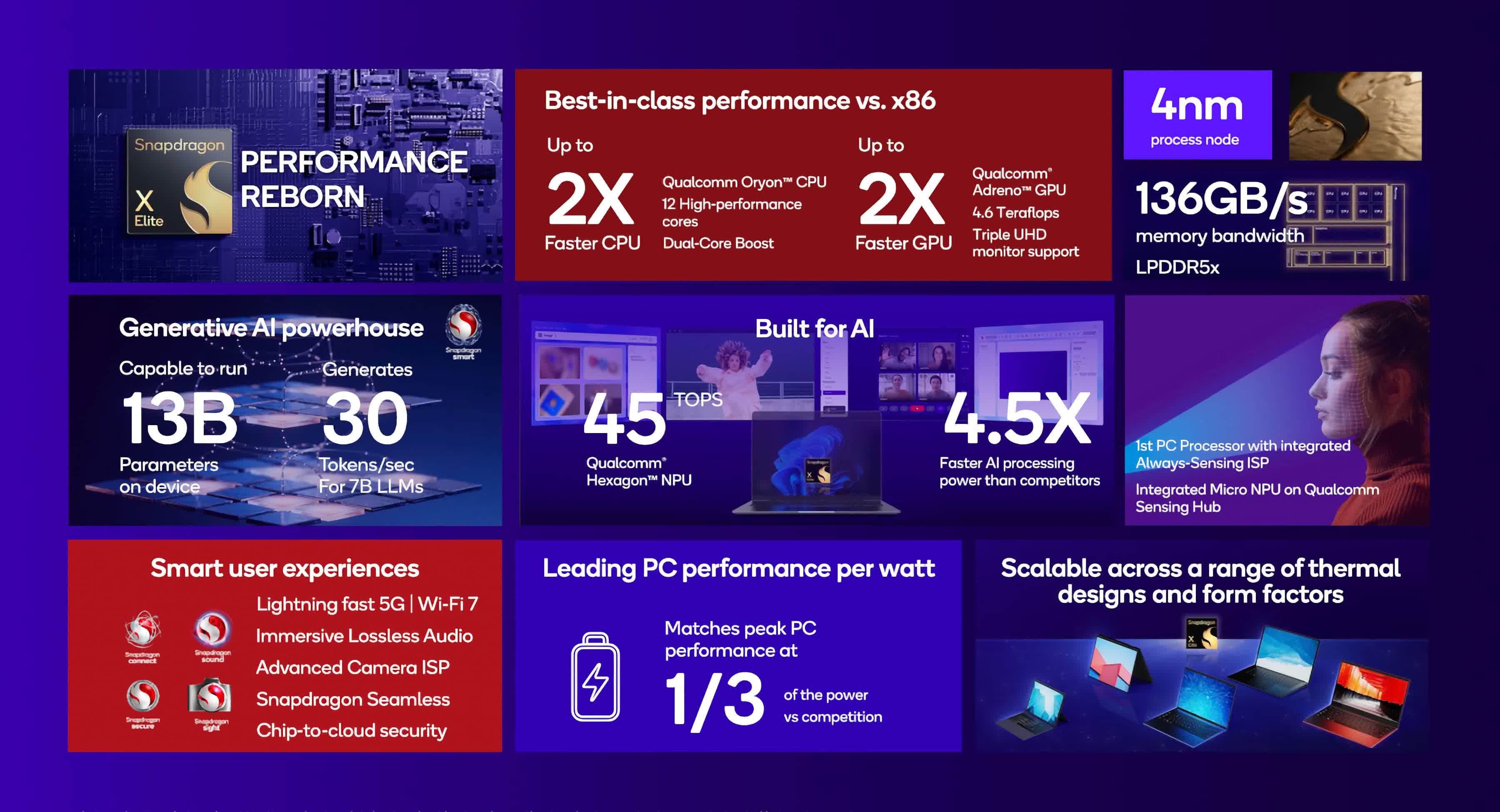
Regardless of one claim or the other, Arm-based systems are making inroads into the PC market. While Qualcomm Snapdragon X Elite machines currently hold a mere 0.8% market share, the overall Arm-based client PC segment commands approximately 10% of the market. This growth is primarily driven by Apple’s M-series processors, which have paved the way for wider Arm adoption.
Intel, for its part, is acutely aware of the evolving landscape. “We [will] have more competitors than we have ever had. You will see more competitors enter the marketplace in 2025,” Johnston Holthaus said, possibly hinting at rumors of MediaTek and Nvidia entering the Arm-based Windows PC market.
Team Blue has been improving performance and power efficiency to match Arm-based rivals. “We took too long at Intel to become performance and power-oriented, and we made a massive leap with our Lunar Lake product last year,” Johnston Holthaus said.
For instance, Intel introduced a hybrid architecture in its latest processor series, combining Efficient-cores (E-cores) with Performance-cores (P-cores) to balance power efficiency with high performance. This design went beyond laptops and desktops and had a notable impact in Xeon 6 datacenter CPUs, which offer 3:1 rack consolidation and up to 2.6x performance-per-watt improvements over their predecessors.
Intel is also collaborating with Arm to produce low-power SoCs using its 18A process and is already integrating AI hardware into its processors. The Lunar Lake architecture, for example, features a fourth-gen NPU capable of delivering up to 48 TOPS – a fourfold improvement over its predecessor.
Laptops featuring Qualcomm’s Snapdragon X Pro and Elite chips were the first PCs to support Microsoft’s Copilot AI features, positioning them at the forefront of the company’s AI PC push. However, most AI PCs are gaining market traction through Intel and AMD’s x86 processors instead.
In Q3 2024, AI PCs accounted for 20% of all PC shipments, a 49% increase from Q2, driven by greater availability. Despite this growth, consumer interest in AI PCs and GenAI features remains modest. Intel and AMD devices, which represent about half of these shipments, are only beginning to receive support for Copilot.
Meanwhile, Snapdragon X laptops are receiving high praises primarily for their extended battery life, often lasting a full day. Additionally, the upcoming end-of-life for Windows 10 is expected to drive a significant sales boost, as users upgrading to Windows 11 may inadvertently adopt AI PCs.
Read More
Margarete Howe