

Potential hazards from cell-based food have been identified as part of the first step to assessing the safety of such products.
The Food and Agriculture Organization of the United Nations (FAO) and the World Health Organization (WHO) said cell-based food production involves growing animal agricultural products directly from cell cultures.
The agencies published a report to capture the key food safety issues and provide authorities, particularly those in low- and middle-income countries, with up-to-date information and scientific knowledge related to cell-based food production, when considering regulatory actions.
Francesco Branca, from WHO, said the report has information about the technologies used to produce cell-based foods, potential food safety hazards, and regulatory frameworks in various countries.
“Experts stated that many hazards are well-known and exist in conventional foods but we cannot exclude new hazards from new technologies, materials, or ingredients used to produce cell-based foods. We see this as a first step of a comprehensive risk-benefit assessment. More data generation and sharing are needed to identify the similarities and differences between conventional foods. WHO and FAO will support Codex Alimentarius on future work in this domain,” he said.
While most hazards are already known and can also occur in conventionally produced food, the focus may need to be on the specific materials, inputs, ingredients including potential allergens, and equipment used in cell-based food production.
National views and terminology
The document looks at terminology issues, principles of cell-based food production processes, and the global regulatory picture. Case studies from Israel, Qatar, and Singapore are included. In December 2020, the first cell-based chicken nuggets were approved in Singapore. However, Italy recently announced plans to ban cell-based meat.
Teng Yong Low, from the Singapore Food Agency, said reaction to approval had been mixed.
“Some people welcomed the benefits, as it gives them a new choice in their diet, some people, for various reasons, choose not to consume such products and some are in-between. SFA tries to provide information for these people with accurate information about the technology and products so they can then make their own informed choice on whether to consume them,” he said.
There are more than 100 start-ups developing various cell-based food products including meat, fish, poultry, dairy, and eggs, according to FAO.
While “cell-based,” “cultivated” and “cultured” are preferred terminologies, other terms such as “in vitro,” “artificial,” “fake,” “clean” and “lab-grown” have been used. Debate is also ongoing around if cell-based meat products can be labeled as halal or kosher, based on initial cells and materials.
Corinna Hawkes, FAO director of the Division of Food Systems and Food Safety, said the publication is part of the larger context of trying to achieve a healthy and sustainable food system.
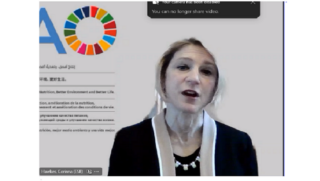
“When it comes to new technologies for food production, the first question many people have is will that food be safe? We know new and innovative technologies and production processes are going to evolve, that is part of the reality of what it’s going to mean to ensure food security into the future while also trying to reduce impacts on the environment,” she said.
“We are still in the early phase of this technology and only have data from small-scale production facilities. It promises improvements but needs to be validated in large-scale production. This hazard identification is just the first step of a long process that will need the engagement of all those who care about food safety.”
Mitigating risks from hazards
It is possible that a case-by-case approach is suitable for the food safety assessment of cell-based products, said FAO.
Manufacturing processes for these products vary depending on the type of cell line used such as livestock, poultry, fish, or seafood, and the final product, like a burger, steak or nuggets. However, the general process includes four production stages: target tissue or cell selection, isolation, preparation, and storage; cell proliferation and possible cell differentiation during large-scale biomass production; tissue or cell harvesting; and processing and formulation of food products.
Cell sourcing, isolation, and storage steps may introduce microbial contaminants. To prevent contamination in these stages, it is common for antibiotics to be used. Cell cultivation is also sensitive to microbial contamination so is performed under sterile conditions. During manufacturing, contamination by other bacteria, yeast, and fungi from the production environment can occur. There are also potential hazards during harvesting and processing.
Identified hazards include foreign matter, veterinary drugs, microbial toxins, additives, residues, allergens, microplastics, and pathogens. Cell lines may also come from species with limited or no history of safe food use.
As most potential food safety hazards are not new, risk-mitigating tools such as good hygiene, manufacturing, cell culture, and hazard analysis and critical control points (HACCP) practices should be considered.
With cell-based food products not yet available in most parts of the world, consumers are unlikely to be familiar with them or the processes used. FAO said it was the perfect time for regulatory agencies to communicate about food safety questions associated with the products and processes, and to establish themselves as sources of information.
“Solving the many challenges and hurdles that still exist with cell-based foods such as high production costs, scale-up hurdles, and gaps in fundamental knowledge will require a significant level of both technical and financial commitments from all stakeholders,” said the report.
(To sign up for a free subscription to Food Safety News, click here.)
Read More
Joe Whitworth